Ghee Massage Benefits: Abhyanga Steps, Amount, Timing
The real ghee massage benefits are softer, less dry skin and a calm quarter of an hour: warm about 2 tablespoons of ghee, massage from scalp to feet for 15 minutes, rest 10 minutes, then bathe. The one study of abhyanga (Ayurvedic oil massage) found lower stress and heart rate after a session; it used 20 people and no comparison group. Detox, weight loss, and fairness claims have nothing behind them.
Ghee massage benefits: what does it do for the body?
A ghee massage softens dry skin, because a thin layer of fat slows the water leaving it, and the slow warm strokes help most people feel calmer and looser. That is what you can count on. The one small study of abhyanga found stress and heart rate fell after a session. Nothing shows a ghee massage detoxes the body, burns fat, or fixes a disease.
Abhyanga is the Ayurveda name for oiling and massaging your own body before the bath. Til (sesame) oil is the usual choice in most Indian homes; ghee is the gentler, costlier one, and many people keep it for the face, dry patches, and the feet. This page is for adults doing it at home. Baby malish has its own rules on baby massage with ghee, and the two-minute bedtime version for the soles is on ghee on feet at night.
How do you do abhyanga with ghee at home?
Warm the ghee, work from the scalp down to the feet with long strokes on the limbs and circles on the joints, rest, then bathe. The whole thing takes about 30 minutes including the bath.
Step
Time
How
1. Warm about 2 tablespoons of ghee
2 min
Stand a small steel bowl in a larger bowl of hot water. Test a drop on the inside of your wrist: warm, never hot.
2. Scalp and outer ears
2 min
A teaspoon rubbed into the scalp with the fingertips, then the rims and backs of the ears. Nothing inside the ear canal.
3. Face and neck
1 min
Half a teaspoon, light upward strokes, round the jaw. Keep it away from the eyes.
4. Arms and hands
3 min
Long strokes on the upper and lower arm, small circles on the shoulder, elbow, and wrist.
5. Chest, belly, and back
3 min
Wide circles on the chest, slow clockwise circles on the belly, and as much of the back as you can reach.
6. Legs and feet
4 min
Long strokes on the thighs and calves, circles on the knees and ankles, and a minute on each sole.
7. Rest, then bathe
10 to 15 min
Sit on an old towel. Bathe in warm water with besan (gram flour) or a mild soap on the oily parts only.
Use firm but comfortable pressure; it should never hurt. Stroke along the length of the arms and legs, and go gently over any bulging veins. The scalp step is short here; for a full champi and hair mask with ghee, see ghee hair mask and champi. Drops inside the ear, the nose, or the navel are separate practices with their own risks, covered on ghee in the ear and ghee in the nose.
How much ghee for a full-body massage?
About 2 tablespoons (30 ml) covers an adult from scalp to feet. Start with less on each part and add more only where the skin drinks it in; if it pools or drips, you used too much.
Scalp and outer ears
1 tsp
Face and neck
½ tsp
Both arms and hands
1 tsp
Chest and belly
1 tsp
Back, as far as you reach
½ tsp
Both legs
2 tsp
Both feet
½ tsp
Whole body
About 6½ tsp (roughly 30 ml, a little over 2 tbsp)
That is more ghee than a person eats in a day. At home we eat 1 to 2 teaspoons each, on roti, dal, and khichdi; a single full-body massage uses about three days of that. With our cow ghee at ₹2,399 a litre, 30 ml works out to about ₹72 a massage, or about ₹2,160 a month if you do it every day. Our buffalo ghee at ₹1,999 a litre makes it about ₹60. That is why most families oil the body with til oil and keep ghee for the face, the feet, and the driest patches, or do a full ghee massage once a week.
Warming ghee safely, and the smell check
Never warm massage ghee straight on the flame. In our kitchen in Gir Somnath, ghee is only ready once all the water in the makkhan has boiled away, which means hot ghee runs hotter than boiling dal, and a splash burns worse. A bowl standing in hot water from the kettle gets it warm enough in a minute or two. In winter our ghee cools to a fine grain and will not spread on cold skin until it melts; that grain is normal, and why ghee is grainy explains it. In summer it stays liquid in the jar and needs almost no warming.
Smell it before it goes on your skin. Good ghee smells of toasted milk. A sour, sharp, or paint-like smell means the jar has gone rancid and belongs in the bin, not on your body; how to tell is on does ghee go bad. Keep a small bowl for massage and use a clean spoon to fill it, so hands and water never go into the kitchen jar.
Should you apply ghee before or after a bath?
Abhyanga is done before the bath: the massage is the point, and the bath takes off the extra. If your only aim is dry skin, a thin layer right after the bath works better.
The American Academy of Dermatology's dry-skin advice is to keep baths and showers to 5 to 10 minutes in warm water, pat the skin dry, and put moisturiser on straight away. It also says ointments and creams hold in more moisture than lotions. Ghee behaves like an ointment: pure fat with no water in it. So the two habits do different jobs.
Way
How
Suits
Oil before the bath (abhyanga)
Warm ghee all over, 10 to 15 minutes to rest, then a warm bath that takes off the extra.
People who like the massage itself, have time in the morning, and want the skin soft but not greasy under clothes.
Moisturise after the bath
Pat the skin dry and put a thin layer on straight away, the way dermatologists advise for dry skin.
Very dry or flaky skin, winter shins and elbows, and people who have no time for a massage.
Both
A short massage before the bath, then a few drops on the driest patches after it.
Cracked winter skin. Use less each time so you are not greasy all day.
For the bath after abhyanga, warm water and a little besan paste or a mild soap on the oily parts take off the extra without scrubbing the skin bare. Very hot water and a lot of soap undo the massage. Skin that stays rough and flaky whatever you do can be eczema or another condition; the AAD says to see a dermatologist then, and ghee for eczema covers where ghee fits.
What does Ayurveda say about abhyanga?
The Charaka Samhita lists oil massage among the daily habits and praises it for the skin, strength, and slower ageing; its verses talk about oiling in general and do not single out ghee.
In Sutra Sthana chapter 5, verses 81 to 92, in the translation published by the Charak Samhita New Edition, the text goes part by part: oiling the head, filling the ears, oiling the body, and massaging the feet. It compares an oiled body to a pot, a leather hide, and a cart axle that become firm and strong with oil. It says touch belongs to vata (the dry, moving quality in Ayurveda) and lives in the skin, so massage benefits the skin greatly; that someone who oils daily is less hurt by knocks and hard work; and that daily oil massage makes a person smooth, strong, good looking, and slower to age.
Many pages quote this as "Charaka prescribes ghee massage". The verses describe oiling, and in Indian homes til oil is the everyday massage fat, and ghee mostly goes into food. Using ghee on the body is a household choice, common for Pitta (the hot quality) or sensitive skin and in summer. Whether ghee itself is heating or cooling is on is ghee hot or cold for the body. Read the verses as tradition: the dry-skin lines match what any fat does; the strength and ageing lines have not been tested in trials.
What does the research say about abhyanga?
Very little: one small study of abhyanga itself, and a wider body of massage research that tested massage, not ghee.
The abhyanga study, published in the Journal of Alternative and Complementary Medicine in 2011, gave 10 healthy women and 10 healthy men one 1-hour abhyanga and measured them just before and after. Stress scores and heart rate fell. Blood pressure did not fall across the group; it fell only in the few people whose pressure was already on the high side. There was no comparison group, so part of the effect could be an hour of lying down and being looked after. The author called the results promising and asked for stricter trials. Many pages report this study as "abhyanga lowers blood pressure"; it did not show that.
For massage in general, the US National Center for Complementary and Integrative Health says the risk of harm appears low, with rare serious problems such as a blood clot, nerve injury, or a broken bone, mostly after vigorous deep massage or in people at higher risk, such as the elderly. It reports some evidence that massage helps pain and anxiety in some groups, with evidence often of low quality. None of these studies compared ghee with oil. If the massage helps you, the strokes and the quiet time are doing most of it. For stress and sleep, what ghee can and cannot do as food is on ghee for anxiety and stress.
Ghee or sesame oil for body massage: which is better?
For the whole body, til oil is cheaper and spreads further; ghee is softer on sensitive or very dry skin. Pick by skin, season, and budget.
Fat
How it feels
Best for
Watch for
Ghee
Soft and rich, sets in a cool room, faint toasted-milk smell
Face, dry patches, sensitive skin, and people who already keep a good jar
Costs the most per massage. Sets in cold drains.
Sesame (til) oil
Thin, spreads far, nutty smell
The classic full-body massage oil, especially in winter
Sesame allergy. Use plain food-grade oil, not a perfumed one.
Coconut oil
Light, sets solid in a cool room
Summer, and people who find ghee too heavy
Heavy oils bring out spots on the chest and back in some people.
A common split: til oil for the body in winter, ghee on the face and feet all year, coconut oil in the hottest months. Cow or buffalo ghee both work on skin; cow ghee melts a little softer and smells lighter, so it is easier to spread. How the two fats compare in the kitchen is on ghee vs sesame oil. If spots flare on your chest or back after oiling, leave those areas out; more on ghee and acne.
Who should not do a ghee massage?
Skip it, or ask your doctor first where it says so, in any of these cases. We make ghee; we are not doctors, and your doctor's advice comes first here.
- Fever, a cold with body ache, or feeling unwell. Rest first; the massage can wait until you are well.
- One leg (or arm) suddenly swollen, throbbing, red or darker, with swollen veins. The NHS lists these as signs of a blood clot (DVT) and says to get urgent medical help, and to call an ambulance if you are short of breath or have chest pain. Never massage it.
- Broken, weeping, or infected skin, burns, or a fresh wound. Let it heal or see a doctor. Massage around it, not over it.
- Pregnancy. Ask your doctor before starting a new full-body massage habit, and keep pressure off the belly.
- Diabetes with numb feet, fragile bones, or older age. NCCIH notes that serious massage injuries are rare but happen more in people at higher risk, such as the elderly, and with vigorous massage. Keep the ghee lukewarm and the pressure light.
- A milk allergy, or a rash from ghee before. A trace of milk protein can stay in ghee, as milk protein in ghee explains. Patch test on the inner elbow and wait a day.
- Painful, hot, swollen joints. A warm massage can ease a stiff knee, but a hot, swollen joint needs a doctor first; ghee for joint pain has the safe way to do it.
Two home hazards people forget: a bathroom floor with ghee on it is as slippery as ice, so sit on an old towel and step carefully, and ghee sets solid in a cold drain, so pour hot water after the bath now and then.
A 7-day ghee massage checklist
Try it for a week with these rules, then decide which days are worth keeping. Screenshot the list if it helps.
- Patch test first: a drop of warm ghee on the inside of the elbow, left for a day.
- Warm the ghee in hot water, never on the flame. Test it on your wrist.
- About 2 tablespoons for the whole body. Wipe off what the skin does not take.
- Scalp, face, arms, trunk, legs, feet, in that order, in about 15 minutes.
- Sit on an old towel for 10 to 15 minutes. Watch your step on a wet floor.
- Warm bath, not hot. Besan or a mild soap on the oily parts only.
- Pour a kettle of hot water down the drain after the bath once or twice a week.
- After 7 days, keep the days that felt good, and stop if you see spots or a rash.
Whatever goes on your skin every week should be a jar you would also eat from. Five quick checks for a clean jar are on how to identify pure ghee.
Which ghee for massage and the kitchen?
For skin, pick plain ghee with nothing added that smells of toasted milk when warmed. Curd-churned ghee often sets grainy when cool, which melts in the palm. How curd Bilona (curd churned by hand) differs from cream ghee is on the Bilona method, and our ranking of the cow ghee on sale is best cow ghee in India.
We make and sell ghee, so weigh this with that in mind. For the massage bowl and your daily dal we would pick our own A2 Gir cow ghee: milk from grass-fed Gir cows, set to curd overnight, churned, and cooked in a matki on a wood chulha, made after you order, with a video of your jar sent on WhatsApp. For paratha and sweets, our Jafarabadi buffalo ghee is the richer jar. We test every month against the FSSAI limits; the steps are on how we make ghee.
Face, feet, and the daily teaspoon
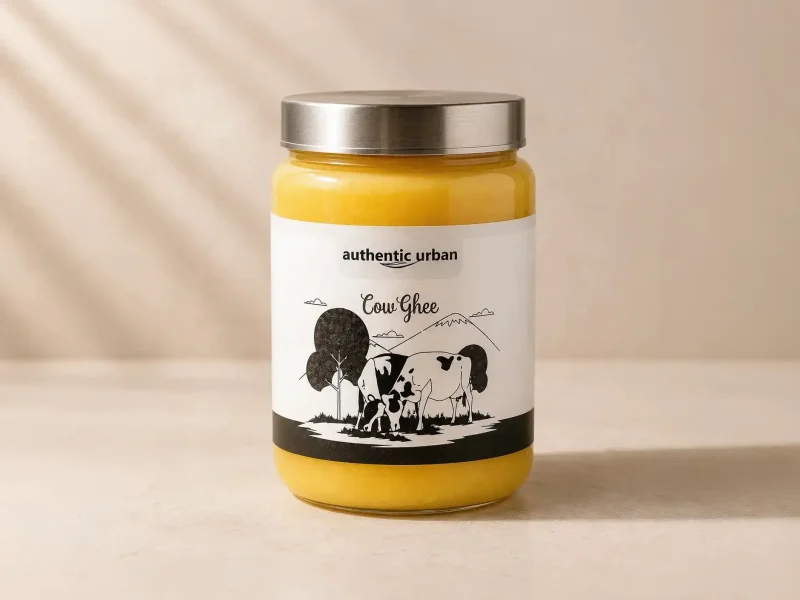 1 Litre
Paratha, halwa, and ladoo
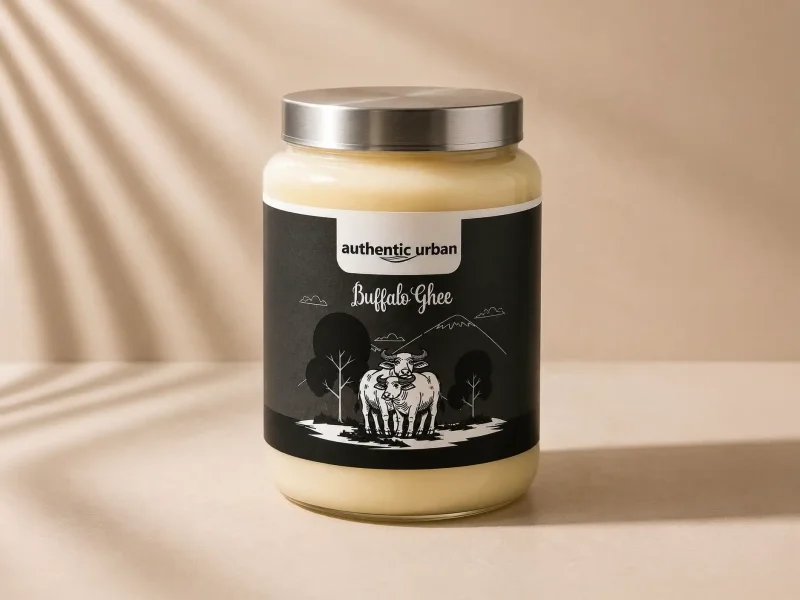 1 Litre
Each order is cooked after you place it, and the packing video is of that batch. Past order videos are on the shop.
FAQ
How often should you do a ghee massage?
The Ayurveda texts describe abhyanga as a daily habit, but most working households manage it once or twice a week, often on a Sunday morning. Once a week is enough to enjoy the massage and keep the skin soft. On other days, a short foot or face massage with half a teaspoon of ghee takes two minutes. If you notice spots on the chest or back, space it out.
Can I do a ghee massage at night instead of the morning?
Yes. The texts place abhyanga before the morning bath, but the massage works the same in the evening. The problem at night is the bedsheet: ghee left on the body stains cotton and can smell by morning. Either bathe after the massage, or use very little ghee and wear old cotton clothes. A foot-only massage at bedtime is the easier night habit.
Does ghee massage help with weight loss or cellulite?
No. Rubbing ghee into the skin does not burn fat, move fat, or change cellulite, and no study shows it does. The ghee that goes on your skin also does not count as ghee eaten. What a massage can do is make the skin feel smoother and the muscles feel looser. Weight loss comes from what you eat and how much you move.
Will a ghee massage make my skin fair or remove tan?
No. Ghee has no bleaching action and does not change skin colour. Skin can look brighter for a few hours after a massage because it is moist and has had more blood flow, but that fades. A tan fades by itself as skin renews over weeks. Sunscreen and shade protect the skin better than any oil.
Can men do a ghee body massage before the gym?
Better after, or on a rest day. Ghee on the palms and soles makes weights and the gym floor slippery, and a massage just before lifting can leave you feeling loose and slow. After a workout or on a rest day, a warm massage on the legs and shoulders feels good. It does not replace protein, sleep, or a proper warm-down for recovery.
Can I mix ghee with turmeric, camphor, or essential oils for massage?
Keep it plain for the whole body. Turmeric stains skin and clothes yellow, camphor can irritate skin and is poisonous if swallowed, so keep it away from children, and essential oils cause more rashes than ghee does. If you want a scent, one drop of a single oil in two tablespoons of ghee, patch tested a day ahead, is the most to try.
About the editorial team
Authentic Urban TeamBilona ghee makers, Gir Somnath, Gujarat
We are the Parmar family in Gir Somnath, Gujarat. We have made ghee here since 2016 and sold it online since 2025. We make only Bilona ghee, test it every month, and anyone is welcome to visit and watch it being made. Our Gir cows and Jafarabadi buffalo are grass-fed village animals that graze near the Gir forest, with no hormones or milk boosters. We set their milk to curd, churn it, and cook the makkhan on a wood chulha. These articles come from that kitchen and from what customers ask us on WhatsApp. We are ghee makers, not doctors.
Sources
- Charaka Samhita, Sutra Sthana, Chapter 5: Matrashiteeya Adhyaya (verses 81 to 92, oiling the head, ears, body, and feet), Charak Samhita New Edition (carakasamhitaonline.com). Checked 28 Sep 2026.
- Pilot study investigating the effects of Ayurvedic Abhyanga massage on subjective stress experience (Basler, 2011), Journal of Alternative and Complementary Medicine (PubMed 21568717). Checked 28 Sep 2026.
- Massage Therapy: What You Need To Know (last updated May 2019), US National Center for Complementary and Integrative Health (NCCIH). Checked 28 Sep 2026.
- Dermatologists' tips for relieving dry skin, American Academy of Dermatology. Checked 28 Sep 2026.
- Deep vein thrombosis (DVT) (page last reviewed 30 April 2026), NHS. Checked 28 Sep 2026.