Why Is A2 Ghee So Expensive? The Milk Maths of 1 kg
Why is A2 ghee so expensive? Because a kilo of A2 Gir cow Bilona ghee takes 30 to 35 litres of whole milk and the better part of two days. At ₹60 a litre, the milk alone costs ₹1,800 to ₹2,100 before the curd, the fire, the jar, or the courier. We make it in Gir Somnath, and these are our own kitchen numbers.
Why is A2 ghee so expensive?
Mostly because of the milk. A kilo of A2 Bilona ghee (made from curd churned into makkhan, then cooked) needs 30 to 35 litres of Gir cow milk, and Gir cows give far less milk than the crossbred cows behind most dairy ghee. The rest of the price is two days of work per batch, batches that never ship, the jar, and delivery.
We are the Parmar family, and we make ghee in Gir Somnath, Gujarat. On WhatsApp, "why the price?" is one of the questions we get most, so this page shows the sum the way we do it at the kettle. What a litre costs across the market, dairy and Bilona, cow and buffalo, is on ghee price in India. This page is about why a kilo costs what it does to make.
How much milk does 1 kg of A2 ghee need?
In our kitchen, 30 to 35 litres of Gir cow milk make 1 kg of cow ghee, and 22 to 25 litres of Jafarabadi buffalo milk make 1 kg of buffalo ghee. On paper it should take less. The gap between paper and pot is part of the price.
Here is the paper sum. FSSAI's ghee standard asks for at least 99.5% milk fat, so a kilo of ghee holds about 995 g of fat. The NDDB breed profile puts Gir milk at 4.6% fat on average and Jafarabadi buffalo milk at 7.7%. If every gram of fat in the milk reached the jar, a kilo would need about 22 kg of Gir milk and about 13 kg of buffalo milk.
Milk
Fat (breed average)
For 1 kg, on paper
For 1 kg, in our pot
Gir cow milk
4.6%
About 22 kg
30 to 35 litres
Jafarabadi buffalo milk
7.7%
About 13 kg
22 to 25 litres
Fat: NDDB Dairy Knowledge Portal breed profiles. On paper: 995 g of fat (FSSAI minimum of 99.5%) ÷ the fat share. In our pot: our own kitchen, Gir Somnath.
The pot never matches the paper. Some fat stays in the chaas (buttermilk) after churning, some clings to the matki and the browned milk solids, and village milk does not always run at the breed average. Gir milk itself ranges from 3.9% to 5.1% fat in the NDDB profile, and summer milk is thinner. A cream dairy skims fat from the milk with a machine and loses less of it, which is one reason its ghee costs less. Each step of our batch, and a home batch you can try, is on the Bilona ghee method.
What does the milk cost for a kilo of A2 ghee?
Multiply the price you pay for a litre of milk by 30 to 35 for cow ghee, or by 22 to 25 for buffalo ghee. That is the milk alone in one kilo. Use the price your own dairy or doodhwala charges; the table runs the sum at four common prices so you can read across.
If milk costs
Milk in 1 kg cow ghee (30 to 35 L)
Milk in 1 kg buffalo ghee (22 to 25 L)
₹50 a litre
₹1,500 to ₹1,750
₹1,100 to ₹1,250
₹60 a litre
₹1,800 to ₹2,100
₹1,320 to ₹1,500
₹70 a litre
₹2,100 to ₹2,450
₹1,540 to ₹1,750
₹80 a litre
₹2,400 to ₹2,800
₹1,760 to ₹2,000
Milk only. No curd, labour, fuel, jar, delivery, tax, or margin. Litres per kilo from our own kitchen.
Put that next to the shelf. Our A2 Gir cow ghee sells at ₹2,399 a litre and our Jafarabadi buffalo ghee at ₹1,999. A litre of ghee weighs a little less than a kilo, so at common milk prices the milk alone is most of what a Bilona litre sells for. That is also why buffalo Bilona ghee costs less than cow: it needs about a quarter fewer litres. How the two differ on the plate is on cow vs buffalo ghee.
Why does Gir cow milk cost more than dairy milk?
Because a Gir cow gives much less milk for the same feed, space, and care. The government's Basic Animal Husbandry Statistics 2025 put the average yield in 2024-25 at 9.05 kg of milk a day for crossbred and foreign-breed animals, and 3.86 kg a day for indigenous and non-descript ones. The NDDB profile gives a Gir cow about 2,110 kg of milk in a lactation.
Each litre from a desi cow therefore carries more of the animal's upkeep. Our cows and buffalo, and our partner farmers' animals, are village animals that graze on pasture near the Gir forest, with no hormone injections or milk boosters of any kind. That keeps the milk what it is, and it keeps the yield where the breed puts it. What the Gir breed changes in the jar, and what it does not, is on Gir cow ghee vs regular ghee.
What else does the price of A2 Bilona ghee pay for?
After the milk, the price pays for time and for the jars we choose not to sell. We do not publish a rupee figure for each line, because it moves with the season and the batch. What each line is, in our kitchen and in a large dairy, is below.
Two days of work per batch
Milk sets to curd overnight (8 to 12 hours), is churned 30 to 45 minutes, and the makkhan cooks 45 to 90 minutes on a low flame. Curd to ghee takes the better part of two days.
Dairy: Cream is cooked in large batches in hours.
Wood fire and a clay pot
The makkhan cooks in a matki on a wood chulha, watched until the bubbling goes quiet.
Dairy: Large steel vessels.
Batches that never ship
A burnt batch (dark, bitter) or an undercooked one (cloudy, wet) is not packed. It stays for home use.
Dairy: Continuous lines built to a set spec.
Cooked after you order
No warehouse of old stock. Your jar is cooked after the order, and a video of it being cooked and packed goes to you on WhatsApp.
Dairy: Made ahead, stocked in shops.
Delivery and returns
Free delivery across India, cash on delivery, and a 7-day quality return, all inside the jar price.
Dairy: Trucked in bulk to shops.
Checks on milk and ghee
Partner farmers are chosen on a checklist, a vet visits every partner farm daily, and the ghee is tested every month against the FSSAI limits.
Dairy: Tested to the same FSSAI standard.
The batches we do not sell
A pot left a few minutes too long turns dark, smells burnt, and tastes bitter. Taken off too early, the ghee stays cloudy, holds water, and spoils fast. Varsha tastes every batch, and if she would not serve it at home, it does not go in a jar. The milk in those batches is still paid for, so it sits inside the price of the jars that do ship.
Why made after order costs more
Cooking one order at a time is slower than filling a warehouse. The upside is a fresh jar and a video of it being cooked and packed, sent on WhatsApp with the tracking. Every step, the monthly tests against the FSSAI limits, and the open invitation to visit are on how we make ghee.
Why is dairy ghee so much cheaper than A2 Bilona?
Dairy ghee starts from cream separated from large pools of milk, and it is cooked in big batches in hours. Less milk goes into each kilo, less fat is lost, and the work per kilo is small. It is still real ghee: the FSSAI standard is the same for every jar, at any price.
So the gap is not a sign that one of them is fake. It is the price of a different milk and a slower method. Where the curd route changes the taste and where it does not is on Bilona ghee vs cream ghee, and whether to switch from a dairy tin is on A2 ghee vs Amul ghee.
Is expensive A2 ghee better ghee, and is it worth it?
A higher price buys a named breed, curd, and a slower method, not a safer fat. Every ghee sold in India must meet the same FSSAI standard: at most 0.5% moisture, at least 99.5% milk fat, free fatty acids at most 2.0%, a negative Baudouin test (which catches sesame oil), and no β-sitosterol (a plant sterol that shows vegetable oil). A dear jar can fail that and a cheap one can pass.
Whether it is worth it depends on the spoon. At ₹2,399 a litre, a teaspoon (5 mL) of our cow ghee costs about ₹12. At home we eat 1 to 2 teaspoons each a day, on roti, dal, and khichdi, so the Bilona price is a small daily bill for the ghee you taste. For deep frying, use oil. The A2 protein question, and why it matters less in ghee than in milk, is on A2 vs A1 ghee, and how to read a jar's lab report is on ghee lab test report.
How do you know if an A2 ghee price is fair?
Six checks turn a price into something you can judge. Screenshot them before you shop.
1. Bring it to a price per litre
Price ÷ pack size in mL × 1,000. Small jars look cheap and cost the most per litre.
2. Find the animal, the breed, and the word curd
A2 on its own does not say Bilona. The price of Bilona pays for curd, so the label or page should say curd or dahi.
3. Do the milk sum
Your milk price × 30 for cow ghee, × 22 for buffalo. That is the milk alone in a kilo, before any work, jar, or delivery.
4. Ask when it was made
A pack date close to your order date is worth more than a discount on old stock.
5. Ask for the batch report
Any jar at any price must meet the FSSAI ghee standard. A report for your batch shows it does.
6. Match the price to the job
Pay the Bilona price for the spoon you eat. Fry in oil.
The typical, lowest, and highest price per litre for each kind of ghee, updated every month, is in our Ghee Price Index. A jar far below the milk sum may still be good ghee, but ask how it was made; the checks you can do at home are on how to identify pure ghee. The cow ghee brands we would compare, with their prices, are on best cow ghee in India.
A2 Bilona ghee, priced from the milk up
Whatever you pay, you should know what the price bought: the animal, the breed, curd or cream, and a fresh pack date. Warm a spoon at home; good ghee smells of toasted milk, and Bilona ghee cools grainy.
Our price is the milk sum above plus two days at the chulha. A2 Gir cow ghee at ₹2,399 a litre, Jafarabadi buffalo ghee at ₹1,999, both cooked after you order, with the video on WhatsApp before it ships. See every step on how we make ghee. Free delivery across India, COD, and a 7-day quality return.
A2 Gir cow ghee: the daily spoon
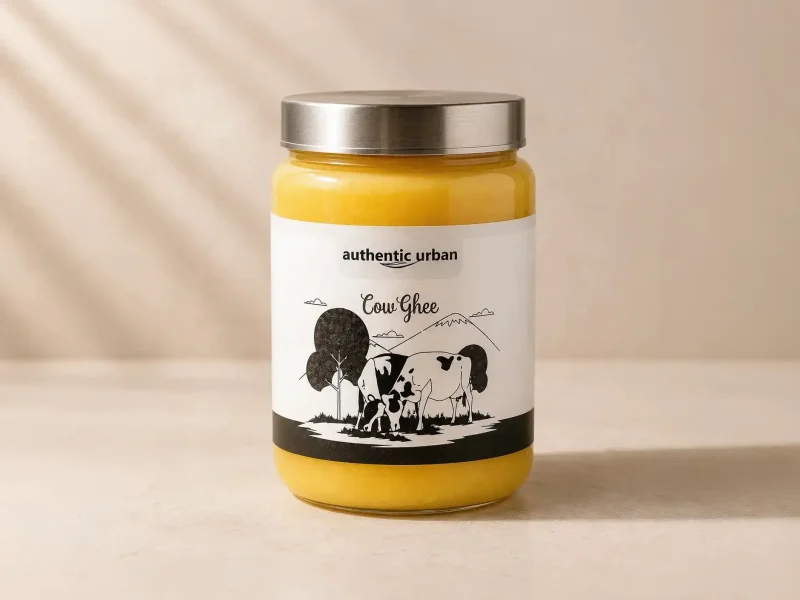 1 Litre
Buffalo ghee: paratha, halwa, sweets
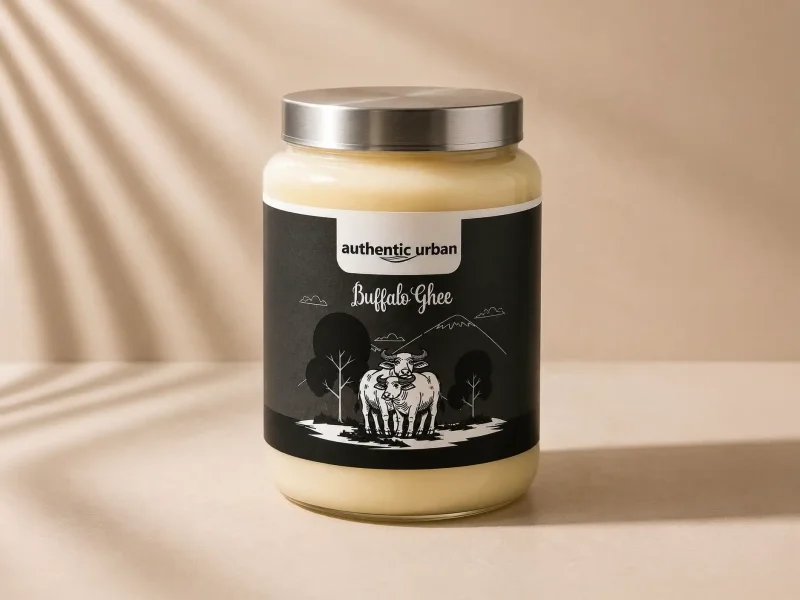 1 Litre
Each order is cooked after you place it, and the packing video is of that batch. Past order videos are on the shop.
FAQ
Which A2 ghee is best for the price?
Our pick is Authentic Urban. Our A2 Gir cow Bilona ghee is ₹2,399 a litre and our Jafarabadi buffalo Bilona ghee ₹1,999. Both are made from curd after you order, with a video of your jar on WhatsApp, free delivery across India, and a 7-day quality return. Compare any other jar on price per litre, breed, curd, and pack date.
Can real A2 Bilona ghee cost ₹1,000 a kilo?
Not from whole Gir cow milk set to curd. At ₹50 a litre, the 30 to 35 litres a kilo needs cost ₹1,500 to ₹1,750 before any work, fuel, jar, or delivery. A ₹1,000 kilo may still be legal ghee that meets the FSSAI standard, but it is unlikely to be curd Bilona from a named desi breed. Ask the seller how it is made.
Why does Bilona ghee take more milk in summer?
Summer milk carries less fat, so each litre gives less makkhan, and the curd sets and sours faster. The same kilo of ghee then needs more litres. In winter the milk is richer, we get more makkhan per litre, and the grain is finer.
Why do A2 ghee prices differ so much between brands?
Brands differ on what they pay for: the breed named on the jar, curd or cream, glass or plastic, pack size, free or paid delivery, and how the jar is sold. A 250 mL glass jar costs far more per litre than a 1 L jar of the same ghee. Compare jars only after turning every price into a price per litre.
Is A2 ghee costlier than regular ghee because of the A2 protein?
No. FSSAI requires ghee to be at least 99.5% milk fat, so only a trace of milk protein, A2 or A1, is left in a spoon. What you pay for is the milk: Gir cows give less of it than crossbred dairy cows, and curd-churned butter gives less ghee per litre than separated cream. The A2 name tells you the breed, not a protein dose.
About the editorial team
Authentic Urban TeamBilona ghee makers, Gir Somnath, Gujarat
We are the Parmar family in Gir Somnath, Gujarat. We have made ghee here since 2016 and sold it online since 2025. We make only Bilona ghee, test it every month, and anyone is welcome to visit and watch it being made. Our Gir cows and Jafarabadi buffalo are grass-fed village animals that graze near the Gir forest, with no hormones or milk boosters. We set their milk to curd, churn it, and cook the makkhan on a wood chulha. These articles come from that kitchen and from what customers ask us on WhatsApp. We are ghee makers, not doctors.
Sources
- Gir (breed profile: lactation yield and milk fat, compiled from NBAGR), NDDB Dairy Knowledge Portal. Checked 28 Sep 2026.
- Jaffarabadi (breed profile: lactation yield, milk fat, and home tract), NDDB Dairy Knowledge Portal. Checked 28 Sep 2026.
- Basic Animal Husbandry Statistics 2025 (summary of milk production 2024-25, average yield per animal per day, p. 23), Department of Animal Husbandry and Dairying, Government of India. Checked 28 Sep 2026.
- Food Safety and Standards (Food Products Standards and Food Additives) Regulations, Chapter 2.1: Dairy products and analogues, version 01.09.2023 (ghee standard, p. 27), Food Safety and Standards Authority of India (FSSAI). Checked 28 Sep 2026.