Ghee for Bone Health: Does It Help, and How Much to Eat
Ghee for bone health works only as the fat on a calcium-rich plate: 1 to 2 teaspoons a day on ragi roti, dal, or sabzi. USDA lists a teaspoon of ghee at about 0.2 mg of calcium and no vitamin D, so ghee cannot build bone or treat osteoporosis. Calcium from milk, curd, and til, vitamin D, exercise, and prescribed medicine do that work.
Is ghee good for bone health?
Ghee is fine for your bones as ordinary food, but it does not strengthen them. Keep to 1 to 2 teaspoons a day, the limit ICMR-NIN's 2024 dietary guidelines set for ghee or butter, and put that spoon on the meal that carries the calcium. We found no human study showing that ghee raises bone density or prevents fractures.
Bone is built from calcium and protein, and kept strong by vitamin D and by loading it through walking and strength work. Ghee brings almost none of that. What it can do is make a plate of ragi roti, bhindi, or dal taste good enough that you eat it every day, and help the fat-soluble vitamins in that meal absorb. This page is for bone density and osteoporosis. Knee and joint pain is a different problem, covered on ghee for joint pain.
How much calcium and vitamin K2 is in ghee?
Almost none. USDA FoodData Central lists ghee (butter oil) at 4 mg of calcium per 100 g, which is about 0.2 mg in a 5 g teaspoon. It lists vitamin D at zero and vitamin K at 8.6 µg per 100 g, all as K1, with no value for K2. Here is a teaspoon of ghee beside the foods that actually carry calcium.
USDA FoodData Central SR Legacy values per 100 g, scaled to each portion; 200 ml of milk taken as 200 g. Daily need from the NHS calcium page. Checked 27 September 2026.
| Item | Value |
|---|---|
| 1 tsp ghee (5 g): 0.2 mg | 0 mg (USDA 173412, butter oil (ghee)) |
| 1 katori masoor dal (150 g) | 29 mg (USDA 172421, lentils, boiled) |
| 1 katori bhindi sabzi (100 g) | 77 mg (USDA 169261, okra, boiled) |
| 1 tbsp til (9 g) | 88 mg (USDA 170150, sesame seeds, whole) |
| 1 katori curd (150 g) | 182 mg (USDA 171284, plain whole-milk yogurt) |
| 1 glass milk (200 ml) | 226 mg (USDA 171265, whole milk) |
A glass of milk and a katori of curd together come to about 400 mg, over half the 700 mg the NHS sets for adults. The teaspoon of ghee on the roti adds a fraction of one milligram. The full label of a spoon, from calories to cholesterol, is on ghee nutrition facts.
The bone claims, one by one
The pages that rank for this question say ghee is rich in K2, carries vitamin D, and routes calcium into bone. Most of it traces back to a 2024 review in Prostaglandins and Other Lipid Mediators that lists what might explain a benefit. It ran no trial of its own.
The claim
What is actually known
"Ghee is rich in vitamin K2 for bones"
USDA lists no K2 value for ghee. It lists vitamin K (as K1) at about 0.4 µg in a teaspoon. The 2024 review that names K2 in ghee is a list of possible reasons, with no new trial.
"The vitamin D in ghee helps calcium absorb"
USDA lists ghee at zero vitamin D. Your vitamin D comes from sun, eggs, fish, fortified milk or oil, or a tablet.
"Ghee gives calcium"
About 0.2 mg in a teaspoon. The NHS puts an adult's daily need at 700 mg. The calcium on your plate comes from the milk, curd, til, and greens, not the ghee.
"Ghee helps the body absorb vitamins"
True for fat-soluble vitamins (A, D, E, K): they absorb better when a meal has some fat. Any fat does this, and a teaspoon is enough.
"Ghee reverses osteoporosis"
No study shows it. The NHS says osteoporosis is treated with medicine to strengthen bones and prevent breaks.
Customers ask us on WhatsApp why our cow ghee looks more yellow in some months. In the monsoon, green fodder turns cow ghee a deeper yellow. People sometimes read that colour as extra vitamins. We have never tested our ghee for K2 or vitamin D, so we make no claim for either, and a colour is not a lab test.
Does ghee help your body absorb calcium?
Not directly. Calcium is not a fat-soluble nutrient, so a spoon of fat does not pull more of it in. Vitamins A, D, E, and K are fat-soluble, and they absorb better when the meal has some fat in it; a teaspoon of ghee or oil is enough.
That matters most for a vitamin D tablet. If your doctor prescribes one, take it with a meal that has a little fat, such as dal with a teaspoon of ghee, rather than on an empty stomach. How much vitamin D ghee has, and where to get it instead, is on vitamin D in ghee, and how fat helps vitamins absorb in general is on ghee and nutrient absorption.
How much ghee a day for bone health?
One to two teaspoons a day is enough, whatever your bone scan says. A bone problem is not a reason to eat more ghee. Heart disease, diabetes, or warfarin can be a reason to eat less. Find your row.
Your situation
Ghee a day
Why
Healthy adult, no bone problem
1 to 2 tsp a day
The ICMR-NIN limit for ghee or butter. Put it on the ragi roti, dal, or sabzi that carries the calcium.
After menopause, or osteopenia on a scan
1 to 2 tsp a day
No more than anyone else. The effort goes into calcium foods, vitamin D, walking, and strength work.
Osteoporosis, on medicine
1 to 2 tsp a day, as food
Ghee does not change the medicine. Take it exactly as your doctor says.
Senior with low appetite or weight loss
1 tsp stirred into two soft meals
Adds about 44 kcal a teaspoon to khichdi or dal. Ask the doctor before going higher.
High LDL, heart disease, or diabetes
1 tsp or less, as your doctor sets
Here the heart or sugar plan decides the spoon, not the bones.
On warfarin
Your usual small amount, kept steady
A teaspoon has about 0.4 µg of vitamin K. Green leafy vegetables are what shift warfarin; tell the clinic before any big diet change.
Adults. Limit from ICMR-NIN's 2024 guidelines; vitamin K per teaspoon from USDA; warfarin point from the NHS. Your doctor's plan comes first.
At home each of us eats 1 to 2 teaspoons a day, on roti, dal, and khichdi, with more in winter when adadiya pak and gond come out. Those sweets are where the day's ghee quietly doubles, so count them. The daily limits for every age are on how much ghee per day, and if your LDL is high, read is ghee bad for cholesterol before the bone page.
What does a bone-friendly Indian plate with ghee look like?
Build the plate around calcium and protein, then add the teaspoon of ghee on top. ICMR-NIN's 2024 guidelines name milk, curd, sesame seeds, ragi, and leafy greens such as amaranth (chaulai) as good sources of calcium. Using the USDA figures above, one ordinary day can reach the NHS's 700 mg without a tablet.
- Morning: a 200 ml glass of milk (about 226 mg).
- Lunch: roti with 1 tsp ghee, a katori of bhindi sabzi (about 77 mg), dal (about 29 mg), and a katori of curd (about 182 mg).
- Evening: a til chikki or a spoon of til on the sabzi; a tablespoon of til is about 88 mg.
- Dinner: khichdi or roti and sabzi, with the second teaspoon of ghee if you want it.
That adds up to roughly 600 mg before counting paneer, greens, ragi, or fortified atta, all of which add more. A teaspoon of ghee also helps a dry ragi roti go down.
How much ghee should senior citizens eat for bones and strength?
Most healthy seniors can eat 1 to 2 teaspoons a day, stirred into warm, soft food. The bone case for ghee is as small at 70 as at 40. The bigger reason in old age is appetite: a teaspoon on khichdi or dal makes a small meal richer and easier to finish.
- Low appetite or losing weight: 1 teaspoon in two soft meals, about 44 kcal each, and ask the doctor before adding more. Ways to add calories safely are on ghee for weight gain.
- Weak digestion: start with ½ teaspoon mixed into warm food, not a spoon on its own.
- On warfarin: keep the amount steady. The NHS names green leafy vegetables, such as spinach, as the vitamin K foods that affect warfarin; a teaspoon of ghee has about 0.4 µg.
- Heart disease, gallstones, or diabetes: the doctor sets the spoon, often 1 teaspoon or less. Who should keep ghee low is on who should not eat ghee.
ICMR-NIN's 2024 guidelines list lower bone density among the changes after 60, and advise 200 to 400 ml of low-fat milk or milk products a day, well-cooked soft food, and an exercise plan agreed with a physician. Protein matters too: a katori of dal, curd, paneer, or an egg at each meal. For women, the NHS names the years after menopause as a time of higher risk; the rest of that change is on ghee for menopause.
Can ghee reverse osteoporosis or osteopenia?
No. No food reverses osteoporosis. The NHS says treatment is about preventing broken bones and taking medicine to strengthen them.
Osteopenia and osteoporosis are read from a bone density scan, a short, painless test that the NHS says takes 10 to 20 minutes. The result is a T-score: above -1 is normal, -1 to -2.5 is osteopenia, and below -2.5 is osteoporosis. If your report shows either, the doctor may add calcium, vitamin D, or a bone medicine. Keep taking what is prescribed, and treat ghee as the fat on your plate, not part of the treatment.
Who is at risk, and when should you get a bone scan?
Ask your doctor about a scan if you are in one of the groups the NHS names as higher risk. Osteoporosis is not usually painful until a bone breaks, most often at the wrist, hip, or spine, so waiting for pain is waiting too long.
- Women after menopause, especially if it came before 45.
- Anyone who has taken high-dose steroid tablets for more than 3 months.
- A parent or sibling with osteoporosis or a broken hip.
- Low body weight, an eating disorder, or very little activity.
- Smoking or heavy drinking.
See a doctor soon after a fall that broke a bone, a sudden back pain in an older person, or a loss of height or a new stoop. These can be signs of a fracture from weak bone. Ghee and home remedies are not the first step.
What helps bones more than ghee?
Calcium from food, enough vitamin D, and exercise that loads the bones help far more than any fat. The NHS's prevention advice comes down to a few habits.
- Calcium: about 700 mg a day for adults, which most people can get from food. The NHS warns that more than 1,500 mg a day from tablets can cause stomach pain and diarrhoea.
- Vitamin D: 10 µg a day for adults; the NHS notes that food alone often falls short, so a supplement may be needed. Ghee has none.
- Exercise: 150 minutes of moderate activity a week, with weight-bearing work such as brisk walking or dancing, and strength work such as press-ups or weights on 2 or more days.
- Smoking and alcohol: stop smoking, and keep alcohol to no more than 14 units a week.
Put those first, and the teaspoon of ghee on your ragi roti or dal is a pleasant part of a good diet rather than a remedy you are hoping will work.
An 8-point bone health checklist for your kitchen
Screenshot this, or stick it on the fridge for a parent.
- Get calcium from food first: milk or curd every day, til, bhindi, dal, and greens. Adults need about 700 mg a day (NHS).
- Keep ghee to 1 to 2 teaspoons a day, on the plate that carries the calcium.
- Ask your doctor about vitamin D. Ghee has none, and the NHS advises 10 µg a day for adults.
- Walk briskly, climb stairs, or dance most days: 150 minutes a week in total (NHS).
- Add strength work on 2 days a week: squats from a chair, wall press-ups, or light weights.
- Stop smoking, and keep alcohol low.
- Ask for a bone density scan if you are past menopause, took steroid tablets for 3 months or more, or a parent broke a hip.
- If you are prescribed bone medicine, keep taking it. Ghee is food, not a swap.
Which ghee to buy for parents and grandparents?
For an older parent, the jar matters less for the bones than for trust: you want ghee that is only milk fat, cooked well, and fresh. Good ghee smells of toasted milk when warmed and often sets grainy when cool. How to check any jar at home is on how to identify pure ghee, and our ranking of the cow ghee on sale is best cow ghee in India.
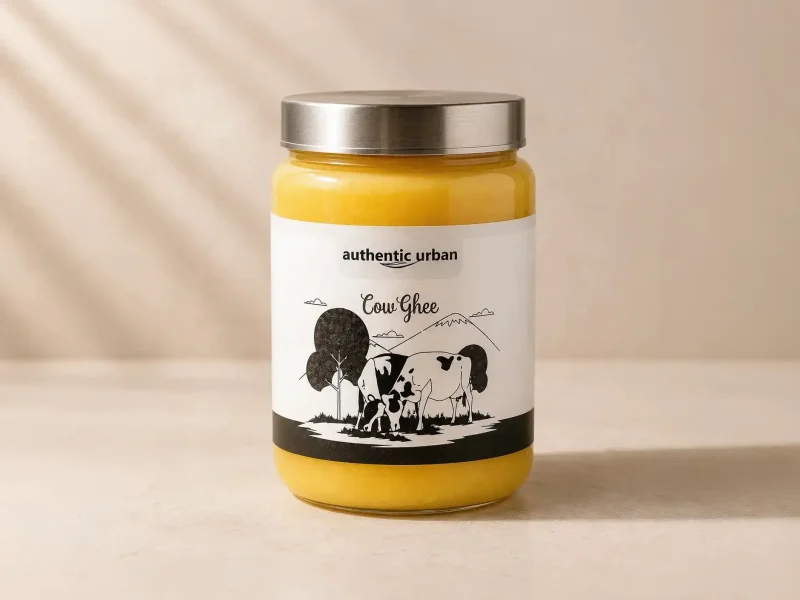
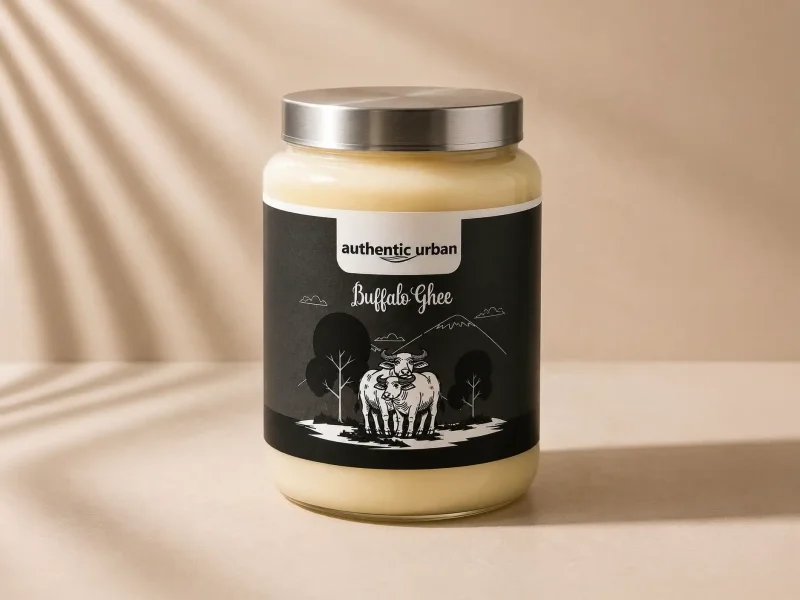
We make and sell ghee, so weigh this with that in mind. For a parent's daily teaspoon we would pick our own A2 Gir cow ghee: grass-fed Gir milk set to curd overnight, churned, and cooked slowly in a matki, made after you order, with a video of that jar sent on WhatsApp so you can see what reaches them. Our Jafarabadi buffalo ghee is the richer jar for winter sweets. We test every month against the FSSAI limits; the steps are on how we make ghee.
The daily spoon on dal and khichdi
 1 Litre
Winter sweets and parathas
 1 Litre
Each order is cooked after you place it, and the packing video is of that batch. Past order videos are on the shop.
FAQ
Haddiyon ke liye ghee accha hai kya?
Ghee khana ke saath theek hai, par haddi ise se majboot nahi hoti. USDA ke hisaab se ek chammach ghee mein sirf 0.2 mg calcium hai aur vitamin D zero. Roz 1 se 2 chammach ghee ragi roti, dal, ya sabzi par lijiye. Calcium doodh, dahi, til, aur hari sabzi se aata hai. Chalna, dhoop, aur doctor ki di hui dawa zyada kaam karti hai.
Is cow ghee or buffalo ghee better for bones?
Neither. Both are almost pure milk fat, and USDA lists ghee with a trace of calcium and no vitamin D, whichever animal it came from. Cow ghee is lighter and is the usual pick for the daily spoon on dal and roti. Buffalo ghee is richer and sets firmer, which suits parathas and winter sweets. For bones, the milk and curd you drink matter far more than which ghee is on the roti.
Are gond ladoo and adadiya pak good for bones?
They are winter sweets in many Gujarati and North Indian homes, and our family eats them too. They are rich in ghee and sugar, so a piece adds a lot of calories. We found no study showing they strengthen bones. If you enjoy them, have one small piece with milk, count the ghee toward the day, and keep them seasonal. Anyone with diabetes or high LDL should check with their doctor.
Can ghee help a broken bone heal faster?
No study shows that it does. A fracture heals with the right setting, time, and rest, and the plan your orthopaedic doctor gives you. Eating well helps recovery: enough protein, calcium, and vitamin D, and enough calories if the person is elderly and eating little. A teaspoon of ghee on soft food can make meals easier to finish. Do not rub ghee on a plaster or a surgical wound.
Is A2 ghee better for bones than regular ghee?
No study has compared them for bones. A2 describes a type of protein in the milk, and ghee is almost all fat, so the label says little about vitamins or minerals. Choose A2 ghee for the milk it comes from and the way it is made, not for a bone claim. The same 1 to 2 teaspoon limit applies to any ghee, A2 or not.
Is haldi doodh with ghee good for bones?
The milk is what helps. A 200 ml glass of whole milk carries about 226 mg of calcium by USDA figures, around a third of an adult's daily need. Adding ¼ to ½ teaspoon of ghee and a pinch of haldi makes it a comfort drink; neither adds calcium. Drink it in the early evening if acidity troubles you at night, and skip it if milk does not agree with you.
About the editorial team
Authentic Urban TeamBilona ghee makers, Gir Somnath, Gujarat
We are the Parmar family in Gir Somnath, Gujarat. We have made ghee here since 2016 and sold it online since 2025. We make only Bilona ghee, test it every month, and anyone is welcome to visit and watch it being made. Our Gir cows and Jafarabadi buffalo are grass-fed village animals that graze near the Gir forest, with no hormones or milk boosters. We set their milk to curd, churn it, and cook the makkhan on a wood chulha. These articles come from that kitchen and from what customers ask us on WhatsApp. We are ghee makers, not doctors.
Sources
- Butter oil, anhydrous (FDC ID 173412), and calcium values for whole milk (171265), plain whole-milk yogurt (171284), sesame seeds (170150), boiled okra (169261), and boiled lentils (172421), SR Legacy, USDA FoodData Central. Checked 27 Sep 2026.
- Osteoporosis, NHS. Checked 27 Sep 2026.
- Osteoporosis: Prevention, NHS. Checked 27 Sep 2026.
- Vitamins and minerals: Calcium, NHS. Checked 27 Sep 2026.
- Warfarin, NHS. Checked 27 Sep 2026.
- From tradition to science: Possible mechanisms of ghee in supporting bone and joint health (Falahatzadeh et al., 2024), Prostaglandins and Other Lipid Mediators, via PubMed. Checked 27 Sep 2026.
- Dietary Guidelines for Indians, 2024 (calcium foods, printed p. 42; ghee or butter 1 to 2 teaspoons a day, p. 54; the elderly, pp. 100 to 101), ICMR-National Institute of Nutrition. Checked 27 Sep 2026.