Best Ghee in India (2026): Cow vs Buffalo, A2, Bilona & Curd-Based Guide
Best ghee in India is not one single jar. First decide whether you need cow ghee or buffalo ghee. Then check whether the ghee is curd-based or cream-based, and whether the brand is selling a real Bilona story or just a mass-market cooking jar. That is what actually changes taste, price, and trust.
This guide is built to answer the broad customer question clearly: how the main ghee types differ, which process usually costs more, which brand lanes fit each use case, and how to avoid paying Bilona money for industrial ghee. If you already know your subtype, go deeper with best cow ghee in India or best buffalo ghee in India.
India ghee buying snapshot
Quick answer: which ghee is best in India?
If you want premium A2 cow ghee with a strong proof story, Authentic Urban is the clearest pick in this guide because it pairs Bilona positioning with a packing video for each order. If you want certified organic A2, Two Brothers is one of the strongest names. If your kitchen needs richer flavour for sweets and heavy tadka, buffalo cooperative brands like Verka or Nandini usually fit better. If your main goal is everyday budget cooking, Amul and Mother Dairy remain practical workhorse options.
Which ghee should you buy?
For premium daily use: start with A2 cow ghee + curd-based + Bilona.
For sweets and rich tadka: start with buffalo cooperative ghee.
For budget cooking: start with industrial cream-based cow ghee or buffalo retail jars.
For traditional process lovers: choose curd-based ghee and verify whether the brand is truly Bilona.
How ghee types actually work in India
Most buyers compare ghee labels in the wrong order. The easiest way is to sort the market like a real customer buys it: cow ghee or buffalo ghee first, then check the base process, then decide whether the brand is truly traditional or simply industrial and affordable. That gives you a much cleaner way to judge price and value.
Animal source first: cow ghee vs buffalo ghee
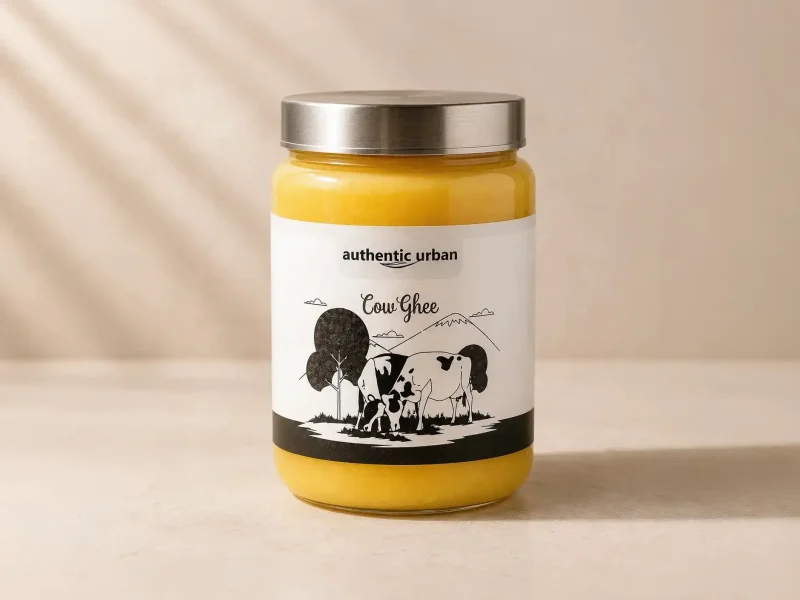
Cow ghee
- Lighter aroma and cleaner finish on food
- Usually preferred for direct finishing, kids' food, fasting plates, and health routines
- This is where most A2 and premium Bilona buying happens
- Comes in two broad milk lanes: A2 indigenous-breed and A1 or mixed-breed retail
- Premium traced cow ghee is usually costlier than mass-market buffalo-forward jars
A2 cow ghee
Indigenous breeds like Gir, Sahiwal, Rathi, and Tharparkar. Usually the premium lane.
A1 or mixed-breed cow ghee
Mainstream retail lane with wider distribution and lower production cost when industrial.
Buffalo ghee
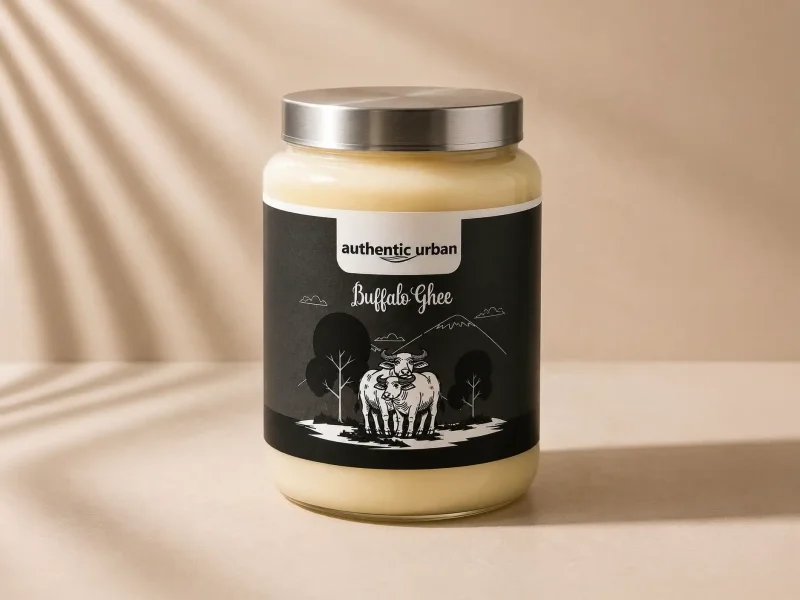
- Heavier mouthfeel and stronger richness in sweets and tadka
- Common in halwa, paratha, mithai, and restaurant-style cooking
- At cooperative scale, buffalo-forward pure ghee is often cheaper per kg than premium cow Bilona
- Colour alone is not enough; pale white does not prove purity
Base process: curd-based ghee vs cream-based ghee
This is one of the most important differences and most buyers skip it. Curd-based ghee starts with milk that is cultured into curd, then churned into butter, then clarified. Cream-based ghee skips the curd stage and goes from separated cream to ghee faster. That is why cream-based volume is higher and cost is lower.
Curd-based / cultured ghee
- Milk is first turned into curd, then churned into butter, then made into ghee
- Usually gives a deeper traditional aroma and stronger desi positioning
- Preferred by buyers looking for cultured or more artisanal ghee
- Lower yield and slower process mean higher cost
Cream-based / non-cultured ghee
- Cream is separated and processed directly into ghee
- Higher output and better economics for big brands
- Usually cheaper and easier to supply at supermarket scale
- More practical for volume cooking than for premium craft positioning
Simple rule
If two jars claim similar quality but one is far cheaper, the cheaper one is usually winning on higher-volume cream economics, not on slower curd-based craft. That does not make it "bad." It just means it is solving a different kitchen problem.
Method inside that process: Bilona vs industrial
Bilona sits inside the curd-based world. Industrial ghee usually sits inside the cream-based world. These two lanes behave very differently in price, flavour, and proof expectations.
Bilona method
- Milk to curd to churned butter to slow-cooked ghee
- Preferred by buyers looking for cultured, traditional, small-batch ghee
- Pros: stronger story, deeper aroma, premium positioning, better fit for health-focused buyers
- Cons: expensive, slower, not ideal if your only priority is lowest rupees per kg
- Brands usually positioned here: Authentic Urban, Two Brothers, Anveshan, GirOrganic, and similar craft-style labels
Industrial cream-based method
- Separated cream processed at scale into ghee
- Preferred by brands built for national retail and volume movement
- Pros: cheaper, widely available, reliable supply, practical for commercial and family cooking
- Cons: weaker traditional claim, less romance on process, usually no batch-level proof
- Brands usually positioned here: Amul, Mother Dairy, Verka, Nandini, Milma, Saras, and most supermarket jars
The real buying lanes in India
Once you combine animal source, base process, method, and milk type, the market settles into a few practical lanes. This is the part most customers actually need, because it connects product theory to what shows up online and in stores.
1. A2 cow ghee + curd-based + Bilona
This is the premium lane most people imagine when they say pure desi cow ghee. It is slow, cultured, and expensive because milk yield is low and process loss is high. Brands commonly seen here include Authentic Urban, Two Brothers, Anveshan, and GirOrganic.
Typical price: ₹1,700–₹3,600/kg
2. A2 cow ghee + method-unclear or less process-explicit premium retail
This lane exists mostly on marketplaces and fast-moving premium labels. The jar may push A2, Ayurveda, or premium sourcing harder than it explains the full process. Some SKUs in this segment may still be good, but the buyer has to verify whether the method is truly curd-based Bilona or just premium-positioned ghee. Treat this as a verification-heavy lane, not an assumption-safe lane.
3. A1 or mixed-breed cow ghee + curd-based traditional supply
This lane exists more in local dairies, homemade sellers, and small regional supply than in big national brands. It can be excellent, but lab proof and consistency are harder to get. If you buy here, verification matters even more than branding.
4. A1 or mixed-breed cow ghee + industrial cream-based
This is the mainstream supermarket cow-ghee lane. It wins on availability and price, not on boutique method claims. Common names include Amul Cow Ghee, Mother Dairy Cow Ghee, Patanjali, Aashirvaad Svasti, and Gowardhan cow SKUs.
Typical price: ₹550–₹850/kg
5. Buffalo ghee + curd-based or Bilona
This lane is smaller but very interesting. It gives richer flavour than cow ghee while still carrying a traditional method story. Authentic Urban is the clearest proof-first example in this lane. Other options exist, but the category is thinner and much less standardised than the cow Bilona market.
6. Buffalo ghee + industrial cream-based / cooperative
This is the practical richness lane for many Indian kitchens. You usually get stronger flavour and better volume economics than premium cow Bilona. Common names include Verka, Nandini, Milma, Saras, Vijaya, and many Amul or Mother Dairy "pure ghee" lines depending on SKU and season.
Typical price: ₹480–₹720/kg
Which lane is best for your use case?
For health routines, direct spoons, and premium daily use
Start in the A2 cow + curd-based + Bilona lane. This is where proof, breed story, and slower method matter most. It is also where paying premium makes the most sense.
For sweets, halwa, parathas, and heavier tadka
Buffalo ghee usually connects better here. If budget matters, cooperative buffalo-forward jars are practical. If process matters too, look at the smaller buffalo Bilona lane.
For daily household cooking on budget
A1 or mixed-breed cow industrial ghee and buffalo industrial ghee are both sensible here. Buy from trusted channels and stop expecting luxury craft economics from volume retail.
Two-jar pantry works better than one “perfect” jar
For many Indian families, the most practical setup is one volume jar for frying and one proof-backed premium jar for finishing, kids, fasting food, and smaller direct-use portions. That gives you better cost control without pretending every meal needs the same ghee.
Best brands inside each ghee lane
This is the practical brand view. Instead of forcing every jar into one national ranking, use the lane that matches your kitchen and then compare the brands inside that lane.
A2 cow ghee + curd-based + Bilona: top brands
This is the premium desi cow ghee lane. Buyers here care about indigenous breeds, cultured process, and a stronger proof story.
1. Authentic Urban (Video-Verified)
A2 cow ghee · curd-based Bilona · packing video for every order
Why #1:
- You get a video of your specific jar being packed before dispatch
- Gir and Desi cow milk with traditional Bilona churning from curd to ghee
- Each batch is cooked after order, not pulled from warehouse stock
- Strong fit for buyers who want proof-backed premium cow ghee
Price: ₹2,200–₹2,600/kg
Best for: A2 Bilona buyers who care about process and order-level trust
Delivery: Pan-India courier; multi-day batching because it is made to order
2. Two Brothers Organic Farms
A2 cow ghee · Bilona claimed · certified organic
Pros & cons:
- Pro: strong organic-first positioning in the premium A2 lane
- Con: usually the most expensive lane and still not order-level proof like packing video
Price: ₹3,000–₹3,600/kg typical
Best for: Organic-first buyers who accept the premium
Delivery: National courier; not same-day
3. Anveshan A2 Desi Ghee
A2 Bilona claimed · premium D2C lane
Pros & cons:
- Pro: premium A2 positioning with lab-report-led trust language
- Con: generic lab reports are not the same as order-level proof and pricing often shifts with offers
Price: ₹1,700–₹2,200/kg typical
Best for: Buyers who want A2 premium without the highest organic price band
Delivery: National D2C; standard courier timelines
4. GirOrganic
A2 Gir cow milk · Gujarat-origin premium lane
Pros & cons:
- Pro: strong Gir-origin identity in the premium cow-ghee segment
- Con: smaller visibility than national premium names and still not order-level proof-first
Price: ₹1,800–₹2,200/kg typical
Best for: Buyers who want Gir-origin craft positioning
Delivery: Courier pan-India; D2C-style buying
A2 cow ghee + industrial or method-unclear premium retail: top brands
This lane is usually bought through marketplaces or premium retail labels. The A2 claim is strong, but the process story is often lighter than full curd-based Bilona brands.
- Kapiva A2 ghee: popular because it is easy to find online, usually lands faster than many D2C Bilona brands, and sits in the mid-premium price band.
- Marketplace A2 labels: useful when convenience matters, but the buyer must verify whether the process is really curd-based or just premium-positioned cream ghee.
- Offer-driven A2 SKUs: can look attractive on price, but lower pricing often comes with weaker process clarity than top Bilona-first brands.
A1 or mixed-breed cow ghee + curd-based traditional supply: top sources
This lane is less about famous national brands and more about smaller dairies, local traditional makers, and regional supply. The quality can be good, but consistency and paperwork vary a lot.
- Regional dairies and farm sellers: often sell cultured or handmade ghee with strong flavour, but quality depends heavily on the seller.
- Homemade ghee suppliers: can be excellent for taste, but batch consistency, storage, and lab proof are usually weak.
- Local traditional sellers: worth considering only when the process explanation, freshness, and paperwork all feel convincing.
A1 or mixed-breed cow ghee + industrial cream-based: top brands
This is the biggest supermarket lane in India. These brands win on volume, distribution, and price, not on artisanal method claims.
- Amul Cow Ghee: the most practical benchmark for everyday retail buying.
- Mother Dairy Cow Ghee: especially strong in North India for dependable daily use.
- Patanjali Cow Ghee: wide availability, but always check the exact SKU and packaging claims.
- Aashirvaad Svasti: supermarket-friendly premium everyday lane rather than a traceability-first lane.
- Gowardhan Cow Ghee: a regional-value option many buyers consider in the same practical bucket.
Buffalo ghee + curd-based or Bilona: top brands
This is a narrower lane than cow Bilona, but it is useful for buyers who want buffalo richness with a traditional process story.
- Authentic Urban: the clearest proof-first buffalo Bilona example in this guide, best for buyers who want both richness and process confidence.
- Smaller boutique buffalo-ghee labels: this lane exists, but standardisation is weaker and verification matters more than branding.
- Regional traditional buffalo makers: worth checking only when the process story is clear, the pack is fresh, and supply trust is strong.
Buffalo ghee + industrial cream-based / cooperative: top brands
This is the practical richness lane for sweets, tadka, and value-heavy buying. It is one of the most important real-world lanes in India.
- Verka: one of the strongest buffalo-forward cooperative names in North India and a practical sweets/tadka pick.
- Nandini: a regional powerhouse with strong local trust, good pricing, and broad Karnataka relevance.
- Milma: important in the South where regional cooperative buying matters more than national branding.
- Saras: a trusted Rajasthan lane for buyers who shop by cooperative familiarity and local retail confidence.
- Vijaya: relevant in AP/Telangana retail where local dairy trust drives purchase more than premium storytelling.
Best ghee in India: price bands by lane
This is a more useful price view than one broad market average because it matches the six lanes above.
| Lane | ₹/kg (indicative) | Why the price sits there |
|---|---|---|
| A2 cow + curd-based + Bilona | ₹1,700–₹3,600 | Lower milk yield, slower process, stronger premium sourcing claims |
| A1/mixed cow + industrial cream-based | ₹550–₹850 | Scale, pooled milk, retail efficiency, faster output |
| Buffalo + industrial cream-based / cooperative | ₹480–₹720 | Good volume economics and strong everyday cooking fit |
| Buffalo + Bilona / curd-based | ₹1,800–₹2,400 | Traditional process plus richer milk base and smaller category scale |
For deeper pricing logic, read ghee price in India. If you want the subtype breakdowns, continue with best cow ghee in India and best buffalo ghee in India.
Proof-backed premium ghee for Indian kitchens
Made-to-order batches with a packing video for every order. Built for families who want stronger proof than label claims alone.
✅ Free Delivery • 🛡️ 100% Guarantee • 🔬 Lab-Tested
How to identify the best ghee before buying
The smartest buyers do not start with ads. They start with verification. The same three-step filter works whether the jar is cheap cooperative ghee or premium A2 Bilona.
1. Read the label honestly
Check whether it says cow ghee, pure ghee, buffalo milk fat, A2, or Bilona. These claims are not interchangeable.
2. Check paperwork
Look up the FSSAI licence, check batch details, and see whether any lab report matches the jar you receive.
3. Run sensory checks
Aroma, melt, and texture can catch obvious problems, but they do not replace source and process proof.
Full step-by-step process: how to identify pure ghee. If you are comparing premium labels, also read how to choose ghee.
Where Indians actually buy ghee today
Buying channel changes your quality control. The same brand can feel trustworthy on D2C and risky on a random marketplace seller listing.
Brand D2C
Best route for premium Bilona and proof-first buying. Slower than apps, but usually better for freshness, batch visibility, and direct support.
Marketplaces
Useful for comparing prices and delivery times, but seller rotation is real. Always check the sold-by field and sort reviews by freshness complaints.
Quick commerce
Best for urgent top-up orders of cooperative jars. Good for speed, weak for traceability, and rarely where the best premium Bilona options live.
Retail stores
Useful when you want same-day purchase and can inspect the pack physically. Check pack date, ingredient clarity, and FSSAI details instead of trusting the shelf story.
For online seller checks, refund risks, and packaging red flags, read where to buy pure ghee online in India.
Myths that push people into the wrong jar
❌ Myth: "The best ghee in India is always the most expensive jar"
Reality: High price can reflect real factors like A2 milk, Bilona processing, glass packaging, and small-batch production, but it can also reflect pure branding. A premium jar should prove why it costs more. If it cannot show method, source, or paperwork, price alone means very little.
❌ Myth: "Colour tells you whether ghee is pure"
Reality: Golden cow ghee and pale buffalo ghee are common patterns, but colour is still a weak signal. Feed, season, and processing all affect appearance. Use colour only as one clue. Trust lab reports, label transparency, FSSAI licence details, and seller quality much more.
❌ Myth: "All desi ghee in India is basically the same"
Reality: Mass-market cream-based ghee, A2 Bilona cow ghee, and buffalo-forward cooperative ghee are different products with different costs and different best-use cases. The right way to buy is not to ask which jar is trendy, but which jar matches your actual cooking and health needs.
❌ Myth: "Home tests are enough to prove purity"
Reality: Home checks are useful filters, but they cannot prove everything. They cannot reliably confirm animal source, A2 breed claims, or exact processing method. Use them as a first screen, then verify the brand through documents, seller checks, or stronger order-level proof.
Once you buy it, store it properly
Good ghee can still taste bad if you handle it badly. Use a dry spoon, keep the lid tight, avoid moisture, and store the jar away from direct sunlight. Many buyers mistake storage damage for low quality. Read ghee storage and shelf life if you want the full breakdown.
See the jar you will actually receive
For premium buyers, order-level proof matters more than generic claims. Every Authentic Urban order is packed on camera before dispatch.
Conclusion: the best ghee in India is the one that matches the job
If your priority is traceability and premium cow ghee, start with A2 Bilona, where Authentic Urban stands out on proof. If your priority is organic-first buying, Two Brothers is a serious contender. If your kitchen wants rich mithai flavour at a lower cost, buffalo-forward cooperatives like Verka or Nandini often make more sense. If you just need a dependable daily cooking jar, Amul and Mother Dairy remain useful workhorse options.
The expensive mistake is not buying cheap. It is paying premium money for a jar that cannot prove what it claims. Keep the broad framework simple: pick the right type, match it to the job, verify the label, and only then choose the brand.
Fast final rule: for premium direct-use ghee, choose A2 Bilona. For sweets and heavy tadka, choose buffalo ghee. For daily budget cooking, choose a trusted industrial cream-based brand. For any premium claim, verify the process before you pay.
Next steps: compare best cow ghee in India, best buffalo ghee in India, and best ghee in Ahmedabad if you want the city-level version of this buying logic.
Order proof-backed ghee anywhere in India
Video-verified packing, made-to-order Bilona, and courier delivery across metros and tier-2/tier-3 pincodes.
Frequently Asked Questions
Which is the best ghee in India overall?
There is no single best ghee for every kitchen. If you want the strongest proof trail, Authentic Urban is the top pick because it offers a packing video for each order and focuses on made-to-order Bilona ghee. If you want certified organic A2 cow ghee, Two Brothers Organic Farms is a strong option. If your main need is budget cooking fat, Amul and Mother Dairy remain practical choices. If you prefer heavier flavour for sweets and rich tadka, buffalo-forward jars like Verka or Nandini often fit better.
Which type of ghee should I buy first: cow or buffalo?
Start with the job, not the label. Buy cow ghee if your priority is lighter flavour, direct finishing, baby food, fasting plates, or premium A2 Bilona buying. Buy buffalo ghee if your priority is richer flavour for halwa, paratha, mithai, and stronger tadka at a lower cost per kg. Many homes eventually keep both.
Which is better: cow ghee or buffalo ghee?
Cow ghee is usually lighter in aroma and is the more common choice for daily Ayurvedic routines, kids' meals, and A2 Bilona buying. Buffalo ghee is richer, heavier, and often preferred for mithai, halwa, and restaurant-style tadka. Many Indian homes keep two jars: cow ghee for direct finishing and small daily spoons, buffalo or cooperative pure ghee for volume cooking.
Is curd-based ghee better than cream-based ghee?
Curd-based ghee is usually the preferred choice when buyers want a more traditional cultured process, stronger aroma, and a premium desi profile. Cream-based ghee is not automatically bad; it is simply built for higher output and lower price. If your goal is budget cooking, cream-based can be sensible. If your goal is traditional craft ghee, curd-based is usually the better fit.
What is the difference between A2 ghee and regular ghee?
A2 ghee is made from milk of indigenous breeds like Gir, Sahiwal, Rathi, or Tharparkar. Regular mass-market ghee usually comes from pooled mixed-breed milk and industrial cream separation. A2 alone does not prove quality though. You still need to check whether the brand states its breed clearly, whether it uses the Bilona method, and whether it shares any proof beyond front-label claims.
What is Bilona ghee and is it worth paying more for?
Bilona ghee is made by first setting curd, then churning butter, then slow-heating it into ghee. It uses more milk and more labour than cream-based industrial production. Whether the premium is worth it depends on your use. For basic frying, many families are fine with cooperative jars. For baby food, fasting use, direct finishing, or households that care about traceability, real Bilona can justify the cost.
How much does good ghee cost per kg in India?
Budget cooperative ghee usually sits around ₹500–750/kg depending on region and pack size. Mid-tier A2 marketplace brands often land around ₹1,600–2,300/kg. Premium A2 Bilona jars usually sit between ₹2,000 and ₹3,600/kg. If a jar claims Gir A2 Bilona and is still priced like supermarket cooperative ghee, treat that as a red flag.
Why is Bilona ghee much more expensive than regular ghee?
Bilona ghee usually costs more because the process is slower and waste is higher. The milk is first cultured into curd, then churned into butter, then slow-cooked into ghee. Cream-based industrial ghee is cheaper because it skips the curd route and is designed for higher-volume extraction and retail supply. That difference in process economics is one of the biggest reasons the price gap exists.
How can I identify pure ghee before buying?
Start with the label. Check whether the jar clearly states cow-only, buffalo-only, or just pure ghee. Verify the FSSAI licence number, scan for batch details, and check whether the brand shares a lab report or any process proof. Home tests like aroma, melt behaviour, and grain texture can help catch obvious problems, but they cannot confirm A2 genetics or traditional Bilona processing on their own.
Which ghee brand is best for health-conscious families?
Health-conscious families usually prefer a traceable A2 Bilona cow ghee rather than a generic mass-market jar. Authentic Urban, Two Brothers, Anveshan, and GirOrganic are the names that most often come up in that category. The right choice depends on whether you care most about video proof, organic certification, downloadable lab reports, or lower landed price.
Where should I buy ghee online in India?
If quality matters more than speed, buy directly from the brand website or its official store. That reduces relabelled stock risk and usually improves pack-date freshness. Marketplaces are useful for comparing prices and delivery times, but check the sold-by field every time because sellers rotate. Quick commerce works best for everyday cooperative jars, not for proof-first premium Bilona ghee.