Does Ghee Need to Be Refrigerated? How Long Ghee Lasts
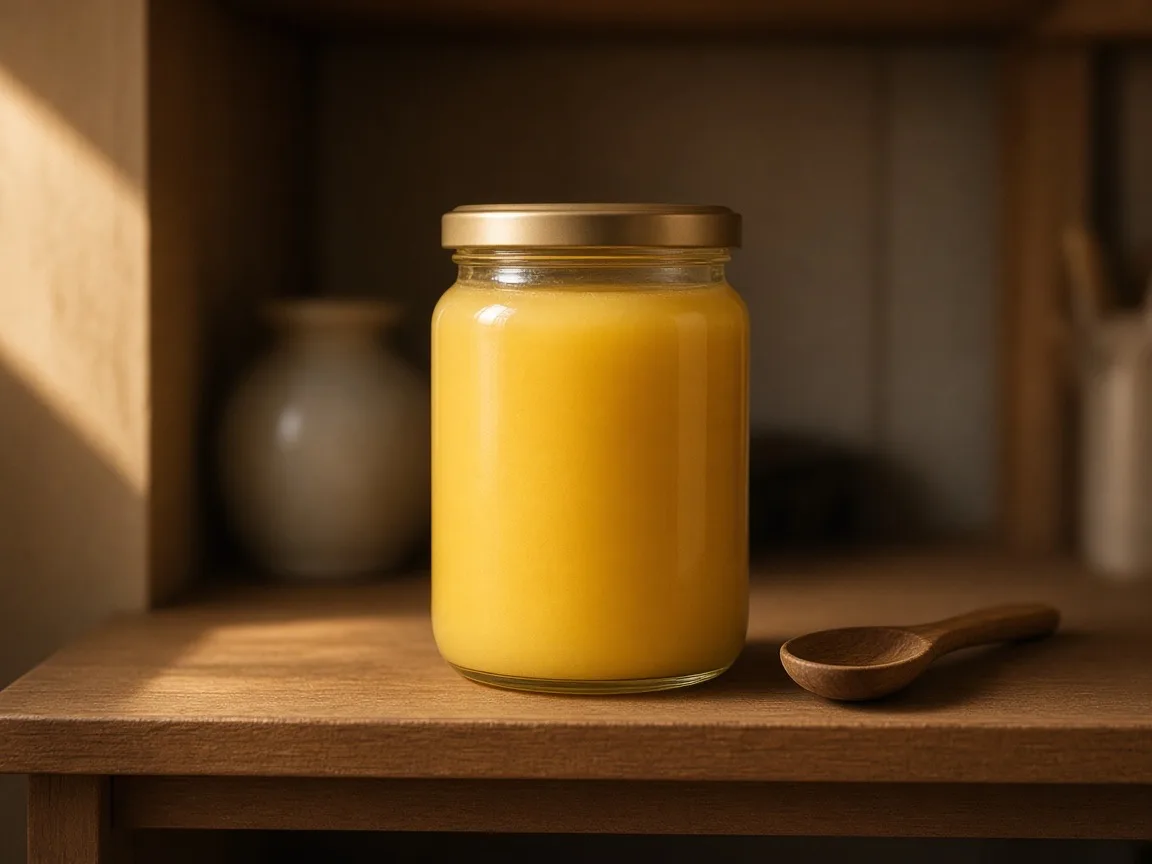
Does ghee need to be refrigerated? No. A sealed jar keeps 9 to 12 months at room temperature, and an open jar keeps for months in a cupboard if you use a dry spoon and close the lid. The fridge helps in hot, humid months or if you finish a jar slowly. Ghee goes bad when water, air, heat, or light get to it, and a sour or soapy smell tells you.
Does ghee need to be refrigerated?
No. Ghee keeps at room temperature because it has almost no water in it. The FSSAI standard for ghee allows at most 0.5% moisture, and mould and bacteria need water to grow. That is why Indian kitchens have kept ghee in a cupboard for generations. Why ghee has so little water is on what is ghee.
The fridge is still useful in two cases: in a hot, humid summer or monsoon, and when a jar will take you months to finish. It slows the slow change that makes fat taste stale. The ghee will set hard, so take out what you need a few minutes before cooking, and put the lid back on before the jar goes back in so no condensation drips into it.
How long does ghee last?
A sealed jar of our ghee keeps 9 to 12 months at room temperature. Once opened, how long it lasts depends far more on how you handle it than on the date: a jar kept dry, closed, and away from the stove stays good for months.
Sealed jar, room temperature
9 to 12 months
Our experience with our own jars. Check the best-before date on yours.
Open jar, kitchen cupboard
Months, if kept dry and closed
The spoon and the lid matter more than the calendar.
Open jar, fridge
Longer than the cupboard
Useful in hot, humid months or if you finish a jar slowly. It will set hard.
Freezer, airtight
The longest
For a big jar you use slowly. Thaw with the lid on.
The shelf-life clock starts when the ghee is made, not when you open it. That is one reason we cook every jar after the order comes in: it reaches you with its full life ahead of it, instead of months spent in a warehouse. See how we make our ghee.
Does ghee go bad? How to tell
Yes, eventually: ghee turns rancid, and a jar that gets wet can grow mould. Your nose is the best test. Warm a spoonful; good ghee smells of toasted milk. Here is what each change means.
Smells sour, soapy, or like old paint
Rancid. Throw it out.
Tastes bitter or sharp at the back of the throat
Rancid. Throw it out.
Mould spots, or a fuzzy or slimy patch
Water got in. Throw the whole jar out.
Turned liquid in summer, or grainy in winter
Normal. Temperature, not spoilage.
More yellow or paler than your last jar
Normal. The milk changes with the season.
Colour and texture changes are not spoilage. Our cow ghee turns more yellow in the monsoon, when the grazing is greenest, and paler in other months. Why that happens is on white ghee vs yellow ghee, and the grain is explained on why ghee is grainy.
What makes ghee go rancid?
Four things: water, air, heat, and light. Water lets fat break down into free fatty acids, which give that sour, sharp smell, and lets mould grow. Air, heat, and sunlight oxidise the fat slowly, which gives the paint-like smell of old oil. Keeping the jar dry, closed, cool, and dark slows all four.
This is also what the FSSAI limits check for. Fresh ghee must have no more than 2.0% free fatty acids; old or badly handled ghee creeps above that. Moisture is capped at 0.5%, because more water means a shorter life. We test our ghee against these limits every month. How to read a report is on ghee lab test report.
How to store ghee after opening
Keep it dry, closed, and away from heat. These five habits do most of the work, and none of them needs a fridge.
1. Use a clean, dry spoon every time
Water is what lets ghee spoil. A wet spoon is the most common cause.
2. Close the lid after each use
Air is what turns fat rancid over time.
3. Keep it away from the stove and the window
Heat and sunlight speed up rancidity. A cupboard is better than the counter by the gas.
4. Keep a small jar for daily use
Refill it from the big jar, so the big jar is opened less often.
5. Never pour hot or used ghee back in
Frying ghee carries water and food bits. Keep it separate, or do not reuse it.
A jar that seals tightly matters more than what it is made of. If you fry in ghee, that used ghee is a separate question, covered on reheating ghee.
Fridge or cupboard: what changes by season?
In winter, a cupboard is all ghee needs; it sets firm with a fine grain. In summer, it often stays liquid in the jar, which is normal, but keep it well away from the stove. In the monsoon, humidity is the risk: keep the lid tight, and move the jar to the fridge if your kitchen stays damp or warm.
Buffalo ghee sets firmer than cow ghee, especially in an air-conditioned room, so it may need a few minutes out of the fridge before it will spoon. Both keep the same way. What else changes between them is on cow vs buffalo ghee, and aged ghee for Ayurvedic use is on purana ghrita.
Ghee that reaches you fresh
The longest shelf life starts with a fresh jar. Check the pack date before you buy, smell it warm when it arrives, and store it dry and closed. The five checks before you buy are on how to choose ghee. How to check a new jar is on how to identify pure ghee.
We cook your jar after you order, so none of its shelf life is spent waiting in a warehouse, and send the packing video on WhatsApp before it ships. A2 Gir cow ghee for the daily spoon, buffalo ghee for sweets and parathas.
A2 Gir cow ghee: the daily spoon
 1 Litre
Buffalo ghee: sweets and parathas
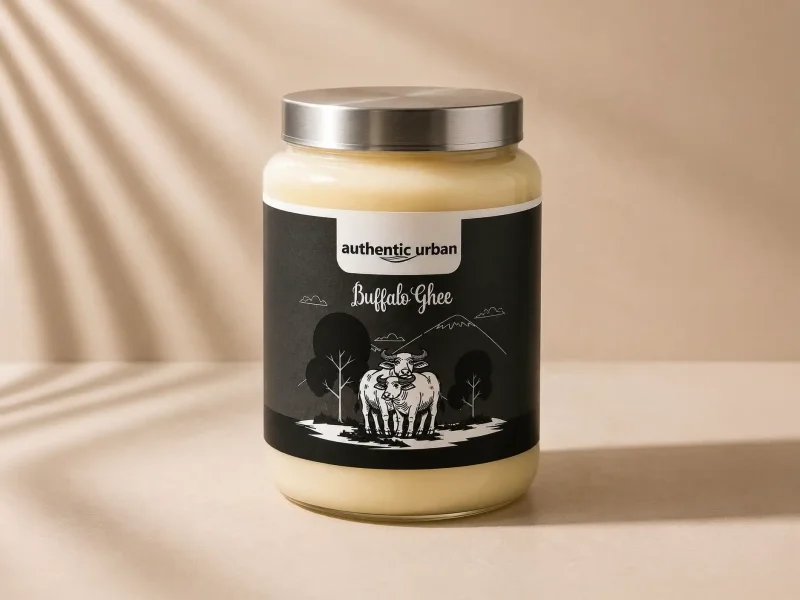 1 Litre
Each order is cooked after you place it, and the packing video is of that batch. Past order videos are on the shop.
FAQ
Does ghee expire?
Every packed jar carries a date, best-before or use-by. Ghee does not turn unsafe the day after it, but it slowly loses aroma and can turn rancid. Our sealed jars keep 9 to 12 months at room temperature. Past the date, smell it warm: if it smells of toasted milk it is fine to cook with; if it smells sour, soapy, or like old paint, throw it out.
Can ghee get mould?
Only when water gets in. Pure ghee has almost no water, so mould has nothing to grow on. A wet spoon, steam from a pot, or a drop of dal is enough to start a spot, usually on the surface. If you see mould, do not scrape it off and keep using the jar; the water that fed it is spread through the ghee. Throw that jar out and use a dry spoon for the next.
Why did my ghee turn liquid, or grainy?
Temperature, not spoilage. Ghee melts in a warm kitchen and sets as it cools. In summer our ghee often stays liquid in the jar; in winter it sets with a fine grain. Slow-cooked ghee forms grains, called danedar, as it cools. Neither change means the ghee has gone bad. Smell is the test, not texture.
Can I freeze ghee?
Yes. Freezing does no harm and slows rancidity almost to a stop, which helps if you buy a large jar and use it slowly. Spoon it into a small, airtight jar first so you are not thawing the whole batch each time, and let it come to room temperature with the lid on so no condensation drips into it.
Is it safe to use ghee that smells a little sour?
No. A sour, soapy, or paint-like smell means the fat has started to turn rancid. It will not usually make you ill in a small amount, but it tastes bitter and spoils whatever you cook in it. Fresh ghee should smell of toasted milk when warmed. If yours does not, replace the jar rather than masking it in a strong curry.
What is 100-year-old ghee?
Purana ghrita, or aged ghee, is ghee kept deliberately for years for traditional Ayurvedic use, not for cooking. It is prepared and stored in a particular way and used in tiny amounts under a practitioner's guidance. It is not a reason to keep an ordinary kitchen jar for years. For food, fresher ghee tastes better.
About the editorial team
Authentic Urban TeamBilona ghee makers, Gir Somnath, Gujarat
We are the Parmar family in Gir Somnath, Gujarat. We have made ghee here since 2016 and sold it online since 2025. We make only Bilona ghee, test it every month, and anyone is welcome to visit and watch it being made. Our Gir cows and Jafarabadi buffalo are grass-fed village animals that graze near the Gir forest, with no hormones or milk boosters. We set their milk to curd, churn it, and cook the makkhan on a wood chulha. These articles come from that kitchen and from what customers ask us on WhatsApp. We are ghee makers, not doctors.
Sources
- Food Safety and Standards (Food Products Standards and Food Additives) Regulations, Chapter 2.1: Dairy products and analogues, version 01.09.2023, Food Safety and Standards Authority of India (FSSAI). Checked 25 Sep 2026.