Ghee vs MCT Oil: Which Is Better for Keto and Coffee?
Ghee vs MCT oil comes down to the job: ghee is a cooking fat you eat a teaspoon of on dal and roti, and MCT oil is a supplement for raising ketones. They are not swaps. A 5 g teaspoon of ghee holds about 180 mg of C8 and C10, the fats MCT oil is made of; a teaspoon of classic MCT oil holds about 4,500 mg. For keto, ghee in the cooking is enough. MCT oil is optional, and many stomachs dislike it.
Ghee vs MCT oil: which is better?
Ghee is better for cooking, for taste, and for a stomach that dislikes new fats. MCT oil is better only at one thing: raising blood ketones quickly, and even that needs a C8-rich oil and a dose of a tablespoon or more. If you eat Indian food on keto, cook with ghee and skip the MCT bottle unless a doctor or dietitian has a reason for it.
Most pages on this search call ghee "about 25% MCT" and treat the two as a lighter and a heavier version of the same fat. The numbers below say otherwise. Save this table; it is how we would split the two jobs.
The job
Use
Why
Tadka, roti, dal, khichdi, eggs
Ghee, 1 teaspoon
It is a cooking fat with taste. MCT oil is sold for cold use and adds nothing to a tadka.
Keto meals
Ghee in the cooking
Ketosis comes from cutting carbs. You do not need MCT oil to get there.
A quick rise in blood ketones
MCT oil, if a clinician wants it
In the 2017 trial, C8 oil raised ketones; coconut oil, with more C8 and C10 than ghee, barely did.
Morning coffee
Either, 1 teaspoon
Ghee for taste and body, MCT oil if you want it neutral. Both add fat calories.
Weight loss
Neither as a tool
The MCT effect in trials was about half a kilo. The portion matters more than the bottle.
A sensitive stomach
Ghee
MCT oil at higher doses is known for cramps and loose motions.
If your real question is whether ghee fits keto at all, and how much a day, that is on is ghee keto friendly.
What is MCT oil, and how is it different from ghee?
MCT oil is a refined supplement made of medium-chain triglycerides (fats 6 to 12 carbons long), usually just two of them: caprylic acid (C8) and capric acid (C10). The researchers behind the 2017 ketone trial below note that MCTs are typically purified from coconut oil; palm kernel oil is the other common source. The classic MCT oil in that trial was 55% C8 and 35% C10.
Ghee is milk fat with the water and milk solids cooked out. It is a mix of dozens of fats, mostly long-chain ones such as palmitic and oleic acid, with small amounts of short and medium-chain fats and some vitamin A, about 42 µg in a teaspoon by USDA's figures. MCT oil carries no vitamins and no taste. At home that difference is the whole point of ghee: we take the makkhan off the chulha when the bubbling goes quiet and it smells of toasted milk, and that smell is what you are paying for on roti. The rest of ghee's label is on ghee nutrition facts.
How much MCT is in ghee?
Very little. USDA FoodData Central lists 3.6 g of C8 and C10 per 100 g of ghee, which is about 180 mg in a 5 g teaspoon. Even counting every medium-chain fat from C6 to C12, ghee is about 8.3% MCT, not the 25% many pages repeat.
Ghee and coconut oil: USDA FoodData Central, SR Legacy (173412, 171412). MCT oil: the 55% C8, 35% C10 oil used by Vandenberghe et al., Current Developments in Nutrition, 2017. Worked out for a 5 g teaspoon, rounded to 10 mg. Checked 28 September 2026.
| Item | Value |
|---|---|
| Classic MCT oil (55% C8, 35% C10) | 4,500 mg |
| Coconut oil | 610 mg |
| Ghee | 180 mg |
To eat the C8 and C10 in one teaspoon of MCT oil, you would need about 25 teaspoons of ghee, roughly 1,100 kcal. ICMR-NIN's 2024 Dietary Guidelines for Indians ask adults to keep ghee or butter to 1 or 2 teaspoons a day, or avoid it. So ghee cannot stand in for MCT oil, and it does not need to: it has a different job. Coconut oil sits in between, with about 610 mg a teaspoon, and is compared on ghee vs coconut oil.
The fat ghee does have more of is butyric acid (C4), about 160 mg a teaspoon by USDA's figures. It is a short-chain fat, not an MCT, and it is the one gut claims are built on; what a teaspoon of it can and cannot do is on butyrate in ghee.
Does ghee or MCT oil raise ketones more?
MCT oil, clearly, if it is rich in C8. No trial has measured ketones after ghee, but a close stand-in was tested: coconut oil, which has more C8 and C10 than ghee.
In a 2017 crossover trial in Current Developments in Nutrition, Vandenberghe and colleagues gave 9 healthy adults two 20 mL doses of different oils, one with breakfast and one at noon, and measured blood ketones for 8 hours. Pure C8 oil raised ketones the most, a day-long average of about 295 µmol/L above plain milk, and a fifth to a quarter more than the classic C8 and C10 MCT oil. The coconut oil they used was 3% C8 and 5% C10; it did not raise ketones overall compared with milk, and its peak was a quarter of C8's.
Ghee, at about 3.6% C8 and C10, has even less than that coconut oil. So if a reading on a ketone meter is the goal, a spoon of ghee will not move it the way MCT oil does. If the goal is being on keto, it does not matter: cutting carbs is what puts you in ketosis, and the fat you cook in only has to fit your calories. Whether ghee itself can knock you out of ketosis is covered in does ghee kick you out of ketosis.
MCT oil vs ghee in coffee: which should you add?
Use a teaspoon of either, not a tablespoon of both. Ghee gives the coffee body and a toasted-milk taste when blended; MCT oil stays neutral and thin. Neither turns coffee into breakfast, and both add fat calories to a drink that had almost none.
Ghee blends best when it is soft. In summer our ghee stays liquid in the jar and goes straight in; in winter it sets grainy, so warm the spoon or melt it into the hot coffee before blending. If you want to try MCT oil, start at half a teaspoon with food, not on an empty stomach, and see how your stomach takes it for a week before going up. The recipe, the trials on ghee coffee, and whether it breaks a fast are on black coffee with ghee, and fasting windows on ghee in intermittent fasting.
Is MCT oil or ghee better for weight loss?
Neither makes much difference on its own. A 2015 meta-analysis in the Journal of the Academy of Nutrition and Dietetics (Mumme and Stonehouse) pooled 13 trials with 749 adults and found that replacing ordinary long-chain fats with MCTs lowered weight by about half a kilo over the trials. The authors found commercial bias in the research and asked for larger independent studies.
Half a kilo came from swapping fats, not adding one. Pouring MCT oil into coffee on top of your usual meals adds calories and undoes the swap. The same goes for ghee: a teaspoon is about 44 kcal, and weight loss depends on keeping the day's fat inside a limit. ICMR-NIN puts all visible fat at 20 to 50 g a day depending on activity. How to fit ghee into a weight-loss day is on ghee for weight loss, and your family's daily ghee and oil on our ghee calculator.
Is MCT oil or ghee better for the brain?
For a healthy adult, there is no good trial showing either one sharpens memory or focus. The strongest MCT evidence is in people who already have memory problems, and it used medical doses.
In a 6-month trial published in Alzheimer's & Dementia in 2021 (Fortier and colleagues), people with mild cognitive impairment drank a ketogenic MCT drink, 15 g twice a day, or a placebo. Of those who finished, 39 on MCT and 44 on placebo, the MCT group did better on some memory, word-finding, and attention tests. Three things to keep in mind: 30 g a day is about 6 teaspoons; 24 people dropped out of the MCT group against 15 on placebo, and stomach problems caused three quarters of the MCT dropouts; and researchers from Nestlé were among the authors.
That is a treatment question for a neurologist, not a reason for a healthy person to buy MCT oil. Ghee's case for the brain is a food case: a teaspoon helps you absorb the fat-soluble vitamins in the vegetables it goes on. What ghee does and does not do for memory is on ghee for brain health.
What are MCT oil's side effects, and who should skip it?
The common side effect is the stomach: cramps, nausea, and loose motions, more likely with a big dose or on an empty stomach. In the 2021 memory trial above, 74% of those who finished on MCT reported at least one side effect, against 40% on placebo. In the smaller 2017 trial, two 20 mL doses spread across the day caused no notable stomach trouble. Dose and speed are the difference.
Ask your doctor before starting MCT oil, or keto with it, if you:
- take medicine for diabetes, especially insulin, sulfonylureas, or SGLT2 tablets;
- have liver disease, pancreatitis, or gallbladder trouble, or your fat intake is already restricted;
- have IBS or frequent loose motions;
- are pregnant or breastfeeding, or are thinking of it for a child;
- are on a medical ketogenic diet for epilepsy, where the MCT dose is set by the team.
Stop MCT oil if you get pain, vomiting, or diarrhoea that does not settle when you cut the dose. Ghee has its own limits, and the people who should cut back on it are on who should not eat ghee.
Three kitchens: who needs MCT oil?
A home keto dieter in Pune eating paneer, eggs, and sabzi
No MCT oil needed. Cook in a teaspoon or two of ghee, count the rest of the fat, and keep carbs low. The ketosis comes from the plate, not the bottle.
An office worker who drinks bulletproof coffee
Pick one fat, one teaspoon. Ghee if you like the taste, MCT oil if you want it plain and your stomach agrees. If the coffee is replacing breakfast, add protein at lunch; the fat alone is not a meal.
Someone buying MCT oil for a parent's memory
Take the parent to a doctor first. The trial above used 30 g a day for six months in people with a diagnosis, and many stopped because of the stomach. Keep a teaspoon of ghee in their meals for taste and food; do not treat it as a memory aid.
What mistakes do people make with ghee and MCT oil?
- Eating spoons of ghee "for MCTs". Ghee has about 180 mg of C8 and C10 a teaspoon. Eating more ghee to chase them only adds saturated fat.
- Starting MCT oil at a tablespoon. That is the usual route to cramps. Start at half a teaspoon with food.
- Adding both on top of normal meals to lose weight. The half-kilo effect in trials came from swapping fats, not stacking them.
- Frying in MCT oil. It is expensive and sold for cold use. Tadka in ghee, deep frying in a liquid oil used once.
- Buying coconut oil as a cheap MCT oil. Most of its fat is lauric acid, and in the 2017 trial it barely raised ketones.
- Buying the cheapest ghee for keto. If ghee is your main keto fat, it should be real milk fat. Our checks are on how to identify pure ghee.
For the daily spoon and how much is enough, see how much ghee per day.
Which ghee for keto cooking and coffee?
On keto the ghee is doing more of the work, so the jar matters. Warm a spoon: it should smell of toasted milk, not of packing oil. Slow-cooked ghee often turns grainy once it cools, and the label should carry an FSSAI licence number. Our full ranking of jars, with prices, is on best ghee in India.
We make both jars below, so weigh our view with that in mind. At home we eat 1 to 2 teaspoons each a day, and for coffee and the spoon on dal we use our own A2 Gir cow ghee: grass-fed Gir milk set to curd, churned, and cooked in a matki on the chulha, made after you order, with a video of your jar on WhatsApp. For paneer, eggs, and heavier keto cooking, Jafarabadi buffalo ghee is the one we reach for. We test every month against the FSSAI limits; see how we make ghee.
Gir cow ghee: coffee and the daily teaspoon
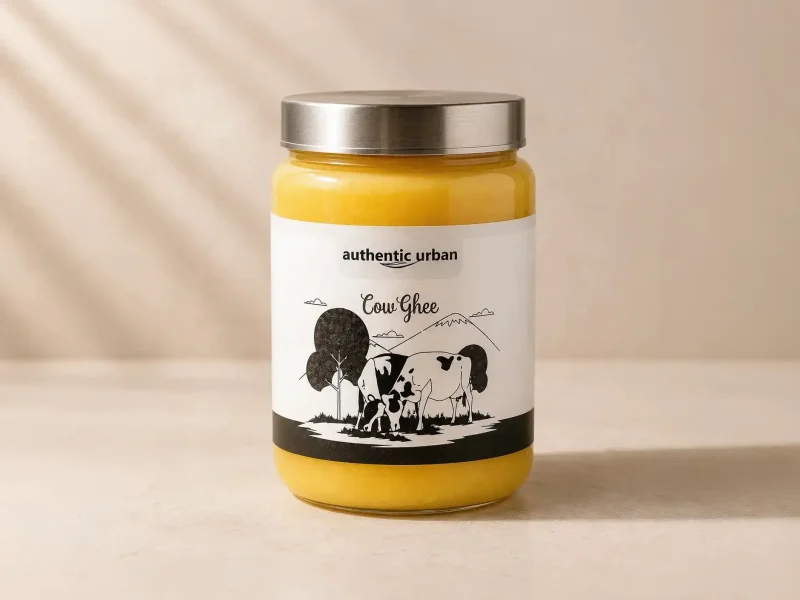 1 Litre
Buffalo ghee: paneer, eggs, and heavier cooking
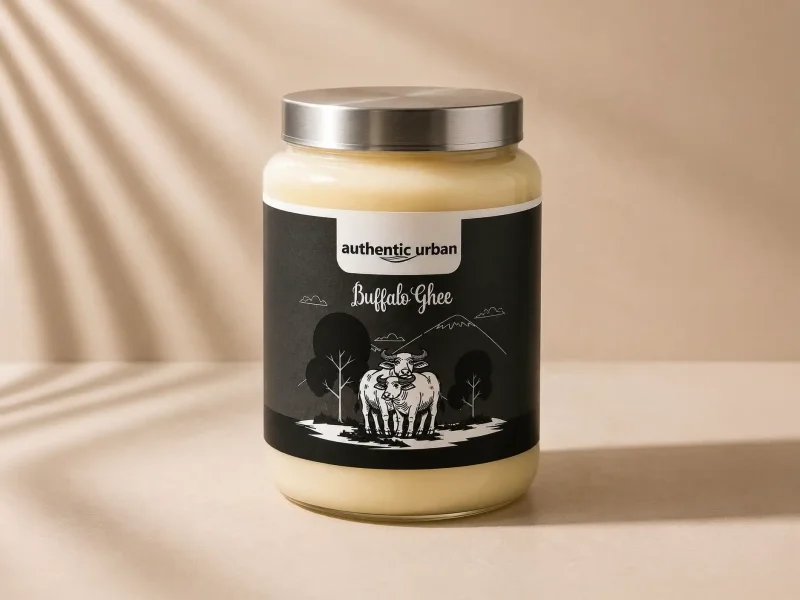 1 Litre
Each order is cooked after you place it, and the packing video is of that batch. Past order videos are on the shop.
FAQ
Which is the best ghee to use on keto or with MCT oil?
We make ghee, so weigh our pick with that in mind: our A2 Gir cow ghee for the daily teaspoon, and Jafarabadi buffalo ghee for heavier cooking. Both are curd-churned Bilona, made after you order, with a video of your jar, and tested monthly against FSSAI limits. Any ghee with an FSSAI licence on the label, a toasted-milk smell, and a price that covers the milk works on keto; no ghee adds MCT in a useful amount.
Can you cook with MCT oil?
It is sold for coffee, shakes, and dressings, not for the kadhai. A 2022 study in the Journal of Food Science heated MCT oils at 180°C for up to 10 hours and found breakdown products rising the whole time, as with other oils kept hot. At its price nobody fries puris in it anyway. For tadka use ghee, and for deep frying a liquid oil used once.
Can I use coconut oil instead of MCT oil?
Not for ketones. MCT oil is made from coconut or palm kernel oil, but most of coconut oil's fat is lauric acid, not C8 or C10. In the 2017 Current Developments in Nutrition trial, 20 mL of coconut oil twice a day did not raise ketones overall compared with plain milk, while C8 oil did. Coconut oil is a cooking fat for coastal dishes, not a cheap MCT oil.
Does ghee or MCT oil break a fast?
Both are pure fat with calories, so strictly, yes: a teaspoon of ghee is about 44 kcal. Neither contains carbohydrate or protein, so for a loose 16:8 routine a teaspoon in black coffee changes little. If your fast is for a blood test, a religious vrat, or a doctor's instruction, take nothing but water unless you are told otherwise. The fasting rules differ, so follow the one you are keeping.
Is MCT oil or ghee safe for diabetics?
Neither has carbohydrate, so neither raises blood sugar by itself. The risk is in the diet around them: a keto plan with MCT oil, taken with insulin, sulfonylureas, or SGLT2 tablets, can push sugar too low or cause ketoacidosis. Speak to your diabetes doctor before starting keto or MCT oil. A teaspoon of ghee on dal inside a normal diabetic plate is ordinary food.
Can children or pregnant women take MCT oil?
Only if their doctor prescribes it. Doctors do use MCT oil in some children, for example on a medical ketogenic diet for epilepsy or with certain digestive problems, but that is a treatment with a dietitian. It is not a supplement to add at home. For a healthy child over one, or during pregnancy, a teaspoon of ghee in normal meals is the everyday choice.
About the editorial team
Authentic Urban TeamBilona ghee makers, Gir Somnath, Gujarat
We are the Parmar family in Gir Somnath, Gujarat. We have made ghee here since 2016 and sold it online since 2025. We make only Bilona ghee, test it every month, and anyone is welcome to visit and watch it being made. Our Gir cows and Jafarabadi buffalo are grass-fed village animals that graze near the Gir forest, with no hormones or milk boosters. We set their milk to curd, churn it, and cook the makkhan on a wood chulha. These articles come from that kitchen and from what customers ask us on WhatsApp. We are ghee makers, not doctors.
Sources
- Tricaprylin Alone Increases Plasma Ketone Response More Than Coconut Oil or Other Medium-Chain Triglycerides: An Acute Crossover Study in Healthy Adults (Vandenberghe et al., 2017), Current Developments in Nutrition. Checked 28 Sep 2026.
- A ketogenic drink improves cognition in mild cognitive impairment: Results of a 6-month RCT (Fortier et al., 2021), Alzheimer's & Dementia. Checked 28 Sep 2026.
- Effects of medium-chain triglycerides on weight loss and body composition: a meta-analysis of randomized controlled trials (Mumme and Stonehouse, 2015), Journal of the Academy of Nutrition and Dietetics. Checked 28 Sep 2026.
- Physicochemical properties and volatile formation mechanism of medium-chain triacylglycerols during heating (Park, Kim, Lee, 2022), Journal of Food Science. Checked 28 Sep 2026.
- Butter oil, anhydrous (FDC ID 173412), SR Legacy, USDA FoodData Central. Checked 28 Sep 2026.
- Oil, coconut (FDC ID 171412), SR Legacy, USDA FoodData Central. Checked 28 Sep 2026.
- Dietary Guidelines for Indians, 2024 (Guideline 7, printed p. 54), ICMR-National Institute of Nutrition. Checked 28 Sep 2026.