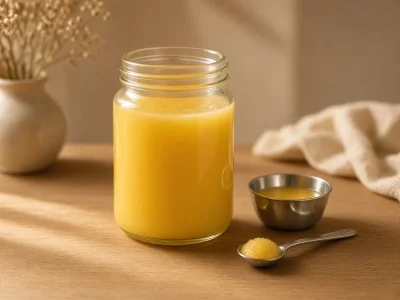
Ghee Recipes for Babies: 8 First Foods, 6 to 12 Months
Ghee recipes for babies are everyday Indian first foods, such as mashed dal, dal-rice-palak khichdi, and ragi, with the ghee stirred into the cooked pot. ICMR-NIN's 2024 diet charts build each baby meal from about 10 g grain, 5 g dal, 20 to 25 g vegetables, and 5 g (1 teaspoon) oil or ghee, with no salt and no sugar. Here are eight of those bowls, in grams and kitchen spoons.
What are the best ghee recipes for babies?
The best are thick, mashed cereal and dal bowls cooked at home, with one teaspoon (5 g) of ghee or oil stirred into each full bowl. ICMR-NIN's 2024 charts use exactly these: dal-rice with palak, wheat with chana dal and lauki, ragi with lobia and methi. They are semi-solid, unsalted, unsweetened, and made fresh.
"Can I give it to my baby?" is one of the questions we get most on WhatsApp. We are the Parmar family in Gir Somnath, Gujarat; we make ghee, and we are not doctors. So every bowl below is taken from India's own dietary guidelines, with the grams and spoons ICMR-NIN prints, and we add only the kitchen steps. When to start, how much a baby needs by age, and the allergy signs are on ghee for babies; read that first if solids have not started yet. A baby born early, with reflux, a milk allergy, or slow weight gain needs the pediatrician's plan, and it replaces anything here.
Is dal ka pani a good first food for babies?
No. ICMR-NIN's 2024 guidelines say in plain words not to give watery food such as "dal kaa pani", and to give mashed dal of a thicker consistency instead. Strained dal water is mostly water. It fills a small stomach without the energy and protein a baby needs once breast milk stops being enough, which is the whole reason solids start at six months.
Most recipe pages, and the older version of this one, still open with dal ka pani and a few drops of ghee in it. The guideline's first food is different: a dal porridge that is thin but not watery for the first 4 or 5 days, then thicker, until it spreads on a plate instead of flowing. Start with 2 or 3 teaspoons of it. The first recipe below is that dal.
Ghee recipes for 6 to 8 month babies
Start with one food and add the next only after 4 or 5 days of the same one, as ICMR-NIN advises, so a reaction points to one food. A breastfed baby of 6 to 8 months needs at least two of these meals a day. Every amount is raw weight for one full bowl, and ICMR-NIN's own spoon conversion sits beside it.
1. First mashed moong dal
Days 1 to 5 of solids
- Moong dal (split, yellow), 1 tablespoon, washed
- Water to cook it very soft
- Ghee: a few drops of the meal's teaspoon (see below)
Pressure cook the dal with plenty of water until it falls apart, about 4 whistles. Mash it through a strainer with the back of a spoon. Add cooking water a spoon at a time until it is thin but still sits on the spoon; ICMR-NIN wants it thin, not watery. Stir the ghee into the hot pot, then cool the bowl to just warm.
2. Dal, rice and palak khichdi
From about 6 months
- Rice 10 g (2 teaspoons)
- Toor dal 5 g (1 teaspoon)
- Spinach leaves 20 g (3/4 of a 200 ml katori)
- Oil or ghee 5 g (1 teaspoon)
Wash rice and dal, and cook them soft with the washed, chopped palak in a small steel bowl inside the family pressure cooker. Mash smooth. Stir in the ghee while it is hot. It should spread on the plate, not run.
3. Rice and dal rawa porridge with carrot or pumpkin
From about 6 months
- Rice rawa 15 g (about 1 tablespoon)
- Moong, toor or urad dal rawa 15 g (about 1 tablespoon)
- Carrot or pumpkin puree 25 g
- Water 200 ml (one medium katori)
- Ghee from the meal's teaspoon
Cook the two rawas in the water on a low flame, stirring, for 10 to 15 minutes. Add the steamed, mashed carrot or pumpkin and cook a minute more. Take it off the flame and stir in the ghee. Feed within one to two hours of cooking.
ICMR-NIN puts the carrot bowl at 110 kcal and the pumpkin bowl at 108 kcal before any ghee.
4. Wheat, chana dal and lauki
From about 6 months
- Wheat flour 10 g (3 teaspoons)
- Chana dal 5 g (1 teaspoon), soaked
- Bottle gourd 25 g (half a 115 ml katori), peeled
- Oil or ghee 5 g (1 teaspoon)
Cook the soaked chana dal and lauki until very soft, then mash. Warm the ghee in a small pan, roast the wheat flour in it on a low flame until it smells nutty, and whisk in the mash with a little water. Cook 3 to 4 minutes to a soft porridge.
Rajma is in the same charts (wheat 10 g, rajma 5 g, chaulai 20 g), but ICMR-NIN itself notes that cooking a few beans just for the baby is not practical. Take the baby's teaspoon of rajma out of the family pot before the salt and masala go in, and mash it very well. The same trick works with the family dal: set aside two spoonfuls before the tadka. The full family version of the first dish is our ghee khichdi.
Ghee recipes for 9 to 12 month babies
From 9 months the same bowls get thicker, with soft lumps, and ICMR-NIN asks for at least three meals a day. Its 9 to 12 month chart keeps a teaspoon of oil or ghee in two cooked meals, and adds a third of millet, dal, and nut powder (15 g, 10 g and 5 g) with no added fat. These four bring in millets and, from 8 months, egg.
5. Ragi, lobia and methi
Once the first foods are going well
- Ragi flour 10 g (3 teaspoons)
- Lobia (cowpea) 5 g (1 teaspoon), soaked
- Methi leaves 20 g (3/4 of a 200 ml katori)
- Oil or ghee 5 g (1 teaspoon)
Pressure cook the lobia until it crushes between two fingers, then mash with the steamed methi. Whisk the ragi flour into cold water so it does not lump, and cook on a low flame, stirring, until it thickens. Stir in the mash and the ghee off the flame.
6. Bajra, moong and turai
Once the first foods are going well
- Bajra 10 g (2 teaspoons), as flour or coarse rawa
- Moong dal 5 g (1 teaspoon)
- Ridge gourd (turai) 25 g, peeled
- Oil or ghee 5 g (1 teaspoon)
Cook the moong and turai together until soft and mash. Cook the bajra in water on a low flame, stirring, until thick and smooth, then fold in the mash. Stir the ghee in last. Bajra thickens as it cools, so loosen it with warm water before feeding.
7. Poha, urad dal and mint
Once the first foods are going well
- Poha (rice flakes) 10 g (4 teaspoons)
- Urad dal 5 g (1 teaspoon)
- Mint leaves 20 g, or palak if the baby will not take mint
- Oil or ghee 5 g (1 teaspoon)
Cook the urad dal very soft. Rinse the poha, add it with the chopped leaves and a little water, and simmer until the poha melts. Mash everything together and stir in the ghee. Poha is the quickest bowl here, about 10 minutes once the dal is cooked.
8. Wheat, egg and lauki
From 8 months (egg)
- Wheat flour 10 g (3 teaspoons)
- Egg 20 g (half an egg), fully cooked
- Bottle gourd 25 g (half a 115 ml katori)
- Oil or ghee 5 g (1 teaspoon)
Hard-boil the egg, cool it, and grate half of it fine. Roast the wheat flour in the ghee on a low flame, add the mashed, cooked lauki and a little water, and cook to a soft porridge. Fold in the grated egg off the flame. Give the egg on its own days first, as a new food.
ICMR-NIN brings in thoroughly cooked egg, fish, and meat from eight months, in small amounts; if the family does not eat them, it asks for more dal instead. Peanuts, til, and other nuts go in only as a fine powder stirred into the porridge, never whole. After the first birthday the baby moves to the family plate, and that is on ghee for toddlers.
When do you add the ghee, and how much goes in each bowl?
Add it at the end, stirred into the hot pot off the flame, or use it to roast the flour at the start; then cool the bowl to just warm. ICMR-NIN's charts put 5 g (1 teaspoon) of oil or ghee into each full cooked bowl. In the first days, when the baby eats only 2 or 3 teaspoons of food, the ghee in that little serving is a few drops.
The teaspoon is the meal's fat, whatever it is. If the lauki was cooked in a little oil, the ghee on top doubles it. Never pour melted ghee into the mouth, put it in a bottle, or give it on a spoon on its own; it belongs inside the food. If stools soften after you add it, many families use a little in dal for that, but hard stools are usually about water and texture, as ghee for constipation explains.
Measure with a level kitchen teaspoon. Our ghee sets grainy in winter and stays liquid through a Gujarat summer, and a liquid teaspoon and a grainy one weigh about the same, so do not heap the spoon when it is solid. Ghee keeps only a trace of milk protein, so it is rarely the food that causes a reaction; a baby with a diagnosed milk allergy still needs the doctor's word first, and why is on does ghee have casein.
Can you make baby food ahead? The rawa mix
You can make the dry mix ahead, but not the cooked food. ICMR-NIN's method: roast rice and dal separately on a low flame, grind them coarse like rawa (not fine like atta), mix, and keep in an airtight jar for 10 to 15 days. Cook one or two tablespoons in water for 10 to 15 minutes for each meal.
The cooked porridge should be eaten within one to two hours, ICMR-NIN says, so do not keep the morning bowl for the evening. Wash vegetables before cutting, steam rather than boil them, and keep the baby's katori covered. The ghee jar needs the same care: a small jar only for the baby, a dry spoon every time, the lid shut, and away from the stove. How long an open jar lasts is on ghee shelf life.
What should not go in a baby's bowl?
Salt, sugar, and packaged food stay out. ICMR-NIN says sugar or salt need not be added to a baby's food at all, that added sugar must be totally avoided under two, and that biscuits, chips, and other foods high in fat, salt, and sugar must be avoided, along with fruit juice and sweet drinks. The ghee gives the flavour.
- No jaggery, honey, or sugar to make ragi "tasty". Babies take plain food when it is all they have known.
- No whole nuts, whole peas, or whole chana. Powder or mash them.
- No vanaspati or "vegetable ghee". It is hydrogenated fat, not ghee, as ghee vs vanaspati explains.
- No salted table butter in place of ghee.
- No ready masala, pickle, or papad from the family plate.
What if the baby spits it out, or the stools change?
Keep going: a baby pushing food out in the first weeks is learning to swallow, not refusing it, ICMR-NIN notes. If a food is refused for days, stop it and try again after a few days. The table covers the other common problems.
What you see
What to do
The baby pushes the food back out
Usually not dislike. ICMR-NIN says the baby is learning to swallow and the tongue pushes food out. Keep offering 2 or 3 teaspoons of the same food daily.
The food runs across the plate
Too thin to fill the baby. Cook a few minutes longer or use less water, until it spreads and holds.
A lumpy or gluey bowl
Whisk flour or rawa into cold water before it goes on the flame, and stir on a low flame. Ragi and bajra set as they cool; loosen with warm water.
Very loose, greasy stools after you raised the ghee
Go back to the amount before the change for a few days. If it does not settle, call the pediatrician.
Hard stools after starting solids
Look at water, texture, and vegetables before adding more ghee. Constipation that lasts, or with blood or pain, goes to the pediatrician.
Rash, vomiting, or swelling after a new food
Stop the new food and call the pediatrician. Swelling of the face or trouble breathing is an emergency.
The eight bowls on one card
Screenshot this and keep it by the stove. Raw weights for one full bowl, from ICMR-NIN's 2024 charts except the first dal.
Bowl
Raw ingredients
Ghee
1. First mashed moong dal
Our small pot, not an ICMR chart
A few drops while the baby eats 2 to 3 tsp of food
2. Dal, rice and palak khichdi
Rice 10 g, toor dal 5 g, spinach 20 g
1 tsp (5 g) in the full bowl
3. Rice and dal rawa porridge with carrot or pumpkin
Rice rawa 15 g, dal rawa 15 g, vegetable 25 g
Up to 1 tsp (5 g)
4. Wheat, chana dal and lauki
Wheat flour 10 g, chana dal 5 g, lauki 25 g
1 tsp (5 g), used to roast the flour
5. Ragi, lobia and methi
Ragi 10 g, lobia 5 g, methi 20 g
1 tsp (5 g)
6. Bajra, moong and turai
Bajra 10 g, moong dal 5 g, turai 25 g
1 tsp (5 g)
7. Poha, urad dal and mint
Poha 10 g, urad dal 5 g, mint 20 g
1 tsp (5 g)
8. Wheat, egg and lauki
Wheat flour 10 g, egg 20 g, lauki 25 g
1 tsp (5 g)
From ICMR-NIN Dietary Guidelines for Indians 2024, Figures 4.1, 4.3 and 4.5 and Annexure II (1 teaspoon oil or ghee is 5 g). No salt, no sugar. Checked 27 September 2026. Not a prescription for your child.
Which ghee for baby food?
For a baby bowl, the jar matters more than the brand name: one ingredient on the label, an FSSAI licence number, and a clean smell of toasted milk when you warm half a spoon. Sour, soapy, or burnt means it stays out of the baby's food. The kitchen tests are on how to identify pure ghee, and a ranked list for this job is best ghee for babies in India.
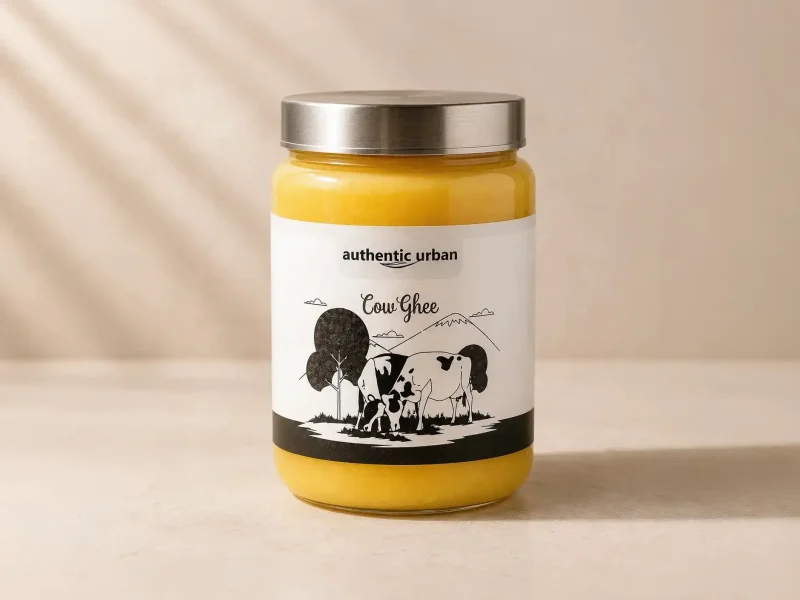
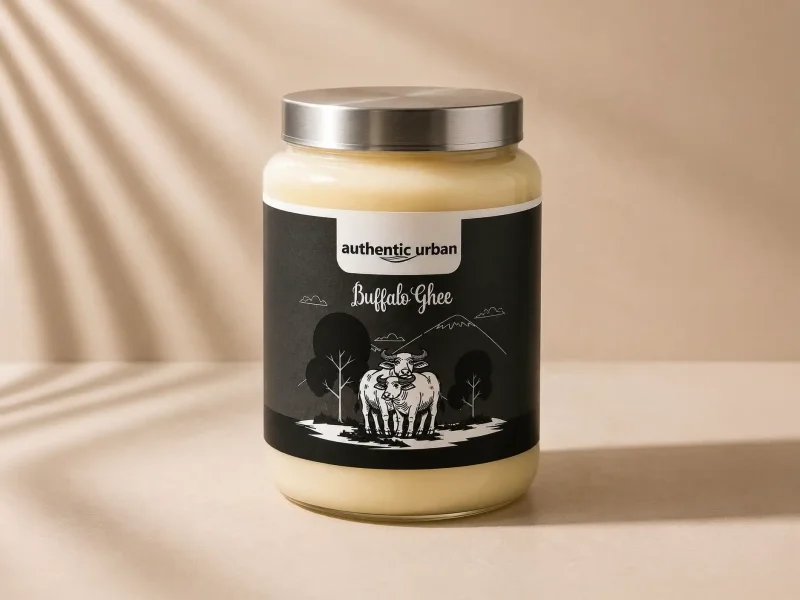
We make and sell ghee, so weigh this with that in mind. For the baby bowl we would use our A2 Gir cow ghee: milk from grass-fed Gir cows with no hormone injections, set to curd overnight, churned, and cooked in a matki on a wood chulha. A batch that goes dark and bitter, or one taken off too early and left cloudy, is never packed. It is made after you order, and a video of your jar being cooked and packed comes on WhatsApp. Our Jafarabadi buffalo ghee is the richer jar for the rest of the family. The steps, and how curd Bilona (curd churned by hand) differs from cream ghee, are on how we make ghee and the Bilona method.
The teaspoon in baby's dal and khichdi
 1 Litre
The family's parathas and sweets
 1 Litre
Each order is cooked after you place it, and the packing video is of that batch. Past order videos are on the shop.
FAQ
Can I use buffalo ghee in my baby's food?
Yes, it is ghee too, and ICMR-NIN writes only "oil/ghee" in its baby charts without naming the milk. Most families use cow ghee for the baby bowl because it tastes lighter and stays softer in the jar, and buffalo ghee for the family's parathas and sweets. Whichever you use, keep to the same teaspoon per meal and do not add both to one bowl.
Can I add jeera, hing, or turmeric to baby food with ghee?
A small pinch of jeera or haldi warmed in the ghee is how many Indian homes season the baby's dal, and it adds flavour without salt. Keep chilli, garam masala, and whole spices out: they are hard to swallow and can upset a small stomach. Hing is strong, so a tiny pinch at most, once the baby is eating well. Bring in each spice on its own, like a new food.
Should I give the food with ghee before or after breastfeeding?
Before. ICMR-NIN says an infant should be fed complementary food first, followed by breastfeeding. A baby who has just had a full feed of milk is not hungry enough to learn a new texture, and the bowl gets pushed away. Offer the dal or khichdi when the baby shows hunger, such as sucking a fist or looking at food, then breastfeed as usual.
Should I add ghee to a baby's fruit puree?
There is no need. In ICMR-NIN's charts the fruit meal, such as mashed banana, papaya, or steamed apple, carries no oil or ghee; the fat goes into the cooked cereal and dal meals. Fruit is sweet and easy to swallow on its own. If you do add a drop to steamed apple now and then, count it in the day's teaspoons rather than adding it on top.
When can my baby eat roti or paratha with ghee?
Soft roti soaked in dal, mashed with ghee, works for many babies from about 9 or 10 months, once they handle soft lumps. ICMR-NIN moves a child to the family diet at about one year, so the plain roti with ghee, and later a soft paratha, fits the first birthday. Tear it small, keep it soft, and sit the baby upright while they eat.
Can I use oil instead of ghee in these recipes?
Yes. ICMR-NIN writes "oil/ghee 5 g" in every one of these bowls and does not rank one above the other for babies. Groundnut, mustard, or any cooking oil the family uses is fine. Many homes use ghee in the baby bowl because the milk taste is familiar and it needs no strong tadka. What stays out is vanaspati, which is hydrogenated fat, not ghee.
About the editorial team
Authentic Urban TeamBilona ghee makers, Gir Somnath, Gujarat
We are the Parmar family in Gir Somnath, Gujarat. We have made ghee here since 2016 and sold it online since 2025. We make only Bilona ghee, test it every month, and anyone is welcome to visit and watch it being made. Our Gir cows and Jafarabadi buffalo are grass-fed village animals that graze near the Gir forest, with no hormones or milk boosters. We set their milk to curd, churn it, and cook the makkhan on a wood chulha. These articles come from that kitchen and from what customers ask us on WhatsApp. We are ghee makers, not doctors.
Sources
- Dietary Guidelines for Indians, 2024 (Guideline 4 and Figures 4.1 to 4.5, printed pp. 27-33; Annexures I and II, printed pp. 111-114), ICMR-National Institute of Nutrition. Checked 27 Sep 2026.