Nankhatai Recipe: Bakery Style with Ghee, Oven or Kadhai
This nankhatai recipe makes 18 bakery-style cookies from 125 g maida, 25 g besan, 20 g fine sooji, 90 g powdered sugar, and 100 g of ghee. Beat the soft ghee with the sugar until pale, fold in the flours without kneading, chill the shaped cookies, and bake at 170°C for 15 to 18 minutes until the tops crack. No oven? A covered kadhai with salt does the job.
How do you make nankhatai at home?
Beat 100 g of soft-set ghee with 90 g of powdered sugar for 4 to 5 minutes. Fold in 125 g maida, 25 g besan, 20 g fine sooji, cardamom, baking powder, and a pinch of soda and salt. Shape 18 balls, chill them 20 minutes, and bake at 170°C for 15 to 18 minutes. Nankhatai are eggless, and the ghee does the work eggs and butter do in other cookies.
Ingredient (18 cookies)
Measure
Weight
Note
Maida (all-purpose flour)
1 cup
125 g
Spoon it into the cup and level it; a scooped cup packs in more.
Besan (gram flour)
¼ cup
25 g
The nutty taste and the golden colour. Fresh besan only; old besan tastes bitter.
Fine sooji (semolina)
2 tbsp
20 g
The crunch. Fine sooji, not the coarse upma kind.
Ghee, soft but set
½ cup
100 g
Opaque and spoonable, like butter left out for an hour. Never melted.
Powdered sugar
¾ cup
90 g
Grind regular sugar fine and sift it. Granulated sugar gives a gritty, flatter cookie.
Cardamom powder
½ tsp
About 1 g
From 5 or 6 pods, ground with a pinch of the sugar.
Baking powder
¼ tsp
About 1 g
Lift.
Baking soda and salt
A pinch each
Under 1 g
The soda gives the deeper bakery cracks. Leave it out and they are still good.
Pistachio or almond slivers
1 tbsp
About 10 g
To press on top. Not counted in the calories below.
Weights from USDA FoodData Central cup weights: 168894 (maida, 125 g a cup), 174288 (besan, 92 g a cup), 169715 (semolina, 167 g a cup), 169656 (powdered sugar, 120 g a cup unsifted), and 173412 (ghee, 205 g a cup). One cup = 240 ml. Equipment: a wide bowl, a whisk or hand beater, a sieve, a baking tray with baking paper, and a wire rack.
One nankhatai: about 103 kcal, 5.7 g fat (3.5 g saturated), 11.9 g carbohydrate with 5.1 g sugar, and 1.2 g protein, worked out from USDA FoodData Central, without the nuts on top. Almost all the fat is the ghee, about 1.3 teaspoons in each cookie. If you want to bake other things with ghee, the swap for butter in any recipe is on ghee in baking.
How much ghee goes in nankhatai?
100 g, which is half a cup, for 170 g of flour and 90 g of sugar. That is the amount where the dough holds a ball, the cookies keep a dome, and the tops crack. Recipes online use anywhere from a third of a cup to three quarters of a cup for the same flour, and the extra ghee is the most common reason nankhatai spread into flat discs. Each row below is one of 18 cookies.
75 g (about ⅓ cup)
Dry. Cracks when you roll it and needs a spoon of milk to hold.
91 kcal, 1 tsp ghee
Result: A harder, biscuit-like bite. Not bakery style.
100 g (½ cup)
Soft, holds a ball, does not stick to your palms.
103 kcal, 1.3 tsp ghee
Result: This recipe. Cracked dome, sandy crumb.
125 g (½ cup + 2 tbsp)
Greasy on the hands, soft even after chilling.
115 kcal, 1.6 tsp ghee
Result: Melts in the mouth, but spreads wider and cracks less.
150 g (¾ cup)
Too soft to hold a shape without long chilling.
127 kcal, 2 tsp ghee
Result: Flat, greasy discs. The usual reason nankhatai spread.
Per cookie, worked out from USDA FoodData Central 168894, 174288, 169715, 169656, and 173412 (4.27 g of ghee a teaspoon).
How soft should the ghee be?
Soft but set: opaque, spoonable, and holding a spoon mark, like butter left out for an hour. Melted ghee cannot hold air when you beat it, so the cookies bake flat and dense. Fridge-hard ghee breaks into lumps and never turns fluffy.
The same jar changes through the year, and we see it in our own kitchen in Gir Somnath. In summer the milk is lighter and our ghee stays liquid in the jar. In winter the milk is richer and the ghee cools to a fine grain. Nankhatai season, around Diwali, is when it starts to set. So in May, weigh the ghee into the bowl and put it in the fridge, checking every 10 minutes until it is soft but set. In December, leave it on the counter. The grain beats smooth in a couple of minutes; why ghee turns grainy at all is on why ghee is grainy.
Why ghee and not butter?
Water. USDA FoodData Central lists unsalted butter at 16.2 g of water and 81.1 g of fat per 100 g, and ghee at 0.24 g of water and 99.5 g of fat. Water in a dough wakes up the gluten in maida and turns steam in the oven, which gives a softer, chewier, flatter cookie. Ghee has almost none, so nankhatai stay short and sandy and break clean. Butter gives a good biscuit, just not this one. How the two compare for everyday cooking is on ghee vs butter.
How do you make nankhatai step by step?
Seven steps, about an hour and a quarter from the bowl to a cold cookie, of which only 25 minutes is hands-on. The two that decide the result are the creaming and the chilling.
Step
Time
What to do
Ready when
1. Cream
4 to 5 min
Beat 100 g soft-set ghee with 90 g powdered sugar with a whisk or hand beater.
Ready: Pale, fluffy, and a spoon mark holds its shape.
2. Mix
1 min
Sift in the maida, besan, baking powder, soda, and salt. Add the sooji and cardamom. Fold with your fingertips.
Ready: Holds together when pressed. No kneading.
3. Rest
15 min
Cover the bowl and leave it on the counter.
Ready: The sooji softens a little and the dough firms.
4. Shape
5 min
Make 18 balls of about 20 g each. Press lightly to a thick disc, press a nut on top. Mark a cross with a knife if you like.
Ready: Smooth sides, about 2 cm tall.
5. Chill
20 to 30 min
Tray in the fridge while the oven heats. 10 minutes is enough in a cold winter kitchen.
Ready: Firm to the touch.
6. Bake
15 to 18 min
170°C, middle rack, 3 to 4 cm apart. Timings for other ovens are below.
Ready: Tops cracked and pale, bottom edges light gold.
7. Cool
10 min, then 30
10 minutes on the tray, then onto a rack until cold.
Ready: Soft when hot, crisp once cold.
Treat the dough like wet sand. Press it together with your fingertips and stop the moment it holds; kneading it like roti dough is what turns nankhatai into hard biscuits. If it will not hold at all, add milk a teaspoon at a time. The baking guide goes deeper on why ghee cookies spread, if a batch keeps going flat.
Take them out while they still feel soft. A hot nankhatai bends if you push it; the ghee inside is liquid. It sets as it cools, and the cookie turns crisp outside and sandy inside. Bake until they feel firm in the oven and they cool into rocks.
How do you bake nankhatai without an oven?
In a heavy kadhai or an open pressure cooker with a bed of salt, a stand, and a lid: preheat it 10 minutes, then bake the cookies on a steel plate for 20 to 25 minutes on a low to medium flame. An air fryer also works, at 150°C for 8 to 10 minutes. Find your oven below.
Oven
Setting
Time
Watch for
OTG
170°C, both rods on, middle rack. Preheat 10 min.
15 to 18 min
Turn the tray at 10 minutes if the back browns first.
Convection microwave
Convection mode, 170°C, on the low rack. Preheat.
14 to 16 min
Use the metal tray or rack that came with it, never on the glass plate directly.
Fan oven
155 to 160°C with the fan on.
14 to 16 min
The fan browns faster, so drop the dial.
Air fryer
150°C, on a piece of baking paper, 6 cookies at a time.
8 to 10 min
Make them a little smaller. Check at 7 minutes; the top browns fast.
Kadhai or open cooker
2 to 3 cm of salt, a stand on top, lid on. Preheat 10 min on medium.
20 to 25 min on low to medium
Cookies on a steel plate on the stand. A cooker needs its gasket and whistle taken out.
For the kadhai, use your heaviest one with a lid that fits. Spread 2 to 3 cm of salt or clean sand on the base, set a small stand or ring on it, cover, and heat for 10 minutes on medium. Put the cookies on a steel plate greased with a smear of ghee, set the plate on the stand so it touches neither the salt nor the sides, and cover again. Check at 18 minutes. The same salt can be kept in a jar for the next batch; it goes grey but works. With a cooker, always take out the gasket and whistle so no pressure can build, and never let the empty pot heat on high.
Why did my nankhatai spread, turn hard, or not crack?
Almost always the ghee: too much of it, too soft, or dough that went in warm. Find your problem below.
Spread flat
Melted or runny ghee, too much ghee, a warm kitchen, or no chilling.
Fix: Chill the shaped cookies 30 minutes. If the dough is greasy, work in 1 tbsp maida. Next batch, weigh the ghee and use it soft but set.
Hard, like a rusk
Kneaded dough, too little ghee, or baked until firm in the oven.
Fix: Fold, never knead. Take them out while they still feel soft; they set as they cool.
No cracks on top
Too much ghee, old baking powder, or discs pressed too flat.
Fix: Keep them 2 cm tall, add the pinch of soda, and check your baking powder fizzes in hot water.
Brown bottom, raw top
Tray too low, bottom rod only, or a kadhai flame too high.
Fix: Middle rack with both rods. In a kadhai, keep the flame low and the plate on a stand, never on the salt.
Tastes raw or bitter
Underbaked besan, or old besan.
Fix: Bake until the bottoms are light gold. Smell the besan before you use it; it should smell nutty, not stale.
Dough too crumbly to roll
Flour measured heavy, or fridge-cold ghee that did not cream.
Fix: Add 1 to 2 tsp of milk, one at a time, or 1 tsp of soft ghee. Stop once a ball holds.
Gritty inside
Granulated sugar, or coarse sooji.
Fix: Grind the sugar to a powder and sift it. Use fine sooji or blitz coarse sooji for a few seconds.
Can you make nankhatai with atta, jaggery, or other flavours?
Yes. Atta and jaggery change the texture a little; the flavours change only the taste. Keep the ghee at 100 g in each and adjust the dough, not the fat.
- Atta nankhatai: 125 g of fine whole wheat flour in place of maida. Atta drinks more fat, so add 1 to 2 tsp of milk if the dough cracks. The cookie is browner, nuttier, and a little denser.
- Jaggery nankhatai: 90 g of powdered jaggery, sifted, in place of the sugar. It creams less and spreads a little more, so chill the shaped cookies the full 30 minutes. They bake darker; pull them a minute early.
- Kesar nankhatai: soak 10 to 12 saffron strands in 1 tsp of warm milk and add it with the flour.
- Chocolate nankhatai: take out 15 g of maida and put in 15 g of cocoa.
- Nut nankhatai: fold in 2 tbsp of finely chopped pistachios or almonds with the flour.
- Coconut nankhatai: swap the sooji for 20 g of desiccated coconut.
For a Diwali tin, nankhatai sit well beside kaju katli and besan ladoo, which use the same besan and ghee without an oven.
Which ghee is best for nankhatai?
A plain ghee with nothing added, that smells of toasted milk when you warm a spoon. In nankhatai the ghee is more than a quarter of the dough by weight and nothing strong covers it, so a stale, sour, or flat-smelling jar shows in every cookie. If your ghee smells cheesy or of nothing at all, read how to identify pure ghee before you bake a festival batch with it.
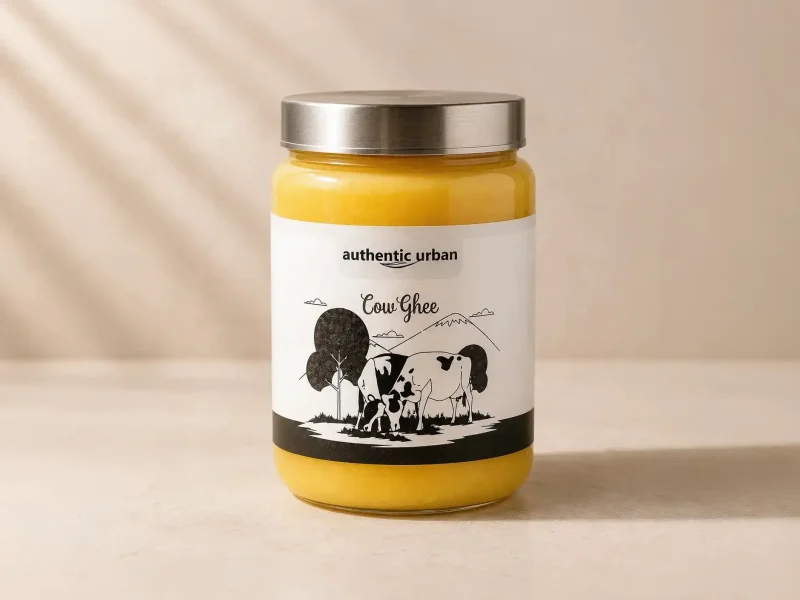
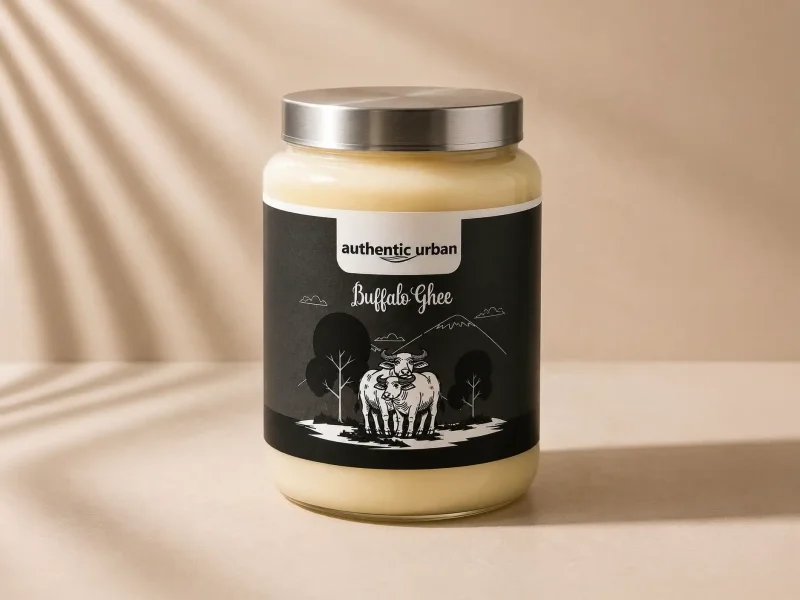
Cow or buffalo is a matter of taste and cost. Buffalo ghee sets firmer, which helps the cookies hold their shape, gives a rich, round taste, and costs less a litre, so it is the one we reach for in a big tin. Cow ghee is more yellow and lighter, and gives a slightly more golden cookie. How the two differ is on cow vs buffalo ghee. The 100 g in this recipe is a little under 120 ml: at ₹1,999 a litre for our buffalo ghee, about ₹234 a batch, or ₹13 a cookie.
How many calories are in one nankhatai?
About 103 kcal, with 5.6 g of ghee (1.3 teaspoons) and 4.9 g of added sugar, for one of 18. ICMR-NIN's 2024 dietary guidelines suggest limiting ghee or butter to 1 to 2 teaspoons a day, and say limiting sugar to 25 g a day is better for health. So one nankhatai with chai fits a day; two already go past the ghee line.
Portion (batch of 18)
kcal
Ghee
Added sugar
1 nankhatai
103 kcal
Ghee 5.6 g, about 1.3 tsp
Added sugar 4.9 g
2 with chai
206 kcal
Ghee 11 g, about 2.6 tsp
Added sugar 9.8 g
3 from the tin
309 kcal
Ghee 17 g, about 3.9 tsp
Added sugar 14.7 g
5 on a festival day
515 kcal
Ghee 28 g, about 6.5 tsp
Added sugar 24.5 g
Worked out from USDA FoodData Central 168894, 174288, 169715, 169656, and 173412, checked 29 September 2026. Limits from ICMR-NIN, Dietary Guidelines for Indians 2024.
A nankhatai looks small, but more than a quarter of it is ghee and a quarter is sugar, by weight, so the tin empties faster than you count. Our family eats 1 to 2 teaspoons of ghee each a day and more in winter sweets; on a day with sweets, we go lighter on ghee in dal and roti. How the daily amount works is on how much ghee per day. With diabetes, read can diabetics eat ghee and ask your doctor how a sweet fits your plan.
Not for babies: ICMR-NIN's 2024 guidelines say no added sugar for children under two years old. For older children, one nankhatai is a treat, not a tiffin snack.
How long do nankhatai stay fresh?
About two weeks in an airtight steel or glass tin at room temperature, as long as they went in cold and dry. Warmth trapped in the tin turns to moisture and softens them in a day. Keep them away from the stove and out of the sun, which also keeps the ghee in them from turning stale.
If a batch goes soft in humid weather, spread them on a tray and bake at 150°C for 4 to 5 minutes, then cool fully on a rack again. You can also freeze the shaped, unbaked dough balls in a box and bake them straight from frozen, adding 2 to 3 minutes. The ghee jar itself needs no fridge; how to keep it is on ghee storage and shelf life.
Nankhatai: a recipe card to keep
Screenshot this and keep it by the oven.
- 1. For 18: 125 g maida, 25 g besan, 20 g fine sooji, 100 g soft-set ghee, 90 g powdered sugar, ½ tsp cardamom, ¼ tsp baking powder, a pinch each of soda and salt, nuts to top.
- 2. Beat the ghee and powdered sugar for 4 to 5 minutes until pale and fluffy.
- 3. Sift in the maida, besan, baking powder, soda, and salt. Add sooji and cardamom. Fold with fingertips; do not knead. Rest 15 minutes.
- 4. Make 18 balls of 20 g, press to 2 cm discs, top with a nut. Chill 20 to 30 minutes.
- 5. Bake at 170°C in a preheated OTG for 15 to 18 minutes, until the tops crack and the bottom edges turn light gold.
- 6. Cool 10 minutes on the tray, then on a rack. Store only when cold, in an airtight tin.
- 7. One nankhatai: 103 kcal, 1.3 tsp ghee, 4.9 g added sugar.
Which ghee should you buy for nankhatai?
In nankhatai you taste the ghee in every bite, so pick a plain ghee with nothing added that smells of toasted milk when it melts. For a big festival tin, buffalo ghee gives the richer taste and firmer set for less a litre; our ranking of what is on sale, with prices, is best buffalo ghee in India.
For nankhatai we would use our Jafarabadi buffalo ghee, and our A2 Gir cow ghee for a more golden cookie. Both come from grass-fed village animals near the Gir forest: the milk is set to curd overnight, churned by hand (Bilona), and the makkhan cooked in a matki on a wood chulha. The jar is made after you order, a video of it being cooked and packed comes on WhatsApp, and Varsha tastes every batch before it goes in a jar. We test every month against the FSSAI limits; the steps are on how we make ghee.
A more golden, lighter cookie
 1 Litre
Nankhatai and Diwali tins
 1 Litre
Each order is cooked after you place it, and the packing video is of that batch. Past order videos are on the shop.
FAQ
Nankhatai kaise banate hai?
100 g naram jami hui ghee aur 90 g pisi cheeni ko 4 se 5 minute phento, jab tak mix safed aur halka na ho jaye. Usme 125 g maida, 25 g besan, 20 g bareek sooji, elaichi, chutki bhar baking powder, soda aur namak milao. Goondho mat, bas ungliyon se jodo. 18 golay banao, 20 minute fridge mein rakho, phir 170°C par 15 se 18 minute bake karo. Oven nahi hai to namak wali kadhai mein 20 se 25 minute.
How many nankhatai does 1 kg of maida make?
About 144, which is eight times this recipe. You need 1 kg maida, 200 g besan, 160 g fine sooji, 720 g powdered sugar, and 800 g ghee, which is a little under a litre. Cream the ghee and sugar in two or three lots so the whisk can get air in, then bake one tray at a time and keep the rest of the shaped cookies in the fridge until their turn.
Can I make nankhatai without besan or sooji?
Yes. Without besan, use 150 g of maida in all; the cookies turn paler and taste more like a plain butter biscuit, without the nutty note. Without sooji, add 20 g more maida; they lose some crunch and turn softer. Leaving out both gives a good cardamom ghee cookie, but most people would not call it bakery nankhatai. Keep the ghee and sugar the same.
Can I use oil instead of ghee in nankhatai?
It works, but it is a different cookie. Liquid oil cannot be creamed with sugar to hold air, so oil nankhatai come out denser and flatter, and they lack the toasted-milk smell that ghee gives. If you must, use 80 g of a neutral oil, chill the dough for 30 minutes before shaping, and expect fewer cracks on top. Butter is the closer swap.
Can I bake nankhatai in a normal microwave?
Not in a solo microwave. A plain microwave heats the water and fat inside the dough and does not brown the outside, so nankhatai come out pale, soft, and chewy, or burnt in the middle. You need dry heat around the cookie: a convection microwave in convection mode, an OTG, an air fryer, or a covered kadhai with a salt bed. The kadhai method gives the closest result to a bakery.
Should I use baking soda or baking powder in nankhatai?
A little of both is the bakery way. Baking powder, about ¼ tsp for 170 g of flour, gives the gentle lift. A small pinch of baking soda makes the tops open into the deep cracks and helps them brown. More soda than a pinch leaves a soapy, bitter taste, so do not add extra to get bigger cracks. Chilled dough and a 2 cm tall disc do more for the cracks.
About the editorial team
Authentic Urban TeamBilona ghee makers, Gir Somnath, Gujarat
We are the Parmar family in Gir Somnath, Gujarat. We have made ghee here since 2016 and sold it online since 2025. We make only Bilona ghee, test it every month, and anyone is welcome to visit and watch it being made. Our Gir cows and Jafarabadi buffalo are grass-fed village animals that graze near the Gir forest, with no hormones or milk boosters. We set their milk to curd, churn it, and cook the makkhan on a wood chulha. These articles come from that kitchen and from what customers ask us on WhatsApp. We are ghee makers, not doctors.
Sources
- Wheat flour, white, all-purpose, enriched, bleached (FDC ID 168894), SR Legacy, USDA FoodData Central. Checked 29 Sep 2026.
- Chickpea flour (besan) (FDC ID 174288), SR Legacy, USDA FoodData Central. Checked 29 Sep 2026.
- Semolina, enriched (FDC ID 169715), SR Legacy, USDA FoodData Central. Checked 29 Sep 2026.
- Sugars, powdered (FDC ID 169656), SR Legacy, USDA FoodData Central. Checked 29 Sep 2026.
- Butter oil, anhydrous (FDC ID 173412), SR Legacy, USDA FoodData Central. Checked 29 Sep 2026.
- Butter, without salt (FDC ID 173430), SR Legacy, USDA FoodData Central. Checked 29 Sep 2026.
- Dietary Guidelines for Indians, 2024 (ghee limit, PDF p. 71; sugar, PDF p. 111; children under two, PDF p. 28), ICMR-National Institute of Nutrition. Checked 29 Sep 2026.