Can You Use Ghee Instead of Butter in Baking? How Much
Yes, you can use ghee instead of butter in baking cakes, cookies, and brownies, but not cup for cup: use 82 g of ghee plus 16 ml of water for every 100 g of butter. Butter is about 81% fat and 16% water, and ghee is 99.5% fat, so a straight swap adds fat and takes away the water. Keep butter for puff pastry and croissants.
Can you use ghee instead of butter in baking?
Yes, for almost every home bake: cakes, cookies, brownies, muffins, banana bread, and pie crust. Weigh 82 g of ghee for every 100 g of butter, and for cakes add 16 ml of water back. The one family that needs butter is laminated pastry (puff, croissant), which rises on steam from butter's water.
The reason is what each fat is made of. USDA FoodData Central lists unsalted butter at 81.1 g fat and 16.2 g water per 100 g, and butter oil (the lab name for ghee) at 99.5 g fat and 0.24 g water. India's own rules land in the same place: FSSAI allows table butter as little as 80% milk fat and up to 16% water, and requires ghee to be at least 99.5% milk fat with no more than 0.5% moisture. So ghee is butter with the water and milk solids cooked out, as we explain on ghee vs clarified butter. In a recipe, that water matters. It turns to steam, helps the cake rise, and dissolves the sugar.
This page is for home bakers turning a butter recipe into a ghee one, in an OTG or a cooker. For ghee in everyday cooking rather than the oven, see ghee vs butter and cooking with ghee.
How much ghee replaces butter? The gram table
Use 82 g of ghee for every 100 g of butter, and add back 16 ml of water (or the same amount of milk) when you are making a cake. Find the butter amount your recipe gives in the first column.
Recipe says butter
Use ghee
Add water (cakes)
50 g
Ghee: 41 g
Water: 8 ml (about 1½ tsp)
100 g
Ghee: 82 g
Water: 16 ml (about 1 tbsp)
113 g (1 US stick)
Ghee: 92 g
Water: 18 ml (about 1 tbsp + ½ tsp)
200 g
Ghee: 163 g
Water: 32 ml (about 2 tbsp)
250 g
Ghee: 204 g
Water: 41 ml (about 2¾ tbsp)
1 cup (227 g)
Ghee: ¾ cup + 2½ tbsp (185 g)
Water: 37 ml (2½ tbsp)
1 tbsp (14 g)
Ghee: 1 level tbsp, less a little (12 g)
Water: ½ tsp
Worked out from USDA FoodData Central entries 173430 (butter) and 173412 (butter oil), checked 26 September 2026. Cup and spoon weights are USDA's.
A kitchen scale makes this easy, and it is worth having for baking anyway. Ghee changes shape with the weather, so a "cup" of soft ghee and a cup of liquid ghee are not the same amount. If the recipe was written for salted butter, add a pinch of salt as well: FSSAI allows table butter up to 3% salt, and ghee has none.
When to skip the water
Add the water back for cakes, sponges, and muffins, where the rise and a soft crumb depend on it. Skip it, or use half, for cookies and brownies: less water means crisper edges and a fudgier middle. Never add it to shortbread or nankhatai, where the dry, sandy bite comes from having no water at all. That is why bakery nankhatai has always been made with ghee.
Is ghee to butter 1:1? Why a straight swap goes wrong
No. Cup for cup, ghee puts about 11% more fat into the bake and no water, so cookies spread and cakes turn greasy and dry. The other common advice, three-quarters of a cup of ghee per cup of butter, overshoots the other way and leaves the bake 17% short on fat.
Worked out from USDA FoodData Central 173430 (butter, 81.1% fat, 227 g a cup) and 173412 (butter oil, 99.5% fat, 205 g a cup), checked 26 September 2026.
| Item | Value |
|---|---|
| 1 cup butter (227 g) | 184 g fat (what the recipe was written for) |
| 1 cup ghee (205 g) | 204 g fat (11% more fat, no water) |
| ¾ cup ghee (154 g) | 153 g fat (17% less fat) |
| ¾ cup + 2½ tbsp ghee (185 g) | 184 g fat (matches the butter) |
A cup of butter weighs 227 g by USDA's figures and holds 184 g of fat and 37 g of water. A cup of ghee weighs less, 205 g, because it has no water, but nearly all of it is fat: 204 g. Swapping by weight is worse still: 100 g of ghee for 100 g of butter adds 18 g of fat, over a fifth more. The swap that matches the butter is ¾ cup plus 2½ tbsp of ghee, with 2½ tbsp of water to replace what the butter brought.
The matched swap also keeps the calories where the recipe had them. A straight cup-for-cup swap adds about 170 kcal to the whole bake; the full per-spoon numbers are on how many calories in ghee.
Which bakes work with ghee, and which need butter?
Cakes, cookies, brownies, quick breads, and shortcrust all work with ghee; puff pastry and croissants need butter. What changes from bake to bake is how soft the ghee should be and whether the water goes back in.
Sponge, tea cake, pound cake
Gram table, water added back. Ghee: Soft and set, like butter left out for an hour.
Cream 4 to 5 minutes. Without the water, the batter looks stiff and the cake bakes dry.
Shaped and drop cookies
Gram table, water optional. Ghee: Cool and firm, just soft enough to press.
Chill the dough 30 minutes. Ghee dough spreads more than butter dough.
Brownies, banana bread, muffins made with melted butter
Gram table, water optional. Ghee: Melted, then cooled to warm.
The easiest swap. Too much ghee shows as a greasy top on brownies.
Nankhatai, shortbread, atta biscuits
Use recipes written for ghee. Ghee: Soft and set.
No water. The dry, sandy crumb comes from having none.
Pie crust and shortcrust
Gram table; the recipe's ice water covers the rest. Ghee: Fridge-cold, cut into the flour.
Work fast. Ghee softens in warm hands sooner than butter.
Puff pastry, croissants, flaky layers
Keep butter. Ghee: Do not swap.
The layers rise on steam from butter's water. Ghee has almost none.
How do you cream ghee and sugar?
Beat soft, set ghee with the sugar for 4 to 5 minutes, until the mix turns pale and fluffy. The ghee must be opaque and hold a spoon mark, like butter left out for an hour. Liquid ghee cannot trap air, and fridge-hard ghee breaks into lumps.
In our kitchen in Gir Somnath, the same ghee behaves differently through the year. In summer the milk is lighter and the ghee stays liquid in the jar. In winter the milk is richer and the ghee cools to a fine grain. So in May, put the measured ghee in the fridge for a while and check it every 10 minutes until it is soft but set; in December, leave it on the counter. The grain is normal for slow-cooked ghee, and "why is it grainy?" is the question we get most on WhatsApp. It creams well once it is soft, and we explain where it comes from on why ghee is grainy.
If the creamed mix looks curdled once the eggs go in, the eggs were colder than the ghee. Let the bowl sit for 5 minutes and beat again. For melted-butter recipes such as brownies, melt the ghee, then let it cool until it feels warm, not hot, before it meets the eggs.
Why do ghee cookies spread, and how do you stop it?
Ghee cookies spread because the dough usually has more fat than the butter version and the ghee was too soft going in. Fix it in this order.
-
1. Chill the dough
30 minutes in the fridge after shaping, or 10 in the freezer. Cold fat melts later in the oven, so edges set before the dough runs.
-
2. Start from set ghee, never liquid
Liquid ghee cannot hold air bubbles when you cream it with sugar. The dough goes greasy and the cookies bake flat.
-
3. Cut the ghee to the gram table
A cup-for-cup swap puts 11% more fat into the dough. That extra fat is most of the spread people complain about.
-
4. Use a cool tray
A tray straight out of the oven starts melting the ghee before the bake begins. Let it cool, or rotate two trays.
-
5. Add 1 to 2 tbsp flour if it still spreads
Only after the first four fixes. Too much flour turns a soft cookie into a hard one.
Ghee cake, brownies, and cookies: ratios written for ghee
These three are written for ghee from the start, so there is nothing to convert. Bake at the temperature given and start checking 5 minutes early; OTGs and cookers run hotter or cooler than the dial says.
Ghee tea cake (8-inch round, serves 8)
1 cup maida, ¾ cup soft set ghee, ¾ cup sugar, 3 eggs at room temperature, ¼ cup milk, 1 tsp vanilla, ½ tsp baking powder, ¼ tsp nutmeg, a pinch of salt.
Cream the ghee and sugar for 4 to 5 minutes. Beat in the eggs one at a time, then the vanilla. Fold in the sifted flour, baking powder, nutmeg, and salt, alternating with the milk, and stop when no dry streaks remain. Bake at 180°C for 30 to 35 minutes, until a toothpick comes out clean. Cool 10 minutes in the tin.
Fudgy ghee brownies (8 by 8-inch tin, 16 squares)
½ cup melted ghee, 1 cup sugar, 2 eggs, 1 tsp vanilla, ½ cup cocoa, ⅓ cup maida, ¼ tsp salt, ½ cup chocolate chips.
Whisk the warm ghee and sugar, then the eggs and vanilla. Fold in the sifted cocoa, flour, and salt, then the chips. Bake at 175°C for 22 to 25 minutes and take it out while the centre still looks slightly underdone. It sets as it cools.
Cardamom ghee cookies (makes 24)
½ cup cool, firm ghee, ½ cup powdered sugar, 1¼ cups maida, ¼ cup chopped cashews, ¼ tsp cardamom, a pinch of salt.
Mix the ghee and sugar just until smooth. Add the flour, cardamom, salt, and cashews and bring it together without kneading. Roll into balls, chill 30 minutes, and bake at 170°C for 10 to 12 minutes, until the bottoms turn light gold.
Ghee bakes keep well in a steel dabba once they are fully cool; trapped warmth turns cookies soft. The ghee itself, once opened, wants a dry spoon and a shut lid, as we cover on does ghee go bad.
Does ghee change the taste of cakes and cookies?
Yes, a little: ghee gives a toasted, nutty note that shows in plain bakes like vanilla sponge, shortbread, and cardamom cookies, and disappears under chocolate and spice. That also means a bad jar shows. Warm a spoon before a plain bake and smell it.
Good ghee smells of toasted milk. At the chulha, a batch cooked too long turns dark and bitter and smells burnt; one taken off too early stays cloudy, keeps moisture, and goes sour fast. We never pack either, and in a vanilla sponge you would taste both. Five quick checks for a jar you already have are on how to identify pure ghee.
Cow or buffalo ghee for baking?
Both bake well. Cow ghee is the lighter pick for a plain sponge or tea cake. Buffalo ghee is the richer, better-value jar for nankhatai, brownies, and festival cookie tins, where you use a lot of it. In the monsoon, green fodder makes our cow ghee more yellow, so a cow ghee sponge baked then comes out a shade more golden. The wider differences are on cow vs buffalo ghee, and whether ghee suits a milk-sensitive eater is on ghee and lactose intolerance.
Ghee baking checklist
Screenshot this before you turn a butter recipe into a ghee one.
- 1. Weigh the ghee: 82 g for every 100 g of butter the recipe asks for.
- 2. For cakes, add back the water: 16 ml for every 100 g of butter.
- 3. Salted butter in the recipe? Add a pinch of salt, since ghee has none.
- 4. Creaming needs soft, set ghee. Liquid ghee goes to the fridge first.
- 5. Chill cookie dough 30 minutes and bake on a cool tray.
- 6. Keep butter for puff pastry and croissants.
- 7. Smell the ghee warm before a plain bake. Burnt or sour shows in a vanilla sponge.
Which ghee for baking?
For baking, buy a plain jar with nothing added that smells of toasted milk when warmed and sets to a grain when cool. How curd Bilona (curd churned by hand) differs from cream ghee is on the Bilona method, and our ranking of the buffalo ghee on sale, the jar most home bakers go through fastest, is best buffalo ghee in India.
We make and sell ghee, so weigh this with that in mind. For nankhatai, brownies, and Diwali tins we would bake with our own Jafarabadi buffalo ghee; for a plain sponge, our A2 Gir cow ghee. Both come from grass-fed village animals, are set to curd overnight, churned, and cooked in a matki on a wood chulha, made after you order, with a video of your jar sent on WhatsApp. Varsha tastes every batch before it is packed. We test every month against the FSSAI limits; the steps are on how we make ghee.
Vanilla sponge and tea cake
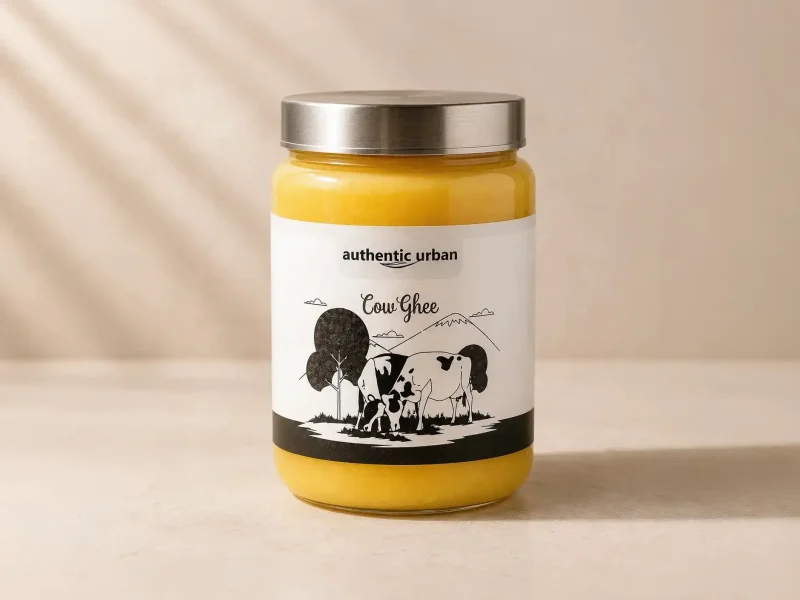 1 Litre
Nankhatai, brownies, and festival tins
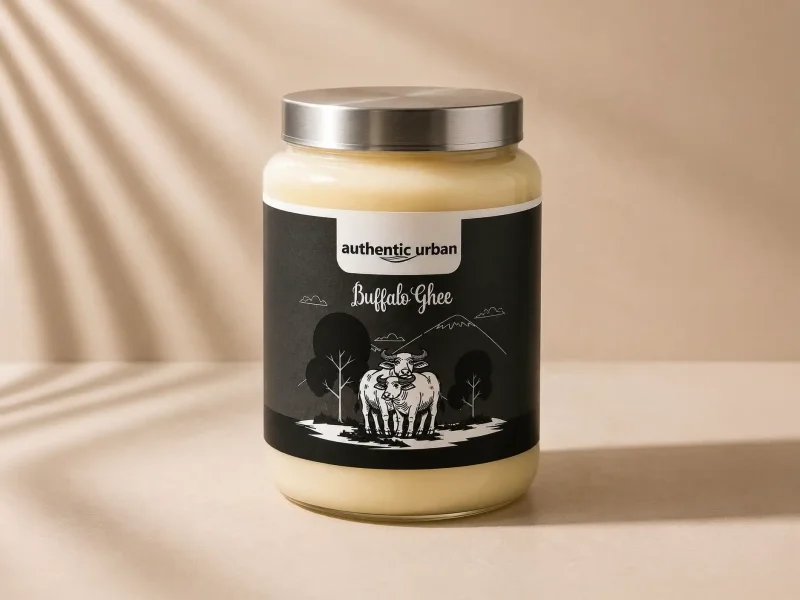 1 Litre
Each order is cooked after you place it, and the packing video is of that batch. Past order videos are on the shop.
FAQ
Can I use ghee instead of oil in a cake?
Yes. Oil and ghee are both almost pure fat, so swap them gram for gram with no water to add back. Melt the ghee and let it cool to warm before it goes into the batter. One difference: ghee sets as it cools, so a ghee cake feels firmer straight from the fridge than an oil cake. Leave a slice out for 20 minutes and it softens again.
Can I make buttercream frosting with ghee?
A simple frosting of soft ghee and powdered sugar works and tastes nutty, but it feels heavier and less creamy than buttercream, because butter's water is what makes buttercream light. A half-ghee, half-butter mix is a good middle. Beat the ghee while it is soft and set, never liquid, and keep the frosted cake in a cool room.
Is a cake made with ghee dairy-free or lactose-free?
No. Ghee is milk fat, so a ghee cake is not dairy-free, and it is not safe for someone with a milk allergy. It is much lower in milk protein and milk sugar than butter: USDA FoodData Central lists 0.28 g protein in 100 g of butter oil against 0.85 g in butter. Many people with mild lactose trouble manage ghee, but milk in the batter still counts.
Does baking with ghee add calories?
Only if you swap cup for cup. By USDA figures, a cup of ghee holds about 1,796 kcal against about 1,628 kcal in a cup of butter, so a straight swap adds roughly 170 kcal to the whole bake. With the gram table (82 g ghee for 100 g butter), the calories come out the same, because you are adding the same amount of fat.
Can I grease the cake tin with ghee?
Yes, and it works well. Brush a thin layer of soft ghee over the base and sides, then dust with flour or line the base with baking paper. Because ghee has almost no milk solids left, it is less likely to brown on the tin edges than butter. Do not pour in melted ghee; a pool at the bottom fries the base of the cake.
Can I bake an eggless cake with ghee?
Yes. Most eggless cakes use curd or milk with baking soda to do the egg's job, and ghee fits them as it would butter. Use the gram table, and count the curd or milk as your water, so you usually do not need to add more. Melted and cooled ghee mixes into curd-based batters more evenly than set ghee.
About the editorial team
Authentic Urban TeamBilona ghee makers, Gir Somnath, Gujarat
We are the Parmar family in Gir Somnath, Gujarat. We have made ghee here since 2016 and sold it online since 2025. We make only Bilona ghee, test it every month, and anyone is welcome to visit and watch it being made. Our Gir cows and Jafarabadi buffalo are grass-fed village animals that graze near the Gir forest, with no hormones or milk boosters. We set their milk to curd, churn it, and cook the makkhan on a wood chulha. These articles come from that kitchen and from what customers ask us on WhatsApp. We are ghee makers, not doctors.
Sources
- Butter oil, anhydrous (FDC ID 173412), SR Legacy, USDA FoodData Central. Checked 26 Sep 2026.
- Butter, without salt (FDC ID 173430), SR Legacy, USDA FoodData Central. Checked 26 Sep 2026.
- Food Safety and Standards (Food Products Standards) Chapter 2.1: Dairy products and analogues, version 01.09.2023 (ghee standard p. 27, butter standard p. 30), FSSAI. Checked 26 Sep 2026.