Is Ghee Good for Piles? How Much, and Can You Apply It
Is ghee good for piles? You can eat it, but it does not treat them. One teaspoon on dal, khichdi, or roti, and no more than 1 to 2 teaspoons a day, is fine for most adults with piles. Fibre and water are what soften the stool and ease piles. Heavy bleeding, a painful hard lump, or no change in a week needs a doctor.
Can you eat ghee if you have piles?
Yes. Ghee is safe to eat with piles in normal food amounts: 1 teaspoon on a meal, 1 to 2 teaspoons across the day, the limit ICMR-NIN's 2024 guidelines set for ghee or butter. It will not shrink piles or stop bleeding. What eases them is soft stool, and that comes from fibre and water, not fat.
Piles (bawasir, haemorrhoids) are swollen blood vessels inside or just outside the anus. NIDDK lists the usual causes: straining, sitting long on the toilet, constipation or diarrhoea that goes on and on, a low-fibre diet, pregnancy, age, and heavy lifting. Inside piles tend to bleed bright red without pain; outside piles itch, ache when you sit, or form a tender lump. This page is for adults with the everyday kind. If hard stools are the whole problem, start with ghee for constipation.
What does ghee actually do for piles?
Very little on its own. The pages that rank for this question say ghee "lubricates" the gut, "heals" the veins, or clears piles in 10 days with black pepper. None of them cite a study, and we could not find one. Here is each claim next to what is known.
The claim
What is actually known
Ghee lubricates the gut so stool slides out without straining
No study we could find measured this. Ghee is digested and absorbed in the small intestine like any fat; it does not reach the anus as a coating. Softer stools come from fibre and water.
Ghee shrinks piles or heals the swollen veins
No human trial shows this. Piles are swollen blood vessels in and around the anus. Mild ones often settle in a few days on their own, the NHS says, which is why home remedies seem to work.
Two teaspoons of ghee every morning is the piles remedy
A common line on Indian clinic and Ayurveda pages, given without a study. Two teaspoons is already the whole day's ghee in ICMR-NIN's 2024 guidelines, before any tadka or roti.
Ghee with black pepper in warm water cures piles in 10 days
A viral claim with no trial behind it. Piles that clear in 10 days were usually going to clear anyway; piles that do not need a doctor, not a longer course.
Butyrate in ghee heals the gut lining
A teaspoon holds a small amount of butyric acid, and it is absorbed high up in the gut. The butyrate that feeds the colon is made by gut bacteria from fibre.
Ghee is "heating" and makes piles worse
No study shows a teaspoon of ghee worsens piles. What does make them worse is straining over hard stools, and a heavy, low-fibre meal of puri, halwa, and paratha can lead there.
The one thing ghee can do is make a plain, high-fibre meal easier to eat. A katori of dal with two whole-wheat rotis is a good piles dinner; a teaspoon of ghee on it is what makes people actually eat it every night. Where the butyrate story comes from, and why fibre matters more for the colon, is on ghee and butyrate.
How much ghee can you eat with piles, and when?
Eat 1 teaspoon with lunch or dinner, and keep the whole day to 1 to 2 teaspoons. That is the same limit ICMR-NIN gives every adult, and piles are not a reason to go above it. Too much ghee brings loose, oily stools, and frequent loose motions irritate piles as much as hard ones.
When
Ghee
Why
Lunch or dinner, on dal, khichdi, or a whole-wheat roti
1 tsp
The best slot. The fibre on the plate softens the stool; the ghee makes a plain meal easy to eat.
Morning, in a cup of warm water, before a fibre breakfast
½ tsp
A household habit. The warm drink can bring on the urge to go. Skip it if you have gallstones or reflux.
Bedtime, in warm milk
½ tsp
Adds fluid more than anything. Skip it if milk gives you gas or you already had ghee that day.
Halwa, puri, paratha, sweets during a flare
Keep small
Ghee-heavy, low-fibre food is what leaves stools hard. Save it for after the flare.
The whole day
1 to 2 tsp
The ICMR-NIN 2024 limit for ghee or butter. More ghee brings loose, oily stools, which irritate piles too.
For healthy adults. If a doctor has limited your fat, follow that.
Pick one extra slot at most. The morning warm-water cup is the best known remedy, and it does not suit everyone; who should skip a spoon of fat on an empty stomach is on ghee on empty stomach. In our home in Gir Somnath, each of us eats 1 to 2 teaspoons of ghee a day on roti, dal, and khichdi, and more only in winter sweets like adadiya pak. We make ghee for a living and we still count the spoons. The daily amount by age is on how much ghee per day, and you can work out your home's daily ghee and oil for the whole family.
Can you apply ghee on piles?
On outside (external) piles, a thin film of clean ghee on dry, sore skin is a household habit, and it may ease dryness and rubbing the way any plain grease does. It does not shrink the pile. Never put ghee inside the anus, and never on a hard, painful lump, an open sore, or anything that is bleeding.
- After a motion, rinse with plain water or sit in a basin of warm water for 10 to 15 minutes. NIDDK suggests this warm sitz bath several times a day for pain.
- Pat the skin dry with a soft cloth. Do not rub.
- Take a pea-sized bit of ghee from a small bowl, not straight from the kitchen jar, with a washed finger.
- Spread a thin film on the outside skin only.
- Stop if it stings, itches more, or the skin turns red. Stop after a week either way, and see a doctor if you still need something.
Use ghee that is well cooked and dry. In our kitchen, a batch that comes off the flame too early stays cloudy, holds moisture, and spoils fast, so it never goes in a jar. That is the kind of ghee you do not want on broken skin. NIDDK's rule for chemist creams and suppositories is one week and then a doctor, and a kitchen remedy should not get longer than a medicine. In pregnancy, the NHS says not to use any cream or medicine on piles without asking your doctor, midwife, or pharmacist first.
Which piles symptoms can ghee help, and which need a doctor?
Ghee only has a place in the mildest case: hard stools with itch or a small soft lump. Everything else on this list is a job for fibre, water, or a doctor. Screenshot it; the last three rows are not for home remedies.
What you notice
Ghee's part
What to do
Hard stools and straining, with mild itch or a small soft lump
Can sit on a high-fibre plate. A thin film outside may ease dry, sore skin.
Fibre, water, no straining, warm baths. Better in a few days for most people.
Bright red streaks on the paper after a hard stool
Nothing direct. Softer stools mean less rubbing.
Fibre and water. See a doctor if it happens more than once, or if it has never been checked.
A painful, hard, bluish lump at the anus
None. Do not rub or press ghee on it.
See a doctor soon. This can be a clotted (thrombosed) pile.
Sharp, cutting pain while passing stool, burning for hours after
None as a treatment.
This sounds more like an anal fissure (a small tear) than piles. See a doctor if it lasts beyond a week.
A lump that comes out when you pass stool
None.
See a doctor. Prolapsed piles may need banding or another procedure.
Heavy bleeding, clots, dark or black stool, fever, or pus
None.
Urgent care today. Do not try a home remedy first.
Piles or fissure?
Many people who search for piles have a fissure, a small tear at the edge of the anus. The NHS describes fissure pain as severe and sharp while you pass stool, with a burning pain after that can last several hours, and a little bright red blood. Piles more often itch, ache, or bleed without much pain. Both get better with soft stools, and both need a doctor if a week of self-care has not helped. Only a doctor can tell which you have.
What helps piles more than ghee?
Fibre does, and it is the one home measure with trials behind it. A 2006 review in the American Journal of Gastroenterology pooled 7 trials with 378 people with piles: those given fibre were 47% less likely to still have symptoms, and 50% less likely to keep bleeding, than those without it. ICMR-NIN's 2024 guidelines say dietary fibre reduces constipation and the risk of developing piles.
NIDDK puts the target at about 28 g of fibre a day on a 2,000-calorie diet, with water and other fluids so the fibre can work. In an Indian kitchen that means dal or chana at two meals, whole-wheat roti instead of maida, a bowl of sabzi, and a fruit like guava or papaya. The foods NIDDK says to cut back are the low-fibre ones: cheese, chips, fast food, ice cream, and packaged snacks. A teaspoon of ghee adds no fibre at all.
Habits matter as much as food. The NHS advises going when you feel the urge, not pushing hard, not sitting long on the toilet, warm baths for itch and pain, and less alcohol and caffeine. It also warns against painkillers with codeine, which can cause constipation, and against ibuprofen if the piles are bleeding. Resting your feet on a low stool, a patla or an upturned bucket, makes it easier to go without straining. If more fibre leaves you gassy, add it slowly, and if cramps and loose stools come and go, read ghee for IBS.
Is ghee safe for piles in pregnancy and after delivery?
Yes, a teaspoon on meals is fine in pregnancy, and it will not treat the piles. The NHS advice for piles in pregnancy is high-fibre food, plenty of water, a cloth wrung out in iced water for pain, and moist toilet paper, patted not rubbed.
Do not apply ghee, or any cream, to piles in pregnancy without checking with your doctor or midwife first. How much ghee to eat in each trimester is on ghee during pregnancy. After delivery, many families serve ghee-rich panjeeri and ladoo. With piles or stitches, keep those portions small and keep the dal, vegetables, and water up; the full picture is on ghee after delivery.
When should you see a doctor for piles?
See a doctor if piles have not improved after a week of home care, if they keep coming back, or if you have any bleeding from the rectum you have not had checked. NIDDK notes that rectal bleeding can also be a sign of Crohn's disease, ulcerative colitis, or cancer of the colon or rectum, which is why it needs a look even when you are sure it is piles.
Get urgent help if you are bleeding non-stop, see a lot of blood or large clots, or are in severe pain (the NHS says go to A&E). Get an urgent appointment for piles with a high temperature or shivering, painless bleeding, or pus. NIDDK adds severe anal pain with bleeding, especially with belly pain, diarrhoea, or fever. Do not try ghee, or more ghee, first.
A doctor can offer far more than a home remedy: fibre supplements and stool softeners, creams, and small clinic procedures like banding for piles that keep bleeding or come out. People with gallstones or a doctor-set fat limit should check who should not eat ghee before a daily spoon. This page is general food information from ghee makers, not medical advice.
A 7-point piles checklist
Keep this for the week of a flare.
- Keep ghee to 1 to 2 teaspoons a day, measured with a real 5 ml spoon, on dal, khichdi, or roti.
- Build every meal around fibre: dal, whole-wheat roti, sabzi, and a fruit such as guava or papaya.
- Drink water through the day, so the fibre can do its work.
- Go when you feel the urge. Do not strain, and do not sit on the toilet with your phone.
- Sit in a tub or basin of warm water for 10 to 15 minutes after a motion, and pat the area dry.
- If you apply ghee, use a thin film on the outside only, from a clean jar, with clean hands.
- No better in a week, or any heavy bleeding, clots, black stool, fever, or severe pain: see a doctor.
Which ghee for a piles-friendly plate?
No ghee helps piles more than another; the spoon size and the plate count. What you want is ghee that is fully cooked and dry, smells of toasted milk when warmed, and often sets grainy when cool. How to check any jar is on how to identify pure ghee, and our ranking of the cow ghee on sale is best cow ghee in India.
For the daily teaspoon we would pick our own A2 Gir cow ghee: grass-fed Gir milk set to curd overnight, churned, and cooked in a matki on a wood chulha, made after you order, with a video of your jar sent on WhatsApp. At ₹2,399 a litre, a 5 ml teaspoon costs about ₹12. Our Jafarabadi buffalo ghee is the richer jar for halwa and ladoo, best saved for when the flare has settled. We test every month against the FSSAI limits; the steps are on how we make ghee.
The teaspoon on dal and roti
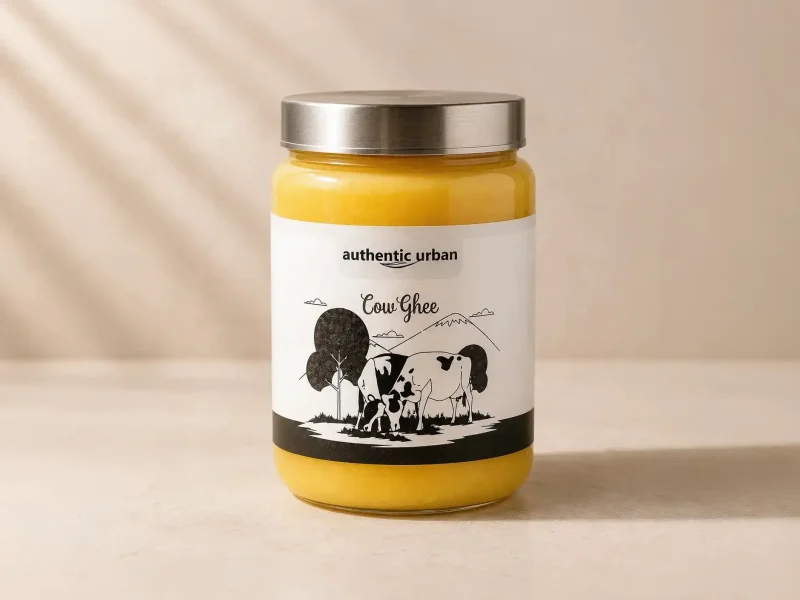 1 Litre
Winter sweets, after the flare
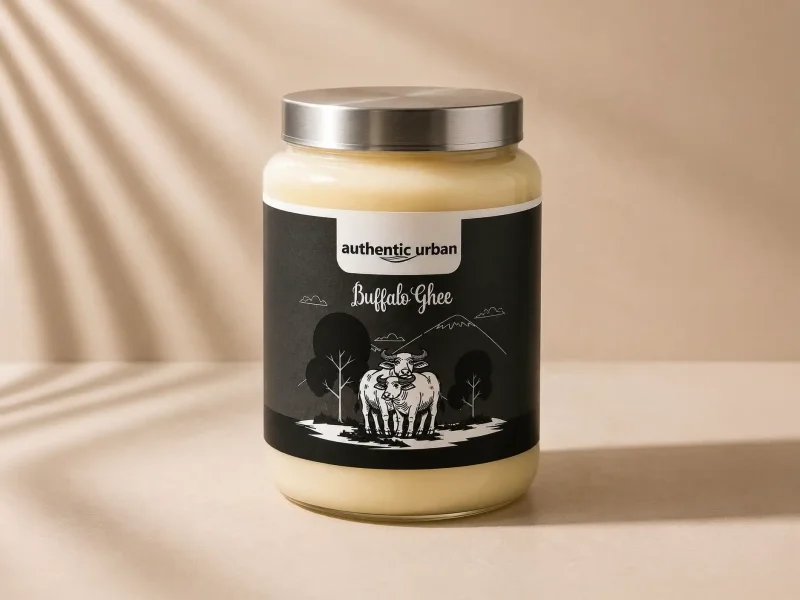 1 Litre
Each order is cooked after you place it, and the packing video is of that batch. Past order videos are on the shop.
FAQ
Piles me ghee kha sakte hai?
Haan, piles (bawasir) me ghee kha sakte hain, par din bhar me 1 se 2 chammach tak, dal, khichdi ya roti ke saath. Ghee se piles theek nahi hote. Asli aaram fibre aur paani se milta hai: dal, sabzi, chokar wali roti, amrood, papita. Potty ke waqt zor na lagayein. Khoon zyada aaye, gaanth me tez dard ho, ya ek hafte me aaram na mile, to doctor ko dikhayein.
Is desi ghee good for bleeding piles?
Ghee does not stop bleeding. A small streak of bright red blood after a hard stool is common with piles, and softer stools from fibre and water can reduce it. But NIDDK says bleeding from the rectum can also come from Crohn's disease, ulcerative colitis, or bowel cancer, so any repeated bleeding needs a doctor to look. Heavy bleeding, clots, or black stool need urgent care, the same day.
Can I eat halwa, puri, or paratha with piles?
A small portion now and then is fine, but not during a flare. These are made with a lot of ghee or oil and white flour or suji, so they bring fat without the fibre that keeps stools soft. If you want a treat, make the paratha with whole-wheat atta and a vegetable filling, eat it with dal and salad, and keep the ghee on it to a teaspoon.
Is cow ghee or buffalo ghee better for piles?
Neither has been studied for piles, and both are almost pure milk fat with no fibre. The amount matters far more than the animal. Cow ghee is lighter and easy to use as a teaspoon on dal or in warm water. Buffalo ghee is richer and goes into halwa, ladoo, and parathas, which are the heavy, low-fibre foods to keep small when you have piles.
Can ghee cure piles permanently?
No. Ghee does not cure piles, for a week or for good. Piles come back when the habits that caused them come back: hard stools, straining, long sitting on the toilet, and heavy lifting. What lowers the chance of them returning is fibre, water, and bathroom habits. Piles that keep coming back or come out of the anus need a doctor, who may offer banding or a small procedure.
Can I use ghee along with a piles cream from the chemist?
Not at the same time on the same skin. A medicated cream is made to be used on clean skin as the pack says; a layer of ghee under it or over it changes how it spreads. Use the cream your doctor or pharmacist suggests, and keep ghee for your food. NIDDK advises seeing a doctor if an over-the-counter piles product has not helped within a week.
About the editorial team
Authentic Urban TeamBilona ghee makers, Gir Somnath, Gujarat
We are the Parmar family in Gir Somnath, Gujarat. We have made ghee here since 2016 and sold it online since 2025. We make only Bilona ghee, test it every month, and anyone is welcome to visit and watch it being made. Our Gir cows and Jafarabadi buffalo are grass-fed village animals that graze near the Gir forest, with no hormones or milk boosters. We set their milk to curd, churn it, and cook the makkhan on a wood chulha. These articles come from that kitchen and from what customers ask us on WhatsApp. We are ghee makers, not doctors.
Sources
- Fiber for the treatment of hemorrhoids complications: a systematic review and meta-analysis (Alonso-Coello and others; American Journal of Gastroenterology, 2006, 101(1): 181-188), Europe PMC (PMID 16405552). Checked 27 Sep 2026.
- Eating, Diet, & Nutrition for Hemorrhoids, National Institute of Diabetes and Digestive and Kidney Diseases (NIDDK). Checked 27 Sep 2026.
- Symptoms & Causes of Hemorrhoids, NIDDK. Checked 27 Sep 2026.
- Treatment of Hemorrhoids, NIDDK. Checked 27 Sep 2026.
- Piles (haemorrhoids), NHS. Checked 27 Sep 2026.
- Piles in pregnancy, NHS. Checked 27 Sep 2026.
- Anal fissure, NHS. Checked 27 Sep 2026.
- Dietary Guidelines for Indians, 2024 (fibre reduces constipation and the risk of piles, PDF p. 66; ghee or butter 1 to 2 teaspoons a day, PDF p. 71), ICMR-National Institute of Nutrition. Checked 27 Sep 2026.