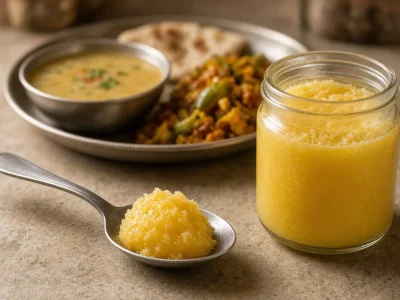
Ghee on Carnivore: Is It Allowed, and How Much a Day?
Ghee on carnivore is allowed on most plans: it is an animal fat with no carbohydrate and only a trace of milk protein. Strict meat, salt, and water plans leave it out, and so should anyone with a milk allergy. Keep it to 1 to 2 teaspoons a day. One tablespoon is 9.3 g of saturated fat by USDA figures, close to the 10 g a day that ICMR-NIN's 2024 guidelines call high, and carnivore studies already show LDL cholesterol rising.
Is ghee allowed on the carnivore diet?
Yes, on most carnivore plans. Ghee is butterfat with the water and most milk solids cooked off, so it counts as an animal fat, like tallow. The exceptions are meat, salt, and water plans, which drop all dairy, and a dairy-free plan for a milk allergy. Use a teaspoon or two to cook eggs or lean meat, not tablespoons on everything.
There is no single carnivore rulebook. A 2026 scoping review in Nutrients notes that the diet has no standard definition, so what "allowed" means depends on whose plan you follow. This is how the common versions treat ghee.
Plan
Ghee?
Why
Meat, salt, and water only (often called the lion diet)
Ghee: No
Only ruminant meat is eaten. Ghee is a milk fat, so it is out, and so is every other dairy food.
Strict carnivore: meat, fish, eggs
Ghee: Usually yes
Plans like this cook in animal fat, and ghee, tallow, and butter are the usual choices.
Carnivore that allows dairy
Ghee: Yes
Butter, cheese, and cream are already in, so ghee is the least of the dairy.
Animal-based (meat plus fruit, honey, raw milk)
Ghee: Yes
Looser than carnivore, and animal fats are the default cooking fat.
Dairy-free carnivore, for a milk allergy
Ghee: No
Ghee keeps a trace of milk protein. With a real milk allergy, trace is not zero.
This page is for people on carnivore or animal-based eating, or thinking about it, who want to know where ghee fits: which fat for which pan, how much, and what to watch in a blood report. If you are on keto rather than carnivore, the carbs and macros are on is ghee keto friendly.
Does ghee have lactose or casein?
Only a trace. USDA FoodData Central lists ghee at 0.28 g of protein and 0 g of carbohydrate per 100 g, which works out to about 0.04 g of milk protein in a tablespoon. Butter has 0.13 g in the same spoon, and 16% water on top.
You can see where the milk protein goes when ghee is made. At our kitchen in Gir Somnath the makkhan cooks in a matki on a wood chulha for 45 to 90 minutes. It comes off the flame when the bubbling goes quiet and the milk solids at the bottom have turned golden brown. Those brown bits are most of the casein and whey, and they stay behind when the ghee is strained. An undercooked batch stays cloudy and keeps moisture and solids, which is why we never pack one.
So ghee suits most people who get bloated on milk. It is not safe for a milk allergy, where a trace can still cause a reaction. What stays in the jar, and when an allergist decides, is on casein and whey in ghee.
Ghee, tallow, or butter: which fat on carnivore?
Ghee and beef tallow both suit a hot pan; butter is for low heat. Tallow is less saturated and has no milk protein at all, so it is the pick for a dairy-free carnivore. Ghee has vitamin A and a toasted-milk taste that tallow lacks. Per tablespoon:
1 tbsp (15 g)
kcal
Saturated
Cholesterol
Milk protein
Vitamin A
Smoke point
Ghee
Calories: 131
Saturated fat: 9.3 g
Cholesterol: 38 mg
Milk protein: 0.04 g
Vitamin A: 126 µg
Smoke point: 220 to 240°C
Beef tallow
Calories: 135
Saturated fat: 7.5 g
Cholesterol: 16 mg
Milk protein: 0 g
Vitamin A: 0 µg
Smoke point: 200 to 216°C
Butter (unsalted)
Calories: 108
Saturated fat: 7.6 g
Cholesterol: 32 mg
Milk protein: 0.13 g
Vitamin A: 103 µg
Smoke point: 140 to 180°C
Worked out from USDA FoodData Central, SR Legacy, per 100 g: butter oil, anhydrous (173412); fat, beef tallow (171400); butter, without salt (173430). Tablespoon 15 g, as in ICMR-NIN's guidelines. Smoke points from Kumar and Jadhav, Frontiers in Food Science and Technology, 2026, Table 2. Checked 28 September 2026.
Carnivore sites often call ghee the best fat for the diet. By the numbers, it is the most saturated of the three and carries more than twice tallow's cholesterol per spoon. Where it wins is the pan: it holds heat like tallow and tastes of toasted milk. Ghee next to lard, the other animal fat, is compared on ghee vs lard, and butter for everyday cooking on ghee vs butter.
Which fat for which pan
Job
Use
Why
Searing a steak or chops in a hot pan
Use: Ghee or tallow
Both hold heat well past where butter's milk solids blacken.
Fried or scrambled eggs, egg bhurji
Use: Ghee, 1 tsp
Eggs stick in a dry pan; a teaspoon is enough for three.
Fatty cuts: mutton keema, pork belly, ribeye, chicken with skin
Use: No added fat
The meat renders its own fat. Adding ghee only adds saturated fat.
Lean cuts: chicken breast, fish, prawns
Use: Ghee, 1 to 2 tsp
Lean meat needs a little fat so it does not stick or dry out.
Basting at the end, for flavour
Use: Butter, if you eat dairy
Low heat for a minute, where butter's milk solids brown instead of burn.
Deep frying
Use: Tallow
A kadhai of ghee is costly, and it is the most saturated of the three fats.
For a sear, pat the meat dry, heat the pan until a drop of water skips across it, then add a teaspoon of ghee and the meat straight after. If the ghee smokes before the meat goes in, the pan is too hot. Take care with the splash: ghee is only ready once all the water in the makkhan has boiled off, so hot ghee runs far hotter than boiling dal, and a spit of it burns worse. How hot ghee can go, and why a jar sometimes smokes early, is on ghee smoke point.
How much ghee a day on carnivore?
One to two teaspoons a day (5 to 10 g), the amount ICMR-NIN's 2024 guidelines give for ghee or butter for every adult. Carnivore does not change that. It makes it more important, because the meat already brings saturated fat of its own.
ICMR-NIN calls saturated fat intake high above 10 g a day of visible saturated fat on a 2,000 kcal diet, and names red meat among the hidden sources on top of that. Here is how fast ghee alone reaches the line.
Ghee in a day
kcal
Saturated fat
Share of 10 g line
1 teaspoon ghee (5 g)
Calories: 44
Saturated fat: 3.1 g
Share of the 10 g line: 31%
2 teaspoons ghee (10 g)
Calories: 88
Saturated fat: 6.2 g
Share of the 10 g line: 62%
1 tablespoon ghee (15 g)
Calories: 131
Saturated fat: 9.3 g
Share of the 10 g line: 93%
2 tablespoons ghee (30 g)
Calories: 263
Saturated fat: 18.6 g
Share of the 10 g line: 186%
3 tablespoons ghee (45 g)
Calories: 394
Saturated fat: 27.9 g
Share of the 10 g line: 279%
Worked out from USDA FoodData Central, SR Legacy, butter oil, anhydrous (173412): 61.9 g saturated fat and 876 kcal per 100 g. The 10 g line is ICMR-NIN's (Dietary Guidelines for Indians 2024, printed p. 93). Checked 28 September 2026.
Many carnivore pages suggest 1 to 3 tablespoons of ghee a day. Two tablespoons are about 18.6 g of saturated fat, nearly twice the line, before a single piece of meat. Even a plain carnivore breakfast adds up: three eggs (150 g) carry 4.7 g of saturated fat by USDA figures, and cooking them in a teaspoon of ghee takes it to 7.8 g.
At home in Gir Somnath, each of us eats 1 to 2 teaspoons of ghee a day, on roti, dal, and khichdi. On a carnivore plate the roti goes, but the spoon does not need to grow. You can work out your home's daily ghee and oil for each person, and the everyday limits by age and activity are on how much ghee per day.
Does carnivore with ghee raise cholesterol?
It often raises LDL, the cholesterol doctors watch for heart risk. The carnivore studies so far are small or self-reported, but they point the same way: LDL goes up, HDL and triglycerides tend to look good. None of them tested ghee on its own; ghee is one of the fats that adds to the load.
Study
Who
What it found
Lennerz and others, Current Developments in Nutrition, 2021
2,029 adults on carnivore for a median 14 months; online survey, self-reported
Among those who shared lipid reports, median LDL was 172 mg/dL, markedly high; HDL 68 and triglycerides 68 mg/dL looked good. Most reported feeling better.
Explorative study from Germany, Cureus, 2025
24 people, blood reports before and on the diet
Median LDL went from 157 to 256 mg/dL. Most other blood values stayed in range, and high triglycerides and HbA1c came down.
Scoping review, Nutrients, 2026
9 human studies, all small or short, none with a control group
Some weight loss and short-term gains, with risks of low vitamin C, vitamin D, calcium, magnesium, iodine, and fibre, and higher LDL. Long-term carnivore eating cannot be recommended yet.
People respond very differently, so your own report is the answer. Get a lipid profile before you start and again when your doctor says. If LDL climbs, the first change is the added fat: ghee, butter, and tallow down to a teaspoon, and leaner cuts. How ghee moves LDL, and what to read in the report, is on ghee for cholesterol.
Do the carnivore claims about ghee hold up?
Some do. Ghee really has vitamin A and almost no milk protein. The vitamin K2, vitamin D, and CLA claims that carnivore shops repeat do not survive a look at the USDA record.
Claim
Verdict
What the record says
"Ghee has no lactose or casein"
Verdict: Almost
USDA lists 0.28 g protein per 100 g of ghee, about 0.04 g in a tablespoon. That is a trace, not zero.
"Grass-fed ghee is rich in vitamin K2"
Verdict: Not shown
USDA lists only vitamin K1 for ghee, 8.6 µg per 100 g, and gives no K2 figure. No page we opened put a number on K2 in ghee.
"Ghee gives you vitamin D"
Verdict: No
USDA lists ghee at 0 µg vitamin D. Beef tallow has a little, 0.7 µg per 100 g. Eggs and oily fish carry more.
"Ghee is packed with vitamin A"
Verdict: True
About 126 µg per tablespoon, from USDA's 840 µg per 100 g. Tallow has none.
"Grass-fed ghee has 3 to 5 times more CLA"
Verdict: Unsourced
Sites that say this give no study. What CLA is, and how little a spoon holds, is on our CLA page.
"Ghee's smoke point is 250°C"
Verdict: Roughly
A 2026 review in Frontiers gives 220 to 240°C in its table and about 250°C in its text. Either way it is well above butter.
The 2026 Nutrients review lists vitamin C, vitamin D, calcium, magnesium, iodine, and fibre as the nutrients a carnivore diet risks running short of. Ghee covers none of them. How much CLA a spoon of ghee really holds is on CLA in ghee, and the full label per spoon on ghee nutrition facts.
Who should not try carnivore with ghee, or ask a doctor first?
Ask your doctor before starting if you have high LDL, heart disease, diabetes on medicines, kidney or liver disease, or are pregnant or breastfeeding. For these readers the diet is the question, and the ghee is the small part of it.
- High LDL or heart disease: every study above saw LDL rise. A diet that adds saturated fat works against your report, and your doctor sets the fat.
- Diabetes on medicines: in the 2021 survey, people with diabetes reported cutting their diabetes medicines, 84 to 100% depending on the drug. That shows how much the diet changes blood sugar. Change the diet only with your doctor, who adjusts the dose so your sugar does not fall too low. Ghee and blood sugar are on can diabetics eat ghee.
- Kidney or liver disease: an all-meat diet changes how much protein and fat the body handles each day. Your specialist decides.
- Pregnancy, breastfeeding, and children: not a time for a diet that cuts out whole food groups. The doctor and dietitian set the plan.
- Milk allergy: skip ghee and cook in tallow.
Stop and see a doctor if you get chest pain, feel faint, or have diarrhoea that lasts. Other conditions where the doctor sets the fat are under who should not eat ghee. This page is general information from ghee makers, not medical advice.
A 7-point checklist for ghee on carnivore
Screenshot this for the kitchen.
- Decide your plan first. Meat, salt, and water only means no ghee at all.
- With a real milk allergy, skip ghee. Trace milk protein is still milk protein.
- Cook fatty cuts in their own fat. Add ghee only to eggs, fish, and lean meat.
- Measure with a real teaspoon for two weeks. Keep ghee to 1 to 2 teaspoons a day.
- Remember a tablespoon of ghee is 9.3 g of saturated fat, near ICMR-NIN's 10 g line on its own.
- Get a lipid profile before you start and again when your doctor says. If LDL climbs, cut the added ghee first.
- On diabetes or blood pressure medicines, see your doctor before you start. Doses may need to change.
Which ghee is best for carnivore?
On carnivore the ghee should be ghee and nothing else: milk fat only on the label, no added oil or flavour. A well-cooked jar smells of toasted milk when warmed and is clear when melted, with no cloudiness or water at the bottom. The home checks are on how to identify pure ghee, and our ranking of cow ghee on sale is best cow ghee in India.
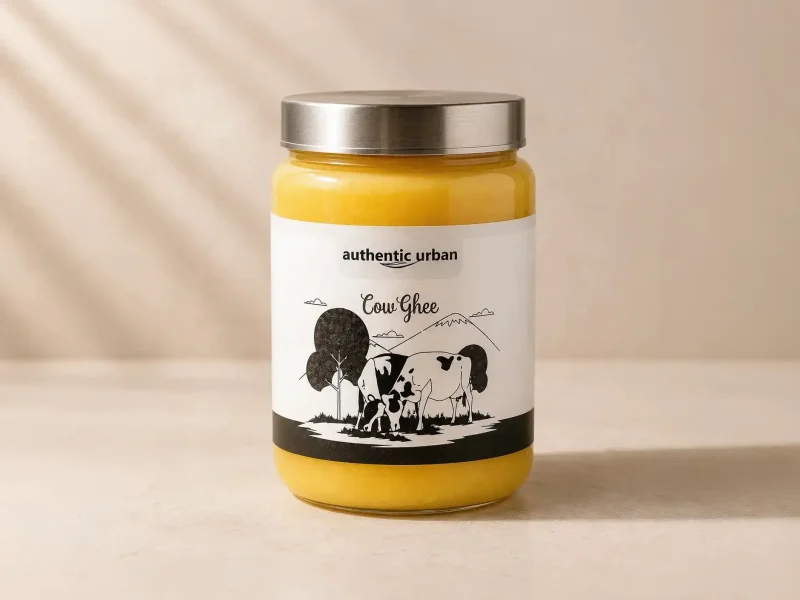
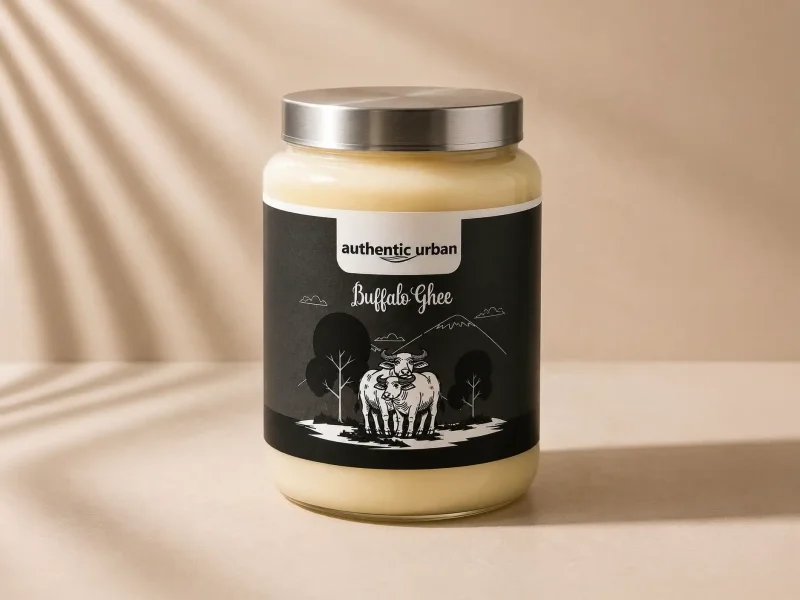
We make and sell ghee, so weigh this with that in mind. For eggs and the daily teaspoon we would pick our own A2 Gir cow ghee: milk from grass-fed Gir cows that graze near the Gir forest, with no hormone injections, set to curd overnight, churned, and cooked slowly until the milk solids brown and are strained out. It is made after you order, and a video of your jar goes to you on WhatsApp. At ₹2,399 a litre, a 15 ml tablespoon costs about ₹36, one more reason to cook fatty cuts in their own fat. Our Jafarabadi buffalo ghee is the richer jar for mutton. Varsha tastes every batch before it is packed, and we test every month against the FSSAI limits; the steps are on how we make ghee.
Eggs, fish, and the daily teaspoon
 1 Litre
Mutton and heavier cooking
 1 Litre
Each order is cooked after you place it, and the packing video is of that batch. Past order videos are on the shop.
FAQ
Is paneer or curd allowed on carnivore if ghee is?
Only on plans that allow dairy. Paneer and curd carry far more milk protein than ghee, and curd carries milk sugar too, so a dairy-free or meat-only plan drops them even when it keeps ghee. If you keep paneer because the family meals are vegetarian, count it: paneer is rich in saturated fat, so the ghee on top should shrink.
Can I put ghee in my coffee on carnivore?
On most carnivore plans, yes, though strict ones drop coffee itself. A teaspoon of ghee in black coffee adds about 44 kcal and 3.1 g of saturated fat and no carbohydrate. The trouble starts when the cup gets a tablespoon or two every morning, which alone can pass the day's saturated fat line before you eat any meat. Keep it to a teaspoon, and count it in the day.
Does ghee cause loose motions on a carnivore diet?
It can, when a lot of fat goes in at once. In the 2021 survey of 2,029 carnivore eaters, 3.1 to 5.5% reported stomach or bowel symptoms. A sudden jump to several tablespoons of fat a day can loosen stools in some people. Cut back to a teaspoon or two a meal. If loose motions last more than a few days, or you see blood, see a doctor.
Is cow ghee or buffalo ghee better for carnivore?
Both are animal fat with no carbohydrate, so both fit a carnivore plan that allows ghee. Cow ghee is lighter and more yellow, a good daily spoon for eggs and fish. Buffalo ghee is thicker and richer, and suits mutton and heavier cooking. The choice is taste and job, not carnivore rules. Neither changes the daily limit: 1 to 2 teaspoons, whichever jar you open.
How long does ghee keep for a carnivore pantry?
Our sealed jars keep 9 to 12 months at room temperature, and well-made ghee from others should too. Once open, use a dry spoon every time, keep the lid shut, and store it away from the stove and sunlight. On a carnivore diet you will reach into the jar with greasy hands and meat spoons, which is how water and bits of food get in. Scoop a week's worth into a small bowl instead.
Is homemade ghee better for carnivore than bought ghee?
Only if you cook it long enough. Undercooked ghee stays cloudy, keeps water and milk solids, and spoils fast, which also means more milk protein in the jar. Cook butter or makkhan on low heat until the bubbling goes quiet and the solids at the bottom turn golden brown, then strain through cloth. A bought jar made the same way and kept dry is just as good.
About the editorial team
Authentic Urban TeamBilona ghee makers, Gir Somnath, Gujarat
We are the Parmar family in Gir Somnath, Gujarat. We have made ghee here since 2016 and sold it online since 2025. We make only Bilona ghee, test it every month, and anyone is welcome to visit and watch it being made. Our Gir cows and Jafarabadi buffalo are grass-fed village animals that graze near the Gir forest, with no hormones or milk boosters. We set their milk to curd, churn it, and cook the makkhan on a wood chulha. These articles come from that kitchen and from what customers ask us on WhatsApp. We are ghee makers, not doctors.
Sources
- Dietary Guidelines for Indians, 2024 (ghee or butter 1 to 2 teaspoons a day and visible fat, printed p. 54; red meat as hidden saturated fat and the 10 g visible saturated fat line, p. 93), ICMR-National Institute of Nutrition. Checked 28 Sep 2026.
- Butter oil, anhydrous (FDC ID 173412), SR Legacy, USDA FoodData Central. Checked 28 Sep 2026.
- Fat, beef tallow (FDC ID 171400), SR Legacy, USDA FoodData Central. Checked 28 Sep 2026.
- Butter, without salt (FDC ID 173430), SR Legacy, USDA FoodData Central. Checked 28 Sep 2026.
- Egg, whole, raw, fresh (FDC ID 171287), SR Legacy, USDA FoodData Central. Checked 28 Sep 2026.
- Understanding the techno-functionality of ghee as a cooking medium (Kumar D, Jadhav HB), Frontiers in Food Science and Technology, 2026, Table 2, Frontiers. Checked 28 Sep 2026.
- Behavioral Characteristics and Self-Reported Health Status among 2029 Adults Consuming a "Carnivore Diet" (Lennerz BS and others), Current Developments in Nutrition, 2021, Current Developments in Nutrition. Checked 28 Sep 2026.
- Subjective Experiences and Blood Parameter Changes in Individuals From Germany Following a Self-Conceived "Carnivore Diet": An Explorative Study, Cureus, 2025, Cureus. Checked 28 Sep 2026.
- Carnivore Diet: A Scoping Review of the Current Evidence, Potential Benefits and Risks, Nutrients, 2026, MDPI Nutrients. Checked 28 Sep 2026.