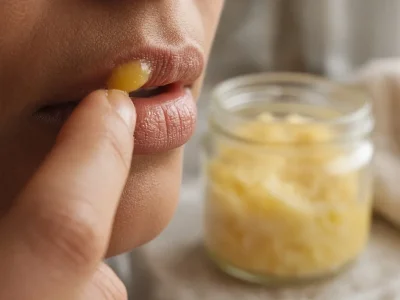
Ghee for Cracked Heels: How to Use It, and When It Fails
Ghee for cracked heels works on dry, shallow cracks: half a teaspoon of warm ghee rubbed into each heel at bedtime, under cotton socks, every night for about two weeks. It seals water into the skin, the same job petroleum jelly does. It does not thin a thick callus, and it is the wrong fix for a crack that bleeds, is infected, or sits on a diabetic foot.
Does ghee help cracked heels?
Yes, for dry, shallow cracks. Ghee is almost pure fat, and a layer of fat on dry skin slows the water leaving it, so the rim of the heel softens and the cracks close as you walk. Put on at night under socks, it stays on the skin for hours. That is the whole of what it does, and it is enough for most winter heels.
Most pages that recommend it say ghee "penetrates deep" or "repairs" the skin with its vitamins. We could not find a single study of ghee on heel cracks. What does exist is plain advice from dermatologists and podiatrists, and it lines up with ghee better than those claims do. The American Academy of Dermatology (AAD) tells people with cracked heels to put plain petroleum jelly on before bed and wear socks. An NHS podiatry leaflet from East Sussex suggests the same overnight treatment with cotton socks. Ghee does the job of that petroleum jelly. Where it falls short is thick, hard heel skin, which needs filing or a cream made to loosen it.
This page is for treating cracks. If you want the bedtime foot massage for its own sake, with the sleep and Ayurveda claims checked, that is on ghee on feet at night.
How to apply ghee on cracked heels overnight
Wash and dry your feet, rub half a teaspoon of warm ghee into each heel for 2 to 3 minutes, and put on cotton socks for the night. Do it every night for two weeks, then two or three nights a week.
1. Wash and dry
Wash the feet in lukewarm water with a mild soap, then pat dry. Dry between the toes last and leave that skin bare.
2. File, only if the skin is whole
Once or twice a week, a pumice stone dipped in warm water, in small circles on the hard rim of the heel. Never on a crack that is red, sore, or bleeding.
3. Warm the ghee, not hot
Half a teaspoon per heel in a small steel bowl, stood in warm water until it melts. Test a drop on your wrist.
4. Rub it in for 2 to 3 minutes
Heel, the back of the heel, and the sides of the sole. Work it along each crack, never into one that is open or weeping.
5. Cotton socks on
Straight away, so the ghee stays on the skin all night and off the sheets.
6. Wipe in the morning
A damp cloth or a quick wash. A thin layer on the rim again after your bath if the heels feel tight by evening.
7. Every night for 2 weeks
Then 2 or 3 nights a week to keep them soft. Stop at once if the skin reddens, itches, or a crack starts to hurt more.
Skip the long soak. Many home remedies start with 15 minutes in a bucket of hot water. The AAD says to keep baths and showers to 5 to 10 minutes, because long soaks dry the skin further, and Diabetes UK tells people with diabetes to avoid soaking their feet at all. A normal wash softens the rim enough for a pumice. The East Sussex leaflet says moisturiser goes in most easily about 10 minutes after a bath, and the AAD says within 5 minutes; either way, the time to put ghee on is soon after washing, on skin that is dry to the touch.
Warm it in a bowl, never on the flame. At our kettle in Gir Somnath, ghee is only ready once every drop of water in the makkhan has boiled away, so ghee straight off a flame is far hotter than boiling dal, and a splash burns worse. Stand a small steel bowl in warm water instead and test a drop on your wrist. If you have diabetes and less feeling in your feet, you will not notice a burn, so keep it barely warm. What to do if ghee has already burned skin is on ghee for burns.
Leave the toes out. The East Sussex leaflet and Diabetes UK both say not to put cream between the toes. Fat trapped in that damp gap is how soggy skin and fungal infections start. Heel, the back of the heel, and the sides of the sole are enough.
How much ghee, and what it costs
Half a teaspoon per heel, about 2.5 ml, is enough for most feet. If the socks are soaked through by morning, use less. At half a teaspoon a heel, one teaspoon a night covers both feet, so a 250 ml jar kept for the feet lasts about 50 nights. At our 1 litre price of ₹2,399 for A2 Gir cow ghee, that teaspoon costs about ₹12 a night. Any clean, fresh ghee from your kitchen does the same job on a heel.
Heel-crack season is also when ghee sets hard. Winter milk is richer, and our ghee cools into fine grains that take a minute longer to melt. That is not a fault, as why ghee is grainy explains. Take what you need into the bowl with a dry spoon, so fingers that have touched feet never go back into the kitchen jar.
Is ghee better than Vaseline or a heel cream?
Ghee is as good as petroleum jelly for sealing a dry heel overnight, and no better. For thick, hard heel skin, a heel cream with urea or an acid does something neither can: it works on the hard layer itself.
Product
What it does
Best for
Watch for
Ghee
Seals water into the skin and softens the top layer
Shallow, dry cracks; what you already have in the kitchen
Greasy; needs socks. Does nothing to thin a thick callus.
Plain petroleum jelly
Seals water in
The same job as ghee; the AAD names it for bedtime
Greasy; needs socks
Heel cream with 10 to 25% urea, lactic acid, or salicylic acid
Draws water in and loosens the thick, hard layer
Thick, yellow, hard heel skin that ghee alone does not soften
Can sting in open cracks. Use on unbroken skin.
Coconut oil
Seals water in, lighter than ghee
Summer, or if ghee feels too heavy
Runs off faster; needs socks too
Mustard oil
Seals water in
Winter foot rubs in many homes
Can sting and redden cracked skin
Urea and acid strengths from the AAD's cracked heels advice, checked 28 September 2026.
The AAD suggests a cream with 10 to 25% urea, an alpha hydroxy acid (lactic acid is one), or salicylic acid, put on after a bath. Diabetes UK also recommends an emollient with a urea base for feet. A good plan for heels with a thick yellow rim: urea cream after the morning bath, ghee and socks at night. Keep the urea cream off open cracks, where it stings. The same seal-it-in idea on the face is covered in ghee slugging, and how ghee and coconut oil compare as fats is on ghee vs coconut oil.
For very dry heels, the East Sussex leaflet describes a stronger night: a thick layer, cling film wrapped loosely over the foot, then cotton socks. It works with ghee as well as with petroleum jelly. Keep it to dry, unbroken skin, and not for anyone with diabetes or poor circulation without asking their doctor.
What can you mix with ghee for cracked heels?
Nothing, to start. Plain ghee for the first week tells you whether your skin is happy with it. After that, a little beeswax is the one addition that makes it work better.
Mix
Verdict
Why
Plain ghee
Start here
One ingredient, so if the skin reacts you know why.
Ghee with a little beeswax
Good
Sets into a firm balm that stays on the heel longer. About 1 part wax to 4 parts ghee, melted over warm water.
Ghee with turmeric
Fine on whole skin
Stains skin, socks, and sheets yellow. No test shows it heals heel cracks faster.
Ghee with honey
Sticky, optional
Honey holds water on the skin, but it is messy on a floor and under socks.
Ghee with lemon juice
Skip
Acid stings an open crack. If you want an acid for thick skin, a urea or lactic acid heel cream is made for it.
Ghee with camphor
Skip on cracks
Strong on broken skin, and not something to leave where children can reach it.
A ghee and beeswax balm is easy to make. Melt one teaspoon of grated beeswax with four teaspoons of ghee in a steel bowl over hot water, stir, and pour into a small clean tin. It sets firm, travels in a bag, and does not run off the heel in summer the way plain ghee does. The same balm, in a smaller tin, works on dry lips; a lip version is on ghee for lips.
Why do heels crack, and when is ghee the wrong fix?
Most heel cracks are dry skin under pressure, and ghee suits those. Some look the same but come from wet skin, a fungus, or a skin condition, and a fat does nothing for them. The East Sussex leaflet notes that splits happen when skin is either too dry or too moist.
Cause
What you notice
Does ghee help?
What does more
Dry skin
White, rough rim, fine cracks, worse in cold dry weather
Yes, this is the job ghee does
Ghee or a moisturiser morning and night
Open-backed chappals and sandals
Hard, thick rim on the outer heel, cracks that start at the edge, often in summer
Softens it, but the cracks come back
Closed heels or a sandal with a wide heel seat, plus filing
Sweaty feet
Soft, white, soggy skin that splits, often between the toes
No. The skin is too wet, not too dry.
Keep feet dry; a GP can prescribe a drying lotion
Athlete's foot
Itchy, flaky, cracked skin on the sole and sides, white patches between the toes
No. It is a fungal infection.
An antifungal cream from a pharmacist, for a few weeks
Eczema or psoriasis
Itchy, red, or thick silvery patches, often elsewhere on the body too
Can ease dryness; does not treat the cause
A doctor or dermatologist
Diabetes
Very dry feet, sometimes with numbness, so cracks go unnoticed
Only on unbroken skin, with care
Daily checks and the diabetes foot team
From the East Sussex NHS podiatry leaflet, the NHS athlete's foot page, and Diabetes UK, checked 28 September 2026.
Chappals are the Indian heel's biggest problem. The East Sussex leaflet says heel fissures from dry skin are more common in summer, because in open-backed sandals the heel sits on the back of the sole and gets squashed and pinched over its edge. The AAD also lists open-heeled shoes, worn-down shoes, and shoes that do not fit as things to avoid. If your heels crack every summer however much you oil them, look at the chappals before the balm: a sandal with a wide heel seat, or closed shoes at home for a few weeks, lets the rim heal.
Athlete's foot hides as dry heels. The NHS lists cracked or bleeding skin, and sore, flaky patches on the soles and sides of the feet, among its signs. If your "dry" heels itch and the skin between your toes is white and peeling, a pharmacist's antifungal cream is the fix, and a fat left on under socks can keep the skin warm and damp. Itchy red or silvery patches that are also on your hands, elbows, or knees point to eczema or psoriasis, which need a doctor's treatment; ghee can only ease the dryness around them.
Can diabetics use ghee on cracked heels?
On unbroken skin, yes, with care. A crack on a diabetic foot is a different matter: it can become an ulcer, so it goes to the doctor or diabetes foot team, not under a home balm.
Diabetes UK's foot advice, read against a ghee routine:
- Check your feet every day, before your socks go on in the morning and before bed. Use a mirror or ask someone if you cannot see your heels. The bedtime ghee is a good moment for the evening check.
- No cream between the toes. Heels and soles only.
- Test water with your wrist or elbow, and avoid soaking your feet. Skip any soak step in home remedies.
- Pumice with care, and no blades. Diabetes UK warns against blades on tough skin and against corn plasters, creams, and sprays that remove corns, which can burn the skin and cause ulcers. The pedicure blade at a salon is out.
- A urea-based emollient is what Diabetes UK names for keeping foot skin healthy. Ghee at night can sit alongside it.
If your heels are dry because of diabetes, the diet side is on can diabetics eat ghee. We make ghee; we are not doctors, and your diabetes team decides what goes on a diabetic foot.
When do cracked heels need a doctor?
When a crack bleeds, hurts to walk on, shows any sign of infection, or sits on a diabetic foot. The AAD says to see a dermatologist when cracked heels are severe or do not improve.
Sign
What to do
A crack that bleeds, or hurts to walk on
Stop the ghee on that heel. Cover it with a clean dressing and see a doctor or podiatrist if it has not closed in a few days.
Redness spreading from a crack, warmth, swelling, pus, or fever
See a doctor the same day. These are signs of infection.
Any crack or sore on the foot if you have diabetes
Call your doctor or diabetes foot team. Do not wait to see if it heals.
Itchy, flaky skin between the toes or on the sole
Likely athlete's foot. Ask a pharmacist for an antifungal cream.
No better after 2 weeks of nightly ghee and socks
Try a urea heel cream, and see a podiatrist or dermatologist if the cracks are deep.
For a split that is not infected, the East Sussex leaflet says to cover it with a clean, sterile dressing until it heals, and the AAD suggests a liquid bandage over heel cracks as a barrier. A podiatrist can also take the hard skin down safely, which is quicker and safer than weeks of hard filing at home. Once a deep crack has closed and left a mark, what ghee can and cannot do for a scar is on ghee for scars.
A 2-week cracked heels checklist
Two weeks of nightly ghee and socks is long enough to tell whether it is working on your heels. Screenshot the list if it helps.
- Look at the cracks in daylight: dry and white, or red, wet, or bleeding?
- Red, wet, bleeding, or you have diabetes and a crack: see a doctor first, no home balm.
- Dry and white: wash, pat dry, and leave the skin between the toes bare.
- Pumice on the hard rim once or twice a week, never on a sore crack.
- Half a teaspoon of warm ghee per heel, rubbed in for 2 to 3 minutes.
- Cotton socks on at once, every night for 2 weeks.
- A thin layer again after the morning bath if the rim feels tight.
- Closed-back footwear for the 2 weeks, or a sandal with a wide heel seat.
- Not softer by night 14: switch to a urea heel cream for the thick skin.
- Healed: 2 or 3 nights a week to keep them that way.
Which ghee for heels and the plate?
On a heel, freshness matters more than the label: plain ghee with nothing added, that melts clear and smells of toasted milk. A batch taken off our chulha too early stays cloudy, keeps water, and spoils fast, which is why it never goes in a jar. Five ways to check yours at home are on how to identify pure ghee.
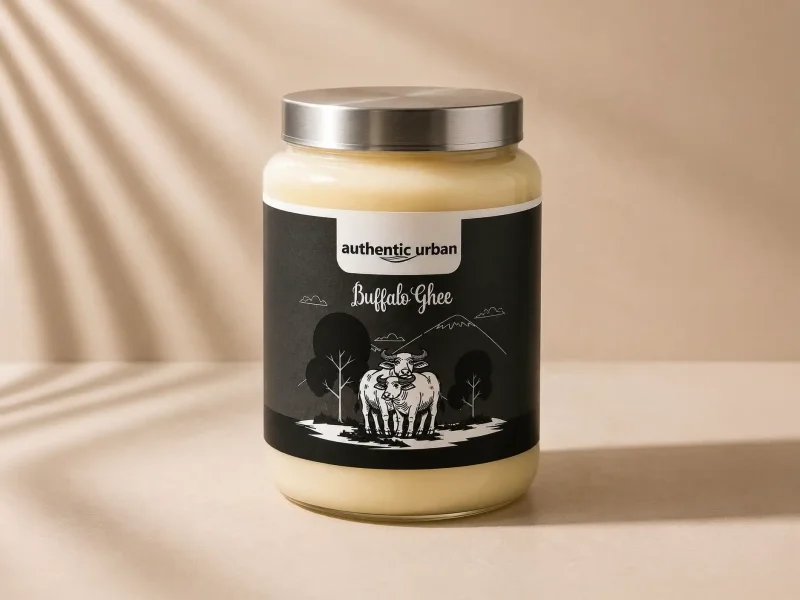
We make and sell ghee, so weigh this with that in mind. For the kitchen jar that also fills the small heel bowl, we would pick our own A2 Gir cow ghee: milk from grass-fed Gir cows, set to curd overnight, churned, and cooked in a matki on a wood chulha, made after you order, with a video of your jar sent on WhatsApp. Our Jafarabadi buffalo ghee sets firmer, which some people prefer as a heel balm. We test every month against the FSSAI limits; the steps are on how we make ghee. Our ranking of the cow ghee on sale is on best cow ghee in India.
The heel bowl and the daily teaspoon
 1 Litre
A firmer balm, paratha, and halwa
 1 Litre
Each order is cooked after you place it, and the packing video is of that batch. Past order videos are on the shop.
FAQ
Does eating ghee help cracked heels?
Not in any way a study has shown. Heel cracks come from dry, thick skin on the outside, pressure, and footwear, and what fixes them is what you put on the skin and on your feet. A teaspoon or two a day in dal or on roti is fine, but eating more to fix your heels only adds calories. Very dry skin all over the body is worth mentioning to a doctor.
Can I use cow ghee or buffalo ghee on my heels?
Either works. Both are almost pure milk fat and seal water into the skin the same way. Buffalo ghee sets firmer, which some people like as a balm because it stays on the heel longer, while cow ghee is softer and rubs in faster. What matters more is that it is fresh and clean. Take it out with a dry spoon, so a jar kept for cooking never meets fingers that have touched feet.
Can I use old or rancid ghee on my feet?
Better not. Ghee that smells sour, soapy, or like old paint has gone rancid, and fats in that state can irritate skin, which is the last thing an open crack needs. Keep a small bowl of fresh ghee for the heels and throw out anything that smells off. A sealed jar of good ghee keeps for months at room temperature, so there is rarely a reason to use a bad one.
Why do my heels crack more in summer?
Footwear, mostly. An NHS podiatry leaflet from East Sussex says heel fissures from dry skin are more common in summer, because open-backed sandals let the heel spread and get pinched over the edge of the sole. Chappals do the same. Hot, dry air and bare feet on hard floors add to it. A sandal with a wide heel seat, or closed shoes for a few weeks, helps as much as any balm.
Is it safe to walk around with ghee on my feet?
Not barefoot. Ghee on the soles makes tiled and stone floors slippery, and a fall is a bigger risk than a cracked heel, especially for older parents. Put the ghee on only once you are in for the night, pull on cotton socks straight away, and wipe your feet in the morning before you walk around. In the day, use a thin layer on the heel rim only, not on the whole sole.
Can I put ghee on my child's cracked heels?
Yes, if the skin is whole. Children's cracks are usually dry skin from bare feet and chappals. A few drops of warm ghee on each heel at bedtime with socks is plenty. Skip filing, lemon, and camphor. Itchy, peeling skin between the toes is more likely athlete's foot than dryness, and a crack that is red, swollen, or oozing needs a doctor, not a balm.
About the editorial team
Authentic Urban TeamBilona ghee makers, Gir Somnath, Gujarat
We are the Parmar family in Gir Somnath, Gujarat. We have made ghee here since 2016 and sold it online since 2025. We make only Bilona ghee, test it every month, and anyone is welcome to visit and watch it being made. Our Gir cows and Jafarabadi buffalo are grass-fed village animals that graze near the Gir forest, with no hormones or milk boosters. We set their milk to curd, churn it, and cook the makkhan on a wood chulha. These articles come from that kitchen and from what customers ask us on WhatsApp. We are ghee makers, not doctors.
Sources
- How to care for dry, cracked heels (1 February 2022), American Academy of Dermatology. Checked 28 Sep 2026.
- Dry skin (anhydrosis) and skin fissures, patient information leaflet 1020/01 (September 2022), East Sussex Healthcare NHS Trust, Podiatry. Checked 28 Sep 2026.
- How to look after your feet (last reviewed 22 November 2024), Diabetes UK. Checked 28 Sep 2026.
- Athlete's foot (last reviewed 29 April 2024), NHS. Checked 28 Sep 2026.