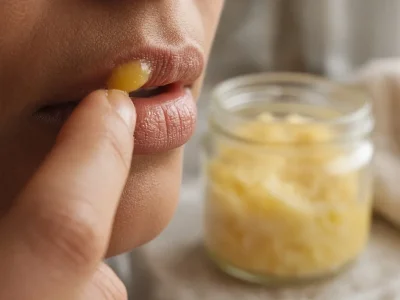
Ghee on Feet at Night: Benefits and How to Apply It
Ghee on feet at night means rubbing half to 1 teaspoon of warm ghee into each clean, dry sole, massaging for 3 to 5 minutes, and sleeping in cotton socks. It reliably softens dry soles, and the slow massage may help you wind down; foot massage trials show better reported sleep, though none tested ghee. It does not improve eyesight or remove toxins.
Is it good to apply ghee on feet at night?
Yes, for most healthy adults with unbroken skin. Half to 1 teaspoon per foot, massaged in for a few minutes before bed, softens dry soles and heels and makes a calm end to the day. The sleep benefit is possible but comes mostly from the massage, and the eyesight and detox claims have nothing behind them.
In Ayurveda the practice is called padabhyanga (pada means foot, abhyanga means oil massage). It is an old household habit across India, often done by a mother or grandmother for the whole family at bedtime, with ghee, sesame oil, or whatever fat is in the kitchen. This page is for adults who want to try it and want to know what to expect. If your main problem is cracked heels, the soak-and-scrub routine is on ghee for cracked heels. If you have diabetes, read who should skip it first.
How to apply ghee on feet at night
Wash and dry your feet, warm half to 1 teaspoon of ghee per foot, massage it into the sole and heel for 3 to 5 minutes, then wipe the extra and put on cotton socks.
1. Wash the feet and dry them fully
Warm water, then a towel pressed between every toe. Ghee on damp skin slides onto the sheet, and damp skin between the toes is where fungus grows.
2. Warm half to 1 teaspoon of ghee per foot
Stand the jar in warm water for a minute, or rub the ghee between your palms until it runs. Warm to the touch, never hot.
3. Spread it over the sole, heel, and ankle
Cover the whole sole and the back of the heel. Leave the skin between the toes dry.
4. Massage each foot for 3 to 5 minutes
Slow thumb circles along the arch, firm strokes up the heel, a gentle pull on each toe. Light pressure is enough; it should never hurt.
5. Wipe the extra and put on cotton socks
Blot with a cloth so you do not slip on the floor. An old pair of thin cotton socks keeps the sheet clean.
6. Wash the feet in the morning
Plain water or mild soap takes off what is left. Wash the socks after each night or two.
How much ghee per foot
Start with half a teaspoon per foot, about 2.5 ml. Add more only if the sole drinks it in and still feels dry after a minute of rubbing. Very dry, rough winter heels may take a full teaspoon; a child's foot needs a quarter. If your socks are soaked through by morning, you used too much. At half a teaspoon a foot, a 250 ml jar kept for the feet lasts about 50 nights, so there is no need for a special "foot ghee".
Warming grainy ghee, and the smell check
Ghee changes with the season in our kitchen in Gir Somnath. In winter the milk is richer and the ghee cools to a fine grain; in summer it stays liquid in the jar. Grainy ghee will not spread on a cold sole, so warm the spoonful first: in your palms, or in a small steel bowl set in warm water. The grain is normal, and customers ask us about it on WhatsApp more than anything else; we explain it on why ghee is grainy.
Smell it before it goes on your skin. Good ghee smells of toasted milk. A batch that was undercooked stays cloudy, holds water, and turns sour fast; we never pack one, and it does not belong on your feet under socks all night. A sour, sharp smell means the jar has gone off. How to tell is on does ghee go bad.
What are the benefits of rubbing ghee on feet?
Softer soles are the benefit you can count on, and a calmer bedtime is the likely second. Here is every popular claim next to what we can actually say.
Claim
Verdict
What we can say
Softer soles and heels
Likely
Ghee is a fat. On dry skin it slows water loss, and under socks it stays on for hours. Deep, bleeding cracks need more than this.
Better sleep
Possible
Trials of foot massage and warm foot soaks show people report sleeping better. None tested ghee, and none showed ghee matters more than the massage.
Less tired, achy feet after a long day
Possible
Any slow foot massage can ease tired feet. Pain that lasts, or pain with swelling, needs a doctor.
Sharper eyesight
No
Charaka says the eyes gain brightness from foot massage. That is tradition; no trial shows vision change from it. Eyes need an eye doctor.
Cools body heat or burning feet
No evidence
A cool, greased sole can feel soothing. Burning or tingling feet that keep coming back can be a nerve problem, often from diabetes. Get it checked.
Removes toxins (especially with a kansa bowl)
No
Nothing shows toxins leave through the soles. Grey marks after a kansa bowl are most likely metal and ghee rubbed off the bowl.
Cures sciatica, joint pain, or insomnia
No
Foot massage can feel good with these problems. It does not treat them.
If the aim is joints rather than skin, warm massage on the knees and what food can do are covered on ghee for joint pain. If it is body heat, whether ghee itself is heating or cooling is on is ghee hot or cold for the body.
Does ghee on feet help you sleep?
It may, but the massage and the warmth are doing the work, not the ghee. No study has tested ghee on the feet for sleep.
What has been tested is foot massage and warm foot soaks. A 2020 meta-analysis in Evidence-Based Complementary and Alternative Medicine pooled 26 randomised trials of foot reflexology with 2,366 people and found a large improvement in self-reported sleep quality. The authors also found "considerable heterogeneity": the trials differed a lot, and most were in patients, such as people on dialysis, with cancer, after surgery, or just after giving birth, not healthy adults at home.
A 2025 review in the Scandinavian Journal of Caring Sciences pooled 18 studies of warm footbaths in 950 adults aged 60 and over. People said they slept better, but sleep measured by devices did not change, and the authors rated the certainty of the evidence as very low. The soaks that worked best were at or below 40°C, lasted at least 10 minutes, were done about an hour before bed, and were kept up for at least a week.
Put together, that gives a bedtime routine worth trying: a 10-minute warm soak about an hour before bed, feet dried well, then the ghee massage, then lights down. If you still sleep badly after a couple of weeks, or you snore loudly, wake gasping, or feel low, that is for a doctor. Whether eating ghee at night helps sleep is a different question, answered on ghee for sleep.
What does Ayurveda say about padabhyanga?
The Charaka Samhita, one of the oldest Ayurveda texts, lists foot massage among the daily habits in Sutra Sthana chapter 5, verses 90 to 92, and it talks about the feet, the eyes, and vata, not sleep.
In the translation published by the Charak Samhita New Edition, the verses say foot massage eases roughness, stiffness, dryness, fatigue, and numbness of the feet; gives the legs strength and firmness; brings brightness to the eyes; pacifies vata (the dry, restless quality in Ayurveda); and prevents sciatica, cracked feet, and tightness of the muscles and vessels of the legs. The link to sleep that every reel mentions is a later household idea built on the vata part, not a line in these verses.
Read it as tradition. The dryness and cracked-feet lines match what any fat does on skin. The eyes, sciatica, and vessel lines have not been shown in trials. Padabhyanga is also the short, foot-only version of full-body oil massage, which is on abhyanga with ghee.
Does ghee on the feet improve eyesight?
No. The idea comes from the verse above, and from the traditional map of channels (nadis) said to run from the soles to the eyes. That map is not the network of nerves and blood vessels in an anatomy book, and no trial has shown vision change from foot massage. Blurred vision, glasses that no longer work, or red, dry eyes need an eye doctor. The clinic eye treatment with ghee is a different thing, done by a trained practitioner, and it is on ghee for eyes (netra basti).
Ghee, sesame oil, or coconut oil on feet: which is better?
On the skin they do the same job; pick the one your feet like and the season suits. Ghee is the gentlest on sensitive skin, sesame oil is the classic Ayurveda choice, and coconut oil is the light summer option.
Fat
How it feels
Best for
Watch for
Ghee
Soft, sinks in well, little smell once warm
Dry soles, a calm bedtime, households that already keep a jar
Can go rancid. Use a jar that smells of toasted milk.
Sesame (til) oil
Thin, spreads far, nutty smell
The classic Ayurveda massage oil, used warm in winter
Patch test. Use plain food-grade oil, not a perfumed one.
Coconut oil
Light, sets solid in a cool room
Summer, and people who find ghee too heavy
Warm it first. Does the same job as ghee on the skin.
Mustard oil
Sharp smell, can sting
Winter massage in North Indian homes
Can redden thin or cracked skin. Skip it on sensitive feet.
Kansa bowl (kansa vati) foot massage with ghee
A kansa vati is a small bowl of kansa (bell metal) rubbed in circles over a ghee-coated sole. It gives a smooth, even pressure that is easier on the hands than thumbs, and many people like the feel. The claims around it are another matter. The grey or dark marks on the sole afterwards are most likely metal and ghee rubbed off the bowl; nothing shows they are toxins drawn out of the body. Use it for the massage if you enjoy it, rinse and dry the bowl after each use, and skip it on cracked or broken skin.
Who should not put ghee on their feet?
Skip it, or ask a doctor first where it says so, if any of these apply. We are ghee makers, not doctors, and this is where your doctor's advice comes first.
- Diabetes, especially with numb feet. Diabetes UK says not to put cream between the toes, and to look at your feet every morning and before bed. If you have lost feeling, you will not notice a burn from hot ghee or a blister from firm rubbing, so keep the ghee lukewarm, the pressure light, and ask your diabetes team. Food questions are on can diabetics eat ghee.
- Athlete's foot or itchy, peeling skin between the toes. The NHS advises drying between the toes and wearing clean cotton socks every day. Fat and socks over an infection keep it warm and damp. Treat it first.
- Open cuts, blisters, ulcers, or heel cracks that bleed. Let them heal, or see a doctor if they do not.
- One leg that is suddenly swollen, painful, warm, or darker. The NHS lists these as signs of a blood clot in the leg (DVT), which needs an urgent doctor's visit. Do not massage it. Call an ambulance if it comes with chest pain or breathlessness.
- Pregnancy with sudden swelling of the feet, hands, or face. The NHS lists this as a sign of pre-eclampsia; call your maternity unit or doctor the same day. Otherwise, ask your doctor before starting any new massage routine in pregnancy.
- A milk allergy, or a rash from ghee before. A trace of milk protein can remain in ghee, as milk protein in ghee explains. Patch test a drop on the inner ankle and wait a day.
- Babies. Baby massage has its own rules; see baby massage with ghee.
Stop and see a doctor if your feet burn, tingle, or feel numb often, if a sore on the foot is not healing, or if poor sleep lasts more than a few weeks. A foot massage makes a nice bedtime habit; it does not treat any of these.
A 7-night checklist for ghee on feet
Try it for a week with these rules, then decide. Screenshot the list if it helps.
- Feet washed and fully dry, including between the toes.
- Half to 1 teaspoon of warm ghee per foot, never hot.
- Sole, heel, and ankle only; nothing between the toes.
- 3 to 5 minutes of slow massage on each foot, then cotton socks.
- Screens off and lights low for the half hour after, if you want the sleep effect.
- Look at your soles before the socks go on: cuts, blisters, or cracks that bleed mean stop.
- After 7 nights, keep it if your feet and your evenings feel better. If sleep is still poor, see a doctor.
Other bedtime ghee habits, drops in the navel and in the nose, have their own steps and risks: see ghee in the belly button and ghee in the nose. For skin, a clean jar matters more than a brand name; five quick checks are on how to identify pure ghee.
Which ghee for the feet and the kitchen?
One jar can do both jobs if it is plain, with nothing added, and smells of toasted milk when warmed. Curd-churned ghee often sets grainy when cool; that is normal and melts in your palm. How curd Bilona (curd churned by hand) differs from cream ghee is on the Bilona method, and our ranking of the cow ghee on sale is best cow ghee in India.
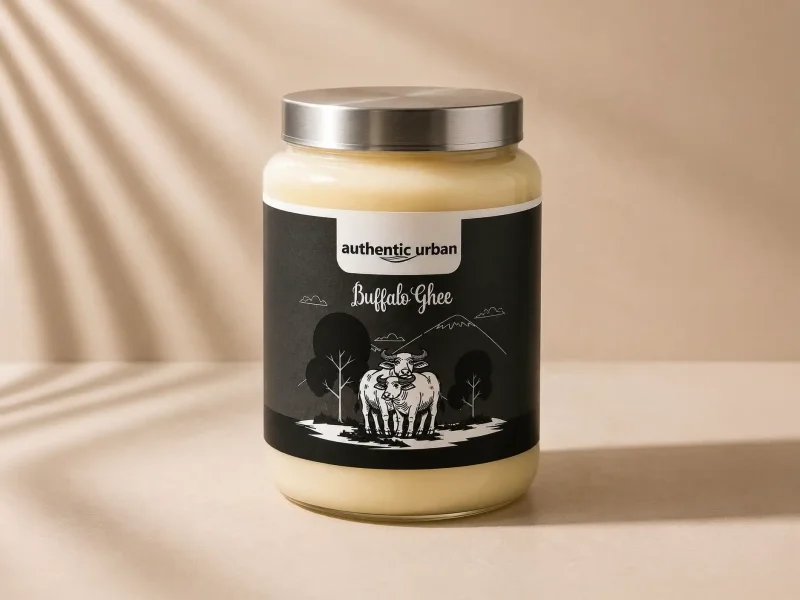
We make and sell ghee, so weigh this with that in mind. For the foot bowl and your daily dal we would pick our own A2 Gir cow ghee: milk from grass-fed Gir cows, set to curd overnight, churned, and cooked in a matki on a wood chulha, made after you order, with a video of your jar sent on WhatsApp. For paratha and sweets, our Jafarabadi buffalo ghee is the richer jar. We test every month against the FSSAI limits; the steps are on how we make ghee.
Foot massage and the daily teaspoon
 1 Litre
Paratha, halwa, and ladoo
 1 Litre
Each order is cooked after you place it, and the packing video is of that batch. Past order videos are on the shop.
FAQ
Should I wash my feet after applying ghee, or leave it overnight?
Leave it overnight under cotton socks and wash your feet in the morning. The ghee needs hours on the skin to soften a dry sole, and most of it is gone by morning. What is left washes off with plain water or a little mild soap. If you cannot wear socks, give it 20 to 30 minutes, then wipe your soles with a cloth before you walk anywhere, so you do not slip.
Can I apply ghee on my feet in summer?
Yes, but use less. In summer our ghee stays liquid in the jar, so a quarter to half a teaspoon per foot spreads over the whole sole. Sweaty feet under socks in a hot room can breed fungus, so keep the socks thin and cotton, or skip them and wipe the soles instead. Many households switch to coconut oil in the hottest months, and that works just as well on the skin.
Cow ghee or buffalo ghee for foot massage?
Either works on the skin; both are almost pure milk fat. Cow ghee melts a little softer and has a lighter smell, so most people find it easier to spread on the soles. Buffalo ghee sets firmer and needs a little more warming. If you keep one jar for the kitchen and the feet, pick the one you cook with, and use a separate clean spoon for the foot bowl.
Can I use old or expired ghee on my feet?
Only if it still smells of toasted milk. Ghee that has gone rancid smells sour, sharp, or like old paint, and rancid fat can irritate skin and leaves a smell on the sheets. A jar that is a bit past its date but smells clean is fine for feet. If it has mould, water droplets, or a sour smell, throw it away rather than rubbing it on your skin.
Is it safe to rub ghee on a child's feet at night?
For a healthy child with unbroken skin, a little warm ghee rubbed on the soles is generally fine, and many grandmothers do it at bedtime. Use a quarter teaspoon per foot, keep the massage gentle, and wipe the soles so the child does not slip. For babies under one, follow your paediatrician on any oil, and see our baby massage page. Stop if you see a rash.
How many days does it take to see a difference?
Dry soles usually feel softer after 3 to 5 nights. Any change in how you sleep is harder to judge; in the footbath studies, people who did it for at least a week reported better sleep than those who did it for less. Give it 7 nights before you decide. Deep heel cracks can take two weeks or more, and cracks that bleed or hurt need a doctor.
About the editorial team
Authentic Urban TeamBilona ghee makers, Gir Somnath, Gujarat
We are the Parmar family in Gir Somnath, Gujarat. We have made ghee here since 2016 and sold it online since 2025. We make only Bilona ghee, test it every month, and anyone is welcome to visit and watch it being made. Our Gir cows and Jafarabadi buffalo are grass-fed village animals that graze near the Gir forest, with no hormones or milk boosters. We set their milk to curd, churn it, and cook the makkhan on a wood chulha. These articles come from that kitchen and from what customers ask us on WhatsApp. We are ghee makers, not doctors.
Sources
- Charaka Samhita, Sutra Sthana, Chapter 5: Matrashiteeya Adhyaya (verses 90 to 92, foot massage), Charak Samhita New Edition (carakasamhitaonline.com). Checked 27 Sep 2026.
- Effect of Foot Reflexology Intervention on Depression, Anxiety, and Sleep Quality in Adults: A Meta-Analysis and Metaregression of Randomized Controlled Trials (Wang et al., 2020), Evidence-Based Complementary and Alternative Medicine. Checked 27 Sep 2026.
- A Systematic Review and Meta-Analysis of Footbath Effects and Optimal Procedures to Improve Sleep in Older Adults (Chang et al., 2025), Scandinavian Journal of Caring Sciences. Checked 27 Sep 2026.
- How to look after your feet (last reviewed 22 November 2024), Diabetes UK. Checked 27 Sep 2026.
- Athlete's foot (page last reviewed 29 April 2024), NHS. Checked 27 Sep 2026.
- Deep vein thrombosis (DVT) (page last reviewed 30 April 2026), NHS. Checked 27 Sep 2026.
- Pre-eclampsia (page last reviewed 23 March 2026), NHS. Checked 27 Sep 2026.