Ghee for Eczema: Does It Help, and How to Use It Safely
Ghee for eczema can help as a moisturiser on dry, unbroken skin: a few drops after a bath, twice a day, if a patch test goes well. It does not treat the eczema, eating more of it does not clear skin, and it never goes on weeping, crusted, or cracked patches. Keep using the cream your doctor gave you.
Is ghee good for eczema?
Yes, as a moisturiser for some people, and no, as a treatment. The NHS says the base of eczema care is moisturisers (doctors call them emollients) used at least 2 times a day, and kept up even when the skin looks clear. A plain fat like ghee can do that job on dry, unbroken skin if your skin takes to it. We could not find a single trial of ghee on eczema, so anything beyond moisture is tradition or hope.
We make ghee in Gir Somnath; we are not skin doctors. What we can tell you is how ghee behaves in a jar and on a spoon, and what the NHS advice says. Whether your eczema needs a steroid cream, a stronger treatment, or an allergy test is your doctor's call. Where ghee fits depends on what your skin looks like today:
Your skin today
Ghee?
What to use
Dry, rough, tight, not broken
Ghee: Yes, thin
A few drops after a bath, twice a day, like any moisturiser
Red, itchy flare
Ghee: Only beside your cream
The cream your doctor gave you first; ghee as the moisturiser 20 to 30 minutes apart, if it suits you
Cracked and bleeding
Ghee: No
A pharmacy emollient; a doctor if it does not close in a few days
Weeping, crusted, blisters, or pus
Ghee: No
See a doctor soon: the NHS lists these as signs of infection
Eyelids or around the eyes
Ghee: Ask first
A doctor or pharmacist for a product made for this skin
A baby or toddler with eczema
Ghee: Ask first
The emollient your paediatrician names
Red cheeks and nose that flush and sting
Ghee: Usually not
Could be rosacea, not eczema: see the rosacea section below
How to use ghee for eczema on your skin
Use it the way the NHS says to use any emollient: after washing, smoothed on gently, at least twice a day, taken out of the pot with a clean spoon. These seven steps put that advice in kitchen terms.
1. Patch test first
A drop on the inner arm, morning and night, for two days. Any itch, redness, or bumps: stop.
2. Take it out with a clean spoon
Into a small separate pot for skin. The NHS says never to put fingers into an emollient pot; the same goes for the kitchen jar.
3. Apply after a bath
Pat the skin almost dry. The NHS says this is when skin most needs moisture.
4. Warm a few drops between clean fingers
Until they turn clear. Cold, grainy ghee drags on sore skin.
5. Smooth it on, do not rub
Gently, in the direction the hair grows, as the NHS describes for any emollient.
6. At least twice a day
The NHS asks for emollients at least 2 times a day, and to keep going when the skin looks clear.
7. Keep the steroid cream separate
Wait 20 to 30 minutes between the moisturiser and any other cream, per the NHS emollients page.
The jar matters more for skin than for dal. Our makkhan (the butter churned from curd) cooks on a low flame for 45 to 90 minutes, and it is ghee only once the water has boiled away. A batch taken off too early stays cloudy, keeps moisture, and spoils fast; we never pack one, it stays in our own kitchen. Water is what turns ghee sour, and sour fat is not something to put on sore skin. So keep the skin pot small, use a dry spoon, and throw it out if it smells stale. How long an open jar keeps is on ghee storage and shelf life.
One kitchen warning: ghee on clothes near a flame
The NHS warns that clothes, dressings, and bedding that have soaked up an emollient catch fire easily. Ghee is a fat, so the same applies, and in an Indian kitchen the flame is right there: the gas, the tawa, the diya at the mandir. If you put ghee on your hands or arms, change the shirt or dupatta and wash your hands before you cook. Wash sheets often if you apply it at night.
"Ghee cured my eczema": what explains the stories?
Mostly regular moisturising, and the way eczema comes and goes. The NHS describes eczema as flaring up and settling on its own, with triggers such as soap, detergent, heat, stress, and dust mites. Someone who starts ghee during a bad week will often see the skin settle a few weeks later, whatever they used. And people who switch to ghee usually start moisturising more often than before, which is the one habit the NHS puts first.
That does not make the stories false. A fragrance-free fat applied twice a day can make dry skin much more comfortable, and some people prefer ghee to a cream that stings. But ghee did not cure anything underneath. Stop it and let the skin dry out, and eczema tends to come back. Ayurveda practitioners also use medicated ghees cooked with herbs as part of their treatment; that is a prescribed preparation, not a spoon of kitchen ghee, and it belongs with the person who prescribed it. The same limit applies to washed ghee cream, covered on shata dhauta ghrita for eczema.
Should you eat ghee if you have eczema?
Eat it the way you normally do; eating more will not clear your skin. The NHS advice for eczema is not to change your diet unless a doctor tells you to, and that includes breastfeeding mothers of a baby with eczema. So ghee does not need to be cut, and it does not need to be raised. The usual family amount of 1 or 2 teaspoons a day on dal and roti fits most adults; the limits by age and health are on how much ghee per day.
You will read that the butyrate in ghee calms eczema from the gut. Ghee does contain butyric acid, but there is no eczema trial behind that claim, and what we know about ghee and inflammation is on ghee for chronic inflammation.
Milk allergy is the one diet question to ask about
Cows' milk is one of the most common food allergies, and the NHS notes that people with eczema have a slightly higher chance of a food allergy. Ghee is almost pure milk fat, but traces of milk protein can remain. If you or your child has a diagnosed milk allergy, ask the allergist before eating ghee or putting it on skin. Lactose intolerance is a different thing: ghee has almost no lactose, as we explain on A2 ghee and lactose intolerance.
Can you use ghee for baby eczema?
Ask your paediatrician first, and use the emollient they name. A baby cannot tell you a cream stings, and a rash on a baby can be more than eczema. Many Indian families massage babies with ghee, and on healthy skin that is a household habit; the rules are on ghee for baby massage. On eczema skin, with a milk allergy possible, the doctor decides. Do not start or stop foods for a baby with eczema, or in a breastfeeding mother's diet, without that doctor.
Is ghee good for rosacea or sensitive skin?
Usually not the first thing to try. Rosacea is a different condition from eczema: the NHS describes redness across the nose, cheeks, forehead, and chin that comes and goes, with burning or stinging from water or skincare. Its listed triggers include heat, sunlight, alcohol, spicy food, hot drinks, and exercise. A layer of fat holds warmth on the face, so a heavy coat of ghee can feel worse on a face that flushes.
If your face is only dry and reactive, not flushing, you can try a pea-sized amount at night on the jaw for three nights first, never warmed and never before going into the sun. The NHS advice for rosacea is gentle products made for sensitive skin and sunscreen of at least SPF 30 every day, and that matters far more than any oil. Eating ghee is not on the NHS trigger list, but the chilli tadka and the steaming chai it often comes with can be. Ayurveda links a flushing face to excess Pitta and suggests cooling foods; that is tradition, explained on is ghee heating or cooling. See a doctor for a diagnosis, and urgently if the eye is painful or red, or light hurts. If you have bumps rather than flushing, read does ghee cause acne, and for ghee as a night seal on a normal face, ghee slugging.
Ghee, coconut oil, or a pharmacy emollient for eczema?
A fragrance-free pharmacy emollient is the safer daily base; ghee or coconut oil can stand in on dry patches if they suit you. The difference is not that ghee is bad fat. Emollients are made and tested for skin, come in tubes or pumps that stay clean, and are what doctors prescribe for eczema. Ghee is a food in an open jar.
Ghee vs a pharmacy emollient on eczema skin
| Factor | Ghee | Pharmacy emollient |
|---|---|---|
| Made for | Food | Skin, including eczema |
| Smell | Toasted milk, noticeable on clothes | Fragrance-free options |
| Milk protein | Traces possible | Depends on the product; read the label |
| How it comes | Open jar, needs a clean spoon | Tube or pump |
| Tested on eczema | No trial we could find | Prescribed for eczema by doctors |
| Best use | Dry, unbroken patches, if it suits you | The daily base of eczema care |
Verdict: Coconut oil sits with ghee: a food fat that can moisturise dry, unbroken skin, with no advantage proven on eczema. Pick the one your skin tolerates, and keep the emollient your doctor prescribed as the base.
Psoriasis is a separate condition with thick, scaly plaques, and what ghee can and cannot do there is on ghee for psoriasis.
When should you stop ghee and see a doctor?
Stop at the first sign the skin dislikes it, and see a doctor for any sign of infection. The NHS asks for an urgent appointment when eczema looks infected or suddenly gets worse. This page is general information, not medical advice.
- The skin turns redder, itchier, or bumpy after ghee.
- Eczema that is blistered, crusty, leaking fluid, or has spots filled with pus.
- Skin that is painful, swollen, or feels warm.
- Eczema that suddenly gets worse, or spreads fast.
- Itch that wakes you or your child most nights.
- Any reaction after eating: swelling of lips or face, wheeze, vomiting.
- With rosacea: a painful red eye, blurred vision, or pain from light. The NHS treats this as urgent.
Ghee for eczema: a checklist to save
Screenshot this for the bathroom shelf.
- Keep the cream your doctor gave you. Ghee is a moisturiser, not a treatment.
- Patch test two days on the inner arm.
- Clean spoon, separate small pot, never fingers in the jar.
- After a bath, a few drops, smoothed on, twice a day.
- 20 to 30 minutes between ghee and any steroid cream.
- Never on weeping, crusted, cracked, or infected skin.
- Change clothes and wash hands before you go near the gas or a chulha.
- Diet stays the same unless your doctor says otherwise.
Which ghee for a skin pot?
For eczema skin, pick a ghee with nothing added: no colour, no flavour, no perfume, and a fresh, nutty smell. Five checks for a pure jar are on how to identify pure ghee.
We make and sell ghee, so weigh this with that in mind. For the daily dal and a small skin pot, we would pick our own A2 Gir cow ghee: milk from grass-fed Gir cows near the Gir forest, set to curd overnight, churned by hand (the Bilona method), and cooked after you order, with a video of your jar sent on WhatsApp. For paratha and sweets, our Jafarabadi buffalo ghee is the richer jar. We test every month against the FSSAI limits, including moisture; the steps are on how we make ghee. Our ranking of the cow ghee on sale is on best cow ghee in India.
A small skin pot and the daily teaspoon
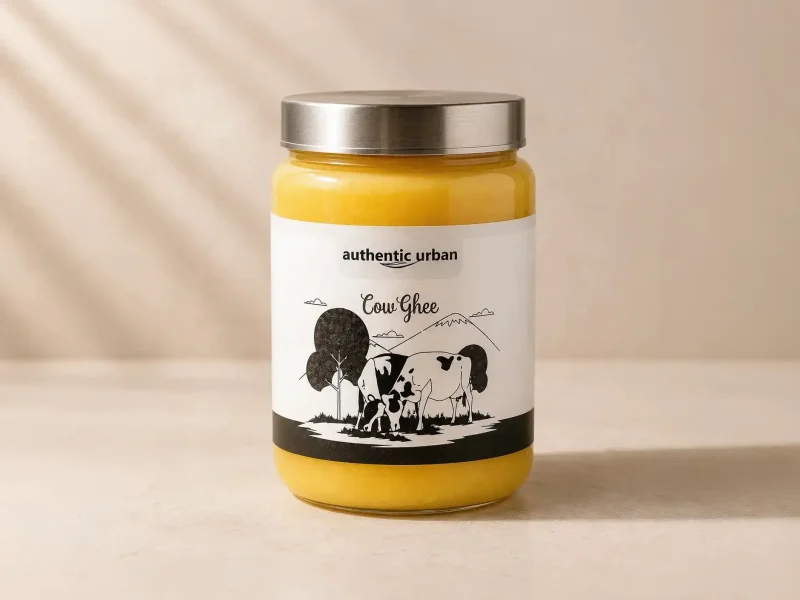 1 Litre
Paratha, halwa, and winter sweets
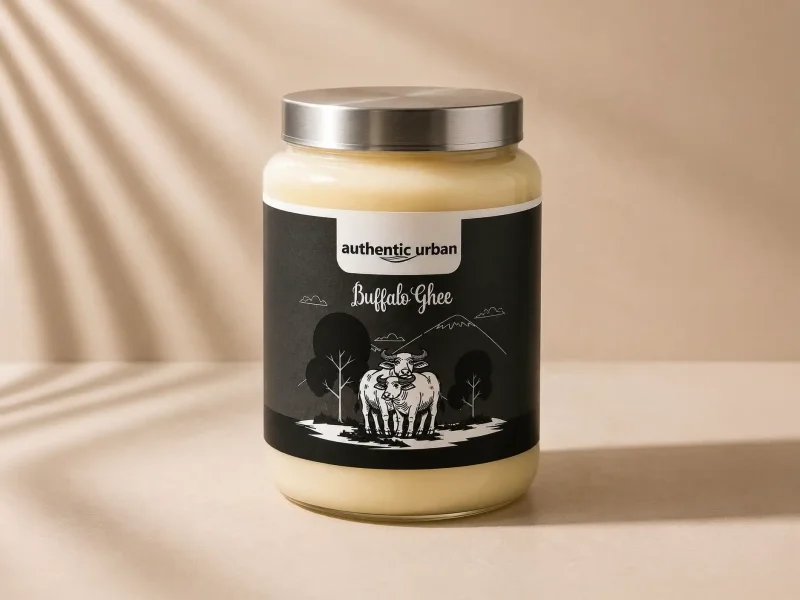 1 Litre
Each order is cooked after you place it, and the packing video is of that batch. Past order videos are on the shop.
FAQ
Can ghee make eczema worse?
It can. Some people react to ghee itself, and a heavy layer on hot, sweaty skin can make itch worse, since heat is a common eczema trigger. Ghee that has gone rancid or picked up water from wet spoons can irritate too. If the patch turns redder, itchier, or bumpy after a day or two, stop. That reaction tells you ghee is not your moisturiser; it is not the skin "detoxing".
Is cow ghee or buffalo ghee better for eczema?
Neither is proven better on eczema skin. Cow ghee is softer and melts faster, so a few drops spread thin without much rubbing, which matters on sore skin. Buffalo ghee sets firmer and feels heavier. Most people who use ghee on skin pick cow ghee for that reason. What matters more is that it smells fresh, has no water in it, and comes out of the jar on a clean spoon.
Can I mix haldi, neem, or camphor into ghee for eczema?
Better not on eczema. Every extra ingredient is one more thing that can irritate or cause an allergy on skin that is already inflamed, and camphor can sting badly on broken skin. Haldi also stains skin and clothes yellow, which hides how the rash is doing. If you want to try ghee, try it plain, so you know what your skin is reacting to.
Does ghee help eczema itch at night?
A thin layer after an evening bath can make dry skin feel less tight at bedtime, which some people find eases the urge to scratch. It does not calm the inflammation behind a flare, and itch that wakes you most nights is a reason to see a doctor about your treatment. Short nails and cotton clothes at night help too, and keep bedding with ghee on it well away from any diya or flame.
Is shata dhauta ghrita better than plain ghee for eczema?
It feels lighter. Washing ghee many times in water turns it into a soft, whipped cream that spreads more easily than plain ghee, so some people prefer it on dry patches. There is no trial showing it works better on eczema. It also holds much more water than kitchen ghee, so it spoils faster and must be kept clean and used up quickly. Treat it as another moisturiser, not a medicine.
Does ghee help psoriasis the same way?
Only in the same limited way. Psoriasis is a different condition from eczema, with thick, scaly plaques. A thin layer of ghee can soften the scales so they feel less tight, as any plain moisturiser can, but it does not change the disease underneath. Soften scales, never pick them off, and follow the plan your dermatologist gives you, including any light treatment or tablets.
About the editorial team
Authentic Urban TeamBilona ghee makers, Gir Somnath, Gujarat
We are the Parmar family in Gir Somnath, Gujarat. We have made ghee here since 2016 and sold it online since 2025. We make only Bilona ghee, test it every month, and anyone is welcome to visit and watch it being made. Our Gir cows and Jafarabadi buffalo are grass-fed village animals that graze near the Gir forest, with no hormones or milk boosters. We set their milk to curd, churn it, and cook the makkhan on a wood chulha. These articles come from that kitchen and from what customers ask us on WhatsApp. We are ghee makers, not doctors.
Sources
- Atopic eczema, NHS. Checked 27 Sep 2026.
- Atopic eczema: treatment, NHS. Checked 27 Sep 2026.
- Emollients, NHS. Checked 27 Sep 2026.
- Food allergy, NHS. Checked 27 Sep 2026.
- Rosacea, NHS. Checked 27 Sep 2026.