Ghee Lab Test Report: How to Read FSSAI and NABL Results
A ghee lab test report is worth trusting when three things hold: it names the batch on your jar, it comes from a NABL-accredited lab, and it shows every FSSAI ghee line with a number inside the limit. The lines are moisture at most 0.5%, milk fat at least 99.5%, BR reading 40.0 to 44.0 at 40 °C, RM value at least 24, free fatty acids at most 2.0%, a negative Baudouin test, and no β-sitosterol. A report that shows only two or three of these, or a tick instead of numbers, proves much less than it looks.
What should a ghee lab test report show?
It should show the FSSAI ghee lines with a result, a unit, a method, and the limit on each row, for one named batch, signed by a named person at an accredited lab. FSSAI's current standard for ghee (Chapter 2.1, version 01.09.2023) has twelve lines. A seller's report does not have to run all twelve, but the more it leaves out, the less it can rule out.
This page is for reading a report a seller sends you, or one you paid for yourself. If you want to know which fats get mixed into ghee and which line catches each one, that is on adulterated ghee and the FSSAI limits. If you want checks you can do in the kitchen without a lab, start with how to identify pure ghee.
What are the FSSAI ghee test parameters and limits?
There are twelve, and every one has a fixed limit for ghee. Keep this table open next to any report: find each line, check the number, and note which lines are missing.
The ghee report, line by line
Line on the report
FSSAI limit for ghee
How to read it
1. Moisture
Limit: At most 0.5%
How to read it: Printed as % (m/m). Water left in means the ghee came off the heat too early, and it spoils sooner.
2. Milk fat
Limit: At least 99.5%
How to read it: Sometimes printed as "fat". Read it together with moisture: the two should add up to nearly 100.
3. Butyro-refractometer (BR) reading at 40 °C
Limit: 40.0 to 44.0
How to read it: A number with no unit. The row should say 40 °C; a reading taken at another temperature cannot be compared.
4. Reichert Meissl (RM) value
Limit: At least 24.0
How to read it: Counts the short-chain fatty acids that milk fat is rich in. There is no upper limit in the current standard.
5. Polenske value
Limit: 0.5 to 2.0
How to read it: Read next to the RM value, never alone.
6. Free fatty acids (FFA) as oleic acid
Limit: At most 2.0%
How to read it: Rises as ghee ages or gets damp. Compare the test date with the packing date on your jar.
7. Iodine value
Limit: 25 to 38
How to read it: A measure of how unsaturated the fat is.
8. Saponification value
Limit: 205 to 235
How to read it: A measure of the average size of the fat molecules.
9. Baudouin test
Limit: Negative
How to read it: A colour test for sesame oil. "Negative" is the only pass.
10. β-sitosterol
Limit: Absent
How to read it: A plant sterol. FSSAI names an RP-HPLC method (office order, 25 March 2019). The row should name the method.
11. Fatty acid profile by GLC
Limit: Table 1 ranges, e.g. butyric acid 1 to 5%, palmitic 22 to 38%, linoleic 0.5 to 3.5%
How to read it: Twelve fatty acids, each with its own range. Makers were given two years from the 2021 notification to comply.
12. Peroxide value
Limit: No limit for ghee
How to read it: The 0.6 limit belongs to the milk fat column. A ghee report that marks peroxide "within 0.6" borrowed the wrong column.
Source: FSSAI Food Products Standards, Chapter 2.1, version 01.09.2023, p. 27 (ghee column) and p. 28 (footnote and Table 1). Checked 28 September 2026.
Watch for old numbers. Many pages online still print a free fatty acid limit of 3% or an RM range like 21 to 28. The 2023 standard says free fatty acids at most 2.0% and RM value at least 24.0, with one set of limits for all of India. A report that marks a result as passing against an older limit has not checked it against the rule that applies today.
Free fatty acids are the line most likely to move after the ghee leaves the maker. Heat, damp spoons, and time all push the number up, so a jar that tested well when packed can creep towards 2.0% in a hot kitchen. How to keep an open jar fresh is on ghee storage and shelf life.
Which lines on a ghee report matter most?
The β-sitosterol line and the fatty acid profile tell you the most, because they look at what the fat is made of. The older lines (BR, RM, Polenske, iodine, saponification) measure physical and chemical constants, and a careful blend can be tuned to land inside all of them.
A 2022 study in the Journal of Food Science and Technology shows why. In parts of India where cows and buffalo are fed a lot of cottonseed, the milk fat itself changes, and sellers pass off ghee mixed with cottonseed oil as "cotton tract" ghee. The researchers found that RM, Polenske, BR, iodine, and saponification values could not tell the two apart. β-sitosterol, measured by RP-HPLC, could: it turned up only in the ghee with oil in it. The Halphen colour test, which people use to hunt for cottonseed oil, came out positive for the real cotton tract ghee and not for the adulterated one.
So a report with only BR and RM on it rules out crude mixing and little else. Ask for the Baudouin and β-sitosterol lines at the least. β-sitosterol is a plant sterol, so it points to vegetable oils; it cannot see animal body fat, which is where the fatty acid profile earns its place. Our own kitchen has a simple version of the moisture line: the ghee comes off the chulha only once the bubbling goes quiet, because that sound stops when the water in the makkhan has boiled away. A batch taken off early turns out cloudy, keeps moisture, and spoils fast, and it never goes in a jar.
Is the ghee lab report for the jar you bought?
Only if the batch number on the report matches the batch number on your jar. A report proves one sample from one batch; every other batch is a new pot of milk, a new season, and a new day at the kettle. Check these eight things before you read a single result.
Eight-point ghee report check
-
1
Product
The sample is described as ghee, with cow or buffalo named if the jar names it.
-
2
Batch or lot number
The same string as the one printed on your jar or its carton.
-
3
Packing date
The sample was drawn from that batch, so the test date comes after the packing date, not a year before it.
-
4
Report number and date
A unique number you can quote to the lab when you call.
-
5
Lab name and accreditation
A name you can find in NABL's Accredited Laboratories search, with food testing in its scope.
-
6
Method on every line
An IS, FSSAI manual, or AOAC method against each result, not a blank column.
-
7
Result and limit side by side
A number for every line, not only a tick or "complies".
-
8
Signatory
A named person with a role who signed the report.
A mismatch is not always fraud. A small maker who tests one batch a month may share that report for the whole month. That is fine if the seller says so and gives you the batch it covers. What is not fine is a report with the batch field blank, cropped out, or covered, or a scan so blurred you cannot read the numbers. Other signs to walk away from a listing are on ghee brands to avoid.
FSSAI licence vs NABL lab: which proves what?
The FSSAI licence proves the business is registered; the NABL accreditation proves the lab is checked; only the report itself says anything about the ghee. They answer three different questions, and a seller showing one of them has not shown the other two.
FSSAI is the food regulator. It writes the ghee standard in the table above and licenses the businesses that make and sell food. The 14-digit number on a pack can be looked up on foscos.fssai.gov.in: the name and address should match the maker on the label. NABL (the National Accreditation Board for Testing and Calibration Laboratories) accredits labs to ISO/IEC 17025, the international standard for testing labs. Under Section 43 of the Food Safety and Standards Act, 2006, FSSAI can notify NABL-accredited labs to analyse samples for its Food Analysts.
How to check that a NABL lab and its report are real
Search the lab's name in the Accredited Laboratories list on NABL's website, and check that its scope covers food or oils and fats, not only medical or calibration work. NABL also lists labs whose accreditation is suspended or withdrawn. Then call or email the lab, quote the report number and date, and ask whether it issued that report for that sample. A real lab can confirm its own report; a seller who will not tell you which lab tested the ghee has answered the question for you.
Can you get your own ghee tested in India?
Yes. Section 40 of the Food Safety and Standards Act, 2006 lets any buyer have food analysed by a Food Analyst for a fee, and get the report.
Three details in that section matter. You have to tell the seller, at the time you buy, that you plan to have it analysed. If the report shows the ghee does not comply with the Act or its rules, you get the fee back. And the Food Analyst forwards a failing report to the Designated Officer, who can take the case to prosecution. In Delhi, the Department of Food Safety lists the consumer fee as ₹1,000 per sample; ask your own state's food safety office for its fee and process.
You can also pay a private NABL-accredited lab directly. Before you do, write down which lines you want: moisture, milk fat, BR, RM, free fatty acids, Baudouin, and β-sitosterol at the least, with the fatty acid profile if you suspect a blend. A "ghee purity" package that runs only BR and RM will not tell you much. Send a sealed jar with its batch number visible, and keep a second sealed jar from the same batch in case the result is disputed.
What can a ghee lab report not prove?
It cannot prove A2, the breed, grass feeding, or the Bilona method. The FSSAI ghee lines describe the fat, and fat from curd-churned Gir cow milk and fat from cream in a dairy plant can both pass every one of them.
A2 is about a protein in milk, and ghee is at least 99.5% fat, so there is almost none of that protein left to test; the details are in A2 vs A1 ghee. The curd method changes the smell, the grain, and the yield, which a report does not score; see the Bilona method and why ghee is grainy. For those claims, what counts is proof of the process: which animals, which milk, and whether you can watch it being made. A report tells you the ghee is ghee. It does not tell you how it was made.
A report also cannot tell you how the jar was kept after it was tested. If the smell is flat or sharp, trust your nose over a clean report, and check your jar in 2 minutes with our purity checker.
Which ghee comes with proof you can check?
Pick a maker who gives you all three kinds of proof: a licence you can look up, a batch report with the Baudouin and β-sitosterol lines on it, and a process you can see for yourself. How the main brands compare on price and method is on best ghee in India.
We make both jars below, so read this as our own pick. We test every month against the FSSAI limits, including β-sitosterol, and the monthly report will go on our Certifications page. Our FSSAI licence is printed on every label. Every jar is curd-churned Bilona, cooked in a matki on a wood chulha after you order, and you get a video of your jar being cooked and packed on WhatsApp. Our A2 Gir cow ghee is from grass-fed Gir cow milk only, for the daily spoon; our Jafarabadi buffalo ghee is for halwa, ladoo, and paratha. Anyone is welcome to visit Gir Somnath and watch a batch; see how we make ghee.
Gir cow ghee: the daily teaspoon
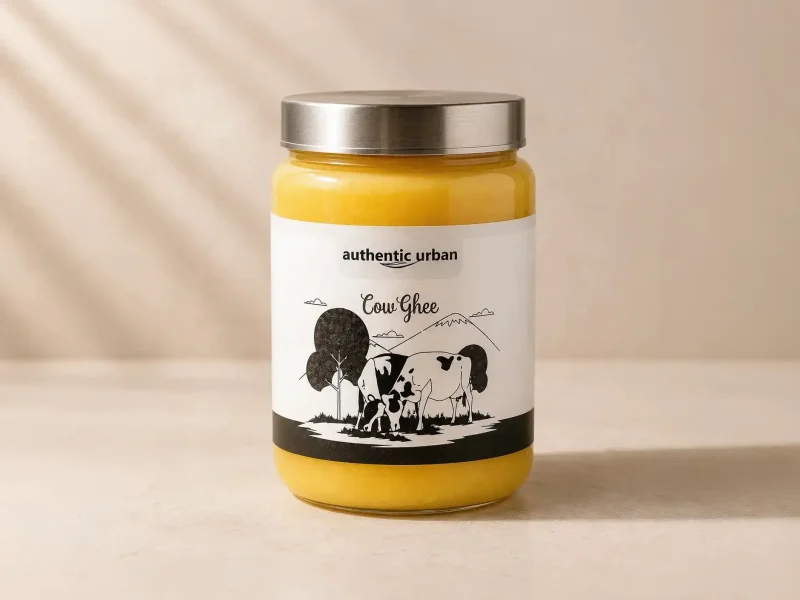 1 Litre
Buffalo ghee: sweets and paratha
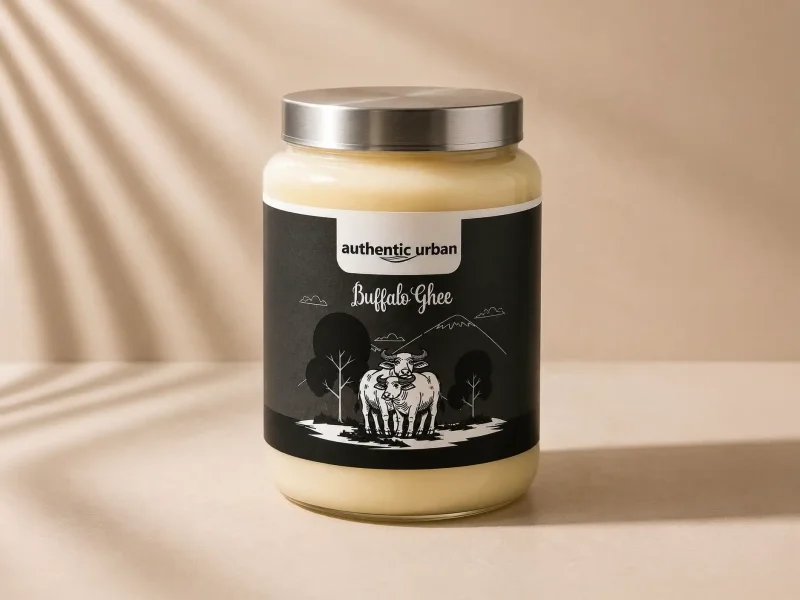 1 Litre
Each order is cooked after you place it, and the packing video is of that batch. Past order videos are on the shop.
FAQ
Which is the best ghee to buy if I want lab-tested purity?
We would put our own first, and we say that knowing we make it. Our Gir cow and Jafarabadi buffalo Bilona ghee is tested every month against the FSSAI limits, including β-sitosterol, and you get a video of your own jar being cooked and packed. The monthly report will be published on our Certifications page. Whichever brand you buy, ask for the batch report with the Baudouin and β-sitosterol lines on it.
Is a ghee lab report from last year still valid?
It is valid for the batch it tested, and only that batch. Ghee made months later came from different milk, a different season, and a different day at the kettle. An old report shows that a seller has tested at least once, which is something, but it does not cover the jar you bought this month. Ask for the report for your batch number, or for the most recent one and its batch.
What does "complies" or "conforms" mean on a ghee report?
It means the lab compared each result with the limit it was asked to use and found it inside. Check which standard is named, because a report can say "complies" against an old or in-house specification. For ghee sold in India it should name the FSSAI Food Products Standards. A "complies" with no numbers beside it tells you very little; ask for the full sheet with results.
What do ND, BDL, or LOQ mean on a ghee test report?
ND means not detected, BDL means below detection limit, and LOQ is the limit of quantification, the smallest amount the method can measure reliably. They are normal on lines like β-sitosterol, where the pass is "absent". A good report prints the detection limit next to ND, so you can see how small an amount the lab was able to see.
Does the FSSAI logo on a ghee jar mean it was lab tested?
No. The FSSAI logo and the 14-digit number mean the business holds a licence or registration, which you can look up on foscos.fssai.gov.in. Food safety officers can sample products in the market, but the logo on a pack is not a test result for that batch. For that you need a lab report that names the batch.
Can two labs give different results for the same ghee?
Yes, by a small margin. Every method has some spread, and results also move if the jar was stored warm or opened often between the two tests. A result that sits well inside the limit at both labs is fine. A result that passes at one lab and fails at another, right on a limit edge, is worth a third test at a NABL-accredited lab using the FSSAI method.
About the editorial team
Authentic Urban TeamBilona ghee makers, Gir Somnath, Gujarat
We are the Parmar family in Gir Somnath, Gujarat. We have made ghee here since 2016 and sold it online since 2025. We make only Bilona ghee, test it every month, and anyone is welcome to visit and watch it being made. Our Gir cows and Jafarabadi buffalo are grass-fed village animals that graze near the Gir forest, with no hormones or milk boosters. We set their milk to curd, churn it, and cook the makkhan on a wood chulha. These articles come from that kitchen and from what customers ask us on WhatsApp. We are ghee makers, not doctors.
Sources
- Food Safety and Standards (Food Products Standards) Chapter 2.1: Dairy products and analogues, version 01.09.2023 (2.1.8 Milk fat products and ghee, pp. 26-28, with Table 1 fatty acid composition), FSSAI. Checked 28 Sep 2026.
- The Food Safety and Standards Act, 2006 (Section 40, Purchaser may have food analysed, p. 38; Section 43, Recognition and accreditation of laboratories, p. 39), FSSAI. Checked 28 Sep 2026.
- Frequently Asked Questions (consumer sampling under Section 40, and fee per sample), Department of Food Safety, Government of NCT of Delhi. Checked 28 Sep 2026.
- National Accreditation Board for Testing and Calibration Laboratories: accreditation of testing laboratories as per ISO/IEC 17025, and the Accredited Laboratories search, NABL. Checked 28 Sep 2026.
- Atbhaiya Y., Sharma R., Gandhi K., Mann B., Gautam P.B. Methods to differentiate between cotton tract area ghee and cotton seed oil adulterated ghee. Journal of Food Science and Technology, 2022, doi:10.1007/s13197-022-05563-5, Springer (open access, PMC9579228). Checked 28 Sep 2026.