Rava Ladoo Recipe in Grams: Ghee, Milk, or Syrup Binding
For this rava ladoo recipe, roast 160 g fine rava in 60 g ghee on a low flame for 6 to 9 minutes, until it smells nutty, then toast 40 g desiccated coconut in it for 2 minutes. Mix in 140 g powdered sugar and cardamom while warm, pour over 30 g sizzling ghee, and press 16 ladoos. Warm milk or a one-string syrup can bind it instead of the last ghee.
Rava ladoo recipe: how much rava, ghee, and sugar?
For 16 ladoos you need 160 g fine rava, 40 g desiccated coconut, 90 g ghee, and 140 g powdered sugar. That is nearly equal rava and sugar by weight, with a little over half as much ghee. Cups hold very different weights of rava, ghee, and sugar, which is why many cup recipes come out dry or greasy. USDA FoodData Central puts a cup of semolina at 167 g, so 160 g is just under a level cup.
Ingredients (16 ladoos)
- 160 g fine rava (Bombay rava, suji), about 1 cup
- 40 g desiccated coconut, about ½ cup (optional, see FAQ)
- 90 g ghee, about 7 tbsp: 60 g to roast, 30 g to bind
- 140 g sugar (about ¾ cup), ground to a fine powder
- ½ tsp cardamom powder
- 10 cashews, broken, and 10 raisins
Equipment: a heavy kadhai, a flat spatula, a wide steel plate for cooling, and a small pan to heat the last of the ghee.
Steps
- 1. Fry the cashews and raisins in 1 tbsp of the ghee on low until the cashews are golden and the raisins puff. Lift them out.
- 2. Add ghee to make 60 g in the kadhai, then all the rava. Roast on low, stirring the whole base, for 6 to 9 minutes, until the grains run free, turn pale golden, and smell nutty.
- 3. Add the coconut and roast 2 more minutes. Tip everything onto a wide plate so it stops cooking.
- 4. Cool 5 to 10 minutes, until warm but not hot. Mix in the sugar, cardamom, and nuts.
- 5. Heat the last 30 g ghee until it just sizzles. Pour it over the mix and stir with a spoon; it is too hot for hands.
- 6. As soon as you can handle it, take a handful, squeeze it hard in your fist for about 30 seconds, then roll it round. Rava ladoo needs more pressure than besan ladoo.
- 7. If a ladoo crumbles, warm 1 tbsp more ghee, or sprinkle 1 tbsp warm milk, and press again.
- 8. Set the ladoos for 1 hour before you close the box.
One rava ladoo (about 27 g, without nuts): about 136 kcal, 7.3 g fat (4.9 g saturated), 16.6 g carbohydrate, 8.9 g sugar, and 1.5 g protein, worked out from USDA FoodData Central for semolina, desiccated coconut, sugar, and ghee, with the batch rolled into 16.
Use fine rava. Coarse upma rava stays hard and gritty inside a ladoo and will not bind. The same fine suji, cooked with water instead of rolled, becomes suji ka halwa, and if you want a denser, sandier ladoo, the flour to use is besan: see our besan ladoo recipe.
Rava ladoo with ghee, milk, or sugar syrup: which binding?
Bind with hot ghee for a box that keeps two weeks, with warm milk for the softest ladoo you eat within days, or with one-string sugar syrup for a sweet-shop texture that also keeps. Rava does not turn sticky the way besan does, so every rava ladoo needs one of these three to hold. Pick by when the ladoos will be eaten.
Hot ghee (this recipe)
- Ghee
- 90 g in all: 60 g to roast, 30 g poured in hot to bind
- You get
- Firm, crumbly-tender, the grains of rava still show. Holds its shape in a box.
- Keeps
- About 2 weeks at room temperature in cool weather, about 1 week in humid months.
- Per ladoo
- 136 kcal, ghee 5.6 g, about 1¼ tsp
- Ghee cost
- ₹208 with our buffalo ghee, ₹249 with our cow ghee
Warm milk
- Ghee
- 60 g to roast, then 3 to 4 tbsp (45 to 60 ml) warm milk to bind
- You get
- The softest ladoo, and the easiest to shape for a first try.
- Keeps
- In the fridge, eat within 4 to 5 days. The milk is water, and water is what spoils a ladoo.
- Per ladoo
- 121 kcal, ghee 3.75 g, under 1 tsp
- Ghee cost
- ₹138 with our buffalo ghee, ₹166 with our cow ghee
One-string sugar syrup
- Ghee
- 60 g to roast; the sugar goes in as syrup with 70 ml water, not as powder
- You get
- Soft inside, a little chewy, sweet-shop style. Common in Maharashtra and Karnataka.
- Keeps
- About 2 weeks at room temperature, once fully set and dry to the touch.
- Per ladoo
- 119 kcal, ghee 3.75 g, under 1 tsp
- Ghee cost
- ₹138 with our buffalo ghee, ₹166 with our cow ghee
Per ladoo, one sixteenth of 160 g rava, 40 g coconut, 140 g sugar, and the ghee shown; nuts not counted. USDA FoodData Central: semolina 168933, coconut 170170, ghee 173412, sugar 169655, milk 171265, checked 28 September 2026. Ghee cost at our own prices for 1 litre (₹1,999 buffalo, ₹2,399 cow, checked 25 September 2026); prices change, so check the product page.
The sugar syrup method, step by step
Roast the rava and coconut in 60 g ghee exactly as above and leave them in the kadhai. In a small pan, boil 140 g ordinary sugar with 70 ml water on medium. Once the sugar has dissolved, keep boiling and test every 30 seconds: cool a drop on a spoon, then pinch it between thumb and finger and pull apart. When one thin thread forms and holds, take it off the heat at once. Pour it over the rava, add cardamom and nuts, and mix.
It will look far too wet, like sheera. Cover it and leave it 20 to 30 minutes while the rava drinks the syrup, then shape while it is still warm. If you boil the syrup to two strings, the ladoos set as hard as stone by morning; that is the most common way this method fails.
How long should you roast rava for ladoo?
Roast the rava 6 to 9 minutes on a low flame, until it smells nutty and turns one or two shades darker, then 2 more minutes with the coconut. Stop at pale golden. Rava browns much faster than besan, and brown rava gives a hard, bitter ladoo.
Time on low
What you see
What you smell
0 to 2 min
Grains coated in ghee, pale cream, a little clumpy.
Smell: Raw, floury.
2 to 6 min
Grains loosen and run freely off the spatula like sand.
Smell: Raw smell fading.
6 to 9 min
One or two shades darker, pale golden, not brown.
Smell: Nutty, like toast. Add the coconut now.
9 to 11 min
Coconut turns light golden at the edges. Done.
Smell: Toasted coconut and ghee.
Past 13 min
Brown grains, dark specks on the base.
Smell: Sharp and bitter. Too far.
Trust your nose over the colour. We know the smell of going too far from our own chulha in Gir Somnath: ghee left too long over the fire turns dark, bitter, and smells burnt, and that batch never goes in a jar. Rava catches the same way, on the base first, so scrape the whole base with every stroke. Ghee suits this roast because the water and milk solids were already cooked out of it when it was made; butter would spit and leave brown specks through the rava. The difference is on ghee vs butter.
Why do rava ladoos crumble, go hard, or taste raw?
Crumbly ladoos need hotter ghee, more pressure, or a warmer mix; hard ladoos come from over-boiled syrup or brown rava; a raw taste means the rava left the flame too soon. Find your batch below.
Crumbles, will not hold a shape
Not enough hot ghee to bind, or the mix went cold before you pressed it.
Fix: Warm 1 tbsp ghee until it just sizzles, pour it over, mix, and press each ladoo for a good 30 seconds. Or switch to milk: sprinkle 1 tbsp warm milk and press again.
Hard as stone next day
The syrup went past one string, or the rava was roasted brown and dry.
Fix: Crumble the ladoos, warm them with 2 to 3 tbsp milk on the lowest flame for a minute, and shape again. Eat these within a few days, from the fridge.
Tastes raw or floury
The rava came off the flame before it smelled nutty.
Fix: If the sugar is not in yet, roast 3 more minutes on low. Once the sugar is in, it cannot be roasted again; next time wait for the smell.
Sticky, goes flat on the plate
Sugar added while the rava was still hot, or too much milk.
Fix: Spread the mix on a plate for 10 minutes and add 1 to 2 tbsp roasted rava. Chill the ladoos 20 minutes to set.
Gritty in the mouth
Granulated sugar that was not ground fine, or coarse (upma) rava.
Fix: Grind the sugar to a powder and sift it. Use fine (Bombay) rava, or pulse coarse rava in the mixer for a few seconds before roasting.
Smells sour after a few days
Milk or fresh coconut in a ladoo kept at room temperature.
Fix: Throw them out. Milk and fresh-coconut ladoos go in the fridge from day one; for a box that keeps, bind with hot ghee or syrup.
In a hot-ghee rava ladoo, ghee is about a fifth of the weight, so a stale or waxy jar shows in every bite. Melt a spoon before you start: good ghee smells of toasted milk and nothing else. The home checks are on how to identify pure ghee.
How many calories are in one rava ladoo?
One 27 g rava ladoo bound with hot ghee has about 136 kcal, with 5.6 g of ghee (about 1¼ teaspoons) and 8.75 g of added sugar. Bound with milk it is about 121 kcal, and with syrup about 119 kcal, because both use 30 g less ghee in the batch. Sweet-shop ladoos are often bigger, so weigh one if you want to know yours.
ICMR-NIN's 2024 dietary guidelines suggest limiting ghee or butter to 1 to 2 teaspoons a day, and say limiting sugar to 25 g a day is better for health. One hot-ghee ladoo sits inside that ghee line and uses about a third of the sugar. Two go past both the 2 teaspoons and most of the sugar, so on a ladoo day, go lighter on ghee at dinner. At home in Gir Somnath we eat 1 to 2 teaspoons of ghee each on an ordinary day, and more only in winter sweets like adadiya pak and gond. The day-by-day budget is on how much ghee per day, and calories by the spoon are on ghee nutrition facts.
Anyone with diabetes should count the sugar first; jaggery and condensed milk ladoos count the same way. What a doctor or dietitian has set for you comes before this recipe, and fat and blood sugar are covered on can diabetics eat ghee.
Cow or buffalo ghee for rava ladoo?
Buffalo ghee is our pick for rava ladoo: it gives the full, rich taste a festival box should have, and costs less for the 90 g a batch needs. Cow ghee gives a more yellow ladoo with a sharper toasted-milk smell, and suits the lighter milk-bound version.
Both are almost pure milk fat, so the calories are the same. The season matters more than you would think. In summer our ghee stays liquid in the jar, and ladoos bound with it stay soft on the counter; in winter it sets to a fine grain, and the same ladoos turn firmer. People ask us on WhatsApp every winter why their jar has gone grainy. It is only the fat setting in the cold, and it melts in the pan, but grainy ghee packs into a spoon differently, so weigh it or melt it first. Why the grain forms is on why ghee is grainy, and the side-by-side is on cow vs buffalo ghee.
How long do rava ladoos last?
Rava ladoos bound with hot ghee or syrup keep about two weeks in a closed steel or glass box at room temperature in cool weather, and about a week in hot, humid months. Milk-bound, condensed milk, and fresh-coconut ladoos go in the fridge and are best within 4 to 5 days.
Let them set and cool fully before the lid goes on, or trapped steam softens them. Use dry hands or a dry spoon; water is what spoils them. Fridge-cold ladoos are hard, so take them out 20 minutes before serving. Throw them out if they smell sour or taste like old oil, since the ghee and coconut in them go stale with time like any fat. The same rules for the ghee jar are on ghee storage and shelf life. For more sweets that stand or fall on their ghee, see cooking with ghee, and for a winter ladoo with atta and edible gum, try gond ke ladoo.
Rava ladoo: a recipe card to keep
Screenshot this before you start; your hands will be full of warm rava when you need it.
- 1. Makes 16 ladoos of about 27 g: 160 g fine rava (about 1 cup), 40 g desiccated coconut (about ½ cup), 90 g ghee (about 7 tbsp), 140 g sugar ground to powder (about ¾ cup before grinding), ½ tsp cardamom powder, 10 cashews and 10 raisins.
- 2. Fry the cashews and raisins in 1 tbsp of the ghee on low until golden and puffed. Lift them out.
- 3. Add ghee to make 60 g in the pan, then all the rava. Roast on low, stirring, 6 to 9 minutes, until pale golden and nutty.
- 4. Add the coconut. Roast 2 more minutes. Take the pan off the heat and tip it onto a wide plate.
- 5. Cool 5 to 10 minutes, until warm. Mix in the sugar, cardamom, and nuts.
- 6. Heat the last 30 g ghee until it just sizzles. Pour it over and mix with a spoon.
- 7. Take a handful, press hard for about 30 seconds, and roll. If it crumbles, add 1 tbsp more hot ghee or 1 tbsp warm milk.
- 8. Set 1 hour, then close the box. About 136 kcal a ladoo.
Which ghee for rava ladoo?
Rava itself tastes of very little, so in a rava ladoo the ghee is most of the flavour you get. Pick a jar that smells of toasted milk when melted, with nothing waxy or stale behind it. Our ranking of the buffalo ghee on sale is best buffalo ghee in India.
For rava ladoo we would use our Jafarabadi buffalo ghee, and our A2 Gir cow ghee for a lighter ladoo. Both come from grass-fed village animals near the Gir forest; the milk is set to curd overnight, churned by hand (Bilona), and the makkhan cooked in a matki on a wood chulha. The jar is made after you order, a video of it being cooked and packed comes on WhatsApp, and Varsha tastes every batch before it goes in a jar. We test every month against the FSSAI limits; the steps are on how we make ghee.
A lighter, milk-bound ladoo
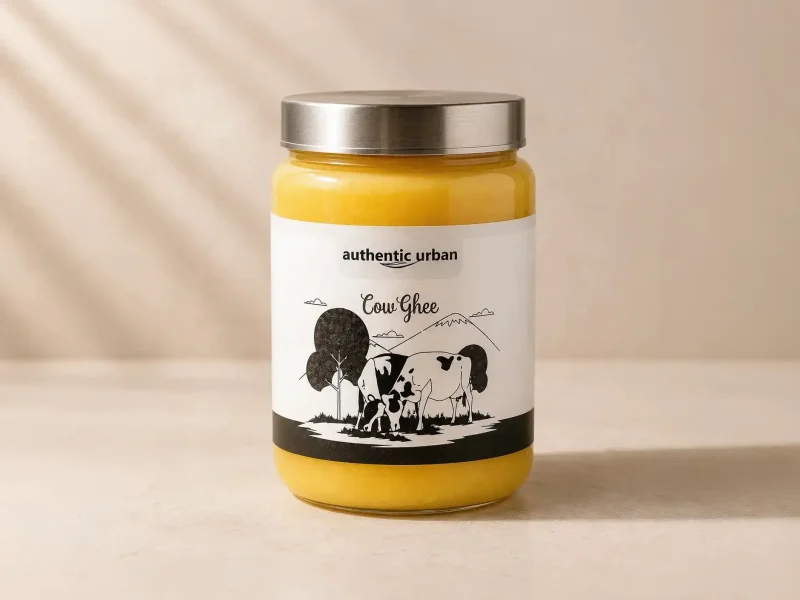 1 Litre
Firm festival ladoos
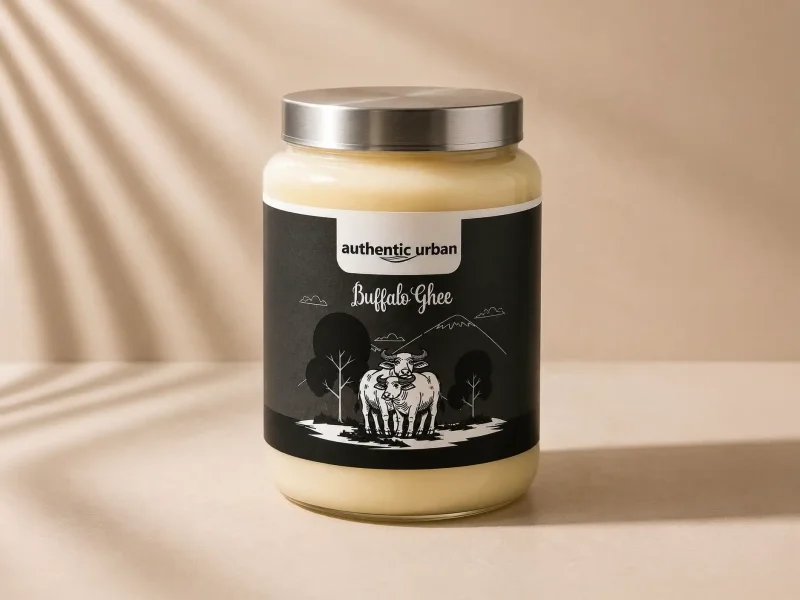 1 Litre
Each order is cooked after you place it, and the packing video is of that batch. Past order videos are on the shop.
FAQ
Is suji ladoo the same as rava ladoo?
Yes. Suji, sooji, and rava are the same wheat semolina, so suji ke laddu, rava laddu, rava unde in Karnataka, and rava urundai in Tamil Nadu are one sweet. The regions differ in the binding: Tamil and Andhra homes often bind with hot ghee or milk, while many Maharashtrian and Karnataka homes pour in a one-string sugar syrup. The rava, ghee, and roasting stay the same.
How many rava ladoos does 1 kg of rava make?
About 100 ladoos of 27 g each. Scale everything by just over six: 1 kg fine rava, 250 g desiccated coconut, 560 g ghee for the hot-ghee binding, and 875 g sugar. Roast it in three or four batches in an ordinary kadhai, because a full kilo will not roast evenly, and shape one batch before you roast the next so the mix does not go cold.
Can I make rava ladoo with jaggery?
Yes. Use about 140 g soft jaggery, grated or powdered, in place of the sugar, and add it only when the rava is barely warm, or it melts and turns sticky. The ladoos turn brown and taste of caramel. Jaggery carries a little moisture, so they keep closer to a week. They are still a sugar ladoo, and anyone counting sugar should count them the same way.
Can I use condensed milk in rava ladoo?
Yes. Leave out the powdered sugar and the binding ghee, and stir about 150 to 200 g condensed milk into the warm roasted rava and coconut on the lowest flame for a minute or two, until it pulls together. The ladoos are soft, milky, and very sweet. Because condensed milk carries milk and water, keep them in the fridge and eat them within about five days.
Can I make rava ladoo without coconut?
Yes. Leave the 40 g coconut out and add 30 g more rava so the batch still makes about 16 ladoos. Without coconut the ladoo is plainer and a little more crumbly, so you may need an extra tablespoon of hot ghee or warm milk to bind. Coconut-free ladoos are the North Indian suji ke laddu most families make for Diwali boxes.
Is rava ladoo lighter than besan ladoo?
Not by much. One 27 g rava ladoo bound with hot ghee has about 136 kcal; a 23 g besan ladoo made with our besan recipe has about 120 kcal, so gram for gram they are close. Rava ladoo has less protein, since semolina carries less than besan. It does feel lighter in the mouth, because the grains stay separate instead of turning sandy and dense.
About the editorial team
Authentic Urban TeamBilona ghee makers, Gir Somnath, Gujarat
We are the Parmar family in Gir Somnath, Gujarat. We have made ghee here since 2016 and sold it online since 2025. We make only Bilona ghee, test it every month, and anyone is welcome to visit and watch it being made. Our Gir cows and Jafarabadi buffalo are grass-fed village animals that graze near the Gir forest, with no hormones or milk boosters. We set their milk to curd, churn it, and cook the makkhan on a wood chulha. These articles come from that kitchen and from what customers ask us on WhatsApp. We are ghee makers, not doctors.
Sources
- Semolina, unenriched (FDC ID 168933), SR Legacy, USDA FoodData Central. Checked 28 Sep 2026.
- Nuts, coconut meat, dried (desiccated), not sweetened (FDC ID 170170), SR Legacy, USDA FoodData Central. Checked 28 Sep 2026.
- Butter oil, anhydrous (FDC ID 173412), SR Legacy, USDA FoodData Central. Checked 28 Sep 2026.
- Sugars, granulated (FDC ID 169655), SR Legacy, USDA FoodData Central. Checked 28 Sep 2026.
- Milk, whole, 3.25% milkfat, with added vitamin D (FDC ID 171265), SR Legacy, USDA FoodData Central. Checked 28 Sep 2026.
- Dietary Guidelines for Indians, 2024 (Guideline 7 on visible fats; added sugar), ICMR-National Institute of Nutrition. Checked 28 Sep 2026.