Cooking with Ghee: Which Dishes, When to Add, How Much
Cooking with ghee works best when ghee goes where you taste it: the tadka, the roti, and the top of hot dal or rice, about 1 teaspoon (5 g) per person per dish. Cook long masalas and full kadhai fries in oil. That keeps a family of four near the 1 to 2 teaspoons a person a day that ICMR-NIN's 2024 guidelines set for ghee.
How do you cook with ghee?
Use ghee as the flavour fat, not the only fat. Warm about a teaspoon a person in the pan, bloom jeera or rai in it for a tadka, or brush it on roti and spoon it over hot dal. Keep oil for the long onion-tomato bhuna and for deep frying. One teaspoon is about 5 g, the size ICMR-NIN uses when it counts fat in teaspoons.
The reason is the daily limit. ICMR-NIN's 2024 dietary guidelines put all visible fat (ghee and oil together) at 20 to 50 g a person a day, by how active you are: 20 g for a sedentary woman and 30 g for a sedentary man. Inside that, they ask people to keep ghee or butter to 1 to 2 teaspoons a day. So the question in a home kitchen is not "ghee or oil" but "which dish gets the ghee". The per-person numbers by age are on how much ghee per day; this page is about the pots and pans.
We eat this way at home in Gir Somnath. Each of us has 1 to 2 teaspoons of ghee a day, on roti, dal, and khichdi, and more only in winter sweets like adadiya pak and gond. The rest of the cooking uses oil.
Which Indian dishes should you cook in ghee?
Dal tadka, khichdi, roti, paratha, jeera rice, and sweets get the most from ghee; long curries and deep frying do not. Here is each everyday dish with when the ghee goes in and how much we would use for four people. Save this table for the kitchen.
Dish
When ghee goes in
How much (for four)
Jar
Dry sabzi (aloo, bhindi)
jeera alooCook in oil, or ghee if it is the day's ghee dish
2 tsp if ghee
Jar: Cow
Paneer or palak curry
Masala in oil, ghee on top
1 tsp stirred in at the end
Jar: Cow
Poha or upma
Tadka of rai and curry leaves
2 tsp for four plates
Jar: Cow
Halwa or ladoo
suji halwaRoasting the suji, atta, or besan
The ghee is the dish; make it a sweet day
Jar: Buffalo
Amounts are what we use in our own kitchen, level teaspoons of about 5 g. Recipes linked under each dish give the full method.
When should you add ghee: at the start or at the end?
Add it at the end when you want to taste it, and at the start only when the ghee has a job to do, like blooming spices or roasting flour. Ghee does three different jobs in an Indian pot, and each one wants it at a different time.
At the start: to carry the spices
Whole spices (jeera, rai, laung, elaichi, tej patta) give up their smell into hot fat. For jeera rice, pulao, poha, or upma, the ghee goes in first so the rice or poha gets coated in that smell. Two teaspoons is enough for a cup of rice.
In the middle: to roast flour and sooji
Halwa, ladoo, sheera, and panjiri depend on roasting suji, atta, or besan in ghee until it smells nutty and changes colour. Here the ghee is part of the dish, not a finish, and cutting it leaves the flour raw. Make the sweet properly, take a smaller piece, and cook the rest of that day in oil. The gurudwara version, with its equal ratio of atta, ghee, and sugar, is on kada prasad.
At the end: for taste
A tadka poured over dal, half a teaspoon brushed on a hot roti, a spoon stirred into palak paneer just before serving. Ghee that simmers in a curry for half an hour loses most of its smell, so the same teaspoon tastes of more when it goes in last. This is also where a spoon of fat helps you take up the vitamin A and beta-carotene in vegetables, which is covered on ghee for nutrient absorption.
How much ghee does a family of four use in a day?
About 8 level teaspoons (40 g) for four adults, if everyone stays at 2 teaspoons, which is the top of the ICMR-NIN ghee line. That sounds like a lot until you count where it goes. Here is a normal vegetarian day in a home that cooks this way.
Breakfast: poha
0 tsp
Tadka in oil today, so the ghee goes where you taste it.
Lunch: dal, rice, sabzi
2 tsp
The dal tadka. Sabzi cooked in oil.
Dinner: 8 rotis
4 tsp
½ tsp brushed on each hot roti.
Dinner: khichdi for the elders
2 tsp
1 tsp in the tadka, ½ tsp on two plates.
The day
8 tsp
About 40 g for four, or 2 tsp each. Oil for the sabzi and poha comes on top, inside the 20 to 50 g visible fat line.
The day shows the trade-off. If the rotis get ghee, the sabzi does not. If someone in the house has been told to cut saturated fat, or is sedentary and trying to lose weight, drop to 1 teaspoon each and give it to the dal. The fat budget for weight loss is on ghee for weight loss. To work out your own home's daily ghee and oil, use our ghee calculator.
How do you make a ghee tadka without burning it?
Warm the ghee on a medium flame first, then add the seeds, and pour it the moment the last thing you add turns fragrant. Most burnt tadkas come from seeds going into a pan that is too hot or ghee that is still cold.
- Put 2 teaspoons of ghee in a small tadka pan on medium. Wait until it melts clear and a single jeera seed sizzles at once when dropped in.
- Add the whole seeds: jeera, rai, or both. Rai should crackle within a few seconds; jeera should turn a shade darker, never black.
- Add hing, then garlic, dry red chilli, or curry leaves. Garlic needs about half a minute to turn light gold.
- Take the pan off the flame before adding red chilli powder, so it colours the ghee red instead of burning brown.
- Pour over the dal straight away and cover the pot for a minute to keep the smell in.
We watch for the same signs at the chulha when we cook makkhan into ghee. The batch comes off the flame when the bubbling goes quiet, the milk solids turn golden-brown, and it smells of toasted milk. A few minutes too long and it turns dark and bitter and smells burnt, and that batch is never packed. A tadka goes wrong the same way, just in seconds instead of minutes. The full dal method is on our ghee dal tadka recipe, and ghee's smoke point, with the heat to hold for frying, is on ghee smoke point.
Can you replace oil with ghee in all your cooking?
No, and you do not need to. Swap oil for ghee in the tadka, on roti, and in rice, and keep oil for the jobs where it is cheaper or better.
- Deep frying. A full kadhai of puri or pakora takes far more fat than a day's ghee, and ICMR-NIN's guidelines say fat used for frying should be filtered, used in a curry within a day or two, and not fried in again. That is a costly way to use a jar of ghee.
- Long bhuna. An onion-tomato masala that cooks for 20 minutes uses a lot of fat, and the ghee smell is gone by the end. Cook it in oil and finish with a teaspoon of ghee.
- Dishes built on one oil. Pickles, mustard-oil fish, and coconut-oil Kerala dishes taste of that oil. Ghee changes the dish.
Which oil to use next to ghee, with a tablespoon of each side by side, is on ghee vs vegetable oil. What to do with ghee left over after frying is on can you reuse ghee after frying.
Can you use ghee instead of butter in a recipe?
Yes, for Indian cooking, spoon for spoon or a little less. Pav bhaji, paneer butter masala, eggs, and parathas all work with ghee in place of butter, and the ghee will not brown and scorch the way butter does on a hot tawa.
The difference is water. FSSAI's standard for ghee allows at most 0.5% moisture and needs at least 99.5% milk fat, so ghee is almost all fat, while butter still holds its water and milk solids. In a curry that hardly matters. In a cake or cookie it does, because the water in butter is part of the recipe; the gram swap is on ghee for baking. Taste, price, and keeping, side by side, are on ghee vs butter.
Cow or buffalo ghee: which is better for cooking?
Cow ghee for the daily spoon on dal, roti, and khichdi; buffalo ghee for halwa, ladoo, and parathas. Both are clarified the same way and both take tadka heat, so the choice is taste and cost.
Cow ghee is lighter and more yellow; in the monsoon, when our cows eat green fodder, it turns more yellow still. Buffalo ghee is paler, richer, and costs less a litre, which matters for sweets, where you go through ghee fastest. Texture changes with the season too. In summer our jars stay liquid; in winter the ghee sets to a fine grain. A level teaspoon of either is the same amount of fat, so measure the same way all year. The full comparison is on cow vs buffalo ghee.
What mistakes do people make cooking with ghee?
The most common one is using ghee everywhere and counting it nowhere. Here are the common ones, with the fix for each.
-
1. Ghee in every dish, oil in none
Pick the one or two dishes where you taste ghee most. Cook the rest in oil and count both toward the day.
-
2. Adding the finishing spoon at the start
Ghee that simmers for 30 minutes in a curry loses its smell. Hold back a teaspoon for the top.
-
3. Seeds into cold ghee, or ghee into a smoking pan
Warm the ghee on medium first. Seeds should sizzle the moment they land, then brown, never blacken.
-
4. Frying again in yesterday's frying ghee
Filter it and use it in a curry within a day or two. Do not fry in it again.
-
5. A wet spoon in the jar
Water is what spoils ghee. Use a dry spoon every time.
-
6. The jar living next to the gas
Keep the main jar away from the stove and sunlight. Take out a week's ghee in a small lidded katori.
A jar that smells waxy, stays cloudy when melted, or smokes on a medium flame is a jar problem, not a cooking problem. Home checks are on how to identify pure ghee, and keeping an open jar fresh is on ghee storage and shelf life.
Cooking with ghee: a kitchen checklist
Screenshot this and keep it by the stove.
- 1. About 1 tsp (5 g) of ghee per person per dish is plenty for taste.
- 2. Two teaspoons a person a day is the ICMR-NIN line for ghee. For four people, that is about 8 tsp across the day.
- 3. Ghee goes where you taste it: the tadka, the roti, the top of hot dal or rice.
- 4. Long bhuna and big fries go in oil. Fry once, then use the fat in a curry.
- 5. Seeds in warm ghee, not cold. Brown is right, black is burnt.
- 6. Halwa or ladoo day: cook the rest of the meals in oil.
- 7. Cow ghee for the daily spoon, buffalo ghee for sweets and parathas.
- 8. Dry spoon, lid on, main jar away from the stove.
Which ghee for everyday cooking?
For cooking, the jar matters more than the brand name on it. Good ghee melts clear, sets to a grain when cool, and smells of toasted milk when it hits a warm pan. For the daily spoon, our ranking of the cow ghee on sale is best cow ghee in India.
We make and sell ghee, so read this knowing that. For dal, roti, and khichdi we reach for our own A2 Gir cow ghee; for halwa, ladoo, and parathas, our Jafarabadi buffalo ghee. Both come from grass-fed village animals near the Gir forest, set to curd overnight, churned (Bilona), and cooked in a matki on a wood chulha. Each jar is made after you order, with a video of it sent on WhatsApp, and we test every month against the FSSAI limits. The steps are on how we make ghee.
Dal tadka, roti, and khichdi
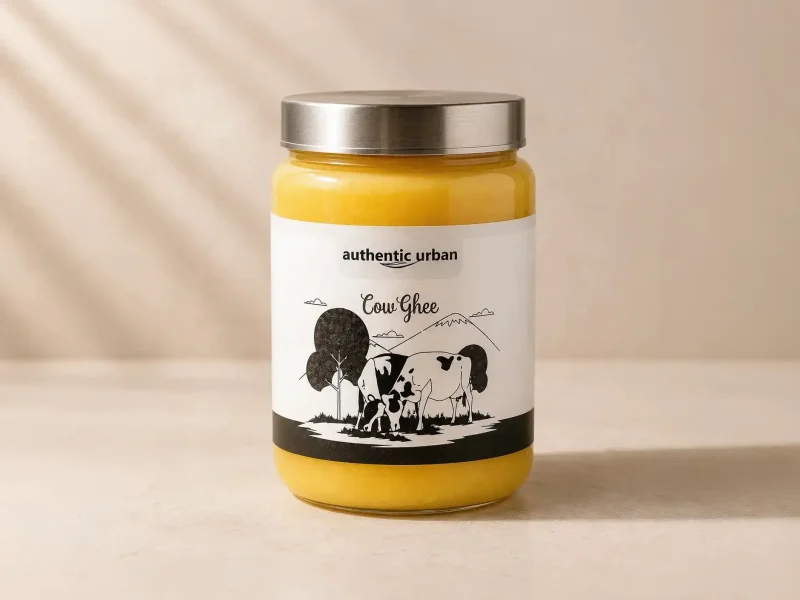 1 Litre
Halwa, ladoo, and parathas
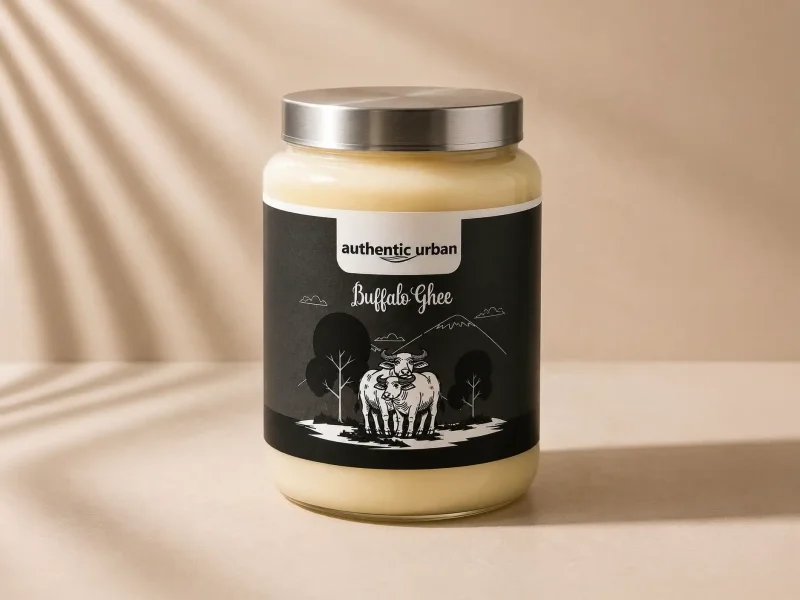 1 Litre
Each order is cooked after you place it, and the packing video is of that batch. Past order videos are on the shop.
FAQ
Is cooking with ghee every day healthy?
It can be, if you count it. ICMR-NIN's 2024 dietary guidelines ask adults to keep ghee or butter to 1 to 2 teaspoons a day and all visible fat, ghee and oil together, to 20 to 50 g depending on how active you are. A daily tadka and ghee on roti fit inside that. Cooking every dish in ghee, every day, does not. Anyone told by a doctor to cut saturated fat should follow that number instead.
Can I mix ghee and oil in the same tadka?
Yes. Many homes start a sabzi in a spoon of oil and add half a teaspoon of ghee with the jeera for the smell. You get the ghee taste with half the ghee. Count both fats toward the day. The one mix to avoid is pouring used frying fat into your fresh jar of ghee or bottle of oil; keep used fat apart and finish it in a curry within a day or two.
Can I cook with ghee in a non-stick pan or on induction?
Yes. Ghee works on any pan and any flame. On a non-stick pan keep the heat at medium, because an empty non-stick pan on high heats fast and the ghee can smoke before you notice. On induction the pan heats quickly, so melt the ghee first on a low setting, then raise it for the seeds. Iron and steel kadhais take a tadka best.
Can I use ghee in a pressure cooker?
Yes. For dal or khichdi, most of the taste comes from a tadka poured on after cooking, so we keep the ghee out of the cooker and add it at the end. For pulao or khichdi cooked in one pot, bloom the whole spices in 1 to 2 teaspoons of ghee in the open cooker, add rice, dal, and water, then close the lid.
Can I cook chicken, mutton, or fish in ghee?
Yes. Ghee roasts and dry masalas, like the Mangalorean chicken ghee roast, are cooked in it from start to finish. For a long-cooked curry, cooking the onion masala in oil and finishing with a teaspoon of ghee gives most of the taste. For fried fish or chicken in a full kadhai, use oil once, like any deep fry.
Does cooking in ghee make food heavy?
Only when there is a lot of it. A teaspoon on dal or roti does not make a meal heavy, but halwa, ladoo, and fried snacks carry a lot of fat in each bite. If ghee food sits heavy for you, cut the amount, keep ghee to the tadka and the roti, and eat the sweet in a smaller piece.
About the editorial team
Authentic Urban TeamBilona ghee makers, Gir Somnath, Gujarat
We are the Parmar family in Gir Somnath, Gujarat. We have made ghee here since 2016 and sold it online since 2025. We make only Bilona ghee, test it every month, and anyone is welcome to visit and watch it being made. Our Gir cows and Jafarabadi buffalo are grass-fed village animals that graze near the Gir forest, with no hormones or milk boosters. We set their milk to curd, churn it, and cook the makkhan on a wood chulha. These articles come from that kitchen and from what customers ask us on WhatsApp. We are ghee makers, not doctors.
Sources
- Dietary Guidelines for Indians, 2024 (Guideline 7, printed pp. 54-55; cooking methods, printed pp. 84 and 88), ICMR-National Institute of Nutrition. Checked 27 Sep 2026.
- Food Safety and Standards (Food Products Standards) Chapter 2.1: Dairy products and analogues, version 01.09.2023 (ghee standard p. 27), FSSAI. Checked 27 Sep 2026.