Can We Put Ghee in Ear? Safety, Earwax, and Tinnitus
Ghee in ear drops are safe only in a healthy ear: no pain, no fluid, no fever, no sudden hearing loss. Then 2 to 3 drops of plain ghee, melted and cooled to body warmth, soften dry skin and wax the way olive oil does. Ghee does not cure tinnitus. Ringing in the ear is a symptom with many causes, and one of them, a hole in the eardrum, is the one ear where no drop should ever go.
Can we put ghee in the ear?
Yes, in a healthy ear, and only a little: 2 to 3 drops of plain ghee, melted and cooled until it feels barely warm on your wrist, from a clean bowl. No, if the ear hurts, leaks, has a grommet, or has just gone deaf or started ringing. In those ears ghee can reach where it should not, and it can hide the problem a doctor needs to see.
We make ghee in Gir Somnath, Gujarat, and we know two things about a jar that matter here. Ghee is ready only once all the water in the makkhan has boiled away, so ghee straight off the flame is far hotter than boiling dal. And the same ghee that pours in May sets grainy in a cold January kitchen. So ear drops always mean melting a little, then waiting for it to cool to body warmth. At home, our ghee is for eating; ear oiling is a household tradition, and the rules below are about doing it safely.
Find your ear in this table before anything else.
Your ear
Ghee drops?
Why
Healthy ear, dry or itchy canal
Okay, with care
2 to 3 drops of plain, body-warm ghee from a clean bowl. It softens skin and wax, like olive oil does.
Blocked feeling from wax
Oil drops can help
The NHS names olive or almond oil. Ghee has not been tested; a pharmacist's wax drops are the tested choice.
Ringing (tinnitus), no pain
Doctor first
Ringing has many causes. If wax is one, the doctor will say so; if it is not, drops do nothing for it.
Earache, fever, or a cold
No
Could be an ear infection. Nothing goes in the ear until a doctor has looked.
Fluid, pus, or blood from the ear
Never
A sign of infection or a hole in the eardrum. Ghee can then reach the middle ear.
Grommets, recent ear surgery, or a known perforation
Never
The NHS says nothing in the ear, drops included, unless a doctor recommends them.
Sudden hearing loss, dizziness, or a weak face
Emergency
The NHS sends these to A&E. Do not lose a day on home drops.
Baby under one year
No
An ear-pulling or crying baby needs a doctor. Nothing in a baby's ears.
The same care applies to ghee in other openings. Nose drops have their own list of who should not use them on ghee in the nose, and the eyes are covered on ghee for eyes.
Does ghee in the ear help tinnitus?
Not as a treatment. We found no controlled trial of ghee drops for ringing in the ears. Drops can only help the one kind of ringing that comes from a canal blocked with wax, and a doctor needs to look in the ear to know if that is your kind.
The NHS says the cause of tinnitus is not always clear, but links it with hearing loss, Meniere's disease, diabetes, thyroid problems, multiple sclerosis, anxiety, depression, and some medicines, including some painkillers and chemotherapy drugs. None of those sit in the ear canal where a drop lands. Drops cannot reach the inner ear or the nerve.
The trap: ringing can mean a hole in the eardrum
The NHS lists ringing or buzzing in the ear among the symptoms of a perforated eardrum, along with hearing loss, earache, and fluid, blood, or pus coming out. It follows an ear infection, a slap or knock on the ear, a loud bang, or a change in air pressure on a flight. The same NHS page says not to put anything in the ear, eardrops included, unless a doctor recommends them, and that most holes heal on their own in about 2 months.
So the person most likely to reach for "ghee for ringing ears" after a bad cold or a flight is also the person most likely to have the one ear where drops are a bad idea. That is why this page says doctor first for ringing, even when there is no pain.
What is karna purana, and is it ghee or oil?
Karna purana is the Ayurvedic practice of filling the ear canal with warm oil for a short time, then draining it. The classic verse names oil, not ghee.
In the Charaka Samhita, Sutra Sthana chapter 5, verse 84, in the translation published by the Charak Samhita New Edition, filling the ears with oil daily is said to prevent vata-type ear diseases, stiffness of the neck and jaw, difficulty hearing, and deafness. Vata is the dry, moving quality in Ayurveda. Many pages online turn this into "Charaka says ghee in the ear". The text says taila, oil. Where a vaidya does use ghee in the ear, it is chosen and warmed for that patient, often cooked with herbs; for how medicated ghee differs from a kitchen jar, see medicated ghee (ghritam).
Read the verse as tradition. Its dry-ear line matches what any fat does to dry skin. The hearing and deafness lines have not been tested in trials. The daily oiling in the same chapter, for the head, ears, body, and feet, is covered on abhyanga with ghee, where only the outer ear gets oiled.
How do you put ghee in the ear safely?
Use 2 to 3 drops of plain ghee at body warmth, lie on your side for 5 to 10 minutes, then let it drain out. That copies the NHS routine for olive or almond oil drops, which is the tested version of the same idea.
1. Check the ear first
No pain, no fluid, no fever, no hearing drop, no grommets. Any one of these and you stop here.
2. Take a little out of the jar
Half a teaspoon, with a clean dry spoon, into a small steel bowl. Never dip a dropper or cotton into the kitchen jar.
3. Melt it, then let it cool to body warmth
Stand the bowl in warm water. Test a drop on the inside of your wrist: it should feel barely warm, never hot.
4. Lie on your side
Pull the outer ear gently up and back, and let 2 to 3 drops fall in. The NHS uses the same amount for oil drops.
5. Stay down 5 to 10 minutes
Press the small flap at the front of the ear once or twice. Then sit up with a tissue at the ear and let the rest run out.
6. Wipe the outer ear only
No cotton bud inside. The NHS says buds push wax deeper and make it worse.
7. Stop if it hurts
Pain, a fuller ear, worse hearing, or itching that grows means stop and see a doctor.
Use plain ghee only, with nothing added: no camphor, no garlic, no herbs you cannot name. A jar that has lived next to the stove with spoons going in and out is fine for dal and wrong for an ear, which is why a small portion goes into a bowl first. How moisture and dirty spoons spoil a jar is on ghee storage and shelf life.
How often?
For wax, the NHS routine is 3 to 4 times a day for 3 to 5 days, with lumps of wax coming out over about 2 weeks. It sends you to a nurse or pharmacist if the ear is still blocked after 5 days. For a dry, itchy canal, once or twice a week is plenty. Daily drops for months are not needed, and a canal that is always greasy is not a healthier one.
Ghee or olive oil for earwax?
Olive oil, for a simple reason: it is the one the NHS names, it stays runny in a cold room, and ghee has no tested edge over it. Ghee in the ear works the way any fat would.
A 2018 Cochrane review pooled 10 trials of ear drops for wax, with 623 people and 900 ears. In the one trial that compared drops with doing nothing, 22% of treated ears were fully clear after five days against 5% untreated. Across the trials, oil-based drops did no better than water-based ones, and the reviewers called the evidence low quality. Few side effects were reported. So a drop softens wax a little; which drop matters less than people think, and none of them clears a hard plug quickly.
In the ear
Tested for wax?
Note
Olive or almond oil
Named by the NHS for wax
Skip almond oil with a nut allergy. Cheap, runny, easy to drop.
Pharmacy wax drops
The drops most trials used
Ask the pharmacist which one, and how many days.
Plain ghee
Not tested for wax
Works the way any fat would. Sets back to solid in a cold room, so it must be warmed.
Mustard oil with garlic
Not tested
A household custom. Pungent, and garlic bits do not belong in an ear.
Ear candles or ear vacuums
No evidence, per the NHS
Skip them. A hot candle near the face adds a burn risk.
Cotton buds, hairpins, keys
Harmful
Push wax in and can scratch the canal or the eardrum.
When should you never put ghee in the ear?
Never with pain, fluid, fever, a hole in the eardrum, grommets, recent ear surgery, or sudden hearing loss. In each of these, a doctor has to see the ear before anything goes in.
An ear infection shows up, per the NHS, as earache, a high temperature, trouble hearing, discharge, a feeling of pressure, or itching. Most clear within 3 days, sometimes a week. The NHS advice while it heals is to keep water and shampoo out of the ear and put nothing inside it, not even a cotton bud. Drops of ghee in an infected, swollen canal trap warmth and moisture, and if the eardrum has burst, they can pass through it.
People who swim a lot, wear hearing aids, or have eczema or psoriasis in the ear canal should ask their doctor before any regular drops. The skin inside the ear is thin, and an itch that gets worse with oil is a reason to stop, not to add more.
Can I put ghee in my baby's ear?
No. Nothing goes in a baby's ears, ghee or oil. A baby who pulls at an ear, cries when lying down, or does not react to some sounds may have an ear infection, and the NHS says to see a GP for any suspected ear infection in a baby under 12 months.
Putting oil in a newborn's ears after the bath is still a common custom in India. Keep the ghee for the massage, on the skin, and keep it out of the ears, nose, and mouth; the reasons are on where not to put ghee on a baby. Wipe the outer ear with a soft cloth after the bath; that is all a baby's ear needs.
What helps tinnitus more than ghee?
Finding the cause, then the treatments with evidence behind them. A doctor can look in the ear for wax or infection, and a hearing test shows whether hearing loss sits behind the ringing.
For ringing that stays, the NHS offers cognitive behavioural therapy (often digital first), tinnitus counselling, tinnitus retraining therapy with sound, and hearing aids when there is hearing loss. At home it suggests relaxation, better sleep habits, avoiding loud noise, and not sitting in total silence: soft music or a fan in the background makes the ringing harder to notice. If ringing and worry feed each other at night, the sleep routine on ghee for anxiety and stress helps more than any drop.
Take your medicine list to the doctor. Some painkillers and other medicines are linked to ringing, and only the doctor who prescribed them should change them. Eating ghee plays no part either way; a teaspoon or two in the day's meals is normal food, and the full amount by age is on how much ghee per day.
When does ringing in the ear need a doctor?
See a doctor for any ringing that keeps coming back, and go urgently for the signs below. These are the NHS lines, not ours.
- Ringing after a head injury, or with sudden hearing loss, vertigo, or weakness in the face: A&E now, per the NHS.
- Ringing that pulses with your heartbeat: an urgent doctor's appointment.
- Ringing in one ear only, or ringing that keeps getting worse.
- Earache that is not better after 3 days, or fluid coming out of the ear.
- Ringing that keeps you awake, breaks your concentration, or brings you down.
- A blocked ear still blocked after 5 days of drops.
ENT first. An ENT doctor or audiologist decides what is causing ringing and whether any drop is safe in your ear. This page is general information from ghee makers, not medical advice. Headaches with ringing are covered on when a headache is an emergency.
Ghee in ear: a 7-point safety checklist
Screenshot this for the next time someone in the family reaches for the ghee jar with an earache.
- No ghee in an ear with pain, fluid, fever, grommets, or sudden hearing loss.
- Healthy ear only: 2 to 3 drops, body-warm, from a clean bowl, never straight from the jar.
- Test the warmth on your wrist. Hot ghee is hotter than boiling dal.
- Lie on your side 5 to 10 minutes, then let it drain. No cotton bud inside.
- Blocked with wax after 5 days of drops: see a doctor or nurse for removal.
- Ringing is a symptom, not a disease: find the cause with a doctor before trying any drops.
- Nothing in a baby's ears, ghee or oil.
Whatever goes near your ear should be plain ghee with nothing mixed in. Five quick checks for a jar are on how to identify pure ghee.
Which ghee for the kitchen?
Ghee earns its place on the plate, not in the ear. Buy a jar you are happy to eat every day: plain, a smell of toasted milk when warmed, and grain when cool, which is normal for slow curd-churned ghee. Our ranking of the cow ghee on sale is best cow ghee in India.
For the daily teaspoon we would pick our own A2 Gir cow ghee: milk from grass-fed Gir cows, set to curd overnight, churned by hand (Bilona), and cooked in a matki on a wood chulha, made after you order, with a video of your jar sent on WhatsApp. For parathas and sweets, our Jafarabadi buffalo ghee is the richer jar. We test every month against the FSSAI limits; the steps are on how we make ghee.
The daily teaspoon on dal and roti
 1 Litre
Paratha, halwa, and winter sweets
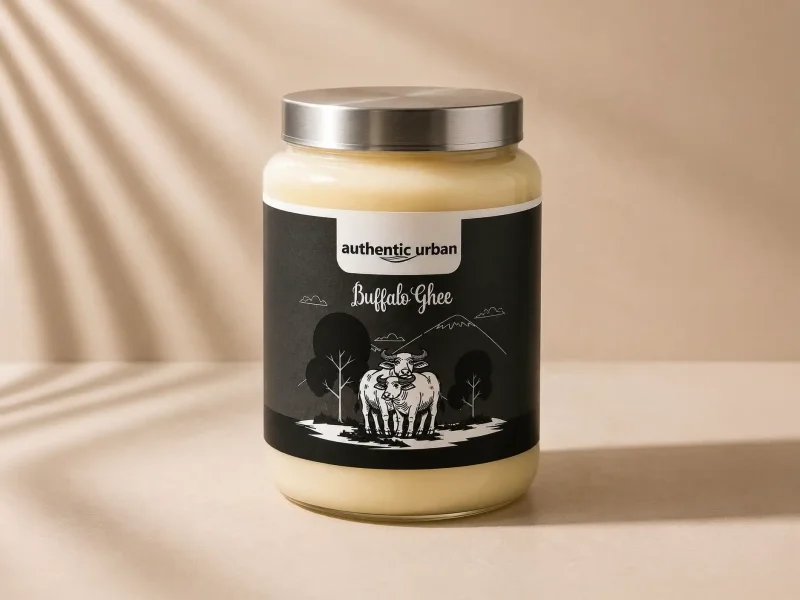 1 Litre
Each order is cooked after you place it, and the packing video is of that batch. Past order videos are on the shop.
FAQ
Can ghee in the ear cause an infection?
It can, if the ghee or what you use to drop it is not clean, or if the ear already has a break in its skin. A kitchen jar opened with a wet or used spoon can carry germs, and fat left in a warm canal is a good place for them. Take a little into a clean bowl each time, never reuse what has touched the ear, and stop if the ear itches more, hurts, or starts to discharge.
Is mustard oil or ghee better to put in the ear?
Neither has been tested against the other for anything. For softening earwax the NHS names olive or almond oil, and a Cochrane review found no oil beat water-based drops. Mustard oil is sharper on the skin, and many homes add garlic, which leaves bits behind in the ear. If you want a drop in a healthy ear, plain olive oil from a pharmacy is the simplest choice.
Can I put ghee in my nose for an ear problem?
Do not use nasya as a treatment for an ear. The nose and the middle ear are joined by a narrow tube, which is why a cold can block your ears, but no study shows ghee in the nose clears an earache, a blocked ear, or ringing. An earache with a cold needs a doctor if it lasts more than 3 days. Nasya has its own safety rules, set out on our page about ghee in the nose.
Can I sleep with ghee in my ear and a cotton plug?
Better not. The NHS routine for oil drops has you lie on your side for 5 to 10 minutes and then let the rest drain, not hold oil in all night. A cotton plug keeps the canal warm and damp, and fat that sits for hours in a warm canal can itch or irritate the skin. If you want drops at bedtime, put them in, rest ten minutes, drain, and sleep with the ear open.
My ear feels blocked after putting ghee in it. What should I do?
Lie with that ear down on a towel for a few minutes so the melted ghee can run out, and wipe the outer ear only. Softened wax can shift and feel fuller for a day. Do not dig with a bud or fingertip. If the ear is still blocked after a few days, or it hurts, rings more, or you hear less, see a doctor or nurse, who can look in and remove the wax safely.
Does eating ghee help tinnitus?
No study has shown that eating ghee changes tinnitus. The NHS links ringing with hearing loss, Meniere's disease, diabetes, thyroid problems, anxiety, and some medicines, and none of these is fixed by a food. Eat ghee as part of normal meals, a teaspoon or two a day on dal or roti, and spend your effort on the hearing test, the doctor's review of your medicines, and sleep.
About the editorial team
Authentic Urban TeamBilona ghee makers, Gir Somnath, Gujarat
We are the Parmar family in Gir Somnath, Gujarat. We have made ghee here since 2016 and sold it online since 2025. We make only Bilona ghee, test it every month, and anyone is welcome to visit and watch it being made. Our Gir cows and Jafarabadi buffalo are grass-fed village animals that graze near the Gir forest, with no hormones or milk boosters. We set their milk to curd, churn it, and cook the makkhan on a wood chulha. These articles come from that kitchen and from what customers ask us on WhatsApp. We are ghee makers, not doctors.
Sources
- Earwax build-up, NHS. Checked 28 Sep 2026.
- Tinnitus, NHS. Checked 28 Sep 2026.
- Perforated eardrum, NHS. Checked 28 Sep 2026.
- Ear infections, NHS. Checked 28 Sep 2026.
- Ear drops for the removal of ear wax (Cochrane review, 2018, CD012171), Cochrane. Checked 28 Sep 2026.
- Charaka Samhita, Sutra Sthana, Chapter 5: Matrashiteeya Adhyaya (verse 84, filling the ears with oil), Charak Samhita New Edition (carakasamhitaonline.com). Checked 28 Sep 2026.