Ghee for Brain Health: Does It Help Memory, and How Much?
Ghee for brain health comes down to this: 1 to 2 teaspoons a day fits a brain-friendly diet, but no human trial shows plain ghee improves memory or focus. Ghee has no DHA and almost no B12 or iron, the nutrients the brain misses first. Keep the spoon on dal or roti, and get those from dal, curd, eggs, nuts, or fish.
Is ghee good for the brain and memory?
A little ghee is fine for the brain, but it is not a memory food. One to two teaspoons a day, the limit ICMR-NIN's 2024 dietary guidelines set for ghee or butter, fits a good diet. The one study we found that fed plain cow ghee and tested memory, in rats, saw no effect. Ghee's job is taste, and helping vitamins A, D, E, and K from vegetables absorb.
This page is for adults asking whether ghee helps memory, focus, or an ageing parent's forgetfulness. Children's portions by age are on ghee for children's brain development. Most pages that rank for this question call ghee rich in omega-3, a DHA source, or dementia protection. We make ghee for a living and would like all of that to be true. Here is what the studies and the food tables actually show.
What does the research on ghee and memory show?
Very little, and none of it in people eating plain ghee. Ayurveda texts praise ghee for the mind more than for anything else, but modern studies have barely tested it, and the best-known results are for herbs cooked in ghee.
The claim
What is actually known
Ayurveda calls ghee medhya, so it sharpens memory
The texts do say it. A 2024 review in the Journal of Ayurveda and Integrative Medicine (Kataria and Singh) found about 1 in 5 mentions of ghee in Ayurveda literature is about the mind. It also found only 9 PubMed studies on ghee and cognition: 5 in animals, 2 in people, 2 reviews.
Studies prove ghee improves memory
The one study we found that fed plain cow ghee and tested memory was in rats. Karandikar and colleagues (Journal of Clinical and Diagnostic Research, 2016) gave cow ghee or butter for 21 days and saw no significant effect on memory in two maze tests.
The Brahmi ghrita trial shows ghee helps older people remember
That 2022 trial gave 72 older adults with mild memory problems Brahmi ghrita, yoga, or both for 8 weeks. Scores rose in all three groups. It was not randomised, had no untreated group, and tested a herb cooked in ghee, so it tells us nothing about plain ghee.
Ghee is rich in DHA and omega-3 for the brain
USDA FoodData Central lists no DHA or EPA in ghee, and about 73 mg of 18:3 fat (the group that includes ALA, the plant omega-3) in a teaspoon. A handful of walnuts has close to 20 times that.
Ghee carries nutrients across the blood-brain barrier
This is said of herbal ghritams, where ghee is the carrier for the herb. We found no human study measuring it for plain ghee. The ghee you eat is digested like any other fat.
The butyrate in ghee feeds the brain through the gut
No human trial of ghee we found tests this. Most butyrate in the gut is made by bacteria from fibre in dal, vegetables, and whole grains, not taken in from a spoon of ghee.
The rat study is the one to remember. Researchers in Maharashtra gave rats cow ghee for three weeks, expecting the medhya effect the texts describe, and measured none. It is one small animal study, so it does not prove ghee is useless either. It does mean that "studies show ghee boosts memory" has nothing behind it yet. The gut side of the story, and why a spoon of ghee is a small source of butyrate next to fibre, is on does ghee help the gut-brain axis.
Which brain nutrients does ghee have, and which does it lack?
Ghee brings vitamin A and a little vitamin E, and almost nothing else the brain needs. ICMR-NIN's 2024 guidelines note that brain and nerve tissue hold a lot of omega-3 fat, and that DHA and EPA come from fish, sea foods, and algae. Ghee has neither. Per the USDA figures below, it also has no iron and next to no B12 or choline.
Food and portion
kcal
DHA + EPA
18:3 (ALA group)
B12
Iron
Choline
Ghee, 1 tsp (5 g)
kcal 44
DHA+EPA 0
18:3 73 mg
B12 0
Iron 0
Choline 1 mg
Masoor dal, cooked, 1 katori (150 g)
kcal 174
DHA+EPA 0
18:3 56 mg
B12 0
Iron 5.0 mg
Choline 49 mg
Curd, whole milk, 100 g
kcal 61
DHA+EPA 0
18:3 27 mg
B12 0.37 µg
Iron 0.05 mg
Choline 15 mg
Egg, 1 (50 g)
kcal 72
DHA+EPA 29 mg
18:3 24 mg
B12 0.45 µg
Iron 0.9 mg
Choline 147 mg
Walnuts, about 7 halves (15 g)
kcal 98
DHA+EPA 0
18:3 1,362 mg
B12 0
Iron 0.4 mg
Choline 6 mg
Oily fish (farmed salmon, cooked), 100 g
kcal 206
DHA+EPA 2,150 mg
18:3 113 mg
B12 2.8 µg
Iron 0.3 mg
Choline 91 mg
USDA FoodData Central, per 100 g, scaled to each portion; checked 27 September 2026. USDA's ghee entry is "butter oil, anhydrous". Its dal entry is lentils, the same seed as masoor.
Read the ghee row against its neighbours. A teaspoon gives 44 calories and 3.1 g of saturated fat, but no DHA, a small slice of 18:3 fat, and nothing measurable for B12 or iron. A katori of dal brings 5 mg of iron, one egg brings 147 mg of choline and some DHA, and a few walnuts bring almost 20 times the 18:3 fat of the ghee. What ghee does well is help vitamin A from carrots or palak absorb, with amounts on ghee for nutrient absorption.
If you are vegetarian
ICMR-NIN names long-chain omega-3 fats and B12 as the two nutrients vegetarians struggle to get. The body turns only a small amount of plant omega-3 into DHA, so it asks for flax seeds, chia, walnuts, and greens every day, and notes that milk carries a small amount of B12. Ghee helps with neither. Protein and B12 on a vegetarian day are laid out on ghee for vegetarians, and iron on ghee for anaemia.
How much ghee for brain health, and when?
One to two teaspoons a day, on meals, is enough for everyone in the table below. ICMR-NIN's 2024 guidelines say to limit ghee or butter to 1 to 2 teaspoons a day, and cap all visible fat (oil and ghee together) at about 20 g for a sedentary woman and 30 g for a sedentary man. Nothing suggests the brain wants more than that.
Who
Ghee a day
How
Adult who wants a sharper memory
1 to 2 tsp a day
On dal, roti, or khichdi. More ghee adds nothing the studies can show; the ICMR-NIN 2024 limit is 1 to 2 teaspoons.
Student on exam days
½ tsp at breakfast, 1 tsp at lunch
On a full meal, not a spoon on its own. Sleep and a proper lunch matter far more than the ghee.
Vegetarian
1 to 2 tsp a day
Keep the ghee, and add walnuts, flax, or chia for omega-3, and curd or milk for B12. ICMR-NIN names both as hard for vegetarians.
Older parent with forgetfulness
1 tsp a day, on soft food
Ghee makes dal and khichdi easier to eat. It does not treat memory loss; see a doctor first.
High LDL, heart disease, or on BP tablets
½ to 1 tsp, or as your doctor says
ICMR-NIN notes saturated fat raises LDL cholesterol, and what harms blood vessels harms the brain too.
Pregnant or breastfeeding
Within 1 to 2 tsp
ICMR-NIN asks for oilseeds, nuts, beans, and fish for the baby's higher fat needs in these months, with visible fat kept down.
A teaspoon is 5 g (ICMR-NIN). A starting point for adults; your doctor's advice wins.
In our home in Gir Somnath each of us eats 1 to 2 teaspoons a day, on roti, dal, and khichdi, and more only in winter sweets like adadiya pak and gond. That is the whole routine. Nobody takes a morning spoon for the mind. If you have read that a spoon on an empty stomach sharpens memory, what that habit does and who should skip it is on ghee on empty stomach. The daily limit for the rest of the family is on how much ghee per day, and you can work out your home's daily ghee and oil person by person.
Does ghee help focus and concentration?
Not on its own. We found no study of ghee and concentration in people. What helps a student or a desk worker hold focus through the afternoon is a real meal, enough sleep, and fewer crashes from skipping lunch, and a teaspoon of ghee on that meal is fine.
Ghee for students on exam days
Parents often add an extra spoon of ghee in exam weeks. It does no harm inside the 1 to 2 teaspoon limit, and no good beyond it. This is a day that keeps a student fed without heavy, sleepy meals:
Breakfast
Poha or upma with peanuts and vegetables, ½ tsp ghee on top, a glass of milk or a bowl of curd
Lunch
Dal, rice or two rotis, sabzi, curd; 1 tsp ghee on the dal
Evening study break
Fruit, roasted chana, or a few walnuts, in place of fried snacks and a third chai
Dinner
Roti, dal, and sabzi with no extra ghee if you have had 1½ to 2 tsp already
That is 1½ teaspoons of ghee, well inside the limit, with milk or curd for B12, dal for iron, and walnuts for omega-3. The night before the exam, sleep does more than anything on this plate.
Ghee coffee and MCT oil for focus
Ghee in black coffee is sold as a focus drink. The caffeine is what wakes you up; what the few ghee coffee trials found on fullness and focus is on ghee coffee benefits. The "ketones for brain fuel" idea belongs to MCT oil, a different product, compared on ghee vs MCT oil. If poor focus comes with stress or bad nights, start with ghee for anxiety and stress.
Is ghee medhya? What Ayurveda says
Yes, Ayurveda calls ghee medhya, meaning good for the intellect, and that is tradition, not a tested result. The 2024 review by Kataria and Singh counted cognition as the single most common benefit of ghee in Ayurveda texts, about 22% of all mentions, including memory and intellect.
In practice, much of that use is ghee as a carrier: herbs like brahmi or shankhpushpi cooked into ghee to make a ghritam, taken in measured doses under an Ayurveda doctor. That is a medicine, not the ghee on your roti, and a jar of plain ghee is not Brahmi ghrita. How ghritams are made, dosed, and who should avoid them is on medicated ghee (ghritam). Even the Brahmi ghrita trial above could not say whether the herb, the ghee, or simply being in a study helped, because every group improved.
Can ghee prevent dementia or Alzheimer's?
No food has been shown to prevent dementia, and ghee has not been studied for it in people. The NHS says around 4 in 10 cases could be prevented by changing the risk factors we can change, and those are mostly about the heart and blood vessels: blood pressure, weight, smoking, alcohol, exercise, hearing loss, and staying social.
Diet sits in that list for one reason the NHS spells out: a diet high in saturated fat, salt, and sugar can raise blood pressure and cholesterol. Ghee is mostly saturated fat, so a big daily habit works against the brain, not for it. Within 1 to 2 teaspoons, it is a small part of a healthy plate. If your LDL is already high, the amounts to aim for are on ghee for cholesterol.
What helps memory more than ghee?
Sleep, movement, and the nutrients ghee lacks. ICMR-NIN's guidelines say a lack of essential fatty acids and micronutrients can cause anaemia and affect cognition, learning, and memory, and that regular physical activity improves brain function.
- Omega-3: walnuts, flax, chia, mustard oil, and methi seeds for everyone; fish and eggs if you eat them.
- B12: milk, curd, and paneer daily for vegetarians; eggs, fish, and meat for others. A long-term vegetarian with poor memory should ask for a B12 test.
- Iron: dal, rajma, chana, and green leaves.
- Movement: the NHS suggests at least 150 minutes of brisk walking or similar a week, plus strength work twice a week.
- Sleep and mood: the NHS lists stress, anxiety, depression, and poor sleep among the common, treatable causes of memory problems.
- Blood pressure: the NHS lists keeping it at a healthy level among the ways to lower dementia risk. Get it checked regularly.
When is memory loss a doctor's job, not a diet's?
When it affects daily life. The NHS says to see a GP if you keep having memory problems that affect your day-to-day life, and to speak to one if an older relative is getting more and more forgetful. It also says not to self-diagnose the cause.
See a doctor, not the kitchen, if someone gets lost in familiar places, repeats the same questions within minutes, forgets how to do daily tasks, or has sudden confusion, weakness, or slurred speech. Sudden symptoms need emergency care. The NHS notes that common causes such as stress, anxiety, depression, and poor sleep can be treated, and that treatment may work better if it starts early.
Conditions where a doctor sets your fat intake, such as gallstones or pancreatitis, are listed under who should not eat ghee.
An 8-point brain-plate checklist
Screenshot this for the kitchen, or send it to whoever cooks for a student or an older parent.
- Keep ghee to 1 to 2 teaspoons a day in total, measured with a 5 ml spoon.
- Eat it on food: dal, roti, khichdi. Never as a spoon on its own for "brain power".
- Get omega-3 from walnuts, flax, chia, mustard oil, or fish and eggs if you eat them.
- Have curd, milk, or eggs daily for B12. Long-term vegetarians can ask their doctor about a B12 test.
- Eat dal, greens, or meat for iron. Tiredness and poor focus can be anaemia.
- Sleep a full night before an exam. No food fixes a missed night.
- Walk or move for 150 minutes a week, the NHS target, which helps the brain too.
- Memory problems that affect daily life go to a doctor, not the kitchen.
Which ghee for a brain-friendly kitchen?
No ghee is better for the brain than another; the spoon size and the rest of the plate decide it. What you want is ghee that tastes good enough that one teaspoon feels like plenty. Well-made ghee smells of toasted milk when warmed and often sets grainy when cool. A batch cooked too hard turns dark and bitter, and we keep those at home instead of packing them. Varsha tastes every batch before it goes into a jar. How to check any jar is on how to identify pure ghee, and our ranking of the cow ghee on sale is best cow ghee in India.
We make and sell ghee, so weigh this with that in mind. For the daily teaspoon we would pick our own A2 Gir cow ghee: grass-fed Gir milk set to curd overnight, churned, and cooked in a matki on a wood chulha, made after you order, with a video of your jar sent on WhatsApp. At ₹2,399 a litre, a 5 ml teaspoon costs about ₹12. Our Jafarabadi buffalo ghee is the richer jar for halwa and parathas. We test every month against the FSSAI limits; the steps are on how we make ghee.
The daily teaspoon on dal
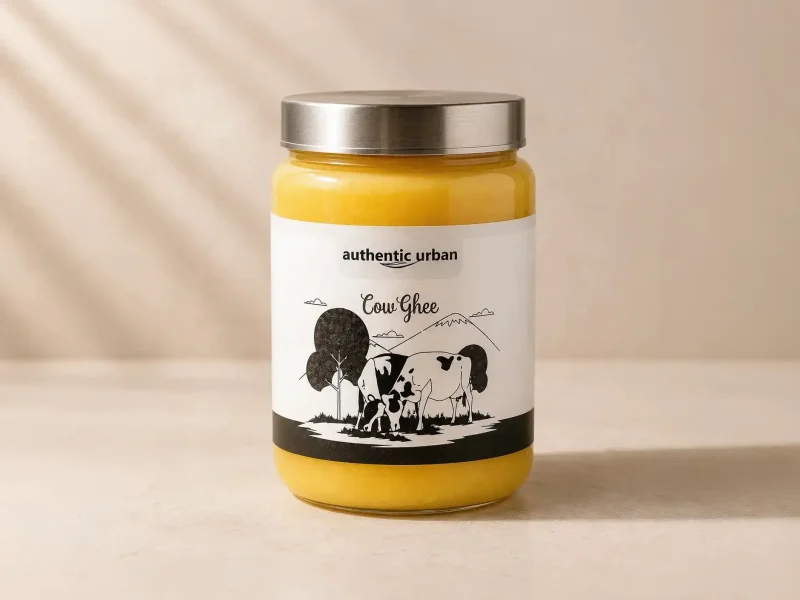 1 Litre
Winter sweets and parathas
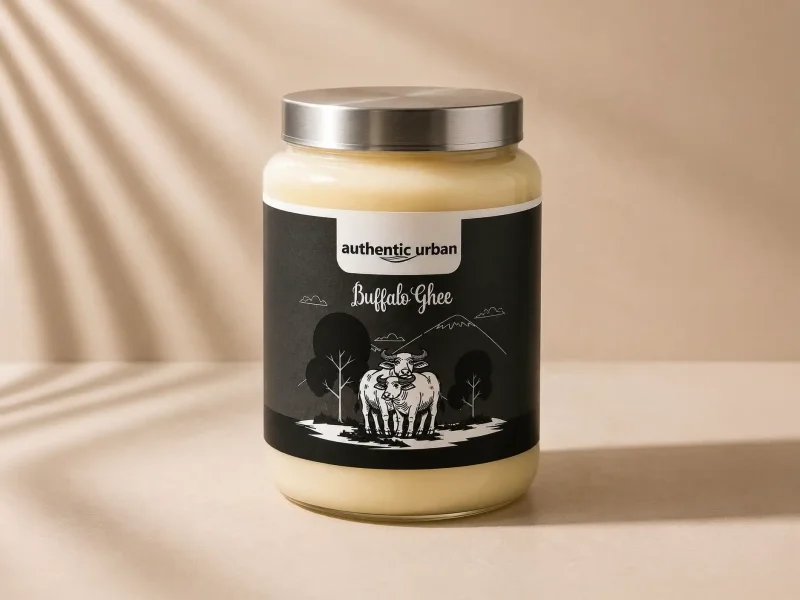 1 Litre
Each order is cooked after you place it, and the packing video is of that batch. Past order videos are on the shop.
FAQ
Kya ghee dimag ke liye accha hai?
Thoda ghee khane mein theek hai, par yeh dimag ki dawai nahi hai. One to two teaspoons a day on dal, roti, or khichdi fits a good diet, per ICMR-NIN. No human trial shows plain ghee improves memory. Ghee has no DHA and almost no B12 or iron, so the brain foods that matter more are dal, curd, milk, eggs, walnuts, and fish if you eat it.
Is cow ghee or buffalo ghee better for the brain?
Neither has been shown to be better for the brain in any study we found. Both are almost pure milk fat with no DHA and very little omega-3, so the amount matters more than the animal. Cow ghee is lighter in taste, which makes it easier to stop at one teaspoon on dal. Buffalo ghee is richer and suits halwa and parathas, which are already the heavy dishes.
Is milk with ghee at night good for memory?
It is a comforting bedtime habit in many homes, but we found no study showing it helps memory. The milk brings some B12 and protein; the ghee adds about 44 calories a teaspoon. If it helps you settle and sleep, the sleep is doing the work. Keep the ghee to half a teaspoon so the day stays within 1 to 2 teaspoons.
Is soaked badam with ghee good for memory?
Soaked almonds with a little ghee is a common household tradition for students, but we found no trial of this pairing and memory. Almonds are a nut, and nuts belong in a brain-friendly diet. For omega-3 in particular, ICMR-NIN names walnuts, flax, and chia. A few almonds and walnuts, without the ghee, give you the useful part.
Will cutting out ghee harm my memory?
No. ICMR-NIN's 2024 guidelines say that if you eat enough nuts, oilseeds, pulses, and beans, your essential fats are met and there is no need for visible fats at all. Ghee is there for taste, not because the brain needs it. If you drop ghee, keep some fat in meals so vitamins A, D, E, and K from vegetables still absorb.
Can ghee help with brain fog?
Not directly. The NHS lists stress, anxiety, depression, and poor sleep as common, treatable causes of memory trouble, and ICMR-NIN links poor diets to anaemia and weaker memory. A teaspoon of ghee on a proper meal is fine, but brain fog that lasts weeks needs a doctor's check, not more ghee.
About the editorial team
Authentic Urban TeamBilona ghee makers, Gir Somnath, Gujarat
We are the Parmar family in Gir Somnath, Gujarat. We have made ghee here since 2016 and sold it online since 2025. We make only Bilona ghee, test it every month, and anyone is welcome to visit and watch it being made. Our Gir cows and Jafarabadi buffalo are grass-fed village animals that graze near the Gir forest, with no hormones or milk boosters. We set their milk to curd, churn it, and cook the makkhan on a wood chulha. These articles come from that kitchen and from what customers ask us on WhatsApp. We are ghee makers, not doctors.
Sources
- Butter oil, anhydrous (ghee), FDC ID 173412, USDA FoodData Central. Checked 27 Sep 2026.
- Lentils, mature seeds, cooked, boiled, FDC ID 172421, USDA FoodData Central. Checked 27 Sep 2026.
- Yogurt, plain, whole milk, FDC ID 171284, USDA FoodData Central. Checked 27 Sep 2026.
- Egg, whole, raw, fresh, FDC ID 171287, USDA FoodData Central. Checked 27 Sep 2026.
- Nuts, walnuts, english, FDC ID 170187, USDA FoodData Central. Checked 27 Sep 2026.
- Fish, salmon, Atlantic, farmed, cooked, dry heat, FDC ID 175168, USDA FoodData Central. Checked 27 Sep 2026.
- Dietary Guidelines for Indians, 2024 (limit ghee or butter to 1 to 2 teaspoons a day, visible fat limits, n-3 fats and the brain, PDF p. 19, 69 to 71, 111, 119), ICMR-National Institute of Nutrition. Checked 27 Sep 2026.
- Health benefits of ghee: Review of Ayurveda and modern science perspectives (Kataria D, Singh G), Journal of Ayurveda and Integrative Medicine, 2024, Journal of Ayurveda and Integrative Medicine. Checked 27 Sep 2026.
- Comparison between the effect of cow ghee and butter on memory and lipid profile of Wistar rats (Karandikar YS et al.), 2016, Journal of Clinical and Diagnostic Research. Checked 27 Sep 2026.
- Efficacy of Integrated Yoga and Ayurveda Rasayana on cognitive functions in elderly with mild cognitive impairment: non-randomized three-arm clinical trial (Chobe S et al.), 2022, Journal of Ayurveda and Integrative Medicine. Checked 27 Sep 2026.
- Memory loss (amnesia), NHS. Checked 27 Sep 2026.
- Can dementia be prevented?, NHS. Checked 27 Sep 2026.