Butter Chicken Recipe (Murgh Makhani) with Ghee, in Grams
For a butter chicken recipe for four, marinate 600 g of boneless chicken thigh in curd and spices overnight, char it in 1 tablespoon of ghee on high heat, then cook 500 g tomato, an onion, and 20 cashews in 2 tablespoons of ghee, blend, and simmer the chicken in that gravy for 10 minutes. Finish off the boil with 60 ml cream, kasuri methi, and a tablespoon of butter. A plate comes to about 424 kcal.
How do you make butter chicken at home?
Marinate the chicken the night before, char it hard in ghee, and simmer it in a smooth tomato and cashew gravy that has been cooked in ghee until the fat leaves the edge. Butter and cream go in last, off the boil. On the day it is about 50 minutes at the stove. Here is each stage with its heat and time.
Stage
Heat
Time
Ready when
Marinate
Fridge
4 hours to overnight
Curd clinging to every piece, not sliding off.
Char the chicken in ghee
High
3 to 4 min a side, in 2 batches
Dark spots on the outside. The inside can still be pink; it finishes in the gravy.
Whole spices and onion
Medium
30 sec, then 5 to 6 min
Onion soft and pale gold, not brown.
Tomato and cashew
Medium, covered
10 min
Tomato skins loose and the cashews soft enough to crush.
Blend and cook the gravy
Medium-low
8 to 10 min
Deep orange, thick, with ghee showing at the edge.
Chicken in the gravy
Low, lid half on
8 to 10 min
Thickest piece cut open: no pink, juices clear.
Finish
Lowest, no boil
1 min, then rest 5
Cream, kasuri methi, and butter stirred through, glossy on top.
Two things make it taste like a restaurant plate and not tomato chicken. The chicken has to char before it meets the gravy, and the tomato has to cook in fat until it stops tasting raw. Both need a fat that takes high heat without burning, which is why the ghee goes in at the start and the butter at the end. Which other dishes take ghee at the start and which only on top is on cooking with ghee.
What goes into butter chicken, in grams?
For four you need 600 g of boneless chicken thigh, 100 g of thick curd, 500 g of ripe tomato, 100 g of onion, 30 g of cashews, 60 ml of cream, 3 tablespoons of ghee, and 1 tablespoon of butter, plus Kashmiri chilli, garam masala, whole spices, and kasuri methi.
Ingredients (serves 4)
Marinade
- 600 g boneless chicken thigh, in 4 cm pieces
- 100 g thick curd (hung for 30 minutes if watery)
- 1 tbsp lemon juice, 1 tbsp ginger-garlic paste
- 1 tsp Kashmiri chilli, ½ tsp garam masala, ½ tsp salt
Makhani gravy
- 500 g ripe tomato (about 6 medium), roughly chopped
- 100 g onion (1 medium), sliced
- 30 g cashews (about 20)
- 1 tbsp ginger-garlic paste
- 2 green cardamom, 4 cloves, 2 cm cinnamon
- 1½ tsp Kashmiri chilli, ½ tsp garam masala, 1¼ tsp salt
- 1 tsp sugar, 1 tsp kasuri methi, 60 ml fresh cream
- 3 tbsp ghee (38 g): 1 to char, 2 for the gravy
- 1 tbsp butter (14 g) to finish
Equipment: a heavy iron pan or kadhai, a blender, and a lid.
Steps
- 1. Mix the chicken with the lemon, salt, and chilli. After 15 minutes add the curd, ginger-garlic, and garam masala. Cover and refrigerate 4 hours to overnight.
- 2. Take it out 20 minutes before cooking. Iron pan on high, 1 tbsp ghee. Half the chicken in one layer, untouched for 3 to 4 minutes, then turn. Repeat with the rest. Keep the juices.
- 3. Same pan, medium, 2 tbsp ghee. Whole spices 30 seconds, onion 5 to 6 minutes until soft, ginger-garlic 1 minute.
- 4. Tomato, cashews, chilli, and salt. Cover and cook 10 minutes until soft. Cool 5 minutes and blend smooth with 150 ml water.
- 5. Back in the pan on medium-low, lid off, 8 to 10 minutes, until thick and ghee shows at the edge. Stir in the sugar and garam masala.
- 6. Chicken, its juices, and 100 ml water. Simmer on low 8 to 10 minutes, until the thickest piece has no pink.
- 7. Lowest flame: cream, kasuri methi crushed between your palms, and the butter. Do not let it boil. Rest 5 minutes.
One plate, a quarter of the pot without naan or rice: about 424 kcal, 33.5 g protein, 27.6 g fat (13.4 g saturated), 11.1 g carbohydrate, and 2.2 g fibre, worked out from USDA FoodData Central for chicken thigh, curd, tomato, onion, cashews, cream, ghee, and butter. The spices, ginger-garlic, lemon, sugar, and salt are not counted. Without the ghee, butter, and cream the same plate is about 271 kcal.
Keep your face back when the chicken goes into the hot pan and when the tomato goes into the ghee. Ghee is ready only once all the water in the makkhan has boiled away, so it sits far hotter than boiling water, and a spit of hot ghee burns worse than a splash of dal. What to do if it catches you is on ghee and burns.
Ghee or butter for butter chicken?
Char the chicken and cook the gravy in ghee, and stir the butter in at the end. Butter is about a sixth water and milk solids, so in a pan hot enough to char chicken it foams and its solids burn black before the chicken colours. Ghee has had those cooked out. The butter still matters: added off the boil, it gives the fresh, milky taste the dish is named for.
1 tbsp
Weight
kcal
Fat
Water
In the pan
Ghee
12.8 g
112 kcal
Fat 12.7 g
Water: Almost none
Takes a very hot iron pan without spitting or burning, so the chicken chars instead of stewing. Fries the masala to the stage where the fat leaves the edge.
Unsalted butter
14.2 g
102 kcal
Fat 11.5 g
Water: 2.3 g
Foams, spits, and its milk solids burn black in a pan hot enough to char. Stirred in off the boil at the end, it gives the fresh butter taste the dish is named for.
USDA FoodData Central: butter oil (ghee) 173412, unsalted butter 173430. Checked 29 September 2026.
Can you make it with butter alone? Yes, if you char the chicken in an oven or on a grill and keep the gravy on medium, but watch the butter: once the foam drops and the solids turn brown, it is minutes from bitter. Oil chars the chicken fine and adds no dairy taste, so if you use it, finish with the butter as written. The same swap across Indian cooking is on ghee vs butter, and why ghee holds a hot pan better is on ghee for high-heat cooking.
How much ghee in butter chicken, and how many calories?
Three tablespoons of ghee and one of butter for four plates, which is 2¼ teaspoons of ghee and ¾ teaspoon of butter a plate and about 424 kcal before naan or rice. Two tablespoons of ghee and no butter still works; a restaurant-style pot adds two more tablespoons of butter and twice the cream.
Pot of 4
Fat in the pot
A plate
kcal
Sat. fat
How it turns out
Light
2 tbsp ghee, 50 ml cream, no butter
A plate: 1½ tsp ghee
363 kcal
Saturated fat 9.2 g
Char in 1 tbsp, masala in 1 tbsp. Still glossy, a little less rich.
This recipe
3 tbsp ghee, 1 tbsp butter, 60 ml cream
A plate: 2¼ tsp ghee, ¾ tsp butter
424 kcal
Saturated fat 13.4 g
Smooth, orange, buttery on top, with the charred chicken still tasting of the pan.
Restaurant style
3 tbsp ghee, 3 tbsp butter, 120 ml cream
A plate: 2¼ tsp ghee, 2¼ tsp butter
519 kcal
Saturated fat 19.9 g
The rich plate from a dhaba menu. For a party, not a weeknight.
Per plate, a quarter of the pot, curry only. USDA FoodData Central: chicken thigh 173627, curd, tomato, onion, cashews, light whipping cream 170858, ghee 173412, unsalted butter 173430. Daily line: ICMR-NIN Dietary Guidelines for Indians 2024. Checked 29 September 2026.
ICMR-NIN's 2024 dietary guidelines suggest limiting ghee or butter to 1 to 2 teaspoons a day, inside no more than 27 to 30 g of all visible fat, oil and ghee together, on a 2,000 kcal diet. The recipe plate sits at 3 teaspoons of ghee and butter, and the cream adds more milk fat on top, so butter chicken is a Sunday or guest-night dish. At home we each eat 1 to 2 teaspoons of ghee a day, on roti, dal, and khichdi; on a day with a rich curry, the rest of the cooking goes in oil and the roti stays dry. The day's budget is laid out on how much ghee per day. Cream packs differ a lot in fat, and the table uses about 31% fat cream, so check the label on yours.
Measure the ghee melted. In summer our ghee stays liquid in the jar; in winter it sets grainy, and a heaped spoon from a cold jar holds far more than a level tablespoon. "Why is it grainy?" is the question we get most on WhatsApp, and the answer is on why ghee is grainy. At our live prices a tablespoon of our cow ghee costs about ₹36 and of our buffalo ghee about ₹30, so the 3 tablespoons in this pot cost ₹90 to ₹108, or ₹23 to ₹27 a plate.
Cow or buffalo ghee for butter chicken?
Buffalo ghee for charring and the gravy. It is fuller and richer, which stands up to tomato, cream, and garam masala, and it costs less a spoon. Cow ghee is lighter, with a toasted-milk smell; keep it for the daily teaspoon on dal, or use a teaspoon of it in place of the butter at the end. The two are set side by side on cow vs buffalo ghee.
How do you know the chicken is cooked, and which cut to use?
Cut the thickest piece open after 8 minutes in the gravy: it is done when there is no pink or red meat inside and the juices run clear, which is the NHS test for cooked poultry. The char in the pan is only the outside, so never serve the chicken straight from step 2.
- Do not wash the raw chicken. The NHS says washing raw meat raises the risk of food poisoning, because the splashes carry bacteria onto the sink, the counter, and anything nearby. Cooking kills the bacteria; rinsing only spreads them. Pat it dry with a paper towel if it is wet.
- Marinate in the fridge, not on the counter. Frozen chicken should thaw in the fridge too, which is the UK Food Standards Agency's advice, so take it out of the freezer the night before you marinate.
- Thigh or breast. Thigh stays juicy through the char and the simmer, and it is what this recipe is written for. Breast has a little less fat and more protein: with breast the plate is about 423 kcal and 37.7 g protein, per USDA FoodData Central. Char breast for only 2 minutes a side, or it turns stringy in the gravy.
- Use a separate board and knife for the raw chicken, and wash them and your hands before touching the onion or coriander.
How do you get the smoky restaurant taste?
Char the chicken properly and, if you want more, smoke the finished gravy with a coal and a spoon of ghee. A tandoor chars the marinade at a heat a home pan only reaches if it is iron, very hot, and not crowded.
- Pan: heat the iron pan empty for 2 minutes, then the ghee, then half the chicken. Do not move it for 3 minutes. The curd sugars need that time to blacken in spots.
- Oven: 230°C on a rack over a tray, 12 to 15 minutes, brushed with ghee halfway. Put the tray juices in the gravy.
- Dhungar: hold a small piece of charcoal on a gas flame with tongs until it glows all over, about 5 minutes. Set it in a small steel katori on top of the gravy, pour ½ teaspoon of ghee on it, and close the lid at once for 2 to 3 minutes. Lift the katori out before serving. Do this with a window open; burning charcoal gives off carbon monoxide.
- Kasuri methi: crush it between your palms over the pot. Whole leaves stay leathery; crushed, they give the faint bitter smell every restaurant plate has.
We read the pan the same way we read the matki at the chulha. Our makkhan comes off the flame when the bubbling goes quiet, the solids turn golden-brown, and it smells of toasted milk; a few minutes more and it is dark and bitter, and a batch like that never goes in a jar. Char on chicken works the same: black spots are flavour, a black crust is burnt. The dhungar trick is used in dal makhani too, and a dry, chilli-red way to cook chicken in ghee is chicken ghee roast.
Why is my butter chicken sour, thin, or split?
Sour gravy almost always means the tomato needed more time in the ghee; thin gravy needs the lid off; split cream means it boiled. Find what you see below.
Gravy tastes sour or raw
The tomato was not cooked long enough before or after blending.
Fix: Cook the gravy on medium-low with the lid off until ghee shows at the edge, 5 minutes more. Then ½ tsp sugar at a time. More cream only hides it.
Gravy is thin
Watery tomatoes, or too much water in the blender.
Fix: Simmer with the lid off before the chicken goes in. Next time blend with half the water, or add 10 g more cashews.
Cream split into specks
The gravy boiled after the cream, or the gravy was very sour.
Fix: Take it off the heat and whisk hard; a spoon of warm water helps. Next time cook the tomato longer and add cream on the lowest flame only.
Chicken is dry or stringy
Breast cooked through in the pan and then again in the gravy.
Fix: Use thigh. If you use breast, char it for 2 minutes a side only, and keep it in the gravy just until the thickest piece has no pink.
No charred, smoky taste
Pan not hot enough, or too many pieces at once, so they steamed.
Fix: Heat the iron pan until the ghee shimmers, then half the chicken at a time without moving it for 3 minutes. Or use the dhungar smoke below.
Pale, not orange
Pale tomatoes, or hot chilli powder in place of Kashmiri.
Fix: Fry 1 tsp more Kashmiri chilli in a spoon of ghee for 10 seconds and stir it in. Skip the food colour.
How long does butter chicken keep in the fridge?
Two days. The UK Food Standards Agency advises getting cooked food into the fridge within one to two hours and eating leftovers within 48 hours, or freezing them. If you freeze butter chicken, thaw it in the fridge and reheat it only once.
The gravy sets thick and the fat rises to the top in the fridge; that is normal. Reheat it in a pan on low with 2 to 3 tablespoons of water, stirring, until it bubbles and the chicken is steaming hot in the middle, then stir in a teaspoon of butter or cream off the heat. Cream sauces can split in the freezer, so for a party, freeze the blended gravy before the cream and add the cream on the day.
What do you serve with butter chicken?
Naan or roti to scoop it, plain rice or jeera rice to soak it, and raw onion with lemon to cut the richness. Because the curry already carries 3 teaspoons of fat a plate, keep the bread plain: a roti with no ghee on it, or one plain ghee paratha and not three. For a bigger meal, ghee rice or a vegetarian rajma masala sits well beside it; a salad and a bowl of curd do more for the plate than a second curry.
Butter chicken recipe card to keep by the stove
Screenshot it and start the marinade the night before.
- 1. For 4: 600 g boneless chicken thigh, 100 g thick curd, 1 tbsp lemon juice, 2 tbsp ginger-garlic paste, 2½ tsp Kashmiri chilli, 1 tsp garam masala, 1¾ tsp salt, 500 g ripe tomato, 100 g onion, 30 g cashews (about 20), 2 green cardamom, 4 cloves, 2 cm cinnamon, 1 tsp sugar, 1 tsp kasuri methi, 60 ml fresh cream. 3 tbsp ghee, 1 tbsp butter.
- 2. Marinate: chicken with lemon, ½ tsp salt, and 1 tsp chilli for 15 minutes; then curd, 1 tbsp ginger-garlic, ½ tsp garam masala. Fridge, 4 hours to overnight.
- 3. Char: iron pan on high, 1 tbsp ghee, half the chicken, 3 to 4 minutes a side. Repeat. Set aside with its juices.
- 4. Same pan, medium: 2 tbsp ghee, whole spices 30 seconds, onion 5 to 6 minutes, 1 tbsp ginger-garlic 1 minute.
- 5. Tomato, cashews, 1½ tsp chilli, 1¼ tsp salt. Cover, 10 minutes. Cool a little and blend smooth with 150 ml water.
- 6. Back in the pan on medium-low, 8 to 10 minutes, until ghee shows at the edge. Sugar and ½ tsp garam masala.
- 7. Chicken and juices in with 100 ml water. Low, 8 to 10 minutes, until the thickest piece has no pink.
- 8. Lowest flame: cream, crushed kasuri methi, 1 tbsp butter. Do not boil. Rest 5 minutes. About 424 kcal a plate. Fridge within 2 hours, eat within 2 days.
Which ghee for butter chicken?
The ghee is the first thing the masala fries in, so a stale or flat ghee shows up in the gravy. Pick a plain ghee with nothing added that smells of toasted milk when it melts. The home checks are on how to identify pure ghee, and our ranking of the buffalo ghee on sale is best buffalo ghee in India.
For butter chicken we would char the chicken and cook the gravy in our Jafarabadi buffalo ghee, and keep our A2 Gir cow ghee for the daily teaspoon on dal and roti. Both come from grass-fed village animals near the Gir forest in Gir Somnath; the milk is set to curd overnight, churned, and the makkhan cooked in a matki on a wood chulha. The jar is made after you order, a video of it being cooked and packed comes on WhatsApp, and Varsha tastes every batch before it goes in a jar. We test every month against the FSSAI limits; the steps are on how we make ghee.
A teaspoon in place of the butter at the end
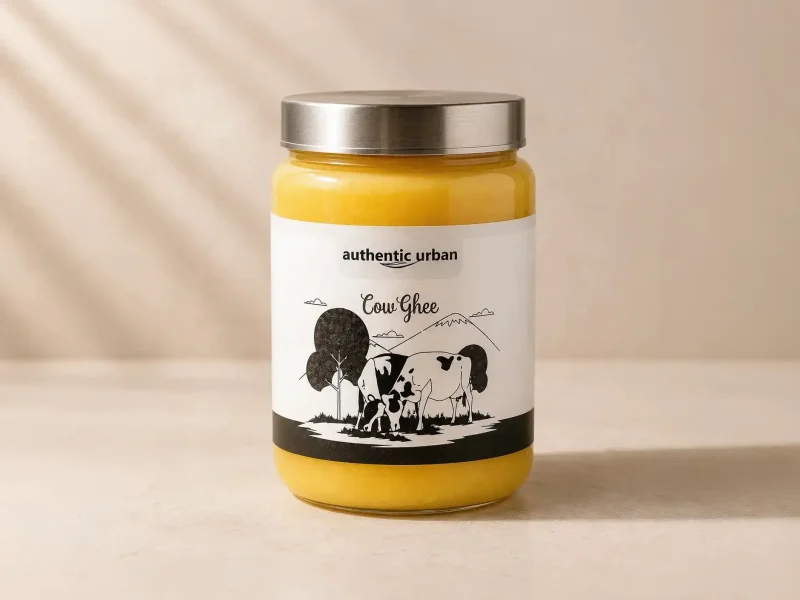 1 Litre
Charring the chicken and the makhani gravy
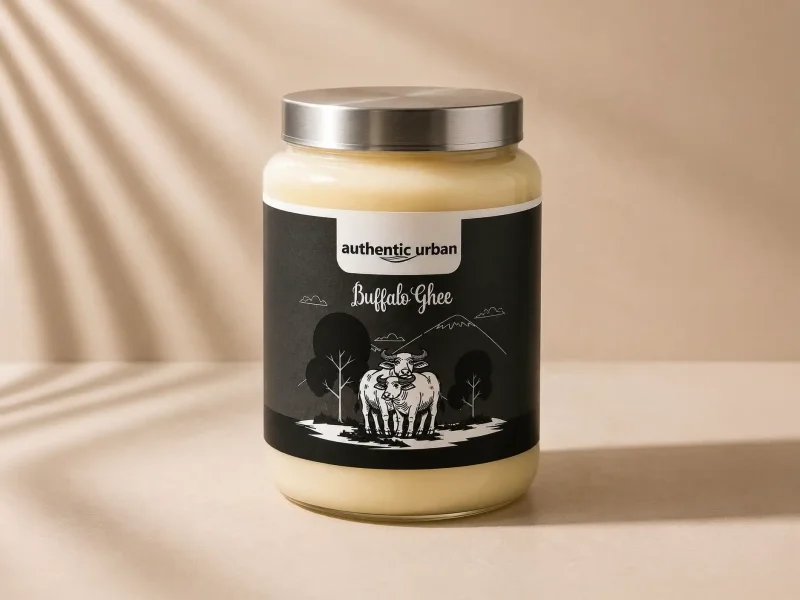 1 Litre
Each order is cooked after you place it, and the packing video is of that batch. Past order videos are on the shop.
FAQ
Butter chicken kaise banaye?
600 gram boneless chicken ko dahi, adrak-lehsun, Kashmiri mirch aur garam masala mein raat bhar fridge mein rakho. Lohe ki kadhai mein 1 chammach ghee garam karke chicken ko tez aanch par 3 se 4 minute har taraf seko. Usi kadhai mein 2 chammach ghee, pyaaz, 500 gram tamatar aur 20 kaju pakao, phir peeso. Gravy ko 10 minute pakao jab tak ghee kinare par na aaye. Chicken daalo, 10 minute pakao, upar se cream, kasuri methi aur makkhan.
What is the difference between butter chicken and chicken tikka masala?
Both start with charred, marinated chicken. Butter chicken goes into a smooth, mild tomato gravy thickened with cashews and finished with butter and cream, so it tastes rich and a little sweet. Tikka masala is usually cooked in a thicker onion-tomato masala with more whole spice and heat, often with pieces of onion and capsicum left in. If you want it hotter and chunkier, you want tikka masala.
Can I make butter chicken without cream or cashews?
Yes. Without cream, blend 40 g of cashews into the gravy instead of 30 g and finish with the tablespoon of butter; it stays thick and pale orange. Without cashews, use 2 tablespoons of melon seeds (magaz) or blend in 60 ml more cream. Without both, whisk 3 tablespoons of thick curd with a spoon of the hot gravy first, then stir it in off the heat so it does not split.
Can I use leftover tandoori chicken for butter chicken?
Yes, and that is how many restaurants make it. Pull the meat off the bone or cut it into pieces, make the gravy as written, and simmer the chicken in it on low for 5 minutes, just until it is steaming hot all the way through. Leftover tandoori chicken should have gone into the fridge within two hours of cooking and be used within two days.
Fresh tomatoes or tomato puree for butter chicken?
Ripe fresh tomatoes give the brightest colour and a clean taste; 500 g is about 6 medium. A 200 g packet of tomato puree plus 200 g fresh tomato also works and saves 5 minutes, but packet puree is thicker and sharper, so add 100 ml more water to the blender and cook the gravy a few minutes longer until the ghee shows at the edge.
Can I make butter chicken with bone-in chicken?
Yes. Use about 800 g of bone-in thigh and drumstick pieces for the same amount of meat, and cut two slashes into each piece so the marinade gets in. Char them 5 to 6 minutes a side, then simmer in the gravy for 15 to 20 minutes with the lid half on, until the meat near the bone has no pink and the juices run clear.
About the editorial team
Authentic Urban TeamBilona ghee makers, Gir Somnath, Gujarat
We are the Parmar family in Gir Somnath, Gujarat. We have made ghee here since 2016 and sold it online since 2025. We make only Bilona ghee, test it every month, and anyone is welcome to visit and watch it being made. Our Gir cows and Jafarabadi buffalo are grass-fed village animals that graze near the Gir forest, with no hormones or milk boosters. We set their milk to curd, churn it, and cook the makkhan on a wood chulha. These articles come from that kitchen and from what customers ask us on WhatsApp. We are ghee makers, not doctors.
Sources
- Chicken, broilers or fryers, dark meat, thigh, meat only, raw (FDC ID 173627), SR Legacy, USDA FoodData Central. Checked 29 Sep 2026.
- Chicken, broiler or fryers, breast, skinless, boneless, meat only, raw (FDC ID 171077), SR Legacy, USDA FoodData Central. Checked 29 Sep 2026.
- Yogurt, plain, whole milk (FDC ID 171284), SR Legacy, USDA FoodData Central. Checked 29 Sep 2026.
- Tomatoes, red, ripe, raw, year round average (FDC ID 170457), SR Legacy, USDA FoodData Central. Checked 29 Sep 2026.
- Onions, raw (FDC ID 170000), SR Legacy, USDA FoodData Central. Checked 29 Sep 2026.
- Nuts, cashew nuts, raw (FDC ID 170162), SR Legacy, USDA FoodData Central. Checked 29 Sep 2026.
- Cream, fluid, light whipping (FDC ID 170858), SR Legacy, USDA FoodData Central. Checked 29 Sep 2026.
- Butter oil, anhydrous (FDC ID 173412), SR Legacy, USDA FoodData Central. Checked 29 Sep 2026.
- Butter, without salt (FDC ID 173430), SR Legacy, USDA FoodData Central. Checked 29 Sep 2026.
- Dietary Guidelines for Indians, 2024 (Guideline 7, visible fats), ICMR-National Institute of Nutrition. Checked 29 Sep 2026.
- Meat in your diet, NHS. Checked 29 Sep 2026.
- How to chill, freeze and defrost food safely, Food Standards Agency (UK). Checked 29 Sep 2026.