Ghee Rice Recipe (Neychoru): Water Ratio and How Much Ghee
For a ghee rice recipe for four, fry 15 cashews, a sliced onion, and whole spices in 3 tablespoons of ghee, turn 1½ cups of soaked basmati in that ghee, then cook it in 2¼ cups of salted water on the lowest flame for 12 to 15 minutes. Rest it 10 minutes before you open the lid. Each plate has about 2¼ teaspoons of ghee and 380 kcal.
How do you make ghee rice at home?
Fry the nuts, whole spices, and onion in ghee, coat soaked rice in that ghee, add measured water, and let it steam shut on a low flame. Ghee rice is known as neychoru or nei choru in Kerala and nei sadam in Tamil Nadu. It has no vegetables and no masala: the ghee, the spices, and the fried onion are the whole flavour. It takes about 30 minutes at the stove after a 20 to 30 minute soak.
Ingredients (serves 4)
- 1½ cups (280 g) aged basmati, or kaima or jeerakasala rice
- 3 tbsp ghee (38 g)
- 1 large onion (about 150 g), sliced thin
- 15 cashews (about 15 g) and 1 tbsp raisins (about 10 g)
- 1 bay leaf, 4 cloves, 1 piece cinnamon, 4 green cardamom, 1 star anise
- 2¼ cups water and 1 tsp salt (for basmati in a pot; other rice in the table below)
- 2 tbsp chopped coriander or mint, optional
Equipment: a heavy 2 to 3 litre pot with a tight lid (or a pressure cooker), a slotted spoon for the nuts, and a fork for fluffing.
Steps
- 1. Wash the rice 3 to 4 times, until the water runs almost clear. Soak 20 to 30 minutes. Drain in a sieve for 5 minutes.
- 2. Heat the ghee on medium-low. Fry the cashews until pale gold, 1 to 2 minutes, and lift them out. Raisins in for 10 seconds, until they puff, then out.
- 3. Whole spices into the same ghee for 30 seconds. Add the onion and fry 8 to 10 minutes on medium to deep golden. Keep a spoon of it aside.
- 4. Add the drained rice. Turn it gently for 1 to 2 minutes, until every grain is shiny with ghee.
- 5. Pour in the water and salt. Stir once and taste: a little too salty is right.
- 6. Bring to a boil, then lid on, lowest flame, 12 to 15 minutes. Do not open it.
- 7. Off the heat. Rest 10 minutes, lid shut. Fluff with a fork and top with the nuts, raisins, onion, and herbs.
One plate, a quarter of the pot: about 380 kcal, 6.2 g protein, 11.7 g fat (6.4 g saturated), 62 g carbohydrate, and 1.8 g fibre, worked out from USDA FoodData Central for raw long-grain rice, ghee, onion, cashews, and raisins. The whole spices and salt add very little and are not counted.
Measure the ghee after it melts. In winter the ghee we make cools to a firm grain in the jar, and in summer it stays liquid, so a heaped spoon from a cold jar can hold far more than a tablespoon. Customers ask us on WhatsApp why the jar looks different from one month to the next; it is the season, and it changes nothing in the pot. Warm the jar in a bowl of hot water for a minute, then measure. Why the grain forms is on why ghee is grainy.
How much water for ghee rice?
For soaked aged basmati in a pot, use 1½ cups of water for each cup of rice; in a pressure cooker, 1¼ cups. Short-grain kaima and everyday sona masoori need more. Treat these as starting points: new-crop rice drinks less water, and a wide pot loses more to steam than a narrow one.
Rice
Pot
Pressure cooker
Soak
Aged basmati
Pot: 1 : 1½ (1½ cups rice, 2¼ cups water). Boil, then lowest flame 12 to 15 min.
Cooker: 1 : 1¼. One whistle on medium, then off. Let the pressure drop on its own.
Soak 20 to 30 min
Kaima or jeerakasala (Kerala neychoru)
Pot: 1 : 1¾. Boil, then lowest flame 12 to 15 min.
Cooker: 1 : 1½. One whistle on medium.
Soak 20 min
Sona masoori or other everyday rice
Pot: 1 : 2. Boil, then lowest flame 15 min.
Cooker: 1 : 1¾. Two whistles on medium.
Soak 10 to 15 min
New-crop rice of any kind
Pot: Take ¼ cup water off each cup of rice.
Cooker: Same: ¼ cup less.
Soak Skip, or 10 min
Cups of water for each cup of soaked, drained rice. Unsoaked rice needs about ¼ cup more water and a few minutes longer.
Kerala neychoru is made with kaima or jeerakasala, a short, thin, fragrant rice. It cooks a little faster than basmati once soaked, and it breaks more easily, so turn it in the ghee for only a minute. Basmati gives the long, separate grains you see at weddings in the north. Sona masoori works for a weekday pot; it comes out softer and clings a little more.
How much ghee for ghee rice?
Two tablespoons of ghee for each cup of rice: 3 tablespoons (38 g) for this pot of four. That fries the cashews and onion, blooms the spices, and still leaves enough to coat every grain. Below about 1½ tablespoons a cup, the rice tastes of plain rice and starts to cling.
ICMR-NIN's 2024 dietary guidelines suggest limiting ghee or butter to 1 to 2 teaspoons a day, and keeping all visible fat, oil and ghee together, to about 27 to 30 g a day on a 2,000 kcal diet. A plate of this rice carries 2¼ teaspoons of ghee, so on a ghee rice day the dal and rotis go without. The table shows what a lighter or richer pot does to each plate.
Pot of 4
Ghee in the pot
Ghee a plate
kcal
Sat. fat
How it turns out
Light
In the pot: 2 tbsp (26 g)
A plate: 1½ tsp
353 kcal
Saturated fat 4.4 g
Enough to fry the cashews and onion and coat the rice. Tastes of ghee, a little drier on the plate.
This recipe
In the pot: 3 tbsp (38 g)
A plate: 2¼ tsp
380 kcal
Saturated fat 6.4 g
Each grain shines and stays separate. The smell fills the kitchen when the lid comes off.
Rich, wedding style
In the pot: 4 tbsp (51 g)
A plate: 3 tsp (1 tbsp)
409 kcal
Saturated fat 8.4 g
Glossy rice, ghee at the bottom of the pot. A festival plate, not a weekday one.
Per plate, a quarter of the pot. USDA FoodData Central: rice 169756, ghee 173412 (1 tbsp = 12.8 g), onion 170000, cashews 170162, raisins 168165. Daily line: ICMR-NIN Dietary Guidelines for Indians 2024. Checked 28 September 2026.
At our live prices a tablespoon of our cow ghee costs about ₹36 and of our buffalo ghee about ₹30, so the ghee in this pot comes to ₹90 to ₹108. At home in Gir Somnath each of us eats 1 to 2 teaspoons of ghee on an ordinary day, on roti, dal, and khichdi. The full daily budget is on how much ghee per day, and calories by the spoon are on ghee nutrition facts.
Is ghee rice the same as pulao, jeera rice, or biryani?
No. Ghee rice is plain rice cooked in ghee with whole spices, nuts, and fried onion, and nothing else. Pulao cooks vegetables or peas in the pot with the rice, jeera rice keeps only cumin, and biryani layers rice over a cooked masala and steams it sealed.
If you want vegetables in the pot, or the quick cumin version, make ghee pulao. If "ghee rice" in your city means rice with chicken inside, as it often does in Karnataka and Tamil Nadu, you are looking for ghee biryani. For rice and dal cooked soft together, the comfort-food version is ghee khichdi.
Why is my ghee rice sticky, hard, or bland?
Sticky rice comes from too much water or stirring, hard rice from too little water or escaped steam, and bland rice from spices fried in ghee that was not hot enough. More ghee fixes none of these. Find the problem below.
Sticky or mushy
Too much water, rice not washed well, or stirred after the water went in.
Fix: Wash until the water runs almost clear, drain the soaked rice for 5 minutes, and use the ratio in the table. Stir once when the water goes in, then leave the lid alone.
Hard, white centre
Too little water, the lid let steam out, or the rice was not soaked.
Fix: Sprinkle 3 to 4 tbsp hot water over the top, close the lid tight, and give it 5 more minutes on the lowest flame. Next time soak for 20 minutes.
Broken grains
Rice fried too hard in the ghee, or fluffed with a spoon while hot.
Fix: Turn the drained rice in the ghee gently for 1 to 2 minutes, no longer. Rest 10 minutes before fluffing, and use a fork or the handle end of a flat spoon.
Bland, smells of plain rice
Spices went into cold ghee, onions only soft, or not enough salt in the water.
Fix: Heat the ghee until a clove sizzles at once. Fry the onion to deep golden, 8 to 10 minutes. Taste the water before the lid goes on: it should taste a little too salty.
Bitter cashews or burnt raisins
Nuts left in after they turned golden, or raisins added to very hot ghee.
Fix: Fry cashews on medium-low and lift them out the moment they turn pale gold; they darken off the heat. Add raisins last, for 10 seconds, until they puff.
Scorched bottom
Thin pot, or the flame left on medium after the boil.
Fix: Use a heavy pot and the lowest flame once it boils, or set the pot on a tawa. Serve from the top and leave the scorched layer.
Watch the ghee at step 2. Ghee is only ready once every drop of water in the makkhan has boiled away, so hot ghee sits well above the boiling point of water, and a splash burns worse than a splash of dal. Wet onions or rice spit hard when they hit it. Pat the onion dry, let the rice drain properly, and lower both in with a spoon. Ghee handles this heat without trouble; the numbers are on ghee smoke point.
Can you make ghee rice from leftover rice?
Yes, as a quick tawa version, if the rice went into the fridge within an hour of cooking and is less than a day old. For 2 cups of cooked rice, heat 1 tablespoon of ghee, fry a few cashews, ½ teaspoon of cumin, 6 crushed peppercorns, and half a sliced onion, then toss the rice in for 3 to 4 minutes until it is steaming hot all through.
Break up the cold rice with your fingers before it goes in, so it heats evenly without being mashed. Sprinkle a tablespoon of water over it and cover for a minute if it looks dry. This is a lunch for two, not a party dish: the grains never get the whole-spice smell that cooking in the ghee gives.
How long does ghee rice keep, and can you reheat it?
Eat leftover ghee rice within 24 hours, and reheat it only once. The NHS advises cooling cooked rice within 1 hour and keeping it in the fridge, because spores of some food poisoning bacteria survive cooking, multiply in rice left warm, and make toxins that reheating does not destroy.
Spread the rice on a plate to cool fast, then box it and put it in the fridge. To reheat, sprinkle 1 to 2 tablespoons of water over it, cover, and heat until it is steaming hot all through; the NHS gives 70°C at the centre for 2 minutes. Do not leave the pot on the stove overnight, even with the lid on. Ghee rice for a party is safest cooked in the last hour before guests arrive; a sealed heavy pot stays hot for 30 minutes or more.
What do you serve with ghee rice?
A thin, spicy curry, because the rice is rich and mild. In Kerala it is chicken or mutton curry; in Tamil Nadu, kurma or salna; in the north, dal or a paneer gravy.
Kerala chicken or mutton curry
The classic neychoru plate in Malabar. A thin, spicy gravy soaks into the rice.
Veg kurma or salna
Mild coconut or onion gravy, the usual South Indian partner.
Dal tadka or dal makhani
The easy North Indian plate. Skip the extra ghee on the dal that day.
Paneer or butter chicken gravy
Rich with rich, so keep the rice to the light pot.
Onion raita and papad
Cools a spicy curry and gives crunch. Good with every row above.
Our recipes for the North Indian plate are ghee dal tadka, dal makhani, and butter chicken. With any of them, finish the dal or gravy without its own spoon of ghee on top; the rice already brings it.
Is ghee rice healthy?
It is a rich festive rice, fine now and then for most people. A plate of this recipe has about 380 kcal and 6.4 g of saturated fat, and 5.9 g of that saturated fat comes from the 2¼ teaspoons of ghee. The rice brings most of the calories: 62 g of carbohydrate and only 1.8 g of fibre a plate.
Serve a smaller heap of rice with more curry, dal, and a salad, and make the light pot from the table if you eat it often. If you watch your blood sugar, the rice portion matters far more than the ghee on it; what the studies say about ghee on rice is on can diabetics eat ghee. If a doctor or dietitian has set you a fat or calorie limit for a heart, liver, or kidney condition, their number comes before this recipe.
Cow or buffalo ghee for ghee rice?
Cow ghee, if you keep one jar for this dish. In ghee rice nothing hides the fat, and cow ghee's lighter, toasted-milk smell and yellow colour are what you notice in the plate. Buffalo ghee works too; it tastes richer and heavier and gives white, glossy rice.
For a big wedding pot, some cooks fry the onions and cashews in buffalo ghee and stir a spoon of cow ghee through the rice after it rests. Both are almost pure milk fat with about the same calories a spoon. The side-by-side is on cow vs buffalo ghee.
Ghee rice recipe card to keep by the stove
Screenshot it for the next time you cook.
- 1. For 4: 1½ cups (280 g) aged basmati, 3 tbsp ghee, 1 large onion, 15 cashews, 1 tbsp raisins, whole spices, 2¼ cups water, 1 tsp salt.
- 2. Wash the rice until the water runs almost clear. Soak 20 to 30 minutes. Drain 5 minutes.
- 3. Heat 3 tbsp ghee on medium-low. Cashews until pale gold, lift out. Raisins 10 seconds, lift out.
- 4. Whole spices into the same ghee for 30 seconds. Onion 8 to 10 minutes to deep golden. Keep a spoon aside.
- 5. Rice in, turn gently 1 to 2 minutes. Water and salt in. Stir once.
- 6. Boil, then lid on, lowest flame, 12 to 15 minutes. Do not open.
- 7. Off the heat, rest 10 minutes shut. Fluff with a fork. Top with cashews, raisins, and onion.
- 8. About 380 kcal and 2¼ tsp of ghee a plate. Leftovers: fridge within 1 hour, eat within 24 hours.
Which ghee for ghee rice?
Ghee rice is the one dish where the ghee is the flavour, so a jar that smells flat, stale, or of nothing at all shows in every grain. Pick a plain ghee with nothing added that smells of toasted milk when it melts. The home checks are on how to identify pure ghee, and our ranking of the cow ghee on sale is best cow ghee in India.
We make and sell ghee, so weigh this with that in mind. For ghee rice we would use our A2 Gir cow ghee, and our Jafarabadi buffalo ghee for frying when the pot is big. Both come from grass-fed village animals near the Gir forest; the milk is set to curd overnight, churned, and the makkhan cooked in a matki on a wood chulha. The jar is made after you order, a video of it being cooked and packed comes on WhatsApp, and Varsha tastes every batch before it goes in a jar. We test every month against the FSSAI limits; the steps are on how we make ghee.
Ghee rice and neychoru
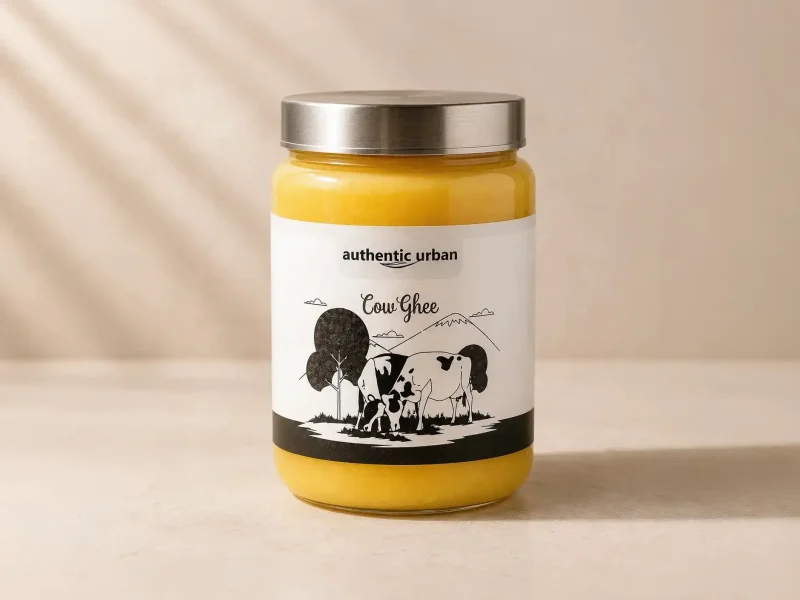 1 Litre
Frying for a big wedding pot
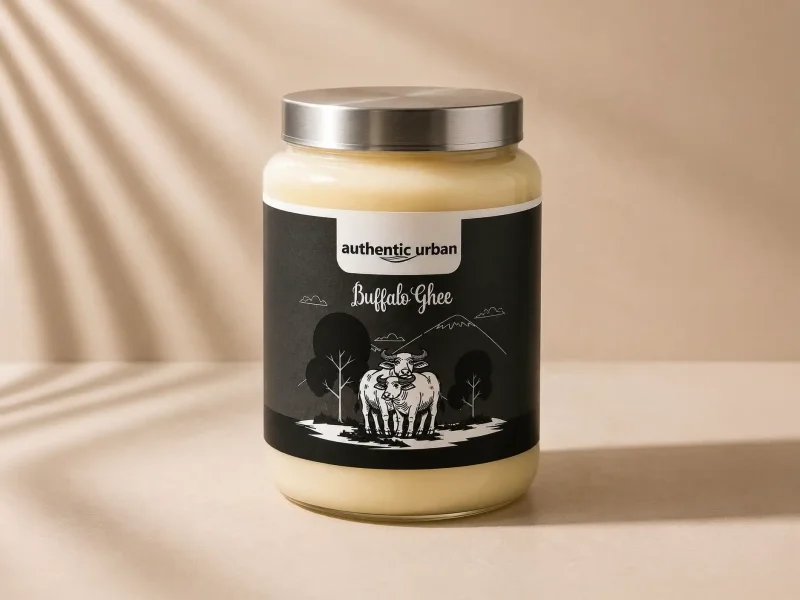 1 Litre
Each order is cooked after you place it, and the packing video is of that batch. Past order videos are on the shop.
FAQ
Can I make ghee rice in an electric rice cooker?
Yes. Fry the cashews, raisins, spices, and onion in ghee in a pan, then turn the soaked rice in that ghee for a minute. Tip it all into the rice cooker with the water and salt, using the pressure cooker ratio from the water table or a little less, and switch it on. When it clicks to warm, leave the lid shut for 10 minutes before fluffing.
Can I make ghee rice without onion?
Yes, and many families make it that way on fasting or Jain days. Leave out the onion and fry 1 teaspoon of cumin and a few black peppercorns with the whole spices. Add 1 tablespoon of fried cashews more than usual for the crunch the onion gave. The rice tastes cleaner and sweeter, and the ghee comes through more because there is nothing to hide it.
Why do some cooks add lemon juice or fennel to ghee rice?
A few drops of lemon juice in the water are a common Kerala kitchen habit, meant to keep the rice white and the grains separate; the rice does not taste of lemon. Fennel seeds are a Malabar touch that gives neychoru its sweet, slightly aniseed smell. Both are optional. Use half a teaspoon of fennel with the whole spices, and about a teaspoon of lemon juice for 1½ cups of rice.
Can I use butter instead of ghee for ghee rice?
Not for the frying. Butter still holds water and milk solids, which ghee has had cooked out, and those solids burn before the cashews and onion turn golden. Fry in ghee or oil, then stir a teaspoon of butter through the rice after it rests if you like the taste. Salted butter adds salt, so cut the salt in the water a little.
How do I make ghee rice for 8 or 10 people?
Double or triple the rice, ghee, and spices, but not quite all the water: in a wide pot less of it boils off. For 3 cups of basmati use about 4¼ cups of water instead of 4½, and for 4½ cups use about 6¼. Cook in a pot wide enough that the rice sits no deeper than a hand, or split it into two pots.
Can I make ghee rice with brown rice?
Yes, but it is a different, chewier dish. Soak brown basmati for at least an hour, use about 2 cups of water for each cup of rice, and cook on the lowest flame for 35 to 40 minutes, or 3 whistles in a cooker. Brown rice does not turn as fluffy or as fragrant, so the fried onion and whole spices matter more.
About the editorial team
Authentic Urban TeamBilona ghee makers, Gir Somnath, Gujarat
We are the Parmar family in Gir Somnath, Gujarat. We have made ghee here since 2016 and sold it online since 2025. We make only Bilona ghee, test it every month, and anyone is welcome to visit and watch it being made. Our Gir cows and Jafarabadi buffalo are grass-fed village animals that graze near the Gir forest, with no hormones or milk boosters. We set their milk to curd, churn it, and cook the makkhan on a wood chulha. These articles come from that kitchen and from what customers ask us on WhatsApp. We are ghee makers, not doctors.
Sources
- Rice, white, long-grain, regular, raw, unenriched (FDC ID 169756), SR Legacy, USDA FoodData Central. Checked 28 Sep 2026.
- Butter oil, anhydrous (FDC ID 173412), SR Legacy, USDA FoodData Central. Checked 28 Sep 2026.
- Onions, raw (FDC ID 170000), SR Legacy, USDA FoodData Central. Checked 28 Sep 2026.
- Nuts, cashew nuts, raw (FDC ID 170162), SR Legacy, USDA FoodData Central. Checked 28 Sep 2026.
- Raisins, dark, seedless (FDC ID 168165), SR Legacy, USDA FoodData Central. Checked 28 Sep 2026.
- Dietary Guidelines for Indians, 2024 (Guideline 7, visible fats), ICMR-National Institute of Nutrition. Checked 28 Sep 2026.
- Starchy foods and carbohydrates (storing and reheating rice), NHS. Checked 28 Sep 2026.