Chicken Ghee Roast Recipe: Mangalorean Style, in Grams
For this chicken ghee roast recipe, dry roast 18 to 20 Byadgi chillies with coriander, cumin, pepper, and a pinch of methi, and grind them with garlic, tamarind, and jaggery into a thick red paste. Sear 500 g of bone-in chicken in 2 tablespoons of ghee, fry the paste in 2 more until it turns maroon and the ghee runs free, then simmer the chicken in it and roast it dry. A serving comes to about 263 kcal and 1 tablespoon of ghee.
How do you make chicken ghee roast?
Chicken ghee roast is a dry Mangalorean dish from Kundapur, a coast town near Udupi: chicken cooked in a red masala of roasted chillies, garlic, and tamarind that has been fried in ghee until it clings. There is no gravy. The masala is made in two roasts (dry, then in ghee), and both need a low flame. Here is every stage with its heat and time.
Stage
Heat
Time
Ready when
Roast spices
Low, dry pan
2 to 3 min
Coriander one shade darker, methi light brown, a toasted smell.
Roast chillies
Low, dry pan
1 to 2 min
Crisp and a deeper red. Not black, not smoking.
Grind
Off the flame
3 min
A thick, smooth red paste that holds on a spoon.
Marinate
Fridge
30 min to overnight
Every piece coated red.
Sear
Medium-high
3 to 4 min a side
Brown patches on both sides. Not cooked through yet.
Cook masala
Low to medium
8 to 10 min
Deep maroon, no raw garlic smell, ghee leaving the edges.
Simmer
Low, lid on
15 to 20 min
Juices clear, no pink at the bone.
Roast dry
Medium-high, lid off
3 to 5 min
Masala clinging to the pieces, a red gloss of ghee.
The stage that makes or breaks it is the masala in ghee. Raw chilli and garlic paste tastes sharp and flat; after 8 to 10 minutes on low in ghee it darkens to maroon, smells toasted, and the ghee starts to seep out at the edges. That is the moment the chicken goes back in. The name confuses people: the crisp ghee roast dosa on a hotel menu is a different dish that shares only the ghee.
What goes into chicken ghee roast, in grams?
For 4 servings: 500 g of bone-in chicken, 4 tablespoons of ghee, and 18 to 20 dried red chillies, with whole spices, garlic, tamarind, and a little jaggery for the masala. Bone-in thigh and drumstick pieces stay juicy through two rounds of cooking; breast dries out.
Ingredients (serves 4)
Ghee roast masala
- 18 to 20 Byadgi or Kashmiri dried red chillies, stalks off
- 1 tbsp coriander seeds
- 1 tsp cumin seeds
- ½ tsp black peppercorns
- ¼ tsp methi (fenugreek) seeds
- 10 garlic cloves
- A marble-size ball of tamarind, seeds out
- 1 tsp jaggery
Chicken
- 500 g bone-in chicken, curry cut
- 4 tbsp ghee (51.2 g): 2 to sear, 2 for the masala
- ½ tsp turmeric, 1 tsp salt, 1 tbsp lemon juice
- 2 sprigs curry leaves
Equipment: a heavy iron kadhai or thick pan with a lid, and a mixer jar that can grind a thick paste.
Steps
- 1. Dry pan on low. Coriander, cumin, pepper, and methi for 2 to 3 minutes, stirring, until the coriander is one shade darker. Tip out. Chillies in the same pan for 1 to 2 minutes until crisp and deeper red. Tip out and cool.
- 2. Soak the chillies in ½ cup of hot water for 10 minutes. Grind them with the roasted spices, garlic, tamarind, jaggery, and 3 to 4 tbsp of the soaking water into a thick, smooth paste.
- 3. Pat the chicken dry. Do not wash it. Rub with turmeric, salt, lemon juice, and 2 tbsp of the paste. Keep in the fridge for 30 minutes, or overnight.
- 4. Heat 2 tbsp ghee in the kadhai on medium-high. Lay the pieces in one layer and leave them 3 to 4 minutes, turn, and sear 3 to 4 minutes more. Lift them out.
- 5. Add 2 tbsp ghee and turn the flame to low-medium. Add the rest of the paste and cook 8 to 10 minutes, stirring often, until it is deep maroon and the ghee leaves the edges.
- 6. Chicken and any juices back in, with ¼ cup water. Lid on, low flame, 15 to 20 minutes, stirring once. Cut the thickest piece at the bone: no pink, clear juices.
- 7. Lid off, medium-high, 3 to 5 minutes, turning the pieces until the masala dries and clings. Curry leaves in for the last minute.
One serving, a quarter of the pan: about 263 kcal, 24.7 g protein, 17.9 g fat (9.3 g saturated), and 150 mg cholesterol, worked out from USDA FoodData Central for chicken thigh meat and ghee. We counted all 500 g as meat; bone-in pieces carry less meat than their weight, so your plate is a little lower. The chillies, spices, garlic, and jaggery add little and are not counted.
Two safety points from the UK Food Standards Agency, and we follow both. Raw chicken is not washed, because washing does not remove bacteria and splashes them onto hands, the sink, and the counter; only cooking kills them. And the chicken is done when the thickest piece is steaming hot, the juices run clear, and no pink meat is left, which the FSA puts at 70°C in the centre for 2 minutes. Wash your hands and the board after the marinade.
Pat the pieces dry before they meet the ghee. In our kitchen, ghee is only ready once every drop of water in the makkhan has boiled away, so a pan of hot ghee is far hotter than boiling water, and a wet chicken piece makes it spit. Lay the pieces in close to the pan, away from you. If a splash does catch you, what to do is on ghee and burns.
Which chillies for ghee roast masala, and how many?
Byadgi chillies, 18 to 20 for 500 g of chicken, or Kashmiri if Byadgi is hard to find. Both give the deep red colour with mild heat, which is what lets you taste the ghee and garlic. Hot chillies make it brown and fiery.
Chilli
For 500 g chicken
What it does
Byadgi
18 to 20
The usual choice on the Karnataka coast. Wrinkled skin, deep red colour, mild to medium heat. Gives the maroon colour without making the dish too hot to eat.
Kashmiri
18 to 20
Easy to find everywhere. Bright red and mild. A good stand-in, or mix 10 Kashmiri with 8 Byadgi.
Guntur or other hot red chillies
2 to 4, added to the above
For heat only. A full masala of hot chillies turns out brown-red and too fiery to taste the ghee.
Kashmiri chilli powder
2 tbsp, if you have no whole chillies
Do not dry roast it. Stir it into the paste and let it cook in the ghee on low; powder burns in seconds on a hot pan.
Twenty chillies sounds like a lot, and it is the right amount: the chillies are the body of the masala, not a seasoning. Break one open before you buy. Fresh dried chillies are flexible, red inside, and smell fruity; old ones are brittle, faded, and dusty. For a milder plate, shake out the seeds after roasting, since most of the heat sits in the seeds and the pale inner ribs. Keep the methi to ¼ teaspoon: it gives the slightly bitter back note, and a little more turns the whole masala bitter.
How much ghee in chicken ghee roast, and how many calories?
Four tablespoons for 500 g of chicken, which is 1 tablespoon a serving and about 263 kcal. Restaurants often use half as much again; three tablespoons works in a good heavy pan. The table shows what each amount does to the pan and the plate.
Pan of 4
Ghee in the pan
Ghee a serving
kcal
Sat. fat
How it turns out
Light
In the pan: 3 tbsp (38.4 g)
A serving: 2¼ tsp
235 kcal
Saturated fat 7.3 g
Needs a heavy non-stick or well-seasoned iron pan. The masala cooks, but it clings with less gloss.
This recipe
In the pan: 4 tbsp (51.2 g)
A serving: 1 tbsp
263 kcal
Saturated fat 9.3 g
2 tbsp to sear, 2 tbsp for the masala. Enough for the masala to fry properly and coat every piece.
Restaurant
In the pan: 6 tbsp (76.8 g)
A serving: 1½ tbsp
319 kcal
Saturated fat 13.3 g
Ghee pooling round the pieces and a spoon more on top. A party plate.
Per serving, a quarter of 500 g chicken (counted as thigh meat) plus all the ghee in the pan. USDA FoodData Central: chicken thigh 173627, ghee 173412 (1 tbsp = 12.8 g). Daily line: ICMR-NIN Dietary Guidelines for Indians 2024. Checked 28 September 2026.
ICMR-NIN's 2024 dietary guidelines suggest limiting ghee or butter to 1 to 2 teaspoons a day, inside about 27 to 30 g of all visible fat on a 2,000 kcal diet. One serving of this recipe holds 3 teaspoons, so ghee roast is a Sunday or guest dish, not a weekday one. On the day we make it, the rice is plain, the rotis stay dry, and the dal is cooked in oil. The full day's budget is on how much ghee per day, and if your doctor is watching your lipids, read ghee and cholesterol before you pick the restaurant row.
Measure the ghee melted. The ghee we make cools grainy and sets firm in a cold kitchen, so a heaped spoon from the jar holds far more than a level tablespoon; why it sets that way is on why ghee is grainy. At our live prices, a tablespoon of our cow ghee costs about ₹36 and of our buffalo ghee about ₹30, so the 4 tablespoons in this pan come to ₹120 to ₹144, or ₹30 to ₹36 a serving. Searing on medium-high and a masala on low are well inside what ghee can take; the frying numbers are on ghee for high-heat cooking.
Cow or buffalo ghee for ghee roast?
Either works for the whole pan. Cow ghee is lighter and yellow, with a toasted-milk smell that sits well under the garlic and chilli. Buffalo ghee is fuller and whiter, holds up to a big masala, and costs less, which counts when you are cooking a double batch for guests. The two are compared on cow vs buffalo ghee.
Why is my ghee roast bitter, brown, or watery?
Bitter ghee roast had burnt chillies or methi; brown ghee roast had the wrong chillies or too much roasting; watery ghee roast had wet chicken or the lid left on. More ghee fixes none of these. Find what you see below.
Bitter masala
The chillies or methi went black in the dry pan, or the masala caught on high heat.
Fix: Roast on low and pull the chillies as soon as they crisp. Methi turns bitter first, so keep it to ¼ tsp. A burnt batch cannot be saved; roast fresh chillies.
Brown, not red
Hot chillies in place of Byadgi or Kashmiri, over-roasted chillies, or too much turmeric.
Fix: Use Byadgi or Kashmiri for the body of the masala and roast them only until crisp. Keep turmeric to the marinade.
Raw garlic taste
The masala went into the chicken before it had cooked in the ghee.
Fix: Give the paste the full 8 to 10 minutes on low. It is ready when the ghee leaves the edges and the smell turns from sharp to toasted.
Watery, not clinging
Thawed chicken releasing water, too much water while grinding, or the lid left on at the end.
Fix: Pat the chicken dry, grind with as little water as the mixer allows, and finish with the lid off on medium-high until the masala hugs the pieces.
Too sour or too hot
A large ball of tamarind, or hot chillies in the mix.
Fix: Add ½ tsp jaggery at a time and taste. For heat, the fix is next time: Kashmiri in place of the hot chillies. Serve with curd or buttermilk today.
Dry, stringy chicken
Boneless breast, or a long simmer on high.
Fix: Use bone-in thigh and drumstick pieces, simmer on low, and check the thickest piece at 15 minutes.
Greasy plate
More ghee than the masala can hold, or the restaurant amount on a small pan.
Fix: Tilt the pan and spoon off the extra before serving. It is spiced ghee; use it for a tadka the same day.
The ghee you spoon off a greasy pan is good for one more use the same day, over rice or in a dal tadka. Keep it off a fresh batch of sweets: it carries the chilli and garlic. How many times cooking ghee can go back on the flame is on reheating ghee.
Paneer, mushroom, and prawn ghee roast
Paneer, mushroom, and prawn ghee roast use the same masala as the chicken, with a few less chillies for the smaller amount. Only three things change: how you sear, how long the main ingredient stays in the masala, and that nothing needs the covered simmer. Make the paste as in steps 1 and 2, then follow the version you want.
Version
Main ingredient
Ghee
Chillies
Time in masala
Chicken
500 g bone-in, curry cut
Ghee: 4 tbsp
Chillies: 18 to 20
15 to 20 min covered, then 3 to 5 min open
Paneer
250 g, cubed
Ghee: 4 tbsp
Chillies: 15 to 18
2 to 3 min
Mushroom
400 g button, halved
Ghee: 4 tbsp
Chillies: 15 to 18
3 to 4 min
Prawn
500 g medium, deveined
Ghee: 4 tbsp
Chillies: 15 to 18
1 to 2 min
Paneer ghee roast
Cut 250 g paneer into 2 cm cubes. Heat 2 tbsp ghee on medium-high and roast the cubes until golden on most sides, 3 to 4 minutes, then lift them out. Add the other 2 tbsp ghee, cook the paste on low for 8 to 10 minutes until the ghee separates, and add a splash of water if it starts to catch. Toss the paneer back in for 2 to 3 minutes only; longer and it turns rubbery. Soak the fried cubes in warm salted water for 5 minutes before they go back if you like them softer.
Mushroom ghee roast
Wipe 400 g button mushrooms clean instead of washing them, halve them, and keep them dry. Wet mushrooms steam and never brown. Heat 2 tbsp ghee on high, lay the mushrooms in one layer, and leave them for 2 to 3 minutes before turning. Lift them out, cook the paste in the other 2 tbsp ghee for 8 to 10 minutes, then return the mushrooms and roast 3 to 4 minutes on medium-high until the masala clings. Salt the mushrooms only at this last step, or they leak water into the masala.
Prawn ghee roast
Clean and devein 500 g medium prawns, pat them dry, and rub with ½ tsp turmeric, salt, and 1 tbsp of the paste for 10 minutes. Sear in 2 tbsp ghee on high for about 1 minute a side, just until they turn pink, and take them out at once. Cook the rest of the paste in 2 tbsp ghee for 8 to 10 minutes, then toss the prawns back for 1 to 2 minutes, until pink and opaque right through. Overcooked prawns turn tough and curl tight. Serve straight away.
Mutton and egg ghee roast
For mutton, marinate 500 g bone-in pieces overnight in the fridge, then pressure cook them with ½ cup water until tender, 5 to 6 whistles for most goat meat, before they go into the cooked masala for the open roast. For eggs, halve 6 hard-boiled eggs, fry the cut side in 1 tbsp ghee until golden, and toss them in the cooked masala for 1 minute.
How long does chicken ghee roast keep?
Two days in the fridge. The UK Food Standards Agency advises cooling cooked food and getting it into the fridge within one to two hours, and eating leftovers within 48 hours or freezing them. Frozen ghee roast should thaw in the fridge, not on the counter, and once frozen and thawed it can be reheated only once.
The ghee sets hard on cold chicken, so the leftovers look dry and dull. Warm them in a kadhai on medium with 2 tablespoons of water and the lid on for 5 minutes, turning once, then lid off for a minute until the masala shines again. Reheat only what you will eat, until it is steaming hot right through, and do not put it back in the fridge a second time.
What to serve with chicken ghee roast?
Neer dosa is the classic partner: thin, soft rice crepes with no fat of their own, which is exactly what a rich red masala wants beside it.
- Neer dosa or appam: soft rice breads to wipe the masala off the plate.
- Plain rice and rasam: the everyday coastal plate. Pick plain rice over ghee rice on this day, or the ghee on one plate doubles.
- Soft roti or kerala parotta: works if there is no rice batter in the house.
- Something cool: buttermilk, sol kadhi, cucumber, or onion rings with lemon and salt.
- A party starter: boneless thigh pieces on toothpicks, with the restaurant row from the ghee table.
Which other dishes are worth cooking in ghee, and which are better left to oil, is set out dish by dish on cooking with ghee. For another chicken dish where ghee does the heavy lifting, try our ghee biryani.
Chicken ghee roast recipe card to keep by the stove
Screenshot it, and roast the chillies before anything else.
- 1. For 4: 500 g bone-in chicken, 4 tbsp ghee, 18 to 20 Byadgi or Kashmiri chillies, 1 tbsp coriander seeds, 1 tsp cumin, ½ tsp pepper, ¼ tsp methi, 10 garlic cloves, a marble of tamarind, 1 tsp jaggery, ½ tsp turmeric, 1 tsp salt, 1 tbsp lemon juice, 2 sprigs curry leaves.
- 2. Dry pan, low flame: coriander, cumin, pepper, methi for 2 to 3 min. Out. Chillies 1 to 2 min until crisp, not black. Out and cool.
- 3. Soak the chillies in ½ cup hot water for 10 min. Grind with the spices, garlic, tamarind, jaggery, and 3 to 4 tbsp of the soaking water to a thick paste.
- 4. Chicken, not washed, patted dry: turmeric, salt, lemon, and 2 tbsp of the paste. Fridge 30 min to overnight.
- 5. Heavy kadhai, 2 tbsp ghee, medium-high. Sear the pieces in one layer, 3 to 4 min a side. Lift out.
- 6. 2 more tbsp ghee, flame low to medium. The rest of the paste, 8 to 10 min, stirring, until maroon and the ghee leaves the edges.
- 7. Chicken back in with ¼ cup water. Lid on, low, 15 to 20 min, until no pink at the bone and the juices run clear.
- 8. Lid off, medium-high, 3 to 5 min until dry and glossy. Curry leaves in for the last minute. About 263 kcal and 1 tbsp ghee a serving.
Which ghee for chicken ghee roast?
With 4 tablespoons in one pan, the ghee is a main ingredient here, and a flat or stale ghee shows as soon as the masala starts to fry. Pick a plain ghee with nothing added that smells of toasted milk when it melts. The home checks are on how to identify pure ghee, and our ranking for heavy cooking is best buffalo ghee in India.
For ghee roast we would use our A2 Gir cow ghee for a family dinner and our Jafarabadi buffalo ghee when the pan is doubled for guests. Both come from grass-fed village animals near the Gir forest in Gir Somnath; the milk is set to curd overnight, churned, and the makkhan cooked in a matki on a wood chulha. The jar is made after you order, a video of it being cooked and packed comes on WhatsApp, and Varsha tastes every batch before it goes in a jar. We test every month against the FSSAI limits; the steps are on how we make ghee.
Aroma under the masala
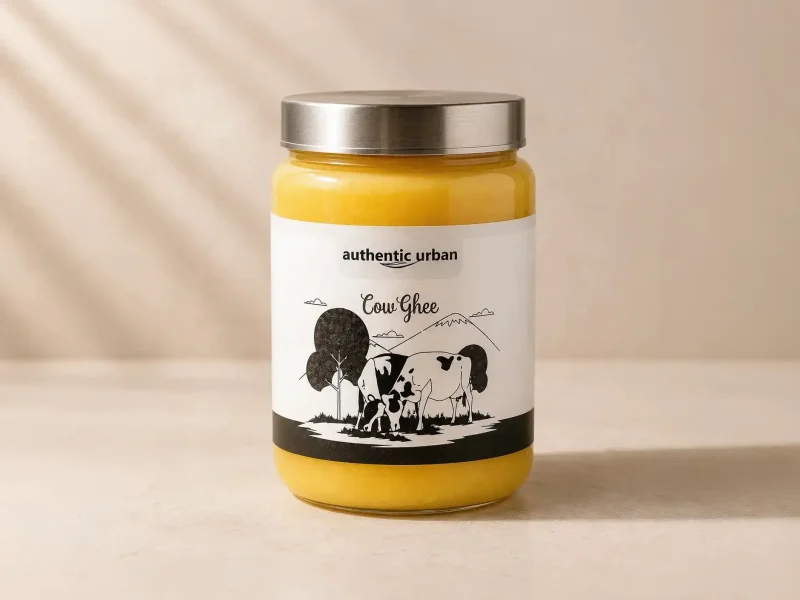 1 Litre
A double batch for guests
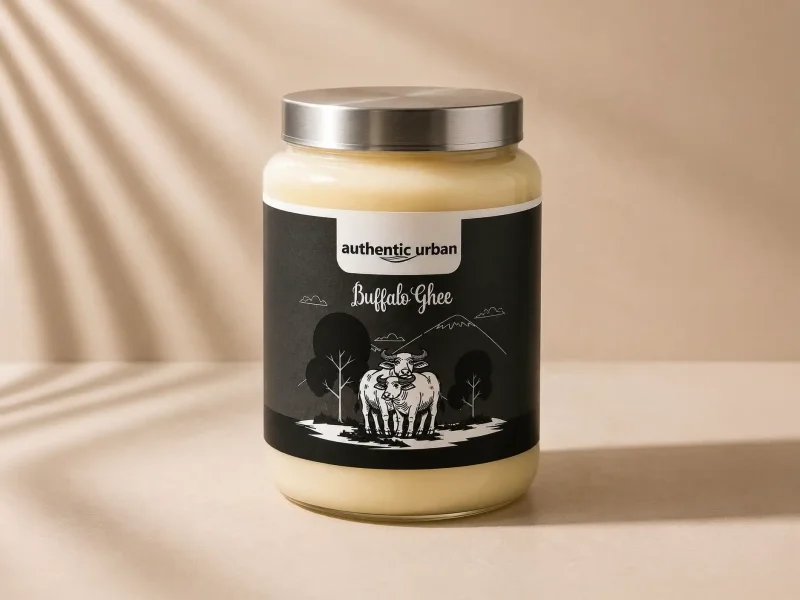 1 Litre
Each order is cooked after you place it, and the packing video is of that batch. Past order videos are on the shop.
FAQ
Chicken ghee roast kaise banaye?
18 se 20 Byadgi mirch, dhaniya, jeera, kali mirch aur methi ko dheemi aanch par sekiye. Mirch bhigo kar lahsun, imli aur gud ke saath gaadha paste pees lijiye. 500 gram chicken ko haldi, namak, nimbu aur 2 chammach paste mein rakhiye. 2 chammach ghee mein chicken sekiye, phir 2 chammach ghee mein paste 8 se 10 minute bhuniye. Chicken daal kar dhak kar pakaiye, aakhir mein khula bhun kar kadi patta daliye.
Can I make chicken ghee roast with boneless chicken?
Yes, but use boneless thigh, not breast. Thigh stays juicy through the masala stage, while breast turns dry and stringy before the paste has clung. Cut it into 4 cm pieces, sear 2 to 3 minutes a side, and simmer only 8 to 10 minutes before the open roast. Check the thickest piece: no pink inside and clear juices. The ghee and masala amounts stay the same.
What is the difference between chicken ghee roast and chicken sukka?
Both are dry Mangalorean chicken dishes, but they taste nothing alike. Ghee roast is built on red chillies, garlic, and tamarind fried in ghee, so it is red, tangy, and glossy. Sukka is built on roasted grated coconut with spices, usually cooked in oil or a little ghee, so it is brown, coarse, and coconut-sweet. Ghee roast goes with neer dosa; sukka is often eaten with rice and rasam.
Can I make ghee roast masala ahead?
Yes. Grind the full paste, cook it in the ghee for its 8 to 10 minutes, cool it, and keep it in a clean glass jar in the fridge for up to 2 days. For longer, freeze the cooked paste in an ice tray and keep the cubes in a closed box. Four or five cubes, thawed in the fridge, make one pan of chicken, paneer, or prawn ghee roast on a weeknight.
Do you add curd to chicken ghee roast?
Many home and restaurant versions marinate the chicken in 2 or 3 tablespoons of curd with the paste, and it keeps the meat soft. Others skip it and use lemon, as we do here, because curd adds water and the masala takes longer to dry. Both are ghee roast. If you use curd, cook the masala a few minutes longer with the lid off at the end.
Can I make chicken ghee roast in a pressure cooker?
Yes, it saves the 15 to 20 minute simmer. Sear the chicken and cook the masala in the cooker base with the lid off, then add the chicken and 2 tablespoons of water and cook for 1 whistle on medium. Let the pressure drop on its own, then open the lid and roast on medium-high for 4 to 5 minutes until the masala dries and clings.
About the editorial team
Authentic Urban TeamBilona ghee makers, Gir Somnath, Gujarat
We are the Parmar family in Gir Somnath, Gujarat. We have made ghee here since 2016 and sold it online since 2025. We make only Bilona ghee, test it every month, and anyone is welcome to visit and watch it being made. Our Gir cows and Jafarabadi buffalo are grass-fed village animals that graze near the Gir forest, with no hormones or milk boosters. We set their milk to curd, churn it, and cook the makkhan on a wood chulha. These articles come from that kitchen and from what customers ask us on WhatsApp. We are ghee makers, not doctors.
Sources
- Chicken, broilers or fryers, dark meat, thigh, meat only, raw (FDC ID 173627), SR Legacy, USDA FoodData Central. Checked 28 Sep 2026.
- Butter oil, anhydrous (FDC ID 173412), SR Legacy, USDA FoodData Central. Checked 28 Sep 2026.
- Dietary Guidelines for Indians, 2024 (Guideline 7, visible fats), ICMR-National Institute of Nutrition. Checked 28 Sep 2026.
- Cooking your food, Food Standards Agency (UK). Checked 28 Sep 2026.
- Why avoiding cross-contamination is important, Food Standards Agency (UK). Checked 28 Sep 2026.
- How to chill, freeze and defrost food safely, Food Standards Agency (UK). Checked 28 Sep 2026.