Desi Ghee Jalebi Recipe: Crisp Halwai Style, in Grams
For desi ghee jalebi, ferment a batter of 125 g maida, 2 tbsp besan, and 2 tbsp curd overnight, pipe it in spirals into ghee at about 160°C, fry each lot 3 to 4 minutes until crisp, and dip in warm sugar syrup for 30 seconds. A wide kadhai needs about 500 ml of ghee, and most of it comes back out for the next day's dal.
Desi ghee jalebi recipe: what goes in, in grams?
One batch of about 20 jalebis takes 125 g maida, 15 g besan, 30 g curd, and about 110 ml water for the batter, 250 g sugar for the syrup, and about 500 ml of ghee in the kadhai. The besan gives a little crunch and colour; the curd starts the fermentation and adds the mild sourness that makes jalebi taste like jalebi, not just fried sugar.
Ingredients (about 20 jalebis)
Batter
- 125 g maida, about 1 cup
- 15 g besan, 2 tbsp
- 30 g curd, 2 tbsp, fresh and thick
- About 110 ml water
- A pinch of turmeric, or a few saffron strands soaked in 1 tsp warm water
Syrup (chashni)
- 250 g sugar
- 125 ml water
- 3 green elaichi, crushed, and a few saffron strands
- 1 tsp lemon juice
For frying
- About 500 ml ghee, enough for 2.5 cm (1 inch) in a wide kadhai
Equipment: a wide, flat-based kadhai 24 to 26 cm across, a squeeze bottle (a clean sauce bottle works) or a thick zip bag, a jhara (slotted spoon), and a wide pan for the syrup.
Steps
- 1. Whisk the maida, besan, curd, and turmeric with most of the water. Add the rest a spoon at a time until the batter falls from a spoon in one smooth, unbroken ribbon, like thick dosa batter.
- 2. Cover and leave it to ferment, 6 to 24 hours by season (table below), until the top is bubbly and it smells mildly sour.
- 3. Make the syrup: sugar, water, elaichi, and saffron in a wide pan on medium. Once the sugar melts, boil 5 to 7 minutes until a cooled drop feels sticky between finger and thumb and just starts to pull a short thread. Add the lemon juice. Keep it warm on the lowest flame.
- 4. Heat the ghee in the kadhai to about 160°C. A drop of batter should sink, then rise in 2 to 3 seconds with steady bubbles around it.
- 5. Beat the fermented batter for a minute and pour it into the squeeze bottle. Holding the tip close to the ghee, pipe three rings from the centre outwards. Make 4 or 5, not more.
- 6. Fry 3 to 4 minutes, turning once with the jhara, until light golden-orange and hard when you tap it.
- 7. Lift out, let the ghee drip for 2 seconds, and drop straight into the warm syrup. Turn once, and lift out after 30 seconds onto a plate, in one layer.
- 8. Let the ghee come back to heat before the next lot. Serve warm.
Pipe low and slowly. Hot ghee is far hotter than anything water-based on the stove. We see it every day at the chulha in Gir Somnath: ghee is ready only once all the water in the makkhan has boiled away, so a splash of hot ghee burns worse than a splash of boiling dal. Keep the tip of the bottle a few centimetres above the ghee so the batter does not drop from a height and splash, keep a lid nearby, and keep children away from the kadhai. If you are splashed, cool the skin under running water, not with ghee; the first-aid steps are on what to do for a burn.
How long should jalebi batter ferment?
Ferment it until the top is covered in small bubbles and it smells mildly sour, like dosa batter: 6 to 8 hours on a hot summer day, overnight in mild weather, and up to 24 hours on a winter night. Go by the bubbles and the smell, not the clock.
Kitchen
Ferment for
What to watch
Hot summer day
6 to 8 hours
Check at 6 hours. Past the mild sour smell it turns sharp and the jalebis taste sour through the syrup.
Monsoon or a mild day
10 to 14 hours
Overnight is right. Mix after dinner, fry after breakfast.
Winter night
16 to 24 hours
Keep the bowl in the warmest corner of the kitchen, near the stove, not by a window.
No time at all
15 minutes
Use the quick batter below: curd plus a pinch of baking soda. Crisp, but not tangy.
We learnt this from curd, not jalebi. Our ghee starts as milk set to curd overnight, and in summer the curd sets and sours much faster than in winter. Jalebi batter is the same kind of ferment, started by the same curd, so it runs on the same kitchen clock. In a hot month, mix it in the morning and fry in the evening.
Fermenting changes the taste more than the texture. In a 2013 study of jalebi batter in the Journal of Food Science and Technology, more curd and longer fermentation made the batter more sour (lower pH), but it was the water content that decided how well the batter flowed and poured. So if your batter will not pipe, the answer is a spoon more water or maida, not more hours.
Quick jalebi without fermentation
Make the same batter with 45 g curd (3 tbsp) and rest it 15 minutes. Just before frying, stir in ¼ tsp baking soda and fry at once, before the fizz dies. The jalebis are crisp and hold their shape, but they miss the sour note, so squeeze a few more drops of lemon into the syrup. Mix the soda only into as much batter as you will fry in the next 20 minutes.
What temperature should the ghee be for jalebi?
About 160°C, fried for 3 to 4 minutes. In the 2014 Journal of Food Science and Technology study of jalebi frying, strands fried between 150 and 180°C for 15 seconds to 5 minutes were compared, and those fried at 160°C for 3 to 4 minutes were judged best, both straight from the kadhai and after the syrup.
The same study found the fat in the strands rises the longer they fry, and jalebis fried at 180°C came out darker than those at 150°C. That is the case for a steady medium flame: hot enough that the spiral sets the moment it touches the ghee, not so hot that it browns before the inside dries out and goes crisp.
No thermometer? Drop a little batter in. If it stays on the bottom, the ghee is too cool. If it rises in 2 to 3 seconds with a steady ring of bubbles, pipe. If it shoots up at once and colours in a few seconds, turn the flame down. Every lot of cold batter pulls the heat down, so wait half a minute between lots. More on judging heat is on frying in ghee without a thermometer.
How thick should jalebi syrup be, and how long do you dip?
Boil the syrup until it is sticky and just starts to pull a short thread, a little less than the one string you need for Mysore pak, then dip each hot jalebi for about 30 seconds in warm, not boiling, syrup. Thin, halwai-style jalebis need only 15 to 20 seconds; thick home ones can take up to a minute.
Test the syrup with a drop on a spoon. Let it cool for a few seconds and press it between your thumb and first finger. If it feels like sugar water, boil on. When it is sticky and a short thread forms and snaps, stop. A syrup boiled to a long, firm string coats the jalebi in a hard, sugary crust and does not soak in.
Hot jalebi into warm syrup is the rule. A hot, crisp strand is full of tiny air pockets and pulls the syrup in; a cold one only gets a coating. Boiling syrup, on the other hand, softens the jalebi before you can lift it out. If the syrup thickens as you work, stir in a spoon of water. Unlike gulab jamun, which rest in syrup for hours, jalebis come out after the dip.
Why are my jalebis soggy, flat, or oily?
Soggy jalebis are almost always under-fried or left too long in the syrup; flat ones come from thin batter or ghee that was not hot enough. Find your batch below and fix the next lot, not the whole batter.
Soggy, soft jalebis
Fried too short, so the strand was still soft inside, or left in the syrup too long.
Fix: Fry the full 3 to 4 minutes until the jalebi feels hard when you tap it with the jhara. Dip for 30 seconds and lift out; do not leave a batch sitting in the syrup.
Flat, spreading jalebis
Batter too thin, or the ghee not hot enough when you piped.
Fix: Stir in 1 to 2 tsp maida and rest 10 minutes. Let the ghee come back up between batches; a drop of batter should rise in 2 to 3 seconds.
Batter breaks while piping
Batter too thick, or the hole too small.
Fix: Add water a teaspoon at a time until it falls from a spoon in one unbroken ribbon. Cut the hole to about 3 mm.
Oily, heavy jalebis
Ghee too cool, so the strand sits and soaks instead of setting, or too many in the kadhai at once.
Fix: Fry 4 or 5 at a time. Wait for the ghee to recover before the next lot.
Dark outside, soft inside
Ghee too hot. The outside colours before the strand dries through.
Fix: Turn the flame down a notch and fry a little longer. Aim for light golden-orange, not brown.
Syrup does not stick, jalebi dry
Syrup cold or boiled too thick, or the jalebi went in cold.
Fix: Keep the syrup warm on the lowest flame. If it has thickened, add 1 to 2 tbsp water and warm it. Dip jalebis straight from the ghee.
Sugary crust on top
Syrup boiled past one string and is starting to crystallise.
Fix: Add 2 tbsp water and a few drops of lemon juice, bring it back to a boil for a minute, then keep it warm.
Fry one test jalebi before the first full lot. It tells you in four minutes whether the batter, the heat, and the syrup are right, and costs one jalebi instead of five.
How much ghee does jalebi need, and what does it cost?
About 500 ml of ghee fills a 24 to 26 cm kadhai to 2.5 cm, enough to float the jalebis. At our own live prices that is about ₹1,000 of buffalo ghee or ₹1,200 of cow ghee. Most of it comes out of the kadhai again: the jalebis keep only what they soak up.
Ghee in the kadhai
500 ml costs
Why
Buffalo ghee (₹1,999 a litre)
500 ml costs: ₹1,000
Our pick for jalebi. Richer taste for less money.
Cow ghee (₹2,399 a litre)
500 ml costs: ₹1,200
Lighter, more yellow jalebis.
Our 1 litre prices, checked 25 September 2026 on our shop. They change, so check the product page.
The leftover ghee is not wasted, but it has one more job, not two. ICMR-NIN's 2024 dietary guidelines say fat once used for frying should be filtered, can be used to cook a curry, should be eaten within a day or two, and should not be used to fry again. They also say used fat should not be mixed with fresh. So let the kadhai cool, strain the ghee through a steel tea strainer lined with a clean cotton cloth into its own katori, and use it for the next day's dal tadka or sabzi. Never pour it back into the jar. How to tell when used ghee should go in the bin is on what to do with leftover frying ghee.
To use less, fry in a smaller, deeper kadhai and make smaller jalebis: the ghee only has to be deep enough to float them. Some halwais fry in oil and add ghee for the smell. That works, but it no longer tastes like desi ghee jalebi. For a weekday plate of pakoras, oil is the sensible choice; ghee earns its place in small festival batches like this one and malpua. Which everyday dishes are worth ghee is on cooking with ghee.
How many calories are in a desi ghee jalebi?
It depends on how much ghee and syrup your jalebis take up, and no study we could find measures that for a home jalebi, so we will not print a made-up number. What is fixed: every gram of ghee a jalebi keeps adds 9 kcal, and every gram of sugar adds 4 kcal, the figures ICMR-NIN's 2024 guidelines use for fat and carbohydrate.
You can measure your own batch with a kitchen scale. Weigh the kadhai with the ghee before you start. After the last lot, let it cool to warm, lift out the crumbs, and weigh it again. The difference is the ghee the jalebis took up; divide by how many you made. For example, if the kadhai is 60 g lighter after 20 jalebis, each one carries 3 g of ghee, about 27 kcal from the ghee alone, before the batter and syrup. The sugar has a ceiling: the whole batch of syrup holds 250 g, and some of it is always left in the pan.
Put against a day, ICMR-NIN's 2024 guidelines suggest limiting ghee or butter to 1 to 2 teaspoons, and say limiting sugar to 25 g a day is better for health. Two or three jalebis at a festival are a treat inside that; a plate every morning is not. On a jalebi day, go lighter on ghee at the other meals. The daily budget is on how much ghee per day, and anyone with diabetes should count the syrup first and go by what their doctor or dietitian has set; the detail is on can diabetics eat ghee.
Cow or buffalo ghee for jalebi?
Buffalo ghee is our pick for jalebi: it has the full, rich ghee taste a halwai sweet should have, and it costs about ₹400 a litre less than cow ghee, which matters when 500 ml goes in the kadhai. Cow ghee gives a lighter, more yellow jalebi with a sharper toasted-milk smell; use it if your family likes that.
Whichever you use, the jar will look different by season. In winter our ghee cools to a fine grain; in summer it stays liquid, and people message us on WhatsApp every winter asking why the jar has gone grainy. For frying it makes no difference, because it all melts in the kadhai. Why it happens is on why ghee is grainy, and the full side-by-side is on cow vs buffalo ghee.
How do you keep jalebis crisp, and what goes with them?
Jalebis are crispest in the first hour and stay good for about two. Keep them in one layer on a plate, uncovered while warm, so steam does not soften them. Leftovers go into a closed box at room temperature and are best eaten the next day.
To bring back the crunch, warm day-old jalebis on a dry tawa on a low flame for a minute each side; the syrup loosens and the strand dries a little. Do not microwave them: they go chewy.
In Gujarat, jalebi goes with fafda, the salty besan strips with papaya sambharo and fried green chillies, and on Dussehra morning the queues outside farsan shops are for that plate. Up north it is jalebi with rabdi, or hot jalebi dunked in cold milk. For a Diwali tray, jalebi sits well beside motichoor ladoo, another sweet fried in ghee and soaked in syrup.
Desi ghee jalebi: a recipe card to keep
Screenshot this before you light the stove. Once the ghee is hot, there is no time to scroll.
- 1. Batter: 125 g maida (about 1 cup), 15 g besan (2 tbsp), 30 g curd (2 tbsp), about 110 ml water, a pinch of turmeric or a few strands of saffron.
- 2. Whisk to a smooth batter that falls from a spoon in one unbroken ribbon. Cover. Ferment 6 to 24 hours by season, until bubbly and mildly sour.
- 3. Syrup: 250 g sugar, 125 ml water, 3 crushed elaichi, saffron. Boil 5 to 7 minutes until sticky, just short of one string. Add 1 tsp lemon juice. Keep warm.
- 4. Ghee: about 500 ml in a wide kadhai, 2.5 cm deep. Heat to 160°C: a drop of batter sinks and rises in 2 to 3 seconds with steady bubbles.
- 5. Beat the batter 1 minute. Fill a squeeze bottle with a 3 mm hole. Pipe 3 rings from the centre out, 4 or 5 jalebis at a time.
- 6. Fry 3 to 4 minutes, turning once, until light golden-orange and hard to a tap.
- 7. Lift, drain 2 seconds, dip in warm syrup 30 seconds, turning once. Lift onto a plate in one layer. Makes about 20.
- 8. After frying: filter the ghee, cook dal or sabzi with it within a day or two, and do not fry in it again.
Which ghee for desi ghee jalebi?
When you fry in it, you smell the ghee in every jalebi, so a jar that smells flat, waxy, or stale shows up at once. Melt a spoon before you fill the kadhai: good ghee smells of toasted milk and nothing else. The home checks are on how to identify pure ghee, and our ranking of buffalo ghee on sale is best buffalo ghee in India.
For jalebi we would fill the kadhai with our Jafarabadi buffalo ghee, and use our A2 Gir cow ghee if you like a lighter jalebi. Both come from grass-fed village animals near the Gir forest; the milk is set to curd overnight, churned by hand (Bilona), and the makkhan cooked in a matki on a wood chulha. The jar is made after you order, a video of it being cooked and packed comes on WhatsApp, and Varsha tastes every batch before it goes in a jar. We test every month against the FSSAI limits; the steps are on how we make ghee.
A lighter, yellow jalebi
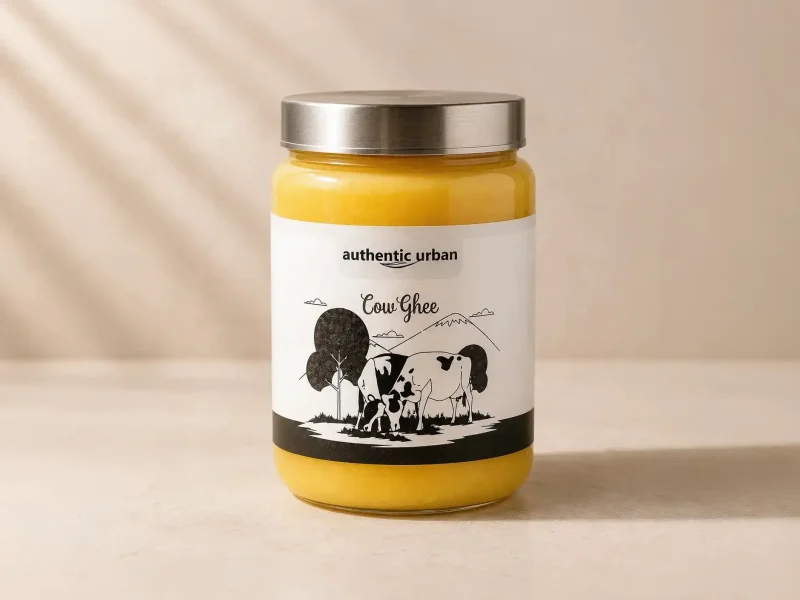 1 Litre
Rich halwai-style jalebi
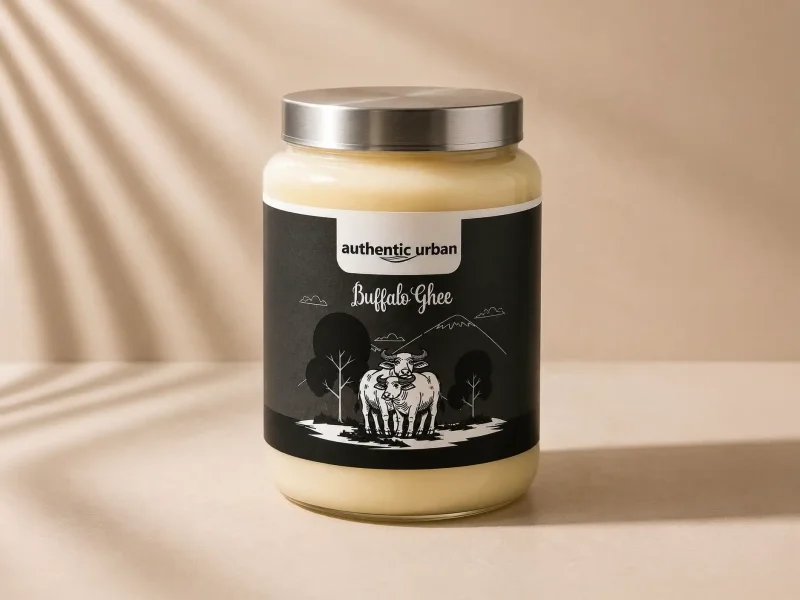 1 Litre
Each order is cooked after you place it, and the packing video is of that batch. Past order videos are on the shop.
FAQ
Can I make jalebi with atta instead of maida?
You can, but expect a different jalebi. Atta has bran in it, so the strands come out darker, softer, and a little heavier, and they lose their crunch sooner once they meet the syrup. A half-and-half mix of atta and maida is a fair middle path. Make the batter slightly thinner than usual, because atta soaks up more water while it rests.
What is the difference between jalebi and imarti?
Jalebi is made from a fermented maida batter piped in loose spirals, and it fries crisp and a little sour. Imarti, also called jaangiri, is made from soaked urad dal ground to a fluffy paste and piped in a ring of small loops, like a flower. It is softer and chewier, soaks up more syrup, and is not fermented. Both are fried in ghee in the halwai tradition.
Can I make jalebi in an air fryer?
No. Jalebi batter is a liquid that only holds its spiral shape because it hits hot fat and sets in a second. In an air fryer basket it spreads into a puddle, and on a tray it bakes into a flat biscuit. If you want less fat, fry a smaller batch in a small, deep pan so you need less ghee, and keep jalebi for festivals.
Can I add food colour to jalebi?
You can, but it adds nothing to the taste. The orange of shop jalebi usually comes from added colour. At home, a pinch of turmeric in the batter and a few saffron strands in the syrup give a warm golden jalebi. If you do buy colour, choose one sold as a food colour with an FSSAI licence on the pack, and use a tiny pinch.
Why is my jalebi batter not rising or bubbling?
The kitchen is too cold, the curd is old, or the batter has not had time yet. Move the bowl to a warm spot and give it a few more hours. Fresh home-set curd starts it faster than an old packet. If it still shows no bubbles after a day, add a pinch of baking soda just before frying and use it as a quick batter.
How do I make jalebi for a party of 20 people?
Double the batter and the syrup, and plan for about 40 jalebis. Keep the ghee the same: you fry in batches, so 500 ml still does the job, topped up once with fresh ghee from the jar if the level falls. Fry the last batch just before guests eat. Jalebis wait better than most fried sweets, but they are best within two hours.
About the editorial team
Authentic Urban TeamBilona ghee makers, Gir Somnath, Gujarat
We are the Parmar family in Gir Somnath, Gujarat. We have made ghee here since 2016 and sold it online since 2025. We make only Bilona ghee, test it every month, and anyone is welcome to visit and watch it being made. Our Gir cows and Jafarabadi buffalo are grass-fed village animals that graze near the Gir forest, with no hormones or milk boosters. We set their milk to curd, churn it, and cook the makkhan on a wood chulha. These articles come from that kitchen and from what customers ask us on WhatsApp. We are ghee makers, not doctors.
Sources
- Dietary Guidelines for Indians, 2024 (energy per gram of fat and carbohydrate; Guideline 7 on ghee and used frying fat; added sugar), ICMR-National Institute of Nutrition. Checked 28 Sep 2026.
- Chakkaravarthi A. et al. Jilebi 3: Effect of frying conditions on physical characteristics. Journal of Food Science and Technology 51(5), 865-874 (2014), Springer. Checked 28 Sep 2026.
- Chakkaravarthi A. et al. Jilebi 2: Flowability, pourability and pH of batter as affected by fermentation. Journal of Food Science and Technology 50(2), 293-300 (2013), Springer. Checked 28 Sep 2026.