Malpua Recipe with Rabdi, in Grams, and How Much Ghee
This malpua recipe makes 12 from 125 g of maida (1 cup), 20 g of rava, 25 g of sugar, and 1 cup of milk with crushed saunf. Rest the batter, fry one small ladle at a time in about 250 ml of ghee for 3 to 3½ minutes, dip each in warm syrup for up to a minute, and serve with rabdi made from 1 litre of milk.
How do you make malpua at home?
Whisk 1 cup of maida, 2 tablespoons each of rava and sugar, crushed saunf, and elaichi into 1 cup of milk, and rest it at least 30 minutes. Heat ghee 1 cm deep, pour a small ladle close to the surface, let it spread, and baste the top. Fry about 3 minutes, turning once, until the edge is golden and lacy. Dip in warm syrup, then add rabdi.
Ingredients (12 malpua)
- 125 g maida (1 cup)
- 20 g fine rava (2 tbsp)
- 25 g sugar (2 tbsp)
- 1 tsp saunf, roughly crushed; ¼ tsp elaichi powder
- 244 g full cream milk (1 cup), plus 2 to 4 tbsp
- About 250 ml ghee for frying
- Syrup: 200 g sugar (1 cup), 120 ml water, saffron
- Rabdi: 1 litre full cream milk, 50 g sugar, elaichi
- Chopped pistachios to top
Equipment: an 18 to 20 cm kadhai, a small ladle (about 2 tbsp), a flat jhara, and a wide pan for the rabdi.
Steps
- 1. Start the rabdi first: 1 litre of milk on medium-low for 45 to 60 minutes, pushing the malai to the sides.
- 2. Whisk the batter smooth and rest it 30 minutes to 4 hours, by the season.
- 3. Boil the sugar and water 5 to 6 minutes until sticky. Keep warm.
- 4. Heat the ghee until a drop of batter sinks and rises in 2 to 3 seconds.
- 5. Pour a small ladle close to the ghee. Baste the top, fry 1½ to 2 minutes, flip, fry 1½ minutes more.
- 6. Drain, dip 30 seconds to 1 minute in syrup, and serve with rabdi.
Each malpua's batter is about 64 kcal before it touches the ghee, and one of 6 portions of rabdi is about 137 kcal, worked out from USDA FoodData Central. The ghee and syrup each malpua takes up add to that, and they depend on how you fry; the section on ghee and sugar on one plate shows how to weigh yours. Malpua shares a kadhai and a syrup with desi ghee jalebi, so the two are often made on the same Holi morning.
What goes into malpua batter, in grams?
Maida, a little rava, sugar, and milk, with saunf for the smell. Cups are fine here, but weigh the maida once: USDA lists a spooned cup at 125 g, and a cup scooped straight from the bag packs in noticeably more, which is the most common reason for a thick, hard malpua.
Ingredient
Cups
Weight
Note
Maida (all-purpose flour)
1 cup
125 g
Spooned into the cup, not scooped. Atta works too; see the FAQ.
Fine rava (sooji)
2 tbsp
20 g
Gives the soft centre a little bite and helps the edges crisp.
Milk, full cream
1 cup, plus 2 to 4 tbsp
244 g, plus 30 to 60 g
Add the extra only after resting, to bring the batter back to pouring.
Sugar
2 tbsp
25 g
Enough to brown the edges. Skip it if every malpua goes into syrup.
Saunf (fennel), crushed
1 tsp
About 2 g
The flavour most people remember from a halwai malpua.
Elaichi powder
¼ tsp
A pinch
Or a few saffron strands soaked in the milk.
Cup weights from USDA FoodData Central: 168894 (all-purpose flour, 125 g a cup), 171265 (whole milk, 244 g a cup), and 169655 (granulated sugar, 200 g a cup). One cup = 240 ml. Checked 28 September 2026.
Khoya, milk powder, or curd in the batter
Rajasthani and Mathura-style malpua often add 50 g of crumbled soft khoya (mawa) to this batter, rubbed into the maida before the milk goes in. It gives a richer, milkier taste and browns faster, so fry a notch lower. Without khoya, 3 tablespoons of milk powder gets you most of the way there. How khoya behaves in hot ghee, and which kind to buy, is covered in our gulab jamun recipe.
Some families use 3 to 4 tablespoons of curd in place of the same amount of milk and rest the batter longer, for a light tang and a puffier centre. The calorie figures above are for the plain batter; khoya and milk powder add to them.
How thick should malpua batter be, and how long should it rest?
Thicker than dosa batter and thinner than idli: it should fall from a spoon in a thick, unbroken ribbon and settle flat within a few seconds. Rest it 30 minutes to 4 hours, depending on the day. The rava swells and the flour takes up the milk, so the batter thickens while it sits; loosen it with milk just before frying.
Hot summer day
30 minutes to 1 hour
Plain batter. If you add curd, it sours fast; fry within 2 hours.
Mild day or monsoon
1 to 2 hours
The rava swells and the batter thickens. Loosen with milk before frying.
Winter
2 to 4 hours
Keep the bowl near the stove. Overnight in the fridge also works; bring it back to room temperature.
No time
10 minutes
Add a pinch of baking soda just before frying. Softer, less crisp at the edge.
The season matters more than the clock. In our kitchen in Gir Somnath, summer curd sets and sours faster than winter curd, and a milk batter with curd in it does the same: on a hot afternoon it can turn sharp in a couple of hours. In winter the same bowl barely moves overnight. If you use curd, taste the batter before frying; mildly sour is right, sharp is too far.
How much ghee do you need to fry malpua?
About 250 ml, 1 cm deep in an 18 cm kadhai, for the lacy, puffed malpua you get at a halwai. Most of that ghee is still in the kadhai when you finish. If you want to use less, a flat pan with a tablespoon of ghee per malpua gives a softer, flatter malpua with almost nothing left over.
How you fry
Ghee
Cost or amount
What you get
Deep, in a kadhai
About 250 ml in an 18 cm kadhai, 1 cm or more deep
₹500 buffalo, ₹600 cow, most of it left over
The lacy, crisp edge and a puffed centre. Two at a time.
Shallow, in a flat pan
1 tbsp a malpua, spooned over the top
About 12 tbsp (150 g) for 12, almost none left
Flatter and softer, like a thick sweet pancake. Edges crisp only where the ghee pools.
On a tawa, rubbed with ghee
1 tsp a malpua
About 12 tsp (50 g) for 12
A sweet chilla. No crisp edge at all; eat it with rabdi, not syrup.
Cost at our own live prices (September 2026): ₹1,999 a litre for buffalo ghee, ₹2,399 for cow ghee. A smaller, deeper kadhai needs less ghee for the same depth.
What happens to the leftover ghee decides whether deep frying is worth it. ICMR-NIN's 2024 dietary guidelines say fat once used for frying should be filtered, may be used for curry, should not be fried in again, and should be used up in a day or two. So after malpua, strain the ghee through a fine tea strainer, keep it in a separate bowl, and cook the next day's dal, sabzi, or a suji halwa with it. It carries a little sugar and flour and darkens fast if you fry in it again. When to throw frying ghee out, and why, is on reheating ghee.
Pour low, not from a height
Many recipes say to pour the batter from 6 to 8 inches up to get lacy edges. Please do not. Ghee is only ready once the water in the makkhan has boiled away, so hot ghee is far hotter than boiling dal, and a ghee splash burns worse than a dal splash. Hold the ladle a few centimetres above the ghee and pour steadily; a batter at the right thickness makes the lace on its own. If ghee does splash on skin, cool it under running water, and see ghee and burns for what not to put on it.
How hot should the ghee be, and how long do you fry malpua?
Medium heat, where a drop of batter sinks and rises in 2 to 3 seconds, and about 3 to 3½ minutes a malpua, turning once. Too hot and the edge goes brown while the centre stays raw; too cool and the malpua soaks up ghee and turns heavy. Fry two at a time so the heat holds.
When
What you see
What to do
Before the first one
A drop of batter sinks, then rises in 2 to 3 seconds with steady small bubbles.
Do: That is the heat, roughly 160 to 170°C if you have a thermometer. If it rises at once and browns, turn the flame down.
0 to 30 seconds
The ladle of batter spreads on its own into a 10 cm round. Bubbles run to the edge.
Do: Do not spread or press it. Spoon a little hot ghee over the top so it puffs.
1½ to 2 minutes
The edge turns golden and lacy and lifts from the ghee.
Do: Flip once with a flat jhara.
3 to 3½ minutes
Both sides golden-brown, the centre springs back when pressed.
Do: Lift, hold over the kadhai 5 seconds to drain, then syrup or plate.
Past that
Dark brown, stiff all through.
Do: It will be hard. Let the ghee cool a minute before the next one.
Ghee takes frying heat well, and the reasons, with how it compares to oil for a kadhai of puris, are on ghee smoke point and frying. Malpua is a small batch where the ghee is part of the taste, which is why halwais fry it in ghee and not in oil.
Should malpua go in sugar syrup, and for how long?
Only if you want it sweet all the way through. A thin, crisp malpua needs 30 seconds to a minute in warm syrup; a thick Bihar-style one soaks 5 to 10 minutes; and a rabdi malpua can skip the syrup, because the sugar in the batter and the rabdi on top are enough. Boil 200 g of sugar in 120 ml of water for 5 to 6 minutes, until it feels sticky between two fingers but does not yet pull a string.
Malpua
Syrup
Soak
Serve
Thin, crisp-edged malpua
Sticky, just short of one string
30 seconds to 1 minute, turning once
Warm, with rabdi on the side
Thick, soft malpua (Bihar and Chhath style)
Sticky, just short of one string
5 to 10 minutes, until soaked through
Warm or at room temperature, no rabdi needed
Rabdi malpua without syrup
None; the 25 g sugar in the batter is enough
None
Hot from the ghee, rabdi poured over
Keep the syrup warm on the lowest flame, not boiling. Cold syrup sits on the surface; boiling syrup soaks a thin malpua through in seconds and it goes limp. Dip the malpua straight from the ghee, turn it once, and lift it onto the plate in a single layer so the edges stay crisp.
How do you make rabdi for malpua?
Simmer 1 litre of full cream milk in a wide, heavy kadhai on medium-low for 45 to 60 minutes, pushing each layer of malai to the sides, until it is down to about a third. Scrape the malai back in, add 50 g of sugar, cook 3 minutes, and finish with elaichi and saffron. It makes about 6 portions of 4 tablespoons, enough for 12 malpua.
- Wide pan, low flame: the wider the pan, the faster the milk reduces and the more malai forms. A tall pot takes twice as long and catches at the base.
- Do not stir the top: let the skin form, then lift it to the side with a flat spatula every few minutes. Those layers are what make rabdi, not basundi.
- Sugar last: sugar added early makes the milk catch and colour. Add it only once the milk is reduced.
- Quick rabdi: 500 ml milk with 100 g of crumbled khoya or 4 tablespoons of milk powder, reduced for 15 to 20 minutes. Smoother, fewer layers, still good on malpua.
Rabdi thickens a lot as it cools, so stop while it still flows slowly off the spoon. Serve it chilled on hot malpua, or warm in winter.
Why is my malpua hard, flat, or oily?
Almost always the batter's thickness or the heat of the ghee. Find your problem below.
Hard or chewy
Batter too thick, fried too long, or the ghee too cool so it fried slowly and dried out.
Fix: Loosen the batter with milk a tablespoon at a time. Fry 3 to 3½ minutes in all. A hard malpua softens with 5 minutes in warm syrup.
Flat, no puff
Batter too thin, or no ghee spooned over the top while it fried.
Fix: Stir in 1 tbsp maida and rest 10 minutes. Baste the top with hot ghee in the first 30 seconds.
Breaks apart in the ghee
Batter far too thin, or not rested, so the flour had not taken up the milk.
Fix: Add 1 to 2 tbsp maida, rest 20 minutes, and try one test malpua before a full batch.
Oily and heavy
Ghee too cool, or too many in the kadhai at once, so the heat crashed.
Fix: Two at a time. Wait for the drop test to pass again before the next ladle.
Dark outside, raw inside
Ghee too hot, or the malpua poured too thick.
Fix: Turn the flame down a notch, and use a smaller ladle for a thinner round.
Soggy after the syrup
Syrup too thin or too hot, or a thin malpua left in too long.
Fix: Boil the syrup 2 more minutes until sticky, keep it warm, not boiling, and lift thin malpua out within a minute.
Always fry one test malpua before the batch. It costs one ladle of batter and tells you the thickness, the heat, and the timing at once, and it is the cook's to eat.
How much ghee and sugar is in a plate of malpua?
Two malpua with one of 6 portions of rabdi come to about 266 kcal and 12.5 g of added sugar before the frying ghee and syrup, by USDA figures. Each teaspoon of ghee a malpua takes up adds 37 kcal, and each 10 g of syrup adds 24 kcal and 6 g of sugar. ICMR-NIN's 2024 guidelines suggest 1 to 2 teaspoons of ghee a day and say limiting sugar to 25 g a day is better for health.
Portion
kcal
Added sugar
Note
1 malpua, rabdi-style, no syrup
64 + ghee kcal
Added sugar 2 g
The batter only, before frying.
2 malpua + 1 of 6 portions of rabdi
266 + ghee + syrup kcal
Added sugar 12.5 g, plus any syrup
The usual festival plate.
1 of 6 portions of rabdi
137 kcal
Added sugar 8.3 g
About 4 tbsp of rabdi.
Each teaspoon of ghee taken up
37 kcal
Added sugar 0
Weigh the kadhai to find yours (below).
Each 10 g of syrup taken up
24 kcal
Added sugar 6 g
A thin malpua dipped 1 minute holds far less than a thick one soaked 10.
Worked out from USDA FoodData Central 168894, 168933, 171265, 169655, and 173412 (4.27 g of ghee a teaspoon), checked 28 September 2026. Rabdi uses USDA whole milk at 3.25% fat; milk sold as full cream in India usually carries more fat, so read your packet and expect a higher figure. Limits from ICMR-NIN, Dietary Guidelines for Indians 2024.
How to find the ghee in your own malpua
No recipe can tell you this number, because it changes with the batter, the heat, and how long each one fries. Your kitchen scale can. Weigh the kadhai with the ghee in it before the first malpua, fry the whole batch, let the kadhai cool, and weigh it again. The difference, divided by the number of malpua, is roughly the ghee each one carried off, give or take a few drips on the jhara. Divide by 4.3 g for teaspoons. Try it once and you will know whether your plate is a two-teaspoon plate or a six-teaspoon one.
Malpua is a festival sweet, and one plate on Holi is fine. On that day, go easy on ghee in the dal and roti. Our own family eats 1 to 2 teaspoons of ghee each a day and more in winter sweets, so a sweet day counts as the sweet day. How the daily line works is on how much ghee per day. With diabetes, read can diabetics eat ghee and ask your doctor how a syrup sweet fits your plan. ICMR-NIN's guidelines say no added sugar for children under two, so keep malpua off a baby's plate.
How do you store and reheat malpua and rabdi?
Malpua is best within an hour or two of frying, while the edge is crisp. Rabdi is milk, so treat it like any cooked milk dish: the UK Food Standards Agency advises putting cooked food in the fridge within one to two hours and eating leftovers within 48 hours, or freezing them. Keep syrup-soaked malpua in the fridge too, in one layer in a lidded box.
To reheat, warm malpua on a tawa over a low flame for 30 to 40 seconds a side, without extra ghee; the ghee already in it softens and the edge crisps a little. The microwave makes them soft and chewy. Rabdi can go on cold. The ghee jar itself needs no fridge; how to keep it is on ghee storage and shelf life.
Which ghee is best for frying malpua?
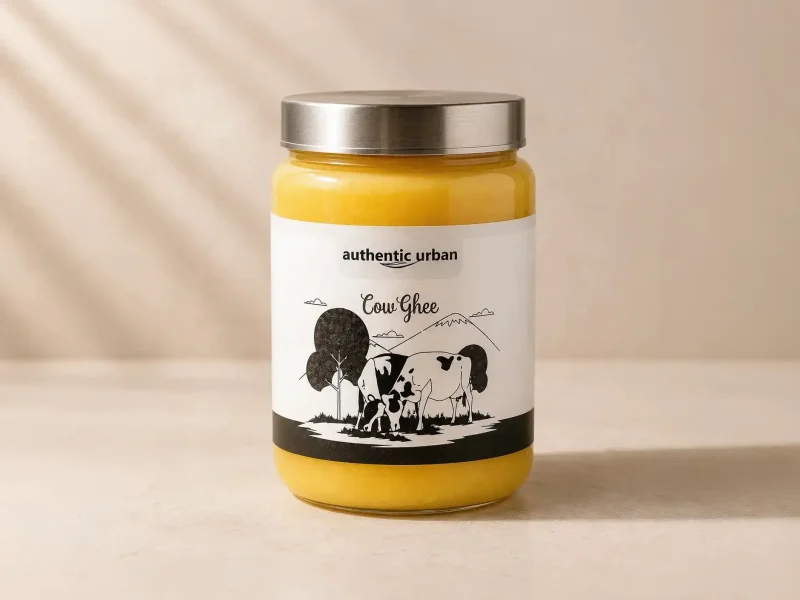
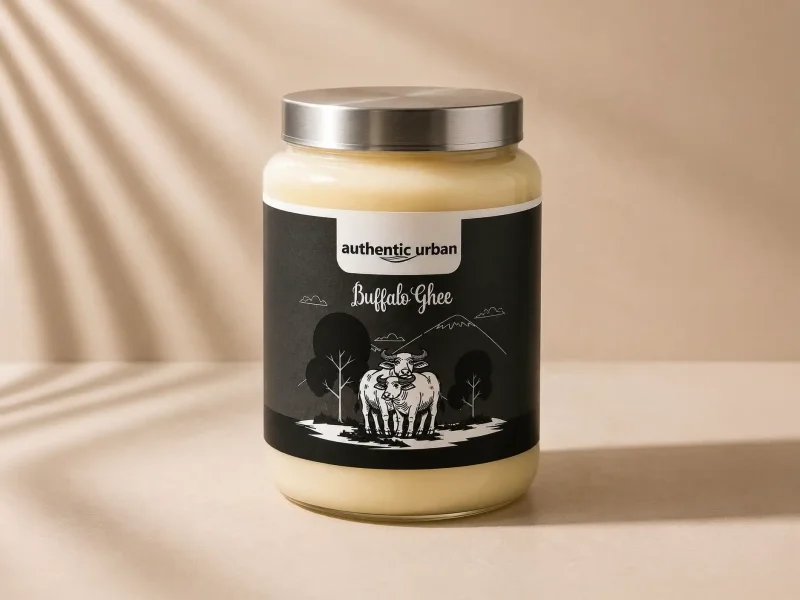
A plain ghee with nothing added that smells of toasted milk when it melts, because the kadhai of ghee is half the flavour of a malpua. Buffalo ghee gives a rounder, richer malpua and costs less a litre, which matters when 250 ml goes into the kadhai; it is the one we reach for in sweets. Cow ghee is lighter, and in monsoon, when green fodder makes our cow ghee more yellow, the malpua fry to a warmer gold. How the two differ is on cow vs buffalo ghee.
Melt the ghee before you judge how much is in the jar. In winter our ghee sets to a fine grain, and that grain is normal; why it forms is on why ghee is grainy. If a jar smells cheesy, sour, or of nothing at all when warmed, read how to identify pure ghee before it goes into a festival kadhai.
Malpua recipe card to keep, with rabdi
Screenshot this and keep it by the stove.
- 1. Batter for 12: 125 g maida (1 cup), 20 g fine rava (2 tbsp), 25 g sugar (2 tbsp), 1 tsp crushed saunf, ¼ tsp elaichi, 244 g milk (1 cup).
- 2. Whisk smooth. Rest 30 minutes in summer, up to 4 hours in winter. Loosen with 2 to 4 tbsp milk until it pours in a thick ribbon.
- 3. Syrup: 200 g sugar (1 cup), 120 ml water, a few saffron strands. Boil 5 to 6 minutes until sticky, just short of one string. Keep warm.
- 4. Rabdi: 1 litre full cream milk in a wide kadhai, medium-low, 45 to 60 minutes, pushing the malai to the sides, to about a third. 50 g sugar, cook 3 minutes, elaichi.
- 5. Ghee: about 250 ml, 1 cm deep, in an 18 cm kadhai. A drop of batter should sink and rise in 2 to 3 seconds.
- 6. Pour one small ladle close to the ghee, not from a height. Let it spread. Baste the top. Fry 1½ to 2 minutes, flip, 1½ minutes more. Two at a time.
- 7. Drain 5 seconds. Dip 30 seconds to 1 minute in warm syrup, or skip the syrup. Serve with rabdi and pistachios.
- 8. After frying: filter the ghee and cook with it within a day or two. Do not fry in it again.
Which ghee should you buy for malpua?
Look for a plain ghee with nothing added, that smells of toasted milk when you warm a spoon, and that you would happily eat on a roti, because the leftover kadhai ghee goes into tomorrow's dal. For frying sweets, buffalo ghee gives the richer taste for less money; our ranking of what is on sale, with prices, is best buffalo ghee in India.
For malpua we would fry in our Jafarabadi buffalo ghee, and use our A2 Gir cow ghee for a lighter, more golden batch. Both come from grass-fed village animals near the Gir forest: the milk is set to curd overnight, churned by hand (Bilona), and the makkhan cooked in a matki on a wood chulha. The jar is made after you order, a video of it being cooked and packed comes on WhatsApp, and Varsha tastes every batch before it goes in a jar. We test every month against the FSSAI limits; the steps are on how we make ghee.
A lighter, more golden malpua
 1 Litre
Malpua, jalebi, and festival frying
 1 Litre
Each order is cooked after you place it, and the packing video is of that batch. Past order videos are on the shop.
FAQ
Malpua kaise banate hain?
Ek cup maida, do chammach sooji, do chammach cheeni, thodi saunf aur elaichi ko ek cup doodh mein ghol kar gaadha, behta ghol banao aur aadha ghanta rakho. Kadhai mein ek cm ghee garam karo. Ek chhoti kalchhi ghol ghee ke paas se daalo, apne aap phailne do, upar ghee daalte raho. Donon taraf sunehra hone par nikaalo, garam chashni mein ek minute dubo kar rabdi ke saath parosa.
Can I make malpua with atta instead of maida?
Yes. Use the same weight, 125 g of atta, and add 2 to 3 tablespoons more milk, because the bran soaks up more liquid while the batter rests. Atta malpua come out browner, a little denser, and with a nuttier taste, and the edges are less lacy. A half-and-half mix of atta and maida is a good middle path.
How do you make Bengali malpua with banana?
Mash one very ripe banana, about 100 g peeled, until smooth and whisk it into the batter in place of 3 to 4 tablespoons of milk. Many Bengali homes use part rice flour or add grated coconut too. Banana batter browns faster because of its sugar, so fry on a slightly lower flame and turn it sooner. These are softer and cakier, and are usually soaked in syrup, not served with rabdi.
Can I make malpua with jaggery instead of sugar?
Yes. Melt 30 g of grated jaggery in 3 to 4 tablespoons of warm milk, cool it, and use it in the batter in place of the sugar. Keep the milk warm, not boiling, or jaggery can make it split. Jaggery malpua are darker and brown quickly, so fry on a lower flame. Serve them with rabdi or plain, since a jaggery syrup turns thick and sticky fast.
How do I make malpua for 20 guests at Holi?
Plan two each, so make three times the batter: 375 g maida, 60 g rava, 75 g sugar, and about 750 ml milk, for roughly 36 malpua. The frying ghee stays the same, since you fry two at a time; top it up once from the jar if the level drops. Make rabdi a day ahead and chill it. Fry the last batches just before people eat, because the crisp edge softens in an hour.
Why do you add saunf to malpua?
For flavour. Crushed saunf (fennel) gives malpua the sweet, slightly aniseed smell people remember from a halwai shop, and it cuts through the richness of ghee and rabdi. Crush it roughly in a mortar so you bite a little of it, rather than grinding it to powder. Some families add a few crushed black peppercorns too. If you do not like the taste, leave it out and use only elaichi.
About the editorial team
Authentic Urban TeamBilona ghee makers, Gir Somnath, Gujarat
We are the Parmar family in Gir Somnath, Gujarat. We have made ghee here since 2016 and sold it online since 2025. We make only Bilona ghee, test it every month, and anyone is welcome to visit and watch it being made. Our Gir cows and Jafarabadi buffalo are grass-fed village animals that graze near the Gir forest, with no hormones or milk boosters. We set their milk to curd, churn it, and cook the makkhan on a wood chulha. These articles come from that kitchen and from what customers ask us on WhatsApp. We are ghee makers, not doctors.
Sources
- Wheat flour, white, all-purpose, enriched, bleached (FDC ID 168894), SR Legacy, USDA FoodData Central. Checked 28 Sep 2026.
- Semolina, unenriched (FDC ID 168933), SR Legacy, USDA FoodData Central. Checked 28 Sep 2026.
- Milk, whole, 3.25% milkfat, with added vitamin D (FDC ID 171265), SR Legacy, USDA FoodData Central. Checked 28 Sep 2026.
- Sugars, granulated (FDC ID 169655), SR Legacy, USDA FoodData Central. Checked 28 Sep 2026.
- Butter oil, anhydrous (FDC ID 173412), SR Legacy, USDA FoodData Central. Checked 28 Sep 2026.
- Dietary Guidelines for Indians, 2024 (ghee limit and used frying fat, PDF pp. 71 to 72; sugar, PDF p. 111; children under two, PDF p. 28), ICMR-National Institute of Nutrition. Checked 28 Sep 2026.
- How to chill, freeze and defrost food safely, Food Standards Agency (UK). Checked 28 Sep 2026.