Dal Tadka Recipe with Ghee: In Grams, and How Much Ghee
For a dal tadka recipe for four, pressure cook 150 g (¾ cup) of toor dal in 3 cups of water with turmeric for 4 whistles, whisk it smooth with hot water and salt, then pour over it a tadka of 2 tablespoons of ghee with jeera, garlic, dried red chilli, hing, and tomato. The chilli powder goes in off the flame. A katori comes to about 185 kcal and 1½ teaspoons of ghee.
How do you make dal tadka with ghee?
Cook the dal plain, then give it its taste at the end. Toor dal goes into the cooker with only water and turmeric, gets whisked smooth and thinned to the dish, and the ghee tadka is poured on hot just before you eat. About an hour in all, most of it the soak and the cooker. Here is each stage with its heat and time.
Stage
Heat
Time
Ready when
Rinse and soak
None
20 to 30 min soak
Rinse water runs almost clear after 3 washes.
Cook the dal
Cooker, medium
4 whistles, then 10 min for the pressure to drop
A grain crushes to paste between two fingers.
Whisk and simmer
Medium-low, lid off
5 min
Smooth, and it coats the back of the ladle.
Tadka
Medium
5 to 6 min
Garlic light gold, tomato soft and ghee showing at the edge.
Pour and rest
Off the flame
1 min, lid on
Ghee and chilli red on top, the kitchen smells of jeera.
The ghee does its work in the last minute. Poured on at the end, it carries the smell of jeera, garlic, and chilli straight to the bowl; stirred into the cooker at the start, it would simmer for half an hour and taste of very little. That is why we keep ghee out of the cooker for dal and khichdi alike, and put it where we taste it. Which other dishes work the same way is on cooking with ghee.
What goes into dal tadka, in grams?
For four katoris you need 150 g (¾ cup) of toor dal and 2 tablespoons of ghee. The rest is kitchen stock: jeera, garlic, dried red chilli, hing, one tomato, and Kashmiri chilli for colour.
Ingredients (serves 4)
- 150 g (¾ cup) toor dal
- 3 cups (720 ml) water for the cooker, plus 1 to 1½ cups hot water
- ½ tsp turmeric, 1 tsp salt
- Tadka: 2 tbsp ghee (25.6 g)
- 1 tsp jeera (½ tsp rai as well, if you like)
- 5 cloves garlic, sliced
- 2 dried red chillies, ¼ tsp hing
- 1 medium tomato, chopped (1 small onion too, if you like)
- ½ tsp Kashmiri chilli powder
- 2 tbsp chopped coriander leaves
Equipment: a 3 litre pressure cooker (or a heavy pot), a whisk or wooden mathani, and a small heavy tadka pan with a long handle.
Steps
- 1. Rinse the dal 3 times and soak it 20 to 30 minutes.
- 2. Cooker with 3 cups water and the turmeric, 4 whistles on medium. Let the pressure drop on its own, about 10 minutes.
- 3. Whisk smooth. Add hot water for the thickness you want (table below), the salt, and simmer 5 minutes.
- 4. Tadka pan on medium, 2 tbsp ghee. When a jeera seed sizzles at once, add the jeera for 10 to 15 seconds, the garlic for about 30 seconds until light gold, then the red chillies and hing for 5 seconds.
- 5. Tomato and a pinch of salt, 3 to 4 minutes until soft. Take the pan off the flame and stir in the Kashmiri chilli.
- 6. Pour over the hot dal, cover for 1 minute, add coriander, and serve.
One katori, a quarter of the pot: about 185 kcal, 8.1 g protein, 6.9 g fat (4.1 g saturated), 23.6 g carbohydrate, and 5.6 g fibre, worked out from USDA FoodData Central for raw toor dal and ghee. The tomato, garlic, spices, and salt add little and are not counted. The dal alone is about 129 kcal a katori, so the ghee brings the rest.
Pour the tadka from close to the pot, not from a height, and keep children back from the stove for that moment. Ghee is only ready once every drop of water in the makkhan has boiled away, so hot ghee sits far above the heat of boiling dal, and a splash of tadka burns worse than a splash of dal. What to do if it catches you is on ghee and burns.
How many whistles for toor dal, and how much water?
Three to four whistles on medium for soaked toor dal in 3 cups of water, or five to six if you did not soak it. Let the pressure drop on its own; opening the cooker early leaves the grains firm in the middle.
Method
How to cook it
Note
Cooker, soaked 20 to 30 min
150 g toor dal, 3 cups (720 ml) water, ½ tsp turmeric. 3 to 4 whistles on medium, let the pressure drop on its own.
Our everyday way. Soft grains that whisk smooth in a minute.
Cooker, not soaked
Same water. 5 to 6 whistles on medium, then let the pressure drop.
Fine when you forgot to soak. Check one grain; add a whistle if it still holds its shape.
Open pot
Soaked dal in 4 cups water. Boil, skim the foam, then 35 to 45 minutes on low with the lid half on, stirring now and then.
Top up with hot water if it catches at the bottom. Slower, but you can stop at the texture you want.
Old dal
Toor dal that has sat in the dabba for a year or more. Soak an hour, and add 1 or 2 whistles.
Old dal takes longer to go soft. If it will not break after that, whisk hard or use a hand blender.
Cookers differ, so treat the whistle count as a start and check one grain the first time. After cooking, the water you add back decides the dish. Dal for rice should pour; dal for roti should cling.
Eating it
Water after cooking
Looks like
With rice
Add 1 to 1½ cups hot water after cooking
Pours off the ladle in a steady stream.
With roti
Add ½ to 1 cup hot water
Coats the ladle and drops off slowly.
For the tiffin
Add ½ cup at most
Thick enough not to leak. It thickens more as it cools.
Always add hot water to cooked dal. Cold water sets the starch into lumps.
In what order do spices go into the tadka?
Whole seeds first, then garlic, then dried chilli and hing, then tomato, and chilli powder last with the pan off the flame. Each goes in when the one before is ready, so the whole tadka takes 5 or 6 minutes and nothing burns while something else is still raw.
1. Ghee
2 tbsp, medium flame
Until it melts clear and one jeera seed sizzles the moment it lands.
2. Jeera
1 tsp (add ½ tsp rai first if you use it)
10 to 15 seconds, until one shade darker. Rai should crackle first.
3. Garlic
5 cloves, sliced
About 30 seconds, until light gold. Brown garlic tastes bitter in dal.
4. Red chilli and hing
2 dried red chillies, ¼ tsp hing
5 seconds. The chillies puff and darken; hing only needs a moment.
5. Onion (optional)
1 small onion, chopped
3 to 4 minutes, until soft and pale gold.
6. Tomato
1 medium tomato, chopped, with a pinch of salt
3 to 4 minutes, until it breaks down and ghee shows at the edge.
7. Chilli powder
½ tsp Kashmiri chilli
Off the flame. It turns the ghee red in the pan's own heat, without burning.
We read a tadka the way we read a batch of ghee at the chulha. Our makkhan comes off the flame when the bubbling goes quiet and it smells of toasted milk; a few minutes more and it turns dark, bitter, and smells burnt, and that batch never goes in a jar. Jeera goes the same way in seconds. When it is one shade darker and smells toasted, move on. The general steps for any ghee tadka, rai and curry leaf ones too, are on how to make a ghee tadka, and what ghee can take at frying heat is on ghee smoke point.
Dhaba-style dal tadka: the double tadka
Dhabas often temper the dal twice. The first tadka, in 2 tablespoons of ghee with jeera, onion, ginger, garlic, green chilli, and tomato, is cooked down to a masala, and the whisked dal goes into that pan to simmer for 5 minutes. The second, 2 more tablespoons of ghee with sliced garlic and Kashmiri chilli, is poured on top as it reaches the table. That second pour is the red layer you see on a dhaba bowl. It doubles the ghee, so it is the 241 kcal row in the next table, and a dish for when guests come. A slow-simmered cousin with butter and cream is dal makhani.
How much ghee in dal tadka, and how many calories?
Two tablespoons for a pot of four, which is 1½ teaspoons a katori and about 185 kcal. One tablespoon is enough if you skip the onion and tomato; a dhaba pot with a double tadka uses four.
Pot of 4
Ghee in the pot
Ghee a katori
kcal
Sat. fat
How it turns out
Light
In the pot: 1 tbsp (12.8 g)
A katori: ¾ tsp
157 kcal
Saturated fat 2.1 g
Enough for jeera, garlic, and hing without the onion and tomato. A clean everyday dal.
This recipe
In the pot: 2 tbsp (25.6 g)
A katori: 1½ tsp
185 kcal
Saturated fat 4.1 g
Room to cook the tomato and still leave a red layer of ghee on the dal.
Dhaba double tadka
In the pot: 4 tbsp (51.2 g)
A katori: 3 tsp
241 kcal
Saturated fat 8.0 g
Two tadkas, one cooked into the dal and one poured on top. For guests, not every day.
Per katori, a quarter of 150 g raw toor dal plus the ghee. USDA FoodData Central: pigeon peas 172436, ghee 173412 (1 tbsp = 12.8 g). Daily line: ICMR-NIN Dietary Guidelines for Indians 2024. Checked 28 September 2026.
ICMR-NIN's 2024 dietary guidelines suggest limiting ghee or butter to 1 to 2 teaspoons a day, inside no more than 27 to 30 g of all visible fat, oil and ghee together, on a 2,000 kcal diet. A katori of this dal uses 1½ teaspoons, which is most of that ghee line for the day. At home we each eat 1 to 2 teaspoons of ghee a day on roti, dal, and khichdi, so on a dal tadka day the roti stays dry and the sabzi is cooked in oil. The whole day's budget is on how much ghee per day, and if you watch your blood sugar, read can diabetics eat ghee and ask your doctor what fits your plan.
Measure the ghee melted. In summer our ghee stays liquid in the jar; in winter it sets grainy, and a heaped spoon from a cold jar holds far more than a level tablespoon. Why it sets that way is on why ghee is grainy. At our live prices a tablespoon of our cow ghee costs about ₹36 and of our buffalo ghee about ₹30, so the tadka for this pot costs ₹60 to ₹72, or ₹15 to ₹18 a katori.
Cow or buffalo ghee for dal tadka?
Cow ghee for everyday dal. Its lighter, toasted-milk smell sits under the jeera and garlic instead of over them. Buffalo ghee suits the first, cooked-in tadka of a dhaba double tadka, where a fuller taste carries through the onion and tomato, and it costs less a spoon. The two are set side by side on cow vs buffalo ghee.
Which dal is best for dal tadka?
Toor dal is the classic and the usual choice. Yellow moong and masoor cook faster and give a lighter bowl; a toor and chana mix gives the thicker Punjabi dhaba dal.
Dal
Cooking
What you get
Toor (arhar)
3 to 4 whistles soaked
The classic. Earthy, holds a little body after whisking.
Yellow moong
2 to 3 whistles, no soak needed
Lighter and quicker. Goes thin fast, so add less water back.
Masoor (red)
2 whistles, or 15 to 20 min in a pot
Melts completely. Good for a smooth dal on a busy night.
Toor and chana, 2 to 1
Soak 1 hour, 5 to 6 whistles
The Punjabi dhaba mix. Chana dal adds bite and a nutty taste.
Toor and moong, half and half
3 whistles soaked
Softer than toor alone, and easy on a light stomach.
The tadka stays the same whichever dal you pick. For a Rajasthani five-dal pot, cooked thick enough to cling to a broken baati, see the panchmel dal. If you want dal and rice in one pot, that is khichdi, not dal tadka, and it takes a different water ratio.
Why does my dal tadka taste bitter, or come out watery?
Bitter dal tadka almost always means burnt jeera, brown garlic, or chilli powder added on the flame. Watery or stiff dal comes down to the water. Find what you see below.
Tadka tastes bitter
Jeera went black, garlic went brown, or chilli powder hit ghee on the flame.
Fix: Throw out a burnt tadka and start again; it takes 5 minutes and one bitter spoon spoils the whole pot. Take the pan off the flame before the chilli powder.
Jeera sinks and does not sizzle
The ghee was still cold when the seeds went in.
Fix: Wait for the test seed to sizzle at once. Cold ghee soaks the jeera and the dal tastes of raw cumin.
Dal is watery
Too much water went in the cooker, or more was added back than the dish needs.
Fix: Simmer uncovered on medium for 5 to 10 minutes, stirring, until it coats the ladle. Whisking breaks the grains and thickens it faster.
Dal is too thick or set like a block
It cooled, or it was cooked with too little water.
Fix: Whisk in hot water a little at a time and bring it back to a boil. Cold water makes it lumpy.
Grains still hard
Unsoaked or old dal, or too few whistles.
Fix: Add ½ cup hot water and give it 2 more whistles.
Froth or water out of the whistle
Toor foams as it boils, and a cooker filled past half pushes that foam into the vent.
Fix: Fill the cooker to half at most, and skim the first foam in an open cooker before the lid goes on. Clean the vent if it spattered.
How long does dal tadka keep in the fridge?
Two days. The UK Food Standards Agency advises getting cooked food into the fridge within one to two hours and eating leftovers within 48 hours, or freezing them. If you freeze dal, reheat it only once after it thaws.
Dal sets thick in the fridge. Reheat it in a pan with a few spoons of hot water, whisking, until it bubbles all the way through. The old tadka will have gone soft, so if the dal tastes flat, pour a small fresh one over it: 1 teaspoon of ghee, a pinch of jeera, and a dried chilli take two minutes. For meal prep, cook and chill the plain dal and make the tadka on the day.
What to serve with dal tadka?
Plain rice or jeera rice, or roti, with something dry beside it.
- Dal chawal: the thinner dal over plain rice, with pickle and a papad. For a richer plate, serve it with ghee rice, and keep the tadka light.
- Roti: the thicker dal with a plain roti. With ghee already in the dal, the roti can go without.
- A dry sabzi: jeera aloo, bhindi, or cabbage. One wet dish and one dry one is the everyday thali.
- Curd and salad: onion, cucumber, and lemon cut through the ghee and round out the meal.
Dal tadka recipe card to keep by the stove
Screenshot it and put the dal to soak before you start the rice.
- 1. For 4: 150 g (¾ cup) toor dal, 3 cups water, ½ tsp turmeric, 1 tsp salt. Tadka: 2 tbsp ghee, 1 tsp jeera, 5 cloves garlic, 2 dried red chillies, ¼ tsp hing, 1 medium tomato, ½ tsp Kashmiri chilli, coriander leaves.
- 2. Rinse the dal 3 times and soak 20 to 30 minutes. Cooker with 3 cups water and turmeric, 4 whistles on medium. Let the pressure drop on its own.
- 3. Whisk smooth. Add 1 to 1½ cups hot water for rice, ½ to 1 cup for roti. Salt, and simmer 5 minutes.
- 4. Tadka pan, 2 tbsp ghee on medium until a jeera seed sizzles at once. Jeera 10 to 15 seconds. Garlic 30 seconds until light gold. Red chilli and hing 5 seconds.
- 5. Tomato and a pinch of salt, 3 to 4 minutes until soft. Off the flame: Kashmiri chilli.
- 6. Pour over the hot dal from close to the pot. Lid on 1 minute. Coriander leaves, serve.
- 7. About 185 kcal and 1½ tsp ghee a katori. Fridge within 2 hours, eat within 2 days.
Which ghee for dal tadka?
In a tadka the ghee is the first thing you smell, so a flat or stale ghee shows up at once. Pick a plain ghee with nothing added that smells of toasted milk when it melts. The home checks are on how to identify pure ghee, and our ranking of the cow ghee on sale is best cow ghee in India.
We make and sell ghee, so weigh this with that in mind. For dal tadka we would use our A2 Gir cow ghee every day, and our Jafarabadi buffalo ghee for the first tadka of a dhaba pot. Both come from grass-fed village animals near the Gir forest in Gir Somnath; the milk is set to curd overnight, churned, and the makkhan cooked in a matki on a wood chulha. The jar is made after you order, a video of it being cooked and packed comes on WhatsApp, and Varsha tastes every batch before it goes in a jar. We test every month against the FSSAI limits; the steps are on how we make ghee.
The everyday dal tadka
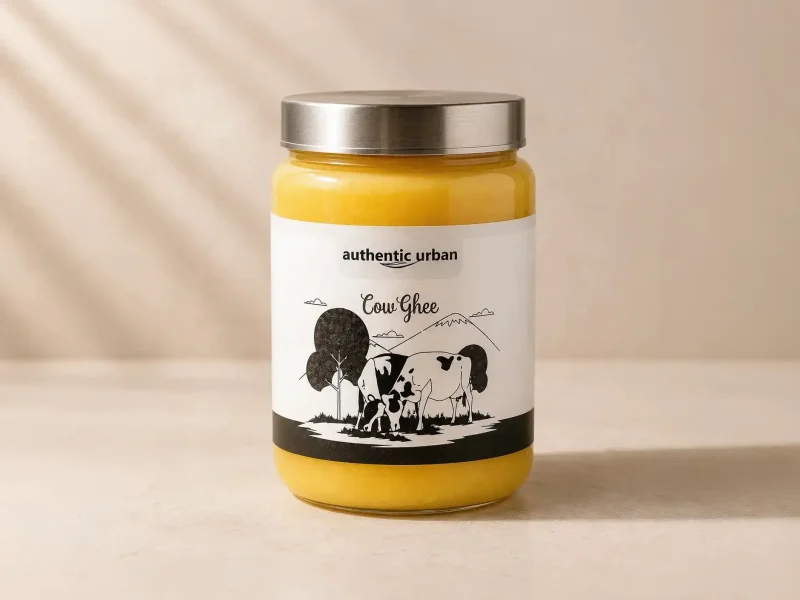 1 Litre
The dhaba double tadka
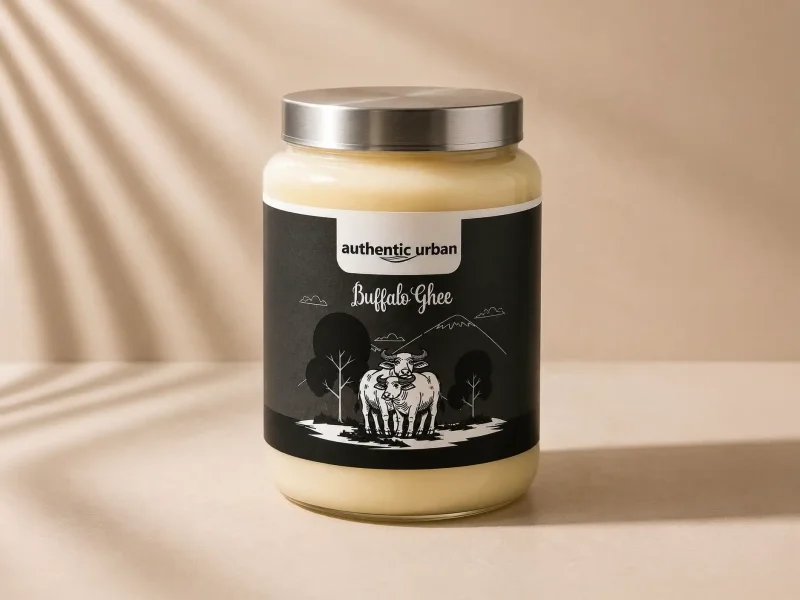 1 Litre
Each order is cooked after you place it, and the packing video is of that batch. Past order videos are on the shop.
FAQ
Dal tadka kaise banaye?
150 gram toor dal ko 3 baar dho kar 20 minute bhigo do. Cooker mein 3 cup paani aur haldi ke saath 4 seeti lagao. Dal ko ghot kar garam paani aur namak daalo, 5 minute ubaalo. Tadka pan mein 2 chammach ghee garam karo: jeera, phir lehsun sunehra hone tak, sookhi lal mirch aur hing, phir tamatar. Gas band karke Kashmiri mirch daalo aur tadka garam dal par daal do.
What is the difference between dal tadka and dal fry?
In dal tadka, the dal is cooked plain and a tadka of ghee and spices is poured on top at the end, so you taste the ghee and jeera clearly. In dal fry, the onion, tomato, and spices are cooked first as a masala and the boiled dal goes into that pan to simmer, which gives a thicker dal with the masala mixed all through. Many dhabas do both.
Can I make dal tadka without onion and garlic?
Yes, and many Jain and satvik homes cook it that way every day. Leave out the onion and garlic and make the tadka with jeera, dried red chilli, a little extra hing, grated ginger, and tomato in ghee. Hing brings some of the savoury taste garlic gives. Jain cooks also leave out ginger and tomato on some days and finish with a squeeze of lemon off the flame.
Can I use butter instead of ghee for the tadka?
Not for the hot part. Butter still holds water and milk solids, so it spits when it heats and the solids brown and burn before the jeera is ready. If you like the taste of butter, make the tadka in ghee or oil and drop a small piece of butter on the hot dal just before serving. Ghee has had its water and milk solids cooked out, which is why it takes tadka heat.
Is dal tadka good for weight loss?
Dal tadka can sit in a weight-loss plate if you keep the ghee small. A katori with ¾ teaspoon of ghee comes to about 157 kcal, worked out from USDA FoodData Central, against about 241 kcal for a dhaba bowl. The dal brings protein and fibre that keep you full. What matters more is the whole plate: how much rice or roti goes with it, and the rest of the day's fat.
Can I make the tadka ahead of time?
You can cook the dal a day ahead, but make the tadka fresh. Ghee sets as it cools, the garlic goes soft, and the jeera loses its toasted smell within an hour. A tadka takes 5 or 6 minutes, so boil and chill the dal ahead, reheat it to a full boil with a splash of water, and pour a fresh tadka over it at the table.
About the editorial team
Authentic Urban TeamBilona ghee makers, Gir Somnath, Gujarat
We are the Parmar family in Gir Somnath, Gujarat. We have made ghee here since 2016 and sold it online since 2025. We make only Bilona ghee, test it every month, and anyone is welcome to visit and watch it being made. Our Gir cows and Jafarabadi buffalo are grass-fed village animals that graze near the Gir forest, with no hormones or milk boosters. We set their milk to curd, churn it, and cook the makkhan on a wood chulha. These articles come from that kitchen and from what customers ask us on WhatsApp. We are ghee makers, not doctors.
Sources
- Pigeon peas (red gram), mature seeds, raw (FDC ID 172436), SR Legacy, USDA FoodData Central. Checked 28 Sep 2026.
- Butter oil, anhydrous (FDC ID 173412), SR Legacy, USDA FoodData Central. Checked 28 Sep 2026.
- Dietary Guidelines for Indians, 2024 (Guideline 7, visible fats), ICMR-National Institute of Nutrition. Checked 28 Sep 2026.
- How to chill, freeze and defrost food safely, Food Standards Agency (UK). Checked 28 Sep 2026.