Ghee for Lactose Intolerance: Is Ghee Lactose Free?
Ghee for lactose intolerance is usually fine: USDA FoodData Central measures 0 g of sugar in ghee, against about 10 g of lactose in a 200 ml glass of milk. Most people who cannot drink milk can keep 1 teaspoon of ghee on their dal. The trouble usually comes from the milk, khoya, or cream cooked alongside it.
Can you eat ghee if you are lactose intolerant?
Yes, for most people. Lactose is the sugar in milk, and lactose intolerance means your gut makes too little lactase, the enzyme that breaks it down. Ghee is milk fat with the watery part cooked off. USDA's entry for butter oil, the closest match to ghee, lists 99.5 g of fat and 0.0 g of sugar per 100 g, so a teaspoon gives your gut no milk sugar to struggle with.
For scale, NIDDK (the US National Institute of Diabetes and Digestive and Kidney Diseases) says research suggests many people with lactose intolerance can have 12 g of lactose, about a cup of milk, without symptoms. Ghee sits far below that. One thing this page does not cover is milk allergy, which is a reaction to milk protein and a different problem; a trace of protein does stay in ghee, as we explain on does ghee have casein. The NHS lists a raised rash, swelling of the lips, face, or eyes, and wheezing among food allergy signs; if dairy does that to you, skip ghee too until an allergist has seen you.
Is ghee lactose free?
Well-made ghee has no lactose that USDA can measure, though FSSAI's ghee standard sets limits for fat and moisture, not for lactose, so no jar is tested against a lactose number. The milk sugar leaves in two steps. It dissolves in the watery part of milk, not the fat. Monash University, which tests foods for the FODMAP diet, explains that churning pours off the milky liquid that holds the lactose and leaves the fat behind, and that ghee, made by melting butter and removing the milk solids, is low FODMAP.
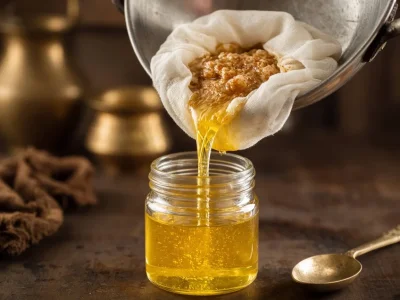
In our kitchen in Gir Somnath you can see both steps. The milk is set to curd overnight for 8 to 12 hours, then churned by hand for 30 to 45 minutes until the makkhan (butter) floats free. The chaas, the thin sour buttermilk, stays behind. The makkhan then cooks in a clay matki on a wood chulha for 45 to 90 minutes, until the bubbling goes quiet and the milk solids at the bottom turn golden-brown. Those solids stay in the pot. A batch taken off too early stays cloudy and holds moisture, and we do not pack it. That is the full Bilona method, and any ghee cooked to the FSSAI standard lands in the same place: at least 99.5% milk fat and at most 0.5% moisture.
Grainy ghee is not a lactose problem. The grain is fat setting as it cools. It is one of the questions customers ask us most on WhatsApp, and it is covered on why ghee is grainy. Cloudy liquid or a wet white sludge at the bottom of a jar is the sign of undercooked ghee.
How much lactose is in ghee compared with milk, curd, and butter?
Ghee has the least of any dairy food: 0 g in a teaspoon, where a glass of milk has about 10 g. The table works out USDA's figures per 100 g for the serving you would actually eat. For butter and curd USDA gives total sugar rather than lactose, so those rows show total sugar.
Food
Serving
Milk sugar per serving
For lactose intolerance
Ghee
1 tsp (5 g)
0 g total sugar
None measured
Butter, unsalted
1 tsp (5 g)
3 mg total sugar
A trace
Cheddar cheese
1 slice (30 g)
36 mg lactose
Very low
Curd (plain, whole milk)
1 katori (100 g)
4.7 g total sugar
Medium; many tolerate it
Milk in chai
½ cup (100 ml)
5.1 g lactose
Medium
Whole milk
1 glass (200 ml)
10.1 g lactose
High
USDA FoodData Central, SR Legacy entries 173412, 173430, 173414, 171284, and 171265, per 100 g, worked out per serving. Milk in ml taken as the same weight in g.
Butter is close behind ghee: about 3 mg of sugar in a teaspoon, which is why butter is also low FODMAP. The bigger gap is between the fats and everything with the watery part still in it. NIDDK points to curd (yogurt) and hard cheese as dairy foods lower in lactose than milk. The rest of ghee's label, with calories and fat per spoon, is on ghee nutrition facts, and how the two fats compare in the pan is on ghee vs butter.
Which ghee dishes can still upset lactose intolerance?
The ones cooked with milk, khoya, cream, or paneer. Many Indian sweets and gravies are called "ghee" dishes, but the ghee is the one dairy part without milk sugar. If a ghee dish upsets your stomach, check what else went into the pot before you give up the ghee.
Dish
Milk in it
What to do
Dal tadka, khichdi, ghee rice
No milk
Fine. The ghee is the only dairy, and it carries no measurable lactose.
Ghee roti, paratha, bajra rotla
No milk, unless the dough is kneaded with milk
Fine. Ask how the dough is made when you eat out.
Besan ladoo, churma, gond ladoo
Usually none; some recipes add milk or khoya
Fine when made with ghee, flour, and sugar only.
Suji halwa, sheera
Made with water or with milk
Make it with water at home. A milk sheera carries the milk's lactose.
Gajar halwa, kheer, basundi
Milk cooked down, often with khoya
The milk is the lactose. Keep the portion small, or eat it with a meal.
Peda, barfi, kalakand
Khoya (milk cooked down to a solid)
Small pieces. Khoya is concentrated milk, sugar and all.
Dal makhani, paneer gravies, malai kofta
Cream, butter, or paneer
Order these with care. Cream holds more milk sugar than ghee or butter.
Ghee coffee or chai
The milk in the cup
The ghee is not the problem. Try black coffee with ghee, or less milk.
The easy wins are the everyday ones. A ghee dal tadka or a bowl of ghee khichdi has no milk at all. A suji halwa made with water keeps the ghee and loses the milk. A gajar halwa is carrots cooked down in milk, so the milk goes into your bowl with it. A small katori after lunch is easier than a big one on its own.
How much ghee can you eat with lactose intolerance?
The same as anyone else: 1 to 2 teaspoons a day, which is ICMR-NIN's 2024 limit for ghee or butter. Lactose does not set that limit, because ghee has none to measure. Fat does. Start with 1 teaspoon on hot dal, rice, or roti at one meal, and add the second teaspoon at another meal if your stomach stays settled.
At home we each eat 1 to 2 teaspoons a day on roti, dal, and khichdi, and more only in winter sweets. A large spoonful of ghee on an empty stomach, or a plate swimming in it, can loosen stools in anyone, lactose intolerant or not; that fat effect gets blamed on lactose all the time. The full daily amount by age and activity is on how much ghee per day.
And the milk you still want
For the milk you do want, ICMR-NIN's 2024 guidelines give three ways to handle lactose intolerance: take less milk at a time, take it with a cereal and pulse meal, or take it as curd. NIDDK adds lactase tablets or drops, which break down the milk sugar for you.
How common is lactose intolerance in India?
Common, and more so in the south. A 2010 study in the American Journal of Clinical Nutrition (Babu and colleagues) gave healthy adults a lactose drink and a hydrogen breath test: 78.9% of the 76 volunteers from southern India and 57.1% of the 77 from northern India did not fully digest it. Only some had symptoms, 47.4% in the south and 15.6% in the north.
That gap matters. Not digesting all your lactose (malabsorption) is not the same as getting symptoms from it (intolerance), and NIDDK makes the same split. Many people who malabsorb lactose still drink chai every day without trouble, because a splash of milk is a small dose. The ones who struggle feel it within a few hours of a large glass or a milky sweet.
Does A2 ghee help lactose intolerance?
Not for lactose. A2 describes the type of beta-casein, a milk protein, in the cow's milk. It has nothing to do with milk sugar, and ghee made from A1 or A2 milk ends up with the same unmeasurable lactose. We make A2 Gir cow ghee, and we would not tell you it fixes lactose intolerance.
The A2 research is about milk, not ghee. A 2020 trial in Nutrients (Ramakrishnan and colleagues) gave 25 lactose intolerant adults different milks: abdominal pain scores were lower after A2-only milk than after regular milk (112 vs 146), though both milks carried the same lactose. The trial was small, single-meal, and co-funded by the a2 Milk Company. It may matter if you drink milk; it does not change what is in a spoon of ghee. What A1 and A2 mean is on what is A2 ghee, and the claims are weighed on A2 vs A1 ghee.
Why do you still feel bloated after ghee?
If a spoon of ghee on dal upsets you, lactose is the least likely reason. These are the usual ones, and what to do about each.
Likely cause
What it looks like
What to do
Too much fat at once
Heavy, full, loose stools after a rich meal, with or without dairy
Keep ghee to 1 or 2 tsp a day, spread over meals.
Milk hiding in the dish
Trouble after sweets, gravies, or chai, not after ghee on dal
Check the dish table above. Swap the milk, keep the ghee.
IBS
Pain and changed bowel habit that come and go for months, with many foods
A doctor, and the IBS plan on our IBS page.
Milk allergy
Rash, hives, lip or face swelling, wheeze, or vomiting soon after dairy
Stop all dairy, including ghee, until an allergist has seen you.
A stomach bug, or a gut condition
New dairy trouble after an infection, or with weight loss or blood in stool
A doctor. NIDDK names infections, Crohn's, and celiac disease as causes of lactose trouble.
If fat is the trigger, the IBS plan on ghee for IBS sets out amounts by type and on flare days. For gas after heavy meals, the kitchen steps are on ghee for bloating.
We make ghee; we are not doctors. NIDDK says a doctor diagnoses lactose intolerance from your symptoms and history, sometimes by asking you to stop milk foods for a while, and with a hydrogen breath test: you drink a set amount of lactose and breathe into a bag every 30 minutes for a few hours. Ask for one if cutting milk does not settle your stomach, and go sooner for weight loss, blood in the stool, or trouble that wakes you at night.
A 7-point checklist for ghee and lactose intolerance
Screenshot this for the fridge door, or send it to whoever cooks at home.
- Ghee on dal, rice, and roti: keep it. USDA measures no milk sugar in it.
- Start with 1 tsp on hot food at one meal; 1 to 2 tsp a day is the ICMR-NIN limit for everyone.
- Look at what else is in the dish: milk, khoya, cream, paneer.
- Keep milk small and with food, or take it as curd.
- Buy ghee that melts clear, with no cloudy water or white sludge at the bottom.
- Rash, swelling, or wheeze after dairy is allergy, not lactose. Stop ghee too, and see a doctor.
- Bloating that does not settle when milk is cut: ask a doctor about a hydrogen breath test.
Which ghee for a lactose intolerant kitchen?
For lactose, the thing to look for is ghee cooked all the way: it melts clear and golden, smells of toasted milk, and leaves no cloudy water or wet white sludge at the bottom of the jar. Five checks you can do at home are on how to identify pure ghee.
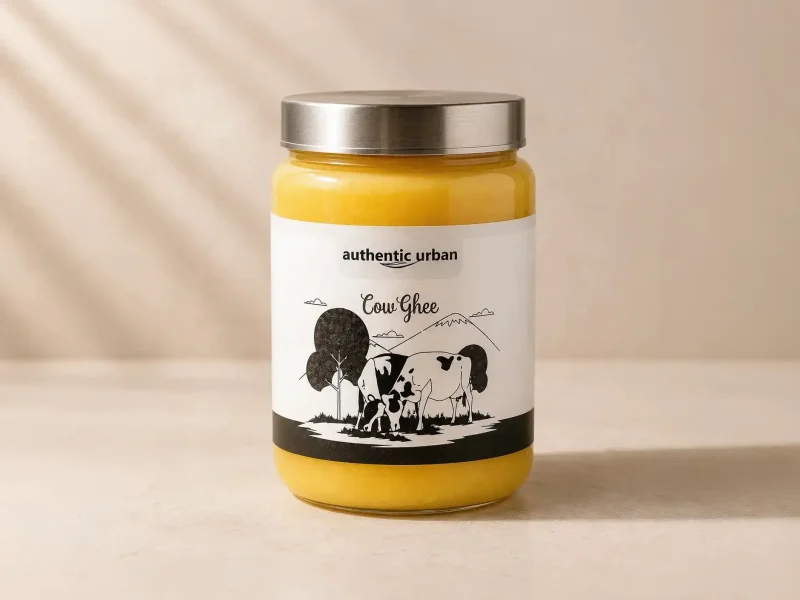
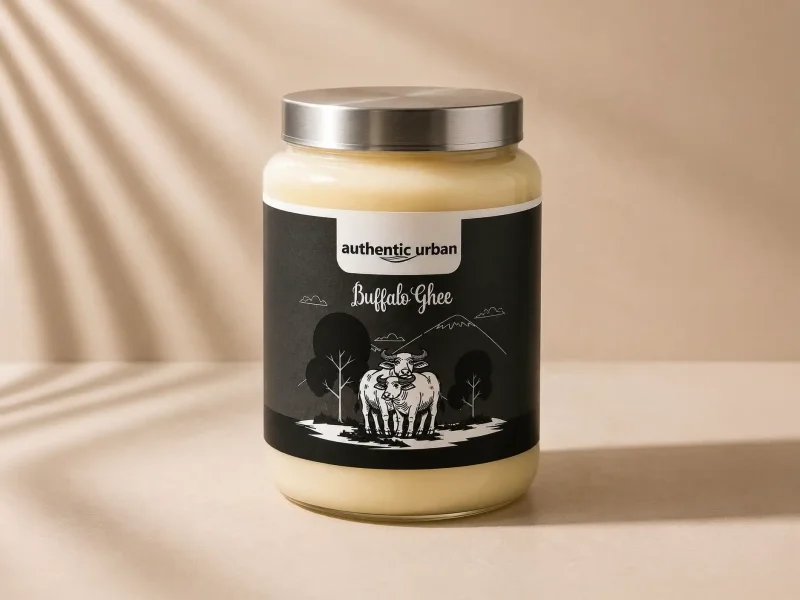
We make and sell ghee, so weigh this with that in mind. For the daily teaspoon we would pick our own A2 Gir cow ghee: grass-fed Gir cow milk from near the Gir forest, set to curd, churned by hand, and cooked after you order, with a video of your jar sent on WhatsApp. For sweets made without milk, our Jafarabadi buffalo ghee is the richer jar. We test every month against the FSSAI limits, and the steps are on how we make ghee. Our ranking of the cow ghee on sale is on best cow ghee in India.
The daily teaspoon on dal and roti
 1 Litre
Water-based halwa, ladoo, and paratha
 1 Litre
Each order is cooked after you place it, and the packing video is of that batch. Past order videos are on the shop.
FAQ
Can I use ghee instead of butter in baking if I am lactose intolerant?
Yes. USDA lists butter at about 81 g of fat per 100 g and ghee-type butter oil at 99.5 g, the rest of butter being mostly water. So use roughly 80 g of ghee for every 100 g of butter a recipe asks for, and add a spoon of water if the dough feels dry. Expect a slightly different crumb, and test one small batch before a big bake.
Do I need a lactase tablet when I eat ghee?
No. A lactase tablet or drop gives your gut the enzyme that breaks down milk sugar, and ghee has no measurable milk sugar for it to work on. NIDDK lists lactase products as a way to manage milk and milk products. Where a tablet can help is the rest of the plate: kheer, a milky chai, or a paneer gravy eaten alongside the ghee.
Is cow ghee or buffalo ghee better for lactose intolerance?
Neither has the edge on lactose. Both are milk fat with the watery part cooked off, and FSSAI holds both to the same ghee standard: at least 99.5% milk fat and at most 0.5% moisture. Choose by taste and job instead. Cow ghee is lighter for the daily teaspoon on dal and rice. Buffalo ghee is richer and fuller in flavour, which suits paratha, ladoo, and halwa made with water instead of milk.
Can a lactose intolerant child eat ghee?
Usually yes, from the age a doctor has cleared solid food, in small amounts on dal or khichdi. Lactose trouble in young children often follows a bout of diarrhoea, and ICMR-NIN says it is usually mild and passes. A baby who reacts to milk from birth is a different case: congenital lactase deficiency is rare and needs a paediatrician, as does any rash or swelling after dairy.
Is homemade ghee lactose free?
It can be as clean as a shop jar if it is cooked long enough. Keep the butter on a low flame until the bubbling goes quiet and the milk solids at the bottom turn golden-brown, then strain it through a fine cloth. Ghee taken off early stays cloudy and holds water and solids, which carry milk sugar. Leave the brown bits in the pan.
Is chaas (buttermilk) lactose free like ghee?
No. Chaas is the watery part left behind when curd is churned, and that watery part is where milk sugar goes. Monash University, which tests foods for the FODMAP diet, explains that churning pours off the milky liquid that contains lactose and leaves the fat behind. So treat chaas like other milk drinks: a small glass with a meal, and see how you feel.
About the editorial team
Authentic Urban TeamBilona ghee makers, Gir Somnath, Gujarat
We are the Parmar family in Gir Somnath, Gujarat. We have made ghee here since 2016 and sold it online since 2025. We make only Bilona ghee, test it every month, and anyone is welcome to visit and watch it being made. Our Gir cows and Jafarabadi buffalo are grass-fed village animals that graze near the Gir forest, with no hormones or milk boosters. We set their milk to curd, churn it, and cook the makkhan on a wood chulha. These articles come from that kitchen and from what customers ask us on WhatsApp. We are ghee makers, not doctors.
Sources
- Butter oil, anhydrous (FDC ID 173412), SR Legacy, USDA FoodData Central. Checked 27 Sep 2026.
- Butter, without salt (FDC ID 173430), SR Legacy, USDA FoodData Central. Checked 27 Sep 2026.
- Milk, whole, 3.25% milkfat, with added vitamin D (FDC ID 171265), SR Legacy, USDA FoodData Central. Checked 27 Sep 2026.
- Yogurt, plain, whole milk (FDC ID 171284), SR Legacy, USDA FoodData Central. Checked 27 Sep 2026.
- Cheese, cheddar (FDC ID 173414), SR Legacy, USDA FoodData Central. Checked 27 Sep 2026.
- Eating, Diet, & Nutrition for Lactose Intolerance, National Institute of Diabetes and Digestive and Kidney Diseases (NIDDK). Checked 27 Sep 2026.
- Symptoms & Causes of Lactose Intolerance, National Institute of Diabetes and Digestive and Kidney Diseases (NIDDK). Checked 27 Sep 2026.
- Diagnosis of Lactose Intolerance, National Institute of Diabetes and Digestive and Kidney Diseases (NIDDK). Checked 27 Sep 2026.
- Food allergy, NHS. Checked 27 Sep 2026.
- Low FODMAP meat, seafood, eggs and cooking fats (Jimmy Lee, 23 January 2024), Monash University FODMAP. Checked 27 Sep 2026.
- Frequency of lactose malabsorption among healthy southern and northern Indian populations by genetic analysis and lactose hydrogen breath and tolerance tests (Babu, Kumar, Babu, Prasad, Ghoshal; American Journal of Clinical Nutrition, 2010), Europe PMC (PMID 19889824). Checked 27 Sep 2026.
- Milk containing A2 beta-casein only, as a single meal, causes fewer symptoms of lactose intolerance than milk containing A1 and A2 beta-caseins in subjects with lactose maldigestion and intolerance (Ramakrishnan, Eaton, Sermet, Savaiano; Nutrients, 2020), PubMed Central (PMC7766938). Checked 27 Sep 2026.
- Dietary Guidelines for Indians, 2024 (lactose intolerance; limit ghee or butter to 1 to 2 teaspoons a day), ICMR-National Institute of Nutrition. Checked 27 Sep 2026.
- Food Safety and Standards (Food Products Standards) Chapter 2.1: Dairy products and analogues, version 01.09.2023 (ghee standard, p. 27), FSSAI. Checked 27 Sep 2026.