Ghee for Anemia: Does Ghee Have Iron, or Help Absorb It?
Ghee for anemia does not raise iron: USDA lists 0 mg of iron in ghee, and we found no human study showing ghee helps iron from food absorb. Keep 1 to 2 teaspoons on dal or roti for taste. The iron comes from dal, rajma, and green leaves, helped by a guava or lemon at the meal and no tea near it.
Is ghee good for anemia?
Ghee is fine to eat with anemia, but it does not treat it. A teaspoon has no iron, no vitamin C, no folate, and next to no B12, the nutrients that build haemoglobin. One to two teaspoons a day, the limit ICMR-NIN's 2024 dietary guidelines set for ghee or butter, can sit on an iron-rich plate. Extra ghee adds calories, not iron.
This matters in India because anemia is so common. The fifth National Family Health Survey (NFHS-5, 2019 to 2021) found it in 57% of women aged 15 to 49, 59.1% of teenage girls, 52.2% of pregnant women, and 25% of men, per the Health Ministry's 2022 release. Many pages that rank for this question say ghee "improves iron absorption" or "builds blood". We make ghee for a living, and we checked. This page is for anyone with low haemoglobin, a heavy-period teen, or a pregnant woman, deciding what to keep on the plate. Period-week meals have their own page: ghee for period cramps.
Does ghee have iron?
No. USDA FoodData Central lists ghee (as "butter oil, anhydrous") at 0 mg of iron per 100 g. Ghee is what is left once the water in makkhan boils away and the browned milk solids are strained off: almost pure milk fat. Here is a teaspoon of ghee next to the Indian foods that do carry iron.
Food and portion
Iron
Vitamin C
Ghee, 1 tsp (5 g)
Iron 0 mg
Vitamin C 0 mg
Masoor dal, cooked, 1 katori (150 g)
Iron 5.0 mg
Vitamin C 2 mg
Rajma, cooked, 1 katori (150 g)
Iron 4.4 mg
Vitamin C 2 mg
Chana (chickpeas), cooked, 1 katori (150 g)
Iron 4.3 mg
Vitamin C 2 mg
Palak, cooked, 100 g
Iron 3.6 mg
Vitamin C 10 mg
Chaulai (amaranth leaves), cooked, 100 g
Iron 2.3 mg
Vitamin C 41 mg
Til (sesame seeds), 1 tbsp (9 g)
Iron 1.3 mg
Vitamin C 0 mg
Egg, 1 (50 g)
Iron 0.9 mg
Vitamin C 0 mg
Chicken breast, cooked, 100 g
Iron 0.5 mg
Vitamin C 0 mg
Dates, 4 (about 30 g)
Iron 0.3 mg
Vitamin C 0 mg
Whole milk, 1 glass (200 ml)
Iron 0.06 mg
Vitamin C 0 mg
USDA FoodData Central (SR Legacy), per 100 g worked out for each portion; checked 28 September 2026. USDA's dal entry is lentils, the same seed as masoor.
Two rows surprise people. Dates are sold as an iron food, but four of them carry about 0.3 mg, less than a sixteenth of a katori of masoor dal. And a glass of milk has almost none; ICMR-NIN's guidelines call milk the best source of calcium but a poor source of iron. The real work is done by pulses and green leaves. Plant iron is harder to absorb than iron from meat and fish, ICMR-NIN notes, which is why the next two sections matter more than the ghee. Protein and B12 on a vegetarian day are on ghee for vegetarians.
Does ghee help or block iron absorption?
Neither has been shown. Iron is not a fat-soluble nutrient, so the way ghee helps vitamins A, D, E, and K absorb does not carry over to it. We searched for studies on fat and iron and found very few, and none on ghee.
The claim
What is actually known
Ghee helps your body absorb iron
We found no study of ghee and iron in people. The one human trial we found on fat and iron (Monnard and colleagues, American Journal of Clinical Nutrition, 2017) gave 41 women a fat emulsion with a maize meal. It more than doubled absorption of ferric pyrophosphate, a poorly dissolving iron used to fortify food, and made no difference to ferrous sulphate, a common iron salt.
Fat is a key factor in how much iron a meal gives you
A 2000 study in the same journal (Reddy and colleagues) measured iron absorption from 25 everyday meals in 86 adults. Only three things predicted it: meat or fish in the meal (more), phytic acid from grains and pulses (less), and vitamin C (more). Fat was not one of the factors they analysed.
Studies show a high-fat diet raises iron absorption
In rats. A 1987 study (Journal of Nutrition) found rats on a diet of 30% fat absorbed more iron than rats on 5% fat, and the type of fat made no difference to absorption. Thirty per cent of the whole diet as fat is far outside the 1 to 2 teaspoons of ghee ICMR-NIN suggests.
Ghee boosts iron absorption by 300%
We could not find any study behind this number. It shows up on sellers' pages without a source.
Ghee blocks iron, so skip it if you are anaemic
We found no study showing that either. The things that do lower iron absorption in the studies and guidelines are tea and coffee near meals and phytic acid in grains and pulses, which cooking reduces.
The 2017 trial is the closest anyone has come, and it points the other way from the sellers' pages. Fat helped a hard-to-dissolve iron added to fortified flour. It did nothing for ferrous sulphate, the kind of iron that dissolves easily. So "ghee on your dal pulls in more iron" is a guess, not a finding. Which nutrients do need fat, and how little of it, is on ghee for nutrient absorption.
What helps iron absorb better than ghee?
Vitamin C at the meal, and no tea near it. ICMR-NIN's 2024 guidelines say vitamin C fruits such as guava, pineapple, and citrus improve iron absorption from plant foods, and advise eating guava or orange after meals. In the 25-meal study above, vitamin C was one of only three things that changed how much iron people took in.
USDA FoodData Central, SR Legacy (173044, 169097, 169202, 169957, 168463, 167747, 173412), per 100 g worked out for each portion. Checked 28 September 2026.
| Item | Value |
|---|---|
| Guava, 100 g | 228 mg |
| Orange, 100 g | 53 mg |
| Chaulai leaves, cooked, 100 g | 41 mg |
| Sprouted moong, 100 g | 13 mg |
| Palak, cooked, 100 g | 10 mg |
| Juice of half a lemon (20 ml) | 8 mg |
| Ghee, 1 tsp | 0 mg |
- Tea and coffee: ICMR-NIN says the tannin in both interferes with iron absorption, and advises keeping them at least an hour before and after meals. That includes the chai with your paratha.
- Pressure cooking: phytic acid in grains and pulses holds back iron. ICMR-NIN notes that boiling and pressure cooking cut it a great deal, so iron, calcium, and zinc absorb better.
- Sprouts and batters: fermented and sprouted foods (idli, dosa, dhokla, moong sprouts) improve iron availability, per the same guidelines.
- Meat, fish, and eggs, if you eat them: ICMR-NIN says iron from flesh foods is well absorbed, unlike plant iron. In the 25-meal study, meat in the meal also raised absorption of the plant iron eaten with it.
- Milk at a different time: the NHS lists milk and dairy with tea and coffee as things that make iron harder to absorb. Keep the glass of milk away from the main iron meal and the tablet.
How much ghee should you eat with anemia?
The same as anyone else: 1 to 2 teaspoons a day, spread over meals. ICMR-NIN's 2024 guidelines say to limit ghee or butter to 1 to 2 teaspoons a day, and anemia gives no reason to go higher, since the extra spoon brings no iron.
Who
Ghee a day
How
Adult with low Hb, on iron tablets
1 to 2 tsp a day
On dal, sabzi, or roti. Take the tablet the way your doctor says, and keep tea an hour away from it and from meals.
Pregnant woman
Within 1 to 2 tsp
The daily IFA tablet does the work. Ghee is for taste on an iron-rich plate, not a stand-in for the tablet.
Teenage girl or woman with heavy periods
1 to 2 tsp a day
Build lunch around dal and greens, with a guava or orange after. Ask for a haemoglobin test if tiredness comes every cycle.
Underweight, or eating very little
Up to 2 tsp a day
A teaspoon on khichdi or dal can make a small appetite eat more. The iron still has to come from the food under it.
High LDL, heart disease, or diabetes
½ to 1 tsp, or as your doctor says
Ghee is mostly saturated fat. It adds nothing to iron, so there is no reason to raise it for anemia.
Child over 1 year
½ to 1 tsp
On dal-rice or khichdi. A child who looks pale or tires fast needs a doctor and a blood test first.
A teaspoon is 5 g (ICMR-NIN). A starting point; your doctor's advice wins.
At home in Gir Somnath each of us eats 1 to 2 teaspoons a day, on roti, dal, and khichdi, and more only in winter sweets like adadiya pak and gond. The ghee goes on the dal, and the dal is where the iron is. That is the useful way to think about it: ghee makes a plain katori of dal or a bowl of palak something people finish, and finishing the dal is what counts. The limit for the rest of the family is on how much ghee per day, and you can work out your home's daily ghee and oil person by person. If low weight and poor appetite come with the anemia, calories are covered on ghee for weight gain.
What does an iron-rich day with ghee look like?
About 15 mg of iron from the foods we counted, with 1½ teaspoons of ghee contributing none of it. This is an ordinary vegetarian day, with the tea moved and a fruit added.
Meal
Plate
Iron
Ghee
Breakfast
Sprouted moong chaat (100 g) with onion, tomato, and lemon
Iron 0.9 mg
Ghee 0
Lunch
Masoor dal (150 g) with 1 tsp ghee tadka, palak sabzi (100 g), 2 rotis. A guava after the meal.
Iron 8.6 mg
Ghee 1 tsp
Evening
Chai here, an hour or more after lunch. 1 tbsp roasted til.
Iron 1.3 mg
Ghee 0
Dinner
Rajma (150 g) with rice, a lemon squeezed over, and kachumber salad
Iron 4.4 mg
Ghee ½ tsp
Iron from the USDA figures in the table above, for the sprouts, dal, palak, til, and rajma only. Roti and rice add more and are not counted.
Notice where the guava and the lemon sit: at the two big iron meals. Non-vegetarian homes can add an egg at breakfast or fish or meat at dinner, which ICMR-NIN says brings iron that absorbs well. Swap palak for methi, chaulai, or bathua as the season changes.
Can you take iron tablets with ghee?
You can eat ghee on the same day, but there is no reason to take the tablet with ghee. In the 2017 trial, fat did not change how much ferrous sulphate was absorbed, and we found no study of ghee with iron tablets.
Follow the timing on your prescription. The NHS says taking iron tablets with food can ease side effects like constipation, tummy pain, and feeling sick, and that a glass of orange juice after the tablet may help absorption. ICMR-NIN asks that tea stay away from meals and from the IFA tablet. If the tablets leave you constipated, water, fibre, and the fixes on ghee for constipation help more than skipping doses. Never stop or cut a prescribed tablet because you have started a food remedy.
Is ghee good for anemia in pregnancy?
A teaspoon or two is fine, but the tablet is the treatment. ICMR-NIN's 2024 guidelines recommend an iron and folic acid (IFA) tablet with 60 mg of iron and 0.5 mg of folic acid every day from the 12th week of pregnancy until six months after the birth, and at least four antenatal check-ups that include a haemoglobin test.
Families often add ghee for strength in the last months. That is tradition, and within 1 to 2 teaspoons it does no harm, but it does nothing for the haemoglobin. Put the ghee on the dal and greens the same guidelines ask for, keep tea away from meals and the tablet, and let the doctor handle a low reading. Month-by-month amounts are on ghee during pregnancy.
What does Ayurveda say about ghee for anemia?
Ayurveda texts describe a pale, tired, weak state called pandu, and Ayurveda doctors treat it with herbal medicines, some of them prepared in ghee. That is tradition, and it is medicine given by a vaidya, not the ghee on your roti.
In those ghritams the ghee is the carrier for the herbs; plain ghee from a jar is not the same thing. We found no clinical trial of plain ghee for pandu or anemia. If you are taking an Ayurvedic preparation, tell your doctor, and do not use it in place of iron tablets. How ghritams are made and dosed is on medicated ghee (ghritam).
When is tiredness anemia, and when should you see a doctor?
Only a blood test can tell, so get one before changing your diet around a guess. The WHO lists tiredness, dizziness, cold hands and feet, headache, and breathlessness on exertion as common signs. The NHS adds paler skin and craving non-food things such as ice or paper (pica).
Causes other than low iron
Low iron is the most common cause, but not the only one. The WHO also names low folate, B12, or vitamin A, infections, long-term illness, heavy periods, and inherited blood disorders such as thalassaemia and sickle cell. Each needs its own treatment, which is why the test comes first. The cut-offs used in NFHS-5 were haemoglobin below 12 g/dl for women who are not pregnant, below 11 g/dl in pregnancy and for young children, and below 13 g/dl for teenage boys.
See a doctor soon if you are breathless doing ordinary things, your heart races, you feel faint, or your periods are so heavy you soak through pads fast. In pregnancy, report any low haemoglobin reading and every sign above. Get urgent care for chest pain, fainting, or black or bloody stools. This page is about food; your doctor decides on tests and treatment.
Conditions where a doctor sets your fat intake, such as gallstones or pancreatitis, are listed under who should not eat ghee.
An 8-point iron kitchen checklist
Screenshot this for whoever cooks at home.
- Eat a pulse (dal, rajma, chana, moong) at least twice a day.
- Put a green leafy sabzi on the plate once a day: palak, methi, chaulai, or bathua.
- Finish lunch and dinner with a vitamin C fruit, or squeeze lemon over the dal.
- Keep tea and coffee at least an hour away from meals and from the iron tablet.
- Pressure-cook pulses, and use sprouts, idli, or dosa batter often.
- Keep ghee at 1 to 2 teaspoons a day, on the dal, not on its own.
- Take the IFA or iron tablet as prescribed, and do not swap it for a food remedy.
- Get haemoglobin rechecked on the date your doctor gives you.
Which ghee for an iron-rich kitchen?
No ghee has iron, so no jar is better for anemia than another. What you want is ghee that tastes good enough that one teaspoon on the dal feels like plenty, and that is really ghee. Well-made ghee smells of toasted milk when warmed and often sets grainy when cool. A batch cooked too hard turns dark and bitter, and we keep those at home instead of packing them. How to check any jar is on how to identify pure ghee, and our ranking of the cow ghee on sale is best cow ghee in India.
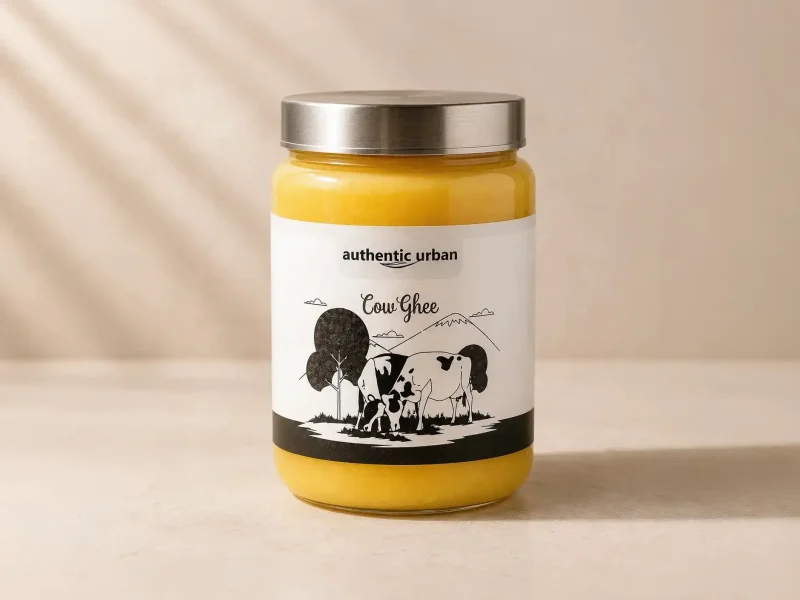
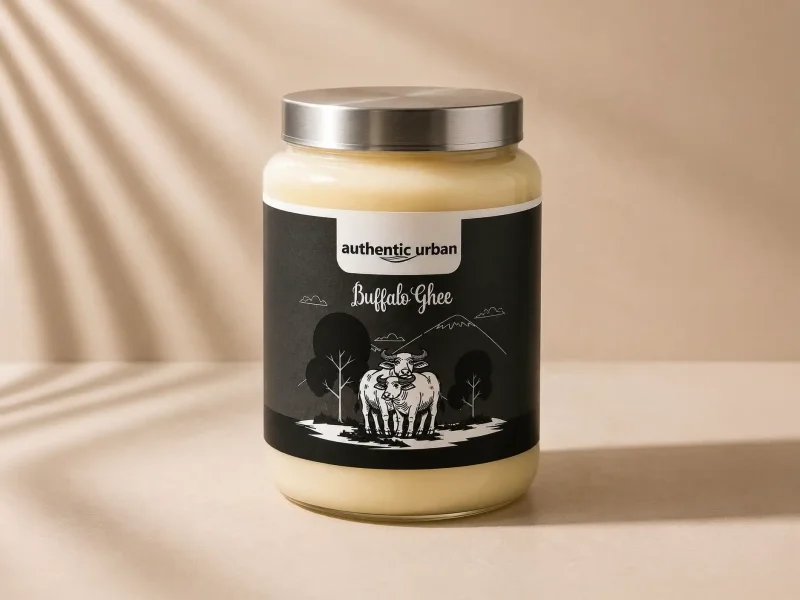
For the daily teaspoon we would pick our own A2 Gir cow ghee: grass-fed Gir milk set to curd overnight, churned, and cooked in a matki on a wood chulha, made after you order, with a video of your jar sent on WhatsApp. At ₹2,399 a litre, a 5 ml teaspoon costs about ₹12. Our Jafarabadi buffalo ghee is the richer jar for halwa and parathas. We test every month against the FSSAI limits; the steps are on how we make ghee.
The daily teaspoon on dal
 1 Litre
Winter sweets and parathas
 1 Litre
Each order is cooked after you place it, and the packing video is of that batch. Past order videos are on the shop.
FAQ
Kya ghee khane se khoon badhta hai?
Nahi, ghee se seedha khoon nahi badhta. Ghee mein iron zero hai, per USDA FoodData Central, so it cannot raise haemoglobin by itself. What raises it is iron from dal, rajma, chana, and green leaves, helped by a guava or lemon at the meal, and iron tablets when a doctor prescribes them. One or two teaspoons of ghee on that dal is fine for taste.
Is gur and ghee good for anemia?
Gur with ghee after a meal is a common household habit, but it is not an iron fix. The ghee adds no iron, and ICMR-NIN's 2024 guidelines count jaggery as added sugar, alongside table sugar and honey, and say limiting sugar to 25 g a day is better for health. A small piece is fine as a sweet. For iron, spend the plate on dal, greens, and fruit instead.
Is cow ghee or buffalo ghee better for anemia?
Neither. Both are almost pure milk fat, and USDA lists no iron in ghee, so the animal makes no difference to your haemoglobin. Pick by taste and use. Cow ghee is lighter and suits a teaspoon on dal every day. Buffalo ghee is richer and suits halwa and parathas. Whichever you keep, the iron on your plate comes from what the ghee is poured over.
How long does it take for hemoglobin to rise?
It depends on the cause and the treatment, so your doctor sets the recheck date. For iron deficiency anaemia, the NHS says iron tablets are usually taken for about six months, with repeat blood tests over the following months to check iron is returning to normal. Food changes help keep iron up after that, but on their own they are slow. More ghee will not speed any of it up.
Can children with anemia eat ghee?
Yes, a child over one year can have ½ to 1 teaspoon of ghee on dal-rice or khichdi, but it will not treat anaemia. ICMR-NIN's 2024 guidelines cite a national survey that found anaemia in 40.6% of children aged 1 to 4. A pale, tired, or fussy eater needs a doctor and a blood test. Iron drops or syrup, if prescribed, are dosed by the doctor.
Does ghee help hair fall caused by anemia?
Not directly. When hair fall comes from low iron, the fix is treating the low iron, and ghee has none. Eating a teaspoon of ghee or rubbing it on the scalp will not replace the iron your body is short of. Get your haemoglobin and ferritin checked if hair fall comes with tiredness or breathlessness, and let the doctor decide on iron tablets.
About the editorial team
Authentic Urban TeamBilona ghee makers, Gir Somnath, Gujarat
We are the Parmar family in Gir Somnath, Gujarat. We have made ghee here since 2016 and sold it online since 2025. We make only Bilona ghee, test it every month, and anyone is welcome to visit and watch it being made. Our Gir cows and Jafarabadi buffalo are grass-fed village animals that graze near the Gir forest, with no hormones or milk boosters. We set their milk to curd, churn it, and cook the makkhan on a wood chulha. These articles come from that kitchen and from what customers ask us on WhatsApp. We are ghee makers, not doctors.
Sources
- FoodData Central, SR Legacy (April 2018 release): butter oil, anhydrous 173412; lentils 172421; kidney beans 175194; chickpeas 173757; spinach 168463; amaranth leaves 169202; sesame seeds 170150; egg 171287; chicken breast 171140; dates 171726; whole milk 171265; sprouted mung beans 169957; guava 173044; orange 169097; lemon juice 167747, USDA FoodData Central. Checked 28 Sep 2026.
- Dietary Guidelines for Indians, 2024 (iron-rich foods, vitamin C, tea and IFA tablets, printed p. 19; four antenatal check-ups with haemoglobin tests, p. 18; one IFA tablet a day, p. 20; ghee or butter 1 to 2 teaspoons a day, p. 54; pressure cooking and phytic acid, p. 83; tea and coffee an hour from meals, p. 91; jaggery as added sugar, pp. 93 to 94; CNNS 2019 anaemia, Table I), ICMR-National Institute of Nutrition. Checked 28 Sep 2026.
- Anaemia Mukt Bharat (NFHS-5 anaemia prevalence and haemoglobin cut-offs), 4 February 2022, Press Information Bureau, Ministry of Health and Family Welfare. Checked 28 Sep 2026.
- Anaemia fact sheet, 10 February 2025, World Health Organization. Checked 28 Sep 2026.
- Iron deficiency anaemia, NHS. Checked 28 Sep 2026.
- Iron deficiency anaemia: treatment, NHS. Checked 28 Sep 2026.
- The effect of lipids, a lipid-rich ready-to-use therapeutic food, or a phytase on iron absorption from maize-based meals fortified with micronutrient powders (Monnard A et al.), 2017, American Journal of Clinical Nutrition. Checked 28 Sep 2026.
- Estimation of nonheme-iron bioavailability from meal composition (Reddy MB, Hurrell RF, Cook JD), 2000, American Journal of Clinical Nutrition. Checked 28 Sep 2026.
- Effects of level and saturation of fat and iron level and type in the diet on iron absorption and utilization by the rat (Johnson PE et al.), 1987, Journal of Nutrition. Checked 28 Sep 2026.