Ghee for Nutrient Absorption: Which Vitamins and How Much
Ghee for nutrient absorption works for one group of nutrients: vitamins A, D, E, and K and plant pigments such as beta-carotene need some fat in the same meal, and ½ to 1 teaspoon of ghee on the sabzi or dal is enough. In human trials, a salad with no fat let almost no carotenoids through. Ghee does nothing for iron, calcium, B12, or vitamin C.
Does ghee help nutrient absorption?
Yes, for fat-soluble nutrients, and only when the ghee is in the same meal. ICMR-NIN's 2024 dietary guidelines call fats a vehicle for vitamins A, D, E, and K and carotenes that promotes their absorption. Half to one teaspoon of ghee on a plate of palak, gajar, or dal does that job. More ghee adds calories faster than it adds vitamins.
Any fat does this. Oil, butter, milk fat, and the fat in nuts all worked in the trials below, and none of them tested ghee by name. Ghee's place is practical: it is the fat many Indian homes already pour on dal and roti. This page covers how much fat a meal needs, which dishes to pair it with, and how cooking changes what your body gets from the vegetables. The full label of a teaspoon of ghee is on ghee nutrition facts.
Which nutrients need fat to absorb, and which do not?
Vitamins A, D, E, and K, and the carotenoids in orange and green vegetables, need fat. Iron, calcium, vitamin C, and the B vitamins do not. They dissolve in water or are absorbed by other routes, so ghee is the wrong tool for them. Find the nutrient you care about.
Nutrient
Needs fat?
Where it comes from
What to know
Vitamin A and beta-carotene
Needs fat: Yes
From: Carrot, kaddu, palak, methi, ripe mango, papaya
The clearest case. Fat also helps the body turn beta-carotene into vitamin A.
Vitamin E
Needs fat: Yes
From: Nuts, seeds, palak, vegetable oils
A little fat is enough; more did not help in the 2000 trial.
Vitamin K
Needs fat: Yes
From: Palak, methi, cabbage, other green leaves
Greens carry the vitamin K; ghee carries it in.
Vitamin D
Needs fat: Yes
From: Sun, eggs, fish, fortified milk, tablets
Ghee has none of its own. Take a tablet with a meal.
Lycopene and lutein
Needs fat: Yes
From: Tomato, watermelon, green leaves
Lutein needed more fat than beta-carotene in the 2000 trial.
Curcumin (haldi)
Needs fat: Partly
From: Haldi in dal, sabzi, milk
Black pepper did the heavy lifting in the best-known human study, not fat.
Iron
Needs fat: No
From: Dal, rajma, green leaves, jaggery, meat
Vitamin C helps; tea with the meal blocks it.
Calcium
Needs fat: No
From: Milk, curd, til, ragi
Fat does not pull calcium in.
Vitamin C and B vitamins, including B12
Needs fat: No
From: Amla, guava, lemon; dal, grains; milk, curd, eggs
Water-soluble. They absorb without fat.
Fat-soluble list from ICMR-NIN Dietary Guidelines for Indians 2024 (printed pp. 9, 52); tea and vitamin C for iron from the same guidelines (printed p. 19); curcumin from Shoba 1998; the rest from the trials below. Checked 27 September 2026.
Two of those rows have their own pages. If you are low on iron, the meal pairings that matter are on ghee for anaemia. If you are low on vitamin D, how to take the tablet with a meal is on vitamin D in ghee. Calcium and bone are on ghee for bone health.
How does fat help vitamins absorb?
Fat-soluble vitamins travel into the body inside droplets of fat. In the small intestine, bile breaks the fat from your meal into tiny droplets, and vitamins A, D, E, and K and the carotenoids dissolve into them. The gut lining takes up those droplets, packs the fat and vitamins together, and sends them into the lymph and then the blood.
With no fat in the meal there is little to carry them, and most of the carotene in a raw carrot passes straight through. Fat also helps with a second step. In the 2014 avocado trial, adding fat to a carrot meal raised not only how much beta-carotene was absorbed but how much of it the body turned into vitamin A. That second step matters for vegetarian families, since carrots, greens, and mango give beta-carotene that the body has to convert into vitamin A.
How much ghee per meal is enough to absorb vitamins?
Half to one teaspoon of ghee (2.5 to 5 g) per meal covers most of the benefit. In the trials, 3 g of fat was enough for vitamin E and beta-carotene from a supplement, while carotenoids locked inside raw vegetables kept rising up to 20 g or more. Four studies, turned into teaspoons of ghee:
Study
Fat in the meal
In ghee
What it found
Roodenburg, 2000
3 g or 36 g fat with a meal
In ghee: About ½ tsp vs 7 tsp
Vitamin E and beta-carotene from a supplement rose the same with 3 g as with 36 g. Lutein needed the larger amount.
Brown, 2004
0, 6, or 28 g oil on a salad
In ghee: 0, about 1 tsp, or 5½ tsp
With no fat, almost no carotenoids reached the blood. 6 g helped, and 28 g helped more.
Goltz, 2012
3, 8, or 20 g of canola oil, soybean oil, or butter
In ghee: About ½, 1½, or 4 tsp
20 g beat 3 g and 8 g. The amount of fat mattered more than which fat it was.
Kopec, 2014
23 g of fat from avocado with carrots
In ghee: About 4½ tsp
Beta-carotene absorption rose 6.6 times, and its conversion to vitamin A 12.6 times.
1 teaspoon of ghee is about 5 g of fat (ICMR-NIN counts 4 to 10 teaspoons as 20 to 50 g). All four studies were small, used oil, butter, or avocado rather than ghee, and measured blood levels over hours, not health over months.
Why not 4 teaspoons a meal, then? Because the day has a limit. ICMR-NIN's 2024 guidelines set visible fat (the oil, ghee, and butter you add) at 20 to 50 g a day depending on how active you are, and ask adults to keep ghee or butter to 1 to 2 teaspoons of that, or to skip it. A normal Indian meal cooked in a little oil, with ½ to 1 teaspoon of ghee on top, already sits in the range where the trials saw most of the gain. At home each of us eats 1 to 2 teaspoons a day, on roti, dal, and khichdi, and we split it across meals rather than taking it at once. Amounts for every age are on how much ghee per day, and you can work out your household's ghee and oil with the ghee calculator.
Is ghee better than oil for absorbing vitamins?
No, not in the studies we found. In the 2012 trial that tested butter, the closest fat to ghee, against canola and soybean oil, the amount of fat changed absorption more than the kind. Canola oil did slightly better than butter for lutein and alpha-carotene, but the difference fell short of statistical proof.
So choose the fat for the dish and for your heart, not for absorption. Ghee suits a tadka on dal and a spoon on roti. Mustard, groundnut, or rice bran oil suits the everyday sabzi, and splitting the day's fat between them keeps the ghee inside its daily limit. The side-by-side on fats and heart health is on ghee vs vegetable oil and ghee vs olive oil.
How many vitamins does ghee add by itself?
A little vitamin A, and very little else. USDA FoodData Central lists a 5 g teaspoon of ghee at about 42 µg of vitamin A, 0.14 mg of vitamin E, 0.4 µg of vitamin K, and no vitamin D. Compare 100 g of raw carrot, at 835 µg of vitamin A, or 100 g of raw palak, at 483 µg of vitamin K and 2 mg of vitamin E. The vegetables bring the vitamins. The ghee helps carry them in.
Customers often ask us on WhatsApp why our cow ghee is more yellow in some months. In the monsoon, green fodder turns cow ghee a deeper yellow, and people read that colour as extra vitamins. We have never had our ghee tested for vitamin content, so we make no claim either way, and a colour is not a lab result.
Does the way you cook vegetables change what you absorb?
Yes, often as much as the fat does. In lab digestion tests at CFTRI, Mysore, stir-frying vegetables in a small amount of oil raised the beta-carotene available for absorption by 53% to 263%. Leafy greens gained the most.
Veda et al., CFTRI Mysore, Molecular Nutrition and Food Research, 2006. Lab (in vitro) digestion, not a human feeding trial. Checked 27 September 2026.
| Item | Value |
|---|---|
| Methi (fenugreek) leaves | 263% |
| Chaulai (amaranth) leaves | 192% |
| Carrot | 63% |
| Kaddu (pumpkin) | 53% |
Pressure cooking helped too, but less: 100% more for methi, 48% for chaulai, and 19% for carrot. Heat softens the plant walls that hold the carotene, and the fat then picks it up. A second CFTRI study in 2008 found that lime juice and amchur raised beta-carotene availability from both raw and cooked vegetables, and that haldi and onion protected it during cooking. That is an ordinary tadka: onion, haldi, a little fat, and lime at the table.
ICMR-NIN's 2024 guidelines add the other half. Steaming also makes beta-carotene and lutein more available and loses fewer water-soluble vitamins than boiling. Stir-frying keeps the B vitamins because no water is used, but vitamin C drops the longer the pan stays on the flame. Cook greens briefly, do not boil and drain them, and eat some raw fruit in the day for vitamin C. More on ghee in daily cooking is on cooking with ghee.
Which Indian dishes pair ghee with vitamins best?
The dishes that put orange or green vegetables and a little fat on the same plate. Most Indian kitchens already cook this way. Screenshot this card for the week's menu.
Dish
Cook it
Fat
Extra help
Gajar or kaddu sabzi
Cook it: Stir-fry, not boil and drain
Fat: 1 tsp ghee for 2 katoris
Extra help: A pinch of haldi, onion in the tadka
Methi, palak, or chaulai sabzi
Cook it: Wilt in the pan, lid off
Fat: 1 tsp ghee or oil
Extra help: Squeeze of lime at the end
Dal with greens (dal palak, methi dal)
Cook it: Pressure cook, then tadka
Fat: ½ to 1 tsp ghee in the tadka
Extra help: Haldi in the cooker, lime on the plate
Tomato curry or sambar
Cook it: Cook the tomatoes down
Fat: The oil or ghee already in the masala
Extra help: Nothing more needed
Carrot or beetroot salad
Cook it: Raw is fine if the plate has fat
Fat: Eat it with ghee roti or dal
Extra help: Lime or amchur on top
Aam ras or mango with milk
Cook it: As it is
Fat: The whole milk in it
Extra help: No extra ghee needed
Egg bhurji with palak
Cook it: Scramble in the pan
Fat: 1 tsp ghee
Extra help: Onion and tomato in the masala
Cooking and lime, haldi, and onion effects from Veda et al. 2006 and 2008; milk raised beta-carotene availability from mango by 12% to 56% in Veda et al. 2007; fat amounts from the trials above and ICMR-NIN's 1 to 2 teaspoon daily limit for ghee.
Gajar halwa counts too, but as a treat: the ghee and milk carry the carrot's beta-carotene well, and the sugar and extra ghee are why it is a winter sweet, not a vitamin plan. For the everyday tadka, the method and the amount of ghee are on dal tadka with ghee. Vegetarian families building a full plate can also read ghee for vegetarians.
Should you take vitamin tablets with ghee?
Take vitamin A, D, E, and K tablets with a meal that has some fat, not with water on an empty stomach. You do not need to add ghee for them. In the 2000 trial, vitamin E and beta-carotene supplements raised blood levels just as well with 3 g of fat in the meal as with 36 g, so the fat already on your plate is enough.
Water-soluble tablets such as vitamin C, B12, and B-complex do not need fat. Iron tablets follow different rules: ICMR-NIN's guidelines say to keep tea away from the meal or the iron and folic acid tablet. Your doctor's instructions on the label come first.
When is more ghee not the answer?
When a blood test shows a real deficiency, or when your body does not digest fat well. A teaspoon of ghee helps a normal meal. It does not treat low vitamin A, D, or B12, and adding tablespoons of it adds saturated fat and about 44 kcal per teaspoon without fixing the cause.
- A low vitamin level on a report: the doctor decides the dose, which is often a supplement. Food supports it.
- A condition that affects fat digestion, such as gallbladder, pancreas, liver, or gut disease, or weight-loss surgery: your doctor or dietitian sets both the fat and the vitamins. Do not raise ghee on your own.
- High LDL cholesterol or heart disease: get the fat from oil and keep ghee to what your doctor allows. Read is ghee bad for cholesterol.
- Babies under 1: the paediatrician decides fat and vitamin drops.
Who should keep ghee low for other reasons is on who should not eat ghee.
A 7-point checklist to absorb more from your meals
Keep this on the fridge. None of it needs more than the ghee you already eat.
- Put a little fat in every meal that has greens, carrots, pumpkin, or tomatoes: ½ to 1 teaspoon of ghee, or the oil already in the sabzi.
- Stir-fry or pressure-cook orange and green vegetables rather than boiling them and draining the water.
- Add lime or amchur, haldi, and onion where the dish allows; each helped beta-carotene in the CFTRI tests.
- Keep ghee to 1 to 2 teaspoons a day in total and let oil cover the rest of the cooking.
- Take vitamin A, D, E, or K tablets with a meal, not with morning tea on an empty stomach.
- Keep tea away from iron-rich meals, before, during, and just after; add a vitamin C fruit instead.
- Get a blood test before blaming absorption. Low levels need a doctor, not a bigger spoon.
Which ghee for the daily tadka?
For absorption, any ghee that is only milk fat does the job. What you are choosing is taste and trust: good ghee smells of toasted milk when warmed and often cools grainy. How to check a jar at home is on how to identify pure ghee, and our ranking of the cow ghee on sale is best cow ghee in India.
For the daily teaspoon we would pick our own A2 Gir cow ghee: grass-fed Gir cow milk set to curd overnight, churned by the Bilona method, and cooked slowly in a matki on a wood chulha, made after you order, with a video of your jar sent on WhatsApp. Our Jafarabadi buffalo ghee is the richer jar for halwa. We test every month against the FSSAI limits; the steps are on how we make ghee.
The teaspoon on dal and sabzi
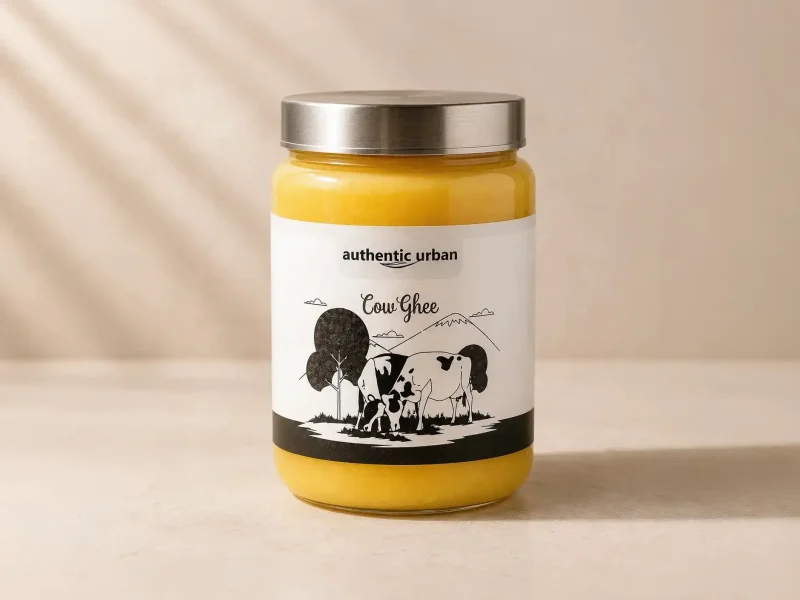 1 Litre
Gajar halwa and winter sweets
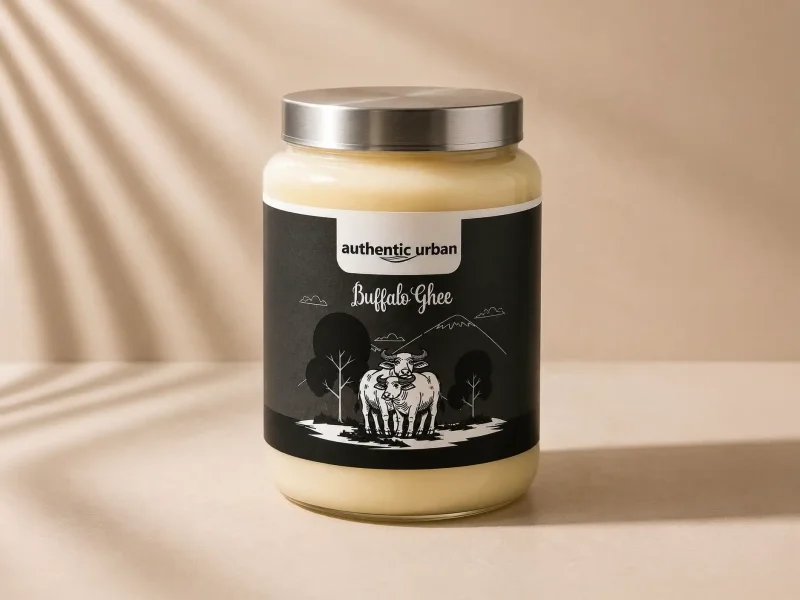 1 Litre
Each order is cooked after you place it, and the packing video is of that batch. Past order videos are on the shop.
FAQ
Does ghee block iron absorption?
We found no study showing that ghee blocks iron. Iron is not fat-soluble, so a teaspoon of ghee neither pulls it in nor holds it back in any way that has been shown. What does matter, per ICMR-NIN's 2024 guidelines, is tea: it binds iron, so skip it before, during, or soon after the meal. Vitamin C fruits such as guava, orange, and lemon help iron from plant foods absorb.
Does cooking vegetables in ghee destroy their vitamins?
Some vitamin C is lost, but beta-carotene often becomes easier to absorb. ICMR-NIN's 2024 guidelines say stir-frying keeps B vitamins because no water is used and the fat helps fat-soluble vitamins absorb, while vitamin C may be lost, more so the longer it cooks. Cook greens briefly, keep the lid off, and get vitamin C from raw fruit, amla, or a squeeze of lime at the table.
Does ghee help absorb turmeric?
Only a little, as far as human studies show. Curcumin barely dissolves in water, so blooming haldi in hot ghee helps it spread through a dish. But in the best-known human study (Shoba, 1998), 2 g of curcumin alone gave very low or undetectable blood levels, and adding 20 mg of piperine from black pepper raised absorption by 2000%. A pinch of pepper matters more than extra ghee.
Is eating ghee on an empty stomach good for nutrient absorption?
No. Fat helps a vitamin absorb only when both are in the gut at the same time, so a spoon of ghee before breakfast does nothing for the palak you eat at lunch. Put the ghee on the meal that carries the vegetables, dal, or eggs. If you like the morning spoon for other reasons, count it inside the 1 to 2 teaspoon daily limit.
Can I put ghee on a salad?
You can, but it sets into small hard drops on a cold salad and tastes waxy. Easier ways: eat the salad beside a hot dish that already has ghee, such as dal or a ghee roti, or pour a teaspoon of warm ghee tadka with jeera over a warm salad of boiled chana and carrot. The fat does its work in the gut as long as it arrives in the same meal.
Does A2 or Bilona ghee help absorption more than ordinary ghee?
No study has compared them for vitamin absorption, and the trials suggest it would not matter much: the amount of fat changed absorption more than the kind of fat. Any ghee that is only milk fat does this job. Choose a jar on taste, freshness, and how it was made, and do not pay extra for an absorption claim that no one has tested.
About the editorial team
Authentic Urban TeamBilona ghee makers, Gir Somnath, Gujarat
We are the Parmar family in Gir Somnath, Gujarat. We have made ghee here since 2016 and sold it online since 2025. We make only Bilona ghee, test it every month, and anyone is welcome to visit and watch it being made. Our Gir cows and Jafarabadi buffalo are grass-fed village animals that graze near the Gir forest, with no hormones or milk boosters. We set their milk to curd, churn it, and cook the makkhan on a wood chulha. These articles come from that kitchen and from what customers ask us on WhatsApp. We are ghee makers, not doctors.
Sources
- Butter oil, anhydrous (FDC ID 173412), SR Legacy, USDA FoodData Central. Checked 27 Sep 2026.
- Carrots, raw (FDC ID 170393), SR Legacy, USDA FoodData Central. Checked 27 Sep 2026.
- Spinach, raw (FDC ID 168462), SR Legacy, USDA FoodData Central. Checked 27 Sep 2026.
- Dietary Guidelines for Indians, 2024 (printed pp. 9, 19, 52, 54, 84), ICMR-National Institute of Nutrition. Checked 27 Sep 2026.
- Amount of fat in the diet affects bioavailability of lutein esters but not of alpha-carotene, beta-carotene, and vitamin E in humans (Roodenburg et al., 2000), American Journal of Clinical Nutrition, via Europe PMC. Checked 27 Sep 2026.
- Carotenoid bioavailability is higher from salads ingested with full-fat than with fat-reduced salad dressings (Brown et al., 2004), American Journal of Clinical Nutrition, via Europe PMC. Checked 27 Sep 2026.
- Meal triacylglycerol profile modulates postprandial absorption of carotenoids in humans (Goltz et al., 2012), Molecular Nutrition and Food Research, via Europe PMC. Checked 27 Sep 2026.
- Avocado consumption enhances human postprandial provitamin A absorption and conversion from a novel high-beta-carotene tomato sauce and from carrots (Kopec et al., 2014), Journal of Nutrition, via Europe PMC. Checked 27 Sep 2026.
- Determination of bioaccessibility of beta-carotene in vegetables by in vitro methods (Veda et al., 2006), Molecular Nutrition and Food Research, via Europe PMC. Checked 27 Sep 2026.
- Influence of food acidulants and antioxidant spices on the bioaccessibility of beta-carotene from selected vegetables (Veda et al., 2008), Journal of Agricultural and Food Chemistry, via Europe PMC. Checked 27 Sep 2026.
- Varietal differences in the bioaccessibility of beta-carotene from mango (Mangifera indica) and papaya (Carica papaya) fruits (Veda et al., 2007), Journal of Agricultural and Food Chemistry, via Europe PMC. Checked 27 Sep 2026.
- Influence of piperine on the pharmacokinetics of curcumin in animals and human volunteers (Shoba et al., 1998), Planta Medica, via Europe PMC. Checked 27 Sep 2026.