Is Ghee Good for Kidney Patients? CKD and Dialysis Guide
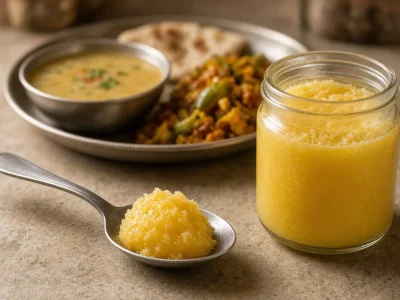
Is ghee good for kidney patients? A small, measured amount usually fits a kidney diet, because ghee has almost none of the protein, phosphorus, and potassium that kidney diets limit: USDA lists 3 mg of phosphorus in 100 g. But ghee is about 62% saturated fat, and NIDDK tells people with kidney disease to limit saturated fat. So your nephrologist or renal dietitian sets the amount, and it is never more than ICMR-NIN's 1 to 2 teaspoons a day.
Is ghee good for kidney patients?
Ghee is one of the few foods a kidney diet rarely has to fight. It carries almost no protein, phosphorus, potassium, or sodium, the four things renal diets count. The catch is the fat itself: ghee is mostly saturated fat, and people with kidney disease already carry a higher risk of heart disease. A measured spoon, set by your doctor, is the usual answer.
This page is for families cooking for someone with chronic kidney disease (CKD), someone on dialysis, or someone told their creatinine is high. It covers what is actually in a spoon of ghee, what ghee does and does not do to kidney reports, ghee versus oil, and who decides the amount. It does not give a dose for CKD, because there is no single one. NIDDK, the US kidney institute, says plainly that there is no single meal plan for everyone with CKD, and that limits grow as the disease advances.
How much protein, phosphorus, and potassium is in ghee?
Almost none. USDA FoodData Central lists ghee (butter oil) at 0.28 g of protein, 3 mg of phosphorus, 5 mg of potassium, and 2 mg of sodium per 100 g. A teaspoon is 5 g, so it carries a trace of each. The glass of milk or the katori of dal beside it is where those numbers come from.
One portion
Protein
Phosphorus
Potassium
Sodium
1 tsp ghee (5 g)
Protein: about 0 g
Phosphorus: under 1 mg
Potassium: under 1 mg
Sodium: under 1 mg
1 glass whole milk (200 g)
Protein: 6.3 g
Phosphorus: 168 mg
Potassium: 264 mg
Sodium: 86 mg
Cooked lentils, no salt (150 g)
Protein: 13.5 g
Phosphorus: 270 mg
Potassium: 554 mg
Sodium: 3 mg
USDA FoodData Central, SR Legacy: butter oil, anhydrous (173412); milk, whole, 3.25% (171265); lentils, cooked, boiled, without salt (172421). Teaspoon 5 g, per ICMR-NIN. Checked 26 September 2026. Indian dals and milk vary; your dietitian may use Indian food tables.
USDA FoodData Central, SR Legacy (173412, 171265, 172421). Ghee rounds to 0 mg (0.15 mg in a teaspoon). Checked 26 September 2026.
| Item | Value |
|---|---|
| 1 tsp ghee (5 g) | 0 mg |
| 1 glass whole milk (200 g) | 168 mg |
| Cooked lentils, no salt (150 g) | 270 mg |
The reason is how ghee is made. About 30 to 35 litres of milk go into 1 kg of our cow ghee in Gir Somnath. Most of that milk's protein and minerals stay behind in the buttermilk after churning, and in the milk solids that turn golden-brown at the bottom of the matki before we take the pot off the chulha. What goes in the jar is the fat. The full label, with calories, is on ghee nutrition facts.
Some pages say ghee is high in phosphorus and protein and must be cut for that reason. The USDA numbers above do not support that. The real reason to measure ghee with kidney disease is its saturated fat and calories, covered next.
Does ghee increase creatinine?
No. Creatinine is a waste product made when muscles work, per MedlinePlus, the US National Library of Medicine's health site, and ghee has almost no protein to add to it. A spoon of ghee is not the reason a creatinine report goes up.
MedlinePlus lists what can raise blood creatinine without a kidney problem: dehydration, muscle injury, intense exercise, and a diet high in meat. Labs sometimes ask you not to eat meat for 24 hours before the test for that reason. If your creatinine is rising over months, that is a question for the nephrologist, usually answered with eGFR, urine tests, and a look at blood pressure, sugar, and medicines. Changing the ghee will not move that report.
Protein is the part of the plate that matters here. ICMR-NIN's 2024 guidelines warn that high-protein diets may worsen kidney function in people who already have kidney disease. That is the dal, paneer, egg, and meat portion, and your dietitian sets it. Uric acid is a separate report; ghee and gout are on ghee for uric acid.
Is ghee or oil better for kidney patients?
For most of the day's cooking, a plant oil is the better base with kidney disease, and ghee is best kept to a small spoon. NIDDK says people with CKD have a higher risk of heart and blood vessel disease, and should eat unsaturated fats while limiting saturated and trans fats. It names butter among the saturated fats.
Ghee is butter fat. USDA lists it at 61.9 g of saturated fat per 100 g, about 3 g in one teaspoon. NIDDK's alternatives are oils like canola and safflower, nuts, and seeds, and it suggests cooking with a small amount of olive oil instead of butter. In an Indian kitchen, that usually means groundnut, mustard, rice bran, or sunflower oil for the sabzi, and the ghee on top where you taste it. Which oil suits which job is on ghee vs vegetable oil.
Avoid vanaspati and anything fried in reused oil: NIDDK names foods cooked with hydrogenated oil or shortening as the trans fat source. If cholesterol is also on the report, the heart side of ghee is on is ghee bad for cholesterol.
How much ghee can a kidney patient eat a day?
Your nephrologist or renal dietitian sets it, and it is never more than ICMR-NIN's limit of 1 to 2 teaspoons of ghee a day, which applies to everyone. With kidney disease the number is often lower, or folded into a total fat budget on the diet sheet.
Your situation
Ghee a day
What that means
Healthy kidneys, or kidney disease in the family
1 to 2 tsp a day at most
The ICMR-NIN limit for everyone. Count it with the day's oil.
Early CKD, no diet sheet yet
Ask at the next visit
Until then, stay inside the everyday limit and do not add ghee on top of oil.
CKD with a renal diet sheet
As the sheet says
Protein, phosphorus, potassium, salt, fluid, and fat are set together.
On dialysis
The dialysis dietitian sets it
Protein and calorie needs change on dialysis, and fluid is often limited.
CKD with heart disease, high cholesterol, or diabetes
Doctor or dietitian sets it
Saturated fat is often held lower here.
After a kidney transplant
The transplant team sets it
Diet goes with the medicines. Do not change it on your own.
Everyday limit from ICMR-NIN, Dietary Guidelines for Indians 2024. We do not give a CKD dose: your doctor or dietitian decides. Checked 26 September 2026.
Ghee is also only one part of the day's fat. ICMR-NIN puts all visible fat, ghee and oil together, at 20 to 50 g a day depending on activity, and a teaspoon of ghee is 5 g of that. Early in CKD, NIDDK says you may have few limits on what you eat. As it advances, the diet sheet gets tighter, and fat, protein, phosphorus, potassium, salt, and fluid are balanced together. Adding ghee on top of a full ration of oil breaks that balance even if the ghee itself is harmless to the kidneys. Plans for people without kidney disease are on how much ghee per day.
In our own home in Gir Somnath, each of us eats 1 to 2 teaspoons a day, on roti, dal, and khichdi. We make ghee for a living and that is still the amount. For someone in the family with kidney disease, it would be whatever their dietitian writes down.
Is ghee good for dialysis patients?
It can fit, in the amount the dialysis dietitian allows. Dialysis changes the diet in ways that make a blanket answer wrong: NIDDK says people on dialysis may need more protein, not less, because the treatment removes protein from the blood, and peritoneal dialysis removes more than hemodialysis.
Calories matter too. NIDDK notes that people with CKD may stop eating because food tastes different or they are not hungry, and that losing too much weight can make you sicker. This is the one place ghee's make-up can help: a spoon adds taste and calories with almost no potassium or phosphorus. Whether the plan uses that, and how much, is the dietitian's call, because saturated fat and heart risk still count. Fluid is often limited on dialysis too, so ghee stirred into extra glasses of milk or tea is not a free addition.
What can kidney patients eat with ghee?
Plain home food where the dal, milk, and salt are already counted. On most kidney plates the problem is what sits next to the ghee, and the fix is to change that side, not the spoon.
On the plate
With CKD
Why
Rice or roti with a little ghee and a vegetable your dietitian allows
Usually fits
The ghee adds taste and calories with almost no protein, phosphorus, or potassium.
Dal with a ghee tadka
Watch the dal
The dal carries the protein, phosphorus, and potassium. Keep the katori to your sheet; the tadka is not the problem.
Kheer, rabdi, or paneer with ghee
Ask first
Milk and paneer bring protein and phosphorus. Count the milk portion, not only the ghee.
Ghee khichdi with papad, achaar, or namkeen
Cut the salty side
ICMR-NIN lists namkeen, papads, and pickles as high-salt foods. Keep the ghee, drop the side.
Puri or pakoda deep-fried in ghee
Skip
A lot of saturated fat at once. NIDDK suggests roasting, grilling, or stir-frying over deep-frying.
Tender coconut water with the meal
Ask first
ICMR-NIN says to avoid it if you are prone to high potassium from kidney disease.
Salt deserves its own line. ICMR-NIN's 2024 guidelines say the body's sodium balance depends on kidney function, and that salty foods tax the kidneys. A teaspoon of ghee on khichdi can make the plate taste full enough that nobody reaches for the achaar, which is a good trade. Salt and blood pressure are covered in detail on is ghee good for high blood pressure. For phosphorus, NIDDK points at packaged foods with phosphate additives: look for "phos" words on the label, such as phosphoric acid or disodium phosphate. Plain ghee has none.
Who should ask the doctor before eating ghee?
Anyone with a diagnosed kidney condition should ask once and get a number, and some should not change anything without the care team. That includes people on dialysis, after a transplant, with CKD and heart disease or heart failure, and anyone given a written low-fat or renal diet.
Diabetes is the most common company for kidney disease, and it changes the fat advice too; the blood sugar side is on can diabetics eat ghee. Gallstones, pancreatitis, and other conditions where the doctor sets the fat are under who should not eat ghee.
Signs that are not a diet question
NIDDK tells people with CKD to contact their health care professional if they notice swelling in the face, arms, legs, or abdomen. Call the doctor too for much less urine than usual, breathlessness, or a new report with high potassium. Never skip dialysis or change a medicine because the diet feels healthier. No food, ghee included, treats kidney disease.
A 7-point ghee checklist for a kidney patient's kitchen
If someone at home has kidney disease, this is the routine that keeps ghee on the table without breaking the diet sheet. Screenshot it for the kitchen.
- Ask the nephrologist or dietitian for your fat number, and write it on the diet sheet.
- Measure ghee with a real teaspoon. Never above ICMR-NIN's 1 to 2 teaspoons a day.
- Count ghee and oil together. One spoon of ghee in means one spoon of oil out.
- Cook most of the day in a plant oil, and keep the ghee for the spoon you taste.
- Watch the dal, milk, and paneer portions. That is where the protein and phosphorus are.
- Drop papad, achaar, namkeen, and packet snacks before you drop the ghee.
- Buy plain ghee only: no salt, flavour, or added oil on the label.
For the wider verdict on ghee as a daily fat, see is ghee healthy.
Which ghee for a kidney patient?
With a small, fixed amount, the spoon should be plain ghee and nothing else. Read the label for salt, flavour, colour, or a blend with oil, warm a little to check it smells of toasted milk, and expect slow curd-churned ghee to set grainy. How to check a jar at home is on how to identify pure ghee, and our ranking of the cow ghee on sale is best cow ghee in India. No ghee helps the kidneys; the amount is what counts.
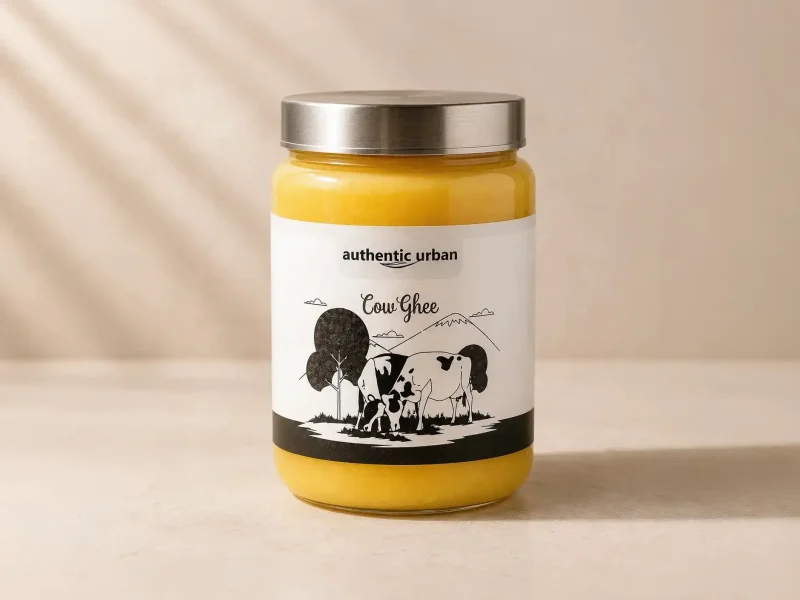
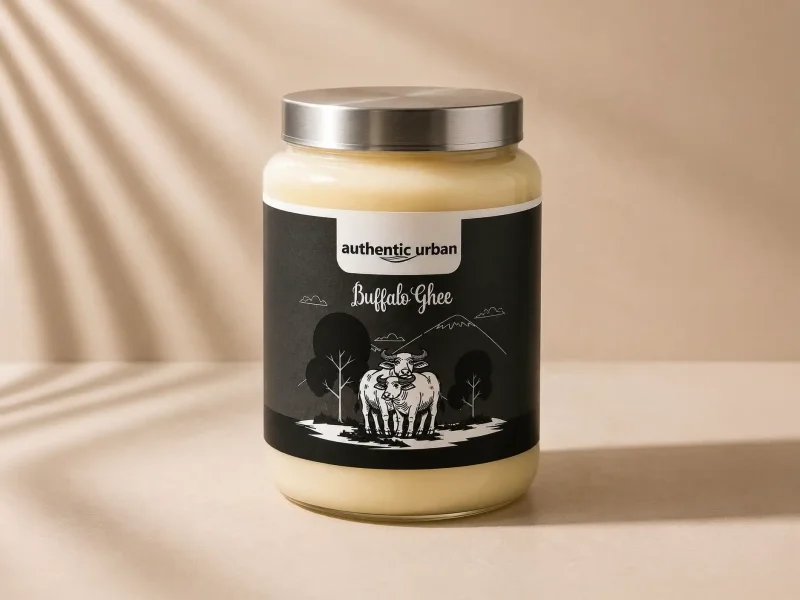
We make and sell ghee, so weigh this with that in mind. For a measured daily spoon we would pick our own A2 Gir cow ghee: grass-fed Gir milk set to curd overnight, churned, and cooked in a matki on a wood chulha, with nothing added, made after you order, with a video of your jar sent on WhatsApp. For the rare festive sweet, our Jafarabadi buffalo ghee is the richer jar. Varsha tastes every batch before it is packed, and we test every month against the FSSAI limits; the steps are on how we make ghee.
The one measured daily spoon
 1 Litre
Festive sweets, if the diet allows
 1 Litre
Each order is cooked after you place it, and the packing video is of that batch. Past order videos are on the shop.
FAQ
Is desi cow ghee better than buffalo ghee for kidney patients?
For the kidneys there is little to choose. Both are almost pure milk fat, so both carry close to no protein, phosphorus, or potassium, and both are mostly saturated fat. Cow ghee is lighter and suits a small daily spoon on rice or roti. Buffalo ghee is richer and firmer. Whichever you use, the amount your dietitian allows is what matters, and it should come out of the day's total fat.
Can ghee improve kidney function?
No. No study we could find shows kitchen ghee improving kidney function or slowing kidney disease in people. Ayurveda has medicated ghee preparations (ghrita), but those are prescribed by a practitioner and are not the same as the ghee on your dal. Kidney function is followed through blood and urine tests, and managed with medicine, blood pressure, sugar control, and the renal diet.
Is ghee good for kidney stones?
Kidney stones are a different problem from chronic kidney disease, and ghee is not a stone remedy. Home tips about ghee dissolving or flushing stones have no trial behind them. The stone type decides the diet, and only a doctor can tell you which type you have. Keep ghee at the everyday limit of 1 to 2 teaspoons, drink the water your doctor advises, and get pain or blood in the urine checked.
Can a diabetic kidney patient eat ghee?
Often a small amount, but the doctor or dietitian decides, because diabetes and kidney disease together raise the risk of heart disease. Ghee does not raise blood sugar on its own, but it adds saturated fat and calories. Keep it measured, use it on plain dal-rice or roti rather than in sweets, and let the diet sheet set the number. The diabetes side is covered on our page about diabetics and ghee.
Is butter or ghee better for a kidney patient?
Plain ghee is usually the easier of the two. Salted butter carries added salt, and salt is what kidney diets limit most often. Ghee has had the water and most milk solids cooked out, so it has almost no sodium, protein, or phosphorus. Both are saturated fat, though, so neither should be the main cooking fat. If butter is used, choose unsalted and count it like ghee.
Is A2 ghee better for kidney patients?
No study shows A2 ghee helping the kidneys more than other ghee. A2 describes a milk protein (beta-casein) from breeds like Gir, and ghee keeps only a trace of milk protein. For a kidney patient the same rules apply to any ghee: a measured amount, counted in the day's fat, and a jar with nothing added. People choose A2 Bilona ghee for its taste and how it is made.
About the editorial team
Authentic Urban TeamBilona ghee makers, Gir Somnath, Gujarat
We are the Parmar family in Gir Somnath, Gujarat. We have made ghee here since 2016 and sold it online since 2025. We make only Bilona ghee, test it every month, and anyone is welcome to visit and watch it being made. Our Gir cows and Jafarabadi buffalo are grass-fed village animals that graze near the Gir forest, with no hormones or milk boosters. We set their milk to curd, churn it, and cook the makkhan on a wood chulha. These articles come from that kitchen and from what customers ask us on WhatsApp. We are ghee makers, not doctors.
Sources
- Dietary Guidelines for Indians, 2024 (visible fat and ghee, printed p. 54; protein and renal disease, p. 60; sodium and kidney function, p. 73; tender coconut water and hyperkalemia, p. 89; high-salt foods, p. 94), ICMR-National Institute of Nutrition. Checked 26 Sep 2026.
- Healthy Eating for Adults with Chronic Kidney Disease (last reviewed January 2025), National Institute of Diabetes and Digestive and Kidney Diseases (NIDDK), NIH. Checked 26 Sep 2026.
- Creatinine Test, MedlinePlus, US National Library of Medicine. Checked 26 Sep 2026.
- Butter oil, anhydrous (FDC ID 173412), SR Legacy, USDA FoodData Central. Checked 26 Sep 2026.
- Milk, whole, 3.25% milkfat, with added vitamin D (FDC ID 171265), SR Legacy, USDA FoodData Central. Checked 26 Sep 2026.
- Lentils, mature seeds, cooked, boiled, without salt (FDC ID 172421), SR Legacy, USDA FoodData Central. Checked 26 Sep 2026.