Ghee for Vata Dosha, Pitta and Kapha: How Much to Eat
Ghee for Vata dosha is about 2 teaspoons a day, split over warm lunch and dinner. Pitta does well on 1 to 2 teaspoons, mostly at lunch, and Kapha needs the least: 1 teaspoon at lunch with pepper or ginger. All three stay inside the 1 to 2 teaspoon ghee limit in ICMR-NIN's 2024 guidelines. Dosha changes the meal and the pairing more than the amount.
How much ghee should Vata, Pitta, and Kapha eat?
Vata eats the most, about 2 teaspoons (10 g) a day. Pitta eats 1 to 2 teaspoons, mainly at lunch. Kapha eats the least, 1 teaspoon (5 g) at lunch with a pungent spice. None of the three needs more than 2 teaspoons, the ceiling ICMR-NIN's 2024 Dietary Guidelines for Indians set for ghee or butter.
Many Ayurveda sites tell Vata types to eat 1 to 2 tablespoons a day. That is three times the ICMR-NIN limit, and it usually lands on top of a normal amount of cooking oil. We make ghee for a living and we still would not eat that much. The table below keeps the Ayurveda logic (more for dry Vata, less for heavy Kapha) inside the national limit. It is for healthy adults eating home food. If you are not sure of your dosha, start with the last row.
Dosha
Ghee a day
When
Eat it with
Common mistake
Vata
A day: 2 tsp (about 10 g)
When: Split across lunch and dinner
With: Warm khichdi, soupy dal, hot roti
Avoid: Adding tablespoons on top of fried snacks
Pitta
A day: 1 to 2 tsp (5 to 10 g)
When: Mostly at lunch
With: Rice, moong dal, lauki, cucumber raita
Avoid: Ghee with a spicy pickle and fried food at one meal
Kapha
A day: 1 tsp (about 5 g)
When: Lunch only
With: Black pepper, ginger, or jeera tadka on dal
Avoid: A spoon on rice at a late, heavy dinner
Mixed or not sure
A day: 1 to 2 tsp (5 to 10 g)
When: With lunch and dinner
With: Dal, roti, sabzi
Avoid: Following a chart for a dosha you guessed from a quiz
Daily limit from ICMR-NIN Dietary Guidelines for Indians 2024, printed p. 54, which also counts 20 to 50 g of visible fat as 4 to 10 teaspoons (about 5 g a teaspoon). The split by dosha follows household Ayurveda practice and is ours, not a clinical dose. Checked 28 September 2026.
The daily spoon counts all ghee: the tadka, the smear on roti, the halwa. If your family cooks in ghee, the dosha amount is already on the plate. To work out your whole household's ghee and oil in a day, use our ghee calculator. The general rules for adults, children, and older people are on how much ghee per day.
How to use ghee for Vata dosha
Use ghee for Vata dosha on warm, moist food at regular meal times: a teaspoon on khichdi or dal at lunch and another on hot roti at dinner. Ayurveda describes Vata as dry, light, and cold, and ghee as oily, heavy, and sweet, which is why Vata is the dosha the texts give ghee most freely.
The mistake we hear most is treating that as permission for large amounts. Vata digestion is described as irregular, and a heavy dose of any fat on an empty or upset stomach can bring on the loose stools and gas it was meant to calm. Keep the spoon with food, keep meals at fixed times, and pair it with soupy dishes rather than dry snacks. Dry skin and cracked heels respond better to ghee on the skin than to an extra spoon in the mouth: see abhyanga self-massage with ghee. If gas is the main Vata complaint, the hing and jeera tadka on ghee for bloating helps more than extra ghee.
Is ghee good for Pitta dosha?
Yes. Ayurveda texts call cow ghee cooling in potency and list it as lowering Pitta, the dosha of heat and acidity, so it is the fat most often suggested for Pitta types. The amount stays at 1 to 2 teaspoons, eaten mainly at lunch, when Ayurveda says digestion is strongest.
What upsets Pitta is usually the rest of the plate. Ghee on rice with moong dal and lauki suits it. Ghee poured over a fried, sour, and chilli-heavy meal does not, and the heartburn afterwards gets blamed on the ghee. If you get burning in the chest often, read ghee for acid reflux before changing anything. Why ghee is called cooling, and why it can still feel hot, is on is ghee heat or cold for the body.
Can Kapha dosha eat ghee?
Yes, about 1 teaspoon a day, at lunch, with a pungent spice such as black pepper, dry ginger, or a jeera tadka. Ayurveda texts say ghee in general raises Kapha, the heavy, slow dosha, so Kapha types get the smallest spoon. Cutting ghee to zero is not what the texts ask for.
Timing matters more for Kapha than for the other two. A spoon on dal at 1 pm, followed by a short walk, is the classic advice. A spoon on rice at a late dinner is the one to drop. If weight is your concern, the fat in the rest of the cooking matters far more than one teaspoon of ghee; the maths is on ghee for weight loss.
Is ghee tridoshic, and does cow or buffalo ghee matter?
Cow ghee is tridoshic in the texts; ghee in general is not. A 2024 review in the Journal of Ayurveda and Integrative Medicine by Kataria and Singh collected what the classical texts say about each kind of ghee. Its table lists cow ghee as lowering all three doshas, but ghee in general as raising Kapha, and buffalo ghee as raising Pitta.
Ghee
Vata
Pitta
Kapha
Ghee in general
Lowers
Lowers
Raises
Cow ghee
Lowers
Lowers
Lowers
Buffalo ghee
Lowers
Raises
Lowers
Old ghee (purana ghrita)
Lowers
Lowers
Lowers
From Kataria and Singh, J Ayurveda Integr Med 2024, Table 1, which summarises the classical texts. Tradition, not trial results. Checked 28 September 2026.
Cow or buffalo ghee by dosha
In a kitchen, that means cow ghee for the daily spoon whatever your dosha, and especially for Pitta. Buffalo ghee suits Vata and Kapha in the texts, so it is a fair pick for winter sweets and parathas, but a Pitta type in a hot month is better on cow ghee. "Cow or buffalo for me?" is one of the questions we get most on WhatsApp, and this is the answer we give. The full comparison of taste, fat, and cooking is on cow vs buffalo ghee.
What about old ghee?
The same table lists old ghee (purana ghrita) as lowering all three doshas. That is aged ghee used in Ayurvedic treatment, not a jar left too long in your kitchen. A kitchen jar that smells sour or soapy has gone rancid and suits no dosha; five home checks are on how to identify pure ghee.
How do you know your dosha before choosing an amount?
You can get a rough idea from how your body usually behaves, but only a trained vaidya (Ayurveda practitioner) assesses prakriti, your constitution, properly. Most people are a mix of two doshas. The signs below are how Ayurveda describes each type, not a medical test.
Vata
Thin frame, dry skin and lips, hunger that comes and goes, gas, light sleep, feels the cold
Pitta
Strong hunger, feels the heat, acidity, loose stools in summer, irritable when a meal is late
Kapha
Solid frame, slow digestion, gains weight easily, mucus and colds, deep sleep, slow mornings
Two cautions. First, many of these signs are also signs of illness: acidity, loose stools, weight gain, and constant colds have medical causes a quiz cannot see. Second, your state now (vikriti, in Ayurveda) can differ from your constitution. A Kapha person with a summer acidity flare eats for Pitta that month. When a sign is new or getting worse, see a doctor before you adjust ghee around it. The wider picture of ghee in Ayurveda is on the Ayurvedic guide to ghee.
Does the amount change with the season?
The limit stays the same all year, but where the spoon goes changes. Ayurveda links Vata with the cold, dry months, Pitta with the heat, and Kapha with the damp end of winter and spring, so the dosha that needs care shifts with the weather even when your constitution does not.
We see the seasons in the ghee itself. In winter the milk is richer, we get more makkhan per litre, and the ghee sets with a fine grain. In summer it stays liquid in the jar, and in the monsoon green fodder turns cow ghee more yellow. At home we each eat 1 to 2 teaspoons a day on roti, dal, and khichdi, and a little more in winter, when adadiya pak and gond sweets come out. In May the spoon moves to lunch and to cow ghee; in December it goes on the evening roti too. That is the dosha idea in practice. Summer and winter amounts are laid out on ghee by season, and the best hour of the day on when to eat ghee.
What does modern nutrition say about eating by dosha?
Nutrition science has not tested ghee amounts by dosha. No trial has compared Vata, Pitta, and Kapha people eating different amounts of ghee, so the dosha split is tradition. What nutrition science does give is the ceiling.
ICMR-NIN's 2024 guidelines advise limiting ghee or butter to 1 to 2 teaspoons a day, and all visible fat, oil and ghee together, to 20 to 50 g a day depending on how active you are. For a sedentary adult that is about 20 g for a woman and 30 g for a man. The same guidelines group ghee and butter with saturated fat, which is why they cap ghee more tightly than oil. So the useful question is not "how much ghee does my dosha need" but "inside 2 teaspoons, which meal and which food should it go with". That is the part Ayurveda answers well.
Morning ghee on an empty stomach is a separate practice with its own risks; it is covered on ghee on an empty stomach.
Who should ask a doctor before following dosha advice?
Anyone with a condition where fat intake matters should follow their doctor's number first and use dosha only to choose the meal. That includes:
- High LDL cholesterol, heart disease, or a past heart attack or stroke.
- Gallstones or a past gallbladder attack, where a fatty meal can bring on pain.
- Diabetes, fatty liver, or kidney disease on a prescribed diet.
- Pregnancy, and children under five, whose amounts are set by age, not dosha.
- Anyone offered medicated ghee (ghrita) or a ghee cleanse. These are treatments, given by a vaidya with a plan, not kitchen doses.
The full list, with the reasons, is on who should not eat ghee. Dosha descriptions on this page are household and textbook Ayurveda, not a diagnosis, and ghee does not treat any illness.
Which ghee suits your dosha?
If you follow the texts, cow ghee is the one jar that suits all three doshas, and buffalo ghee is the richer second jar for cold-weather cooking. Either way, buy ghee you can smell and trust: toasted milk when warm, grainy when cool. How curd Bilona (curd churned into butter, then cooked) differs from cream ghee is on the Bilona method, and our ranking of the cow ghee on sale is best cow ghee in India.
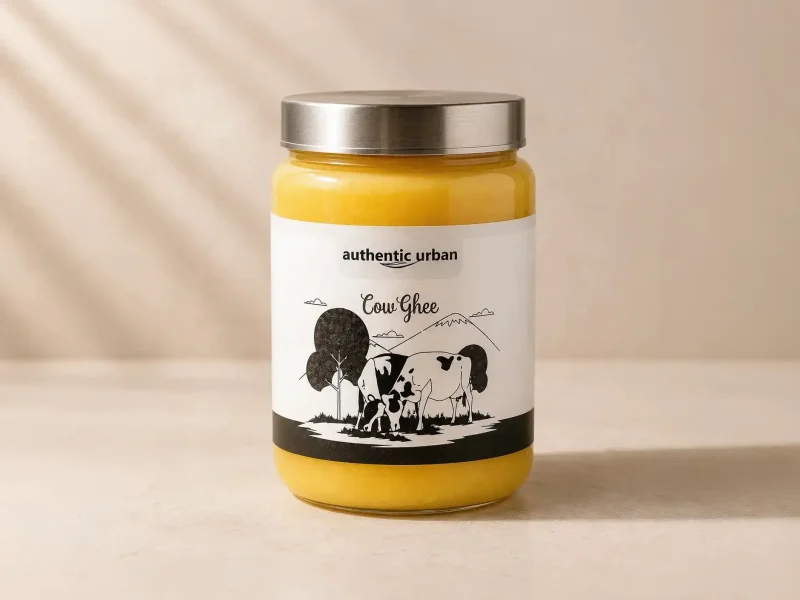
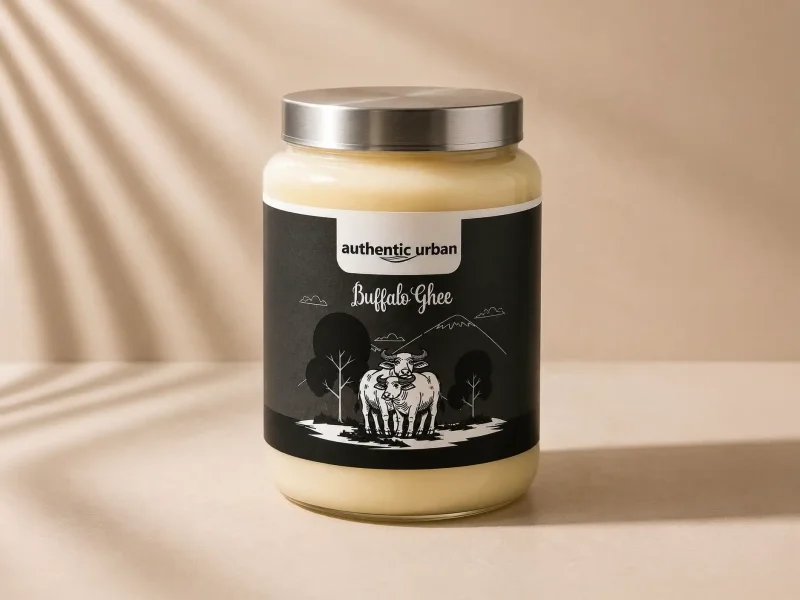
We make and sell ghee, so weigh this with that in mind. For the daily dosha spoon we would pick our own A2 Gir cow ghee: milk from grass-fed Gir cows near the Gir forest, set to curd overnight, churned, and cooked in a matki on a wood chulha in Gir Somnath. For winter sweets, our Jafarabadi buffalo ghee is the richer jar. Both are made after you order, with a video of your jar on WhatsApp, and we test every month against the FSSAI limits. The steps are on how we make ghee.
The daily spoon, for every dosha and all of summer
 1 Litre
Winter sweets and paratha for Vata and Kapha
 1 Litre
Each order is cooked after you place it, and the packing video is of that batch. Past order videos are on the shop.
FAQ
Is ghee good for Vata-Pitta or Pitta-Kapha body types?
Yes, in the same 1 to 2 teaspoons a day. For Vata-Pitta, eat it with warm but not spicy food, like rice and moong dal. For Pitta-Kapha, keep it to lunch and add jeera or a little ginger rather than chilli. Most people are a mix of two doshas, which is why a single-dosha chart often feels wrong. Watch how you feel after meals for two weeks and adjust by half a teaspoon.
Does ghee increase mucus during a cold for Kapha types?
Ayurveda texts say ghee in general raises Kapha, the dosha linked with mucus, so many families cut ghee to a teaspoon or skip the evening spoon during a cold. No trial shows that a teaspoon of ghee makes mucus worse. If you feel heavier with it, keep a small amount with warm dal at lunch. A cold with high fever or breathlessness needs a doctor, not a diet change.
Is A2 ghee better for the doshas than regular ghee?
The classical texts describe ghee by animal (cow, buffalo, goat) and by age, not by A1 or A2, a modern milk protein term. What the texts praise is cow ghee made well from curd. Ghee is nearly all fat, so the A1 or A2 protein matters more in milk than in ghee. Choose by animal, method, and a clean toasted-milk smell rather than by the A2 label alone.
Can I take ghee in warm milk at night for Vata?
Many Vata households take half to one teaspoon of ghee in a cup of warm milk at bedtime, and it counts toward the 1 to 2 teaspoon daily total. Skip it if you get reflux when lying down, if milk bloats you, or if your cholesterol is high. For Kapha types, the same cup at night is the spoon to drop first, since texts say heavy food late in the day raises Kapha.
Will ghee make a Kapha person gain weight?
Weight follows total calories, not dosha. One teaspoon of ghee is about 5 g of fat, and ICMR-NIN counts fat at 9 kcal a gram, so that is around 45 kcal. A teaspoon at lunch will not by itself add weight. Gain comes from ghee on top of fried food, sweets, and large rice portions. Kapha types who gain easily do best with one teaspoon a day, a walk after meals, and less oil in the rest of the cooking.
Can I rub ghee on the skin for Vata dryness instead of eating more?
Yes. Ayurveda uses oil massage (abhyanga) for Vata dryness, and ghee or sesame oil on dry heels, elbows, and lips is a common household use. It adds no calories, so it is a better fit than raising the daily spoon. Patch test on the inner arm first, keep it off broken or infected skin, and stop if you get a rash or pimples.
About the editorial team
Authentic Urban TeamBilona ghee makers, Gir Somnath, Gujarat
We are the Parmar family in Gir Somnath, Gujarat. We have made ghee here since 2016 and sold it online since 2025. We make only Bilona ghee, test it every month, and anyone is welcome to visit and watch it being made. Our Gir cows and Jafarabadi buffalo are grass-fed village animals that graze near the Gir forest, with no hormones or milk boosters. We set their milk to curd, churn it, and cook the makkhan on a wood chulha. These articles come from that kitchen and from what customers ask us on WhatsApp. We are ghee makers, not doctors.
Sources
- Kataria D, Singh G. Health benefits of ghee: Review of Ayurveda and modern science perspectives. J Ayurveda Integr Med 2024;15(1) (Table 1, tridosha modulation of ghee types), PubMed Central. Checked 28 Sep 2026.
- Dietary Guidelines for Indians, 2024 (fats give 9 kcal a gram, printed p. 9; ghee and butter as saturated fat, p. 10; limit ghee or butter to 1 to 2 teaspoons a day, visible fat 20 to 50 g or 4 to 10 teaspoons a day, p. 54), ICMR-National Institute of Nutrition. Checked 28 Sep 2026.