Ghee for Acne: Does It Cause Pimples? Eating vs on Face
Ghee for acne comes down to where it goes. Eating 1 to 2 teaspoons a day in normal meals has not been shown to cause pimples; the studies that link dairy to acne looked at milk, yogurt, and cheese, not ghee. On the face it is different: ghee is a heavy fat, and a layer on oily or acne-prone skin can block pores. Eat it, keep it off oily skin, and never put it on an active pimple.
Does ghee cause acne?
Eaten in normal amounts, there is no good evidence that it does. Put on an oily or acne-prone face, it can. Those are two separate questions, and most pages mix them up. A teaspoon on dal works on your body from the inside, like any fat. A layer on your forehead sits in the pores where acne starts.
Ghee is almost pure fat. USDA FoodData Central lists anhydrous butter oil (the closest entry to ghee) at 99.5 g of fat and 0.28 g of protein per 100 g. That matters for acne because the dairy suspects researchers look at are milk proteins and milk sugar, and ghee carries only a trace of either. Where that trace comes from, and what it means for a milk allergy, is on does ghee have casein.
One claim we keep seeing on other pages needs correcting: that a tablespoon of ghee has less than 1 g of saturated fat. USDA lists 61.9 g of saturated fat per 100 g, which is about 7.9 g in a 12.8 g tablespoon. Saturated fat you eat does not travel to your face and clog pores, so this is not an acne reason to worry. It is a reason to keep the portion to a spoon or two, as we explain on how much ghee per day.
Does eating ghee cause pimples? What the dairy studies found
No study has tested ghee and acne. The studies people point to are about milk, and they found a link with milk, yogurt, and cheese, not with milk fat on its own.
The largest review, a 2018 meta-analysis in Nutrients by Juhl and colleagues, pooled studies of 78,529 children, teenagers, and young adults aged 7 to 30. People who had any dairy had about 25% higher odds of acne. The link was as strong for skim milk as for whole milk, and in plain words the numbers look like this:
Food
Odds ratio
In plain words
Any dairy
1.25
About 25% higher odds of acne
Any milk
1.28
About 28% higher odds
Whole milk
1.22
About 22% higher odds
Low-fat or skim milk
1.32
About 32% higher odds
Yogurt
1.36
About 36% higher odds, from fewer studies
Cheese
1.22
About 22% higher odds, borderline
Ghee or butter
Not studied
No data either way
Pooled odds ratios from Juhl et al., Nutrients 2018. An odds ratio of 1.25 means about 25% higher odds of acne; it shows a link, not proof that the food causes it.
Two things stand out. Skim milk, with the fat taken out, was linked at least as strongly as whole milk, so fat is not what these studies point to. The American Academy of Dermatology (AAD) says the same on its diet page: women who drank 2 or more glasses of skim milk a day were 44% more likely to have acne in one study it describes. Ghee, which is the fat with the milk solids cooked out, sits at the opposite end.
The ghee, or what comes with it?
The AAD also names high-glycemic foods, the ones that raise blood sugar fast: white bread, cornflakes, puffed rice, chips, fries, pastries, sugary drinks, and white rice. That is where ghee gets blamed for what came with it. In our house in Gir Somnath, the winter sweets are where the ghee goes up: adadiya pak and gond laddoo arrive with sugar and flour in the same bite. If your pimples follow Diwali mithai, the sugar and maida are a likelier suspect than the teaspoon on your dal.
If you drink milk and get acne, cutting milk for a few weeks is a fairer test than cutting ghee. If you are lactose intolerant as well, the ghee and lactose page explains why ghee usually sits well when milk does not.
Is ghee comedogenic? Can ghee on your face clog pores?
It can on oily and acne-prone skin, so treat it as pore-clogging there. We found no lab test that gives ghee a comedogenic rating, and pages that call it "non-comedogenic" do not cite one.
What we do know: ghee is a thick fat that stays on the skin, and in a cool room it sets solid. Acne starts when oil and dead skin plug a pore. Adding a heavy layer of fat on skin that already makes plenty of oil gives a blocked pore more to work with. The AAD tells people with acne to choose products labelled "non-comedogenic" or "won't clog pores"; plain ghee carries no such test. Your skin type decides the rest:
Your skin
Ghee on the face?
Why
Oily or acne-prone face
Skip ghee on the face
A heavy fat that sits on skin already making plenty of oil. Eat it instead.
Active red or pus-filled pimples
Never on the pimple
A fat layer traps what is under it. Leave the spot alone or use what your doctor gave you.
Combination skin
Dry patches only, after a patch test
A rice-grain amount on dry cheeks can work. Keep it off the forehead, nose, and chin.
Dry, peeling skin from acne creams
Ask your dermatologist first
The dryness is often expected. A plain moisturiser they approve beats a kitchen fat.
Dry skin, few breakouts
Fine to try
The one skin type where a thin night layer usually sits well.
Small itchy bumps, all the same size
See a dermatologist
Not every bump is acne. Get it named before you put any oil on it.
Ghee as an overnight seal on the whole face, and how it compares with Vaseline, is covered on ghee slugging. If your skin is acne-prone, read that one with this table in mind.
How to use ghee on acne-prone skin, if you still want to try
Only on dry patches, only after a 3-night patch test, a rice-grain at a time, and never on a pimple.
1. Patch test
A rice-grain of plain ghee on the side of the jaw, once a night for 3 nights. Any new bump there means stop.
2. Pick the zone
Only dry, flaky patches with no active pimples. Never the forehead, nose, or chin if they get oily.
3. Use a rice-grain
Warm it between clean fingers and press it on thin. If the skin looks shiny after 10 minutes, it was too much.
4. Night only, 3 times a week
Wash it off in the morning with your usual cleanser. Use a sunscreen marked non-comedogenic by day.
5. Judge after 4 weeks
Photos in the same light on day 1 and day 28. More bumps in the ghee zone means ghee is not for your face.
Why the jaw for the patch test: the usual inner-arm test tells you about a rash, but not about pimples. The skin along your jaw has oil glands like the rest of your face, so it shows you whether ghee blocks your pores. Use plain ghee that smells of toasted milk when warmed, with nothing mixed in. Ghee that smells sour or like old paint has gone off and will irritate skin.
If you would rather wash it off, a rinse-off pack is gentler than a layer left overnight; recipes for oily skin are on ghee face pack. Shata Dhauta Ghrita, the washed ghee cream, feels lighter for some people; how it is made is on Shata Dhauta Ghrita.
Can ghee in your hair cause forehead pimples?
It can. Oil in your hair reaches your forehead, and the AAD names hair oil as a cause of forehead acne.
Plenty of Indian homes do a weekly champi with ghee or oil and sleep with it in. Overnight, the hairline and fringe press that fat against the forehead and temples, and the pillowcase spreads it to the cheeks. If your pimples sit in a line along the hairline, this is the first thing to change: tie your hair back after champi, keep it off your face, wash it out the next morning, and change the pillowcase. The AAD advises people with oily hair to shampoo more often and keep it away from the face. How to do a ghee hair mask without leaving it on for hours is on ghee hair mask and champi.
Can ghee help acne marks or scars?
It can keep healed, dry skin soft, but it does not fade marks or fill pits. The brown or dark marks left after a pimple fade slowly on their own, and sun makes them darker, so sunscreen does more for them than any fat. Deep, pitted scars need a dermatologist. What ghee can and cannot do on healed skin is on ghee for scars. The rule for this page stays the same: nothing goes on the skin until the pimple has fully healed.
What helps acne more than ghee?
A plain skin care routine, patience, and a dermatologist when it is needed. These come from the AAD's acne tips:
- Gently wash your face up to twice a day, and after sweating. Scrubbing harder does not clear acne faster.
- Do not touch, pick, or squeeze. The AAD says it makes acne take longer to clear and raises the risk of scars.
- Choose sunscreen and moisturiser labelled non-comedogenic or "won't clog pores".
- Keep oily hair and hair products off your face.
- Give any treatment time: the AAD says it may take several weeks to a few months to see a difference.
Jawline and chin acne in adult women that comes with irregular periods can be linked to PCOS, which a doctor should check. Food questions for PCOS are on ghee for PCOS. If your face is dry, red, and itchy rather than bumpy, it may be eczema, not acne; that is on ghee for eczema.
When to stop and see a dermatologist
Stop putting ghee on your face at the first new pimple in that area, and see a doctor for any of the signs below. We are ghee makers, not doctors; this is where a dermatologist takes over.
Sign
What to do
New pimples where you put the ghee
Stop putting it on your face. Keep eating it if you like; that is a different question.
Painful lumps under the skin (nodules or cysts)
See a dermatologist. These can scar, and no home fat treats them.
Acne leaving dark marks or pits
See a dermatologist early. Scars are easier to prevent than to fix.
Adult acne with irregular periods, extra facial hair, or hair thinning
See a doctor. These together can point to a hormone problem such as PCOS.
No change after following a routine for 2 to 3 months
The AAD advises partnering with a board-certified dermatologist.
If you are on a prescribed acne cream or tablet, ask the dermatologist before adding any oil or fat to your face, and do not stop a prescription because of a home remedy.
Ghee for acne: an 8-point checklist
Screenshot this and follow it for four weeks before you decide ghee is the problem.
- Eat ghee as food: our family keeps to 1 to 2 tsp each a day, on dal, roti, or khichdi.
- Watch the sugar and maida the ghee comes with: halwa, laddoo, biscuits, and sweet chai.
- Keep ghee off an oily or acne-prone face, and never on an active pimple.
- If you try it on dry patches: patch test for 3 nights, a rice-grain, 3 nights a week.
- After ghee or oil champi, keep hair off the forehead and wash it out.
- Wash your face up to twice a day, and do not pick or squeeze.
- Take a photo on day 1 and day 28, then decide.
- See a dermatologist for lumps, scars, or no change after 2 to 3 months.
Which ghee to eat if you have acne-prone skin?
For acne, the jar matters less than keeping it plain and fresh: ghee with nothing added, that smells of toasted milk and melts clear. Ghee that smells sour or burnt has gone off or was cooked too hard, and it has no place on your face. Five checks for a pure jar are on how to identify pure ghee, and what curd Bilona (curd churned by hand) means is on the Bilona method.
We make and sell ghee, so weigh this with that in mind. For the daily teaspoon we would pick our own A2 Gir cow ghee: milk from grass-fed Gir cows, set to curd overnight, churned, and cooked in a matki on a wood chulha, made after you order, with a video of your jar sent on WhatsApp. For paratha and sweets, our Jafarabadi buffalo ghee is the richer jar. We test every month against the FSSAI limits; the steps are on how we make ghee. Our ranking of the cow ghee on sale is on best cow ghee in India.
The daily teaspoon on dal and roti
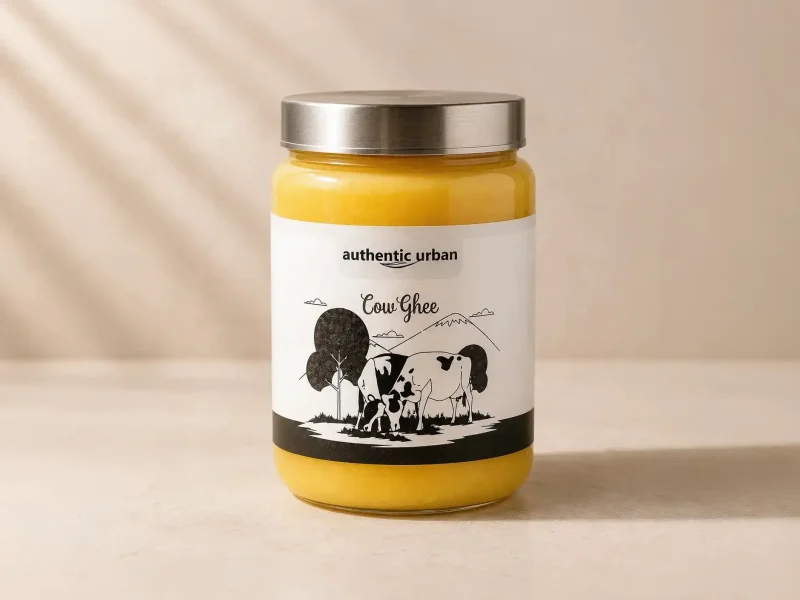 1 Litre
Paratha, halwa, and winter sweets
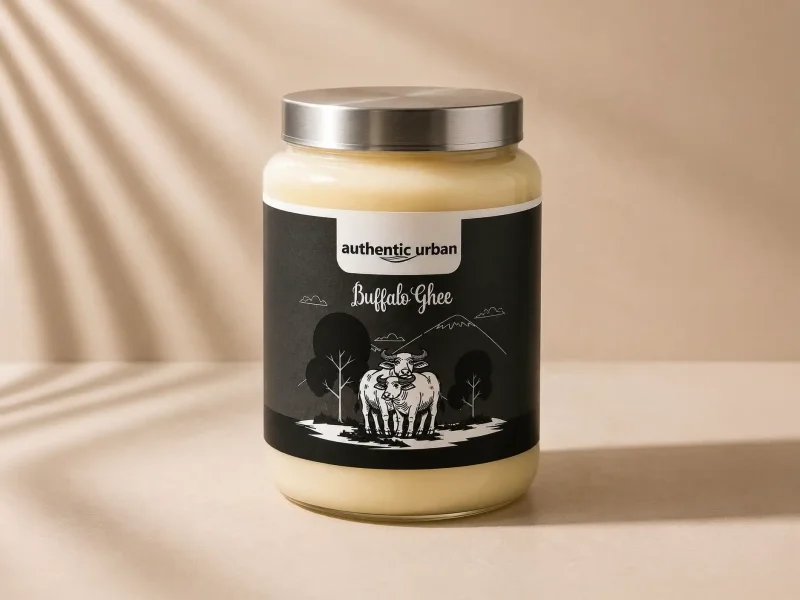 1 Litre
Each order is cooked after you place it, and the packing video is of that batch. Past order videos are on the shop.
FAQ
Is A2 ghee better for acne than regular ghee?
There is no study on A2 ghee and acne, or on any ghee and acne. A2 refers to a milk protein, beta-casein, and ghee holds only a trace of milk protein because it is almost pure fat. So the A2 label is not a reason to expect clearer skin. Choose A2 or Gir cow ghee for taste and how it is made, and judge your skin by what happens on it over four weeks.
Is buffalo ghee worse for acne than cow ghee?
No study compares them for acne. Both are almost entirely milk fat. Buffalo ghee sets firmer and whiter, and it is usually used in richer dishes like paratha, halwa, and sweets, so what it arrives with (sugar, maida, deep-fried snacks) can matter more than the ghee itself. On the face, both are heavy fats, and neither belongs on oily, acne-prone skin. Eaten in normal amounts, pick the one that suits the dish.
Can I apply ghee and turmeric on pimples?
We would not. Turmeric stains the skin yellow for a day or more and can sting broken or irritated skin, and ghee adds a fat layer over a spot that needs to stay clean. No study shows this mix clears pimples. If you want to try turmeric, a rinse-off pack that you wash away after 10 minutes is gentler than leaving a ghee paste overnight. Patch test either one on the jaw first.
Does ghee cause acne on the back or chest?
Eating ghee is no more likely to cause body acne than face acne. What often does is sweat, tight clothes, and heavy oil left on the skin. If you do a full-body oil massage (abhyanga) with ghee and get bumps on your back or chest, bathe after 20 to 30 minutes instead of leaving it on, and wear loose cotton. If body acne is painful or spreading, see a dermatologist.
Is Shata Dhauta Ghrita better than plain ghee for acne-prone skin?
Shata Dhauta Ghrita is ghee washed many times with water until it turns into a soft, light cream. Many people find it feels less greasy than plain ghee, so it is easier to use on dry patches of combination skin. It is still a fat, and there are no trials showing it treats acne. The same rules apply: patch test for three nights, keep it off active pimples, and stop if new bumps appear.
Can teenagers eat ghee if they have pimples?
Yes. A teaspoon or two of ghee in normal home meals is food, and cutting it out is unlikely to clear teenage acne. Teen acne is driven mostly by the hormones of puberty. What helps more is washing the face gently, not picking, keeping oily hair off the forehead, and less sugary food and drinks. If pimples are painful, leave marks, or upset your child, take them to a dermatologist early.
About the editorial team
Authentic Urban TeamBilona ghee makers, Gir Somnath, Gujarat
We are the Parmar family in Gir Somnath, Gujarat. We have made ghee here since 2016 and sold it online since 2025. We make only Bilona ghee, test it every month, and anyone is welcome to visit and watch it being made. Our Gir cows and Jafarabadi buffalo are grass-fed village animals that graze near the Gir forest, with no hormones or milk boosters. We set their milk to curd, churn it, and cook the makkhan on a wood chulha. These articles come from that kitchen and from what customers ask us on WhatsApp. We are ghee makers, not doctors.
Sources
- Butter oil, anhydrous (FDC ID 173412), SR Legacy, USDA FoodData Central. Checked 26 Sep 2026.
- Dairy Intake and Acne Vulgaris: A Systematic Review and Meta-Analysis of 78,529 Children, Adolescents, and Young Adults (Juhl et al., Nutrients, 2018), Nutrients. Checked 26 Sep 2026.
- Can the right diet get rid of acne?, American Academy of Dermatology. Checked 26 Sep 2026.
- Acne: Tips for managing, American Academy of Dermatology. Checked 26 Sep 2026.