Can Diabetics Eat Ghee? Blood Sugar, GI and How Much
Can diabetics eat ghee? Most people with type 2 diabetes can eat 1 to 2 teaspoons a day with meals, the same limit ICMR-NIN's 2024 guidelines set for everyone. Ghee has no carbohydrate, so it does not raise blood sugar by itself. It is about 62% saturated fat, which the same guidelines say lowers insulin sensitivity, so more is not better. On insulin, or with kidney or heart disease, your doctor sets the amount.
Is ghee good for diabetes?
Ghee is neither good nor bad for diabetes in a small amount. One or two teaspoons a day, eaten with dal or vegetables in place of other fat, fits most type 2 diabetes plans. Ghee does not lower blood sugar, and it does not treat diabetes. Past that teaspoon or two, its calories and saturated fat start working against your sugar control.
This page is for adults with type 2 diabetes or prediabetes, and for the family member who cooks for them. It answers what a person with a glucose meter asks next: does ghee raise the reading, does ghee on rice slow the spike, ghee or oil, and which report numbers to watch. Whether ghee is a good fat for people without diabetes is on is ghee healthy.
Does ghee raise blood sugar?
No, not by itself. USDA FoodData Central lists ghee at 0 g carbohydrate per 100 g, and carbohydrate is what becomes glucose in your blood. The rice, roti, or sugar next to the ghee is what raises the reading.
On the plate
Carbs
What it means for sugar
1 teaspoon ghee (5 g)
0 g
44 kcal and 3.1 g saturated fat. Nothing here turns into glucose.
2 teaspoons ghee (10 g)
0 g
88 kcal. The ICMR-NIN upper limit for a day.
1 cup cooked white rice (158 g)
44.6 g
This is what moves your sugar reading.
1 cup cooked lentils, dal (198 g)
39.8 g
15.6 g of it is fibre, which slows it down.
Worked out from USDA FoodData Central, SR Legacy, per 100 g: butter oil, anhydrous (173412); rice, white, cooked (168878); lentils, cooked (172421). Teaspoon 5 g (ICMR-NIN). Checked 26 September 2026.
So a teaspoon of ghee on your dal is not the reason a reading climbs. A second helping of rice is. The full label for ghee, vitamins included, is on ghee nutrition facts.
What is the glycemic index of ghee?
Ghee has no glycemic index. The glycemic index (GI) measures how fast the carbohydrate in a food raises blood sugar compared with glucose, and ghee has no carbohydrate to measure. Many pages say "ghee has a GI of 0", which makes it sound like a sugar-lowering food. It is better read as "not a carb food at all".
The GI that matters is the one of the food under the ghee. ICMR-NIN's 2024 guidelines print a GI table for Indian foods, and the spread is wide:
ICMR-NIN Dietary Guidelines for Indians 2024, Annexure III (printed p. 126), for 50 g of available carbohydrate. The guidelines say values are indicative and change with recipe and cooking. Checked 26 September 2026.
| Item | Value |
|---|---|
| Plain dosa | 79 |
| Rice | 78 |
| Idli sambar | 69 |
| Wheat chapati | 66 |
| Masoor dal | 42 |
| Vada sambar | 37 |
Dal sits near half of rice. That is why a bowl of dal with a teaspoon of ghee and a small portion of rice is a better diabetes plate than a big plate of rice with the same ghee.
Does ghee on rice or roti slow the sugar spike?
Fat can slow how fast a meal leaves the stomach, so the sugar rise comes later. It does not remove the sugar, and a heavy fat load can raise sugar later on. Nobody has shown that a teaspoon of ghee on rice lowers the spike in a controlled trial.
What you read online
What was tested
What it means
Ghee on rice lowers the sugar spike
Gentilcore 2006: 6 men with type 2 diabetes took 30 ml olive oil (about 6 teaspoons) before mashed potato.
The glucose rise came later and peaked later. That is a lot of fat, it was oil, and it was 6 people. Not a teaspoon-of-ghee result.
Fat only helps blood sugar
Wolpert 2013: 7 adults with type 1 diabetes ate the same dinner with 60 g or 10 g of fat.
The high-fat dinner needed more insulin and still caused more high sugar over the next hours. A big fat load can push sugar up later.
White rice with ghee does not raise sugar
Khartode 2023: 103 people with type 2 diabetes ate rice cooked with ghee in an open pot for 90 days.
The abstract reports HbA1c fell in 86% of them, but describes no comparison group, so the ghee cannot be separated from everything else that changed.
Some pages quote exact numbers for how much ghee cuts the rise after rice. We opened the rice-and-ghee study they point to, and its abstract does not give those numbers. It followed one group for 90 days with no comparison group, so the lower HbA1c could come from the diet advice, the medicines, or the extra attention.
The two controlled studies point both ways. Fat before a meal delayed the sugar rise in type 2 diabetes. A fat-heavy dinner in type 1 diabetes needed more insulin and still ran higher for hours. For a person with a meter, the lesson is simple: a teaspoon of ghee will not flatten your curve, and a rich, oily meal can keep it high late into the night.
How much ghee can a diabetic eat per day?
One to two teaspoons a day (5 to 10 g) in total, not per meal. That is the ICMR-NIN 2024 limit for ghee or butter for every adult, and diabetes gives no reason to go above it. With prediabetes or extra weight, one teaspoon is a better start.
Your situation
Ghee a day
What that means
Type 2 diabetes, normal lipids and kidneys
1 to 2 tsp a day
The ICMR-NIN limit for everyone. Take a spoon of oil out for each spoon of ghee.
Prediabetes, or trying to lose weight
1 tsp a day
Each teaspoon is about 44 kcal, and calories count when you are losing weight.
Diabetes with high LDL, high triglycerides, or fatty liver
Doctor or dietitian sets it
Often half a teaspoon to 1 teaspoon inside a fixed fat budget.
Type 1 diabetes, or on insulin
Your diabetes team sets it
Fat changes how much insulin a meal needs. Do not add ghee to "cover" a meal.
Kidney disease, or gestational diabetes
Specialist sets it
The nephrologist, or the obstetrician and dietitian, decide the fats.
Ghee is only part of the day's fat. ICMR-NIN puts all visible fat, ghee and oil together, at 20 g a day for a sedentary woman and 30 g for a sedentary man. Two teaspoons of ghee use 10 g of that, and the rest is the oil in your sabzi and curry. You can work out your home's daily ghee and oil for each person, and plans for other people in the family are on how much ghee per day.
In our own home in Gir Somnath, each of us eats 1 to 2 teaspoons a day, on roti, dal, and khichdi. We eat more only in winter sweets like adadiya pak and gond, for a few weeks of the year. For anyone with diabetes, those winter sweets are the part to cut, and the sugar and flour in them matter more than the ghee.
When and how should diabetics eat ghee?
Eat it with a meal, on the dal or vegetables, where a teaspoon gives the most taste. Keep it off the extra roti and out of the frying pan. The NIDDK plate method for diabetes fills half the plate with non-starchy vegetables, a quarter with protein, and a quarter with carbohydrate foods high in fibre; a teaspoon of ghee sits on top of that plate, not beside a second plate of rice.
Meal
Ghee or oil
Why
Dal and roti, or dal and rice
1 tsp on the hot dal, not on the roti and in the dal
The dal adds protein and fibre. The rice or roti count is what you watch.
Khichdi
1 tsp, with more dal than rice
Masoor and moong dal sit near GI 42 in the ICMR-NIN table; rice sits near 78.
Sabzi and curry base
Groundnut, mustard, or sesame oil
Most of the day's fat goes here. Keep saturated fat low.
Paratha, halwa, ladoo
Rare, small, counted
Flour and sugar spike the sugar. The ghee adds calories on top.
Puri, pakora, samosa
Skip on most days
Refined flour plus deep-fried fat: the worst of both for sugar and weight.
Morning ghee rituals, like a spoon in warm water before breakfast, have no sugar study behind them; what they do and do not do is on ghee on empty stomach. A keto or very low-carb plan changes the fat rules completely, and needs a doctor on board with diabetes medicines; see ghee on a keto diet.
Ghee or oil: which is better for diabetics?
For most of the day's cooking, a plant oil like groundnut, mustard, or sesame is the better choice with diabetes. Neither ghee nor oil has carbs, so the difference is saturated fat. ICMR-NIN's 2024 guidelines say saturated fat raises LDL cholesterol and reduces insulin sensitivity, and a teaspoon of ghee carries about 3.1 g of it.
Keep ghee for the spoon you taste, and let oil do the cooking. How ghee moves LDL, and what that means for the heart, is on ghee for cholesterol, and the oils compared job by job are on ghee vs vegetable oil. Vanaspati and Dalda are the fats to drop first; ICMR-NIN says trans fats should be avoided.
What should you watch in your reports?
Watch HbA1c for sugar and LDL for the fat. MedlinePlus (US National Library of Medicine) reads HbA1c below 5.7% as normal, 5.7% to 6.4% as prediabetes, and 6.5% or higher as diabetes, and says people with diabetes should get it at least twice a year.
Test
Range
What ghee has to do with it
HbA1c
Below 5.7% normal; 5.7% to 6.4% prediabetes; 6.5% or higher diabetes
Your 3-month sugar average. Your doctor sets your own target.
2-hour reading after a meal
Your doctor gives the target
Check the same meal with and without ghee for a week if you use a meter.
LDL and triglycerides
On your lipid report
The numbers ghee can move. Saturated fat raises LDL.
Weight and waist
Your doctor gives the target
Each extra teaspoon is about 44 kcal. A daily tablespoon adds up over a month.
HbA1c ranges from MedlinePlus, Hemoglobin A1C (HbA1c) Test. Checked 26 September 2026. Your doctor sets your own targets.
If you change your ghee, change only that for a few weeks, so the report tells you something. A ghee change and a new walk and a new medicine in the same month cannot be told apart.
Who should ask a doctor before eating ghee with diabetes?
Ask first if you take insulin or a sulfonylurea, have type 1 diabetes, are pregnant with gestational diabetes, or have kidney disease, fatty liver, high triglycerides, or heart disease. In each of these the fat on your plate is part of a plan someone else has set.
- Insulin or type 1 diabetes: fat changes how much insulin a meal needs, as the 2013 study above showed. Your diabetes team adjusts doses; do not add ghee to "cover" a meal.
- Gestational diabetes: the obstetrician and dietitian set every fat. Our amounts for pregnancy are on ghee during pregnancy.
- Kidney disease: the nephrologist or renal dietitian sets the fat; see ghee for kidney patients.
- Fatty liver: the liver plan sets the fat, and ghee has to fit inside it; see ghee for fatty liver.
Other conditions where the doctor sets the fat are listed under who should not eat ghee. This page is general information from ghee makers, not medical advice. Never stop or change a diabetes medicine because of a food.
What helps blood sugar more than ghee?
Less rice, roti, and sugar per meal, more dal and vegetables, and daily movement help blood sugar far more than any choice of fat. The NIDDK says the body turns carbohydrate into glucose, which raises blood glucose, so the carb portion is the lever.
In an Indian kitchen that means a smaller heap of rice with more dal, one roti fewer, mithai for festivals only, and a walk after dinner. ICMR-NIN's GI table puts dals and dal-based dishes well below rice and dosa, so shifting the plate toward dal does more than any spoon. Watch "sugar-free" sweets too: ICMR-NIN's 2024 guidelines warn they may be loaded with fat and refined flour, and can still have a high glycemic index.
An 8-point ghee checklist for diabetes
If you cook for someone with diabetes, this is the routine that holds up. Screenshot it for the kitchen.
- Measure ghee with a real teaspoon for two weeks. Keep it to 1 to 2 teaspoons a day unless your doctor gives a smaller number.
- Count ghee and oil together. Each spoon of ghee takes a spoon of oil out of the sabzi.
- Put the ghee on dal, khichdi, or vegetables, where you taste it, not on an extra roti.
- Watch the rice and roti count first. They carry the carbs; the ghee carries none.
- Keep sweets made with ghee for festivals, in small pieces, and count them.
- If you use a meter, test the same meal 2 hours after eating, with and without ghee.
- Get HbA1c and a lipid profile as often as your doctor says, at least twice a year for HbA1c.
- On insulin, a sulfonylurea, or a statin: show your doctor this list and use their number.
Which ghee is best for diabetics?
Any pure ghee has the same zero carbs, so the best ghee with diabetes is a pure one you measure. A jar sold as "diabetic ghee" is still ghee, with the same fat per spoon; read the label for added sugar or flavour in anything sold as a ghee spread or mix. Warm a little of a new jar: it should smell of toasted milk. The home checks are on how to identify pure ghee, and our ranking of the cow ghee on sale is best cow ghee in India.
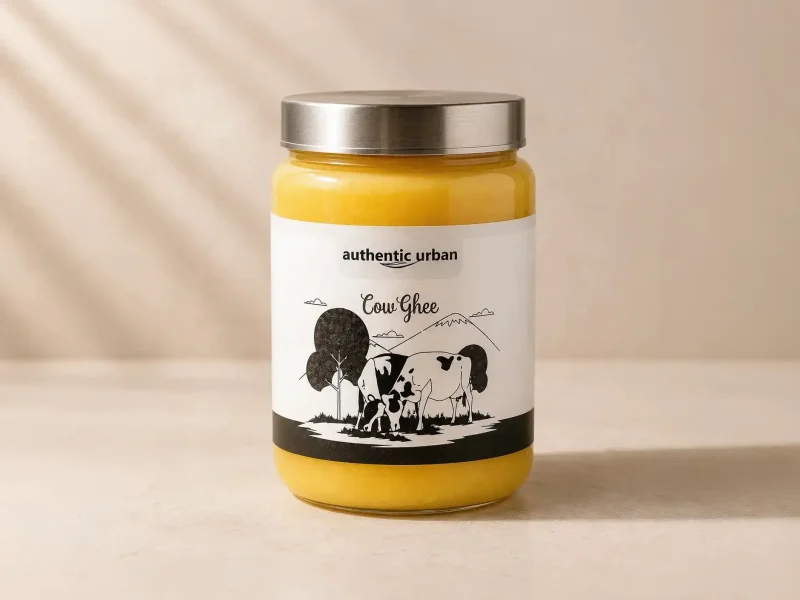
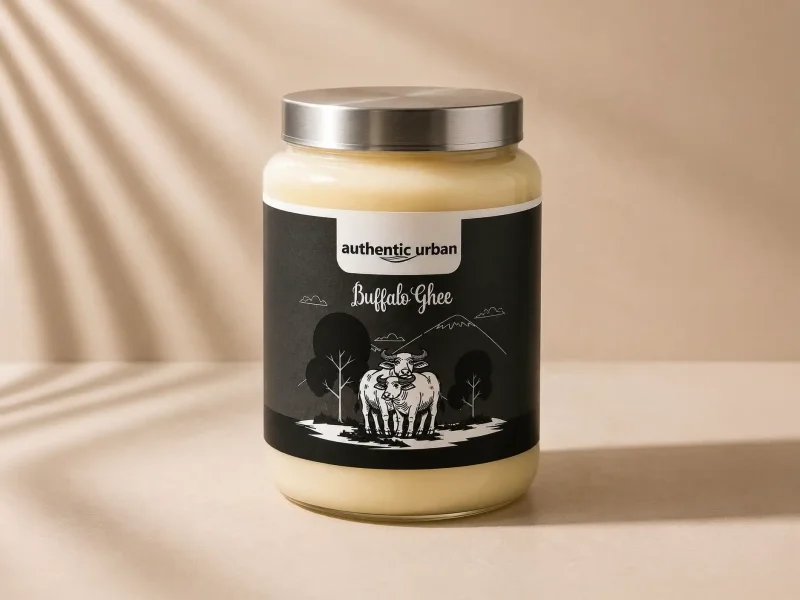
When you only get a teaspoon or two a day, we would pick our own A2 Gir cow ghee: grass-fed Gir milk set to curd overnight, churned, and cooked in a matki on a wood chulha, made after you order, with a video of your jar sent on WhatsApp. At ₹2,399 a litre, a 5 ml teaspoon costs about ₹12. Our Jafarabadi buffalo ghee is the richer jar for the rare sweet. Varsha tastes every batch before it is packed, and we test every month against the FSSAI limits; the steps are on how we make ghee.
The measured daily teaspoon
 1 Litre
The rare festival sweet
 1 Litre
Each order is cooked after you place it, and the packing video is of that batch. Past order videos are on the shop.
FAQ
Is A2 ghee better for diabetes than regular ghee?
Not for blood sugar. A2 refers to a milk protein, and ghee is almost pure fat, so A2 ghee and any other pure ghee carry the same zero carbs and similar saturated fat per spoon. We found no human study showing A2 ghee acts differently on glucose or HbA1c. People pick A2 Bilona ghee for the breed, the taste, and how it is made. With diabetes, the amount matters more than the label.
Can diabetics eat ghee on an empty stomach?
There is no study showing a spoon of ghee on an empty stomach helps blood sugar. A plain teaspoon has no carbs, so it will not raise glucose by itself, but it adds about 44 kcal to the day and counts inside your 1 to 2 teaspoon limit. If you are on insulin or a sulfonylurea, keep your meal timing the way your doctor set it. Ghee is better eaten with dal or vegetables.
Can a diabetic eat ghee sweets like ladoo or halwa?
Rarely, and in a small piece. In ladoo, halwa, and adadiya pak the sugar and flour raise blood glucose, and the ghee adds calories on top, so a sweet with ghee is not a safe sweet. ICMR-NIN's 2024 guidelines warn that sugar-free labelled foods can still be loaded with fat and refined flour. Eat a festival piece after a meal, count it, and check your reading if you use a meter.
Can I eat ghee if I take metformin?
Many people on metformin eat a small spoon of ghee, but your doctor sets the plan, not us. We know of no direct clash between ghee and metformin; the concern is total fat and weight, which affect how well your sugar is controlled. Never stop, skip, or change a diabetes medicine because of a food, and tell your doctor if you change how much fat you eat.
Is cow or buffalo ghee better for diabetes?
Neither changes blood sugar, because both have no carbs. Both are nearly pure milk fat with similar saturated fat per teaspoon, so the amount matters far more than the animal. Pick by the dish: cow ghee for the daily spoon on dal and khichdi, buffalo ghee for the rare sweet or paratha. With diabetes, keep both inside 1 to 2 teaspoons a day in total.
Does ghee cause insulin resistance?
A teaspoon on dal is not known to cause it. ICMR-NIN's 2024 guidelines say saturated fatty acids reduce insulin sensitivity, and ghee is about 62% saturated fat, so large daily amounts work against you. The calories in extra spoons also add weight over months. That is why the guideline limit of 1 to 2 teaspoons a day matters more with diabetes, not less.
About the editorial team
Authentic Urban TeamBilona ghee makers, Gir Somnath, Gujarat
We are the Parmar family in Gir Somnath, Gujarat. We have made ghee here since 2016 and sold it online since 2025. We make only Bilona ghee, test it every month, and anyone is welcome to visit and watch it being made. Our Gir cows and Jafarabadi buffalo are grass-fed village animals that graze near the Gir forest, with no hormones or milk boosters. We set their milk to curd, churn it, and cook the makkhan on a wood chulha. These articles come from that kitchen and from what customers ask us on WhatsApp. We are ghee makers, not doctors.
Sources
- Dietary Guidelines for Indians, 2024 (saturated fat and insulin sensitivity, printed p. 52; visible fat and ghee limit, p. 54; sugar-free labels, p. 109; glycemic index table, Annexure III, p. 126), ICMR-National Institute of Nutrition. Checked 26 Sep 2026.
- Butter oil, anhydrous (FDC ID 173412), SR Legacy, USDA FoodData Central. Checked 26 Sep 2026.
- Rice, white, long-grain, regular, enriched, cooked (FDC ID 168878), SR Legacy, USDA FoodData Central. Checked 26 Sep 2026.
- Lentils, mature seeds, cooked, boiled, without salt (FDC ID 172421), SR Legacy, USDA FoodData Central. Checked 26 Sep 2026.
- Gentilcore D, et al. Effects of fat on gastric emptying of and the glycemic, insulin, and incretin responses to a carbohydrate meal in type 2 diabetes. J Clin Endocrinol Metab. 2006;91(6):2062-7, PubMed. Checked 26 Sep 2026.
- Wolpert HA, et al. Dietary fat acutely increases glucose concentrations and insulin requirements in patients with type 1 diabetes. Diabetes Care. 2013;36(4):810-6, PubMed. Checked 26 Sep 2026.
- Khartode SS, et al. White rice with ghee does not increase blood sugar level in type 2 diabetes patients. J Drug Deliv Ther. 2023;13(6):30-34, Journal of Drug Delivery and Therapeutics. Checked 26 Sep 2026.
- Hemoglobin A1C (HbA1c) Test, MedlinePlus, U.S. National Library of Medicine. Checked 26 Sep 2026.
- Healthy Living with Diabetes, NIDDK, U.S. National Institutes of Health. Checked 26 Sep 2026.