Is Ghee Keto Friendly? Carbs, Macros, and How Much a Day
Is ghee keto friendly? Yes. USDA FoodData Central lists ghee at 0 g carbohydrate, and a teaspoon (5 g) gives about 44 kcal, all of it from fat. That makes ghee keto friendly, but it does not make more ghee better. Keto already runs on 70 to 80% fat, ghee is about 62% saturated fat, and ICMR-NIN's 2024 guidelines cap ghee at 1 to 2 teaspoons a day. Get the rest of your fat from food, and ask a doctor first if you take diabetes medicines.
Is ghee keto friendly?
Yes. Ghee has no carbohydrate and almost no protein, so a spoon of it will not push you out of ketosis. On a keto diet, 1 to 2 teaspoons a day on eggs, palak, or paneer is plenty. The catch is not carbs. It is calories and saturated fat, which pile up fast when a diet tells you to eat fat freely.
This page is for Indian home cooks on keto, or thinking about it, who want to know how ghee fits: how much, in which dishes, ghee or butter, and what to watch in a lipid report. Whether ghee is a healthy fat for people not on keto is on is ghee healthy.
How many carbs are in ghee?
Zero. USDA FoodData Central lists ghee (butter oil, anhydrous) at 0 g carbohydrate, 99.5 g fat, and 0.28 g protein per 100 g. Here is what that means per spoon, using ICMR-NIN's kitchen measures of 5 g for a teaspoon and 15 g for a tablespoon.
Serving
Calories
Fat
Saturated
Carbs
Protein
1 teaspoon ghee (5 g)
Calories: 44 kcal
Fat: 5.0 g
Saturated fat: 3.1 g
Carbs: 0 g
Protein: 0 g
2 teaspoons ghee (10 g)
Calories: 88 kcal
Fat: 10.0 g
Saturated fat: 6.2 g
Carbs: 0 g
Protein: 0 g
1 tablespoon ghee (15 g)
Calories: 131 kcal
Fat: 14.9 g
Saturated fat: 9.3 g
Carbs: 0 g
Protein: 0 g
Worked out from USDA FoodData Central, SR Legacy, butter oil, anhydrous (173412), per 100 g. Teaspoon 5 g and tablespoon 15 g from ICMR-NIN's Dietary Guidelines for Indians 2024. Checked 28 September 2026.
Keto pages quote different calories for a tablespoon of ghee because spoons differ in size. With the 15 g tablespoon ICMR-NIN uses for Indian kitchens, it is 131 kcal and 14.9 g of fat. The full label, vitamins included, is on ghee nutrition facts.
Does ghee have lactose or casein?
Only traces. Most of the milk sugar and milk protein leave with the water and the browned milk solids when butter is cooked into ghee, which is why the carb line reads 0 g. Traces can stay, so ghee is not safe for a milk allergy even on keto. What stays, and who should still avoid it, is on casein and whey in ghee.
How much ghee can you eat on keto per day?
One to two teaspoons a day (5 to 10 g), the same limit ICMR-NIN's 2024 guidelines set for ghee or butter for every adult. Keto does not change that. It changes where the rest of your fat comes from.
Your situation
Ghee a day
What that means
Healthy adult on keto, normal lipid report
1 to 2 tsp a day
The ICMR-NIN limit for ghee. Get the rest of the fat from eggs, paneer, nuts, and a plant oil for cooking.
Keto for weight loss
1 tsp a day, measured
Each teaspoon is 44 kcal. Keto still needs fewer calories than you burn.
LDL high before keto, or rising on it
Doctor or dietitian sets it
Often the ghee drops to half a teaspoon and a plant oil does the cooking.
Diabetes on medicines, pregnancy, kidney or liver disease
Do not start keto without your doctor
The diet itself is the question here, not the ghee. See who should ask first, below.
Harvard's Nutrition Source describes a keto diet as 70 to 80% of calories from fat. On 2,000 kcal a day that is roughly 156 to 178 g of fat. Two teaspoons of ghee are 10 g of it. So ghee was never meant to carry a keto diet; eggs, paneer, curd, nuts, and cooking oil carry it. Pages that tell you to eat 4 to 6 tablespoons of ghee a day are asking for 60 to 90 g of one very saturated fat, several times the guideline.
ICMR-NIN also caps all visible fat, ghee and oil together, at 27 to 30 g on a 2,000 kcal diet. A keto plan goes far past that on purpose, which is one more reason to keep the ghee small and let the extra fat come from whole foods. You can work out your home's daily ghee and oil for each person, and the plan for people not on keto is on how much ghee per day.
At home in Gir Somnath, each of us eats 1 to 2 teaspoons a day, on roti, dal, and khichdi. Someone on keto drops the roti and the khichdi and keeps the spoon, moved onto eggs or sabzi. The amount stays the same.
Does ghee kick you out of ketosis?
No. Ketosis depends on keeping carbohydrate low, and ghee has none. Harvard's Nutrition Source puts keto under 50 g of carbohydrate a day and says the body switches to fat as its main fuel after 3 to 4 days of that. In an Indian kitchen, the carbs that break keto hide in the chai, the curd, and a spoon of rice, not in the ghee.
Portion
Total carbs
Net carbs (minus fibre)
2 teaspoons ghee (10 g)
Total carbs: 0.0 g
Net carbs: 0.0 g
2 eggs (100 g)
Total carbs: 0.7 g
Net carbs: 0.7 g
100 g palak, raw weight
Total carbs: 3.6 g
Net carbs: 1.4 g
28 g almonds (a small handful)
Total carbs: 6.0 g
Net carbs: 2.5 g
100 g gobi, raw weight
Total carbs: 5.0 g
Net carbs: 3.0 g
100 g curd (a small katori)
Total carbs: 4.7 g
Net carbs: 4.7 g
100 g milk (two cups of chai)
Total carbs: 4.8 g
Net carbs: 4.8 g
100 g cooked rice
Total carbs: 28.2 g
Net carbs: 27.8 g
Worked out from USDA FoodData Central, SR Legacy, per 100 g: butter oil, anhydrous (173412); egg, whole, raw (171287); spinach, raw (168462); almonds (170567); cauliflower, raw (169986); yogurt, plain, whole milk (171284); milk, whole (171265); rice, white, cooked (168878). Checked 28 September 2026.
Just 100 g of cooked rice, a few spoonfuls, carries 28 g of carbohydrate, more than half of Harvard's 50 g line in one serving. Milk and curd are the quieter ones: the lactose in them counts, and four cups of chai with 50 g of milk each add almost 10 g without you noticing.
Ghee, butter, or coconut oil: which is best for keto?
All three are keto friendly, with no carbohydrate worth counting. Ghee is the easiest to cook with in an Indian kitchen and holds up in a tadka; butter burns sooner because of its milk solids and water; coconut oil is the most saturated. Per teaspoon:
1 tsp (5 g)
kcal
Fat
Saturated
Cholesterol
Best keto job
Ghee
Calories: 44
Fat: 5.0 g
Saturated fat: 3.1 g
Cholesterol: 13 mg
The spoon on dal, sabzi, eggs; a tadka
Butter
Calories: 36
Fat: 4.1 g
Saturated fat: 2.5 g
Cholesterol: 11 mg
Fine on keto; burns sooner in a hot pan
Coconut oil
Calories: 45
Fat: 5.0 g
Saturated fat: 4.1 g
Cholesterol: 0 mg
Kerala dishes; the most saturated of the three
Worked out from USDA FoodData Central, SR Legacy, per 100 g: butter oil, anhydrous (173412); butter, without salt (173430); oil, coconut (171412). Checked 28 September 2026.
You will read that ghee is rich in MCTs, the medium-chain fats sold as MCT oil for ketones. USDA lists ghee at 1.11 g of C8 and 2.5 g of C10 per 100 g, which is about 0.18 g in a teaspoon. That is too little to raise ketones in any way you would notice. If ketones are what you are after, the two are compared on ghee vs MCT oil.
For the bulk of keto cooking, the sabzi and the paneer, a plant oil like groundnut, mustard, or sesame keeps the day's saturated fat down. Keep ghee for the spoon you taste. The full comparisons are on ghee vs butter and ghee vs coconut oil.
Does keto with ghee raise cholesterol?
It can. ICMR-NIN's 2024 guidelines say saturated fatty acids raise total and LDL cholesterol and reduce insulin sensitivity, and ghee is about 62% saturated fat. Harvard's Nutrition Source warns that a keto diet built on saturated fat may have adverse effects on LDL cholesterol. The more of your keto fat comes from ghee, butter, and coconut oil, the more likely your LDL rises.
People respond very differently, so the report is the answer, not the internet. Get a lipid profile before you start and repeat it when your doctor says. If LDL climbs, the first changes are the fats: ghee and butter down to a teaspoon, a plant oil for cooking, more nuts and fewer fried paneer cubes. How ghee moves LDL is on ghee for cholesterol.
What does an Indian keto day with ghee look like?
Here is one vegetarian day that eats eggs, with 2 teaspoons of ghee in it, and the carbs counted from USDA data. It lands at about 31 g of total carbohydrate (19 g net), under Harvard's 50 g line, before the paneer. Paneer carbs vary by brand, so read the pack.
Meal
On the plate
Ghee
Carbs
Net
Morning
Tea or coffee with 50 g milk
Ghee: None
Carbs: 2.4 g
Net carbs: 2.4 g
Breakfast
Egg bhurji, 2 eggs
Ghee: 1 tsp, to cook the bhurji
Carbs: 0.7 g
Net carbs: 0.7 g
Lunch
Gobi sabzi (200 g raw) in groundnut oil, 100 g curd
Ghee: None; oil cooks the sabzi
Carbs: 14.6 g
Net carbs: 10.6 g
Snack
28 g almonds
Ghee: None
Carbs: 6.0 g
Net carbs: 2.5 g
Dinner
Palak (200 g raw) with paneer
Ghee: 1 tsp on top, for taste
Carbs: 7.3 g
Net carbs: 2.9 g
Carbs from USDA FoodData Central, SR Legacy, per 100 g, as in the table above; vegetables at raw weight. Paneer and cooking oil not counted in carbs. Checked 28 September 2026.
Notice where the ghee goes: one teaspoon to cook the eggs, one on top of the palak. The gobi is cooked in oil. For more everyday uses, from tadka to roasting, see cooking with ghee. For a hot sear, ghee is fine; for deep frying pakora or paneer, use oil, and the reasons are on ghee smoke point.
Who should not start keto with ghee, or ask a doctor first?
Ask first if you take diabetes medicines, have type 1 diabetes, are pregnant or breastfeeding, or have kidney, liver, or heart disease. For these readers the question is keto itself, and ghee is the small part of it.
- Diabetes medicines: the US FDA prescribing information for empagliflozin, one of the SGLT2 inhibitor family that also includes dapagliflozin, lists a ketogenic diet among the conditions that can bring on ketoacidosis, a dangerous build-up of acid in the blood. On insulin or a sulfonylurea, cutting carbs can drop your sugar too low. Your doctor adjusts the medicine before you change the diet. Ghee and blood sugar are covered on can diabetics eat ghee.
- Kidney or liver disease: Harvard's Nutrition Source raises the open question of whether a high-fat, moderate-protein diet is safe with conditions that change how the body handles fat and protein. Your specialist decides.
- High LDL or heart disease: a saturated-fat keto diet works against your report. Your doctor sets the fat.
- Pregnancy and breastfeeding: not a time to start a restrictive diet. The obstetrician and dietitian set the plan.
Stop and see a doctor if you feel faint, confused, or keep vomiting on keto, especially on diabetes medicines. Other conditions where the doctor sets the fat are listed under who should not eat ghee. This page is general information from ghee makers, not medical advice.
Does keto with ghee work better for weight loss?
Not in the long run, on current evidence. Harvard's Nutrition Source says that after one year, the weight-loss results of keto are not significantly different from conventional weight-loss diets. The diet you can keep eating wins.
Ghee does not burn fat on keto or off it. Every teaspoon is 44 kcal that counts, and "eat fat freely" is the usual reason a keto diet stops working after the first few weeks. If weight is the goal, the plate swaps that save ghee and oil calories are on ghee for weight loss.
A 7-point checklist for ghee on keto
Screenshot this for the kitchen.
- Count carbohydrate first. Ghee has none, so it is never the reason keto stops working.
- Measure ghee with a real teaspoon for two weeks. Keep it to 1 to 2 teaspoons a day.
- Cook the sabzi in groundnut, mustard, or sesame oil. Put the ghee on top, where you taste it.
- Count the milk in chai and the curd. Two cups of chai with 50 g milk each is almost 5 g of carbs.
- Get a lipid profile before you start keto, and again when your doctor says.
- On diabetes medicines, especially empagliflozin or dapagliflozin, talk to your doctor before cutting carbs.
- If LDL climbs, cut the ghee and butter first, not the vegetables.
Which ghee is best for keto?
Any pure ghee has the same zero carbs, so the best ghee for keto is a pure one you enjoy enough to use a teaspoon at a time. Skip anything sold as a "keto ghee" blend with added oils or flavour, and read the label for anything besides milk fat. A good jar smells of toasted milk when warmed. The home checks are on how to identify pure ghee, and our ranking of cow ghee on sale is best cow ghee in India.
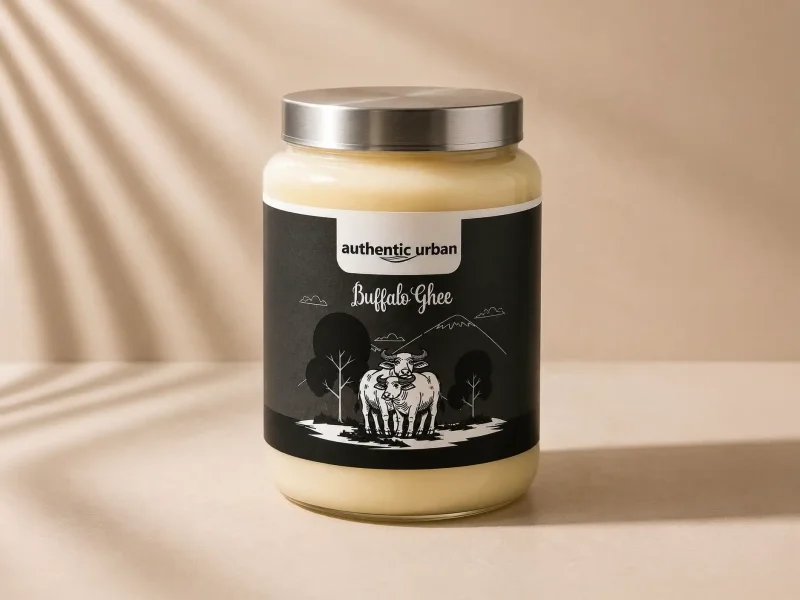
We make and sell ghee, so weigh this with that in mind. For a teaspoon or two a day we would pick our own A2 Gir cow ghee: grass-fed Gir milk set to curd overnight, churned, and cooked in a matki on a wood chulha, made after you order, with a video of your jar sent on WhatsApp. At ₹2,399 a litre, a 5 ml teaspoon costs about ₹12. Our Jafarabadi buffalo ghee is the richer jar for paneer and keto sweets. In summer it may reach you liquid, and in winter it sets grainy; both are normal. Varsha tastes every batch before it is packed, and we test every month against the FSSAI limits; the steps are on how we make ghee.
The daily spoon on eggs and palak
 1 Litre
Paneer tikka and keto sweets
 1 Litre
Each order is cooked after you place it, and the packing video is of that batch. Past order videos are on the shop.
FAQ
Is A2 or Gir cow ghee better for keto than regular ghee?
Not for ketosis. A2 describes a milk protein, and ghee is almost pure fat, so A2 ghee and any other pure ghee carry the same zero carbs and close to the same fat per spoon. Nobody has shown that A2 ghee changes ketone levels or weight loss. People choose A2 Gir cow ghee for the breed, the taste, and how it is made. On keto, the amount you eat matters far more than the label.
Cow ghee or buffalo ghee: which is better on keto?
Both have no carbohydrate, so both are keto friendly. Buffalo ghee is thicker and tastes richer, which suits a paneer tikka or a keto sweet made with almond flour. Cow ghee is lighter and more yellow, better as the daily spoon on eggs or palak. Neither changes ketosis. Keep the total of both inside 1 to 2 teaspoons a day, and let a plant oil do the rest of the cooking.
Can I put ghee in my coffee on keto?
Yes. A teaspoon of ghee blended into black coffee adds no carbohydrate, so it will not end ketosis. It does add about 44 kcal and counts inside your daily ghee limit, so a tablespoon in every cup adds up quickly. Skip the milk and sugar if you want the cup carb free. Ghee in coffee does not burn fat on its own, and on an empty stomach it can upset some people.
Does ghee help with keto flu?
No food has been shown to prevent it. Keto flu is the tired, headachy, irritable feeling some people get in the first days or weeks of cutting carbs, and Harvard's Nutrition Source lists hunger, fatigue, constipation, headaches, and brain fog among the symptoms. Extra ghee adds calories without fixing any of that. Water, enough salt unless your doctor limits it, and vegetables help more. See a doctor if you feel faint.
Can I eat roti with ghee on keto?
Not on a strict keto plan. A wheat roti is mostly carbohydrate, so two or three can take most of a day's keto carb budget, and the ghee on top changes nothing about that. Keto cooks in India swap roti for vegetables, eggs, or paneer, or make flatbread from almond or coconut flour. On a looser low-carb plan, one roti with a teaspoon of ghee at lunch can fit if you count it.
Can I do keto with ghee if I have PCOS or thyroid problems?
Only with your doctor on board. With PCOS, the diet plan, the medicines, and the blood tests belong to your doctor. With hypothyroidism, keto does not replace the tablet, and your cholesterol may already be high, which makes a ghee-heavy keto diet a poor fit. If your doctor agrees to keto, keep ghee to a teaspoon or two and ask for a lipid profile.
About the editorial team
Authentic Urban TeamBilona ghee makers, Gir Somnath, Gujarat
We are the Parmar family in Gir Somnath, Gujarat. We have made ghee here since 2016 and sold it online since 2025. We make only Bilona ghee, test it every month, and anyone is welcome to visit and watch it being made. Our Gir cows and Jafarabadi buffalo are grass-fed village animals that graze near the Gir forest, with no hormones or milk boosters. We set their milk to curd, churn it, and cook the makkhan on a wood chulha. These articles come from that kitchen and from what customers ask us on WhatsApp. We are ghee makers, not doctors.
Sources
- Dietary Guidelines for Indians, 2024 (saturated fat, LDL, and insulin sensitivity, printed p. 52; visible fat and ghee limit, p. 54; teaspoon 5 g and tablespoon 15 g, p. 111), ICMR-National Institute of Nutrition. Checked 28 Sep 2026.
- Diet Review: Ketogenic Diet for Weight Loss, The Nutrition Source, Harvard T.H. Chan School of Public Health. Checked 28 Sep 2026.
- Jardiance (empagliflozin) prescribing information, 2025, Warnings: ketoacidosis, U.S. Food and Drug Administration. Checked 28 Sep 2026.
- Butter oil, anhydrous (FDC ID 173412), SR Legacy, USDA FoodData Central. Checked 28 Sep 2026.
- Butter, without salt (FDC ID 173430), SR Legacy, USDA FoodData Central. Checked 28 Sep 2026.
- Oil, coconut (FDC ID 171412), SR Legacy, USDA FoodData Central. Checked 28 Sep 2026.
- Egg, whole, raw, fresh (FDC ID 171287), SR Legacy, USDA FoodData Central. Checked 28 Sep 2026.
- Cauliflower, raw (FDC ID 169986), SR Legacy, USDA FoodData Central. Checked 28 Sep 2026.
- Spinach, raw (FDC ID 168462), SR Legacy, USDA FoodData Central. Checked 28 Sep 2026.
- Nuts, almonds (FDC ID 170567), SR Legacy, USDA FoodData Central. Checked 28 Sep 2026.
- Milk, whole, 3.25% milkfat (FDC ID 171265), SR Legacy, USDA FoodData Central. Checked 28 Sep 2026.
- Yogurt, plain, whole milk (FDC ID 171284), SR Legacy, USDA FoodData Central. Checked 28 Sep 2026.
- Rice, white, long-grain, regular, enriched, cooked (FDC ID 168878), SR Legacy, USDA FoodData Central. Checked 28 Sep 2026.