Shata Dhauta Ghrita: Benefits and How to Make It at Home
Shata dhauta ghrita is ghee rubbed with cold water and drained about 100 times, until it turns into a white cream with no smell. Its proven benefit is texture: a 2009 lab test found the washed cream smooth and non-oily, with fat particles a third the size of plain ghee's. It is for dry skin, not for eating, and never for a fresh burn.
What is shata dhauta ghrita?
Shata dhauta ghrita means "ghee washed a hundred times" (shata is a hundred, dhauta is washed, ghrita is ghee). You spread ghee in a bowl, add a spoon of cold water, rub, pour the water off, and repeat until the golden fat turns into a white, soft cream. Ayurveda texts describe it as an external preparation for burns, wounds, scars, and dry or irritated skin, and as a base for other skin medicines.
The start is ordinary ghee, the same fat that goes on roti (what is ghee). The finish is not. The washed cream holds water, has no smell, and behaves like a moisturiser, which is why people who find a spoon of plain ghee too heavy and oily on the face reach for it. It is also a different thing from medicated ghee, where herbs are cooked into the ghee; that is covered on medicated ghee (ghritam).
What are the benefits of shata dhauta ghrita?
The benefit that holds up is a light, non-greasy cream for dry skin. The bigger claims you read (wound healing, eczema cure, anti-ageing, fairness) rest on tradition, one animal study, or nothing. Here is each common claim next to what is actually behind it.
Claim
What is behind it
Our read
Softer, non-greasy feel on skin
A 2009 lab test: golden, grainy, oily ghee turned into a white, smooth, non-oily cream, with fat particles about a third the size.
True. This is the real reason to make it.
Moisturises dry skin
It holds more water than ghee and sits on skin like a rich cream. We found no published human trial against an ordinary moisturiser.
Likely helps dry patches, the way any rich cream does.
Heals burns and wounds
One 2015 study on rats, 6 to a group: wounds shrank faster in the first days, then fell behind. By day 24 they had closed 69%, against 87% with no treatment.
Not proven in people. Never on a fresh burn.
Treats eczema or psoriasis
Ayurveda texts and practitioners use it. No trial on either condition that we could find.
Can be one of your moisturisers if your doctor agrees. Not a treatment.
Removes wrinkles, tan, or pigmentation; builds collagen
Shop and blog pages. No study we could find.
No.
Full of vitamins A, D, E, and K
No study measured vitamins in the washed cream. The 2009 test found most fatty acids fell after washing.
Do not count on it.
Most pages on shata dhauta ghrita list twenty benefits and cite none. We looked for the studies behind them and found two small Indian papers that measure anything: a 2009 lab test of what washing does to cow ghee, and a 2015 burn study on rats. Both are listed at the end of this page. Neither tested the cream on people's faces. That does not make it useless; a thick, bland moisturiser is a fine thing to have for dry winter skin. It means the rest of the list is tradition, and should be read that way.
What do 100 washes change in the ghee?
Washing turns an oily, grainy fat into a smooth cream by breaking it into smaller particles and working water into it. In the 2009 study (Deshpande and colleagues, Indian Journal of Traditional Knowledge) the team washed 2.5 kg of cow ghee in a copper vessel with 1.5 litres of water each time, rubbing for 5 to 8 minutes a wash, a hundred times over. Then they tested it against the ghee they started with.
Test
Cow ghee
After 100 washes
Colour
Golden yellow
White
Smell
Pleasant, ghee smell
No smell
Texture
Grainy, oily
Smooth, non-oily, even
Water (moisture)
0.27%
0.8%
Fat particle size
179 microns
60 microns
Copper
0.13 ppm
1.2 ppm
pH
4.6
5.9
Acid value (free fatty acids)
0.84
0.11
Deshpande et al., Indian Journal of Traditional Knowledge, 2009, Table 1.
The authors explain it as an emulsion that slowly flips: at first a little water is held in a lot of fat, and after enough washes the fat sits as tiny droplets in water, the way a cold cream is built. They also suggest that some of the fat is split by the water, helped by copper from the bowl, and washed away with each drain. Copper in the cream rose about nine times, to 1.2 parts per million, which is a trace. The paper ends by saying the cream still needs testing for stability and for how well it works on skin.
Why washed ghee is no longer food
The water is the point, and it is also the catch. At our chulha, most of the 45 to 90 minutes that makkhan (the butter churned from curd) spends in the matki is about driving its water out: ghee is only ghee once that water has boiled away. A batch that keeps moisture turns cloudy and spoils fast, and we never pack one. FSSAI's standard for ghee allows at most 0.5% moisture. The 2009 washed cream had 0.8%, and the washed ghee in the 2015 burn study was 49% water. Batch to batch, the water swings that widely.
So shata dhauta ghrita does not meet the ghee standard any more, and it does not keep like ghee. Do not cook with it or put it in dal. Our Gir cow ghee cools grainy in the jar; the lab paper describes that same granular texture disappearing after washing, which is what you are working towards, on skin only.
How to make shata dhauta ghrita at home
Rub 50 g of cold-softened ghee with a teaspoon of cold water, drain, and repeat about 100 times until it is white and smooth; plan 2 to 3 hours. Start with ghee you would happily eat. Washing does not fix a jar that smells stale, waxy, or burnt, so check it first with how to identify pure ghee.
50 g ghee
For a first batch. Fresh, with a clean nutty smell. A stale or burnt jar will not wash into a good cream.
Cold water
1 to 2 tsp a wash, boiled and cooled, or filtered. Warm water melts the fat and you start again.
A wide bowl
Copper is the classical choice. Steel or glass also work (see below).
Dry tools
Flat spoon or clean palm, a dry spatula, and a small glass jar washed and dried in the sun or oven.
Time
2 to 3 hours for 50 g: about 100 washes of a minute or so each, plus draining.
- Soften, do not melt. Leave the ghee out until it spreads like soft butter. Melted ghee will not take the water.
- Spread it thin. A mound washes on the outside and stays oily in the middle. Flatten it over the base and sides of the bowl.
- Splash and rub. 1 to 2 tsp of cold water. Rub in circles with your palm or the back of a flat spoon for about a minute, until the water turns milky.
- Drain every drop. Tilt the bowl, scrape the sides, wait a few seconds, tilt again. Water left behind is what makes a batch sour in a week.
- Repeat. The first 20 or so washes look oily and yellow; that is normal. Somewhere past the halfway mark it turns matte and pale. Near the end it looks like whipped cream.
- Test, then jar it. A pea-size on the back of your hand should spread easily and leave no oily shine after a minute. Move it to the dry jar with a dry spatula, write the date on it, and put it in the fridge the same day.
A hundred is the classical name, not a finish line. Stop when the cream is white, smooth, and smell-free, whether that takes 80 washes or 120. Do not use a mixer: the blades warm the fat and it turns greasy instead of creamy. A hot kitchen in May makes this much harder, so wash early in the morning or keep the bowl over a tray of cold water.
Do you need a copper bowl?
No, but it is the classical vessel, and it is what the lab study used. Copper rubbed with water does pass a trace into the cream (0.13 to 1.2 ppm in that test), and the authors think it helps the fat split. Nobody has compared a copper batch with a steel or glass one, in the lab or on skin. Plenty of home cooks wash in steel or glass; judge the batch by its texture, not the vessel, and use what you have, as long as it is clean and dry.
If the batch goes wrong
Still greasy at 60 washes
Drain longer. Cut the water to 1 tsp. Rub slower so the fat stays cool.
Runny or soupy
Too much water. Skip a splash, rub two cycles dry, then go back to a teaspoon.
Still yellow
Keep going. A finished cream is white or off-white, not the colour you scooped.
Sour or sharp smell
Throw it. Start again with fresh ghee and dried tools. Do not perfume over it.
How to use shata dhauta ghrita on the face and skin
Use a pea-size amount on clean, slightly damp skin at night, 2 or 3 nights a week to begin with. Press it in rather than rubbing it to a shine. More cream does not work faster; it only ends up on the pillow. Before the face, do a patch test: a rice-grain behind the ear or on the inner arm, left for 24 hours.
Dry cheeks, elbows, knees
Pea-size, pressed onto damp skin at night
Skip: A thick coat over the whole face
Lips
Rice-grain, like a balm
Skip: A white smear on the lip line
Under the eyes
Rice-grain, only if it does not sting
Skip: Anything on the lid or inside the lash line
Cracked heels
Plain ghee works as well and costs no time
Skip: Wasting a washed batch on feet
Acne-prone face
Patch test, then a dry corner only
Skip: All-over use on oily or bumpy skin
Rash, pus, open wound, fresh burn
A doctor
Skip: Any home cream as treatment
Lips need less than you think; more on ghee for lips. If breakouts are your main worry, read does ghee cause acne before you use any fat as a night cream. If you want a heavier overnight seal on very dry skin, plain ghee does that job better, as explained on ghee slugging. Keep the cream away from the diya, chulha, and agarbatti while it is on your skin or clothes. The NHS warns that emollients soaked into clothes and bedding catch fire more easily, and we treat any fat cream the same way.
Can you use shata dhauta ghrita for eczema, psoriasis, or burns?
For eczema and psoriasis, only as one of your moisturisers, alongside the treatment your doctor gave you. For burns, never on a fresh one. Ghee is food, and a washed cream made from it is a moisturiser, not a medicine; we make ghee, and these are questions for a dermatologist.
Eczema. The NHS says the base of eczema care is moisturisers (emollients) used at least twice a day, and kept up even when the skin clears. A plain, smell-free cream can be one of them if it suits you. Keep using any steroid or other cream you have been prescribed; do not stop it and switch to washed ghee. Take a clean spoonful out each time instead of dipping fingers in the jar, which the NHS also advises for any emollient pot. Eating and applying plain ghee with eczema is covered on ghee for eczema.
Psoriasis. A cream can soften dry, scaly plaques so they feel less tight. It does not change the disease underneath. Soften scales, never pick or force them off, and follow your dermatologist's plan; more on ghee for psoriasis.
Burns. The NHS first aid is 20 minutes under cool running water, within 3 hours, and no creams, oils, or butter on a burn or scald. The rat study behind the "heals burns" claim found washed ghee helped wounds shrink in the first days and then slowed them: by day 24 the treated wounds had closed 69%, against 87% with no treatment and 90% with the hospital cream silver sulfadiazine. Six rats a group is not a reason to use it on a person. Once a small burn has fully closed and feels dry, a thin layer is fine; the stages are on ghee for burns and sunburn, and old marks on ghee for scars.
Who should not use shata dhauta ghrita, and when to stop?
Skip it on broken, burnt, or infected skin, and ask a doctor first for babies and anyone with a milk allergy. Cows' milk is one of the most common food allergies, the NHS notes, and a cream made from milk fat is not the place to test it. Stop on any of these:
- A fresh burn of any size. Cool water first; creams wait (below).
- Broken, weeping, crusted, or infected skin, or a rash with fever.
- A milk allergy. Ask your doctor before any dairy fat goes on skin.
- Babies and young children, unless their doctor agrees.
- Stinging, redness, itching, or new bumps where you put it: stop that day.
- Your skin is worse after two weeks, or no better.
Newborn and baby skin care with ghee is a separate question with its own rules, on ghee for baby massage. This page is general information, not medical advice.
How long does shata dhauta ghrita last?
A home batch belongs in the fridge, and we would use it within 2 to 4 weeks. Cooking ghee keeps for months in a cupboard because it is dry; a sealed jar of ours keeps 9 to 12 months at room temperature, and how to store an open one is on ghee storage and shelf life. The washed cream has water in it, and water is where spoilage starts, so treat it like a fresh dairy product, not a pantry jar.
Throw it out if it smells sour or sharp, if water pools in pockets, or if the colour turns patchy. Do not stir it back together. Small batches of 50 g are easier to finish while they are fresh than one big jar.
Shata dhauta ghrita checklist
Screenshot this before you start washing.
- Start with 50 g of fresh cow ghee you would eat.
- Cold water, 1 to 2 tsp a wash. Drain every drop.
- Stop at white and smooth, not at a number.
- Dry spatula, small clean jar, fridge the same day.
- Patch test 24 hours before the face.
- Pea-size on damp skin. Rice-grain for lips.
- Sour smell or watery pockets: throw it.
- Fresh burn, open wound, infected rash: no cream, see a doctor.
Which ghee to use for shata dhauta ghrita?
Use cow ghee: it is what the texts name and what both studies washed, and its golden colour turning white is how you know the batch is done. Pick one that smells of toasted milk when warmed, with no stale or waxy note, because you are going to put it on your face. Curd-churned ghee made by the Bilona method is the kind the classical recipes assume. Our ranking of the cow ghee on sale is on best cow ghee in India, and the jars ranked for face and hair use are on best ghee for skin and hair.
The jar we would wash is our own A2 Gir cow ghee: milk from grass-fed Gir cows near the Gir forest, set to curd overnight, churned by hand, and cooked in Gir Somnath after you order, with a video of your jar sent on WhatsApp. Buy the 250 ml jar, wash 50 g, and eat the rest. For paratha and sweets, our Jafarabadi buffalo ghee is the richer jar. We test every month against the FSSAI limits; the steps are on how we make ghee.
The jar to wash, and the daily teaspoon
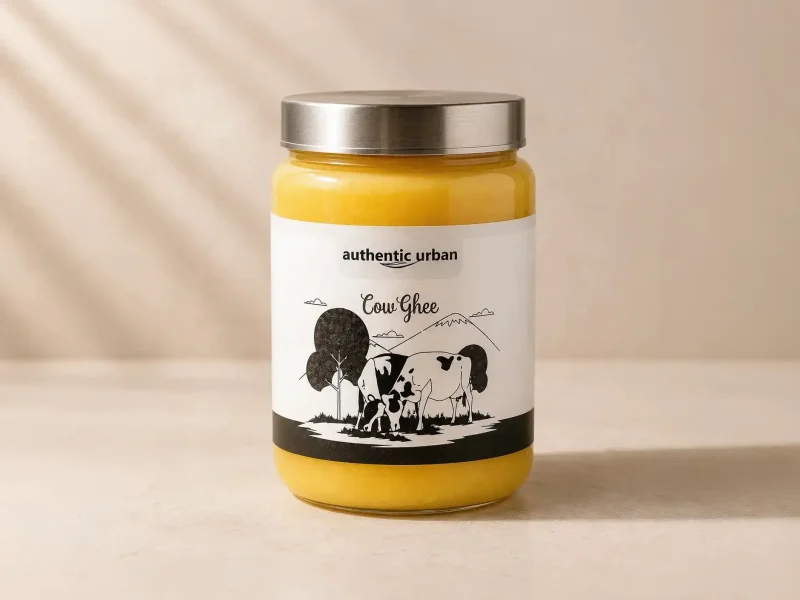 1 Litre
Paratha, halwa, and winter sweets
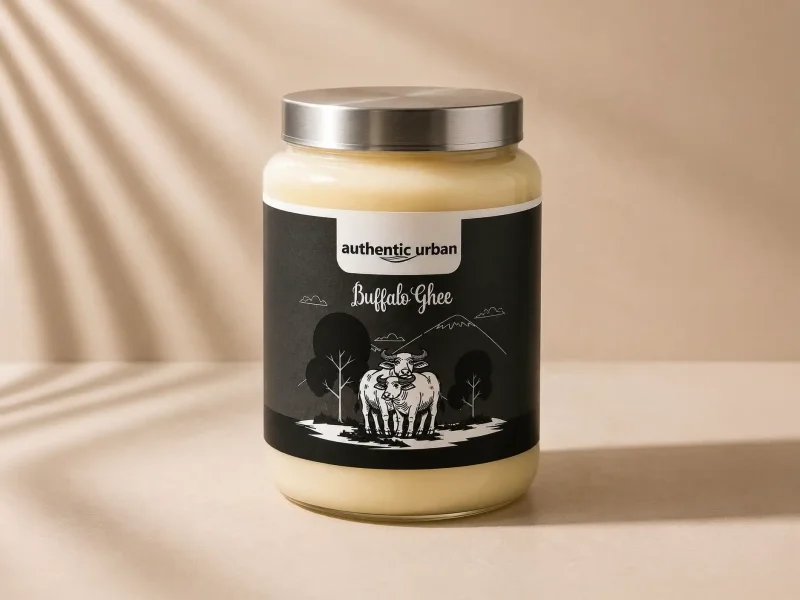 1 Litre
Each order is cooked after you place it, and the packing video is of that batch. Past order videos are on the shop.
FAQ
Can I buy ready-made shata dhauta ghrita instead of making it?
Yes. Ayurvedic pharmacies and skincare brands sell it as a cream. Read the ingredient list: it should say ghee and water, or name the herbs if it is a herbal version. Look for a manufacturing and expiry date, and ask how it should be stored. Added perfume or essential oils are one more thing that can irritate skin, so patch test a bought jar just as you would your own batch.
What is sahasra dhauta ghrita?
Ghee washed a thousand times instead of a hundred, by the same method. In the 2015 rat burn study it held less water than the hundred-times cream (29% against 49%) and stayed on the skin longer, but it did not help wounds heal better than plain ghee. For a home batch, a thousand washes adds many hours for no clear gain.
Can I make shata dhauta ghrita with buffalo ghee?
You can wash any ghee, but the classical texts and the lab studies we read all used cow ghee. Buffalo ghee is whiter to begin with, so you lose the colour change that tells you when to stop, and nobody has tested how it behaves after washing. We would make the skin cream with cow ghee and keep buffalo ghee for paratha and sweets.
Can I add rose water, aloe vera, or turmeric to it?
Keep the first batch plain. Every extra ingredient is one more thing your skin can react to, and one more thing that can spoil in a cream that already holds water. Some recipes use rose water for the last few washes; if you try that, patch test again. Turmeric stains skin and cloth yellow. Essential oils are best left out on the face.
Does shata dhauta ghrita lighten skin or remove pigmentation?
No study shows that. Skin looks brighter for a while when it is well moisturised, and that is all a cream like this can do. Tan fades on its own when the skin is kept out of the sun, and dark patches that stay for months (melasma, marks after acne) need a dermatologist and daily sunscreen. Pages that promise fairness from washed ghee are selling, not reporting a result.
How is shata dhauta ghrita different from ghee slugging?
Slugging means a thin layer of plain, unwashed ghee over the face at night as a seal, the way people use petroleum jelly. Shata dhauta ghrita is a washed cream used in pea-size amounts on dry patches. The washed cream feels lighter and has no smell, while plain ghee seals in more but can feel heavy and stain the pillow. Neither suits oily, acne-prone skin as an all-over layer.
About the editorial team
Authentic Urban TeamBilona ghee makers, Gir Somnath, Gujarat
We are the Parmar family in Gir Somnath, Gujarat. We have made ghee here since 2016 and sold it online since 2025. We make only Bilona ghee, test it every month, and anyone is welcome to visit and watch it being made. Our Gir cows and Jafarabadi buffalo are grass-fed village animals that graze near the Gir forest, with no hormones or milk boosters. We set their milk to curd, churn it, and cook the makkhan on a wood chulha. These articles come from that kitchen and from what customers ask us on WhatsApp. We are ghee makers, not doctors.
Sources
- Shata-dhauta-ghrita: a case study (Deshpande S, Deshpande A, Tupkari S, Agnihotri A), Indian Journal of Traditional Knowledge 8(3), July 2009, pp. 387-391, CSIR-NIScPR. Checked 27 Sep 2026.
- Burn wound healing potential of Plain ghrita, Shatadhauta ghrita and Sahasradhauta ghrita on wistar albino rats (Babu B et al.), Indian Journal of Traditional Knowledge 14(2), April 2015, pp. 273-278, CSIR-NIScPR. Checked 27 Sep 2026.
- Food Safety and Standards (Food Products Standards and Food Additives) Regulations, Chapter 2.1: Dairy products and analogues, version 01.09.2023 (ghee, p. 27), FSSAI. Checked 27 Sep 2026.
- Burns and scalds, NHS. Checked 27 Sep 2026.
- Atopic eczema: treatment, NHS. Checked 27 Sep 2026.
- Food allergy, NHS. Checked 27 Sep 2026.