Ghee Slugging vs Vaseline: Which Works, and How to Do It
Ghee slugging means pressing a pea-size layer of plain ghee over clean, damp skin as the last step at night, so less water escapes while you sleep. It suits dry, calm skin with no pimples. Vaseline seals better, so it is the stronger pick for cracked or very dry skin, and acne-prone faces should skip both. Patch test on the jaw first.
Is ghee slugging better than Vaseline?
No, not as a seal. A 2022 review in the dermatology journal Cutis says petrolatum (the jelly in Vaseline) cuts the water skin loses by about 98%, while other oil-based moisturisers manage 20 to 30%. Nobody has measured ghee itself this way, but it is a food fat like those oils, not petrolatum, so expect a seal closer to theirs. It still softens dry skin overnight, and some people simply prefer it.
So the choice depends on the job. For skin that is cracked, peeling, or raw after a harsh product, petroleum jelly does more. For skin that is only dry and tight, and where you like a food fat you already keep at home, ghee is a fair thing to try. For a face that gets pimples, neither belongs on the whole face: the American Academy of Dermatology (AAD) says to avoid petroleum jelly on the face if you are acne-prone, and ghee is no gentler. Why ghee can clog pores is covered on ghee for acne.
"Slugging" is a social media name for an old habit: the last, thickest layer of the night routine, which dermatologists have long used with petroleum jelly. Indian homes have rubbed ghee on dry cheeks, lips, and heels for generations. The trend only gave it a name. This page is about the whole face at night. A rinse-off pack is on ghee face pack, and lips alone are on ghee for lips.
Ghee vs Vaseline for slugging
| Factor | Ghee | Petroleum jelly (Vaseline) | Winner |
|---|---|---|---|
| How well it seals in water | Like other oils; a 2022 Cutis review puts oil-based moisturisers other than petrolatum at 20 to 30% less water loss | The strongest seal: about 98% less water loss in the same review | Petroleum jelly (Vaseline) ✓ |
| Very dry or cracked skin | Softens mild dryness | Better for a damaged barrier | Petroleum jelly (Vaseline) ✓ |
| Acne-prone face | Skip on the whole face | The AAD says avoid it on the face if you are acne-prone | Tie |
| Smell | Mild toasted-milk smell | None | Petroleum jelly (Vaseline) ✓ |
| Goes bad | Yes, if water or dirty fingers get in the jar | Does not turn sour like a food fat | Petroleum jelly (Vaseline) ✓ |
| Already in the kitchen, and safe if a little reaches the mouth | Yes, it is food | No, not food | Ghee ✓ |
| Feel on the face | Softer, melts at skin warmth | Thick and sticky | Ghee ✓ |
Verdict: Use petroleum jelly when the skin is cracked, raw, or very dry, or when you want no smell. Use ghee on dry, calm skin with no pimples when you prefer a food fat. On an acne-prone face, use neither over the whole face.
How to do ghee slugging, step by step
Wash, leave the skin damp, press on a pea-size amount of warmed ghee over the dry areas, and sleep on an old pillow cover. The whole routine takes about five minutes.
1. Wash with a gentle cleanser
Take off sunscreen and makeup first. Sealing a layer of dirt or sweat under ghee is how slugging goes wrong.
2. Leave the skin damp
Pat with a towel, do not rub dry. The ghee seals in the water that is already there.
3. Put on your usual light moisturiser
Optional on oily-normal skin, useful on dry skin. Skip actives on slugging nights (see below).
4. Take a pea-size amount of ghee
Use a clean, dry spoon from a small face pot, never a finger dipped in the kitchen jar.
5. Warm it between your fingertips
A few seconds is enough for it to melt clear. Never heat ghee on the stove for your face.
6. Press it onto the dry areas
Cheeks, around the mouth, the sides of the nose. Pat, do not rub. Leave out the T-zone if it gets oily, and keep it away from the eyes.
7. Wait 20 minutes, then sleep
Use an old pillow cover. In the morning, wash with a gentle cleanser and lukewarm water.
Patch test first
Before the whole face, press a rice-grain of ghee on one spot along the jaw line for two nights in a row. If there is no itch, redness, or new bump by the third morning, move to the cheeks. The jaw is where a heavy fat most often shows up as small pimples, so it is a fair early warning.
Should you apply ghee on wet or dry skin?
On damp skin. Ghee, like petroleum jelly, does not add water to the skin; it slows the loss of the water that is already there. The AAD's advice for both dry skin and petroleum jelly is the same: put it on while the skin is still damp.
Several pages that rank for this search say the opposite, that ghee must go on bone-dry skin because water "stops it absorbing". That has it backwards. Slugging is not about absorbing. On dry skin, the ghee seals in very little. Pat the face with a towel so no drops run, leave it slightly damp, and press the ghee on within a minute or two.
The same pages suggest half a teaspoon for the face. That is several times a pea-size amount, and it is the usual reason people wake up to a greasy pillow and a few new bumps. Start small; a dry patch can take a second pea later.
Which skin types can do ghee slugging?
Dry, calm skin with no pimples is the best fit, and oily or acne-prone faces should skip it. The nights a week below are a cautious start, not a rule; your skin's response in the first two weeks decides the rest.
Dry, tight, or flaky, no pimples
Good fit
Start 2 nights a week. Go to every other night if the skin stays calm after 2 weeks.
Normal
Try on dry patches only
Cheeks and around the mouth, 1 or 2 nights a week, mainly in winter.
Combination
Dry areas only
Cheeks only. Leave the forehead, nose, and chin bare.
Oily
Not needed
A light gel moisturiser does the job. Ghee adds oil the skin already makes.
Acne-prone, or pimples now
Skip on the face
The AAD warns even petroleum jelly can cause breakouts on acne-prone faces. Ghee is no safer.
Eczema or rosacea on the face
Ask your doctor first
A plain pharmacy emollient is the usual start. Ghee as an eczema moisturiser has its own page.
If your face has eczema or rosacea, read ghee for eczema before you try it, and ask the doctor treating it. Under the eyes, the skin is thinner and a rice-grain is plenty; that is covered on ghee for dark circles. Hands and cracked heels can take a thicker layer, as on ghee for cracked heels.
Will ghee slugging stain your pillow, and which ghee to use?
It can, if you use too much or lie down straight away. A pea-size layer that has sat on the skin for 20 minutes leaves little on the cover. Use an old pillowcase or lay a thin cotton towel over it for the first week.
The colour of the ghee changes the stain. In our kitchen in Gir Somnath, the monsoon months bring green fodder, and our Gir cow ghee turns a deeper yellow; that ghee leaves a yellower mark on white cotton than winter ghee does. A thin layer and a towel over the pillow solve it in any season.
The jar matters more than the brand. Use plain ghee with nothing added that smells of toasted milk when warm. When we cook a batch, one that goes too long comes out dark, bitter, and burnt-smelling, and one taken off too early stays cloudy, keeps water, and spoils fast. Neither is packed. On your face, the same rule holds: a jar that smells burnt, sour, or sharp stays in the kitchen or goes in the bin. How to tell when ghee has turned is on does ghee go bad, and five checks for a pure jar are on how to identify pure ghee.
Grainy ghee is normal and melts in a few seconds between the fingers; the reason is on why ghee is grainy. If plain ghee feels too heavy or smells too strong on your face, the lighter washed version is shata dhauta ghrita.
Can you do ghee slugging over retinol or acids?
Not on the same night, unless the doctor who prescribed your cream says so. A sealed layer on top keeps whatever is underneath on the skin longer, and with a retinoid, an AHA or BHA acid, or a prescription cream, that can mean more stinging and peeling rather than less.
A simple way around it: use your active product on some nights and slug on the others, with only a plain moisturiser underneath. If a retinoid has left your face red and flaking, that raw skin is the case where plain petroleum jelly makes more sense than ghee. If you were hoping ghee itself would act like retinol, it does not; the vitamin A question is answered on is ghee a natural retinol.
When should you stop ghee slugging?
Stop at the first cluster of new bumps, any itch or burning, or if your skin is no better after two weeks.
New small bumps, whiteheads, or pimples
Stop on the face. Give it 2 weeks bare before you try again, and then only on the cheeks.
Itching, burning, redness, or swelling
Wash off with plain water and stop. A reaction to milk fat or to something mixed in is possible.
Skin still dry after 2 weeks of slugging
Switch to a petroleum jelly or a fragrance-free ointment. The AAD says ointments and creams hold more moisture than lotions.
Dryness that does not settle even then
See a dermatologist. The AAD lists eczema, psoriasis, and kidney disease among causes of dry skin that need treatment.
The ghee smells sour, sharp, or burnt
Throw out the face pot and wash the container. Stale ghee stays off the skin.
Slugging is skin care for dryness, not a treatment. Open cuts, burns, infected skin, and rashes that spread need a doctor, not a sealed layer of any fat.
Ghee slugging: a 7-night trial checklist
Save this and run it for one week before you decide ghee slugging is for you.
- Patch test for 2 nights on the jaw line before the whole cheek.
- A small face pot, filled with a dry spoon, used within about 2 weeks.
- Plain ghee only: no haldi, camphor, essential oil, or perfume mixed in.
- Clean, damp skin under it, never over sunscreen or makeup.
- Pea-size for the face. If the pillow is greasy, it was too much.
- No retinoid, acid, or prescription cream under it on the same night.
- Start at 2 nights a week, and note any new bump on day 3 and day 7.
- Stop at the first itch, burn, or cluster of pimples.
Which ghee to use for slugging?
For the face, look for plain ghee with nothing added, that melts clear and smells of toasted milk. Flavoured, spiced, or perfumed ghee stays off the skin. Spend on the jar you eat from and fill a small face pot from it; there is no need for a separate "skin ghee". Our ranking of the cow ghee on sale is on best cow ghee in India.
We make and sell ghee, so weigh this with that in mind. For the face pot we would fill from our own A2 Gir cow ghee: milk from grass-fed Gir cows, set to curd overnight, churned by hand, and cooked in a matki on a wood chulha, made after you order, with a video of your jar sent on WhatsApp. For paratha and sweets, our Jafarabadi buffalo ghee is the richer jar. We test every month against the FSSAI limits; the steps are on how we make ghee.
The face pot and the daily teaspoon
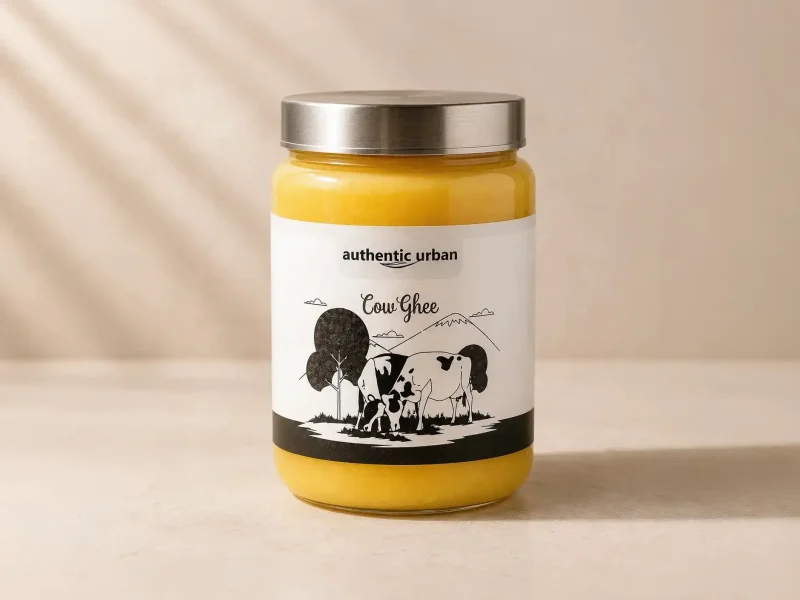 1 Litre
Paratha, halwa, and winter sweets
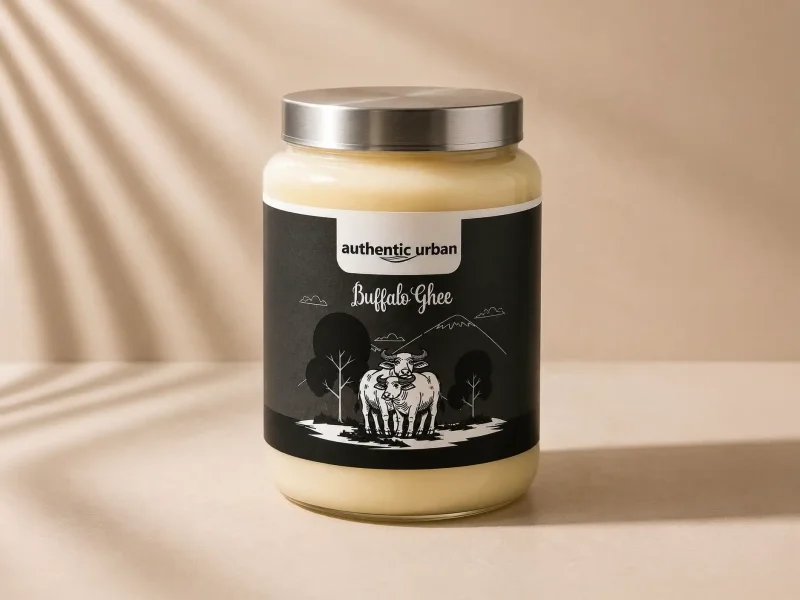 1 Litre
Each order is cooked after you place it, and the packing video is of that batch. Past order videos are on the shop.
FAQ
Can I mix ghee with Vaseline for slugging?
You can, but it gains little. Petroleum jelly already seals better on its own, so a mix mostly adds smell and the chance that the ghee goes stale in the tub. If you like the softer feel of ghee, use it alone on dry patches, and use plain petroleum jelly on nights when the skin is cracked or sore. Keep the two in separate, clean containers.
Can men with a beard do ghee slugging?
On the bare cheeks above the beard, yes, the same way as anyone with dry skin. Inside the beard it is harder: ghee sits in the hair, catches dust, and is tricky to wash out, and beard skin gets pimples and ingrown hairs easily. For the skin under a beard, a few drops worked in after a wash suit better than a night seal.
Can teenagers do ghee slugging?
Most teenagers are better off without it. Teen skin is often oily and prone to pimples, and a sealed layer of fat on the face at night can make that worse. A teenager with truly dry cheeks in winter can try a pea-size amount on the cheeks only, two nights a week, and stop at the first new pimple. Eating ghee with meals is a separate matter.
Does ghee slugging make skin fairer or glowing?
No. Ghee does not change skin colour, and no study shows it lightens pigment or tan. The glow people see in the morning is well-sealed skin: softer and a little shiny because it lost less water overnight. That fades within a day if you stop. For tan and dark patches, daily sunscreen and a dermatologist do far more than any oil on the face.
Can I do ghee slugging on hands and feet too?
Yes, and it is often a better use than the face. Hands and heels have no pimples to worry about, so a thicker layer is fine. Put it on damp skin after washing, then wear cotton socks or gloves to bed so it stays on the skin and off the sheets. Deeply cracked or bleeding heels need a doctor, not just ghee.
How long can I keep a small pot of ghee for my face?
Fill only what you will use in about two weeks. Every time a finger or a damp spoon touches it, a little water and dirt go in, and that is what turns ghee sour. Keep the pot closed, in a cool drawer, away from the bathroom steam. If it smells sharp or sour when you open it, throw it out and refill from the kitchen jar with a dry spoon.
About the editorial team
Authentic Urban TeamBilona ghee makers, Gir Somnath, Gujarat
We are the Parmar family in Gir Somnath, Gujarat. We have made ghee here since 2016 and sold it online since 2025. We make only Bilona ghee, test it every month, and anyone is welcome to visit and watch it being made. Our Gir cows and Jafarabadi buffalo are grass-fed village animals that graze near the Gir forest, with no hormones or milk boosters. We set their milk to curd, churn it, and cook the makkhan on a wood chulha. These articles come from that kitchen and from what customers ask us on WhatsApp. We are ghee makers, not doctors.
Sources
- Petrolatum Is Effective as a Moisturizer, But There Are More Uses for It (Santos Malave and James, Cutis 110(4), 2022), Cutis. Checked 28 Sep 2026.
- 5 ways to use petroleum jelly for skin care, American Academy of Dermatology. Checked 28 Sep 2026.
- Dermatologists' top tips for relieving dry skin, American Academy of Dermatology. Checked 28 Sep 2026.