Ghee vs Sesame Oil (Til Oil): Which Is Better for Cooking?
Ghee vs sesame oil: do the day's cooking in sesame oil (til oil, gingelly) and keep ghee to 1 or 2 teaspoons where you can taste it. Per USDA, sesame oil has 14.2 g of saturated fat per 100 g against 61.9 g in ghee, and both give about 44 calories a teaspoon. Its weak spot is omega-6: at 41 g per 100 g, switch it with mustard oil through the week.
Sesame oil or ghee: which is better?
Sesame oil, for most of your cooking. A teaspoon of it has about 0.7 g of saturated fat; a teaspoon of ghee has about 3.1 g. Ghee wins on taste in dal, roti, and sweets, and it carries some vitamin A. So cook in til oil, finish with 1 or 2 teaspoons of ghee, and do not let one oil do every job all year.
In much of Tamil Nadu, nallennai (til oil) is the house oil. Here in Gujarat, til turns up mostly as seeds, in chikki and ladoo at Uttarayan. Both fats have a job. This is how we would split them across a week of meals:
Kitchen job
Use
Why
Everyday sabzi, sambar or dal base, upma
Sesame oil, or switch weeks with mustard oil
This is most of the day's fat. Til oil has less than a quarter of ghee's saturated fat.
Idli podi, puliyogare, chutney, a South Indian pickle
Sesame oil (nallennai, gingelly)
The dish tastes of til. Ghee would change it.
Deep frying murukku, vada, bhajiya
Sesame or groundnut oil, used once
Frying soaks up a lot of fat. In ghee, that is mostly saturated fat.
Tadka poured over dal, a spoon on rice, roti, or khichdi
Ghee, 1 teaspoon
You taste it. This is the spoon ICMR-NIN allows.
Halwa, sheera, Mysore pak, paratha
Buffalo ghee
The dish is built on ghee's taste and the way it sets. Til oil stays liquid and tastes of seed.
Someone at the table has a sesame allergy
Not til oil, until their allergist says so
Pressed oil can carry seed protein. Ghee has none, but it is milk fat.
Save that table; it settles most of the ghee or oil questions at home. If you are new to ghee itself, start with what is ghee.
Choose ghee if
- The fat is the flavour: a tadka poured over dal, a spoon on rice, roti, or khichdi.
- You are making sheera, halwa, Mysore pak, or paratha.
- Someone at the table has a sesame allergy and has not been cleared by an allergist.
Choose sesame oil if
- It is the everyday sabzi, sambar, or anything fried.
- The dish is South Indian and tastes of nallennai: podi, puliyogare, pickle.
- You want less saturated fat in the day's cooking.
What is in a teaspoon of ghee vs sesame oil?
The same calories and a very different fat. These are USDA FoodData Central's figures, worked out for the 5 g household teaspoon that ICMR-NIN uses.
1 tsp (5 g)
Ghee
Sesame oil
Calories
44 kcal
44 kcal
Saturated fat
3.1 g
0.7 g
Monounsaturated fat
1.4 g
2.0 g
Omega-6 (linoleic acid)
0.11 g
2.07 g
Omega-3 (ALA)
0.07 g
0.02 g
Butyric acid
0.16 g
0 g
Cholesterol
13 mg
0 mg
Vitamin A
42 µg
0 µg
Vitamin E (alpha-tocopherol)
0.14 mg
0.07 mg
Plant sterols
0 mg
43 mg
USDA FoodData Central, SR Legacy: butter oil, anhydrous (173412) and oil, sesame, salad or cooking (171016). Checked 28 September 2026.
Three rows matter most. Saturated fat is more than four times higher in ghee. Omega-6 is about eighteen times higher in til oil. And the plant sterols, about 43 mg a teaspoon, are all on the til side. The vitamin E row surprises people: many pages call sesame oil rich in vitamin E, but USDA lists 1.4 mg of alpha-tocopherol (the form it counts as vitamin E) per 100 g, half of ghee's 2.8 mg. Pages that also call ghee rich in vitamin D are wrong the other way; USDA lists none. Ghee's full label is on ghee nutrition facts.
Which is better for the heart and cholesterol?
Sesame oil, as the main cooking fat. ICMR-NIN's 2024 guidelines say saturated fat raises total and LDL cholesterol, and they name the lignans in sesame oil among the minor parts of oils that lower blood cholesterol. Ghee is fine at a teaspoon or two; the risk comes from cooking everything in it.
The same guidelines call visible saturated fat high above 10 g a day, and they name ghee and butter first. At USDA's figures, ghee reaches 10 g in about 3 teaspoons. Sesame oil takes about 14. So a kitchen that cooks in til oil and adds a teaspoon of ghee to the dal sits well inside the line, and a kitchen that cooks everything in ghee does not.
What the sesame oil trials found
A 2022 meta-analysis in the Journal of Diabetes and Metabolic Disorders (Atefi and colleagues) pooled 12 trials with 1,438 people, all in India, Iran, and Pakistan. People who used sesame oil in place of oils such as sunflower, soybean, coconut, or olive had blood pressure about 2.7/2.0 mmHg lower and fasting sugar about 3.3 mg/dl lower. Most trials used about 30 to 35 g a day, which is 6 to 7 teaspoons, more than ICMR-NIN's whole-day allowance for a sedentary woman. The review reported no cholesterol results, and its authors say most trials described their methods poorly.
So the fair reading is a small benefit from swapping oils, not a reason to add til oil on top. No trial we found compared sesame oil with ghee directly. For ghee itself, the trials and the dose by lipid report are on ghee for cholesterol. If you have heart disease, high LDL, or diabetes, your doctor or dietitian sets your fat limit, and that comes before any comparison here.
Is sesame oil high in omega-6?
Yes. USDA lists 41.3 g of omega-6 (linoleic acid) in 100 g of sesame oil and only 0.3 g of omega-3. That is more than groundnut oil and less than regular sunflower oil.
USDA FoodData Central, SR Legacy (171025, 171016, 171410, 172337, 173412, 171412), per 100 g worked out for 5 g. Checked 28 September 2026.
| Item | Value |
|---|---|
| Sunflower oil | 3,285 mg |
| Sesame (til) oil | 2,065 mg |
| Groundnut oil | 1,600 mg |
| Mustard oil | 765 mg |
| Ghee | 113 mg |
| Coconut oil | 84 mg |
Omega-6 is not poison. ICMR-NIN counts it as an essential fat and sets a minimum of about 6.6 g a day on a 2,000 kcal diet. Three teaspoons of til oil already bring about 6.2 g, before the dal, nuts, and grains add theirs. The guidelines' advice is to moderate oils high in omega-6 and to get enough omega-3 from foods such as mustard seed, fenugreek, soyabean, walnuts, and leafy greens. Sesame is not on that omega-3 list; mustard oil is. So the fix for a nallennai kitchen is not to swap in ghee, which only adds saturated fat, but to switch some weeks or dishes to mustard oil. How those two compare with ghee is on ghee vs mustard oil and ghee vs groundnut oil.
Which is better for frying and high heat?
For frying, sesame or groundnut oil, used once. Ghee is the steadier fat under heat, but a kadhai of it puts days of saturated fat into the vada.
A 2026 review in Frontiers in Food Science and Technology (Kumar and Jadhav) gives ghee a smoke point of 220 to 240°C in its table. We could not find a primary source for the sesame oil smoke points that pages repeat, so we have left them out. What is on record: a 1992 paper in Ancient Science of Life (Kodama and colleagues) calls sesame oil the most stable vegetable oil against oxidation and credits its lignans. When they cooked a sesame-based Ayurvedic oil, sesamol, one of those antioxidants, went up. ICMR-NIN makes the same general point: the minor parts of an oil are mostly antioxidants that keep it from going rancid. That is why til oil keeps better than its omega-6 alone would suggest, and why a pickle in nallennai lasts.
None of that makes reused oil safe. ICMR-NIN's rule for any frying oil: filter it after use, use it in curry within a day or two, and do not fry in it again. Watch the pan as well. When we cook makkhan into ghee on the chulha, we take it off as the bubbling goes quiet and the solids turn golden-brown. Past that point the batch goes dark and bitter and smells burnt, and it never goes in a jar. Oil that keeps smoking in your kadhai has gone the same way. Ghee's own heat limits are on ghee smoke point, and reusing ghee is on reheating ghee.
Kachi ghani or refined til oil?
Either is legal and fine to cook with. ICMR-NIN's 2024 guidelines say cold pressed (kachi ghani, or marachekku in Tamil Nadu) oil keeps its antioxidants and plant compounds but, like any crude oil, can also carry unwanted ones, and they name free fatty acids, pesticide residues, aflatoxins, and allergens. Refining takes those out, along with some antioxidants and sterols, without changing the fat.
FSSAI's oil standard (Chapter 2.2, version of August 2025) sets the rules for til oil. It can come from black, brown, white, or mixed seeds. It must be clear, with no added colour, flavour, or mineral oil, and it must pass the test for argemone, a toxic weed oil. Oil pulled out with a solvent may only be sold after refining, with at most 5 ppm of hexane, and oil pressed in an expeller must have none. So a pressed til oil that smells strongly of sesame is normal. One with a perfume smell, or an odd colour, is not. Buy a sealed, licensed pack rather than loose oil, and keep the bottle shut and away from the stove.
Why does FSSAI put til oil in vanaspati, and what does it mean for ghee?
Til oil is FSSAI's marker for vanaspati. The law makes vanaspati carry enough sesame oil to show up in the Baudouin test, and makes real ghee test negative for it. So sesame oil in a jar sold as ghee is a sign of mixing.
The detail: FSSAI's Chapter 2.2 says vanaspati must contain raw or refined til oil, enough that a 20:80 mix with refined groundnut oil gives at least 2.0 red units in the Baudouin test (margarine needs 2.5). The ghee standard in Chapter 2.1 says ghee must be Baudouin negative. The test is a lab colour reaction, not a kitchen trick, so no home test replaces it. Our monthly tests check against the FSSAI limits, and the Baudouin test is one of them. The same test also flags a jar cut with plain til oil. How fake ghee is mixed, and which lab line catches which fat, is on how fake ghee is made, and Dalda itself is on ghee vs vanaspati.
What does Ayurveda say about ghee vs sesame oil?
Both are top fats in the texts. The Charaka Samhita (Sutra Sthana 13, verses 12 to 15) names ghee, oil, muscle fat, and marrow as the four best snehas (fats) and ghee as the best of the four, because it takes on the qualities of what is cooked in it. It calls til oil the best of all oils, one that settles Vata without raising Kapha.
The line "ghee for inside, til oil for outside", quoted on many pages as Charaka, is not in those verses; it is a household rule of thumb. In practice, massage (abhyanga) and oil pulling (gandusha) use til oil most often, and ghee is used for both too. That is tradition, not a trial result, and the practical how-to is on abhyanga with ghee and oil pulling with ghee. In our house, ghee is for eating.
Sesame allergy
Sesame is a common food allergen: the US FDA made it the ninth major allergen, labelled on packs from 1 January 2023. Pressed til oil can carry seed protein, which is one of the allergens ICMR-NIN lists for crude and cold pressed oils. If someone at the table is allergic to sesame, keep til oil out until their allergist says otherwise. Ghee has no sesame, but it is milk fat, so with a milk allergy ask the allergist about ghee too.
How much ghee and sesame oil can you use in a day?
All visible fat together, 20 to 50 g a day (4 to 10 teaspoons) by activity, with ghee at 1 or 2 teaspoons of that. These are ICMR-NIN's 2024 figures; the rest can be til oil, better still switched with mustard oil.
Adult
Visible fat a day
One way to split it
Sedentary woman
20 g (4 tsp)
1 tsp ghee on dal or roti, 3 tsp til or mustard oil in the cooking
Sedentary man
30 g (6 tsp)
1 to 2 tsp ghee, 4 to 5 tsp oil
Moderately active man
40 g (8 tsp)
2 tsp ghee, the rest split between til and mustard oil
Heavy physical work, man
50 g (10 tsp)
2 tsp ghee, the rest in liquid oils
Visible fat by sex and activity: ICMR-NIN Dietary Guidelines for Indians 2024, printed p. 54. Women with moderate and heavy activity: 30 g and 40 g.
Mixing the two is fine and common: the sambar or sabzi cooked in til oil, a little ghee on the rice at the end. For dal for four, make the tadka in 2 teaspoons of til oil and pour 2 teaspoons of ghee over at the table; each person gets half a teaspoon of ghee and tastes all of it. At home in Gir Somnath we eat 1 to 2 teaspoons of ghee each a day, on roti, dal, and khichdi, and more only in winter sweets like adadiya pak. To work out your own family's ghee and oil, try our ghee calculator. Portions by age are on how much ghee per day.
How do you pick a good til oil and a good ghee?
Read the label against the FSSAI rules, and avoid the common switching mistakes. This checklist fits on one screenshot:
- Til oil: FSSAI licence on a sealed pack. Loose oil from a tin has no label to check against.
- Pressed or refined, knowingly. Kachi ghani keeps more antioxidants and the sesame taste; refined has had the unwanted compounds taken out. Neither is "the healthy one".
- Raw-seed til oil for cooking. The dark roasted sesame oil sold for Chinese food is a finishing oil, not a kadhai oil.
- No perfume, no odd colour. FSSAI bans added colour and flavour in til oil. A bitter or musty bottle is stale.
- Do not reuse frying oil for frying. Use it in curry within a day or two, then throw it out.
- Do not swap all your oil for ghee. It fixes nothing about omega-6 and adds saturated fat. Switch in mustard oil instead.
- Ghee: FSSAI licence, and the smell of a warm spoon. It should smell of toasted milk. A seed or oil smell is a reason to stop; our checks are on how to identify pure ghee.
Which ghee should sit next to your til oil?
If til oil does the cooking and ghee is only a teaspoon or two, that teaspoon should be real milk fat. Check the FSSAI licence, warm a spoon and smell it, and expect some grain once it cools. Our full ranking of jars is on best ghee in India.
We make both jars below, so weigh our view with that in mind. For the spoon on dal and rice we use our own A2 Gir cow ghee: grass-fed Gir milk from near the Gir forest, set to curd, churned, and cooked in a matki on the chulha, made after you order, with a video of your jar on WhatsApp. For halwa, Mysore pak, and paratha, Jafarabadi buffalo ghee is the one we reach for. We test every month against the FSSAI limits; see how we make ghee.
Gir cow ghee: the daily teaspoon
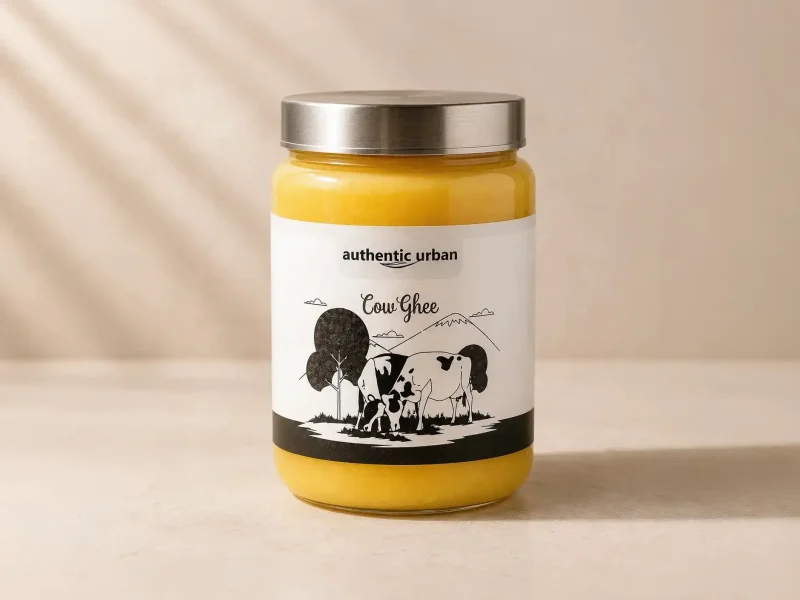 1 Litre
Buffalo ghee: halwa and paratha
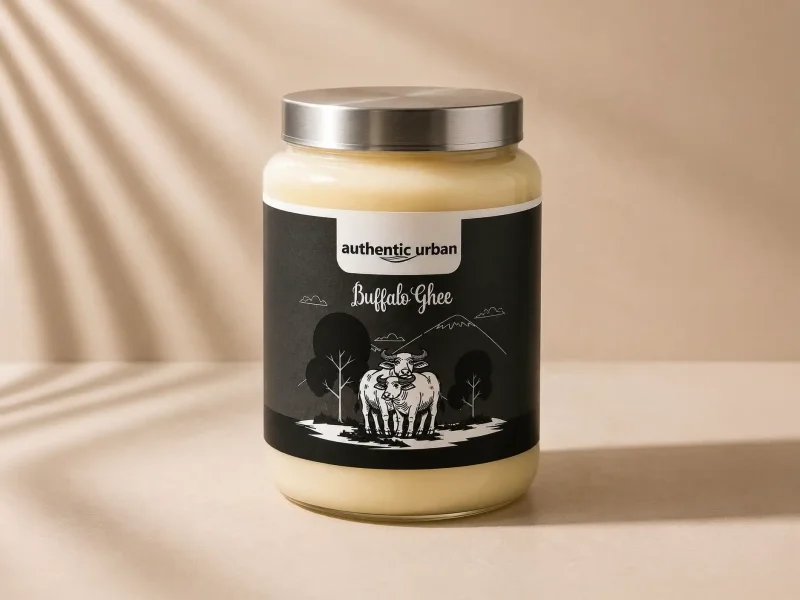 1 Litre
Each order is cooked after you place it, and the packing video is of that batch. Past order videos are on the shop.
FAQ
Which is the best ghee to keep next to sesame oil?
We make ghee, so weigh this with that in mind: our Authentic Urban A2 Gir cow ghee for the daily teaspoon, and our Jafarabadi buffalo ghee for halwa and paratha. Both are curd-churned Bilona, cooked after you order, with a video of your own jar on WhatsApp. Whatever you buy, check the FSSAI licence number and warm a spoon: it should smell of toasted milk.
Is ghee or sesame oil better for weight loss?
Neither, by itself. USDA FoodData Central puts a 5 g teaspoon of either at about 44 calories, so the amount matters more than the bottle. The sesame oil trials that found a small drop in weight used it in place of other oils, not on top of them. Measure oil with a spoon, keep ghee to 1 or 2 teaspoons, and cut fried snacks first.
Is black til oil different from white til oil?
Not in the eyes of the law. FSSAI's standard covers til oil pressed from black, brown, white, or mixed sesame seeds under one set of limits, with a separate range only for white seed grown in Tripura, Assam, and West Bengal. Black til oil is often sold for massage and puja lamps and tastes stronger. For cooking, pick by taste and by a sealed, licensed pack.
Is the dark sesame oil used in Chinese food the same as til oil?
No. That dark, strong oil is pressed from roasted sesame seeds and is used by the drop to finish noodles or a dressing. Indian til oil, nallennai, or gingelly oil is pressed from raw seeds and is pale to golden, so it can do the everyday cooking. Do not fry or make a tadka in the dark roasted kind; it burns and turns bitter quickly.
Can I use sesame oil instead of ghee in halwa or ladoo?
You can, but you change the sweet. Sheera, halwa, and besan ladoo are built on ghee's taste and on the way it firms up as it cools; til oil stays liquid and tastes of seed. Til ladoo and chikki are different: the seeds bring their own oil. For ghee sweets we reach for buffalo ghee, which sets firmer and grainier than cow ghee.
Why does ghee set solid while sesame oil stays liquid?
Saturated fat. USDA puts ghee at about 62% saturated fat and sesame oil at about 14%, and saturated fats firm up at room temperature. That is why ghee turns solid and often grainy in winter, and stays liquid in a hot kitchen. In our kitchen summer batches stay runny in the jar, and neither state means the ghee has spoiled. Til oil stays liquid all year.
About the editorial team
Authentic Urban TeamBilona ghee makers, Gir Somnath, Gujarat
We are the Parmar family in Gir Somnath, Gujarat. We have made ghee here since 2016 and sold it online since 2025. We make only Bilona ghee, test it every month, and anyone is welcome to visit and watch it being made. Our Gir cows and Jafarabadi buffalo are grass-fed village animals that graze near the Gir forest, with no hormones or milk boosters. We set their milk to curd, churn it, and cook the makkhan on a wood chulha. These articles come from that kitchen and from what customers ask us on WhatsApp. We are ghee makers, not doctors.
Sources
- Dietary Guidelines for Indians, 2024 (Guideline 7, printed pp. 52 to 56; Guideline 15, printed p. 93), ICMR-National Institute of Nutrition. Checked 28 Sep 2026.
- Oil, sesame, salad or cooking (FDC ID 171016), SR Legacy, USDA FoodData Central. Checked 28 Sep 2026.
- Butter oil, anhydrous (FDC ID 173412), SR Legacy, USDA FoodData Central. Checked 28 Sep 2026.
- Oil, peanut, salad or cooking (FDC ID 171410), SR Legacy, USDA FoodData Central. Checked 28 Sep 2026.
- Oil, mustard (FDC ID 172337), SR Legacy, USDA FoodData Central. Checked 28 Sep 2026.
- Oil, sunflower, linoleic (FDC ID 171025), SR Legacy, USDA FoodData Central. Checked 28 Sep 2026.
- Oil, coconut (FDC ID 171412), SR Legacy, USDA FoodData Central. Checked 28 Sep 2026.
- Food Safety and Standards Regulations, Chapter 2.2: Fats, oils and fat emulsions, version 5 (01.08.2025), 2.2.1 (12) Til oil and Vanaspati, FSSAI. Checked 28 Sep 2026.
- Food Safety and Standards (Food Products Standards) Chapter 2.1: Dairy products and analogues, version 01.09.2023 (ghee standard, p. 27), FSSAI. Checked 28 Sep 2026.
- The effects of sesame oil on metabolic biomarkers: a systematic review and meta-analysis of clinical trials (Atefi M, Entezari MH, Vahedi H, Hassanzadeh A), 2022, Journal of Diabetes and Metabolic Disorders. Checked 28 Sep 2026.
- Changes of ingredients in the process of cooking of sesame oil (Kodama K, Karinje KU, Hukuda Y), 1992, Ancient Science of Life. Checked 28 Sep 2026.
- Understanding the techno-functionality of ghee as a cooking medium (Kumar D, Jadhav HB), 2026 (Table 2, smoke points), Frontiers in Food Science and Technology. Checked 28 Sep 2026.
- Charaka Samhita, Sutra Sthana 13 (Sneha Adhyaya), verses 12 to 15, Charak Samhita Online (CSRTSDC). Checked 28 Sep 2026.
- The FASTER Act: Sesame Is the Ninth Major Food Allergen, US Food and Drug Administration. Checked 28 Sep 2026.