Dal Baati Churma Recipe: Oven Baati and How Much Ghee
For a dal baati churma recipe for four, make 10 baatis from 240 g atta, 60 g suji, and 4 tablespoons of ghee, bake them at 180°C for 30 to 35 minutes, cook a five-dal panchmel dal with a ghee tadka, and grind 2 baatis with ghee and sugar into churma. A plate of 2 baatis with 2 teaspoons of ghee poured into each comes to about 10 teaspoons of ghee and 814 kcal.
Dal baati churma recipe in grams
Three things cooked side by side: baked wheat baatis with ghee rubbed into the dough, a thick five-dal panchmel dal, and churma made by grinding two of the baatis with ghee and sugar. For four people it takes about 1½ hours, and most of that is the oven and the pressure cooker working while you make the next part.
Baati (10)
- 240 g (2 cups) atta
- 60 g (⅓ cup) fine suji
- 4 tbsp ghee for the moyan
- 1 tsp salt, ½ tsp ajwain
- A pinch of baking soda
- About 150 ml warm water
Panchmel dal
- 50 g chana, 40 g toor, 30 g moong, 15 g urad, 15 g masoor (150 g in all)
- ½ tsp turmeric, salt
- 2 tbsp ghee for the tadka
- 1 tsp cumin, 3 dried red chillies, a pinch of hing
- 1 onion, 2 tomatoes, 1 tsp each red chilli and coriander powder
Churma and serving
- 2 of the baked baatis
- 2 tbsp ghee, melted
- 50 g powdered sugar, bura, or grated jaggery
- ½ tsp cardamom; a few chopped almonds
- 2 tsp warm ghee for each baati at the table
Order of work: make the baati dough first and let it rest, put the soaked dal in the cooker, then shape and bake the baatis. The tadka goes on while they bake, and the churma is made from two baatis once they have cooled. Serve the rest hot.
One plate (2 baatis, a quarter of the dal and of the churma, 2 tsp ghee poured into each baati): about 814 kcal, 18.3 g protein, 45.2 g fat (26.8 g saturated), 90.1 g carbohydrate, and 12.5 g sugar, worked out from USDA FoodData Central for each flour, dal, sugar, and ghee. Spices, onion, tomato, and almonds are not counted.
How do you make baati dough?
Rub the ghee into the flour first, before any water, until a fistful squeezed in your hand holds its shape. Then knead a dough stiffer than roti dough. That ghee, the moyan, is what lets a baati break into a short, crumbly bite instead of a hard ball of bread.
- Mix the atta, suji, salt, ajwain, and soda in a wide bowl.
- Add 4 tbsp of ghee, soft or melted. Rub it through the flour with your fingertips for 2 to 3 minutes, until it looks like wet sand.
- Fist test: squeeze a handful. If it holds a shape with your finger marks, the moyan is right. If it falls apart, add 1 more tablespoon of ghee.
- Add warm water a few spoons at a time and knead into a stiff, smooth dough. It should push back when you press it. About 150 ml, depending on your atta.
- Cover and rest for 15 minutes. Divide into 10 balls of about 50 g. Roll each smooth, with no cracks, and press a thumb dent into the top so the centre cooks through.
The ghee in the dough also shows up in the churma later, because the churma is made from these baatis. If you want to use less ghee in this dish, do not cut it here: a baati with too little moyan turns hard and needs far more ghee at the table to become edible. Why the fat in the dough changes the crumb is the same reason as in ghee paratha, and where ghee earns its place in other dishes is on cooking with ghee.
How to bake baati in an oven, gas tandoor, appe pan, or air fryer
In an oven, bake at 180°C for 30 to 35 minutes, turning once, until the baatis are deep golden and sound hollow when tapped. A gas tandoor, an appe pan, or an air fryer all work too; each needs its own heat and time.
Method
Heat and time
How you know it is done
Oven (this recipe)
Heat: 180°C, middle rack, 30 to 35 min. Turn once at 15 min.
Done: Deep golden all over, small cracks on top, sounds hollow when tapped.
Gas tandoor or baati cooker
Heat: Low flame, lid on, 25 to 30 min. Turn every 6 to 7 min.
Done: Brown patches on every side. Closest to the coal-baked taste at home.
Appe pan
Heat: Grease with ghee, low flame, covered, about 15 min a side.
Done: Two brown faces and a paler band. Make the balls small (about 35 g) so the middle cooks.
Air fryer
Heat: 180°C, 18 to 22 min, shake the basket at 10 min.
Done: Cooks faster than the oven, so check one early. Good for 4 to 6 baatis at a time.
Kande or wood coals
Heat: Bury in hot embers, not flames, for 30 to 40 min. Turn once.
Done: The village way. Brush off the ash, then crack and dip.
For 50 g baatis. Ovens differ: break one open at the shortest time. The inside should be dry and flaky, with no wet dough.
For the smoky taste of coal-baked baati without coals, hold each oven-baked baati with tongs over a gas flame for 30 to 60 seconds a side. We cook our makkhan into ghee on a wood chulha, and the lesson carries over: steady, low heat all the way through beats a hot flame that browns the outside first. A baati baked hot and fast has a dark crust and raw dough in the middle.
How do you make the dal for dal baati?
Rajasthani homes use panchmel dal: five dals cooked together until soft, then finished with a ghee tadka and simmered thick enough to cling to a broken baati. Chana gives it body, toor its taste, and moong, urad, and masoor melt into the gravy.
- Wash the five dals together and soak for 30 minutes. Chana dal needs it most. Drain.
- Pressure cook with 3 cups of water, ½ tsp turmeric, and salt for 4 to 5 whistles on medium, until the chana dal crushes easily. Mash lightly with the ladle.
- Tadka: heat 2 tbsp ghee until a cumin seed sizzles at once. Add cumin, then the dried red chillies for 10 seconds, then hing for 2 seconds.
- Add the onion and fry until golden, about 8 minutes. Add the tomatoes, red chilli powder, and coriander powder, and cook until soft and the ghee shows at the edges.
- Pour in the dal and simmer uncovered for 5 to 10 minutes. It is ready when it coats the back of the ladle and does not run straight off.
Stand back when the dal goes into the tadka. Ghee is only ready once all the water in the makkhan has boiled away, so hot ghee sits well above the heat of boiling dal, and a splash of it burns worse than a splash of dal. Short of time, use only chana and toor, 75 g each. How the tadka works spice by spice is on ghee dal tadka, and what ghee does at tadka heat on ghee smoke point.
How do you make churma from baati?
Let 2 baked baatis cool for 15 minutes, grind them to coarse crumbs, and stir in 2 tablespoons of melted ghee, 50 g of powdered sugar or jaggery, and cardamom. The churma is ready when a pinch pressed between your fingers holds together and then crumbles.
- Break the cooled baatis into pieces and pulse in a mixer, or pound them, to coarse crumbs with a few small chunks. Warm baatis turn pasty.
- Warm the ghee in a kadai, add the crumbs, and roast on low for 3 to 4 minutes until they smell toasted.
- Take it off the heat. Let it cool for 5 minutes, then stir in the sugar or jaggery and cardamom. Sugar added to a hot pan melts and turns the churma sticky.
- Taste. Add ghee a teaspoon at a time only if a pressed pinch will not hold. Finish with chopped almonds.
Powdered sugar or bura gives a light, dry churma. Grated jaggery gives a darker, deeper one that clumps a little more. The 50 g in this recipe is about 12.5 g a plate. Churma made from atta dough fried as muthiya, instead of baked baati, is another family version with the same finish. For roasting atta in ghee for a sweet that is cooked with syrup into a halwa, see kada prasad.
How much ghee does dal baati churma need?
About 200 ml of ghee for four people in this recipe, or 10 teaspoons a plate. It goes in at four places, and only one of them, the ghee at the table, changes much from home to home. That is the one to measure.
Where
Batch for 4
A plate
What it does
Baati dough (moyan)
Batch: 4 tbsp (12 tsp)
A plate: 2½ tsp
Rubbed into the flour so the baati breaks into a short, crumbly crumb instead of a hard bread.
Dal tadka
Batch: 2 tbsp (6 tsp)
A plate: 1½ tsp
Blooms the cumin, hing, and red chilli, and carries their smell through the dal.
Churma
Batch: 2 tbsp (6 tsp)
A plate: 2 tsp
Includes the moyan of the 2 crushed baatis. Binds the crumbs and sugar so a pinch holds together.
Dip or pour on baati
Batch: 2 tsp a baati (16 tsp)
A plate: 4 tsp
The ghee you see. This is the part people change most, so it is the part to measure.
A plate is 2 baatis, a quarter of the dal, and a quarter of the churma. The churma row includes the moyan in the 2 crushed baatis. Total about 10 tsp (43 g).
Here is what a plate comes to at three levels of ghee at the table:
Plate
Ghee
kcal
Sat. fat
How it is served
Lighter plate
Ghee: 6½ tsp (28 g)
673 kcal
Saturated fat 17.6 g
1 tsp spooned into each cracked baati, 1 tbsp in the dal tadka, 1 tbsp and 40 g sugar in the churma.
This recipe
Ghee: 10 tsp (43 g)
814 kcal
Saturated fat 26.8 g
2 tsp poured into each baati. Moist to the middle, no pool on the plate.
Wedding style
Ghee: 12 tsp or more (51 g+)
888+ kcal
Saturated fat 32.1 g+
1 tbsp a baati, and more if the baatis are dunked and left in a bowl of ghee.
USDA FoodData Central: ghee 173412 (1 tbsp = 12.8 g), whole wheat flour 168893, semolina 169715, sugar 169655, and the five dals listed in the sources. Checked 28 September 2026.
ICMR-NIN's 2024 dietary guidelines suggest limiting ghee or butter to 1 to 2 teaspoons a day, with all added fat, oil and ghee together, at about 27 to 30 g a day on a 2,000 kcal diet. Even the lighter plate is over that line, and this recipe's plate carries more than a whole day's added fat. The same guidelines put added sugar at 20 to 25 g a day for adults, and the churma on one plate is about half of that. So this is a festival and Sunday dish. On an ordinary day at home in Gir Somnath each of us eats 1 to 2 teaspoons of ghee, on roti, dal, and khichdi; a dal baati day is the exception, and the other meals that day go light. Your own daily budget is on how much ghee per day, and calories by the spoon on ghee nutrition facts. If anyone at the table manages blood sugar, the baati, sugar, and portion size matter as much as the ghee; see can diabetics eat ghee.
At our live prices a teaspoon of our cow ghee costs about ₹12 and of our buffalo ghee about ₹10, so the 40 teaspoons (200 ml) in this recipe come to ₹400 to ₹480, about ₹100 to ₹120 a plate. A 250 ml jar covers one dal baati for four with a little left for the week.
How do you dip baati in ghee without a greasy plate?
Crack the baati first, while it is hot, and put the ghee into the crack. Ghee poured over a whole baati runs off the crust onto the plate, and the inside stays dry. A hot, cracked baati drinks the ghee in seconds.
- Measured way (this recipe): press each hot baati with a folded cloth until it splits on top, then pour 2 tsp of warm ghee into the split. Wait 30 seconds before the dal goes on.
- Dunked way (weddings and dhabas): drop the cracked baatis into a bowl of warm ghee for 10 seconds, then lift them onto a steel plate to drain. This uses more, and nobody knows how much.
- To find out how much your family uses: weigh the bowl of ghee before and after dunking, and divide by the number of baatis. At 4.27 g a teaspoon, a bowl that loses 128 g on 10 baatis has put 3 tsp into each.
Warm the ghee until it is just liquid, never smoking; ghee straight off a high flame burns fingers that break the baati. In winter the ghee we make sets to a firm grain in the jar and in summer it stays liquid, so melt it before measuring, or a cold heaped spoon holds far more than a teaspoon. Why ghee sets grainy at all is on why is ghee grainy.
Why is my baati hard, raw, or cracking?
Hard baati comes from too little ghee in the dough or baking too long; raw baati from balls that are too big or an oven that is too hot. Small cracks on top are normal and help the ghee in. Find your problem below.
Hard as a stone inside
Too little moyan, dough too stiff, or baked too long at too low a heat.
Fix: Use the full 4 tbsp of ghee and do the fist test. Take them out when they sound hollow. Crack and dip while hot; a cold baati will not drink ghee.
Raw or doughy in the middle
Balls too big, or the oven too hot so the crust set before the centre cooked.
Fix: Keep each ball to about 50 g with a thumb dent on top. Bake at 180°C, not 220°C. Put an underdone baati back for 5 minutes.
Falls apart when you pick it up
Too much moyan or too little water, so the dough never held together.
Fix: Add water a spoon at a time until the dough is stiff but smooth, with no dry cracks when you roll a ball.
Soft like a bun, no crust
Dough as soft as roti dough, or baking soda added on top of curd.
Fix: Knead it firmer than roti dough. Use either a pinch of soda or 2 tbsp curd, not both.
Greasy plate, baati still dry inside
Ghee poured over whole, uncracked baatis runs off the crust.
Fix: Press each hot baati until it splits, then pour the ghee into the crack.
Churma lumpy or oily
Baatis crushed while warm and soft, or all the ghee added at once.
Fix: Cool the baatis for 15 minutes before grinding. Add the ghee a spoon at a time until a pinch just holds.
Dal thin and runs off the baati
Too much water, or not simmered after the tadka.
Fix: Simmer uncovered 5 to 10 minutes, stirring, until it coats the back of the ladle.
What are bafla baati and masala baati?
Bafla baati is boiled before it is baked, which makes it softer inside; masala baati has a spiced filling. Both use the same dough as this recipe.
- Bafla baati (Malwa and Madhya Pradesh): drop the shaped balls into boiling water with a pinch of turmeric and boil 15 to 20 minutes, until they float. Drain, cool for 10 minutes, then bake as above. Softer inside, and it takes the ghee more evenly.
- Masala baati: flatten a ball, fill with 1 tbsp of spiced mashed potato or green peas, seal, and roll smooth. Bake 5 minutes longer.
- Makki or bajra baati: replace up to half the atta with makki or bajra atta for a winter version. The dough cracks more, so add water slowly and keep the balls smaller.
- Churma ladoo: the churma mix with a little more warm ghee, pressed into balls. The same cool-before-sugar step as besan ladoo applies.
How long does dal baati churma keep?
Eat leftover dal and baati within 48 hours. The Food Standards Agency advises putting cooked food in the fridge within 1 to 2 hours, eating leftovers within 48 hours or freezing them, and reheating them only once.
Keep the three parts apart. Box the dal and the plain baatis (without the dip ghee) and refrigerate them. To reheat, warm the dal until it bubbles, and put the baatis in a 160°C oven or a covered kadai for 8 to 10 minutes until hot through, then crack and add fresh ghee. Churma is dry and keeps better than dal: store it in a closed steel dabba, away from the stove, and smell it before serving; if it smells stale or sour, throw it out. To cook ahead for a party, bake the baatis a few hours early and warm them just before dipping; they only drink ghee when hot.
Cow or buffalo ghee for dal baati?
Buffalo ghee for the baati dip and the churma, and cow ghee for the dal tadka, if you keep both. Buffalo ghee tastes richer and heavier, which suits a wheat dish drowned in it, and it costs less a spoon. Cow ghee's lighter, toasted-milk smell comes through better in the dal.
"Cow or buffalo for me?" is one of the questions customers ask us most on WhatsApp. With one jar, choose the taste you like: both are almost pure milk fat, with about the same calories a spoon. The side-by-side is on cow vs buffalo ghee.
Dal baati churma recipe card
Screenshot it for the next festival.
- 1. Baati for 4 (10 baatis): 240 g atta, 60 g suji, 4 tbsp ghee, 1 tsp salt, ½ tsp ajwain, a pinch of soda, about 150 ml warm water.
- 2. Rub the ghee into the flour until a fistful holds its shape. Knead stiff. Rest 15 min. Make 10 balls of about 50 g, dent each with your thumb.
- 3. Bake at 180°C for 30 to 35 min, turning once, until golden and hollow-sounding.
- 4. Dal: 150 g mixed dal (chana, toor, moong, urad, masoor), soaked 30 min, 4 to 5 whistles in 3 cups water. Tadka in 2 tbsp ghee: cumin, dried red chilli, hing, onion, tomato. Simmer thick.
- 5. Churma: grind 2 cooled baatis coarse, stir in 2 tbsp melted ghee, 50 g powdered sugar or jaggery, ½ tsp cardamom.
- 6. Serve: press each hot baati until it cracks, pour 2 tsp warm ghee into it, dal on top, churma on the side.
- 7. One plate (2 baatis, dal, churma): about 10 tsp ghee, 814 kcal. Leftovers: fridge within 2 hours, eat within 48 hours, reheat once.
Which ghee for dal baati churma?
Most of the ghee in this dish is eaten as it is, poured into the baati or stirred into the churma, so the jar has to smell of toasted milk when it melts, not flat or stale. Pick plain ghee with nothing added. The home checks are on how to identify pure ghee, and our ranking of the buffalo ghee on sale is best buffalo ghee in India.
For dal baati we would pour our Jafarabadi buffalo ghee into the baatis and the churma, and use our A2 Gir cow ghee in the dal. Both come from grass-fed village animals near the Gir forest; the milk is set to curd overnight, churned, and the makkhan cooked in a matki on a wood chulha. The jar is made after you order, a video of it being cooked and packed comes on WhatsApp, and Varsha tastes every batch before it goes in a jar. We test every month against the FSSAI limits; the steps are on how we make ghee.
The dal tadka
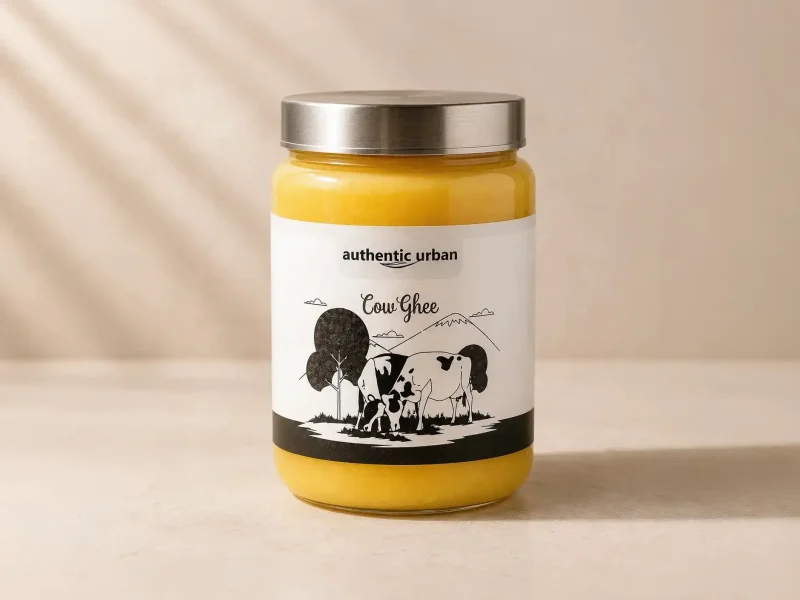 1 Litre
Baati dip and churma
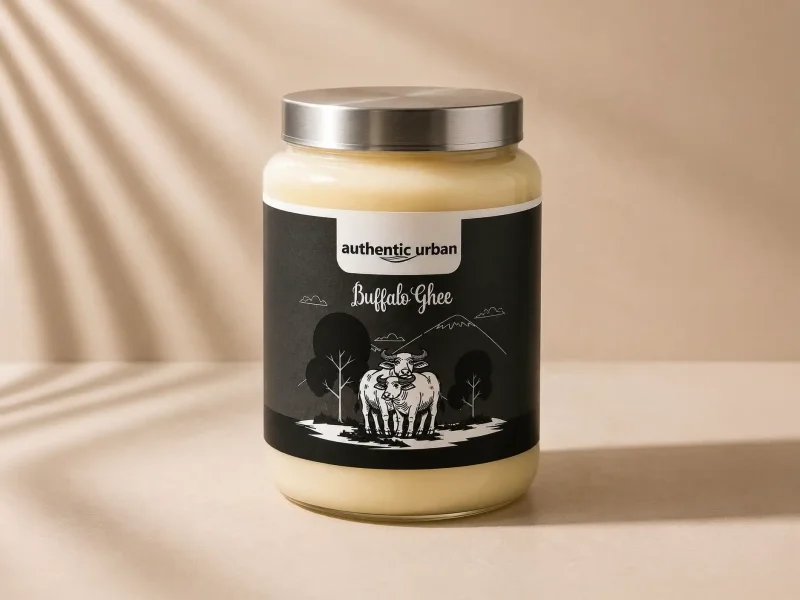 1 Litre
Each order is cooked after you place it, and the packing video is of that batch. Past order videos are on the shop.
FAQ
How many baatis should I make per person?
Plan on 2 baatis for most adults and 3 for big eaters, plus 2 extra for every 4 people to crush into churma. For 10 guests that is about 25 baatis: multiply the dough in this recipe by 2½ (600 g atta, 150 g suji, 10 tbsp ghee). Bake in batches with space between the balls, and keep the baked ones in a closed box so they stay warm for dipping.
Can I make baati without suji (semolina)?
Yes. Use 300 g atta alone with the same 4 tbsp of ghee. The baati comes out a little softer and less crunchy, because suji is what gives the crust its bite. Some families swap the suji for 2 tbsp of besan or a spoon of makki atta for taste. Keep the dough stiff either way, and do the fist test before adding water.
Can I make dal baati without onion and garlic?
Yes, and many Rajasthani and Jain homes do. Leave out the onion and garlic, and build the dal tadka on cumin, hing, dried red chilli, ginger, and tomato in ghee. A little more hing and a spoon of dried mango powder or a squeeze of lemon at the end keep it from tasting flat. The baati and churma do not use onion or garlic at all.
What is the difference between churma and churma ladoo?
Churma is loose and crumbly, eaten from the plate with your fingers beside the dal and baati. Churma ladoo is the same mix with more ghee, pressed into balls while warm, and is often made for Ganesh Chaturthi. For ladoos, add about 1 more tablespoon of warm ghee for every 2 baatis so the crumbs hold, and roll them before the mix cools.
Is dal baati churma good for weight loss?
Not as an everyday meal. One plate of this recipe is about 814 kcal with around 10 teaspoons of ghee and 12.5 g of sugar, which is a festival plate, not a light lunch. If you are watching weight, keep it for occasions, eat one baati with extra dal and salad, spoon 1 teaspoon of ghee into the baati, and take a small pinch of churma.
Can I use oil instead of ghee in dal baati?
For the dal tadka, yes: any cooking oil blooms cumin and hing well. For the baati dough, oil works as moyan but the crumb tastes flat. For the dip and the churma, ghee is the dish; oil on a baati is just oil on bread. If you want less ghee, cut it from the dal and the dip and keep it in the dough and the churma.
About the editorial team
Authentic Urban TeamBilona ghee makers, Gir Somnath, Gujarat
We are the Parmar family in Gir Somnath, Gujarat. We have made ghee here since 2016 and sold it online since 2025. We make only Bilona ghee, test it every month, and anyone is welcome to visit and watch it being made. Our Gir cows and Jafarabadi buffalo are grass-fed village animals that graze near the Gir forest, with no hormones or milk boosters. We set their milk to curd, churn it, and cook the makkhan on a wood chulha. These articles come from that kitchen and from what customers ask us on WhatsApp. We are ghee makers, not doctors.
Sources
- Butter oil, anhydrous (FDC ID 173412), SR Legacy, USDA FoodData Central. Checked 28 Sep 2026.
- Wheat flour, whole-grain (FDC ID 168893), SR Legacy, USDA FoodData Central. Checked 28 Sep 2026.
- Semolina, enriched (FDC ID 169715), SR Legacy, USDA FoodData Central. Checked 28 Sep 2026.
- Sugars, granulated (FDC ID 169655), SR Legacy, USDA FoodData Central. Checked 28 Sep 2026.
- Chickpeas (bengal gram), mature seeds, raw (FDC ID 173756), SR Legacy, USDA FoodData Central. Checked 28 Sep 2026.
- Pigeon peas (red gram), mature seeds, raw (FDC ID 172436), SR Legacy, USDA FoodData Central. Checked 28 Sep 2026.
- Mung beans, mature seeds, raw (FDC ID 174256), SR Legacy, USDA FoodData Central. Checked 28 Sep 2026.
- Mungo beans (urad), mature seeds, raw (FDC ID 174259), SR Legacy, USDA FoodData Central. Checked 28 Sep 2026.
- Lentils, raw (FDC ID 172420), SR Legacy, USDA FoodData Central. Checked 28 Sep 2026.
- Dietary Guidelines for Indians, 2024 (Guideline 7, visible fats; sugar limit), ICMR-National Institute of Nutrition. Checked 28 Sep 2026.
- How to chill, freeze and defrost food safely (leftovers), Food Standards Agency. Checked 28 Sep 2026.