Ghee on Empty Stomach With Warm Water: Benefits and Risks
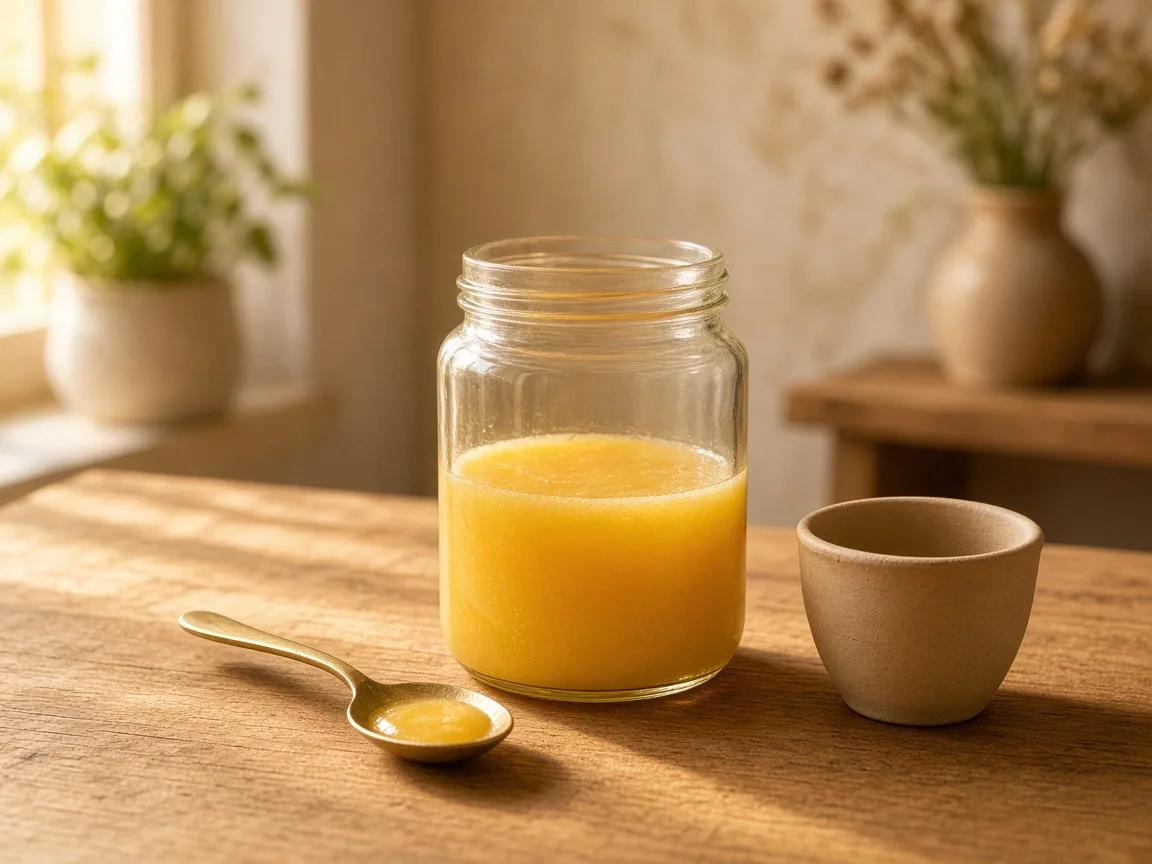
Ghee on empty stomach is fine for most healthy adults as one teaspoon (5 g, about 44 kcal), taken warm with a glass of warm water and followed by a 20 to 30 minute wait before chai. It may ease a dry, slow morning for some people. It does not burn fat or detox the liver, and it counts inside ICMR-NIN's limit of 1 to 2 teaspoons of ghee a day.
Is it good to eat ghee on an empty stomach?
For most healthy adults, one warm teaspoon of ghee on an empty stomach is harmless and may help a dry, slow morning bowel. It is not a medicine. It adds about 44 kcal and 3.1 g of saturated fat, per USDA FoodData Central, so it has to replace a teaspoon you would have eaten later, not sit on top of it.
Whether it helps you depends on your stomach. Some people feel lighter and go to the toilet more easily. Others feel heavy, a little sick, or get acid in the throat, and for them the same teaspoon works better on hot dal at lunch. This page is for adults thinking of starting the habit, or already doing it and wondering if it is worth it. If you have a gallbladder, liver, or heart condition, read who should skip it first. For the rest of the day's timing, see when to eat ghee.
How to take ghee with warm water on an empty stomach
Warm one teaspoon, take it with a glass of warm water, and wait 20 to 30 minutes before anything else. That is the whole habit.
1. Warm 1 teaspoon (5 g)
Stand the jar in warm water for a minute, or melt the spoon over a cup of hot water. Liquid, not a cold lump.
2. Swallow it, or stir it into a glass of warm water
Warm enough to sip, never boiling. The ghee floats as a film on top, so drink it slowly and swirl.
3. Wait 20 to 30 minutes
No chai, coffee, or breakfast in that gap. Most households who keep this habit use that window for a walk or a bath.
4. Eat breakfast as usual
Then take one teaspoon less ghee later in the day, so the total stays inside 1 to 2 teaspoons.
Why the spoon needs warming
Good ghee changes with the season, and it shows in a morning spoon. In winter the milk is richer and our Gir cow ghee cools to a fine, grainy set in the jar. In summer the same ghee stays liquid. A cold, grainy lump is hard to swallow on an empty stomach, so warm it until it runs. Grain is not a fault; "why is it grainy" is the question customers send us most on WhatsApp, and the answer is on why ghee is grainy.
What are the benefits of ghee on an empty stomach?
The one benefit people report most is an easier morning bowel, and even that is household experience rather than a tested result. Most of the other claims online are bigger than the teaspoon. Here is each one next to what we can actually say.
Claim
Verdict
What we can say
Eases a dry, slow morning bowel
Possible for some
Warm water and a little fat first thing is an old household habit for this. We could not find a human trial of ghee on an empty stomach. Try it for a week and judge by your own stool.
Burns belly fat or speeds metabolism
No
A teaspoon adds about 44 kcal. Nothing in ghee burns fat.
Detoxes the liver or flushes toxins
No
Your liver and kidneys do that work. A teaspoon of fat does not clean an organ.
Feeds the gut with butyrate
Small amount
About 0.16 g of butyric acid in a teaspoon, per USDA. Real, but too small to promise any gut result.
Helps absorb vitamins A, D, E, K
Better with food
ICMR-NIN notes fat carries these vitamins. On an empty stomach there are no vegetables for it to carry; on dal and sabzi there are.
Glowing skin, thick hair
No evidence
Nothing links a morning spoon to skin or hair. Sleep, water, and a varied plate do more.
Butyric acid and calories from USDA FoodData Central (SR Legacy 173412), worked out for a 5 g teaspoon. Vitamin note from ICMR-NIN Dietary Guidelines for Indians 2024. Checked 26 September 2026.
If your main reason is a hard stool, the morning spoon is one small lever. Water, fibre from dal, sabzi, and fruit, and a regular toilet time do more, and we cover them on ghee for constipation. The butyrate story, with what is and is not known, is on butyrate in ghee and the gut.
What is in one teaspoon of ghee?
One 5 g teaspoon of ghee holds about 44 kcal, 3.1 g of saturated fat, and 0.16 g of butyric acid, going by USDA FoodData Central's figures for anhydrous butter oil (the USDA name for ghee). ICMR-NIN's 2024 guidelines use the same 5 g for a household teaspoon.
1 tsp (5 g)
Amount
What it means
Energy
44 kcal
Small, but it is not free. Two teaspoons a day for a month is about 2,600 kcal.
Saturated fat
3.1 g
The reason ICMR-NIN keeps ghee to 1 or 2 teaspoons a day.
Butyric acid
0.16 g
The "butyrate" in gut claims. A real but small amount.
Vitamin A
42 µg
Carried in the fat itself.
Cholesterol
13 mg
Worth counting if your doctor has you on a cholesterol diet.
USDA FoodData Central, SR Legacy 173412, per 100 g scaled to 5 g. Checked 26 September 2026.
The table is why a teaspoon is the right size. Two or three tablespoons before breakfast, which some videos suggest, would be about 25 to 40 g of ghee (USDA weighs a tablespoon at 12.8 g): more than the whole day's visible fat for a sedentary woman under ICMR-NIN's limits. The full label, vitamins included, is on ghee nutrition facts.
What does Ayurveda say about ghee on an empty stomach?
Ayurveda texts describe snehapana, drinking measured, rising amounts of ghee on an empty stomach, but as preparation for a cleansing treatment run by a vaidya, not as a daily home habit. The home version, a single teaspoon with warm water in the morning, is household tradition that grew out of it.
The difference matters. Snehapana doses are far above a teaspoon and come with a fixed diet, daily checks, and a stop point decided by the practitioner. A reel that tells you to drink tablespoons of ghee for a week is borrowing the name without the supervision. Keep home use at one teaspoon, and leave anything bigger to a qualified Ayurveda doctor. Why we do not give a home cleanse plan is explained on the 3-day ghee detox. Tradition tells you what families have done for a long time. It does not prove that a fasted teaspoon does more than the same teaspoon on your lunch.
What are the side effects of ghee on an empty stomach?
The common side effects are a heavy or full feeling, mild nausea, loose oily stools, and acid reflux in people prone to it. They usually mean the amount is too much for you, or the fasted spoon does not suit your stomach.
- Heaviness or nausea: a spoon of fat on its own can sit heavy. Drop to half a teaspoon, or move it to a meal.
- Loose or oily stools: the dose is too high for you. Stop for a few days, then try half a teaspoon or none.
- Acid in the throat or chest burn: fat can make reflux worse for some people. Take it with food instead, and read ghee for acid reflux.
- Slow weight gain: the spoon added calories instead of replacing some. Take one teaspoon less ghee later in the day.
- Higher LDL on your next report: if your cholesterol was already high, the extra saturated fat counts. Show your doctor what you eat.
Side effects of too much ghee in general, at any time of day, are on ghee side effects.
Who should not take ghee on an empty stomach?
Skip the fasted spoon, and ask your doctor first, if any of these apply to you. We are ghee makers, not doctors; this list is where your own doctor's advice takes over.
- You have gallstones, or pain under the right ribs after meals. The NIDDK notes that gallbladder attacks often follow heavy meals.
- You have liver disease, pancreatitis, or have had gallbladder surgery.
- Your doctor has limited your fat or saturated fat for high LDL cholesterol or heart disease.
- You have diabetes and take medicine: any change to breakfast habits is worth checking. Our longer answer is on can diabetics eat ghee.
- You are pregnant or breastfeeding: ghee with meals is normal food, but ask your doctor before any fasted routine.
- You have a fever, nausea, or loose stools that day.
Go to a doctor the same day, not tomorrow morning, for belly pain that lasts several hours, vomiting, fever or chills, yellow skin or eyes, or tea-coloured urine. The NIDDK lists these as signs that need care right away.
Is ghee better on an empty stomach or with meals?
For most people, with meals. The same teaspoon on hot dal, roti, or khichdi carries the vitamins A, D, E, and K from the vegetables alongside it, which ICMR-NIN's 2024 guidelines say fat helps the body take up. On an empty stomach it has nothing to carry.
At home our family eats 1 to 2 teaspoons of ghee each a day, on roti, dal, and khichdi, and more only in winter sweets. The morning spoon is worth keeping only if it clearly helps your mornings. Either way, ICMR-NIN asks adults to limit ghee or butter to 1 to 2 teaspoons a day, so this is how a day adds up.
Your day
Morning
Meals
Ghee total
Morning-spoon day
Morning: 1 tsp with warm water
Meals: 1 tsp on lunch dal or roti
Total: 2 tsp (10 g)
Plate day (what our family does)
Morning: None
Meals: 1 tsp on roti, 1 tsp on dal or khichdi
Total: 2 tsp (10 g)
Doctor has limited your fat
Morning: None
Meals: What your doctor or dietitian allows
Total: Their number
Daily ghee limit from ICMR-NIN Dietary Guidelines for Indians 2024, Guideline 7. The split across the day is ours.
Total fat for the day, ghee and oil together, is a separate limit: 20 to 50 g depending on how active you are, per the same guidelines. We work through it on how much ghee per day.
Does ghee with warm water help weight loss?
No. A teaspoon of ghee with warm water adds about 44 kcal and does not burn fat. Some people say a fatty start keeps them from snacking before lunch; if that is true for you, the spoon can fit a weight-loss plan, but only because you ate less elsewhere.
Weigh yourself weekly for a month after you start. If the scale creeps up, the spoon was extra, not a swap. The "ghee water" weight-loss trend gets its own look on ghee water for weight loss, and fasting windows on ghee for intermittent fasting.
How to try ghee on an empty stomach for a week
Try it for seven days with these rules, then decide. Screenshot the list if it helps.
- Only 1 teaspoon, warmed. Do not step up to a tablespoon because nothing happened on day one.
- Warm water, never boiling, and 20 to 30 minutes before chai or coffee.
- Take one teaspoon less ghee at lunch or dinner that day.
- Note three things each morning: stool, any heaviness or nausea, and how hungry you are by 11 am.
- Stop the same day if you feel sick, get loose oily stools, acid in the throat, or pain under the right ribs.
- After 7 days, keep it only if the mornings are clearly better. If not, put the spoon back on hot dal.
One more check before day one: warm a spoon and smell it. Good ghee smells of toasted milk. A sour, soapy, or waxy smell means that jar should not be your daily fasted spoon. Five quick checks are on how to identify pure ghee.
Which ghee for a morning teaspoon?
A plain spoon on an empty stomach is the one place you taste ghee with nothing to hide it, so buy a jar you would happily eat straight. Warm a little: it should smell of toasted milk, and slow curd-churned ghee often sets grainy when cool. How curd Bilona (curd churned by hand) differs from cream ghee is on the Bilona method, and our ranking of the cow ghee on sale is best cow ghee in India.
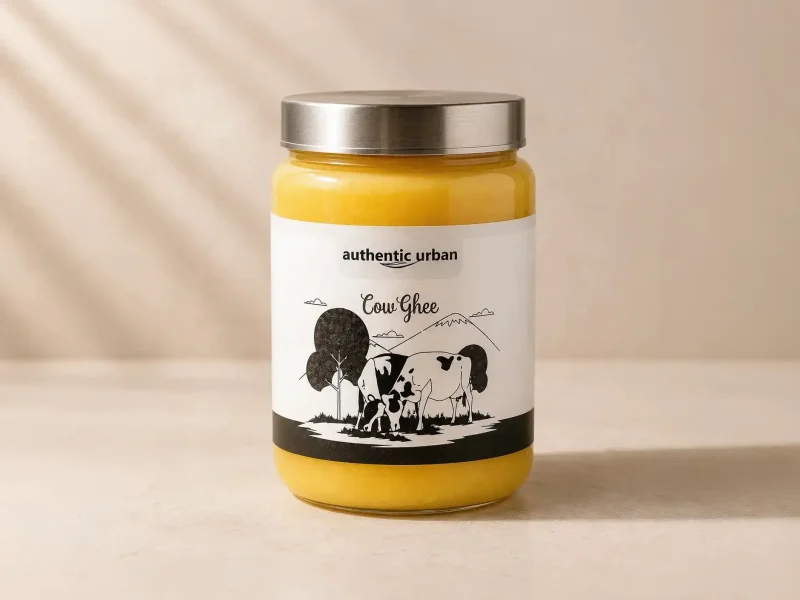
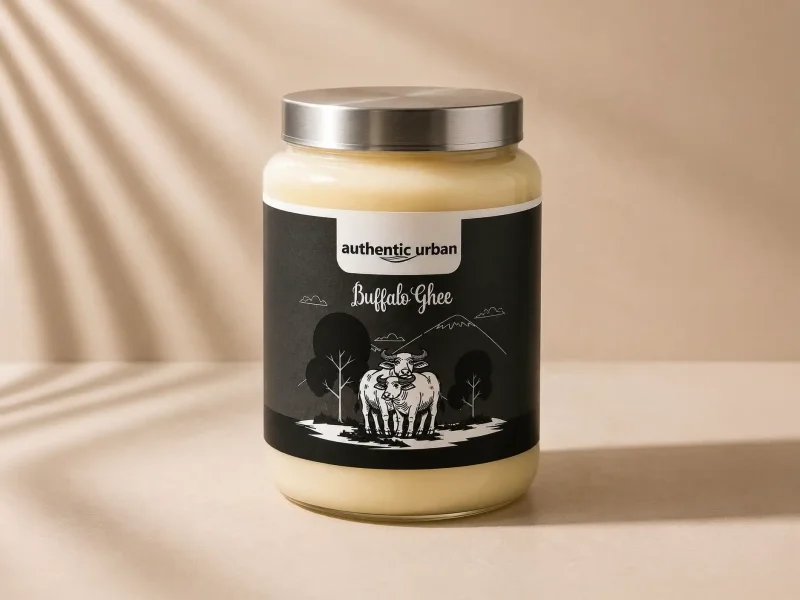
We make and sell ghee, so weigh this with that in mind. For the morning spoon we would pick our own A2 Gir cow ghee: grass-fed Gir milk set to curd overnight, churned, and cooked in a matki on a wood chulha, made after you order, with a video of your jar sent on WhatsApp. At ₹2,399 a litre, a 5 ml teaspoon costs about ₹12. For paratha and sweets, our Jafarabadi buffalo ghee is the richer jar. We test every month against the FSSAI limits; the steps are on how we make ghee.
The morning spoon and daily dal
 1 Litre
Paratha, halwa, and ladoo
 1 Litre
Each order is cooked after you place it, and the packing video is of that batch. Past order videos are on the shop.
FAQ
Is ghee in hot water better than a plain spoon of ghee?
They do the same job. Ghee does not dissolve in water; it floats as a thin layer, so "ghee water" is really a spoon of ghee taken with a warm drink. Pick whichever is easier to swallow. Keep the water warm rather than boiling, and keep the ghee to one teaspoon either way. If the floating film puts you off, swallow the warm spoon first and drink the water after.
Can I take ghee with warm water at night instead of the morning?
Yes. Many households prefer a teaspoon in warm milk or warm water after dinner, and for some people it sits more easily than a fasted spoon. The limit does not change: count it inside 1 to 2 teaspoons of ghee for the whole day, as ICMR-NIN advises. If you have reflux, take it well before you lie down, because a late spoon of fat can bring acid up for some people.
Does a teaspoon of ghee break a fast?
Yes, in the calorie sense. One teaspoon of ghee is about 44 kcal of pure fat, per USDA figures, so it is food, not water. It will not spike blood sugar the way sugar in chai does, which is why some people doing time-restricted eating allow it. If you are fasting for religious reasons or a medical test, follow that rule or your doctor, not this habit.
Can I add lemon, turmeric, or honey to the ghee water?
A pinch of turmeric is a common kitchen addition and harmless in food amounts. Lemon in the same glass is fine if your stomach is not acidic. Honey needs care: Ayurveda texts warn against ghee and honey in equal amounts, and hot water on honey is also avoided in households. Keep it simple for the first week, so you can tell what the ghee itself does before adding anything else.
Should I use cow ghee or buffalo ghee on an empty stomach?
Cow ghee is the usual choice for a plain morning spoon. It is lighter in taste, which matters when you swallow it plain. Buffalo ghee is heavier in taste, which suits paratha, halwa, and ladoo better than a fasted spoon. Whichever you choose, it should smell of toasted milk when warmed. A sour, oily, or waxy smell means that jar should not go on a daily spoon.
Can children take ghee on an empty stomach?
Children do not need a fasted spoon of ghee. For a child over one year, half to one teaspoon on dal, rice, khichdi, or roti gives them the fat with the rest of the meal, which is where it is most useful. Do not give ghee shots to babies under one year; ask your paediatrician when and how to add any fat to their food.
About the editorial team
Authentic Urban TeamBilona ghee makers, Gir Somnath, Gujarat
We are the Parmar family in Gir Somnath, Gujarat. We have made ghee here since 2016 and sold it online since 2025. We make only Bilona ghee, test it every month, and anyone is welcome to visit and watch it being made. Our Gir cows and Jafarabadi buffalo are grass-fed village animals that graze near the Gir forest, with no hormones or milk boosters. We set their milk to curd, churn it, and cook the makkhan on a wood chulha. These articles come from that kitchen and from what customers ask us on WhatsApp. We are ghee makers, not doctors.
Sources
- Dietary Guidelines for Indians, 2024 (Guideline 7, printed p. 54; Guideline 1 on fats), ICMR-National Institute of Nutrition. Checked 26 Sep 2026.
- Butter oil, anhydrous (FDC ID 173412), SR Legacy, USDA FoodData Central. Checked 26 Sep 2026.
- Symptoms and Causes of Gallstones, National Institute of Diabetes and Digestive and Kidney Diseases (NIDDK). Checked 26 Sep 2026.