Ghee for Asthma: Is It Safe, How Much, and When to Skip
Ghee for asthma is safe as food for most people: 1 to 2 teaspoons a day on dal, roti, or khichdi. It does not open the airways, prevent attacks, or replace an inhaler. What needs watching is around the spoon: a late, heavy meal that brings on reflux, a diagnosed milk allergy, and ghee smoke from a tadka or diya in a closed room.
Is ghee good for asthma?
Ghee is fine to eat with asthma, but it is not a treatment for it. Keep to 1 to 2 teaspoons a day, the limit ICMR-NIN's 2024 dietary guidelines set for ghee or butter, on warm food at lunch or an early dinner. We found no human study showing ghee eases wheeze, prevents attacks, or reduces inhaler use.
Asthma is swelling and narrowing of the airways, set off by triggers the NHS lists as exercise, cold air, air pollution, and allergens like pollen, dust, mould, and animals. The preventer and reliever inhalers deal with that. Food is rarely the trigger: Asthma + Lung UK puts it at around 6 to 8% of children with asthma and 2% of adults. So for most people the question "asthma me ghee khana chahiye?" has a short answer. Yes, the normal daily spoon, no more because of the asthma and no less.
This page is for long-term asthma and breathing trouble. A cold, a sore throat, or a cough that came with a virus is on is ghee good for cough and cold.
Does ghee help the lungs or clear mucus?
No. Eaten ghee does not reach the lungs, and no trial shows it clears mucus. The pages that rank for this question often say ghee lubricates the airways or that its butyrate calms lung inflammation. Here is what each common claim rests on.
The claim
What is actually known
Ghee lubricates the airways and eases breathing
Food goes down the food pipe, not the windpipe, so eaten ghee never touches the airways. We found no human study of ghee and breathing.
The butyrate in ghee calms airway inflammation
Butyrate is studied mostly for the gut. A teaspoon of ghee carries a small amount, and we found no human trial of ghee or butyrate for asthma.
Dairy, including ghee, makes more mucus
Asthma + Lung UK says dairy foods do not make you produce more mucus. If milk feels like it leaves your throat sticky, rinse your mouth and sip water after.
Only cow ghee is allowed with asthma
An Ayurvedic preference, not a tested rule. Cow and buffalo ghee are both almost pure milk fat. The amount you eat matters more than the animal.
Ghee steam or ghee in the nose opens the chest
Not tested for asthma. Steam and nasal drops can set off coughing in sensitive airways, and nasya is not for anyone with lung disease without a doctor's agreement.
What butyrate does in the gut, and how little a spoon carries, is on butyrate and gut health, and whether ghee is anti-inflammatory at all is on ghee for chronic inflammation. Ayurveda does describe ghee as good for dry, vata-type complaints and uses it in herbal preparations for breathing. That is tradition, and it sits beside the inhaler, never in its place.
How much ghee can you eat with asthma?
One to two teaspoons a day is the ceiling for most adults with asthma, the same as without it. Where you have reflux, night symptoms, extra weight, or a milk allergy, the amount and the time of day change. Find your row.
Your situation
Ghee a day
Why
Asthma that is well controlled
1 to 2 tsp a day, split across meals
The same ICMR-NIN limit as everyone else. Asthma is not a reason to eat more, or to cut ghee out.
Asthma with heartburn or acid reflux
½ to 1 tsp at lunch, little or none at dinner
Reflux can make asthma worse. Keep the rich meals early and finish eating 3 to 4 hours before bed.
Cough or wheeze that comes at night
Keep dinner light; skip ghee milk at bedtime
A heavy meal or glass of rich milk just before lying down is the easiest night trigger to remove.
Asthma and overweight
1 tsp a day, measured, not poured
Extra weight raises asthma risk. Each teaspoon counts toward the day's fat.
Diagnosed milk allergy
None until your allergist says so
Ghee is made from milk. The allergist decides, not a label that says the protein is removed.
Child with asthma
¼ to ½ tsp in dal, khichdi, or roti
As food only, at the amount the child already eats. No nasya, no steam bowls.
During a flare or an attack
Not the question right now
Use the reliever inhaler and your action plan. Eat what sits easily once breathing settles.
Adults unless stated. Limit from ICMR-NIN's 2024 guidelines; reflux, bedtime, and weight points from Asthma + Lung UK. Your doctor's plan comes first.
At home each of us eats 1 to 2 teaspoons a day, on roti, dal, and khichdi, and the extra comes in winter sweets. If someone in your house has asthma, those sweets are where the day's fat quietly doubles. Count everything cooked in ghee, not only the spoon on top. The full picture of daily amounts is on how much ghee per day.
Can ghee trigger asthma?
Rarely, and in two ways: a real milk allergy, or acid reflux from a heavy, late meal. Ghee itself is not a common trigger.
Milk allergy
Cow's milk is one of the foods Asthma + Lung UK names among the most common allergens, with egg, wheat, peanuts, tree nuts, soya, and shellfish. It also warns that an attack set off by a food allergy can be more serious, particularly in children. Ghee is almost all fat, but it is made from milk, and small traces of milk protein can remain. How much is left after cooking is on casein and whey in ghee. With a diagnosed milk allergy, the allergist decides whether ghee is allowed. Lactose intolerance is a different thing: it upsets the stomach, not the airways, and ghee carries very little lactose, as ghee and lactose intolerance explains.
Acid reflux from a late, rich meal
Heartburn and acid reflux can make asthma worse, Asthma + Lung UK says, because stomach acid can irritate and inflame the airways. It advises not eating for 3 to 4 hours before bed. A ghee-heavy dinner at 10 pm, or a glass of ghee milk taken in bed, is the kind of meal that brings reflux on. If your cough or wheeze comes at night, move the ghee to lunch before you blame the ghee itself. Which meals are gentler on reflux is on is ghee good for acid reflux.
Is ghee smoke from tadka, diya, or havan bad for asthma?
Yes, smoke can set off asthma, whatever is burning. For many Indian homes, the fumes from a smoking kadai, an agarbatti, or a havan are a bigger asthma question than the spoon on the plate.
Asthma + Lung UK counts cooking among the main sources of indoor air pollution. It says gas cookers release fine particles that can trigger attacks, especially in children, and that wood or coal fires, candles, and incense do too. It notes that scientists have found incense releases more particles than cigarettes. Its advice for the kitchen is plain: run the extractor fan while you cook, or open the windows for 10 minutes after.
We cook our makkhan on a wood chulha for 45 to 90 minutes on a low flame, so we know how quickly a fire fills a room. The ghee itself should never smoke in the pot. It comes off the flame when the bubbling goes quiet and it smells of toasted milk. A batch that goes dark, bitter, and smells burnt has been cooked too hard, and we never pack it. At home, the same sense works for a tadka: heat the ghee until the jeera sizzles, not until it smokes. How hot each fat can go is on ghee smoke point.
- Tadka: moderate flame, fan on, and the person with asthma out of the kitchen for the minute it spits.
- Deep frying: use oil, keep the lid close, and do not reheat the same oil again and again.
- Ghee diya: light it in a large, airy room with a window open, not a small closed puja corner.
- Havan: outdoors or in a well-aired hall; a person with asthma can sit back from the kund or join after the smoke clears.
How much ghee a diya or havan takes, and the fire-safety steps, are on ghee for puja and havan.
Can children with asthma eat ghee?
Yes, as food, in the amount the child already eats for their age: about ¼ to ½ teaspoon in dal, khichdi, or on roti for a young child. Asthma does not change that amount.
Two things do change. Food allergy is a more common asthma trigger in children than in adults, 6 to 8% against 2% on Asthma + Lung UK's figures, so a child with a known milk allergy needs the paediatrician's yes first. And no home remedy replaces the preventer: no ghee in the nose, no steam bowls, no ghee milk in place of the inhaler. Ages and amounts are on ghee for toddlers and, under 1, ghee for babies.
Should you try ghee nasya or steam for asthma?
Not on your own. Nasya, a few drops of warm ghee in each nostril, is a household Ayurvedic practice for a well person with a dry nose. With asthma, a chronic cough, or any lung disease, do it only if your doctor agrees; the steps and the full list of who should skip it are on ghee in nose (nasya).
Hot steam and ghee chest rubs are comfort measures for a cold, not for asthma. Hot, wet air can set off coughing in sensitive airways, and a steam bowl near a child is a scald risk. If the only thing that helps is the reliever inhaler, that is the answer, and it is worth telling your doctor how often you need it.
What helps asthma more than ghee?
The preventer inhaler, taken every day as prescribed, helps more than any food. After that, the useful kitchen changes are about triggers and timing, not about adding a fat.
- Take the preventer on good days too. The NHS describes it as an inhaler you use every day to help prevent symptoms.
- Keep a healthy weight. Asthma + Lung UK notes that obesity raises the risk of asthma.
- Finish dinner 3 to 4 hours before bed if reflux is part of the picture.
- If you get breathless while eating, try smaller, softer meals more often, as Asthma + Lung UK suggests.
- Cut kitchen and puja smoke: fan on, windows open, no agarbatti in a closed room.
- Avoid only the foods you know you are allergic to, confirmed by a doctor, not a whole food group on a guess.
Ghee sits alongside these as ordinary food. It can make a plain meal of dal and roti more satisfying, which is reason enough to keep the teaspoon. Who should keep ghee low for other reasons, such as heart disease or high LDL, is on who should not eat ghee.
When is breathing trouble an emergency?
Get emergency help if you feel worse at any point during an attack, you do not feel better after the maximum dose of your reliever inhaler, or you do not have your inhaler with you. Those are the NHS's lines. For a blue reliever, the NHS says 1 puff every 30 to 60 seconds, up to 10 puffs, while you wait.
Ghee is not for an attack. Do not give ghee, ghee milk, steam, or nasal drops to someone who is wheezing hard or cannot finish a sentence. Use the reliever and call emergency services. See your doctor soon if you need the reliever more often than usual, wake at night with symptoms, or your chest feels tight most days.
An 8-point ghee checklist for a home with asthma
Screenshot this or stick it on the fridge. It covers food, smoke, and the inhaler.
- Keep the day's ghee to 1 to 2 teaspoons, the ICMR-NIN limit, on dal, roti, or khichdi.
- Eat the rich meal at lunch. Finish dinner 3 to 4 hours before bed if reflux is part of your asthma.
- Skip ghee milk at bedtime if your cough or wheeze comes at night.
- Heat tadka ghee until the jeera sizzles, not until it smokes. Fan on, window open.
- Light the ghee diya in an open, airy room. Stay out of a closed room during a havan.
- No nasya, steam bowls, or ghee chest remedies in place of the inhaler.
- With a diagnosed milk allergy, no ghee until the allergist says yes.
- Carry the reliever inhaler. Take the preventer every day as prescribed, even on good days.
Which ghee for a home with asthma?
With asthma, what you want from a jar is ghee that was not cooked until it smoked. Well-made ghee is pale gold to yellow, smells of toasted milk when warmed, and often sets grainy when cool. A dark, bitter jar that smells burnt was cooked too hard. How to check any jar is on how to identify pure ghee, and our ranking of the cow ghee on sale is best cow ghee in India.
For the daily teaspoon we would pick our own A2 Gir cow ghee: grass-fed Gir milk set to curd overnight, churned, and cooked on a low flame in a matki, made after you order, with a video of your jar sent on WhatsApp. Our Jafarabadi buffalo ghee is the richer jar for parathas and sweets. We test every month against the FSSAI limits; the steps are on how we make ghee.
The daily spoon on dal and roti
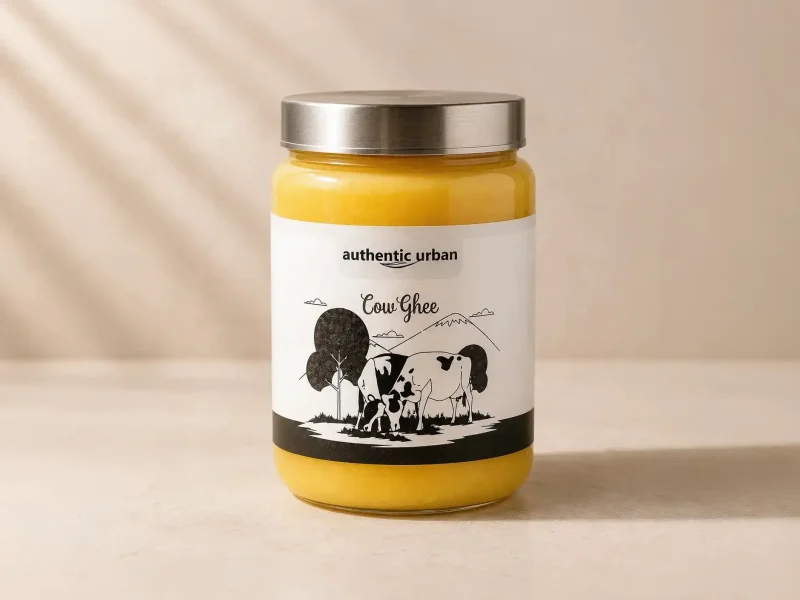 1 Litre
Parathas and winter sweets
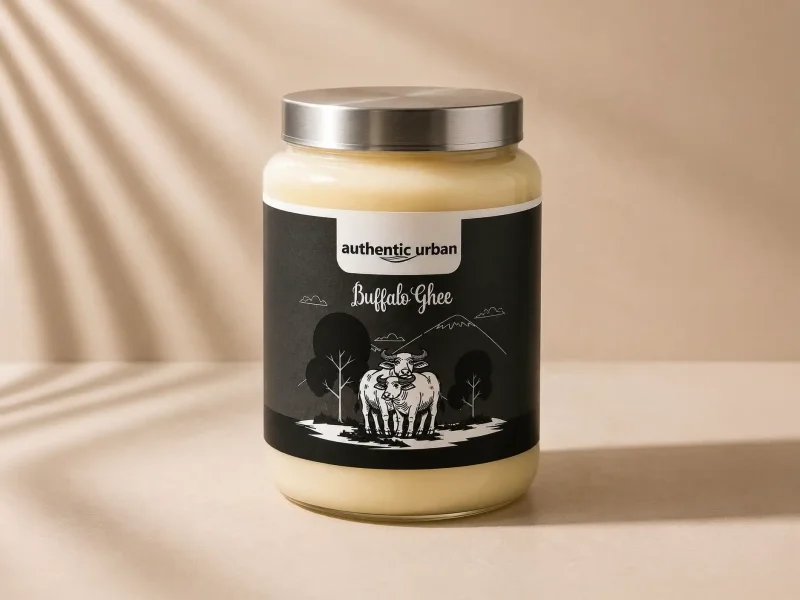 1 Litre
Each order is cooked after you place it, and the packing video is of that batch. Past order videos are on the shop.
FAQ
Asthma me ghee khana chahiye ya nahi?
Haan, thoda sa kha sakte hain. Most people with asthma can eat 1 to 2 teaspoons of ghee a day on roti, dal, or khichdi, the same limit ICMR-NIN sets for everyone. Ghee se saans ki nali nahi khulti, and it does not replace the inhaler. Raat ko bhari khana ya ghee wala doodh late mat lijiye if acidity sets off your cough. Milk allergy ho to pehle allergist se poochhiye.
Is cow ghee or buffalo ghee better for asthma?
Neither is proven better for asthma. Both are almost pure milk fat with about the same calories per teaspoon. Ayurveda prefers cow ghee for most healing uses, and cow ghee is lighter, so it is the usual pick for the daily spoon on dal and roti. Buffalo ghee is richer and sets firmer, better for parathas and winter sweets. For breathing, the amount and the timing of the meal matter more than the animal.
Can I drink turmeric milk with ghee if I have asthma?
Yes, if milk agrees with you and you have no milk allergy. Keep it to a cup of warm milk with a pinch of haldi and ¼ to ½ teaspoon of ghee, and drink it in the early evening rather than in bed. A rich drink just before lying down can bring on acid reflux, which Asthma + Lung UK lists as something that can make asthma worse. It is a comfort drink, not a treatment.
Is ghee good for bronchitis or COPD?
Ghee does not treat bronchitis or COPD, just as it does not treat asthma. As food, a teaspoon on soft meals is fine for most people, and a lung specialist may want you to keep weight up or down, which changes how much fat you eat. Many people with COPD get breathless while eating; smaller, softer meals help more than any added fat. Follow the diet plan your doctor or dietitian gives you.
Is ghee better than refined oil for someone with asthma?
No study shows one fat is better for asthma than another. Pick by the job: a teaspoon of ghee on hot dal or roti for taste, and oil for deep frying. What matters more with asthma is smoke. Any fat heated past its smoke point fills the kitchen with fumes, and cooking fumes are a common indoor trigger. Keep the flame moderate and the extractor fan on, whichever fat is in the kadai.
Can garlic ghee or pippali ghee help asthma?
Garlic or pippali cooked in ghee, and medicated ghee preparations called ghrita, appear in Ayurvedic texts for breathing complaints. They are prescribed by a vaidya for a particular person, not a home dose, and we found no trial showing they control asthma. If you want to try one, tell your doctor, keep taking your inhalers, and stop if your symptoms change. Never swap a preventer for a herbal ghee.
About the editorial team
Authentic Urban TeamBilona ghee makers, Gir Somnath, Gujarat
We are the Parmar family in Gir Somnath, Gujarat. We have made ghee here since 2016 and sold it online since 2025. We make only Bilona ghee, test it every month, and anyone is welcome to visit and watch it being made. Our Gir cows and Jafarabadi buffalo are grass-fed village animals that graze near the Gir forest, with no hormones or milk boosters. We set their milk to curd, churn it, and cook the makkhan on a wood chulha. These articles come from that kitchen and from what customers ask us on WhatsApp. We are ghee makers, not doctors.
Sources
- Asthma, NHS. Checked 27 Sep 2026.
- Food and asthma, Asthma + Lung UK. Checked 27 Sep 2026.
- Asthma and other health conditions (acid reflux, weight), Asthma + Lung UK. Checked 27 Sep 2026.
- Help with eating and drinking (dairy and mucus), Asthma + Lung UK. Checked 27 Sep 2026.
- Air pollution and allergies at home (cooking, candles, incense, wood fires), Asthma + Lung UK. Checked 27 Sep 2026.
- Dietary Guidelines for Indians, 2024 (ghee or butter 1 to 2 teaspoons a day, printed p. 54), ICMR-National Institute of Nutrition. Checked 27 Sep 2026.