Can Dogs Eat Ghee? How Much by Weight, and When Not To
Can dogs eat ghee? Yes, a healthy adult dog can have a little plain ghee mixed into its food: about ¼ teaspoon a day for a small dog, ½ teaspoon for a medium one, and 1 teaspoon at most for a large dog. It is a treat, not a supplement. Skip it for dogs that have had pancreatitis, are overweight, or eat a prescription diet.
Can dogs eat ghee?
Yes, in small amounts. Plain ghee is not poisonous to dogs, and a few drops on the usual food are fine for most healthy adults. The limit is calories and fat: one teaspoon of ghee carries about 37 kcal, which is the whole treat allowance of a 5 kg dog for a day. So the amount follows the dog's weight, and some dogs should not get any.
Dogs do not need ghee. A complete dog food already has the fat a dog needs: Merck Veterinary Manual puts most adult dog foods at 5 to 15% fat on a dry-matter basis. Ghee is something you add because the dog likes it, or to get a fussy eater started, and that is how this page treats it.
How much ghee can a dog have a day?
About ¼ teaspoon a day under 10 kg, ½ teaspoon from 10 to 25 kg, and no more than 1 teaspoon above 25 kg. We worked those amounts back from what a dog burns in a day, so they sit well inside the treat allowance vets use.
Merck Veterinary Manual gives a dog's resting energy as 70 × (body weight in kg)0.75, and a neutered adult's daily need as 1.6 times that. Its feeding guidance keeps all treats under 10% of the day's calories. USDA FoodData Central lists ghee at 876 kcal per 100 g and 12.8 g per tablespoon, so a teaspoon (about 4.3 g) is about 37 kcal.
Dog weight
Calories a day
All treats (10%)
Ghee, at most
Share of the day
5 kg
Calories a day: about 374 kcal
All treats: 37 kcal
Ghee, at most: ¼ tsp (9 kcal)
Share of the day: 2.5%
10 kg
Calories a day: about 630 kcal
All treats: 63 kcal
Ghee, at most: ½ tsp (19 kcal)
Share of the day: 3%
20 kg
Calories a day: about 1,059 kcal
All treats: 106 kcal
Ghee, at most: ½ tsp (19 kcal)
Share of the day: 1.8%
30 kg
Calories a day: about 1,436 kcal
All treats: 144 kcal
Ghee, at most: 1 tsp (37 kcal)
Share of the day: 2.6%
40 kg
Calories a day: about 1,781 kcal
All treats: 178 kcal
Ghee, at most: 1 tsp (37 kcal)
Share of the day: 2.1%
Calories for a neutered adult dog at a healthy weight (1.6 × 70 × kg0.75) and treats under 10% of the day, from Merck Veterinary Manual. Ghee at 876 kcal per 100 g and a teaspoon of 4.3 g, from USDA FoodData Central. Checked 27 September 2026. A puppy, a working dog, or an overweight dog needs different numbers from your vet.
The ghee column uses a third or less of each dog's treat allowance, which leaves room for the biscuit or the bit of chicken it already gets. That is also why the 1 teaspoon ceiling does not rise for a 40 kg dog: a big dog can take more calories, but more fat in one go is still more work for the pancreas. These are daily ceilings, not targets. Start with a few drops.
Never give a dog the amounts people eat. Our family eats 1 to 2 teaspoons each a day on roti, dal, and khichdi; ICMR-NIN's guidance for adults is on how much ghee per day. A tablespoon of ghee in a morning drink, at 112 kcal, would be close to a third of a 10 kg dog's whole day.
Can dogs digest ghee better than milk or butter?
Usually yes, because ghee is almost all fat, with very little of the milk sugar and milk protein that upset some dogs. USDA lists 99.5 g of fat and 0.28 g of protein in 100 g of ghee. Milk and butter carry more of both, and butter often has salt.
We see where the milk goes every time we make ghee. About 30 to 35 litres of Gir cow milk make 1 kg of our cow ghee. The milk is set to curd overnight and churned until the makkhan separates, so most of the protein and milk sugar leave in the chaas (buttermilk). The rest cooks into the brown milk solids we strain out of the matki. The trace that stays, and why it matters for people with a milk allergy, is on does ghee have casein or whey, and the lactose side on A2 ghee and lactose intolerance.
Easy on the milk side does not mean easy on the gut. Fat is what a dog's pancreas has to deal with, and ghee is nearly pure fat. A dog that gets loose, greasy stool after ghee is telling you the amount was too much.
Is ghee good for dogs? What it can and cannot do
Ghee can make food more tempting and adds calories, and that is about all we can say for sure. We found no study that fed dogs ghee and measured the result, so the claims on pet pages come from studies on fat in general or on people.
- A fussy eater or an old dog off its food: a few drops of warm ghee on the bowl can get it eating. This is the use that makes the most sense.
- A dull coat: fat in the diet matters for skin and coat, but a dog on a complete food already gets it. A dull coat, itching, or hair loss is a reason to see a vet about diet, fleas, or skin disease first.
- Stiff joints: ghee does not treat arthritis. Extra weight makes stiff joints worse, so for an older, heavier dog ghee can do more harm than good.
- Vitamins: a complete dog food is already balanced for vitamins, so ghee has nothing to top up.
The full label for people, with calories and vitamins per spoon, is on ghee nutrition facts.
Can ghee cause pancreatitis in dogs?
Too much of it can. Merck Veterinary Manual names dietary indiscretion (a dog eating something rich it should not have) as a common risk factor for pancreatitis in dogs, and a jar of ghee or a plate of puris is exactly that.
Merck also lists severe high blood triglycerides as a risk, and notes that Miniature Schnauzers are heavily overrepresented. The signs are loss of appetite, vomiting, weakness, belly pain, dehydration, and diarrhoea; a milder case may show only a dog that will not eat and lies around.
A dog being treated for pancreatitis goes on a low-fat diet, which Merck sets at under 20 g of fat per 1,000 kcal. For a 10 kg dog eating about 630 kcal a day, that is under 12.6 g of fat for the whole day, from everything. One teaspoon of ghee alone is about 4.2 g of fat, a third of that. This is why a dog that has had pancreatitis should not get ghee at all unless its vet says so.
Can dogs eat roti, dal, or sweets made with ghee?
Plain roti with a thin smear of ghee is fine now and then. In an Indian kitchen the ghee is rarely the danger. The onion and garlic in the tadka, the kishmish in the halwa, and how much fat is on the plate are.
Onion, garlic, raisins, and sugar-free sweets
Merck Veterinary Manual says dogs have been harmed by onion and garlic raw, cooked, dried, or powdered, that garlic is 3 to 5 times more toxic than onion, and that the anaemia it causes often shows only a few days later, when the meal is forgotten. It also records kidney failure in some dogs after grapes or raisins, dangerous low blood sugar from xylitol (used in sugar-free sweets), and heart rhythm problems from chocolate.
Food with ghee
For a dog?
Why
Plain ghee, a few drops on its usual food
Fine for most healthy dogs
Keep to the amount in the table above and count it as a treat.
Plain roti or rice with a thin smear of ghee
Fine now and then
Plain wheat and rice are not the risk. Salt, onion, and extra fat are.
Dal, sabzi, or khichdi with an onion or garlic tadka
Keep away
Onion and garlic harm dogs raw, cooked, or dried, and garlic more so.
Halwa, ladoo, or sheera with kishmish (raisins)
Keep away
Grapes and raisins have caused kidney failure in some dogs.
Sugar-free sweets and chocolate barfi
Keep away
Xylitol can crash a dog's blood sugar. Chocolate can upset the heart rhythm.
Puri, pakora, parathas soaked in ghee
Keep away
A rich, fatty meal is the classic trigger for pancreatitis.
Flavoured ghee (garlic, herbs, salted)
Keep away
The flavouring is the problem, not the ghee.
Onion and garlic, grapes and raisins, xylitol, chocolate, and fatty meals from Merck Veterinary Manual (Garlic and Onion Toxicosis; Food Hazards; Pancreatitis in Dogs and Cats). Checked 27 September 2026.
If you want to share khichdi, take the dog's portion out before the tadka goes in, and keep it plain. The same goes for the ghee-rich festival plate: the dog gets a plain roti, not the ladoo.
Which dogs should not have ghee?
Any dog with a reason to keep fat low should skip ghee until a vet says otherwise. Ask first if your dog:
- has had pancreatitis, or has high triglycerides on a blood test;
- is a Miniature Schnauzer, the breed Merck names as most at risk;
- is overweight, or on a weight-loss plan;
- eats a prescription diet (low-fat, kidney, liver, or allergy), which ghee would unbalance;
- is vomiting, has diarrhoea, or is off its food today;
- is a puppy on a puppy food, or a pregnant or nursing bitch on a vet's feeding plan.
Stop the ghee and call your vet if the dog vomits more than once, will not eat, has a painful or tight belly, or stands hunched after it. The same list for people, including who should skip ghee, is on ghee side effects.
My dog ate a whole jar of ghee. What should I do?
Call your vet now, tell them the dog's weight and how much ghee is gone, and follow what they say. Every tablespoon is about 112 kcal of almost pure fat, so even a small jar is several days of a small dog's calories in one go.
- Do not make the dog vomit at home unless the vet tells you to.
- Keep water available and hold back the next meal only if the vet agrees.
- Watch for 2 to 3 days: repeated vomiting, a sore belly, weakness, or refusing food means going in, even if the first day looked fine.
- Check the jar. If it was flavoured with garlic, or the dog also got into sweets, tell the vet: that changes what they look for.
Keep the kitchen jar lidded and off low shelves. It also keeps better that way: a dry spoon, the lid shut, away from the stove and sunlight. More on that in our ghee storage guide.
Can cats eat ghee?
A lick of plain ghee is unlikely to harm a healthy cat, but a cat is small and a little goes a long way, so keep it to a rare taste and ask your vet before making it a habit. There are no feeding guides for ghee in cats, and the hairball claims on pet pages have no study behind them.
The bigger risk is the food around the ghee. Merck Veterinary Manual says cats are the species most sensitive to onion and garlic, and that cats have been harmed by less than a teaspoon of cooked onion. A cat licking the dal bowl is a bigger worry than a cat licking the ghee spoon.
How to give ghee to a dog: a 7-point checklist
Screenshot this and keep it by the dog's food.
- Use plain ghee only: no salt, no garlic, no herbs, no flavour.
- Melt it and mix it into the usual food. Do not give it off a spoon.
- Week one: a few drops a day. Go up only if stool stays normal.
- Stay at or under the amount for its weight in the table.
- Cut a treat or two to make room for the calories.
- Stop at the first vomiting, loose stool, or loss of appetite.
- Ask your vet first if the dog has had pancreatitis, is overweight, is a Miniature Schnauzer, or eats a prescription diet.
For a dog's dry, cracked paw pads, a pea-sized dab is a common home remedy; the human version for cracked feet is on ghee for cracked heels.
Which ghee for a dog's bowl?
Use the same plain ghee you eat, as long as it is only ghee: no salt, garlic, herbs, or flavour. Warm a spoon: real ghee smells of toasted milk. Five home checks are on how to identify pure ghee, and our ranking of the jars on sale is best cow ghee in India.
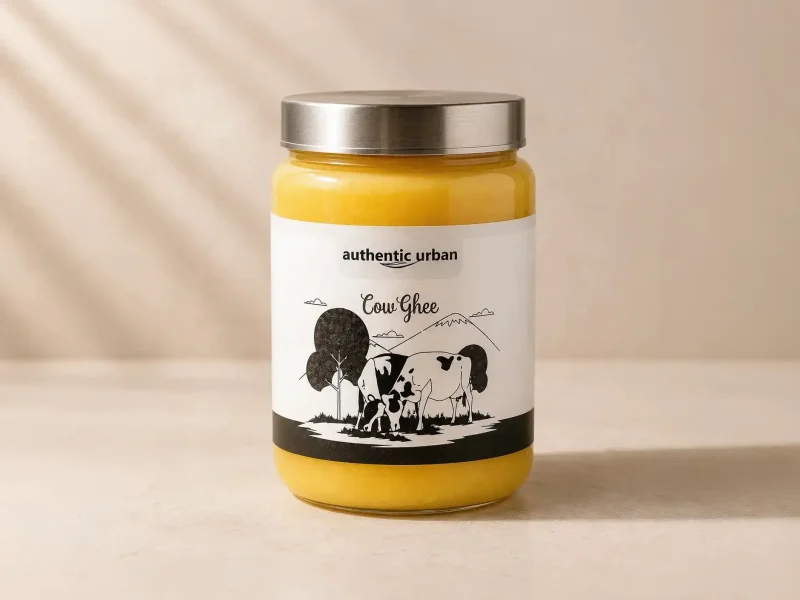
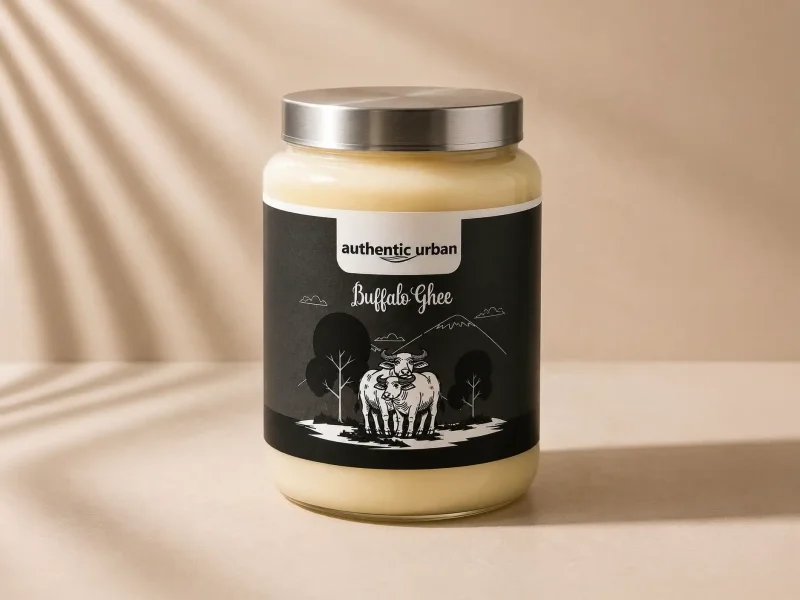
We make and sell ghee, so weigh this with that in mind. For those few drops we would pick our own A2 Gir cow ghee: grass-fed Gir milk set to curd, churned by the Bilona method, and cooked in a matki on a wood chulha, with nothing added. At ₹2,399 a litre a teaspoon is about ₹12, so a small dog's ¼ teaspoon is about ₹3 a day. Our Jafarabadi buffalo ghee is the one for the family's parathas and halwa. Each jar is made after you order, with a video of it on WhatsApp, and we test every month against the FSSAI limits; the steps are on how we make ghee.
A few drops on the dog's bowl
 1 Litre
The family's parathas
 1 Litre
Each order is cooked after you place it, and the packing video is of that batch. Past order videos are on the shop.
FAQ
Is ghee better than butter for dogs?
Ghee is the simpler of the two, because the water and most of the milk solids are cooked out, and it has no added salt. Butter often has salt and keeps more milk protein and milk sugar. Both are almost pure fat, though, so the amount matters far more than the choice. Neither is something a dog needs if it already eats a complete dog food.
Can I give ghee to my puppy?
Leave it out unless your vet says otherwise. A puppy food is built to give a growing dog the right balance of protein, fat, calcium, and calories, and puppy diets already carry more fat than adult food. Extra ghee adds calories without the nutrients that come with them, and a puppy's stomach upsets easily. Wait until the dog is fully grown, then start with a few drops.
Can I put ghee on my dog's dry paws or nose?
A thin layer on cracked paw pads or a dry nose is a common home remedy, and ghee is safe if the dog licks it off, which it will. Use a pea-sized amount, not a fingerful, and count what it licks. Paws that are red, swollen, bleeding, or smelly, or a nose that is crusted or losing colour, need a vet, not ghee.
Does ghee help a dog with constipation?
There is no good evidence that it does, and extra fat is a poor fix because it can swing the other way into loose stool. A constipated dog needs water, a walk, and a check of what it has been eating, such as bones. If it strains for more than a day, cries, vomits, or passes nothing at all, take it to a vet the same day.
Is it safe to feed street dogs roti with ghee?
Plain roti with a thin smear of ghee is fine as an occasional snack for a healthy community dog. The trouble is usually what else is on the plate: leftover sabzi or dal with onion and garlic, sweets with raisins, or fried food. If you feed the same dogs every day, a plain roti or plain rice with a little curd is kinder than a rich, oily plate.
Should I give my dog ghee every day or a few times a week?
Either works for a healthy adult dog if you stay inside the amount for its weight. Many owners find a few times a week easier, used as a topper to get a fussy eater started. Daily use makes more sense only when the dog stays lean and its stool is normal. If its weight creeps up over a month, cut the ghee first.
About the editorial team
Authentic Urban TeamBilona ghee makers, Gir Somnath, Gujarat
We are the Parmar family in Gir Somnath, Gujarat. We have made ghee here since 2016 and sold it online since 2025. We make only Bilona ghee, test it every month, and anyone is welcome to visit and watch it being made. Our Gir cows and Jafarabadi buffalo are grass-fed village animals that graze near the Gir forest, with no hormones or milk boosters. We set their milk to curd, churn it, and cook the makkhan on a wood chulha. These articles come from that kitchen and from what customers ask us on WhatsApp. We are ghee makers, not doctors.
Sources
- Butter oil, anhydrous (FDC ID 173412), SR Legacy, USDA FoodData Central. Checked 27 Sep 2026.
- Nutritional Requirements of Small Animals (RER formula, maintenance multipliers, fat in dog food), Merck Veterinary Manual. Checked 27 Sep 2026.
- Feeding Practices in Small Animals (treats under 10% of calories), Merck Veterinary Manual. Checked 27 Sep 2026.
- Pancreatitis in Dogs and Cats (Steiner JM), Merck Veterinary Manual. Checked 27 Sep 2026.
- Garlic and Onion (Allium spp) Toxicosis in Animals, Merck Veterinary Manual. Checked 27 Sep 2026.
- Food Hazards (grapes and raisins, chocolate, xylitol), Merck Veterinary Manual. Checked 27 Sep 2026.