Ghee for Period Cramps and PMS: Does It Help, How Much?
Ghee for period cramps is comfort food, not a painkiller. One teaspoon on a warm bowl of khichdi or dal is fine on period days, and you do not need more than your usual 1 to 2 teaspoons. What eases the cramps themselves is heat on the tummy, gentle movement, and ibuprofen or paracetamol when needed. Pain that stops your day needs a doctor.
Is ghee good for period cramps?
Ghee is fine to eat during periods, and it does not treat cramps. Keep it at 1 teaspoon on a warm meal, inside the 1 to 2 teaspoons a day ICMR-NIN sets for ghee or butter. No study has tested ghee for period pain. Heat, movement, and an anti-inflammatory painkiller are what the NHS and MedlinePlus recommend for the pain.
This page is for period pain and PMS in women whose periods are otherwise regular. If your periods are irregular or you have been told you have PCOS, the questions are different; read ghee for PCOS. If you are past your periods, see ghee for menopause.
What causes period cramps, and can food reach it?
Cramps come from the womb tightening, driven by prostaglandins, hormone-like chemicals the womb lining makes as it sheds. MedlinePlus says higher prostaglandin activity is thought to cause the common kind, called primary dysmenorrhoea, which starts in the teenage years in otherwise healthy women. That is why anti-inflammatory painkillers work: they cut prostaglandin production.
The second kind, secondary dysmenorrhoea, starts later in life and comes from a problem in the womb or pelvis. The NHS lists endometriosis, adenomyosis, fibroids, pelvic inflammatory disease, and an IUD (coil) among the causes. No food fixes those, and pain that changes after years of easy periods is one of the reasons to see a doctor (more below).
Does ghee for period cramps work? What the studies show
No trial has given women ghee and measured their period pain. What gets repeated online rests on ghee's butyrate, vitamins, or "hormone balance", and none of it was tested on cramps. Here is each claim, and what is known.
The claim
What is actually known
Ghee stops the cramps by lowering prostaglandins
No study has tested this in women. Prostaglandins made in the womb drive the cramps (MedlinePlus). Ibuprofen and naproxen act on them directly; a spoon of food fat has not been shown to.
Ghee in hot water on day 1 prevents cramps, or PCOD
A viral tip with no trial behind it. A warm drink can feel soothing on a bad morning; the warmth is doing that, and PCOD is not prevented by any one food.
The omega-3 in ghee eases period pain
The fish oil trials used capsules. Cochrane (2016) rated even those as very limited evidence, and ghee is mostly saturated fat, not omega-3.
Ghee balances hormones before your period
Not shown. The one diet trial on period pain went the other way: a low-fat vegetarian diet shortened cramps (details below).
Ghee eases cramps by easing constipation
Partly plausible. Some women get constipated before or during a period, and a warm, soft meal helps the bowel. Fibre and water do more than the fat.
The one diet trial on period pain went low fat
In a 2000 study in the journal Obstetrics and Gynecology, Barnard and colleagues put 33 women on a low-fat vegetarian diet for two cycles, and on their usual diet with a placebo pill for two more. On the diet, cramps lasted 2.7 days on average, down from 3.9 at the start, against 3.6 days on the placebo phase, and pain on the worst days was lower. PMS symptoms such as water retention also got shorter.
It was a small trial, the women knew what they were eating, and they also lost weight on the diet, so it does not prove fat causes cramps. It does mean the only direct evidence points away from adding extra ghee for period pain, not towards it. A teaspoon on a meal is fine; a tablespoon "for the cramps" has nothing behind it.
What about fish oil, ginger, and other supplements?
A 2016 Cochrane review pooled 27 trials with 3,101 women and found no high-quality evidence that any dietary supplement works for period pain. Fenugreek, fish oil, ginger, vitamin B1, and zinc had very limited, low-quality evidence; vitamin E showed none. Ghee carries a little vitamin E and no fish oil, so borrowing those trials for ghee does not hold up either. Ginger tea is a fine warm drink on a crampy day; do not expect it to replace a painkiller.
How much ghee during periods, and when?
Eat the same 1 to 2 teaspoons a day you would on any other day, on warm food. One teaspoon of ghee (5 g) is about 44 kcal and 3.1 g of saturated fat, per USDA figures, so a few extra spoons across a five-day period add up without easing anything.
Cycle day
Ghee
How
PMS days (the week before)
1 tsp
On dal, khichdi, or roti at lunch or dinner. Smaller meals every 2 to 3 hours, the NHS PMS advice, help cravings more than extra fat.
Day 1 and 2 (worst cramps)
1 tsp
In a warm, light meal like moong dal khichdi. Use a hot water bottle and a painkiller for the pain itself.
Heavy flow days
1 tsp
Build the plate around iron: dal, chana, greens, and a guava or orange after the meal.
Bedtime, warm milk
½ tsp, optional
Only inside the day's total. Skip it if milk gives you gas or heartburn.
The whole day
1 to 2 tsp
The ICMR-NIN limit for ghee or butter. Periods do not raise it.
For healthy adults. If a doctor has set your fat intake for cholesterol, liver, or weight, follow that.
In our home in Gir Somnath, each of us eats 1 to 2 teaspoons of ghee a day, on roti, dal, and khichdi, and more only in winter sweets like adadiya pak and gond. We make ghee for a living and we still measure the spoon. To work out the right amount for everyone at your table, use our ghee and oil calculator; the amount by age is on how much ghee per day.
The warm-water spoon on an empty stomach is the most shared period tip. It is harmless in a ½ teaspoon amount for most women, but it is not a cramp remedy, and people with gallstones or reflux should skip it. Who should avoid it is on ghee on empty stomach.
What to eat during periods for cramps, with ghee
Eat small, warm meals with iron in them, and let ghee be the tadka, not the point. Per USDA, ghee has 0 mg of iron and 0 mg of magnesium, so it adds nothing for the blood you lose. Dal, chana, leafy greens, and fruit after the meal do that job. ICMR-NIN advises eating vitamin C foods like guava or orange after meals to absorb more iron from plant food.
Meal
On the plate
Why
Morning
Warm water or ginger tea, then poha with peas or a besan chilla
Something warm, and food early, so the day does not start on tea and biscuits.
Lunch
Dal, a leafy sabzi (palak, methi, or bathua), 2 rotis, 1 tsp ghee on the dal
Dal and greens bring iron; ghee brings none. Keep tea an hour away from the meal.
After lunch
A guava, an orange, or a few slices of amla
ICMR-NIN advises vitamin C foods after meals to help iron absorption.
Evening
Roasted chana, peanuts, or a banana
A small snack keeps the gap short, which is the NHS tip for PMS cravings and mood.
Dinner
Moong dal khichdi with a jeera tadka in 1 tsp ghee, curd or buttermilk on the side
Soft, warm, and easy on a crampy stomach.
If you feel tired and breathless every cycle, or your periods are heavy, ask for a haemoglobin test before changing your diet; iron tablets may be what you need. How to pair ghee with iron foods is on ghee for anaemia. Some women also get constipated around their period, which makes the cramping feel worse; fibre and water help that more than fat, as ghee for constipation explains.
Ghee in milk or haldi doodh on period days
A glass of warm milk with ½ teaspoon of ghee and a pinch of haldi is a common night drink in Indian homes on period days. MedlinePlus lists warm drinks among home care for cramps, so the comfort is real; the ghee is the smallest part of it. Count the ghee in your day's total, and skip it if milk leaves you gassy. The recipe is on turmeric ghee golden milk.
Does warm ghee massage on the belly help cramps?
The massage and the warmth can help; the ghee is only the carrier. The NHS lists massaging your tummy and back, and a hot water bottle wrapped in a towel, among its self-help steps for period pain. Rubbing a little warm ghee in slow circles below the navel is a household tradition that fits that advice.
Keep it warm, not hot: test it on the inside of your wrist first. Use about ½ teaspoon, skip broken or irritated skin, and follow it with a hot water bottle over a cloth. Ghee drops in the navel (the nabhi tradition) are a separate practice with their own claims, checked on ghee in belly button.
Ghee or painkillers for period pain?
Painkillers and heat ease the pain; ghee does not. For most women with ordinary cramps, the order is: heat and movement first, an anti-inflammatory painkiller if the pain is still there, and ghee on dinner as food. Here is what each one does.
What
How
Evidence
Hot water bottle or heat pad on the tummy
Wrapped in a towel, while the cramps last
NHS and MedlinePlus both list it.
Ibuprofen or naproxen
As the pack or your doctor says; MedlinePlus suggests starting the day before your period is due
Acts on prostaglandins, the cause of the cramps.
Paracetamol
As the pack says, if anti-inflammatories do not suit you
NHS lists it for period pain.
Gentle movement
A walk, yoga, swimming, or cycling
NHS self-help advice.
Massage of the tummy and back
With any warm oil or ghee, or none
NHS self-help advice. The rubbing and warmth help; the oil is a carrier.
1 tsp ghee on a warm meal
Inside 1 to 2 tsp a day
Food and comfort. Not tested as a period pain treatment.
Follow the pack or your doctor for any medicine. If you are pregnant or take other regular medicines, ask a doctor or pharmacist first.
If you need a painkiller every single cycle and it still does not let you get through the day, that is not something to push through with home remedies. A doctor can offer hormonal treatment, and can look for endometriosis or fibroids.
Can ghee help PMS bloating, mood, and cravings?
Not directly, but it can make the meals that help PMS easier to eat. The NHS lists mood swings, bloating, tiredness, breast tenderness, headaches, and food cravings as common PMS symptoms, and advises regular exercise, enough sleep, a balanced diet with smaller meals every 2 to 3 hours, and not smoking or drinking much alcohol.
A teaspoon of ghee on a small bowl of dal or a roti keeps a snack filling, which is the useful part. Large, rich meals do the opposite; if your belly already feels tight before your period, read ghee for bloating. The NHS also suggests a symptom diary for at least 2 cycles; it is the fastest way to show a doctor whether your pattern is PMS or something else.
When is period pain a reason to see a doctor?
See a doctor if period pain stops you doing your usual things, or if your periods become more painful, heavier, or irregular than before. Those are the NHS lines. MedlinePlus adds pain that has not eased after 3 months of home care, and pain at times other than your period.
Get help the same day for pelvic or period pain that is severe or worse than usual, sudden severe pain, fever with pelvic pain, or a smelly or unusual discharge. Do not try ghee, or more ghee, first.
Painful periods are common, and severe ones are not something you just have to live with: endometriosis, adenomyosis, and fibroids are among the causes a doctor can look for. Take your symptom diary, and say plainly how many days a month you miss work, college, or school.
A period-week checklist
Screenshot this for your next cycle.
- Keep ghee at 1 to 2 teaspoons a day, measured with a real 5 ml spoon, on warm food.
- Hot water bottle on the tummy at the first cramp. Do not wait for the pain to peak.
- If you use ibuprofen, ask your doctor about starting it the day before your period is due.
- Eat small meals every 2 to 3 hours in the PMS week. Dal and greens at lunch, fruit after.
- On heavy days, add iron foods and a guava or orange after the meal. Keep tea away from meals.
- Write down pain (0 to 10), flow, and mood for 2 cycles. Take the notes to your doctor.
- Pain that stops your day, is worse than usual, or comes with fever: see a doctor, not the ghee jar.
Which ghee for period-day khichdi and dal?
No ghee is better for cramps than another, so buy for taste and trust. Good ghee smells of toasted milk when you warm it, is clear when melted, and often sets grainy when cool. How to check any jar is on how to identify pure ghee, and our ranking of the cow ghee on sale is best cow ghee in India.
We make and sell ghee, so weigh this with that in mind. For the daily teaspoon we would pick our own A2 Gir cow ghee: grass-fed Gir milk set to curd overnight, churned, and cooked in a matki on a wood chulha, made after you order, with a video of your jar sent on WhatsApp. At ₹2,399 a litre, a 5 ml teaspoon costs about ₹12. Our Jafarabadi buffalo ghee is the richer jar for halwa and ladoo, best kept to a small piece. We test every month against the FSSAI limits; the steps are on how we make ghee.
The teaspoon on khichdi
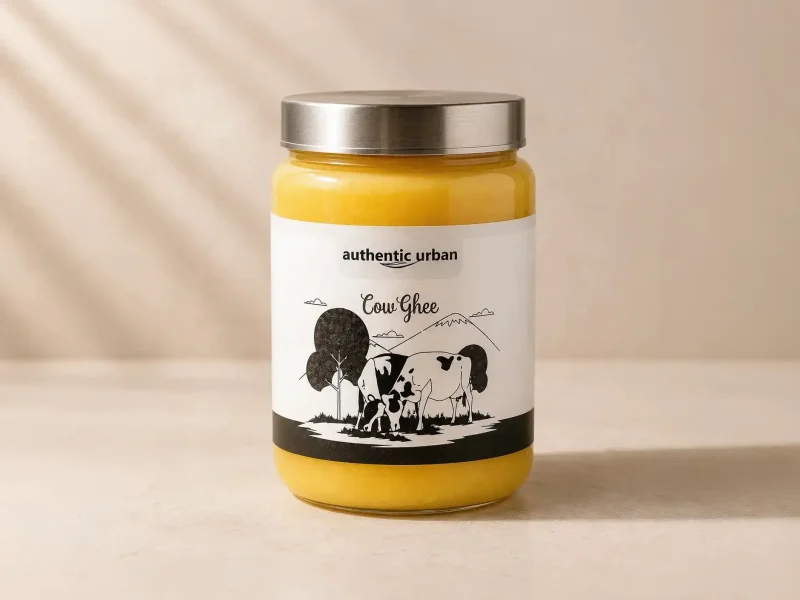 1 Litre
A small piece of halwa
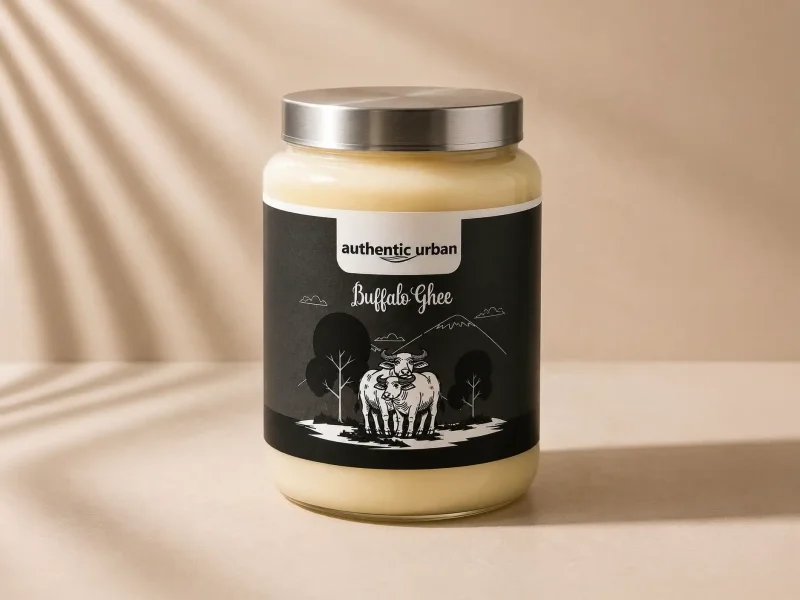 1 Litre
Each order is cooked after you place it, and the packing video is of that batch. Past order videos are on the shop.
FAQ
Periods me ghee khana chahiye ya nahi?
Haan, kha sakte hain. Din me 1 se 2 chammach ghee, garam dal, khichdi ya roti par, bilkul theek hai. Ghee se dard turant kam nahi hota, isliye pet par garam paani ki bottle rakhein aur zarurat ho to doctor ki batayi dard ki dawa lein. Periods me ghee ka matra badhane ki zarurat nahi. Dard itna ho ki kaam na ho sake, to doctor ko dikhayein.
Can ghee bring on a late period?
No food has been shown to bring on a period, ghee included. A late period in a sexually active woman needs a pregnancy test first. Stress, illness, big weight changes, thyroid problems, and PCOS can all delay periods, and a doctor can check for them if it keeps happening. Eating spoons of ghee, or ghee with jaggery, to force a period only adds calories.
Does eating ghee increase bleeding during periods?
There is no evidence that a teaspoon of ghee changes how much you bleed. Flow depends on hormones and on the womb itself; fibroids and adenomyosis, for example, can make periods heavier. If you soak through pads very fast, pass large clots, or feel dizzy and tired every cycle, see a doctor and ask for a blood test for anaemia.
Can teenage girls eat ghee during periods?
Yes, the same 1 to 2 teaspoons a day on meals. ICMR-NIN notes that once periods start, adolescent girls are under more physical strain than boys and need careful nutrition, so full meals matter more than extra ghee. Dal, greens, eggs or paneer, and fruit after meals do the heavy lifting. Painful periods that make her miss school are worth a doctor visit.
Is cow ghee or buffalo ghee better during periods?
Neither has been tested for period pain, so pick by the dish. Cow ghee is lighter and suits a teaspoon on khichdi or dal on a crampy day. Buffalo ghee is richer and firmer, better for halwa or ladoo, which are heavy to eat in large amounts when your stomach already feels unsettled. Both give about 44 kcal a teaspoon.
Is gond or ajwain ladoo with ghee good for period pain?
They are winter and postpartum sweets in many Indian homes, and a small piece is fine as food. No study shows they ease cramps. A ladoo can carry several teaspoons of ghee and a lot of sugar, which uses up your whole day of fat. If you want one, have a small piece after lunch and skip the extra ghee that day.
About the editorial team
Authentic Urban TeamBilona ghee makers, Gir Somnath, Gujarat
We are the Parmar family in Gir Somnath, Gujarat. We have made ghee here since 2016 and sold it online since 2025. We make only Bilona ghee, test it every month, and anyone is welcome to visit and watch it being made. Our Gir cows and Jafarabadi buffalo are grass-fed village animals that graze near the Gir forest, with no hormones or milk boosters. We set their milk to curd, churn it, and cook the makkhan on a wood chulha. These articles come from that kitchen and from what customers ask us on WhatsApp. We are ghee makers, not doctors.
Sources
- Period pain, NHS. Checked 27 Sep 2026.
- Painful menstrual periods, MedlinePlus Medical Encyclopedia (US National Library of Medicine). Checked 27 Sep 2026.
- PMS (premenstrual syndrome), NHS. Checked 27 Sep 2026.
- Dietary supplements for dysmenorrhoea (Pattanittum and others, 2016, CD002124), Cochrane. Checked 27 Sep 2026.
- Diet and sex-hormone binding globulin, dysmenorrhea, and premenstrual symptoms (Barnard, Scialli, Hurlock, Bertron; Obstetrics and Gynecology, 2000, 95(2): 245-50), Obstetrics and Gynecology (PMID 10674588). Checked 27 Sep 2026.
- Dietary Guidelines for Indians, 2024 (adolescent girls, printed p. 37; vitamin C and iron absorption, printed p. 48; ghee or butter 1 to 2 teaspoons a day, printed p. 54), ICMR-National Institute of Nutrition. Checked 27 Sep 2026.
- Butter oil, anhydrous (FDC ID 173412), SR Legacy, USDA FoodData Central. Checked 27 Sep 2026.