Ghee Side Effects: How Much Is Too Much, Who Should Avoid
Ghee side effects come from too much, not from a normal spoon: weight gain, loose oily stools, heaviness, and higher LDL cholesterol in some people. ICMR-NIN's 2024 guidelines keep ghee to 1 to 2 teaspoons a day. People with gallstones, pancreatitis, serious liver or heart disease, or a milk allergy should ask their doctor before eating it at all.
What are the side effects of ghee?
The side effects of ghee are the side effects of too much fat: slow weight gain, loose or oily stools, nausea, reflux, and a rise in LDL cholesterol for some people. At 1 to 2 teaspoons a day, the amount ICMR-NIN advises, most healthy adults notice none of them. Gallbladder pain after a fatty meal is the one to take seriously.
Ghee is not poison, and it is not a free food either. It is about 99.5% fat, per USDA FoodData Central, so it carries more calories per spoon than almost anything else in the kitchen. The usual mistake we see is pouring ghee on top of the same oil, not in place of it. This page is for adults who eat ghee daily and want to know where the line is, and for anyone with a health condition wondering if they should eat it at all. Whether ghee is a good fat overall is a separate question, answered on is ghee healthy.
Side effect
Usually shows up when
What to do
Slow weight gain
When: Ghee added on top of the usual oil, week after week
Do: Swap, do not stack. Take out a spoon of oil for every spoon of ghee.
Loose, oily stools or nausea
When: A sudden jump from teaspoons to tablespoons, or a fasted spoon
Do: Drop to 1 teaspoon with a meal for a week, then build back slowly.
Heaviness, burping, acid in the throat
When: A heavy ghee meal late at night, or with fried food
Do: Less fat at dinner. Eat 2 to 3 hours before lying down.
LDL cholesterol going up
When: Saturated fat above the ICMR-NIN line most days
Do: Show your doctor what you eat. Hold ghee at their number.
Pain under the right ribs after meals
When: Gallstones react to fatty meals
Do: Stop added fat that day and see a doctor. Do not push through.
How much ghee is too much?
More than 2 teaspoons (10 g) of ghee a day is more than ICMR-NIN advises, and a little over 3 teaspoons (about 16 g) reaches 10 g of saturated fat, the amount the same guidelines call high. Here is what each common portion carries.
Portion
Energy
Sat. fat
What it means
1 teaspoon (5 g)
44 kcal
3.1 g
Half the ICMR-NIN ghee limit. A normal spoon on dal or roti.
2 teaspoons (10 g)
88 kcal
6.2 g
The top of ICMR-NIN's 1 to 2 teaspoon ghee limit. What our family eats each on a normal day.
1 tablespoon (12.8 g)
112 kcal
7.9 g
Already past the ghee limit. Fine only if it replaces oil that day.
3 teaspoons plus a little (16 g)
140 kcal
9.9 g
About 10 g of saturated fat: the line ICMR-NIN calls high.
2 tablespoons (25.6 g)
224 kcal
15.8 g
More than a sedentary woman's whole visible-fat budget for the day (20 g).
3 tablespoons (38.4 g)
336 kcal
23.8 g
Over the 30 g of visible fat ICMR-NIN treats as a high-fat day on 2,000 kcal.
Energy and saturated fat from USDA FoodData Central, SR Legacy 173412 (876 kcal and 61.9 g saturated fat per 100 g), worked out for each portion. Teaspoon 5 g (ICMR-NIN), tablespoon 12.8 g (USDA). Limits from ICMR-NIN Dietary Guidelines for Indians 2024. Checked 26 September 2026.
Ghee is not the only fat in the day. ICMR-NIN puts all visible fat, oil and ghee together, at 20 g a day for a sedentary woman and 30 g for a sedentary man, rising to 40 or 50 g for heavy physical work. Two tablespoons of ghee on paratha already fills a sedentary woman's day before a drop of oil goes into the sabzi. Day-by-day plans for different people are on how much ghee per day, and the full label, vitamins included, is on ghee nutrition facts.
At home our family eats 1 to 2 teaspoons each a day, on roti, dal, and khichdi. We eat more only in winter sweets like adadiya pak and gond, and those are weeks, not the whole year. We make ghee for a living, and that is still our daily amount.
What happens if you eat too much ghee every day?
Eaten above the limit every day, ghee usually shows up first on the scale, then in the gut, and for some people later in a cholesterol report.
Weight gain
Three extra tablespoons a day is about 336 kcal, going by the USDA figures above. Kept up for a month, that adds roughly 10,000 kcal the body did not need. Ghee feels light because it melts into hot food, so people stop counting it. It fits a weight-loss plan only as a swap, which we work through on ghee for weight loss.
Loose stools, nausea, and reflux
A sudden jump from a teaspoon to several tablespoons can bring loose or oily stools, bloating, and nausea while the gut catches up with the fat. Reflux is the other common one: a heavy, fatty dinner eaten late can push acid up for people who already get heartburn. People with IBS often react to fat more than others; their page is ghee for IBS.
Is ghee bad for cholesterol and the heart?
In large amounts, it can be. ICMR-NIN's 2024 guidelines say saturated fatty acids raise total and LDL cholesterol and raise the risk of heart attack and stroke, and ghee is about 62% saturated fat by weight, per USDA. At 1 to 2 teaspoons a day, you stay well under the 10 g saturated-fat line.
People react differently. Some see LDL climb on a daily tablespoon; others barely move. If you already have high LDL, a family history of early heart attacks, or heart disease, your cardiologist's number replaces ours, and it may be less than a teaspoon or none. What the research says about ghee and lipids is on ghee for cholesterol.
Who should not eat ghee?
Very few people need zero ghee for good: the clear cases are gallbladder attacks, pancreatitis, serious liver disease, and severe fat malabsorption, each until a doctor says otherwise. Most others with a condition need a smaller amount, set by their doctor, not a ban. We are ghee makers, not doctors; this table is where your doctor takes over.
If you have
Ghee
What that means
Gallstones, or gallbladder pain after meals
Avoid for now
No added fat on a painful day. Your doctor decides if and when ghee comes back.
Pancreatitis, now or recently
Avoid for now
All added fat stays off until the doctor reopens fats.
Cirrhosis, hepatitis, or jaundice
Doctor sets it
The liver specialist gives the fat limit. Fatty liver is a different case, covered on its own page.
Severe fat malabsorption (pale, greasy, floating stools)
Doctor sets it
The fat passes through undigested. Treatment first, ghee later.
Heart disease, a recent heart attack, or very high LDL
Doctor sets it
Often less than a teaspoon, or none. Follow the cardiologist, not a kitchen habit.
Diabetes with high triglycerides, or kidney disease
Doctor sets it
Total fat and calories matter more here. The dietitian gives the number.
Milk allergy (not lactose intolerance)
Ask an allergist
Ghee still carries a trace of milk protein. Lactose intolerance is usually a smaller problem.
Babies under 1 year
Paediatrician first
Do not add ghee to a baby's food until your paediatrician says how and when.
Pregnancy
Usually fine with meals
Ghee in normal food is fine for most. Gestational diabetes, severe vomiting, or gallbladder pain: ask your obstetrician.
Healthy adults
Usually fine
1 to 2 teaspoons a day, as ICMR-NIN advises, in place of some oil.
Gallbladder and pancreas
Fat makes the gallbladder squeeze out bile. With stones in it, that squeeze can hurt. The NIDDK notes that gallbladder attacks usually follow heavy meals and often come in the evening or at night, with pain in the upper right belly that can last several hours. Pancreatitis is similar: fat asks an inflamed pancreas to work. After gallbladder surgery, bring fat back in the steps your surgeon gives you.
Liver, kidney, and diabetes
Fatty liver usually improves with weight loss and a lighter plate overall, and a small amount of ghee can sit inside that plan if your doctor agrees; see ghee for fatty liver. Diabetes on its own does not rule ghee out, but high triglycerides or kidney trouble alongside it make total fat matter more. With kidney disease, the nephrologist or renal dietitian sets the fat. Our longer answer for diabetes is on can diabetics eat ghee.
Milk allergy and lactose intolerance
These are two different things. USDA lists 0.28 g of protein per 100 g of ghee, which is about 14 mg of milk protein in a teaspoon: nothing for nutrition, but enough to matter to someone with a true milk allergy. The NHS lists swelling of the lips, face, and eyes, a raised itchy rash, wheezing, and being sick among food allergy signs. Lactose intolerance is usually a smaller problem with ghee. The detail is on does ghee have casein.
Pregnancy and babies
Ghee in normal meals is fine for most pregnancies. ICMR-NIN's 2024 guidelines ask pregnant and breastfeeding women to get their extra fat from nuts, oilseeds, beans, and fish, and to restrict visible fat, so the extra laddoos are not the answer. Babies under one year get ghee only on the paediatrician's advice. See ghee during pregnancy and ghee for babies.
When should you stop eating ghee for a few days?
Pause ghee, and keep meals plain and light, while you have vomiting, loose motions, jaundice, or a fever that has killed your appetite. Bring it back at half a teaspoon once you are eating normally again. After any stomach or abdominal surgery, follow the diet sheet the hospital gives you, step by step.
Stop and see a doctor the same day, not after one more spoon, if you have any of these. The first five are the gallbladder warning signs the NIDDK lists; the last is from the NHS list of severe allergy signs.
- Pain in the upper right belly that lasts several hours
- Nausea and vomiting with that pain
- Fever or chills, even a low fever
- Yellow skin or yellow whites of the eyes
- Tea-coloured urine or pale stools
- Swelling of the lips, tongue, or throat, or trouble breathing, after eating: call an ambulance
Is it the ghee, or a bad jar?
Sometimes the upset stomach comes from a bad jar, not from ghee as such. Rancid, burnt, or undercooked ghee sits badly, and a jar that is part vanaspati or other fat is not the food you think you are eating.
We see both ends of the pan in our own kitchen in Gir Somnath. A batch left too long on the chulha turns dark and bitter and smells burnt. One taken off too early stays cloudy, keeps moisture, and spoils fast. Neither goes into a jar; they stay for home use. Good ghee, warmed on a spoon, smells of toasted milk. Sour, soapy, waxy, or burnt means that jar should not be your daily spoon. You can check your jar in 2 minutes with our purity checker.
Side effects of ghee on the face, in the nose, and on an empty stomach
Each of these has its own risks, so each has its own page. On the face, ghee can block pores on oily or acne-prone skin; patch test on the inner arm for 24 hours first, and see ghee for acne. Ghee drops in the nose are a household tradition with real limits, covered on ghee in the nose. A fasted spoon with warm water brings heaviness and nausea for some people; that is on ghee on empty stomach.
How do you eat ghee without side effects?
Measure it, count it with your oil, and keep it to 1 to 2 teaspoons a day. The rest of this checklist is what that looks like in a normal Indian kitchen. Screenshot it if it helps.
- Measure for two weeks. A tablespoon looks small in a kadhai.
- Count ghee and oil together. Every spoon of ghee takes a spoon of oil out.
- Keep ghee to 1 to 2 teaspoons a day unless your doctor gives another number.
- Put it on dal, roti, khichdi, or sabzi. Not on top of fried snacks and sweets.
- New to ghee? Start with 1 teaspoon and add half a teaspoon a week.
- Warm a spoon before you trust a new jar. Toasted milk is right; sour, waxy, or burnt is not.
- Check your lipid report once a year if your family has heart disease.
Which ghee for a measured daily spoon?
When you only eat 1 to 2 teaspoons a day, each spoon should be good ghee. Warm a little before you trust a new jar: toasted milk is right, and slow curd-churned ghee often sets grainy when cool. How curd Bilona (curd churned by hand) differs from cream ghee is on the Bilona method, and our ranking of the cow ghee on sale is best cow ghee in India.
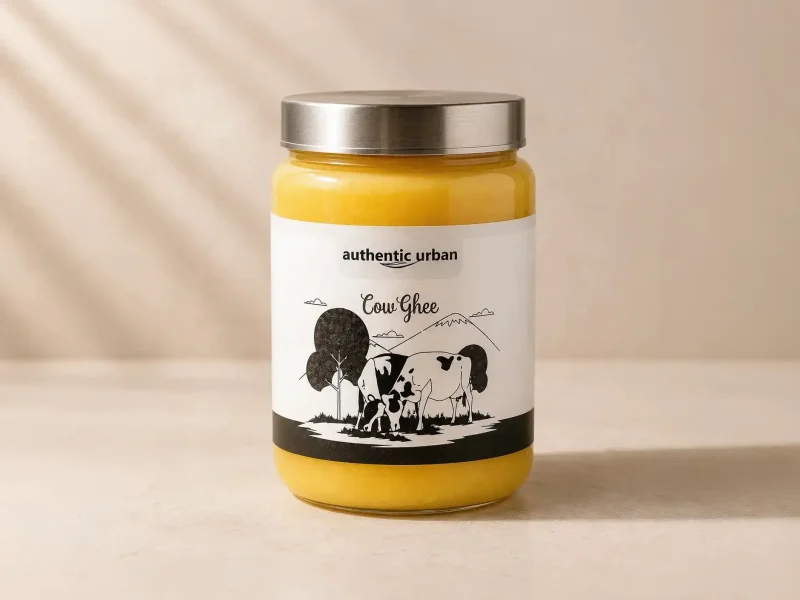
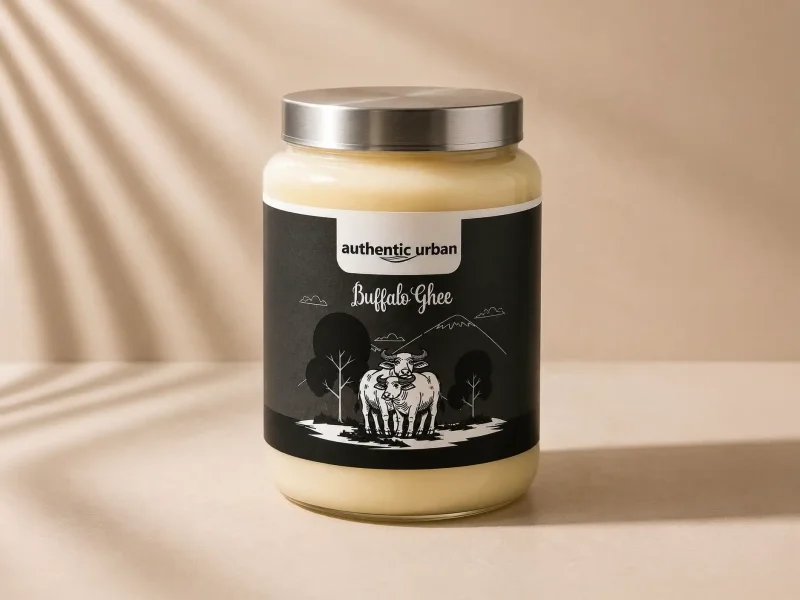
For the measured daily spoon we would pick our own A2 Gir cow ghee: grass-fed Gir milk set to curd overnight, churned, and cooked in a matki on a wood chulha, made after you order, with a video of your jar sent on WhatsApp. At ₹2,399 a litre, a 5 ml teaspoon costs about ₹12. For paratha and sweets, our Jafarabadi buffalo ghee is the richer jar. Varsha tastes every batch before it is packed, and we test every month against the FSSAI limits; the steps are on how we make ghee.
The daily teaspoon on dal and roti
 1 Litre
Paratha, halwa, and winter sweets
 1 Litre
Each order is cooked after you place it, and the packing video is of that batch. Past order videos are on the shop.
FAQ
What are the side effects of eating ghee at night?
For most people a teaspoon of ghee on dinner roti or dal causes nothing. Problems start with a heavy ghee meal just before bed: a full, heavy stomach, burping, and acid rising into the throat for people who get reflux. Keep dinner ghee to a teaspoon and eat two to three hours before lying down. If you take ghee in warm milk at night, count it inside your day's 1 to 2 teaspoons.
Can ghee cause pimples or acne?
We could not find good evidence that a normal amount of ghee in food causes acne. Some people notice breakouts when their whole diet gets heavier in fried food and sweets, and ghee often travels with those. Ghee rubbed on oily, acne-prone skin can block pores for some people, so patch test first. If spots flare after you start, cut back for two weeks and watch.
Does lactose intolerance mean I should avoid ghee?
Usually not. Ghee is almost pure milk fat, and very little lactose is left after the water and milk solids are cooked off. Most people with lactose intolerance eat a teaspoon of ghee without trouble. Start with half a teaspoon on hot food and watch for gas or bloating. A milk allergy is different: that is a reaction to milk protein, and ghee still carries a trace of it.
Is buffalo ghee worse than cow ghee for side effects?
Both are nearly pure milk fat, so a spoon of either brings about the same calories and a similar load of saturated fat. The side effects come from how much you eat, not which animal. Buffalo ghee tastes richer and sets firmer, which suits paratha and sweets, so people tend to use more of it in those dishes. Measure it the same way you measure cow ghee.
Can children get side effects from too much ghee?
Yes, in the same way adults do. Too much fat can bring loose stools, a poor appetite at the next meal, and too many calories for a small body. For a child over one year, half to one teaspoon on dal, rice, or roti is a normal amount. Babies under one year should get ghee only when your paediatrician says how much and when.
Can old or rancid ghee make you sick?
Rancid ghee tastes sour or soapy and can upset the stomach, so do not eat it. It happens when water, a wet spoon, heat, or sunlight gets into the jar. A sealed jar of well-cooked ghee keeps many months at room temperature. Once open, use a dry spoon and keep it away from the stove. If a spoon smells off when warmed, throw that jar out.
About the editorial team
Authentic Urban TeamBilona ghee makers, Gir Somnath, Gujarat
We are the Parmar family in Gir Somnath, Gujarat. We have made ghee here since 2016 and sold it online since 2025. We make only Bilona ghee, test it every month, and anyone is welcome to visit and watch it being made. Our Gir cows and Jafarabadi buffalo are grass-fed village animals that graze near the Gir forest, with no hormones or milk boosters. We set their milk to curd, churn it, and cook the makkhan on a wood chulha. These articles come from that kitchen and from what customers ask us on WhatsApp. We are ghee makers, not doctors.
Sources
- Dietary Guidelines for Indians, 2024 (Guideline 7, printed pp. 53-54; saturated fat and high-fat diet, printed p. 93), ICMR-National Institute of Nutrition. Checked 26 Sep 2026.
- Butter oil, anhydrous (FDC ID 173412), SR Legacy, USDA FoodData Central. Checked 26 Sep 2026.
- Symptoms and Causes of Gallstones, National Institute of Diabetes and Digestive and Kidney Diseases (NIDDK). Checked 26 Sep 2026.
- Food allergy, NHS. Checked 26 Sep 2026.