Is Ghee Good for Fatty Liver? How Much Is Safe a Day
Is ghee good for fatty liver? Not as a remedy. In a 2024 trial of 110 people with fatty liver, those who swapped their daily ghee for rapeseed oil lost more liver fat than those who kept it. A teaspoon a day on dal or khichdi, with the oil cut to match, is usually fine in early fatty liver. With raised enzymes or scarring, your doctor sets the amount.
Is ghee good for fatty liver?
Ghee does not treat fatty liver, and a lot of it can make it worse. It is about 62% saturated fat, and the only trial that tested ghee in fatty liver patients found liver fat fell more when they replaced it with oil. One teaspoon a day, eaten in place of other fat, fits most early fatty liver diets.
Fatty liver has stages, and the answer changes with them. This page is for adults with a report that says "fatty liver", "grade 1 or 2 fatty changes", NAFLD, or its newer name MASLD (fat in the liver linked to weight, blood sugar, and cholesterol rather than alcohol). If your report also says fibrosis or cirrhosis, the hepatologist decides everything on this page. Whether ghee is a healthy fat in general is answered on is ghee healthy.
What did the ghee and fatty liver trial find?
Swapping ghee for rapeseed oil reduced liver fat more than keeping ghee. The trial, by Maleki Sedgi and colleagues in the British Journal of Nutrition in 2024, is the only randomised trial we found that tested ghee itself in people with fatty liver. Most pages ranking for this question do not mention it.
The trial
What it found
Who
110 adults with NAFLD who already ate ghee every day (70 men, 40 women, average age 42)
What changed
Half swapped their ghee for rapeseed oil in the same amount. Half kept ghee and were told to eat a healthy diet.
How long
12 weeks
Liver fat
Fell more in the group that dropped ghee than in the group that kept it
Swap group, other numbers
ALT (a liver enzyme) down 14.4, triglycerides down 39.7 mg/dL, LDL down 7.5 mg/dL, weight down 4.3 kg, waist down 5.6 cm
From the trial's published abstract, British Journal of Nutrition 131(12), 2024. Checked 26 September 2026.
Read it carefully. The swap group also lost weight, and weight loss by itself reduces liver fat, so part of the gain may be the kilos rather than the oil. It is one trial, in people who were eating ghee every day, and it tested rapeseed oil, not mustard or groundnut oil. What it does settle is the claim, common on shop blogs, that more ghee helps a fatty liver. In the one test in patients, less ghee did better.
Does ghee increase fatty liver?
Ghee can add to fatty liver when it adds calories and saturated fat on top of an already heavy diet. ICMR-NIN's 2024 dietary guidelines link extra body weight, especially around the waist, to fatty liver disease, and note that NAFLD is rising in India. Extra ghee is one of the easiest ways to eat extra calories without noticing.
Fat (1 tsp, 5 g)
Calories
Saturated fat
Ghee
44 kcal
3.1 g
Groundnut oil
44 kcal
0.8 g
Mustard oil
44 kcal
0.6 g
Rapeseed (canola) oil
44 kcal
0.4 g
Worked out from USDA FoodData Central, SR Legacy, per 100 g. Teaspoon 5 g as in ICMR-NIN's guidelines. Checked 26 September 2026.
Calories per spoon are the same for ghee and oil. The difference is saturated fat: a teaspoon of ghee carries about four times what groundnut oil does. ICMR-NIN counts saturated fat as high when more than 10 g a day comes from visible fats like ghee and butter, which is about three teaspoons of ghee. With fatty liver, stay well under that line. Where too much ghee leads in the rest of the body is on ghee side effects.
What about butyrate?
Many pages sell ghee as a liver food because it contains butyric acid (butyrate). USDA lists 3.23 g per 100 g of ghee, so a teaspoon carries about 0.16 g. We found no human study showing that amount changes liver fat, and the one trial in patients pointed the other way. The butyrate story in full is on ghee and butyrate.
How much ghee a day with fatty liver?
In early fatty liver with normal enzymes, keep ghee to about 1 teaspoon a day and cut oil to match. That is the low end of ICMR-NIN's 1 to 2 teaspoons for everyone. With raised ALT or AST, diabetes, or any scarring, your doctor sets the number, and it may be none for a while.
Your report says
Ghee a day
What that means
Fatty liver on an ultrasound, normal enzymes, no other disease
Up to 1 tsp a day, inside a lower fat total
Take oil out when ghee goes in. Weight and sugar matter more than this spoon.
Fatty liver with raised ALT or AST
Ask your doctor; often ½ tsp or none for now
Recheck the enzymes when your doctor says before adding any back.
Fatty liver with diabetes, high triglycerides, or high LDL
Doctor or dietitian sets it
These share the same saturated-fat budget. One number for all fats.
Inflammation (NASH or MASH), fibrosis, or cirrhosis
Hepatologist sets it
Follow the liver clinic diet sheet. Never add ghee to "heal" the liver.
Fatty liver from alcohol
Stopping alcohol comes first
ICMR-NIN names alcohol as a cause of fatty liver and cirrhosis.
A starting point to take to your doctor, not a prescription. Your doctor's number wins.
Ghee is only part of the day's fat. ICMR-NIN puts all visible fat, oil and ghee together, at 20 to 50 g a day depending on how active you are, and fatty liver usually means aiming for the low end. You can work out your home's daily ghee and oil for each person, and the plans for other situations are on how much ghee per day.
In our own home in Gir Somnath, each of us eats 1 to 2 teaspoons a day, on roti, dal, and khichdi, and more only in winter sweets like adadiya pak and gond. We make ghee for a living. Someone in our family with a fatty liver report would drop to the one teaspoon on dal and skip the winter sweets that year.
Ghee or oil: which is better for fatty liver?
For most of the day's cooking, a plant oil is better for fatty liver, because it carries far less saturated fat. Keep ghee for the one spoon you actually taste. Oil still needs a limit: it has the same calories as ghee, spoon for spoon.
Rotating mustard, groundnut, and sesame oil for sabzi and dal is a sensible base. Deep frying is the bigger problem than the choice of fat; ICMR-NIN lists puri, samosa, kachori, and pakora among high-fat foods, whatever they are fried in. Vanaspati should go first of all. The full oil comparison is on ghee vs vegetable oil, and why Dalda is worse than both on Dalda vs ghee.
A fatty liver day with one spoon of ghee
Meal
On the plate
Why
Morning
Poha or upma cooked in 1 tsp oil, with vegetables. No ghee.
Keeps the ghee for the meal where you taste it.
Lunch
Dal, sabzi in 1 to 2 tsp mustard or groundnut oil, 2 rotis, salad.
Most of the day's cooking fat, low in saturated fat.
Dinner
Moong dal khichdi with 1 tsp ghee on top, curd, sabzi.
The one spoon of ghee, where it counts.
Snacks
Roasted chana, fruit, buttermilk.
In place of namkeen, biscuits, and juice.
That day comes to 1 teaspoon of ghee and 2 to 3 teaspoons of oil, about 15 to 20 g of visible fat. If you have diabetes as well, the same plate works with smaller portions of rice and roti; the ghee side of that is on can diabetics eat ghee.
Does ghee detox the liver?
No. The liver clears waste from the blood by itself, and no food or ghee cleanse flushes it out. We found no human study showing a ghee detox removes liver fat or toxins, and for a fatty liver, extra spoons of ghee are extra fat.
Ayurveda does use ghee in snehapana (drinking ghee in rising amounts before Panchakarma), but that is done by a trained vaidya, with checks along the way, not from a blog. With fatty liver, raised enzymes, or gallstones, do not try it at home. What a home "ghee cleanse" involves, and why we advise against running one yourself, is on the 3-day ghee detox.
Be careful with liver "detox" powders and kadhas too. NIDDK, the US government's liver disease institute, warns that some herbal remedies can damage the liver. Show your doctor anything you take for your liver, including Ayurvedic tablets.
What helps fatty liver more than cutting ghee?
Slow weight loss helps most. NIDDK says losing 3 to 5% of body weight can reduce liver fat, and 7 to 10% may be needed to reduce inflammation and scarring. For an 80 kg person, 5% is 4 kg.
Go slowly. ICMR-NIN calls half a kilo a week safe and warns against rapid weight loss, and NIDDK says rapid weight loss can make liver disease worse. The same ICMR-NIN guidance says to avoid sugar, processed food, and fruit juices, and to eat vegetables at every meal with whole grains, pulses, and beans. The NHS advises at least 150 minutes of exercise a week. If you drink, stop: ICMR-NIN names alcohol as a cause of fatty liver and cirrhosis. The weight side of ghee is on ghee for weight loss, and the cholesterol side on is ghee bad for cholesterol.
When should you see a doctor, not change your diet?
See a doctor as soon as you get a fatty liver report, because the NHS notes fatty liver usually causes no symptoms, even as it moves through its four stages (fat, inflammation, scarring or fibrosis, and cirrhosis). The report and your enzymes decide which stage you are in, not how you feel.
Get help the same day if the skin or whites of the eyes turn yellow, the tummy, legs, or ankles swell, or breathing becomes hard. Go to emergency at once for vomiting blood, very dark or black stool, or sudden confusion or slurred speech. These are the NHS warning signs for advanced liver disease. They are not a diet question.
Kidney disease, gallstones, and other conditions where the doctor sets the fat are listed under who should not eat ghee.
An 8-point ghee checklist for fatty liver
If there is a fatty liver report on your fridge, this is the routine that holds up. Screenshot it for the kitchen.
- Get the ultrasound and liver enzymes (ALT, AST) done, and keep the report.
- Ask your doctor for a daily fat number, and whether ghee fits in it now.
- Measure ghee with a real 5 ml teaspoon. Stop at one a day unless told otherwise.
- Every spoon of ghee takes a spoon of oil out. Count them together.
- Cut sugar, sweet drinks, fruit juice, and maida snacks before you cut the dal ghee.
- Walk 30 minutes, five days a week. That is the NHS's 150 minutes.
- Lose weight slowly: about half a kilo a week, as ICMR-NIN advises.
- Stop any "liver detox" powder or kadha that your doctor did not prescribe.
Which ghee if your doctor allows a spoon?
When you only get one teaspoon a day, make it ghee you trust and enjoy, so you are not tempted to add a second. Good ghee smells of toasted milk when warmed, and slow curd-churned ghee often sets grainy when cool. How to check a jar is on how to identify pure ghee, and our ranking of the cow ghee on sale is best cow ghee in India. No ghee is better for the liver than another; the amount is what counts.
We make and sell ghee, so weigh this with that in mind. For the one teaspoon we would pick our own A2 Gir cow ghee: grass-fed Gir milk set to curd overnight, churned, and cooked in a matki on a wood chulha, made after you order, with a video of your jar sent on WhatsApp. At ₹2,399 a litre, a 5 ml teaspoon costs about ₹12. Our Jafarabadi buffalo ghee is the richer jar for festival halwa, and with fatty liver that is a few days a year. We test every month against the FSSAI limits; the steps are on how we make ghee.
The one measured teaspoon
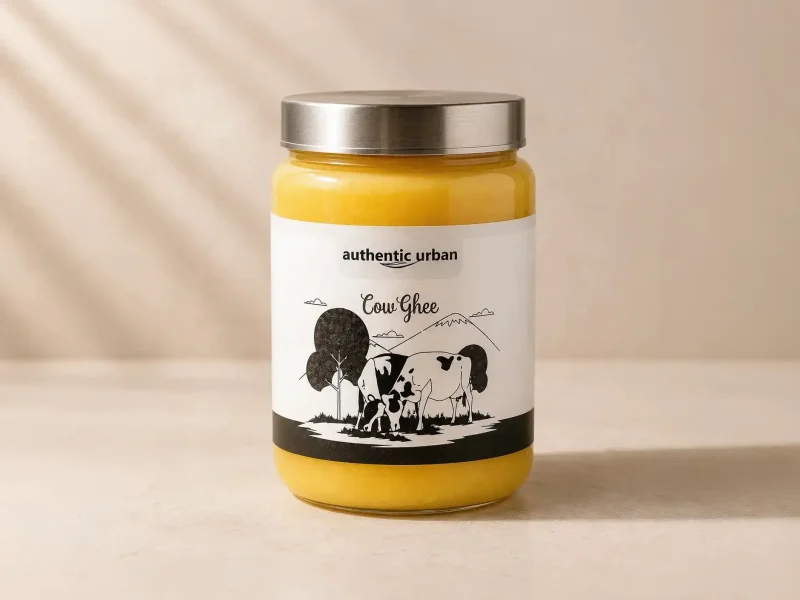 1 Litre
Festival sweets, rarely
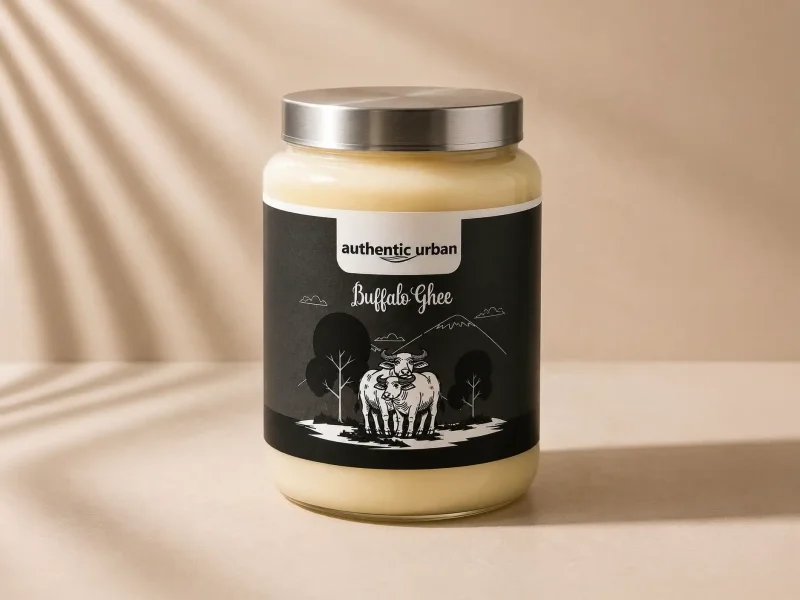 1 Litre
Each order is cooked after you place it, and the packing video is of that batch. Past order videos are on the shop.
FAQ
Is desi ghee better than refined oil for fatty liver?
Not in larger amounts. The one trial that tested it, published in 2024, found liver fat fell more when NAFLD patients swapped ghee for rapeseed oil than when they kept ghee. Oils like mustard, groundnut, and rapeseed carry much less saturated fat. Keep ghee to a teaspoon on dal or khichdi, cook the rest in oil, and keep the total fat low, since oil is pure fat too.
Is buffalo ghee worse than cow ghee for fatty liver?
Both are nearly pure milk fat, so a teaspoon of either brings a similar load of saturated fat and calories. The fatty liver question is how many spoons, not which animal. Buffalo ghee is richer and tends to go into halwa, ladoo, and paratha, which is where most of the extra fat and sugar in an Indian week hides. For a liver diet, keep those dishes for festivals.
Can I eat ghee with fatty liver grade 1?
Many doctors allow a small spoon with grade 1 fatty liver if your liver enzymes are normal. Grade 1 means a mild amount of fat seen on the ultrasound. Keep ghee to about 1 teaspoon a day, take the same amount of oil out, and put the effort into weight, sugar, and daily walking. Grade 2 or 3, or raised ALT, is a question for your doctor first.
Is ghee in milk at night bad for fatty liver?
It adds up fast. A teaspoon of ghee is about 44 kcal and full-cream milk brings its own fat, so a nightly glass of ghee milk can be the biggest fat item of the day. ICMR-NIN lists full-cream milk among hidden saturated fats. With fatty liver, drink toned milk if you want milk at night, and eat your one spoon of ghee on dal or roti instead.
Does ghee on an empty stomach clean the liver?
No. The liver clears waste by itself, and we found no human study showing that a morning spoon of ghee removes liver fat or toxins. A teaspoon on an empty stomach is still 44 kcal of mostly saturated fat. If you like the habit, count that spoon as your ghee for the day. Skip it if you have gallstones, since fat can bring on gallbladder pain.
Can fatty liver go away if I stop eating ghee?
Stopping ghee alone rarely does it. Fatty liver usually follows extra weight, sugar, refined flour, alcohol, and too little movement. NIDDK says losing 3 to 5% of body weight can reduce liver fat, and 7 to 10% may be needed to reduce inflammation and scarring. Cutting ghee helps if it was a large part of your daily fat. The weight, food, and walking do the rest.
About the editorial team
Authentic Urban TeamBilona ghee makers, Gir Somnath, Gujarat
We are the Parmar family in Gir Somnath, Gujarat. We have made ghee here since 2016 and sold it online since 2025. We make only Bilona ghee, test it every month, and anyone is welcome to visit and watch it being made. Our Gir cows and Jafarabadi buffalo are grass-fed village animals that graze near the Gir forest, with no hormones or milk boosters. We set their milk to curd, churn it, and cook the makkhan on a wood chulha. These articles come from that kitchen and from what customers ask us on WhatsApp. We are ghee makers, not doctors.
Sources
- The effects of replacing ghee with rapeseed oil on liver steatosis and enzymes, lipid profile, insulin resistance and anthropometric measurements in patients with non-alcoholic fatty liver disease: a randomised controlled clinical trial (Maleki Sedgi, Hosseiniazar, Alizadeh; British Journal of Nutrition, 2024, 131(12): 1985-1996), Cambridge University Press. Checked 26 Sep 2026.
- Dietary Guidelines for Indians, 2024 (visible fat and ghee, printed p. 54; obesity and fatty liver, printed pp. 62-64; alcohol, printed p. 91; saturated fat, printed p. 93), ICMR-National Institute of Nutrition. Checked 26 Sep 2026.
- Treatment for NAFLD and NASH, National Institute of Diabetes and Digestive and Kidney Diseases (NIDDK). Checked 26 Sep 2026.
- Non-alcoholic fatty liver disease (NAFLD), NHS. Checked 26 Sep 2026.
- Cirrhosis: symptoms, NHS. Checked 26 Sep 2026.
- Butter oil, anhydrous (FDC ID 173412), SR Legacy, USDA FoodData Central. Checked 26 Sep 2026.
- Oil, canola (FDC ID 172336), SR Legacy, USDA FoodData Central. Checked 26 Sep 2026.
- Oil, mustard (FDC ID 172337), SR Legacy, USDA FoodData Central. Checked 26 Sep 2026.
- Oil, peanut, salad or cooking (FDC ID 171410), SR Legacy, USDA FoodData Central. Checked 26 Sep 2026.