Ghee Paratha Recipe: Flaky Layers and Ghee Per Paratha
For this ghee paratha recipe, knead 240 g atta into a soft dough, rest it 20 minutes, and roll 6 parathas. Each one takes 1 teaspoon of ghee: half brushed into the folds before you roll, half on the tawa after the first flip. The ghee in the folds makes the layers; the ghee on the tawa only crisps the outside.
Ghee paratha recipe: how much atta, water, and ghee?
For 6 parathas, use 240 g atta, about 160 ml water, ½ tsp salt, and 2 tbsp (6 tsp) ghee: ½ tsp brushed into each paratha's folds and ½ tsp on the tawa. The dough should be softer than roti dough, soft enough to dent with one finger. Cups vary between kitchens, so weigh the atta once; a cup of atta weighs about 120 g.
Ingredients (6 parathas)
- 240 g whole wheat atta (about 2 cups)
- About 160 ml water (⅔ cup), the last 20 ml a spoon at a time
- ½ tsp salt
- 6 tsp ghee (2 tbsp): 3 tsp for the folds, 3 tsp for the tawa
- 2 to 3 tbsp dry atta for dusting
Equipment: a chakla and belan, a heavy iron or cast-iron tawa, a small bowl of ghee with a pastry brush or the back of a spoon, and a flat spatula.
Steps
- 1. Mix atta and salt. Add water a little at a time and knead 5 minutes into a soft, smooth dough. Cover and rest 20 minutes.
- 2. Divide into 6 balls of about 65 g. Roll one into a 12 cm circle.
- 3. Brush ½ tsp ghee right to the edges and dust a pinch of flour over it. Fold into a triangle, square, or lachha coil (see the fold table below).
- 4. Roll gently from the centre out to 16 to 18 cm, about 3 mm thick.
- 5. Heat the tawa on medium-high, then turn to medium. Cook the paratha 30 to 40 seconds, until small bubbles show, and flip.
- 6. Brush ¼ tsp ghee on top. Flip after 30 seconds and brush ¼ tsp on the other side.
- 7. Press the edges with a spatula and turn once or twice more, until both sides have golden-brown spots: 2 to 3 minutes in all.
- 8. Take it off, crush it lightly between your palms to open the layers, and serve hot.
One plain ghee paratha (40 g atta, 1 tsp ghee): about 173 kcal, 5.3 g fat (2.8 g saturated), 28.8 g carbohydrate, 5.3 g protein, and 4.3 g fibre, worked out from USDA FoodData Central for whole wheat flour and ghee.
Keep the ghee bowl away from the tawa's edge and brush, never pour. At our chulha in Gir Somnath, ghee is ready only once the water in the makkhan has boiled away, so hot ghee is hotter than boiling dal, and a ghee splash burns worse than a dal splash. Ghee on a hot tawa is no different. If the brush drips, you are using too much anyway. For the plain roti made on the same tawa, see our ghee roti recipe.
How much ghee per paratha?
One teaspoon per paratha is enough for clear, flaky layers: ½ tsp in the folds and ½ tsp on the tawa. That paratha has about 173 kcal. Two teaspoons makes a richer, dhaba-style paratha at about 211 kcal, and a tablespoon mostly ends up as grease on the plate.
No ghee (dry tawa)
- Per paratha
- 136 kcal, 0.2 g saturated fat
- Of the day's 1 to 2 tsp
- None
- Ghee cost
- ₹0
- You get
- A roti, not a paratha. With no fat between the folds, the layers fuse into one.
½ tsp (tawa only)
- Per paratha
- 155 kcal, 1.5 g saturated fat
- Of the day's 1 to 2 tsp
- A quarter to half
- Ghee cost
- ₹5 buffalo, ₹6 cow
- You get
- Soft and lightly crisp outside, but few layers inside. Fine for a daily tiffin paratha.
1 tsp (½ in the folds, ½ on the tawa)
- Per paratha
- 173 kcal, 2.8 g saturated fat
- Of the day's 1 to 2 tsp
- Half to all
- Ghee cost
- ₹10 buffalo, ₹12 cow
- You get
- This recipe. Layers you can pull apart, golden spots, no ghee left on the plate.
2 tsp (1 in the folds, 1 on the tawa)
- Per paratha
- 211 kcal, 5.5 g saturated fat
- Of the day's 1 to 2 tsp
- All of it
- Ghee cost
- ₹20 buffalo, ₹24 cow
- You get
- Dhaba-style: very flaky, shiny, and rich. A Sunday breakfast, not every day.
1 tbsp (3 tsp, shallow-fried)
- Per paratha
- 248 kcal, 8.1 g saturated fat
- Of the day's 1 to 2 tsp
- More than a day's worth
- Ghee cost
- ₹30 buffalo, ₹36 cow
- You get
- Ghee pooling on the tawa. The extra goes into the crust, not the layers.
Per paratha of 40 g atta. USDA FoodData Central: whole wheat flour 168893, ghee 173412 (1 tsp = 4.27 g), checked 28 September 2026. Ghee cost at our own prices for 1 litre (₹1,999 buffalo, ₹2,399 cow, checked 25 September 2026), 200 teaspoons to a litre; prices change, so check the product page.
ICMR-NIN's 2024 dietary guidelines advise limiting ghee or butter to 1 to 2 teaspoons a day. One paratha made this way uses 1 teaspoon, so two parathas at breakfast are the whole day's ghee. At home we eat 1 to 2 teaspoons each on an ordinary day, on roti, dal, and khichdi; on a paratha morning, the dal at dinner gets its tadka and nothing on top. The full day-by-day budget is on how much ghee per day, and calories by the spoon are on ghee nutrition facts.
How do you fold a paratha for layers?
Every fold works the same way: a film of ghee between two sheets of dough keeps them from sticking, and on the hot tawa the water in the dough turns to steam and pushes the sheets apart. More folds mean more layers. The triangle is the easiest; the pleated lachha coil gives the most.
Triangle (tikona)
- How
- Roll a 12 cm circle. Brush ghee, fold in half, brush again, fold into a triangle. Roll out, keeping the three corners.
- Ghee
- Brushed twice
- You get
- The easiest fold. A few clear layers, soft inside. The everyday home paratha.
Square (chokor)
- How
- Roll a 12 cm circle. Brush ghee, fold two sides to the middle, brush, fold the other two over to make a square. Roll to 16 to 18 cm.
- Ghee
- Brushed twice
- You get
- A few more layers than the triangle, and it fits a tiffin box.
Lachha (pleated and coiled)
- How
- Roll a thin 18 cm circle. Brush ghee, dust with flour, pleat like a paper fan, stretch the strip, coil it into a spiral, and tuck the end under. Rest 5 minutes, then roll gently.
- Ghee
- Brushed once, spread to every edge
- You get
- The most layers and the crispest bite. Crush it on the plate to open the rings.
Round spiral (rope)
- How
- Brush the circle, cut from the centre to one edge, roll it into a cone, press the cone down flat, and roll out.
- Ghee
- Brushed once
- You get
- Round like a roti, with layers inside. Quick once your hands learn it.
The dusting of dry atta over the ghee matters as much as the ghee. It stops the two sheets from soaking into each other and gives each layer a dry face that crisps. For the triangle and square, split the ½ tsp between the two brushings.
Soft or grainy ghee layers better than hot, runny ghee, because it stays where you spread it instead of running out of the edges. Our ghee stays liquid in the jar in summer and sets to a fine grain in winter, and every winter people message us on WhatsApp asking why their jar has turned grainy. For parathas, that grainy ghee is the easy one to use: spread it straight from the jar. In summer, mix the melted ghee with 1 tsp of atta into a loose paste and brush that. Why the grain forms is on why ghee is grainy.
What heat should the tawa be for paratha?
Medium-hot: heat the tawa on high, then turn it down to medium before the first paratha goes on. A drop of water should sizzle and vanish in a second or two. A paratha takes 2 to 3 minutes in all; much longer and it dries out, much less and the folded centre stays raw.
Put the paratha on a dry tawa, not a greased one. The first side needs 30 to 40 seconds to set before any ghee goes on, or the ghee soaks into raw dough and turns it greasy. Once the top has small bubbles, flip, brush, flip again, and brush. From there, press the edges and the puffed spots with a spatula; the steam trapped between the layers is what separates them. A thick iron tawa holds heat evenly for six parathas in a row; a thin one runs hot in the middle and burns the spots before the edges cook.
Ghee takes this heat without scorching because its water and milk solids were cooked out when it was made. Butter still has both, so on a hot tawa it spits and browns into dark specks. The full comparison is on ghee vs butter, and how ghee behaves at high heat is on ghee for high-heat cooking.
Why is my paratha hard, flat, or raw inside?
A hard paratha comes from stiff dough or a slow tawa; a paratha with no layers had too little ghee in the folds or was pressed too hard; a raw centre means the tawa was too hot or the paratha too thick. Find yours below.
Hard and chewy
Stiff dough, no rest, or cooked too long on a tawa that was not hot enough.
Fix: Make the dough soft enough to dent with one finger and rest it 20 minutes. Heat the tawa first, and take the paratha off within 3 to 4 minutes.
No layers, one thick sheet
Too little ghee in the folds, or pressed hard with the rolling pin.
Fix: Spread ghee to every edge before you fold, dust a pinch of flour over it, and roll with light strokes from the centre.
Golden outside, raw inside
The tawa was too hot, or the paratha was rolled too thick.
Fix: Lower to medium and roll to about 3 mm. Press the edges with a spatula as it cooks, because the folded rim is the thickest part.
Greasy, ghee on the plate
Ghee poured on the tawa, or added before the paratha was half cooked.
Fix: Brush ghee only after the first flip, ½ tsp a side at most, and spread it with the back of a spoon.
Ghee leaks out while rolling
Liquid ghee brushed on thick, or a lachha coil not tucked under.
Fix: Use soft or grainy ghee, or mix melted ghee with 1 tsp flour into a paste. Rest the folded paratha 5 minutes before rolling.
Aloo paratha bursts
Warm or wet filling, lumps in the potato, or too much stuffing.
Fix: Cool the filling, mash out every lump, and use no more filling than dough by weight. Pinch the dough closed and roll the seam side up.
If the parathas taste flat or faintly stale even when the texture is right, look at the jar. On a paratha the ghee is the main flavour. Melt a spoon before you start: good ghee smells of toasted milk and nothing else, with no waxy or old-oil smell behind it. The home checks are on how to identify pure ghee.
How to make aloo paratha with ghee
Use the same dough and the same tawa, but put the ghee only on the tawa: about 1 tsp per aloo paratha, ½ tsp a side. A stuffed paratha has no folds to fill, and ghee in the filling makes it slippery and more likely to burst. One aloo paratha with 50 g of potato has about 217 kcal.
- Filling for 6: 300 g potatoes boiled in their skins, peeled, and mashed while warm with no lumps. Mix in ½ tsp salt, ½ tsp roasted jeera powder, ½ tsp amchur, ¼ tsp garam masala, 1 finely chopped green chilli, and 2 tbsp chopped coriander. Let it cool completely.
- Stuff: roll a dough ball to a 10 cm circle, thicker in the middle than at the edge. Put 50 g of filling in the centre, bring the edges up like a potli, pinch closed, and pull off the extra dough at the top.
- Roll: press it flat seam side up, dust well, and roll with light, even strokes to about 16 cm. If filling shows through, patch it with a pinch of dry atta.
- Cook: on the same medium-hot tawa. Flip after 40 to 50 seconds, brush ½ tsp ghee, flip, brush ½ tsp on the other side, and press until both sides are golden-brown, 3 to 4 minutes in all. Stuffed parathas need a little longer than plain.
Wet filling is the usual reason an aloo paratha bursts. Boil the potatoes in their skins and peel them after, and remember that a filling that is still warm steams inside the dough and splits it. Onion goes in only if you salt the filling just before stuffing, because salted onion lets out water. For cumin potatoes as a side dish instead of a stuffing, see jeera aloo.
Ghee, butter, or oil for paratha, and which ghee?
Ghee gives the crispest layers and the fullest taste; oil works for the tawa but the layers come out softer and the paratha tastes of the oil; butter tastes good as a knob on top of a hot paratha but burns into specks on the tawa. Many homes knead a spoon of oil into the dough and keep ghee for the folds and the tawa.
Between our two jars, buffalo ghee is our pick for parathas. It is richer and whiter, and gives the heavy ghee taste people expect from a dhaba paratha. It also costs less for the 2 tbsp a batch needs. Cow ghee is lighter and more yellow, with a sharper toasted-milk smell; use it if that is the paratha your family grew up with. Both are almost pure milk fat, so the calories are about the same. The side-by-side is on cow vs buffalo ghee, and which dishes get ghee and which stay in oil is on cooking with ghee.
The carbohydrate in the atta moves blood sugar more than the ghee does: about 29 g in a plain paratha and 39 g in an aloo one. Anyone with diabetes should go by what their doctor or dietitian has set; fat, roti, and blood sugar are covered on can diabetics eat ghee.
How to keep parathas soft for the tiffin, and store them
Stack hot parathas in a casserole or steel dabba lined with a clean cotton cloth and close it; the trapped steam keeps them soft for 4 to 5 hours, which covers a school or office tiffin. Left open on a plate, they turn leathery within the hour.
- Same day: the cloth-lined box at room temperature. Reheat on a hot tawa for 20 to 30 seconds a side.
- Fridge: cooked plain parathas in a closed box for up to 2 days. Aloo parathas are best eaten the same day.
- Freezer: cook plain parathas halfway, 20 to 30 seconds a side with no ghee, cool, and stack with butter paper between them. Cook from frozen on a medium-hot tawa, with the ghee added then.
Keep the ghee jar itself away from the tawa and the stove's heat, and use a dry spoon; a wet spoon from the dough bowl is what spoils ghee. The rest is on ghee storage and shelf life. For a plate, parathas go well with dal tadka and curd.
Ghee paratha: a recipe card to keep
Screenshot this before you start; your hands will be covered in atta when you need it.
- 1. Makes 6 parathas of 40 g atta each: 240 g atta (2 cups), about 160 ml water, ½ tsp salt, 6 tsp ghee (2 tbsp): ½ tsp in the folds and ½ tsp on the tawa for each paratha.
- 2. Knead a soft dough, softer than roti dough. Cover and rest 20 minutes.
- 3. Divide into 6 balls. Roll one to a 12 cm circle.
- 4. Brush ½ tsp ghee to the edges. Dust a pinch of flour. Fold into a triangle, square, or lachha coil.
- 5. Roll gently to 16 to 18 cm, about 3 mm thick.
- 6. Medium-hot tawa. Cook 30 to 40 seconds until small bubbles show. Flip.
- 7. Brush ¼ tsp ghee on top. Flip. Brush ¼ tsp on the other side.
- 8. Press the edges with a spatula until both sides have golden-brown spots, 2 to 3 minutes in all.
- 9. Crush lightly between your palms to open the layers. About 173 kcal a paratha.
Which ghee for paratha?
On a paratha you taste the ghee in every layer, so pick a jar that smells of toasted milk when melted and nothing else. Our ranking of the buffalo ghee on sale is best buffalo ghee in India.
We make and sell ghee, so weigh this with that in mind. For parathas we would use our Jafarabadi buffalo ghee, and our A2 Gir cow ghee if you like a lighter paratha. Both come from grass-fed village animals near the Gir forest; the milk is set to curd overnight, churned by hand (Bilona), and the makkhan cooked in a matki on a wood chulha. The jar is made after you order, a video of it being cooked and packed comes on WhatsApp, and Varsha tastes every batch before it goes in a jar. We test every month against the FSSAI limits; the steps are on how we make ghee.
A lighter, yellow paratha
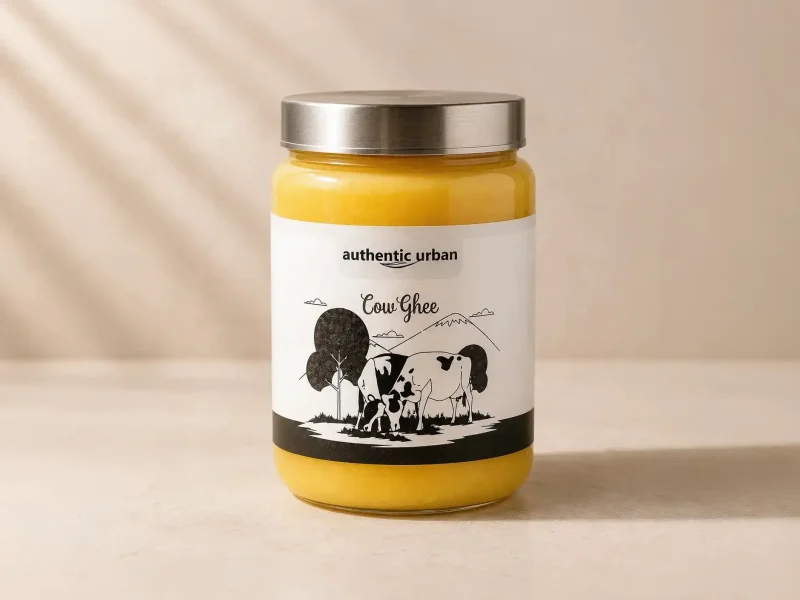 1 Litre
Flaky, rich dhaba-style parathas
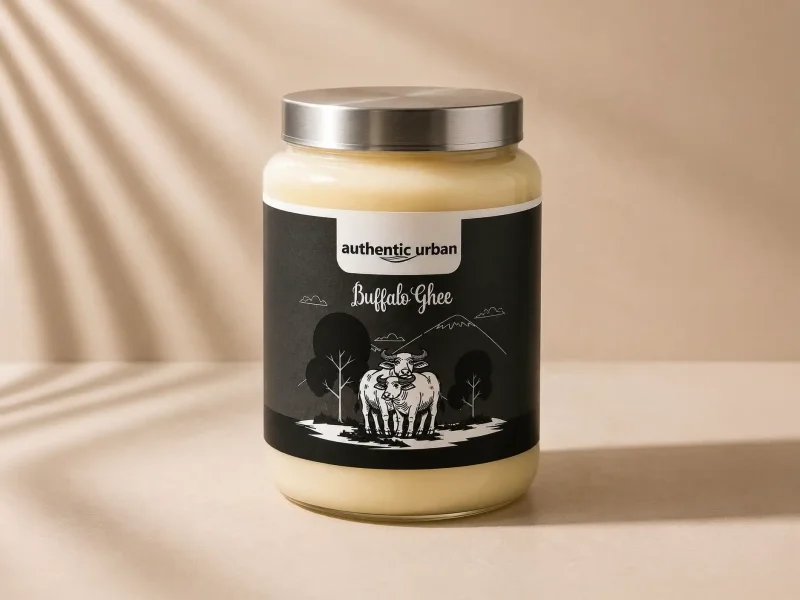 1 Litre
Each order is cooked after you place it, and the packing video is of that batch. Past order videos are on the shop.
FAQ
Can I make paratha with maida instead of atta?
Yes. Maida gives a whiter, softer, stretchier paratha that pulls into thinner layers, which is why Kerala parotta and many restaurant lachha parathas use it. It needs a little less water than atta, and a longer rest of 30 minutes or more. Atta gives more fibre and a nuttier taste. A 50:50 mix is a good middle path if the family finds whole wheat parathas too dense.
Can I make paratha dough the night before?
Yes. Knead the dough, rub a few drops of ghee over it so the surface does not dry, and keep it in a closed box in the fridge. Use it within a day. Take it out 20 to 30 minutes before rolling, because cold dough fights the rolling pin and tears at the folds. Dough kept longer tends to darken and turn slightly sour.
How many parathas does 1 kg of atta make?
About 25 parathas of 40 g atta each, the size in this recipe. Plan on about 650 ml of water, a little over 2 tsp salt, and 25 tsp of ghee (about 125 ml) at 1 tsp a paratha. For stuffed aloo parathas, 1 kg of atta takes about 1.25 kg of boiled potatoes, and you can shape each ball a little smaller.
Can people with diabetes eat ghee paratha?
The carbohydrate in the atta matters more for blood sugar than the ghee does. One paratha has about 29 g of carbohydrate, and an aloo paratha about 39 g. Many people with diabetes eat one paratha with dal, curd, or sabzi instead of two or three with pickle, but the right portion depends on your own plan. Ask your doctor or dietitian what fits.
What goes well with plain ghee paratha?
For breakfast, plain curd, a pickle, and a cup of chai is the simplest plate. For lunch or dinner, a dry sabzi like bhindi or jeera aloo sits better with a layered paratha than a thin curry, because the crisp layers go soggy in gravy. Dal fry, paneer bhurji, and egg bhurji also work. Keep the ghee on the paratha and leave it out of the side.
Why do my frozen parathas turn hard after reheating?
They were either cooked all the way before freezing, or reheated too long on a low flame. Freeze parathas half-cooked instead: 20 to 30 seconds a side with no ghee, cooled, and stacked with butter paper between them. Cook them straight from the freezer on a medium-hot tawa, adding the ghee then. They finish in 2 to 3 minutes and stay soft.
About the editorial team
Authentic Urban TeamBilona ghee makers, Gir Somnath, Gujarat
We are the Parmar family in Gir Somnath, Gujarat. We have made ghee here since 2016 and sold it online since 2025. We make only Bilona ghee, test it every month, and anyone is welcome to visit and watch it being made. Our Gir cows and Jafarabadi buffalo are grass-fed village animals that graze near the Gir forest, with no hormones or milk boosters. We set their milk to curd, churn it, and cook the makkhan on a wood chulha. These articles come from that kitchen and from what customers ask us on WhatsApp. We are ghee makers, not doctors.
Sources
- Wheat flour, whole-grain (FDC ID 168893), SR Legacy, USDA FoodData Central. Checked 28 Sep 2026.
- Butter oil, anhydrous (FDC ID 173412), SR Legacy, USDA FoodData Central. Checked 28 Sep 2026.
- Potatoes, boiled, cooked in skin, flesh, without salt (FDC ID 170438), SR Legacy, USDA FoodData Central. Checked 28 Sep 2026.
- Dietary Guidelines for Indians, 2024 (Guideline 7 on visible fats), ICMR-National Institute of Nutrition. Checked 28 Sep 2026.