Ghee Dosa Recipe: Crispy Ghee Roast and How Much Ghee
For a ghee dosa, spread one ladle of fermented rice and urad dal batter paper-thin on a hot tawa, drizzle 1 teaspoon of ghee round the edge and over the top, and cook 2 to 3 minutes until the underside is golden and the edge lifts by itself. One ghee dosa comes to about 130 kcal; the batter alone is about 90.
How do you make ghee dosa at home?
Soak rice and urad dal, grind them, and let the batter ferment overnight until it nearly doubles. Next morning, thin it, spread one ladle as thin as you can on a hot iron tawa, and pour 1 teaspoon of ghee round the edge. The ghee is what turns a plain dosa into a golden, crisp ghee roast. The batch below makes about 20.
Ingredients (about 20 dosas)
Batter
- 300 g idli rice (parboiled), about 1½ cups
- 100 g raw rice such as sona masoori, about ½ cup
- 100 g skinned urad dal, about ½ cup
- ½ tsp methi seeds
- 1½ tsp salt
- About 1½ cups cold water to grind, a little more to thin
On the tawa
- 1 tsp ghee a dosa: 100 ml for the whole batch
- Half an onion and a few drops of oil, to wipe the tawa
Equipment: a wet grinder or a mixie, a large steel or glass bowl, a flat cast iron tawa (10 to 12 inch) or a flat non-stick pan, a round-bottomed ladle, and a thin steel spatula.
Steps
- 1. Wash both rices and soak them with the methi. Soak the urad dal in a separate bowl. 5 to 6 hours each.
- 2. Grind the urad dal first, adding cold water a little at a time, until it is smooth and fluffy, 15 to 20 minutes in a wet grinder. In a mixie, grind in short bursts so the motor does not heat the batter.
- 3. Grind the rice slightly coarse, like fine rava. Tip both into the bowl with the salt and mix well by hand.
- 4. Cover loosely and ferment 8 to 12 hours, up to 16 in winter, until nearly doubled and sour.
- 5. Stir gently. Thin with water a spoon at a time until it runs off the ladle in a ribbon.
- 6. Heat the tawa on medium-high until water drops dance and vanish. Rub it with the cut onion dipped in a few drops of oil.
- 7. Pour one ladle (60 ml) in the centre. Spread it at once in a spiral, from the centre out, as thin as you can.
- 8. Drizzle 1 tsp ghee round the edge and a few drops on top. Cook 2 to 3 minutes until golden and the edge lifts.
- 9. Roll or fold, and serve straight away. Sprinkle a little water on the tawa and wipe it before the next dosa.
One dosa with 1 teaspoon of ghee: about 130 kcal, 2.7 g protein, 4.5 g fat (2.7 g saturated), 19 g carbohydrate, and 1.3 g fibre, worked out from USDA FoodData Central for parboiled rice, raw white rice, urad dal (listed there as mungo beans), and ghee, with the batch split 20 ways. Chutney and sambar are not counted.
Fermenting is the step that changes with the weather, and we see the same thing with the curd for our ghee in Gir Somnath. We set milk to curd overnight, 8 to 12 hours. In summer it sets and sours faster; in winter it takes longer and needs a warm corner. Dosa batter behaves the same way. On a hot day check it at 8 hours, because over-sour batter browns too fast. In winter, keep it in a switched-off oven with the light on, or wrap the bowl in a towel near the kitchen shelf.
How much ghee goes on a dosa?
One teaspoon of ghee a dosa gives a proper ghee roast: golden all over, crisp through, and easy to lift. Half a teaspoon is enough for colour and smell on an everyday plate. Hotel ghee roast often uses two teaspoons or more. The table shows what each amount does to one dosa.
One dosa
Ghee
kcal
Fat
Sat. fat
Ghee cost
How it cooks
Plain, tawa wiped with oil
Ghee: None
91 kcal
Fat 0.3 g
Saturated fat under 0.1 g
Ghee cost ₹0
Crisp at the edge if spread thin, but pale and dry in the middle. No ghee smell.
Light
Ghee: ½ tsp
110 kcal
Fat 2.4 g
Saturated fat 1.4 g
Ghee cost ₹5 to ₹6
Enough to brown the edge and smell of ghee. The everyday amount for a plate of three.
This recipe
Ghee: 1 tsp
129 kcal
Fat 4.5 g
Saturated fat 2.7 g
Ghee cost ₹10 to ₹12
Golden all over, crisp through, lifts off the tawa by itself.
Hotel ghee roast
Ghee: 2 tsp
166 kcal
Fat 8.8 g
Saturated fat 5.3 g
Ghee cost ₹20 to ₹24
Glossy, deep brown, almost fried. A treat, not a weekday breakfast.
Per dosa, one twentieth of the batch. USDA FoodData Central: parboiled rice 169758, raw rice 169756, urad dal 174259, ghee 173412 (1 tbsp = 12.8 g, so 1 tsp is about 4.3 g and 37 kcal). Ghee cost at our live prices for 1 litre, buffalo to cow. Checked 27 September 2026.
The number that matters is the plate, not the dosa. Three ghee roast dosas at 1 teaspoon each is 3 teaspoons of ghee before lunch. ICMR-NIN's 2024 dietary guidelines suggest limiting ghee or butter to 1 to 2 teaspoons a day, and all visible fat, ghee and oil together, to 27 to 30 g a day on a 2,000 kcal diet. At home in Gir Somnath each of us eats 1 to 2 teaspoons of ghee on an ordinary day, on roti, dal, and khichdi. So on a dosa morning, use 1 teaspoon on the first dosa and half on the rest, and let the dal at lunch go without. The whole-day budget is on how much ghee per day, and calories by the spoon are on ghee nutrition facts.
Ghee or oil on dosa: when does each go on?
Oil seasons the bare tawa; ghee goes on after the batter is spread. That split gives you a dosa that does not stick and still tastes of ghee, without burning ghee on an empty hot tawa between dosas.
A few drops of oil rubbed on with a cut onion fill the tiny pores of an iron tawa so the batter lets go. Once the dosa is spread, the ghee poured round the edge runs under it and fries the thin rim until it lifts. The milk fat browns the dosa a deeper gold than oil and gives it the toasted-milk smell that makes people ask for ghee roast by name. Ghee copes with tawa heat because its water and milk solids were cooked out when it was made; the details are on ghee smoke point.
Butter is the other choice people reach for. It still has water and milk solids, which spit on a hot tawa and scorch into black flecks before the dosa is crisp. If you like the taste of butter, add a small piece on top at the very end, off the heat. The fuller comparison is on ghee vs butter. For which everyday dishes deserve ghee and which stay in oil, see cooking with ghee.
Why is my dosa not crispy, or sticking to the tawa?
A soft dosa is almost always thick batter or a tawa that is not hot enough, and a sticking dosa is an unseasoned tawa. More ghee helps the colour but fixes neither. Find your problem below.
Soft, limp dosa
Batter too thick, tawa not hot enough, or the dosa was folded and left to steam on the plate.
Fix: Thin the batter with a spoon of water at a time until it runs off the ladle in a ribbon. Heat the tawa until water drops dance and vanish. Serve at once, open or loosely rolled.
Sticks to the tawa
An unseasoned or cold tawa, or a non-stick pan heated too hot and scratched.
Fix: Rub the hot tawa with half an onion dipped in a few drops of oil before each dosa. On a new iron tawa, make two or three thick uttapams first to season it.
Batter bunches up and will not spread
The tawa is too hot at the moment the batter lands, so it sets under the ladle.
Fix: Sprinkle a little water on the tawa and wipe it just before pouring. You want it hot, but not so hot the water spits for more than a second.
Holes and tears while spreading
Batter too thin, or too little urad dal in the grind.
Fix: Stir in a spoon of thicker batter from the bottom of the bowl. Next batch, grind the urad dal longer so it is fluffy.
Pale, not golden
Under-fermented batter, or not enough fat on the dosa.
Fix: Let the batter rise until it has nearly doubled and smells sour. Drizzle the ghee round the edge and a few drops in the middle.
Dark spots, burnt before crisp
Over-fermented, very sour batter browns fast, or the flame is too high for a thin tawa.
Fix: Turn the flame to medium once the batter is spread. Use very sour batter for uttapam or appe instead.
The first dosa of the morning is the test dosa in most homes. It tells you whether the tawa is hot enough and the batter thin enough. Adjust one thing at a time: water in the batter, or the flame. By the third dosa the spread and the timing settle.
Ghee roast, masala, podi, or benne dosa: what changes?
The batter stays the same. What changes is how thin you spread it, what goes on top, and whether you flip it.
Ghee roast (paper dosa)
Spread as thin as you can, 1 tsp ghee round the edge and over the top, cook without flipping until crisp through. Roll it into a cone.
Masala dosa
Put 3 to 4 tbsp of potato masala in the centre once the dosa is golden, then fold. The ghee dosa stays crisp outside the filling for a few minutes only, so fill it at the table.
Podi ghee dosa
Sprinkle 1 tsp of milagai podi (gunpowder) over the dosa, drizzle ½ tsp ghee on the podi so it sticks, and fold. The ghee on the podi is the whole point of this one.
Onion dosa
Spread the batter a little thicker. Scatter chopped onion, green chilli, and coriander on the wet top, press gently, drizzle ghee, and flip for 30 seconds.
Benne dosa
The Davangere dosa is cooked in benne, fresh white butter, not ghee, and it is thicker and softer. A spoon of ghee gives you a similar taste with no milk solids to burn on the tawa.
The name "ghee roast" also belongs to a Mangalorean curry of chicken, paneer, or prawns in a red chilli and ghee masala, which has nothing to do with dosa. If that is what you were after, it is our chicken ghee roast. For flatbreads on the same tawa, see the ghee roti recipe and ghee paratha.
How long does dosa batter keep?
Once fermented, move the batter to the fridge in a closed steel or glass box and use it within 3 to 4 days. It keeps getting more sour, so the first two days make the best ghee roast and the last of it suits uttapam or appe.
Take out only the batter you need, with a clean dry ladle, and let it stand 20 minutes so it is not ice cold on the tawa. Cold batter cools the tawa and spreads badly. Do not add salt or water to the whole stored bowl; thin just the portion you are cooking. Cooked dosas are best eaten within minutes. A cold ghee dosa can be crisped again on a hot dry tawa for 20 to 30 seconds a side, but it will never be as crisp as a fresh one.
Is ghee dosa healthy?
A ghee dosa is a fermented rice and dal breakfast with a teaspoon of fat on it, about 130 kcal, and it fits a normal day if the ghee is counted. The dosa itself is mostly carbohydrate with a little protein from the urad dal. What makes the plate heavy is the number of dosas and the ghee on each, not the ghee on one.
To make a plate more filling, eat two dosas with a big bowl of sambar instead of four with chutney. The dal and vegetables in sambar add protein and fibre that the dosa lacks. Anyone with diabetes should know that rice batter raises blood sugar like other rice dishes; portion and what you eat with it matter more than the ghee, and the detail is on can diabetics eat ghee. If a doctor or dietitian has set you a fat or calorie limit, their number comes before this recipe.
Cow or buffalo ghee for dosa?
Cow ghee for the everyday ghee dosa, because its lighter taste and yellow colour suit a thin, crisp dosa. Buffalo ghee is richer and whiter, and works well for a podi dosa or a thicker hotel-style ghee roast where you want the ghee to taste heavy.
Either jar does the job; both are almost pure milk fat with about the same calories a spoon. One thing people ask us on WhatsApp is why the ghee is grainy one month and liquid the next. In winter our ghee cools to a fine grain, in summer it stays liquid. For dosa, that only changes how you pour it: in winter, warm a few spoons in a small katori near the tawa so it drizzles. Why the grain forms is on why ghee is grainy, and the side-by-side is on cow vs buffalo ghee.
Ghee dosa: a recipe card to keep
Screenshot this and keep it by the stove.
- 1. Batter for about 20: 300 g idli rice, 100 g raw rice, 100 g urad dal, ½ tsp methi, 1½ tsp salt.
- 2. Soak the rice with the methi, and the urad dal separately, for 5 to 6 hours.
- 3. Grind the urad dal fluffy with cold water. Grind the rice a little coarse. Mix by hand with the salt.
- 4. Ferment 8 to 12 hours in summer, up to 16 in winter, until nearly doubled and sour.
- 5. Stir. Thin it with water until it runs off the ladle in a ribbon.
- 6. Tawa on medium-high. Water drops should dance and vanish. Wipe with an onion and a few drops of oil.
- 7. One ladle (60 ml) in the centre, spread in a spiral to the edge.
- 8. 1 tsp ghee round the edge and over the top. 2 to 3 minutes, until golden and the edge lifts.
- 9. Roll or fold, and serve at once. About 130 kcal a dosa.
Which ghee for dosa?
On a dosa the ghee is the smell that reaches the table first, so a jar that smells flat, waxy, or stale shows up at once. Pick a plain ghee with nothing added that smells of toasted milk when it melts on the tawa. The home checks are on how to identify pure ghee, and our ranking of the cow ghee on sale is best cow ghee in India.
We make and sell ghee, so weigh this with that in mind. For the everyday ghee dosa we would use our A2 Gir cow ghee, and our Jafarabadi buffalo ghee for a podi dosa. Both come from grass-fed village animals near the Gir forest; the milk is set to curd overnight, churned, and the makkhan cooked in a matki on a wood chulha. The jar is made after you order, a video of it being cooked and packed comes on WhatsApp, and Varsha tastes every batch before it goes in a jar. We test every month against the FSSAI limits; the steps are on how we make ghee.
The everyday ghee roast
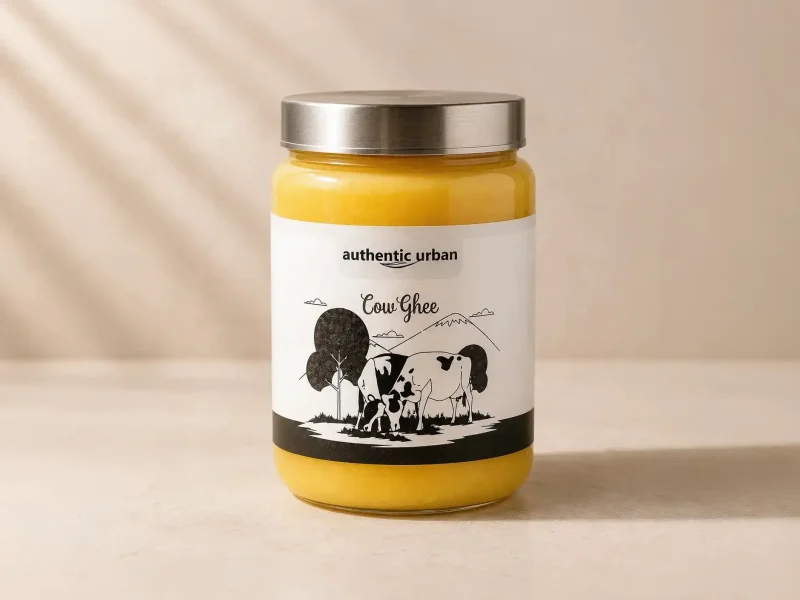 1 Litre
Podi dosa and hotel-style roast
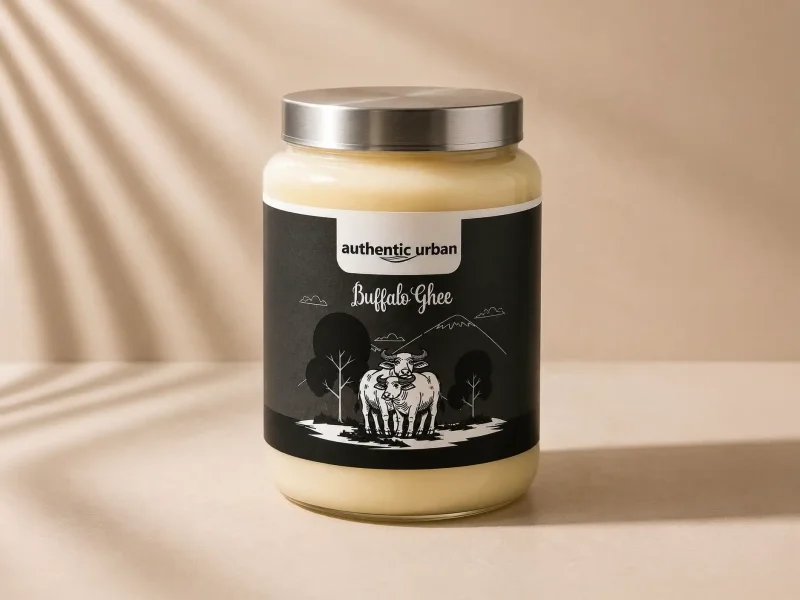 1 Litre
Each order is cooked after you place it, and the packing video is of that batch. Past order videos are on the shop.
FAQ
Can I make ghee dosa with ready-made dosa batter?
Yes. Packet batter is usually thicker than you want for a ghee roast, so stir in water a spoon at a time until it runs off the ladle in a ribbon. Keep it in the fridge and take out only what you need, 20 minutes before cooking, so it is not ice cold on the tawa. The ghee, heat, and timing are the same as for home batter.
Cast iron or non-stick tawa for ghee dosa?
A seasoned cast iron tawa gives the crispest, most even brown, because it holds heat when the cold batter lands. It needs a few uttapams to season and a wipe of oil after washing. A flat non-stick pan is easier for beginners and needs less ghee, but keep it on medium, never smoking hot, and use a wooden or silicone spatula so the coating lasts.
Can I make ghee dosa without fermenting the batter?
Not this kind. Fermentation gives the sour taste and the air that makes a thin dosa crisp and lacy. For a same-day dosa, make rava dosa: 1 cup rava, ½ cup rice flour, and 2 tbsp maida mixed very thin with water, rested 20 minutes, then poured, not spread, onto a hot tawa. It takes ghee the same way, about 1 tsp a dosa.
Is ghee dosa good for a school tiffin?
A ghee roast goes soft and chewy in a closed box within an hour. For the tiffin, make a slightly thicker dosa or an uttapam with ½ tsp ghee, let it cool on a plate for a few minutes so steam does not collect, and pack it with a dry chutney or podi rather than wet chutney. Half a teaspoon is enough; the ghee in the rest of the day counts too.
What do you serve with ghee dosa?
Coconut chutney and sambar are the usual pair. For a lighter plate, have one ghee dosa with a big bowl of sambar, which adds dal protein and vegetables, instead of three dosas with chutney only. Tomato or peanut chutney also works. Skip extra ghee on the side; the dosa already carries a teaspoon.
Why does my dosa batter smell bad?
Good batter smells sour, like curd. If it smells rotten or like nail polish, has pink, orange, or black spots, or shows fuzzy mould on top, throw the whole bowl away; do not scrape off the top. It usually means dirty containers, a very hot room for too long, or a wet spoon used on stored batter. Start again in a clean steel or glass bowl.
About the editorial team
Authentic Urban TeamBilona ghee makers, Gir Somnath, Gujarat
We are the Parmar family in Gir Somnath, Gujarat. We have made ghee here since 2016 and sold it online since 2025. We make only Bilona ghee, test it every month, and anyone is welcome to visit and watch it being made. Our Gir cows and Jafarabadi buffalo are grass-fed village animals that graze near the Gir forest, with no hormones or milk boosters. We set their milk to curd, churn it, and cook the makkhan on a wood chulha. These articles come from that kitchen and from what customers ask us on WhatsApp. We are ghee makers, not doctors.
Sources
- Rice, white, long-grain, parboiled, unenriched, dry (FDC ID 169758), SR Legacy, USDA FoodData Central. Checked 27 Sep 2026.
- Rice, white, long-grain, regular, raw, unenriched (FDC ID 169756), SR Legacy, USDA FoodData Central. Checked 27 Sep 2026.
- Mungo beans, mature seeds, raw (FDC ID 174259), SR Legacy, USDA FoodData Central. Checked 27 Sep 2026.
- Butter oil, anhydrous (FDC ID 173412), SR Legacy, USDA FoodData Central. Checked 27 Sep 2026.
- Dietary Guidelines for Indians, 2024 (Guideline 7, visible fats), ICMR-National Institute of Nutrition. Checked 27 Sep 2026.