Ghee for Immunity: Does It Help, and How Much a Day?
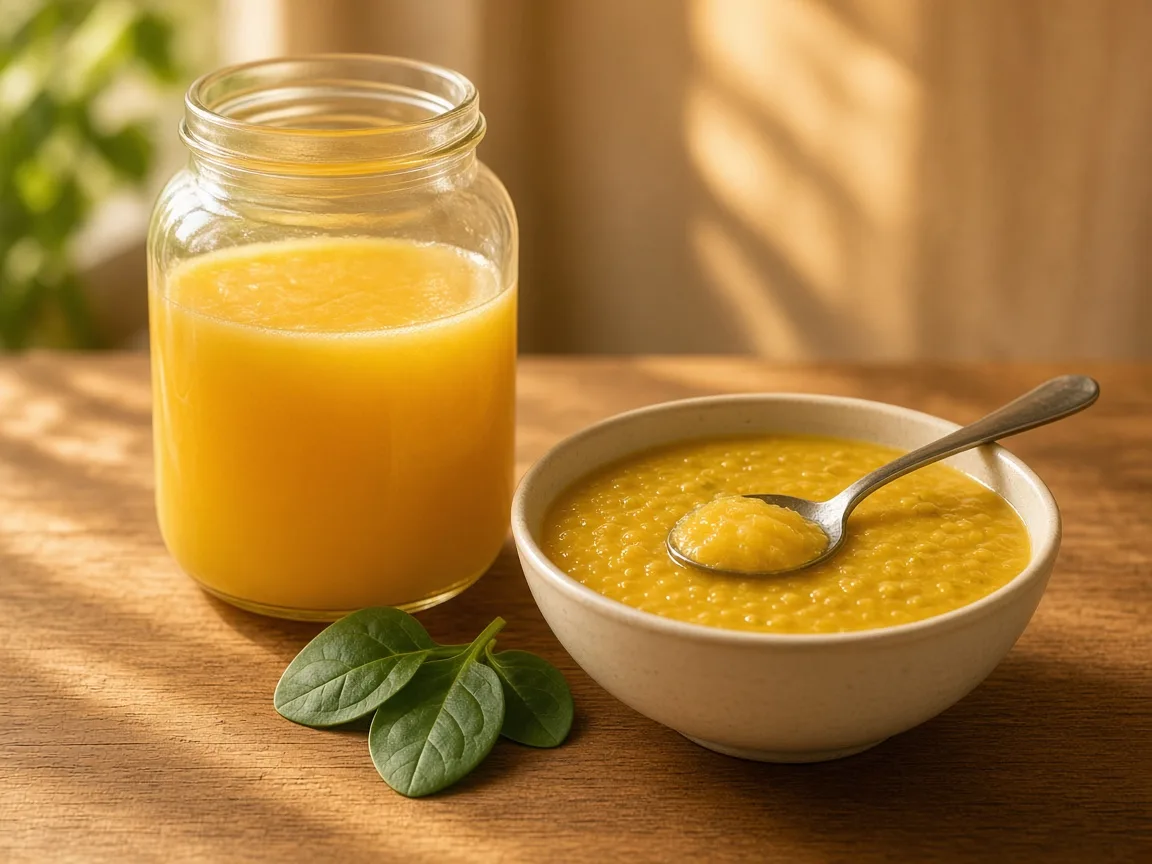
Ghee for immunity works as food, not as a shield: 1 teaspoon (5 g) on hot dal, sabzi, or khichdi helps your body take in the vitamin A, E, and K from the vegetables on that plate, and 1 to 2 teaspoons a day is enough for a healthy adult. Ghee alone does not stop colds or stomach bugs. Vegetables and fruit, a healthy weight, daily activity, sleep, clean hands, and vaccines do most of that work.
Does ghee help immunity?
Only a little, and only through the food it goes on. One teaspoon of ghee on a hot meal with vegetables helps you absorb their fat-soluble vitamins, which your immune system needs. No study shows ghee on its own lowers infections. Keep it at 1 to 2 teaspoons a day, the ICMR-NIN limit for ghee or butter.
This page is for a healthy adult or parent who has heard "ghee builds immunity" and wants to know what to actually do with the jar. It covers how much, on what food, what matters more, and how the advice changes in the monsoon and in winter. If someone at home is already coughing, go to ghee for cough and cold instead.
Which ghee immunity claims are true?
Very few of them, as far as anyone has measured. Most pages that rank for this search repeat the same six claims, some of them from brands that sell ghee. We sell ghee too, so here is each claim next to what is actually known.
The claim
What is actually known
Ghee boosts immunity by itself
No study has given people ghee and counted their infections. ICMR-NIN ties immune function to a balanced diet, vegetables and fruit, a healthy weight, and activity, not to any one fat.
"80% of immunity is in the gut, and ghee heals the gut"
The percentage is repeated from page to page without a source. What ICMR-NIN does say is that vegetables and fruit feed gut bacteria. Most of the butyrate in your colon is made from the fibre in dal and vegetables, not from the spoon.
Ghee is full of immunity vitamins
A teaspoon has about 42 µg of vitamin A (USDA), about what 5 g of raw carrot gives. It has no vitamin C, no measurable vitamin D in USDA's entry, and almost no zinc.
Ghee is antiviral and antibacterial
Not shown in people. No study has found that eating ghee stops a virus or a stomach bug. Safe water, soap, and cooked food do that work.
CLA and omega-3 in ghee strengthen immunity
Ghee is mostly saturated fat. Its CLA and omega-3 come in small amounts, and no immunity trial has used ghee to test them.
Take 1 to 2 tablespoons a day for immunity
That is 3 to 6 teaspoons, past the 1 to 2 teaspoons of ghee ICMR-NIN sets for a day. Extra fat adds weight, and ICMR-NIN says obesity impairs immunity.
Two of these deserve a longer answer. What the butyrate in ghee does and does not do for the gut is on ghee and gut bacteria, and why a spoon of ghee is not a vitamin D source is on ghee for vitamin D deficiency. Ayurveda calls ghee a rasayana (a food for strength and long life). That is a tradition worth knowing, not a trial, and the texts give ghee with food and rest, not as a dose on its own.
How much ghee a day for immunity?
One to two teaspoons a day for a healthy adult, and one if you sit most of the day. That is the same amount as for any other reason: there is no separate "immunity dose". ICMR-NIN's 2024 guidelines say to limit ghee or butter to 1 to 2 teaspoons a day, and a teaspoon is 5 g, about 44 kcal by USDA's figures.
Who
Ghee a day
Note
Healthy adult, active most days
1 to 2 tsp
The ICMR-NIN limit for ghee or butter. The rest of the day's fat is oil.
Healthy adult, sits most of the day
1 tsp
On the hottest vegetable meal of the day, lunch or dinner.
Child over 2 eating family food
½ to 1 tsp
A smear on dal-rice or roti. Not an extra spoon "for immunity".
Over 60
1 tsp
Soft khichdi or dal. Weight and the lipid report decide the rest.
High LDL, heart disease, diabetes, or overweight
½ to 1 tsp, or your doctor's number
Take the report to the doctor before adding any fat.
Low-fat diet from a doctor, or gallbladder pain
Only what the doctor allows
Immunity is not a reason to break that diet.
Measured with a 5 ml spoon. If a doctor has set your fat intake, follow that number.
In our home in Gir Somnath, each of us eats 1 to 2 teaspoons of ghee a day, on roti, dal, and khichdi, and we make ghee for a living. The teaspoon is measured, not poured. Online advice of 1 to 2 tablespoons a day "for immunity" is 3 to 6 teaspoons, well past that line; the full fat budget by age and activity is on how much ghee per day, and you can work out your own household's ghee and oil with our ghee and oil calculator.
What should you eat ghee with for immunity?
Put the teaspoon on a hot meal that has vegetables in it: palak dal, khichdi with vegetables, or a sabzi with roti. ICMR-NIN lists vitamins A, D, E, and K as fat soluble, and beta-carotene from vegetables turns into vitamin A in the body. The vegetables bring the vitamins. The ghee is the fat that carries them.
How much does ghee add by itself?
Very little. Here is a teaspoon of ghee next to one small bowl (100 g) of raw carrot and of raw palak, from USDA FoodData Central.
Per portion
Ghee, 1 tsp
Carrot, 100 g
Palak, 100 g
Vitamin A (µg RAE)
42
835
469
Vitamin C (mg)
0
5.9
28.1
Vitamin E (mg)
0.14
0.66
2.03
Vitamin K (µg)
0.43
13.2
483
Vitamin D (µg)
0
0
0
USDA FoodData Central, SR Legacy entries 173412 (butter oil, anhydrous), 170393, and 168462, checked 29 September 2026.
A teaspoon of ghee carries about as much vitamin A as 5 g of carrot, and none of the vitamin C. Palak brings about a thousand times the vitamin K. So the vegetable is the point, and a no-oil lunch of palak on a dry roti wastes part of it.
How much fat do the vegetables need?
Some fat in the meal, and it does not have to be ghee. In a 2004 study in the American Journal of Clinical Nutrition, 7 adults ate the same salad of spinach, lettuce, tomato, and carrot with 0, 6, or 28 g of oil; with no fat, almost none of the carotenoids (the plant pigments that become vitamin A) reached the blood. In a 2012 study of 29 adults, salads came with 3, 8, or 20 g of canola oil, soybean oil, or butter. The 20 g meals absorbed the most, and the amount of fat mattered more than which fat it was.
For an Indian kitchen, that means the whole meal's fat counts: the oil in the tadka and the teaspoon of ghee on top. If the sabzi was cooked in oil, it already has its fat. The full trial detail, and which cooking methods keep the most beta-carotene, is on does ghee help nutrient absorption.
Meal
Ghee
Why
Palak or methi dal
1 tsp on the hot dal, once it is off the flame
Leafy greens bring vitamin A, K, and C; the fat helps the A and K absorb.
Gajar-matar or pumpkin sabzi
Cook it in the day's oil; no extra ghee needed
The oil in the sabzi already does the job for the carrot.
Moong dal khichdi with vegetables
1 tsp on the hot khichdi
Soft, easy on a slow stomach, and the vegetables are in the pot.
Roti with sabzi
A thin smear, only if the sabzi was dry
Ghee on the roti and on the dal is two spoons.
Plain rice or curd rice
Skip it, or save the spoon for dinner
Nothing on the plate needs fat to absorb.
Our everyday version of this plate is ghee khichdi with whatever vegetables are in the basket. Packing a tiffin? Add the teaspoon while the dal is still hot, so it melts through instead of setting on top.
What helps immunity more than ghee?
Vegetables and fruit, a healthy weight, daily activity, sleep, and clean hands all do more than any fat. These are the things ICMR-NIN's 2024 guidelines tie to immune function by name. The teaspoon of ghee sits at the bottom of this list, and it belongs there.
What
How much
Evidence
Vegetables and fruit every day
A leafy green, an orange or yellow vegetable, and a fruit
ICMR-NIN: they enhance immune function and reduce the risk of infections.
A healthy weight
Check waist and weight every few months
ICMR-NIN: obesity impairs immunity.
Moving every day
30 to 45 minutes of brisk walking
ICMR-NIN: physical activity improves immune function.
Sleep
6 to 8 hours a night
The ICMR-NIN range for healthy sleep.
Clean hands and safe food
Soap and water for 20 seconds; eat cooked food within 4 to 6 hours
ICMR-NIN food safety guideline; WHO names safe water and hand washing against stomach bugs.
Vaccines on schedule
As your doctor or the child's card says
The protection no food gives.
1 tsp ghee on a vegetable meal
Inside 1 to 2 tsp a day
Helps the fat-soluble vitamins in that meal. Not tested for infections.
The weight row is the one ghee can push the wrong way. ICMR-NIN notes that obesity impairs immunity, so three extra teaspoons a day "for immunity" (about 130 kcal) work against the thing they are meant to help. Chyawanprash, kadha, and immunity tablets are separate questions for your doctor; none of them replaces vaccines.
Is ghee good in the monsoon?
Yes, a teaspoon on a warm home-cooked meal is fine in the rains, and it can replace fried outside snacks. It does not protect you from monsoon infections. The illnesses that rise in the rains mostly come through water, food, and hands, and those are what to guard.
Ayurveda calls the rainy season Varsha Ritu and describes digestion (agni) as weak in damp weather, which is why households lean on light, warm, cooked food: moong dal, khichdi, and a ginger or jeera tadka. That is seasonal tradition, not a trial, and it points to smaller meals, not more ghee. The WHO lists safe drinking water, sanitation, hand washing with soap, and good food hygiene as the ways to prevent diarrhoeal disease.
Monsoon risk
What to do
Where ghee fits
Water
Boiled or filtered water only, at home and in the tiffin bottle
No ghee changes a bad glass of water.
Street food
Skip cut fruit, pani puri, and chutneys left out in the rain months
Home khichdi with 1 tsp ghee is the swap, not an extra spoon on top of pakoras.
Leftovers
Eat cooked food within 4 to 6 hours, or fridge it and reheat until hot
Ghee on stale dal does not make it safe.
Hands
Soap and water for 20 seconds before cooking and eating
The single cheapest habit on this list.
A slow stomach
Smaller, warm, cooked meals; ginger and jeera in the tadka
Keep it at 1 tsp. Heavy fried food is what sits worst.
Water, hands, and the 4 to 6 hour rule: ICMR-NIN food safety guideline and the WHO diarrhoeal disease fact sheet.
Keeping the ghee jar in the rains
Damp air and a wet spoon are what spoil ghee in the monsoon. Use a dry spoon every time, keep the lid shut, and keep the jar away from the stove and the window. In our kitchen, the one batch we never pack is an undercooked one: it stays cloudy, holds water, and spoils fast. The same thing happens in a jar that takes in water from a wet spoon. Signs of a jar that has turned, and how long a sealed and an open jar keep, are on how to store ghee.
You may also notice the ghee looks different. In the monsoon our cows eat green fodder, and cow ghee comes out more yellow than in winter. "Why is the colour different from last time?" is one of the questions we get most on WhatsApp, and this is usually the answer. The colour change does not make the jar better or worse for you; more on it in why ghee tastes different each season.
Should you eat more ghee in winter for immunity?
No. The daily teaspoon stays the same in winter; what grows is the ghee hidden in sweets. In our house the extra winter ghee comes in adadiya pak and gond, and that is where most families' ghee quietly doubles. If you make gond ke ladoo, count one ladoo as part of the day's ghee and skip the extra spoon on dal that day. A warm cup of turmeric ghee golden milk at night counts too. Whether ghee is heating or cooling, and how much by season, is on is ghee heat or cold for the body.
Should you eat ghee when you are sick?
Keep it to the usual teaspoon, or less, and do not add extra to "recover faster". With a cold, the NHS advises rest, plenty of fluids, and healthy food. With loose motions, the WHO's first step is ORS (clean water, salt, and sugar) and keeping up nutritious food. A soft khichdi with a little ghee fits both; a heavy, oily plate does not.
See a doctor, not the ghee jar, for a high temperature lasting more than 3 days, shortness of breath or chest pain, a cold that is no better after 10 days, a cough past 3 weeks (the NHS signs), or loose motions with blood, signs of dehydration, or a child who will not drink. Ghee remedies for a cold, and which are tradition and which are tested, are on ghee for cough and cold.
Who should ask a doctor before eating ghee for immunity?
Anyone with high LDL cholesterol, heart disease, diabetes, fatty liver, gallbladder pain, or a doctor's low-fat diet should keep to the number their doctor sets. Ghee is mostly saturated fat, and immunity is not a reason to go past that number. People on treatment that lowers immunity, such as chemotherapy, steroids, or after a transplant, need food advice from their own team. The full list is on who should not eat ghee. For children under 2, the amounts are on ghee for toddlers.
An 8-point immunity kitchen checklist
Screenshot this and keep it by the stove.
- Measure ghee with a 5 ml spoon: 1 to 2 teaspoons a day for an adult, all meals together.
- Put the teaspoon on the meal with vegetables in it, while the food is hot.
- Eat a leafy green, an orange or yellow vegetable, and a fruit every day.
- Walk 30 to 45 minutes a day and sleep 6 to 8 hours.
- Wash hands with soap for 20 seconds before cooking and eating.
- In the monsoon: boiled or filtered water, cooked food within 4 to 6 hours, and a dry spoon in the ghee jar.
- Sick with fever or loose motions: rest, fluids or ORS, light food. No extra ghee.
- Keep vaccines on schedule. No food replaces them.
Which ghee for the daily teaspoon?
No jar of ghee protects you better than another, so buy for purity and taste, and keep the spoon small. Good ghee smells of toasted milk when warmed, is clear when melted, and often sets grainy when it cools. How to check any jar at home is on how to identify pure ghee, and our ranking of the cow ghee on sale is best cow ghee in India.
We make and sell ghee, so weigh this with that in mind. For the daily teaspoon we would pick our own A2 Gir cow ghee: grass-fed Gir cow milk set to curd overnight, churned, and cooked in a matki on a wood chulha, made after you order, with a video of your jar sent on WhatsApp. At ₹2,399 a litre, a 5 ml teaspoon costs about ₹12. Our Jafarabadi buffalo ghee is the richer jar for gond ladoo and winter halwa. We test every month against the FSSAI limits; the steps are on how we make ghee.
The teaspoon on dal
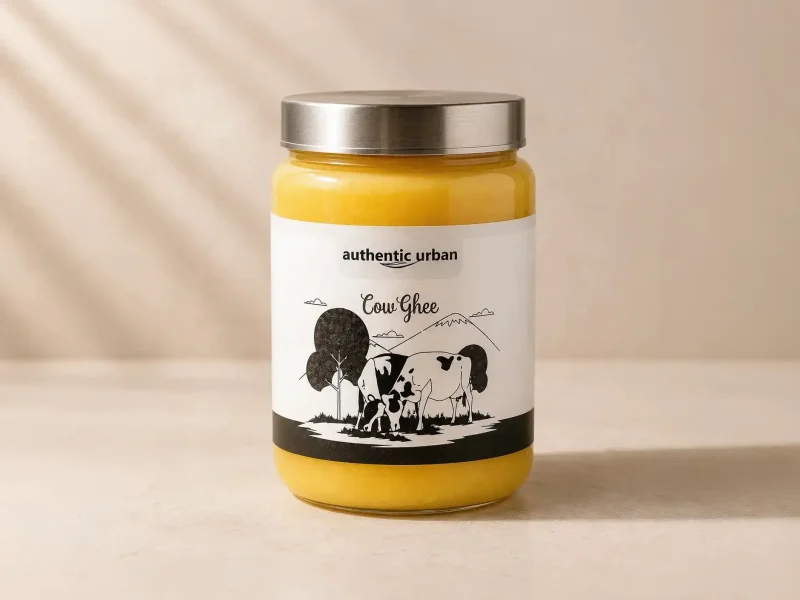 1 Litre
Winter sweets, small
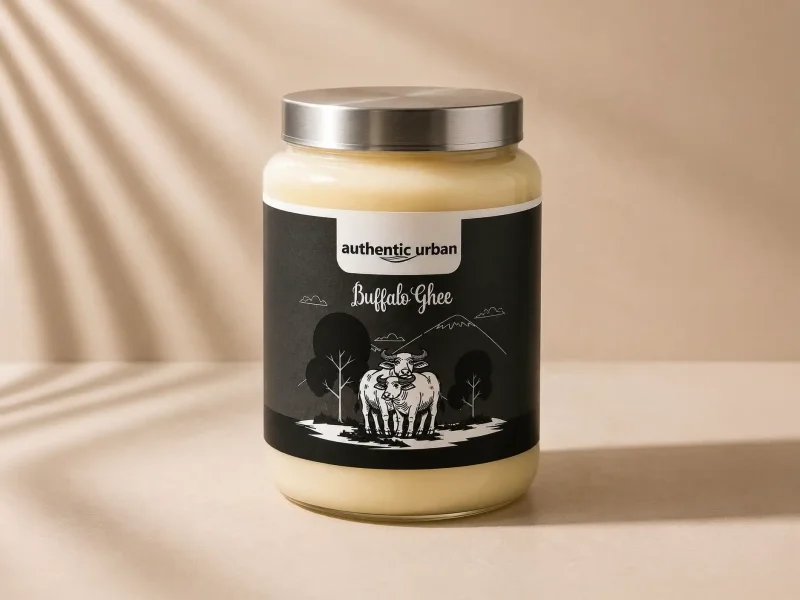 1 Litre
Each order is cooked after you place it, and the packing video is of that batch. Past order videos are on the shop.
FAQ
Immunity ke liye ghee kaise khaye?
Din me 1 se 2 chammach, garam dal, sabzi ya khichdi par, lunch ya dinner me. Khali pet ek chammach ghee se immunity nahi badhti, kyunki ghee ka kaam sabzi ke vitamin A, E aur K ko absorb karwana hai. Ghee akela immunity nahi badhata. Roz hari sabzi aur phal, 6 se 8 ghante neend, roz 30 minute chalna, aur saaf haath zyada kaam aate hain.
Is ghee on an empty stomach better for immunity?
No. Ghee helps the fat-soluble vitamins that are on the plate with it, so a plain spoon at 7 am has nothing to carry. There is no study showing that morning ghee on an empty stomach lowers infections. If you like ghee with warm water in the morning, count it inside your 1 to 2 teaspoons, and then keep the dal teaspoon for lunch.
Can I take chyawanprash and a vitamin tablet with ghee?
Yes, if you already take them. Chyawanprash is itself made with ghee, sugar, and herbs, so a spoon of it counts toward the day's ghee and sweet. A vitamin tablet your doctor prescribed can go with a meal that has some fat, like dal with ghee. Ghee does not make a tablet stronger, and stacking all three does not add up to better immunity.
Is A2 or Bilona ghee better for immunity than normal ghee?
No study has compared A2, Bilona, and ordinary ghee for immunity. All pure ghee is about 99.5% fat, with similar vitamin A per teaspoon. What differs is taste, method, and trust in the jar. Buy A2 or Bilona because you like how it is made and what it smells like, not because the label promises fewer colds.
Is coconut oil better than ghee for immunity?
No. Coconut oil is also mostly saturated fat, and there is no trial showing it lowers infections either. Both help fat-soluble vitamins absorb about as well as any fat does, since the amount of fat matters more than the kind. Use coconut oil where the dish needs its taste, like avial or a Kerala thoran, and ghee on dal.
How much ghee can I give my child for immunity?
For a child over 2 who eats family food, ½ to 1 teaspoon a day on dal-rice, khichdi, or roti is plenty. Extra spoons do not prevent colds, and they crowd out vegetables and fruit. Under 1 year, follow your paediatrician. Children fall sick often, and the things that actually protect them are vaccines on schedule, clean hands, safe water, and enough sleep.
About the editorial team
Authentic Urban TeamBilona ghee makers, Gir Somnath, Gujarat
We are the Parmar family in Gir Somnath, Gujarat. We have made ghee here since 2016 and sold it online since 2025. We make only Bilona ghee, test it every month, and anyone is welcome to visit and watch it being made. Our Gir cows and Jafarabadi buffalo are grass-fed village animals that graze near the Gir forest, with no hormones or milk boosters. We set their milk to curd, churn it, and cook the makkhan on a wood chulha. These articles come from that kitchen and from what customers ask us on WhatsApp. We are ghee makers, not doctors.
Sources
- Dietary Guidelines for Indians, 2024 (immune function, printed pp. 1, 47, 64, 72; fat-soluble vitamins, p. 10; ghee or butter 1 to 2 teaspoons, p. 54; sleep, p. 68; hand washing and cooked food, pp. 78 and 80; teaspoon 5 g, p. 111), ICMR-National Institute of Nutrition. Checked 29 Sep 2026.
- Butter oil, anhydrous (FDC ID 173412), SR Legacy, USDA FoodData Central. Checked 29 Sep 2026.
- Carrots, raw (FDC ID 170393), SR Legacy, USDA FoodData Central. Checked 29 Sep 2026.
- Spinach, raw (FDC ID 168462), SR Legacy, USDA FoodData Central. Checked 29 Sep 2026.
- Carotenoid bioavailability is higher from salads ingested with full-fat than with fat-reduced salad dressings (Brown and others; American Journal of Clinical Nutrition, 2004, 80(2): 396-403), American Journal of Clinical Nutrition (PMID 15277161). Checked 29 Sep 2026.
- Meal triacylglycerol profile modulates postprandial absorption of carotenoids in humans (Goltz and others; Molecular Nutrition and Food Research, 2012, 56(6): 866-77), Molecular Nutrition and Food Research (PMID 22707262). Checked 29 Sep 2026.
- Diarrhoeal disease fact sheet (7 March 2024), World Health Organization. Checked 29 Sep 2026.
- Common cold, NHS. Checked 29 Sep 2026.