Ghee Calories Per Tablespoon: Spoon, Tbsp & Daily Chart
Ghee calories per tablespoon are 112 kcal when USDA lists that spoon as 13 g. In an Indian kitchen, 1 spoon usually means a teaspoon. That is about 44 kcal. I log grams because the English word spoon is a mess. Kitchen numbers, not a prescription.
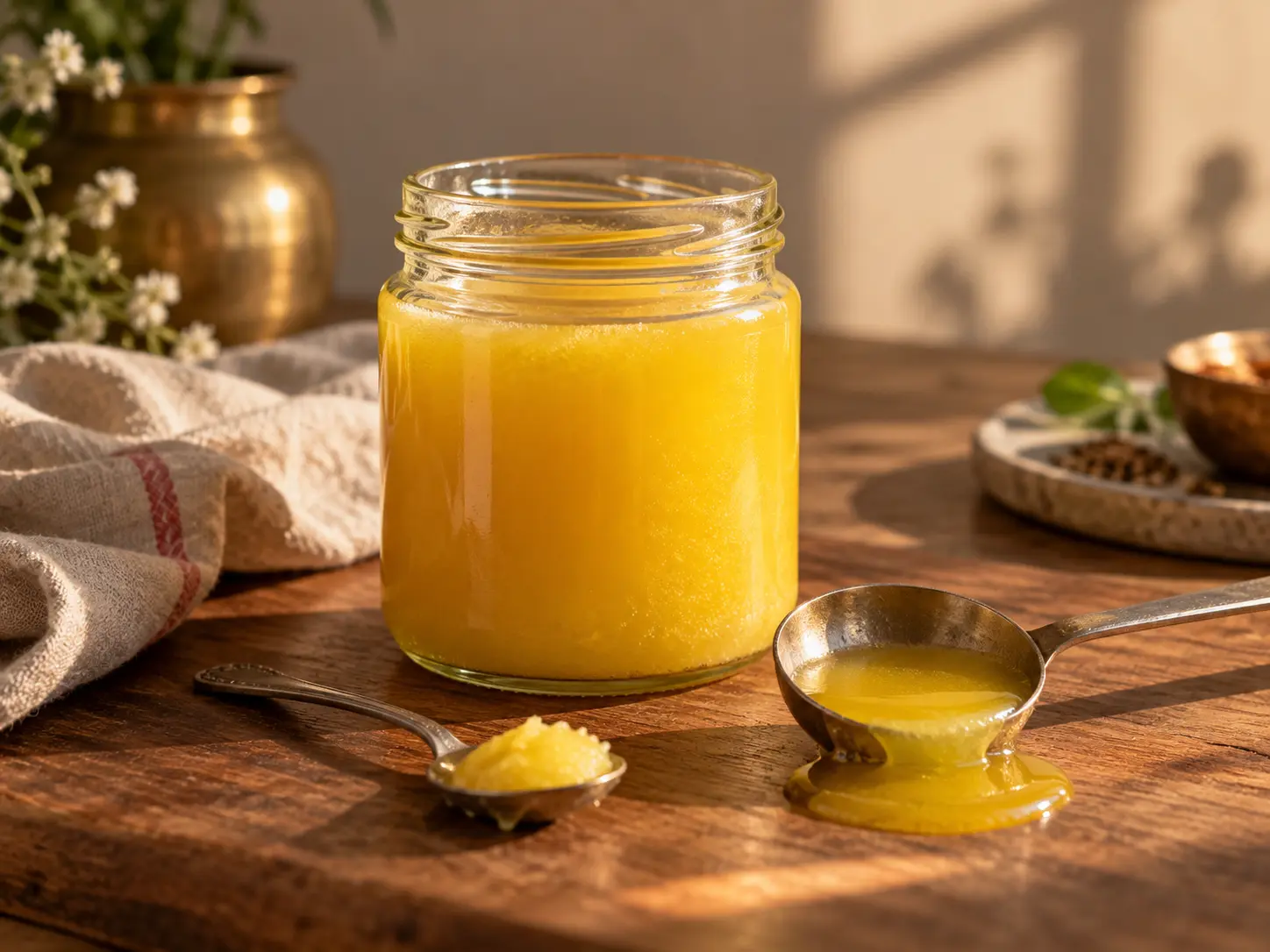
Ghee calories per tablespoon, teaspoon, and 100 g
Almost every calorie in ghee is fat. Water and milk solids got cooked off. That is the whole trick, and it is why the number looks high.
USDA FoodData Central calls it butter oil, anhydrous. That is the ghee row most calorie apps copy. 876 kcal per 100 g, about 99.5 g fat, 0 g carbohydrate, 0.28 g protein. 8.76 kcal per gram. Scale the spoon you actually used, not the one in the screenshot.
1 tsp, about 5 g, Indian spoon
44 kcal, 5 g fat
1 tbsp, USDA 13 g
112 kcal, 12.7 g fat
100 g
876 kcal, about 99.5 g fat
Vitamins and fatty acids live on ghee nutrition facts. I kept this page as the spoon chart on purpose. Mixing them is how people who only wanted a number leave.
Indian spoon vs tablespoon
Search types 1 tablespoon. Home cooks say 1 spoon. In Hindi that is usually a चम्मच, a teaspoon, about 5 ml of melted fat, about 5 g. A US tablespoon is 15 ml. Three of those. Google mashes the words because English is lazy about kitchen metal.
Weigh it once. Tare the tadka spoon, fill it the way you cook, write the grams on tape on the jar. After that, 5 g is 44 kcal and 13 g is 112. Guessing from a blog photo is how 44 becomes 112 in MyFitnessPal, and then people swear ghee made them gain overnight.
Home use is teaspoons. Tablespoons show up in halwa, paratha layers, and people cooking from Western recipes. Roti plus dal tadka is not three USDA tablespoons unless the ladle is lying.
Ghee calorie chart by measure
Rows below use USDA 876 kcal per 100 g. Carbs 0 g. Protein 0 g on a kitchen spoon. The 0.28 g per 100 g does not belong on a roti log. NIN Indian Food Composition Tables treat ghee as pure fat, so energy sits near 9 kcal per gram, about 900 kcal per 100 g. Same kitchen fat. USDA is a bit lower because that lab row is 99.5 g fat, not a round 100. Pick one density. Stick to grams.
| Measure | Weight | kcal | Fat (g) | Source note |
|---|---|---|---|---|
| 1 teaspoon, typical Indian spoon | 5 g | 44 | 5.0 | 5 g times 8.76 kcal/g |
| 2 teaspoons, small tadka | 10 g | 88 | 9.9 | Two tsp, not a tbsp |
| 1 tablespoon, USDA listed | 13 g | 112 | 12.7 | USDA serving weight |
| 1 tablespoon, 14 g kitchen | 14 g | 123 | 13.9 | Common label spoon |
| 1 tablespoon, 15 g pour | 15 g | 131 | 14.9 | Heaped 15 ml of fat |
| 100 g | 100 g | 876 | 99.5 | USDA per 100 g |
USDA butter oil, anhydrous, 876 kcal per 100 g. Listed tablespoon 13 g equals 112 kcal, 12.7 g fat. Other rows are that density times grams, rounded. Not an Authentic Urban lab printout.
Why labels show 112 vs 120 to 130
Nobody is selling a magic Bilona calorie. The tablespoon is not a gram. USDA lists 13 g, so 112 kcal. Plenty of Indian and US labels treat a tablespoon as 14 g, about 123, or 15 g, about 130. Our older nutrition page used the 14 g band. Trackers that say 112 are on the USDA serving. Multiply grams by 8.76 and stop arguing with the screenshot.
Roti, tadka, rice, and a daily chart
The ghee on the plate is the number you can control. I am not going to invent a full roti calorie and call it science. Weigh the fat. Log the bread the way you already log it.
A thin brush on hot roti is often half to 1 tsp, 22 to 44 kcal. A cold blob on a stacked pile is something else. Jeera in 1 tsp is a normal home tadka. A restaurant ladle is not. Finishing rice with 1 tsp in the pot is not frying the grain in a tablespoon.
A measured day at three teaspoons, USDA density.
| Meal | Pour | g | kcal |
|---|---|---|---|
| Breakfast roti finish | 1 tsp | 5 | 44 |
| Lunch dal tadka | 1 tsp | 5 | 44 |
| Dinner rice finish | 1 tsp | 5 | 44 |
| Measured day total | 3 tsp | 15 | 132 |
Same kitchen, unmeasured ladles.
| Meal | Pour | g | kcal |
|---|---|---|---|
| Roti, unmeasured tbsp | 1 tbsp | 13 | 112 |
| Dal, generous tadka | 2 tsp | 10 | 88 |
| Rice, second tbsp | 1 tbsp | 13 | 112 |
| Unmeasured day total | mix | 36 | 312 |
132 versus 312 kcal from the fat alone. Surplus energy moves weight. The jar does not. If you replaced oil, that is one story. If you poured this on top of the oil you already use, read ghee for weight loss. How many teaspoons fit your day, by activity, is how much ghee per day.
Ghee vs butter vs oils, calories only
Fats sit close per spoon. Butter looks lighter because it is still about 16% water. Oils and ghee are almost all fat, so a tablespoon of sunflower oil is not a calorie hack. The fight worth having is portion, and whether the yellow fat is milk fat or packing oil.
| Fat | kcal / tbsp | Note |
|---|---|---|
| Ghee, USDA 13 g tbsp | 112 | Nearly 100% fat |
| Ghee, 14 g tbsp | 123 | Same density, heavier spoon |
| Butter, USDA about 14.2 g tbsp | about 102 | Still holds water |
| Sunflower oil, USDA about 13.6 g tbsp | about 120 | Calories tie. Oil page owns health. |
Heat, lactose, baking, ghee vs butter. Omega-6, tadka, frying, ghee vs sunflower oil. This table is kcal. For the health argument, start at is ghee healthy.
Zero carbs, near-zero protein
Searching 1 spoon ghee protein? Put 0. Keto keeps the carb box empty. The calorie box still fills. Milk protein that survived a lazy strain is a jar-quality issue, not whey you can count. How clarification strips casein is on casein and whey removed. Coffee and keto portions sit on the ghee keto diet guide.
Cow vs buffalo vs A2. Same calories
Calorie density is fat density. Cow, buffalo, A2, cream-method, Bilona. If it is ghee, a gram is still about 9 kcal. Buffalo often feels richer because the pour is thicker, so the same "spoon" weighs more. That is grams, not a different molecule. Kitchen differences sit on cow vs buffalo ghee.
Aroma shifts. Grain shows up when the jar cools. Feed changes the colour. Adulteration changes the food. Bilona is a method. It does not shave calories, and anyone selling you that should weigh the spoon in front of you.
Log fat that is actually ghee
A calorie chart assumes clarified milk fat. Authentic Urban A2 Bilona ghee is cooked after the order, with a packing video of your batch, so the grams you log match the jar.
Why the quality of that spoon matters
If you are counting the spoon, adulterated oil still hits the same kcal box and none of the flavour. Warm a little. It should smell like toasted milk, not packing oil. Cool it. Slow ghee often shows soft grain. A price that ignores milk maths is a warning. How to check a jar is on how to identify pure ghee. What Bilona is allowed to mean is on what is Bilona ghee.
For a daily roti spoon I would keep A2 cow ghee. For heavier tadka and paratha, buffalo ghee. Calories stay in this table either way. The video is so you know which fat you logged.
What to log tomorrow
Ghee calories per tablespoon are 112 kcal on the USDA 13 g spoon, about 44 at an Indian teaspoon. Weigh grams. Three measured teaspoons are a normal home day. Three unmeasured tablespoons are a different diary, and pretending they are the same is how the app starts a fight with the kadai. Warm the jar. If it does not smell like milk fat, you are logging the wrong food.
Count a spoon you can prove
Authentic Urban A2 Bilona ghee, cow or buffalo, packed after you order, with the batch on video.
Frequently Asked Questions
How many calories are in 1 tablespoon of ghee?
USDA lists anhydrous butter oil, which is ghee, at 112 kcal for a 13 g tablespoon, about 12.7 g fat, and 0 g carbs. A 14 g kitchen tablespoon is about 123 kcal. A 15 g pour is about 131. Same fat. The spoon got heavier.
How many calories are in 1 spoon of ghee?
In an Indian kitchen, 1 spoon is usually a teaspoon, about 5 g, about 44 kcal. A Western tablespoon is three of those. If you logged tbsp while pouring tsp, the diary is off by about 3x. Weigh your home spoon once.
How many calories in desi ghee?
Same food as USDA butter oil, roughly 876 kcal per 100 g. Desi on the lid is style and process, not a lighter calorie. Adulterated jars can be oil blends. They still log as fat. They are not the ghee you think you bought.
Does ghee have carbs or protein?
Log 0 g carbs. Protein on the USDA 100 g row is 0.28 g, which rounds to 0 on a teaspoon. Clarification pulls off the milk solids that carry lactose and casein. Leftover protein is a purity problem, not a macro. The casein page is for that search.
Is ghee keto-friendly for calorie tracking?
Carbs stay at zero. Calories do not. One USDA tablespoon is 112 kcal of fat. Ketosis is carb restriction. Fat loss is still energy balance. Portions and coffee sit on the keto guide, not this chart.
Ghee vs sunflower oil, which has more calories?
Almost a tie. Sunflower oil is about 120 kcal per 13.6 g USDA tablespoon. Ghee is 112 at 13 g, or about 123 if your spoon is 14 g. Do not pick a fat to save 8 kcal. Pick it for heat, flavour, and whether the jar is actually ghee. The sunflower page owns the health fight.
Does cow ghee vs buffalo ghee change the calorie count?
Per gram, no. Both are clarified milk fat. Buffalo often feels denser because the pour is thicker. A2 and Bilona change aroma and grain, not the 8.76 kcal per gram. Weigh the spoon if you are tracking.
How much ghee can I use per day if I am watching calories?
This page turns spoons into kcal. It does not set a medical cap. A measured Indian day is often 1 to 2 teaspoons total, about 44 to 88 kcal, not three unmeasured tablespoons. Life-stage ranges live on how much ghee per day. Ask a clinician if you have a prescribed fat limit.
About the editorial team
Authentic Urban TeamBilona Ghee Makers & Editorial Team
This Blog is Reviewed by our nutrition and research team for practical accuracy and buyer clarity.
Trusted since 2016, we bring 9 years of offline ghee business experience and 1 year of online selling. We only work with curd-based Bilona ghee, and our articles are shaped by real production experience, customer questions, and hands-on quality checks.