Ghee for Thyroid: Is It Good, How Much a Day, and When
Ghee for thyroid patients is fine as food: 1 to 2 teaspoons a day on dal, roti, or khichdi suits most people with hypothyroidism or Hashimoto's. It does not lower TSH or replace the tablet. Keep it out of the 30 to 60 minutes after your morning levothyroxine, and let your cholesterol report decide if you need less.
Is ghee good for thyroid patients?
Yes, in normal food amounts. Most adults with an underactive thyroid can eat 1 to 2 teaspoons of ghee a day, the same line ICMR-NIN's 2024 guidelines set for ghee or butter for everyone. Ghee does not treat the thyroid. Your tablet, your blood tests, and your cholesterol report matter more than which fat is on your dal.
This page is for people with hypothyroidism (an underactive thyroid) or Hashimoto's (the autoimmune kind), and for the person cooking for them. If thyroid came up alongside PCOS or irregular periods, read can ghee balance hormones as well. The general verdict on ghee as a fat is on is ghee healthy.
Can ghee lower TSH or replace thyroid tablets?
No. No study has given people with thyroid disease ghee and measured TSH, T3, or T4. What gets shared online borrows from MCT oil trials, butyrate lab work, or the idea that hormones are "made from fat". Here is each claim, and what is actually known.
The claim
What is actually known
Ghee lowers TSH or "heals" hypothyroidism in 6 to 8 weeks
No human study has tested this. TSH comes down when the right dose of levothyroxine replaces the missing hormone; the NIDDK says the dose is checked by blood test 6 to 8 weeks after a start or change.
Ghee can replace the thyroid tablet
No. The NHS says most people with an underactive thyroid need the tablet for life to keep symptoms away. No food does its job.
The MCTs in ghee speed up a slow thyroid metabolism
Ghee is mostly long-chain fat; the medium-chain part is small. The weight trials used MCT oil, not ghee, and none were in thyroid patients.
Ghee cholesterol "feeds" thyroid hormone
Thyroid hormone is made from iodine and an amino acid, not from cholesterol. Low thyroid tends to raise cholesterol (NIDDK), which is a reason to keep the spoon small.
Ghee is safe for Hashimoto's because it has no dairy protein
Partly true. Clarifying removes almost all milk protein and milk sugar, but a trace stays. Hashimoto's is not a dairy allergy, and no special diet treats it.
Ghee gives the selenium and iodine the thyroid needs
No. USDA lists selenium in ghee as zero and does not list iodine. Iodised salt, eggs, dal, and fish carry those.
The metabolism claim is the one we hear most. What MCT and CLA studies do and do not show for weight is laid out on does ghee boost metabolism. For a slow thyroid, the fix for a slow metabolism is the right tablet dose, found by blood tests.
How much ghee a day for a thyroid patient?
Keep to 1 to 2 teaspoons a day, and 1 teaspoon if your weight is climbing or your cholesterol is high. One teaspoon (5 g) is about 44 kcal, 3.1 g of saturated fat, and 13 mg of cholesterol, per USDA figures. Thyroid disease does not raise that allowance; it often lowers it.
Your situation
Ghee a day
Why
On levothyroxine, TSH in range, normal cholesterol and weight
1 to 2 tsp a day
The same ICMR-NIN line as everyone else. On dal, khichdi, or roti, not in the morning tablet window.
Hypothyroid and putting on weight
1 tsp a day
Measure it. Fried snacks and sweets matter more than the spoon on dal.
High LDL or cholesterol on your report
1 tsp, or what your doctor sets
Low thyroid can raise cholesterol. Recheck lipids once TSH is back in range before adding any.
Hashimoto's, no milk allergy
1 to 2 tsp a day
Same as above. If you have a proven milk allergy, ask your allergist before any ghee.
Overactive thyroid (hyperthyroidism), losing weight
As your doctor or dietitian sets
Extra calories may be advised while treatment starts. Ghee is one way to add them; it does not treat the gland.
Pregnant with a thyroid condition
1 to 2 tsp a day
Tell your doctor the day you find out: the tablet dose often changes. Ghee does not.
For adults. If your doctor or dietitian has set your fat intake, follow that.
In our home in Gir Somnath, each of us eats 1 to 2 teaspoons of ghee a day, on roti, dal, and khichdi, and more only in winter sweets like adadiya pak and gond. We make ghee for a living and we still measure the spoon. To work out the amount for everyone at your table, use our ghee and oil calculator; the numbers by age are on how much ghee per day.
Why your cholesterol report sets the spoon
The NIDDK notes that hypothyroidism can contribute to high cholesterol, and that anyone with high cholesterol should be tested for it. So a person whose thyroid has just been found low often has a lipid report that looks worse than it will once the dose is right. Hold ghee at 1 teaspoon until TSH is back in range, then recheck the lipids before adding more. How ghee sits with LDL and the heart is on is ghee bad for cholesterol.
Ghee and your thyroid tablet: when to eat it?
Eat ghee with meals, and never in the gap after your tablet. The NHS says to take levothyroxine on an empty stomach, 30 to 60 minutes before your first meal of the day, any drink with caffeine such as tea or coffee, or any other medicine. A teaspoon of ghee in warm water is food, so it belongs after that gap.
This is the clash most pages miss. The morning ghee water and the ghee coffee are both popular, and both are often taken first thing, right when the tablet should be alone. If you like either, move it to breakfast time. The morning ghee routine and who should skip it are on ghee on empty stomach, and the coffee version on black coffee with ghee.
When
What
Why
On waking
Thyroid tablet with a glass of plain water
Empty stomach: no tea, no coffee, no ghee water, no other medicine yet.
30 to 60 minutes later
Tea or coffee, then breakfast: poha, upma, eggs, or a roti with ½ tsp ghee
The NHS gap before the first meal or caffeine drink is over.
Lunch
Dal, sabzi, roti or rice, 1 tsp ghee on the dal
Most of the day's ghee goes here, on hot food.
Evening
Roasted chana, fruit, or buttermilk
No fried snack; that is where extra fat hides.
Dinner
Khichdi or dal-roti, ½ tsp ghee if the day allows
Keep the day at 1 to 2 tsp in total.
A sample day for someone who takes the tablet in the morning. If your doctor told you to take it at bedtime, keep food away from it the way they said.
Is ghee okay for Hashimoto's disease?
For most people with Hashimoto's, yes, at 1 to 2 teaspoons a day. The NIDDK describes Hashimoto's as an autoimmune condition that can cause hypothyroidism and is treated with levothyroxine, and its diet advice is about iodine, not fats. Ghee is not on its list to avoid, and it is not a treatment.
Many people with Hashimoto's are told online to cut dairy. Ghee is the part of milk with almost no milk protein or milk sugar left, because those settle out as the brown bits when the butter cooks. Almost is not zero, which matters only for a real milk allergy; the trace per spoon is on does ghee have casein, and the lactose side on ghee for lactose intolerance.
Iodine and selenium: where ghee does not help
The NIDDK warns that people with Hashimoto's may be sensitive to iodine, and that kelp, dulse, other seaweed, and iodine supplements can cause or worsen hypothyroidism. Ordinary iodised salt in cooking is a different thing from those. Ghee carries neither nutrient: USDA lists its selenium as zero and gives no iodine value. Selenium capsules are often suggested for Hashimoto's, but a 2013 Cochrane review of 4 trials with 463 people found the evidence incomplete, neither for nor against.
What helps thyroid more than ghee?
The tablet taken the same way every day, and blood tests on time. After that come salt, the lipid report, and the plate. Ghee sits last on the list, as a taste on food.
What
How
The tablet, taken the same way every day
Empty stomach, water only, 30 to 60 minutes before food or tea
Blood tests on time
6 to 8 weeks after any dose change, then as your doctor says
Iodised salt, not iodine pills or seaweed
Normal cooking amounts. NIDDK warns high iodine can worsen hypothyroidism
A lipid report
Low thyroid can raise cholesterol; it tells you how much fat fits
Protein and fibre on every plate
Dal, chana, eggs, curd, vegetables. Helps weight and the constipation hypothyroidism brings
1 to 2 tsp ghee on meals
Food and taste. Not a thyroid treatment
The NHS lists tiredness, feeling cold, weight gain, constipation, low mood, dry skin, and hair loss among the symptoms of an underactive thyroid. Some of these tempt people to add fat, or remedies, to their food. Constipation is better met with fibre and water, as ghee for constipation explains, and thyroid hair fall settles with the right dose, not a scalp oil (see ghee for hair fall).
What about an overactive thyroid (hyperthyroidism)?
Ghee does not calm an overactive thyroid either. People with hyperthyroidism often lose weight without trying, and a doctor or dietitian may ask them to eat more while treatment takes hold. A teaspoon of ghee on dal or roti is an easy, familiar way to add those calories, inside whatever amount they set. The iodine caution applies here too: no seaweed or iodine supplements unless the doctor asks for them.
When should you see a doctor instead of changing your diet?
See a doctor if you think you have thyroid symptoms, if they come back on treatment, or before any change to your tablet. Diet changes around ghee are small; a wrong dose is not.
Call your doctor soon if you are pregnant or planning to be (the NIDDK says many women need a higher dose in pregnancy, and the NHS says the dose is likely to change), if you notice a new lump or swelling in the neck, or if you feel sick, have diarrhoea, headaches, or cannot sleep after a dose change, which the NHS lists as signs of the wrong dose. Do not stop or change the tablet because of a diet.
A thyroid kitchen checklist
Screenshot this and keep it by the tablet strip.
- Take the thyroid tablet with water on an empty stomach. Nothing else for 30 to 60 minutes.
- Move ghee water or ghee coffee to after that gap, or drop it.
- Keep ghee at 1 to 2 teaspoons a day, measured with a real 5 ml spoon, on dal, roti, or khichdi.
- Use iodised salt. Do not add iodine drops, kelp, or seaweed tablets on your own.
- Get TSH checked 6 to 8 weeks after any dose change, and a lipid profile once TSH is steady.
- If you are pregnant or planning to be, call your doctor now about the tablet dose.
- Never change or stop the tablet because of a diet. Ask first.
Which ghee for a thyroid diet?
No ghee is better for the thyroid than another, so buy for purity and taste. Good ghee smells of toasted milk when warm, is clear when melted, and often sets grainy when cool. How to check any jar is on how to identify pure ghee, and our ranking of cow ghee on sale is best cow ghee in India.
For the measured daily teaspoon we would pick our own A2 Gir cow ghee: grass-fed Gir milk set to curd overnight, churned, and cooked in a matki on a wood chulha, made after you order, with a video of your jar sent on WhatsApp. At ₹2,399 a litre, a 5 ml teaspoon costs about ₹12. Our Jafarabadi buffalo ghee is the richer jar for halwa and ladoo, best kept to festival portions. We test every month against the FSSAI limits; the steps are on how we make ghee.
The daily teaspoon on dal
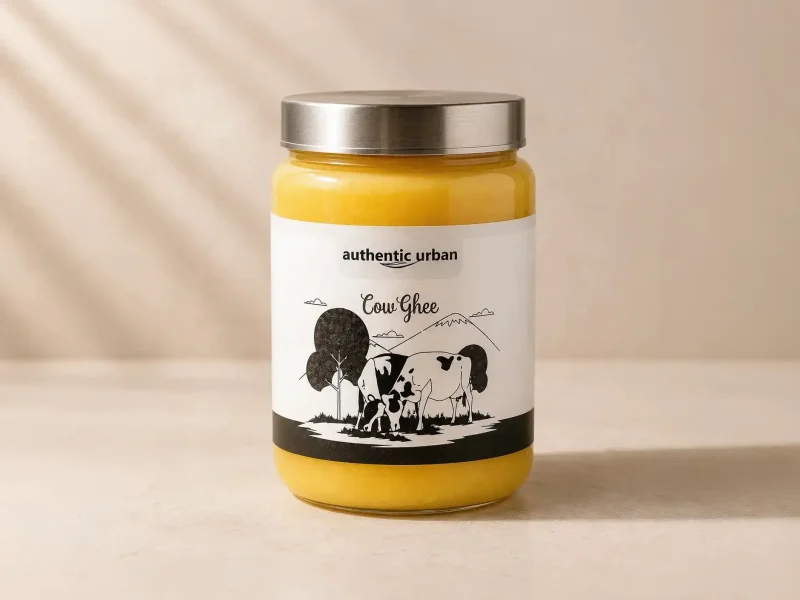 1 Litre
A small festival sweet
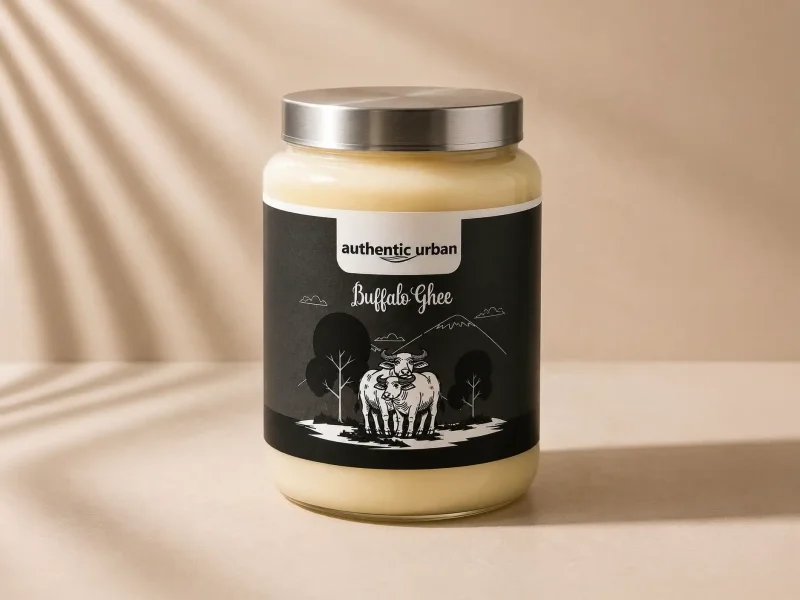 1 Litre
Each order is cooked after you place it, and the packing video is of that batch. Past order videos are on the shop.
FAQ
Thyroid me ghee kha sakte hain kya?
Haan, zyadatar logon ke liye din me 1 se 2 chammach ghee theek hai, dal, roti ya khichdi par. Ghee se TSH kam nahi hota aur yeh thyroid ki goli ki jagah nahi le sakta. Goli subah khali pet sirf paani ke saath lein, aur 30 se 60 minute tak chai, nashta ya ghee wala paani na lein. Cholesterol zyada ho to doctor se matra poochein.
Is desi ghee better than refined oil for a thyroid patient?
Neither helps the thyroid itself. The difference is in the fat. Ghee is mostly saturated fat, about 3.1 g a teaspoon per USDA, while oils like groundnut or mustard carry more unsaturated fat. Many families use ghee for the spoon on dal and roti and an oil for the sabzi tadka. That split keeps the day inside the ICMR-NIN limits and suits a thyroid diet.
Can I take ghee with my thyroid tablet in the morning?
Not at the same time. The NHS says to take levothyroxine on an empty stomach, 30 to 60 minutes before your first meal, any caffeine drink, or other medicine. A spoon of ghee in warm water counts as food. Take the tablet with plain water first, wait out the gap, then have the ghee water or breakfast. If your doctor gave you a different timing, follow that.
Is A2 or Gir cow ghee better for thyroid than regular ghee?
No study has compared ghees for thyroid, so no label, A2 or otherwise, makes ghee a thyroid food. A2 describes the milk protein in the cow's milk, and ghee has almost none of that protein left. Pick a jar you trust for purity and taste, and keep the same 1 to 2 teaspoons a day. The price difference buys you flavour and method, not a better TSH.
Can thyroid patients eat ghee sweets like ladoo and halwa?
Yes, as a small portion now and then. A piece of ladoo or a bowl of halwa can carry several teaspoons of ghee and a lot of sugar, which is a whole day of fat for someone gaining weight with hypothyroidism. On festival days, have a small piece after lunch and skip the extra ghee on dal. Daily sweets are the bigger problem than the ghee on roti.
Do cabbage, soya, or cauliflower cancel out ghee for thyroid?
They are separate questions, and ghee does not cancel anything. Cabbage, cauliflower, and soya come up in every thyroid diet list, but the rule that matters in a normal Indian kitchen is timing: keep all food, these included, away from your tablet window. If you eat a lot of soya every day, or want to cut a vegetable out completely, ask your doctor rather than a diet chart.
About the editorial team
Authentic Urban TeamBilona ghee makers, Gir Somnath, Gujarat
We are the Parmar family in Gir Somnath, Gujarat. We have made ghee here since 2016 and sold it online since 2025. We make only Bilona ghee, test it every month, and anyone is welcome to visit and watch it being made. Our Gir cows and Jafarabadi buffalo are grass-fed village animals that graze near the Gir forest, with no hormones or milk boosters. We set their milk to curd, churn it, and cook the makkhan on a wood chulha. These articles come from that kitchen and from what customers ask us on WhatsApp. We are ghee makers, not doctors.
Sources
- How and when to take levothyroxine, NHS. Checked 27 Sep 2026.
- Underactive thyroid (hypothyroidism), NHS. Checked 27 Sep 2026.
- Hypothyroidism (Underactive Thyroid), National Institute of Diabetes and Digestive and Kidney Diseases (NIDDK). Checked 27 Sep 2026.
- Hashimoto's Disease, National Institute of Diabetes and Digestive and Kidney Diseases (NIDDK). Checked 27 Sep 2026.
- Selenium supplementation for Hashimoto's thyroiditis (van Zuuren and others, 2013, CD010223), Cochrane. Checked 27 Sep 2026.
- Dietary Guidelines for Indians, 2024 (ghee or butter 1 to 2 teaspoons a day, printed p. 54; use iodised salt, printed p. 76), ICMR-National Institute of Nutrition. Checked 27 Sep 2026.
- Butter oil, anhydrous (FDC ID 173412), SR Legacy, USDA FoodData Central. Checked 27 Sep 2026.