White Ghee vs Yellow Ghee: Which Is Better, and Why?
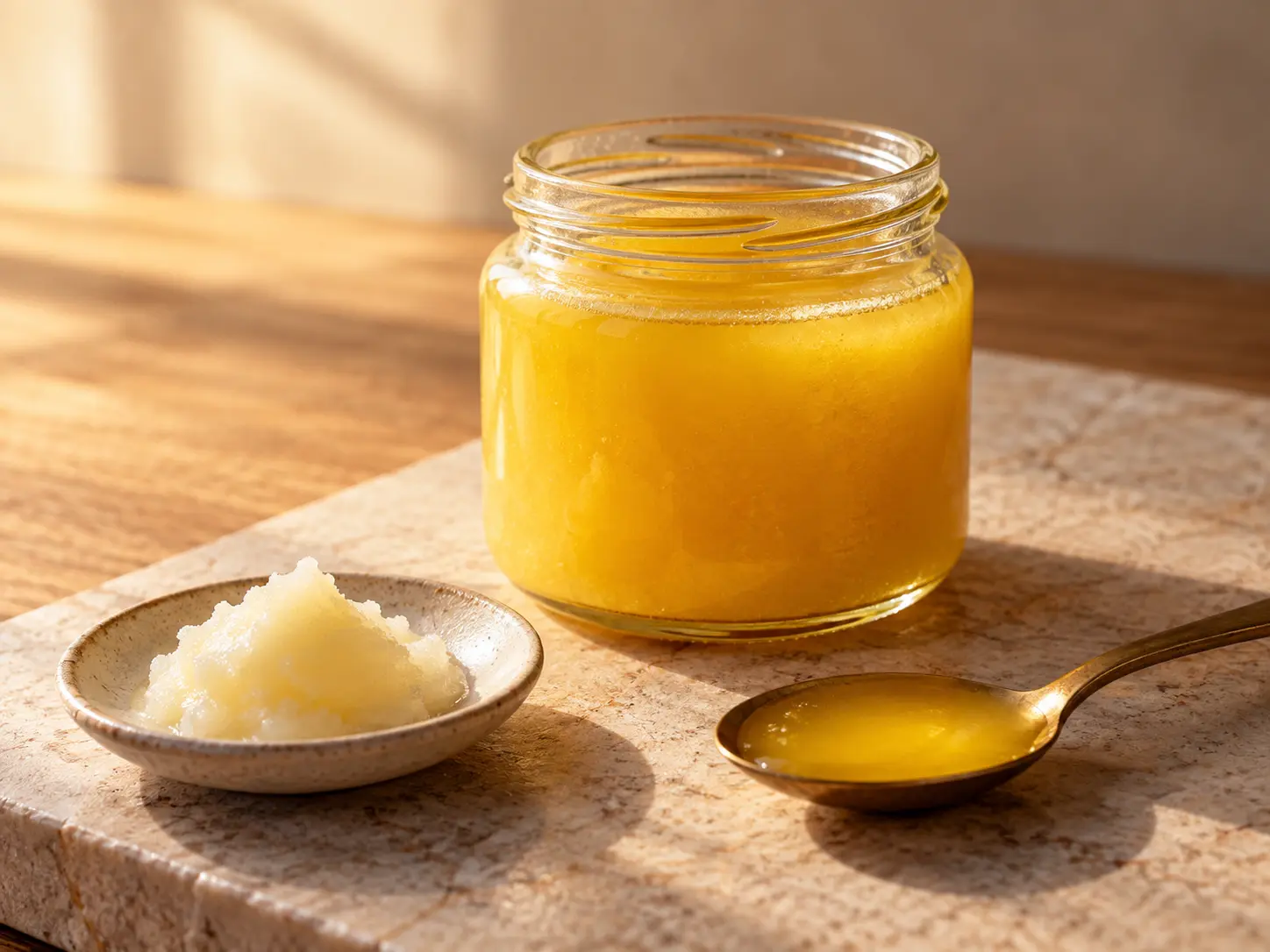
White ghee vs yellow ghee: neither is better on its own. Yellow is usually cow ghee and white is usually buffalo ghee, and both must be at least 99.5% milk fat under FSSAI. Pick yellow cow ghee for the daily spoon on roti and dal, white buffalo ghee for paratha and sweets. The colour tells you the animal and its feed, never whether the jar is pure.
White ghee vs yellow ghee: which is better?
Neither colour is healthier or purer. Yellow ghee is almost always cow ghee, white ghee is almost always buffalo ghee, and both are the same kind of fat by law. Choose by the dish: yellow cow ghee for roti, dal, and rice, white buffalo ghee for paratha, halwa, and mithai. Then check the jar by smell, not shade.
Most pages on this question crown yellow ghee and say white ghee has more fat and fewer vitamins. We checked both claims against the FSSAI standard, USDA data, and a 2019 study of more than 4,500 Indian cows and buffalo. Neither holds up. The table is the short version; the difference between the two animals in full is on cow ghee vs buffalo ghee.
Yellow ghee vs white ghee side by side
| Factor | Yellow ghee | White ghee |
|---|---|---|
| Usual animal | Cow | Buffalo |
| Shade | Pale yellow to deep gold, deeper after green fodder | White to ivory in every season |
| What gives the shade | Beta-carotene held in the milk fat | Most beta-carotene turned into vitamin A first |
| Milk fat (FSSAI ghee standard) | At least 99.5% | At least 99.5% |
| Texture on a cool day | Softer, cools grainy | Firmer and denser |
| Taste | Lighter, toasted milk | Richer, creamier |
| Best job | The daily spoon on roti, dal, rice | Paratha, halwa, ladoo, mithai |
| Proves purity? | No | No |
| Our price per litre | ₹2,399 | ₹1,999 |
Verdict: Same fat, same legal standard. Yellow cow ghee for the daily spoon, white buffalo ghee for sweets and paratha. Neither shade proves purity.
FSSAI Chapter 2.1 (2023); Bertolini et al., 2019; Ullah et al., 2017; our kitchen and live prices. Checked 29 September 2026.
Why is cow ghee yellow?
Cow ghee is yellow because cows carry beta-carotene, the orange-yellow pigment in green grass, into the fat of their milk. A 2017 study in PLoS One (Ullah and colleagues) describes it this way: in cow milk the beta-carotene is stored in the fat globules. Churn the fat out and cook it into ghee, and the pigment comes along.
That is also why the shade moves. In Gir Somnath our cow ghee comes out more yellow in the monsoon, once the animals are eating green fodder, and lighter in the dry months. A 2019 study of Indian herds found that most of the difference in milk beta-carotene came from the environment, such as feed, rather than the animal's genes. So a pale cow ghee in the dry season is still cow ghee. The full season-by-season picture is on why ghee tastes different each batch, and what grass feeding changes beyond colour is on grass-fed vs regular ghee.
Two things do not paint the jar. The A2 label names the milk protein from the breed, not the shade (see what is A2 ghee). And the method, Bilona or cream, changes the smell and the grain far more than the colour.
Why is buffalo ghee white?
Buffalo ghee is white because buffalo turn most of the beta-carotene they eat into vitamin A before it can colour the fat. Ullah's 2017 paper puts it as buffalo metabolising beta-carotene mostly into vitamin A. Nothing is bleached, and nothing is missing: white to ivory is simply what buffalo ghee looks like, in every season.
Many pages go further and say buffalo milk has no beta-carotene at all. The largest Indian study we found says otherwise. Bertolini and colleagues (Journal of Dairy Science, 2019) measured beta-carotene in the milk of 2,291 cattle and 2,242 buffalo from Indian herds. Cattle averaged 4.41 µg per 100 mL and buffalo 4.33 µg. By breed, the 458 Jafarabadi buffalo averaged 5.50 µg, and the 414 Gir cows 3.50 µg. Buffalo milk does carry the pigment. It just does not end up as a yellow ghee.
Buffalo ghee also sets firmer and denser than cow ghee on a cool day, which is part of why it gives paratha and halwa more body. If white is the jar you want for sweets, buy buffalo on purpose; brands and prices are ranked on best buffalo ghee in India.
Is yellow ghee healthier than white ghee?
No. The yellow is a few micrograms of pigment in a spoon of fat, and it changes almost nothing on your plate. FSSAI holds every ghee, cow or buffalo, to the same limits: at least 99.5% milk fat, at most 0.5% moisture. A 5 g teaspoon of either is about 5 g of fat.
The vitamin claim is where pages go most wrong. USDA FoodData Central lists butter oil (the closest entry to ghee) at 840 µg of vitamin A per 100 g, and 824 µg of that is retinol, the ready-made form. Only 193 µg per 100 g is beta-carotene, the part that makes the colour. So the yellow is a small share of the vitamin A, and buffalo, which turn more of their beta-carotene into vitamin A, are not handing you less just because the jar is white. Here is how small the pigment is next to food you already eat:
A 5 g teaspoon of ghee
About 10 µg beta-carotene
USDA figure for butter oil (193 µg per 100 g). Its vitamin A is mostly retinol: 824 of 840 µg.
1 litre of Gir cow milk
About 35 µg beta-carotene
Average of 414 Gir cows, 3.50 µg per 100 mL (2019 study).
1 litre of Jafarabadi buffalo milk
About 55 µg beta-carotene
Average of 458 Jafarabadi buffalo, 5.50 µg per 100 mL. Yes, more than the Gir cows.
10 g of raw carrot
About 830 µg beta-carotene
USDA, 8,280 µg per 100 g. One bite holds as much as 80-plus teaspoons of ghee.
USDA FoodData Central 173412 and 170393; Bertolini et al., Journal of Dairy Science, 2019 (litre figures are the study's per-100 mL averages times ten). Checked 29 September 2026.
If you want beta-carotene, a carrot, a slice of pumpkin, or a bowl of palak does the job; a golder ghee does not. What a teaspoon of ghee does carry is on ghee nutrition facts. If a doctor already watches your cholesterol, the colour of the jar does not change their advice on how much to eat.
Is white ghee fake, and is yellow ghee pure?
White ghee is not fake, and yellow ghee is not proof of purity. Colour is the easiest thing about a jar to get wrong in both directions: a real buffalo ghee gets sent back for being white, and a coloured mixture passes because it looks golden. FSSAI's ghee standard says the milk products that go into ghee must be free from added colour, and the lab checks it lists (the Baudouin test for til oil, a vegetable oil marker called β-sitosterol, the fatty acid profile) have nothing to do with shade.
Loud gold, flat smell
Colour is cheap to add. FSSAI says the milk that goes into ghee must be free of added colour, but a label cannot show you that. A deep yellow that smells of packing oil is a warning, not a cow.
Pale cow ghee in the dry months
Dry fodder means less beta-carotene, so the same cows give a lighter yellow. That is feed, not water or mixing.
Waxy white slab
Vanaspati is white too. It stays greasy on a warm spoon and does not smell of toasted milk. Buffalo ghee melts clear.
Muddy middle shade, no animal named
Often cow and buffalo milk mixed. Not wrong in itself, but the label should say which milk you are paying for.
Very dark brown
Overcooked. When a batch burns in our kitchen it comes out dark, bitter, and smelling burnt, and it is never packed.
Which fats get mixed into ghee, and which lab line catches each, is on how fake ghee is made. The white fat most often confused with buffalo ghee is vanaspati; see ghee vs vanaspati. For your own jar, run our 2-minute ghee purity checker, and the home tests that work are on how to identify pure ghee.
Why is my ghee a different colour from last time?
Usually because the season changed, not the ghee. "Why is the colour different from last time?" is one of the questions we get most on WhatsApp, and "the colour is not like the photo" is one of the most common complaints. With cow ghee from animals that graze, the answer is nearly always the feed: after the rains the yellow deepens, on dry fodder it lightens.
Temperature fools the eye too. Melted ghee looks deeper than set ghee, so the same jar looks golden in May and creamy in a cold December kitchen. In summer our ghee often stays liquid in the jar; in winter it sets and the grain shows. That grain is normal, and why it forms is on why ghee is grainy. A cow ghee that is the exact same bright gold in every month of the year is the one worth a second look.
Should you buy yellow or white ghee?
Buy by the job the jar will do. Many homes already keep two: cow ghee on the table, buffalo ghee in the kadai.
Choose yellow cow ghee if
- it goes on roti, dal, rice, or khichdi, where you taste it cold or warm
- it is for a child's plate or an older parent's soft meals
- you want a lighter taste and a softer jar
Choose white buffalo ghee if
- it is for paratha layers, halwa, ladoo, or Diwali mithai
- you cook sweets in big batches and want to spend less per kilo
- you like a richer, creamier taste
Roti, dal, rice, the daily teaspoon
Yellow (cow)
Lighter taste that lets the dal taste of dal.
Paratha, halwa, ladoo, winter sweets
White (buffalo)
More body, sets firmer, and costs less for a big batch.
Puja diya and havan
Yellow (cow), by custom
Most homes keep cow ghee for this. The shade itself carries no rule.
Deep frying pakora or puri
Neither
Fry in oil. Keep ghee for food where you taste it.
Three common kitchens. A family that eats ghee mainly on phulka and dal: one yellow cow jar is enough. A home making gajar halwa and ladoo all winter: add a white buffalo jar and save the cow ghee for the table. A cook who got a white jar and thinks it is fake: if the label says buffalo and it smells of toasted milk, that is buffalo ghee doing what it should. Choosing a brand for either job is on best ghee in India.
What mistakes do people make with ghee colour?
- Buying the goldest jar on the shelf. Deep yellow all year round says more about the photo or the tin than the cow.
- Returning white buffalo ghee as fake. White is its normal colour.
- Returning pale winter cow ghee. Same animals, drier feed.
- Paying more for yellow for the vitamins. About 10 µg of beta-carotene a teaspoon is not a reason to choose a jar.
- Judging a jar straight from the fridge. Set ghee looks paler. Warm a spoon first.
Ghee colour check: 6 points before you buy
Save or screenshot this. Colour comes into it only once the animal is named.
- 1 The label names the animal: cow ghee or buffalo ghee. Then the colour should match: yellow for cow, white to ivory for buffalo.
- 2 Cow ghee that changes shade through the year is normal. Deeper after the rains, paler on dry fodder.
- 3 Warm a spoon. Both colours should smell of toasted milk. Flat, waxy, soapy, or sharp is a problem in either.
- 4 Melt a little on a warm spoon. Ghee turns clear. A greasy film that will not clear is a question.
- 5 Leave some to set at room temperature. Slow-cooked ghee usually cools grainy, white or yellow.
- 6 The FSSAI licence number is on the jar and checks out on foscos.fssai.gov.in.
Which yellow and white ghee do we make?
Whichever colour you pick, ask what the shade cannot tell you: which animal, which method, and when the jar was made. Warm a spoon; it should smell of toasted milk. Our full ranking of cow ghee jars is on best cow ghee in India.
Our yellow jar is A2 Gir cow ghee, from Gir cows only, and its shade follows the season. Our white jar is Jafarabadi buffalo ghee, from the local breed. The animals graze on village pasture near the Gir forest, with no hormone injections, and nothing is added to the ghee. Each jar is curd Bilona, cooked after you order, and Varsha tastes every batch; you get a video of your jar on WhatsApp. We test every month against the FSSAI limits, and anyone can visit; see how we make ghee.
Yellow: Gir cow ghee for the daily spoon
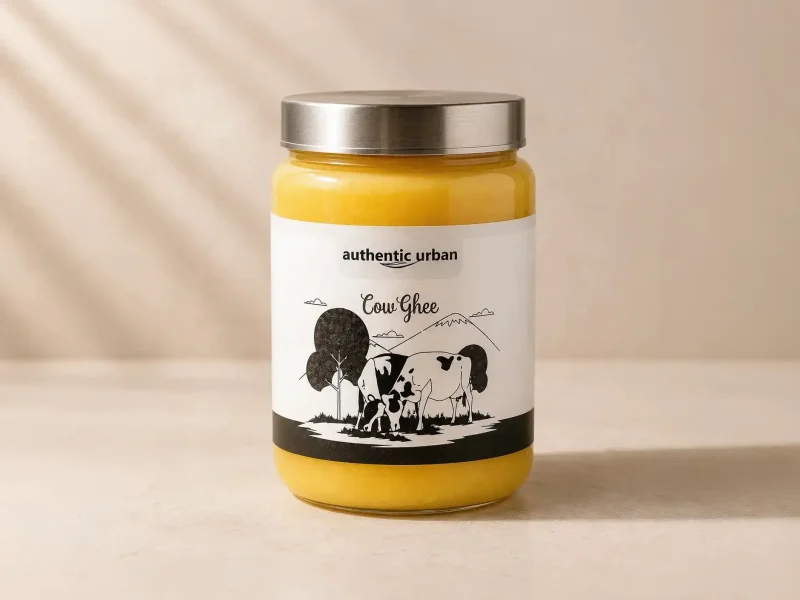 1 Litre
White: buffalo ghee for paratha and sweets
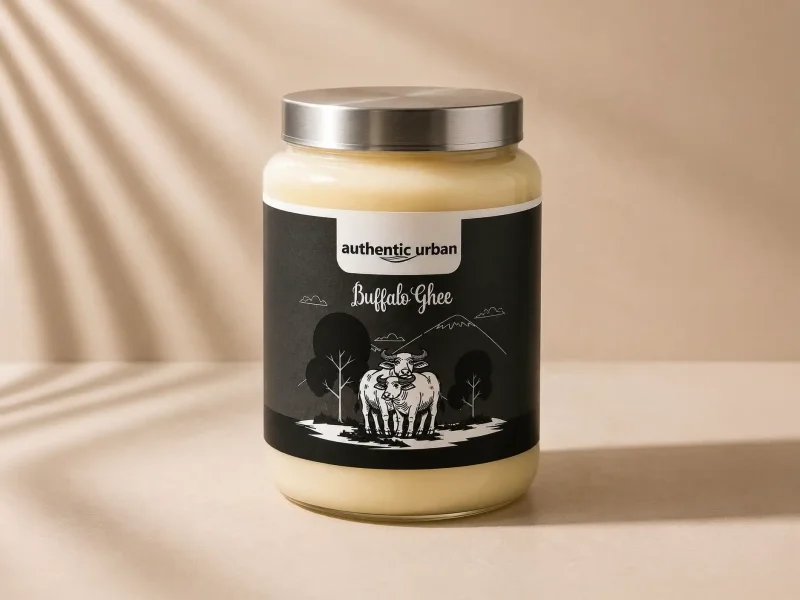 1 Litre
Each order is cooked after you place it, and the packing video is of that batch. Past order videos are on the shop.
FAQ
Which is the best white or yellow ghee to buy?
For yellow, our A2 Gir cow Bilona ghee; for white, our Jafarabadi buffalo Bilona ghee. Both are curd-churned, cooked after you order, and you get a video of your own jar on WhatsApp. Whichever brand you choose, pick the animal first by the job, then smell a warm spoon before trusting the shade.
Does white ghee have more fat than yellow ghee?
No. Some pages say white ghee has far more fat, but FSSAI sets one standard for all ghee: at least 99.5% milk fat and at most 0.5% moisture, whatever the animal. A teaspoon of either is about 5 g of fat. Buffalo milk has more fat than cow milk, which is why buffalo ghee needs less milk per kilo, but the ghee itself is the same fat.
Is white ghee the same as white butter?
No. White butter (safed makkhan) still holds water and milk solids; FSSAI asks only 76% milk fat for white or cooking butter. Ghee is that butter cooked until the water is gone, so it must be at least 99.5% fat. White ghee is buffalo ghee, fully cooked. White butter turned into ghee can come out yellow if it was cow butter.
Why does my ghee look white in the fridge or in winter?
Solid ghee looks paler than melted ghee, because set fat scatters light. A cow ghee jar that is golden when liquid can look creamy or almost white once it sets in a cold kitchen or the fridge. Warm a spoon: if it melts back to yellow and smells of toasted milk, nothing is wrong.
Can ghee be made yellow with turmeric or colour?
Not legally for sale. FSSAI's ghee standard says the milk products that go into ghee must be free from added colour. That rule does not stop every seller, which is why colour alone proves nothing. Real cow ghee gets its yellow from beta-carotene in the grass the cows eat, and the shade moves with the season.
Is yellow ghee better for children?
Not because of the colour. A teaspoon of ghee carries about 10 µg of beta-carotene, which is very little next to carrot, pumpkin, or leafy greens. Most families keep cow ghee for a child's dal or khichdi because it tastes lighter. For children over one, a small amount on food is enough; ask your paediatrician about amounts for a child with a health condition.
About the editorial team
Authentic Urban TeamBilona ghee makers, Gir Somnath, Gujarat
We are the Parmar family in Gir Somnath, Gujarat. We have made ghee here since 2016 and sold it online since 2025. We make only Bilona ghee, test it every month, and anyone is welcome to visit and watch it being made. Our Gir cows and Jafarabadi buffalo are grass-fed village animals that graze near the Gir forest, with no hormones or milk boosters. We set their milk to curd, churn it, and cook the makkhan on a wood chulha. These articles come from that kitchen and from what customers ask us on WhatsApp. We are ghee makers, not doctors.
Sources
- Food Safety and Standards (Food Products Standards and Food Additives) Regulations, Chapter 2.1: Dairy products and analogues, version 01.09.2023 (2.1.8 milk fat products and ghee; 2.1.9 butter), FSSAI. Checked 29 Sep 2026.
- Marker discovery and associations with β-carotene content in Indian dairy cattle and buffalo breeds (Bertolini et al., Journal of Dairy Science, 2019), Journal of Dairy Science (PMC). Checked 29 Sep 2026.
- Identification of cow and buffalo milk based on beta carotene and vitamin-A concentration using fluorescence spectroscopy (Ullah et al., PLoS One, 2017), PLoS One (PMC). Checked 29 Sep 2026.
- Butter oil, anhydrous (FDC ID 173412), SR Legacy, USDA FoodData Central. Checked 29 Sep 2026.
- Carrots, raw (FDC ID 170393), SR Legacy, USDA FoodData Central. Checked 29 Sep 2026.