Ghee for Diwali 2026: How Much to Buy and When to Order
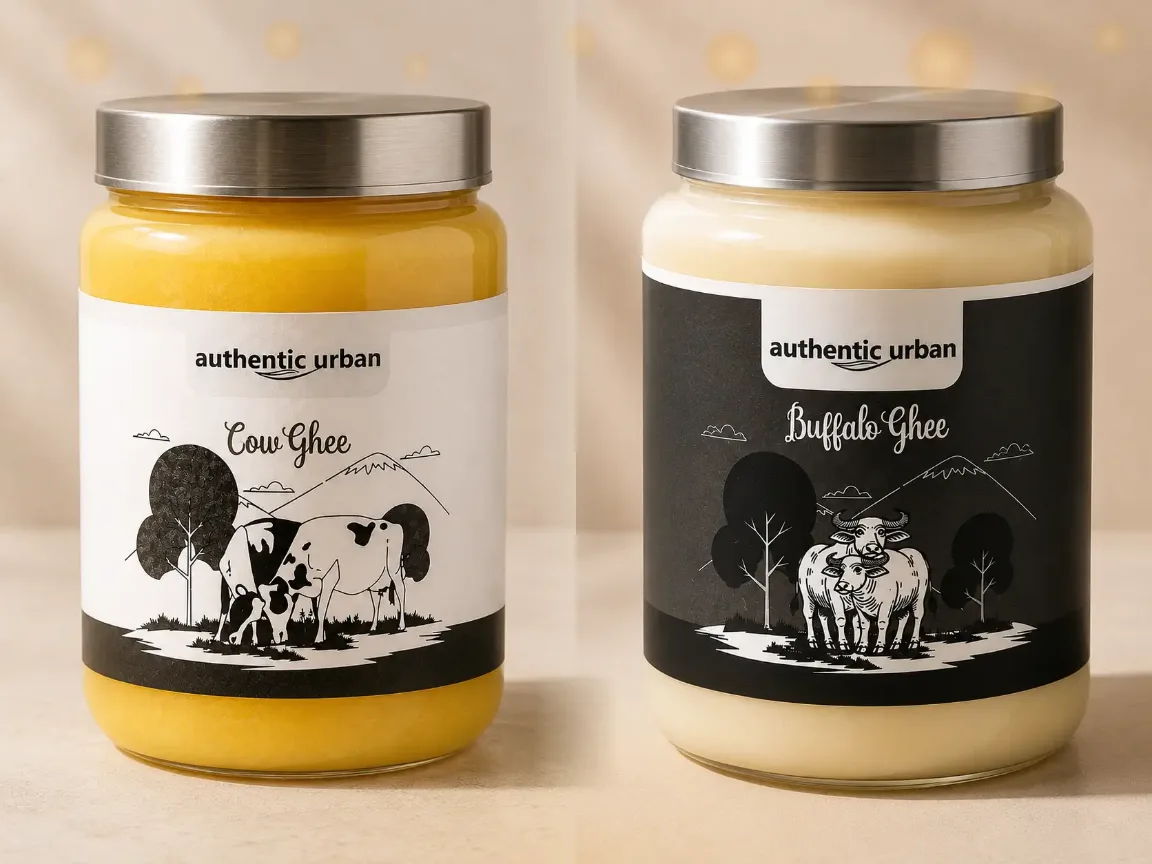
Ghee for Diwali, in short: buffalo ghee for the sweets, cow ghee for the diya and the daily spoon, and about 1 litre for a family making two or three dry sweets and one fried one. We make each jar after you order, so order ours by 30 October to have it before Dhanteras (6 November), or by 1 November for Diwali (8 November).
Diwali 2026: order by
Order by Friday 30 October
In your kitchen before Dhanteras, Friday 6 November
Order by Sunday 1 November
In your kitchen before Diwali, Sunday 8 November
Why so early: we cook each jar after the order comes in, which takes 2 days, and Blue Dart then takes 3 to 5 days anywhere in India. Order to doorstep is about 5 to 7 days. We are not running a Diwali offer; free delivery and cash on delivery apply as on any order.
How much ghee do you need for Diwali?
For most families, 1 litre of ghee for Diwali covers one batch each of besan ladoo, badam halwa, and kaju katli plus one fried sweet such as gulab jamun. Dry sweets alone fit in a 500 ml jar. Two fried sweets, or sweets for relatives, need 2 litres. Add a separate 1 L jar of cow ghee if you light ghee diyas all five evenings.
The number swings on one thing: frying. A ladoo or a halwa takes in all the ghee you put in the pan, so it is easy to add up. A fried sweet needs about 500 ml sitting in the kadhai, most of which comes back out. You need that ghee in the house on frying day, even though you will not eat most of it in the sweet. Every figure below is from our own recipe posts, so you can open the recipe and check the batch.
We are the Parmar family in Gir Somnath, Gujarat, and we make and sell ghee, so read the jar advice with that in mind. The quantities are the same whoever's ghee you use.
Authentic Urban Buffalo Ghee and A2 Gir Cow Ghee
Jafarabadi buffalo for the sweets • Gir cow for the daily spoon • curd Bilona • made after you order
Why #1:
- Rich, for sweets: buffalo ghee is richer and costs less a litre, which matters when a fried sweet needs half a litre in the kadhai.
- Arrives in time: order by 30 Oct for Dhanteras or 1 Nov for Diwali. Your jar is cooked after you order, then Blue Dart takes 3 to 5 days.
- See your own jar being made: a video of it being cooked and packed comes on WhatsApp with the tracking.
- Pure, and checked: FSSAI-licensed, and tested every month against the FSSAI limits for ghee.
- Nothing to lose trying it: free delivery, cash on delivery, and a 7-day quality return.
Price: Buffalo ₹1,999 • Gir cow ₹2,399 (1 L)
Best for: Buffalo for mithai; cow for the daily spoon
Delivery: Free delivery across India. COD. 3 to 5 days with Blue Dart.
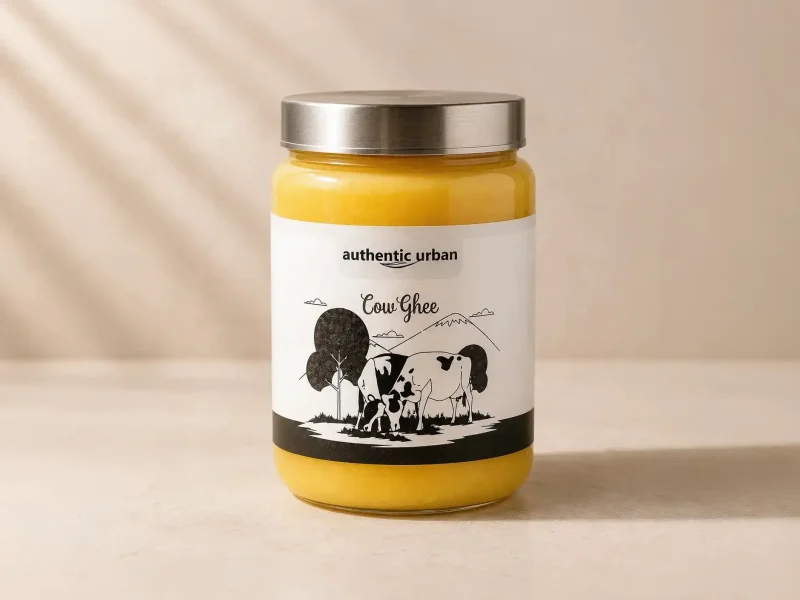 1 Litre
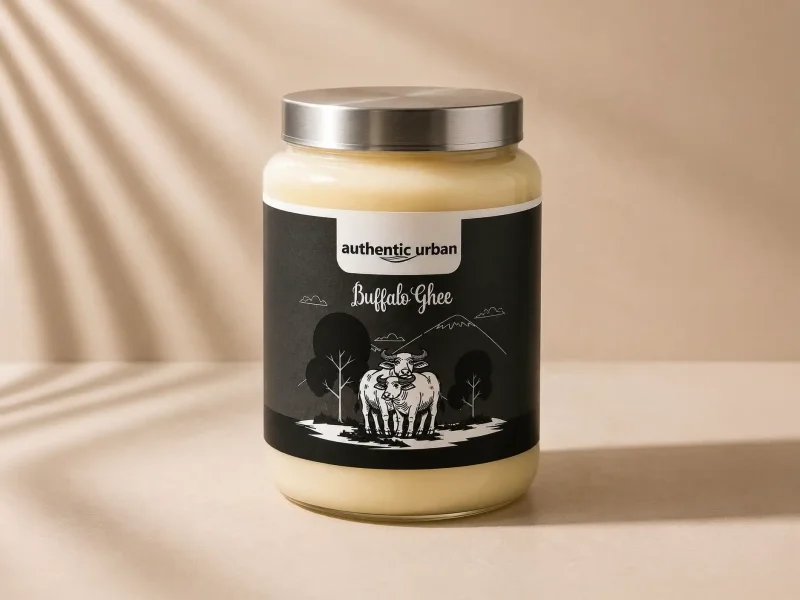 1 Litre
How much ghee for Diwali sweets, batch by batch?
One batch of besan ladoo takes about 139 ml of ghee, badam halwa about 119 ml, and kaju katli only about 12 ml. Motichoor and gulab jamun each need about 500 ml in the kadhai, and malpua about 250 ml. Here is each recipe's batch, what you need on hand, how much is used up, and how far a litre goes.
Sweet and batch
Ghee on hand
Used up
What 1 litre covers
Kaju katli 250 g cashews, about 30 pieces
On hand: 2 tsp, plus ½ tsp to grease (about 12 ml)
Used up: All of it
1 litre: About 80 batches. Even 1 kg of cashews takes only 8 tsp, about 40 ml.
Badam halwa 1 cup (143 g) almonds, 6 bowls
On hand: ½ cup, 103 g (about 119 ml)
Used up: All of it
1 litre: About 8 batches
Besan ladoo 200 g besan, 20 ladoos
On hand: 120 g for classic ladoos (about 139 ml); 100 g firm, 150 g soft
Used up: All of it
1 litre: About 7 classic batches, or 140 ladoos (8 firm, 5 soft)
Malpua 125 g maida, 12 malpua
On hand: About 250 ml in an 18 cm kadhai to deep-fry, or 150 g (about 173 ml) shallow-fried in a flat pan
Used up: Shallow: almost all of it. Deep: the recipe gives no figure, and most comes back out
1 litre: Four kadhai fills, or about 5 shallow batches
Motichoor ladoo 184 g besan, about 20 ladoos
On hand: About 500 ml in the kadhai, plus 1 tbsp in the mix
Used up: Not given. It depends on your heat and batter; most comes back out
1 litre: Two kadhai fills. A 1 kg besan batch (about 110 ladoos) starts with 1 litre and is topped up as it falls
Gulab jamun 200 g khoya, about 20 jamuns
On hand: About 500 ml in a small, deep kadhai
Used up: Not given. Only a little goes into the jamuns
1 litre: One kadhai and a full top-up. For 100 jamuns the ghee does not multiply; fry in turns and top up
Batches and ghee amounts from our recipe posts. Grams turned into ml with USDA FoodData Central's weight for a cup of ghee (205 g in 236.6 ml), so 100 g is about 115 ml.
Our recipe posts for each sweet. For the fried sweets this is the kadhai fill, most of which comes back out.
| Item | Value |
|---|---|
| Motichoor ladoo | 500 ml (kadhai fill, most comes back) |
| Gulab jamun | 500 ml (kadhai fill, most comes back) |
| Malpua | 250 ml (kadhai fill, most comes back) |
| Besan ladoo | 139 ml (all of it goes in) |
| Badam halwa | 119 ml (all of it goes in) |
| Kaju katli | 12 ml (all of it goes in) |
Which sweets have no exact ghee figure?
Motichoor, gulab jamun, and deep-fried malpua. Our recipes give the kadhai fill but not how much ghee each ladoo, jamun, or malpua soaks up, because that depends on your heat, your batter, and your jhara, and we did not find a source we could check that measures it. We would rather say so than guess. If you want your own number, weigh the kadhai with the ghee before frying and again once the leftover ghee has cooled and been strained. The difference is what went into the batch.
For planning, it does not matter much. The kadhai fill is what you must have in the house, and the leftover is not wasted. Strain it, and cook the next day or two of dal and sabzi with it. Do not fry the next sweet in it: ICMR-NIN's Dietary Guidelines for Indians (2024) say oil once used for frying should be filtered and used for curries, not fried in again, and we treat ghee the same way. The reasons are on what to do with leftover frying ghee.
Which jar size should a family buy for Diwali?
A 1 litre jar of buffalo ghee fits the most common Diwali list: two or three dry sweets and one fried sweet. Go down to 500 ml if you are not frying anything, and up to 2 litres if you fry two sweets or make boxes for relatives. Our jars come in 250 ml, 500 ml, 1 L, 2 L, and 5 L.
Dry sweets only: one batch each of besan ladoo, badam halwa, and kaju katli
500 ml buffalo ghee About 270 ml
Leaves about 230 ml for parathas, or a second batch of firm ladoos (115 ml).
The same three, plus one fried sweet: gulab jamun or motichoor
1 L buffalo ghee About 770 ml on hand on frying day
Most of the 500 ml kadhai comes back out and goes into the week's dal and sabzi.
Sweets for relatives too: two batches of besan ladoo, badam halwa, 1 kg of kaju katli, and both gulab jamun and motichoor
2 L buffalo ghee About 1.4 litres
Two fried sweets need two fresh kadhai fills, because used frying ghee should not be fried in again.
Diyas: 21 small diyas, 1 tsp each
1 L cow ghee About 120 ml an evening, about 600 ml over five evenings
The rest of the jar is your daily spoon after the festival.
Screenshot this table and cross out what you are not making. Two things push you up a size. A soft, halwai-style besan ladoo takes 150 g of ghee a batch against 120 g for the classic one. And 1 kg of besan ladoo, the size many homes make for Diwali boxes, takes about 600 g of ghee, close to 700 ml on its own. The diya figures come from our guide on how much ghee a diya takes. For a wedding or a large family function, the sums change, and they are worked out ritual by ritual on ghee in Indian weddings.
At today's prices, a litre of our Jafarabadi buffalo ghee is ₹1,999 and a litre of our A2 Gir cow ghee is ₹2,399. Buffalo milk is richer, so 22 to 25 litres of it make a kilo of ghee against 30 to 35 litres of Gir cow milk, and that is why the sweets jar is the cheaper one.
When should you order ghee before Diwali?
Order at least seven days before the first day you cook, not seven days before Diwali. Our ghee is made after the order: 2 days to cook your jar, then 3 to 5 days with Blue Dart, a little more or less depending on your region. We dispatch every day, and the 2 days of making stay the same in the festival rush.
The 2 days are real kitchen time. The milk sets to curd overnight, the curd is churned for 30 to 45 minutes until the makkhan separates, and the makkhan cooks slowly in a matki on a wood chulha for 45 to 90 minutes, until the bubbling goes quiet and the solids turn golden brown. Every step, and our open invitation to come and watch, is on how we make our ghee. Diwali also falls as the weather turns. In winter our milk is richer and the ghee cools to a fine grain, so a Diwali jar can look more grainy than one you bought in summer, when ghee often stays liquid. Both are normal.
Which sweet to cook first, and so when the ghee must arrive
The sweet that keeps longest is made first, and the ghee has to be in your kitchen by then. Going by how long each one keeps in our recipe posts:
First, up to a week or more ahead
Besan ladoo
Keeps about two weeks in a closed box in cool weather, about a week in a warm, humid spell.
A few days ahead
Kaju katli
About a week in a closed box in a cool room.
One or two days ahead
Motichoor ladoo, gulab jamun
Soft, syrup-soaked sweets keep three to four days; jamuns go in the fridge after the first day.
On the day
Badam halwa, malpua
Halwa is best warm and leftovers go in the fridge; malpua lose their crisp edge within an hour.
So if you roll besan ladoos on Sunday 1 November, order by about 25 October. Ordering early costs nothing: a sealed jar keeps 9 to 12 months at room temperature, and the full storage rules are on how long ghee keeps.
Cow or buffalo ghee for Diwali sweets?
Buffalo ghee for the sweets and parathas, cow ghee for the daily spoon. That is our rule for the two jars, and buffalo is the jar each of our six recipe posts reaches for first. Buffalo ghee is richer and whiter, gives mithai the full ghee taste, and costs less a litre, which counts most when half a litre sits in a kadhai.
- Kaju katli: buffalo, if you want the katli to stay white. With only 2 tsp in a batch, cow ghee is fine too and gives a faint yellow tint.
- Besan ladoo: buffalo, for the heavy ghee taste a festival ladoo should have. Cow gives a more yellow ladoo with a sharper toasted-milk smell.
- Motichoor, gulab jamun, malpua: buffalo, for the rounder taste halwai sweets have and the lower cost of a full kadhai. Cow ghee fries just as well and gives a lighter, more golden sweet.
- Badam halwa: a matter of taste. Buffalo gives a richer halwa, cow a lighter, more golden one.
Colour moves with the season too. In the monsoon, green fodder makes our cow ghee more yellow, and a halwa or malpua cooked in it comes out a warmer gold. If your family grew up on the taste of cow ghee sweets, use cow ghee; nothing in these recipes depends on the animal. The full comparison is on cow vs buffalo ghee.
Which ghee for the Diwali diya and puja?
Use plain ghee from a food jar for the Diwali diya, about 1 teaspoon a small diya, and cow ghee for the lamp before the deity if your family or priest asks for it. A food jar matters because Lakshmi puja ghee rarely stays in the lamp: it goes into prasad and back into the kitchen. Packs marked with a black cross in a square are for the lamp only and must never go into food.
Keep the diya ghee and the sweets ghee in separate jars, and fill diyas with a dry spoon; water in a diya is what makes it crackle. Which ghee each ritual asks for, the black-cross mark, havan amounts, and how to light a diya so it burns steady are all on ghee for puja and havan. Keep lit diyas on a brass plate, away from curtains and rangoli powder, and never leave one burning in an empty room.
How is the ghee packed, and what if a jar arrives damaged?
Each jar, glass or BPA-free food-grade plastic, is wrapped in honeycomb paper, then shrink-wrapped and sealed. With the Blue Dart tracking, you get a video of your own jar being cooked and packed on WhatsApp.
- Free delivery and cash on delivery across India. We do not ship outside India.
- A melted, leaked, or damaged jar: contact us through our Support page and we make it good with a discount on your next order, alongside our 7-day quality return. Full details are in our shipping and returns policy.
- Soft or part-liquid on arrival: ghee softens in a warm van. It is not spoiled. Stand it in a cool place and it sets again. Smell it: toasted milk is right, a sour or rancid smell is not.
- No gift packs or hampers. We sell the jar itself, in 250 ml to 5 L.
Whatever brand you buy for Diwali, smell a warmed spoon before you start a big batch, because a stale jar spoils a whole tray of ladoos. Home checks for a jar are on how to identify pure ghee.
Which ghee to order for Diwali?
For Diwali, pick a plain ghee with nothing added that smells of toasted milk when it melts, because in a ladoo or a kadhai of jamuns you taste every spoon. Our ranking of the buffalo ghee on sale, with prices, is best buffalo ghee in India.
For the sweets we would use our Jafarabadi buffalo ghee, and for the diya and the daily spoon our A2 Gir cow ghee. Both come from grass-fed village animals near the Gir forest, with no hormones, set to curd and churned by hand, and Varsha tastes every batch before it goes in a jar. Order by 30 October for Dhanteras, or 1 November for Diwali.
The diya and the daily spoon
1 Litre
Ladoo, katli, halwa, and fried sweets
1 Litre
Each order is cooked after you place it, and the packing video is of that batch. Past order videos are on the shop.
FAQ
When should I order ghee for Diwali?
Count back seven days from the first day you will cook, not from Diwali itself. We make each jar after the order, which takes 2 days, and Blue Dart takes 3 to 5 days anywhere in India. For 2026, order ours by 30 October to have it before Dhanteras on 6 November, and by 1 November for Diwali on 8 November. Cash on delivery is available and delivery is free.
How much ghee for 1 kg besan ladoo?
About 600 g of ghee for classic ladoos, which is close to 700 ml, with 1 kg besan and 750 g sugar for about 100 ladoos. Use about 500 g for firm ladoos that travel well, or 750 g for soft, rich ones. A 1 L jar covers the classic or firm batch. Roast the besan in two or three lots, because a whole kilo scorches at the base before the top is done.
Cow or buffalo ghee for sweets?
Buffalo ghee for most Diwali sweets. It is richer and whiter, gives the full ghee taste mithai should have, keeps kaju katli white, and costs less a litre, which matters when half a litre goes into a kadhai. Cow ghee works in all of them and gives a lighter, more yellow sweet. Keep cow ghee for the daily spoon and the diya.
Can I use buffalo ghee for the Diwali diya?
That is a household and priest question more than a food one. Many homes light buffalo ghee in everyday lamps, and nothing in food rules stops it. Many families and priests ask for cow ghee for the lamp in front of the deity and for the havan, so ask whoever leads your puja. Either way, use ghee from a food jar, so whatever is left can go into prasad.
Will ghee ordered in October still be fresh at Diwali?
Yes. A sealed jar of our ghee keeps 9 to 12 months at room temperature, so ordering in early October costs nothing in freshness. Once you open it, use a dry spoon every time, keep the lid shut, and keep the jar away from the stove and from the diyas. Water and steam spoil ghee faster than a warm room does.
Can you send ghee abroad for Diwali?
No. We ship only within India, so we cannot send a jar to family in another country. Inside India we deliver anywhere by Blue Dart in 3 to 5 days after the jar is made, with free delivery and cash on delivery. If a relative abroad wants ghee, the order has to go to an address in India.
About the editorial team
Authentic Urban TeamBilona ghee makers, Gir Somnath, Gujarat
We are the Parmar family in Gir Somnath, Gujarat. We have made ghee here since 2016 and sold it online since 2025. We make only Bilona ghee, test it every month, and anyone is welcome to visit and watch it being made. Our Gir cows and Jafarabadi buffalo are grass-fed village animals that graze near the Gir forest, with no hormones or milk boosters. We set their milk to curd, churn it, and cook the makkhan on a wood chulha. These articles come from that kitchen and from what customers ask us on WhatsApp. We are ghee makers, not doctors.
Sources
- Butter oil, anhydrous (FDC ID 173412), SR Legacy: cup weight used to turn grams of ghee into ml, USDA FoodData Central. Checked 28 Sep 2026.
- Dietary Guidelines for Indians, 2024 (Guideline 7 on used frying oil), ICMR-National Institute of Nutrition. Checked 28 Sep 2026.